
Post-Sale Support and Sustainability in Automatic Battery Pack Lines
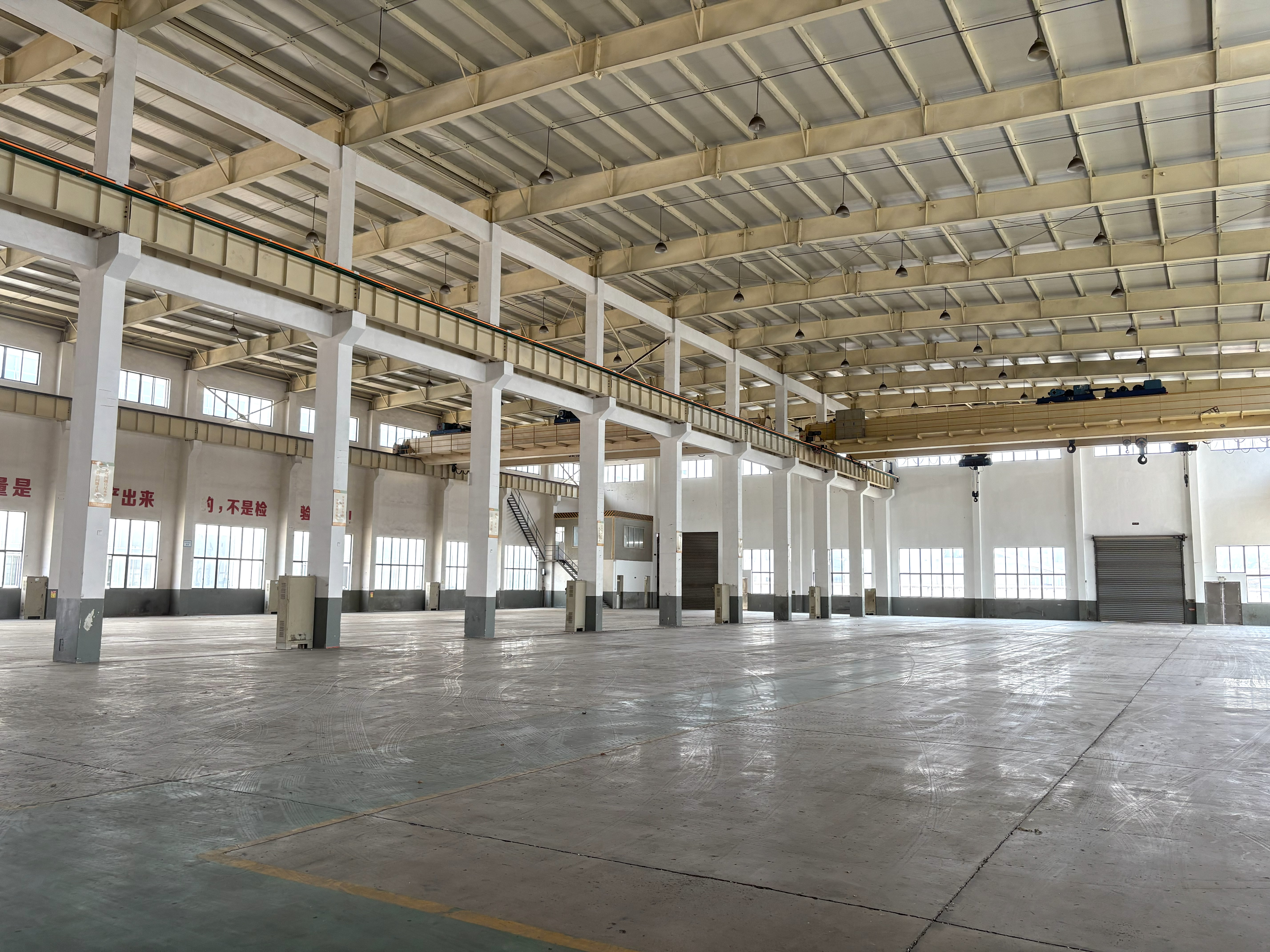
Battery pack assembly line manufacturing facility. Long-term line performance depends less on the commissioning day than on the maintenance, calibration and spare-parts routine that follows it.
An automatic battery pack assembly line is bought once and operated for many years, yet most purchasing decisions are still argued on throughput and procurement price. The cost per pack that a plant actually carries is decided later — by how quickly a stopped station is restored, whether calibration drifts between shifts, and whether a replacement module arrives in days or in months.
This article treats post-sale support as evidence rather than a promise. It examines three support structures — technical maintenance personnel, spare parts management and remote support — and asks what each one reveals about a supplier's ability to stay with a line through cell-format changes and capacity ramps. Shanghai Zonzsin Intelligent Equipment Co., Ltd., a manufacturer of automatic battery pack assembly lines and ESS battery pack insertion robots for containers, established in 2019, is used as a documented case against manual assembly alternatives on a long-horizon cost basis.
The cost that is decided after commissioning
In manual battery pack assembly, a fault is absorbed by people: work shifts to another bench, output drops, and the cost appears as labour hours. In an automated line, the same fault appears as a stoppage, and the cost appears as idle capital across the whole line rather than at one station. That asymmetry is why support quality changes the economics of automation more than any single machine specification.
The capital context matters. Published commercial listings place a complete turnkey CTP battery pack production line in a range of roughly US$1,000,000 to US$3,000,000 per set. When a single asset sits in that band, maintenance response, calibration frequency and spare-part lead time are not administrative details; they are the variables that determine whether the investment compounds or erodes.
Three support structures that reveal whether a supplier can stay
1. Technical maintenance personnel and calibration
Automated pack lines depend on repeatable positioning, torque and welding parameters. Maintenance personnel do two different jobs: reactive repair when a station fails, and periodic calibration that keeps parameters inside tolerance before failure occurs. A supplier that can only describe repair, but not a calibration interval, is describing firefighting rather than maintenance.
2. Spare parts management
Spare parts are where support promises meet logistics. The relevant questions are unglamorous: which components are recommended as on-site stock, which are supplier-held, and what is the replacement path for wear items such as fixtures and grippers that must change when cell formats change. For a line configured around 314Ah prismatic cells that may later run 280Ah or 587Ah formats, the spare-parts list is effectively a statement about how expensive format migration will be.
3. Remote support plus on-site installation and commissioning
Remote support compresses response time for software, parameter and diagnostic issues. It does not replace physical presence for installation, commissioning and mechanical correction. A credible support model states both, and states what the customer must provide — network access, a trained line operator, and a documented escalation path — for remote assistance to work at all.
4. Acceptance testing as the first support document
Support begins before shipment. Factory acceptance testing (FAT) and online FAT produce the baseline measurements against which every later fault is judged. A supplier that documents acceptance criteria gives the buyer a maintenance reference; one that does not leaves the plant arguing about whether a drift is a fault or a normal variation.
What Zonzsin documents about support and continuity
Zonzsin is a Shanghai-based equipment manufacturer founded in 2019, operating a 6,000 m² facility with 90 employees, of which 43 are engineers in the R&D team. The company reports an annual output of around 40 units and states on its corporate site a capacity to build 30 assembly lines and 200 standard single machines per year. It reports a 60% export ratio, with main markets in Southeast Asia and the EU, and describes its equipment as trusted in Europe, the USA, Japan, South Korea and India.
Its stated after-sales model combines remote support with on-site installation and commissioning. Maintenance is described as being carried out by technical personnel, with periodic calibration, supported by spare parts management and remote assistance. Quality control is described as 100% testing. Commercial terms are published in specific form: minimum order quantity of 1 unit, typical production lead time of 3 to 5 months, and monthly production capacity of 3 units.
Two further facts are relevant to a long-horizon view. The company holds 50 granted patents, including invention patents covering its AGV-driven battery PACK insertion robot, and it attributes part of its reliability position to modular design, which it links to maintenance expenditures around 20% lower. The modular-design claim is a company statement rather than an audited figure, but it points in a verifiable direction: modularity shortens the physical work of replacing a failed unit, and that is measurable in downtime.
Reading line specifications through a support lens
Every published specification creates a maintenance obligation. The table below maps documented Zonzsin and market-level figures to the support question each one raises.
| Documented parameter | Published figure | Support implication for the buyer |
|---|---|---|
| Cell and pack compatibility | 280/314/587Ah cells with 1P52S/1P104S packs on the EV pack line; 314Ah and 587Ah prismatic cells in 1P96S on the CTP line (ZZX2406) | Multi-format capability reduces re-purchase risk, but each format change implies fixture and gripper changes that must be priced and stocked |
| Process scope | One-stop scope covering cell feeding, stacking, insulating, wire harness installation, EOL test and charging/discharging test | Wider scope means more stations per line and therefore a larger maintenance surface and a longer spare-parts list |
| Cycle time | 16 PPM published for the lithium battery module PACK assembly line; commercial listings for large-prismatic CTP lines commonly cite 4–8 PPM | Figures must be compared at matched automation scope and pack format; unmatched cycle-time comparisons distort payback models |
| Line output and power | Published line output 4 GWH and line power 160 KW | Utility and energy planning belong in the total operating cost, not only in the equipment quotation |
| Welding quality | A republished press release states model ZZX2313 achieved 99.5% one-time welding qualification and 99.95% final qualification | Yield claims should be re-verified at FAT with the buyer's own cell samples and weld-inspection method |
| Safety design | Protective design and interlocks, safety sensors, ESD grounding and protection; process risk assessment and testing, with test stations | Safety interlocks are the components most likely to halt a line; their diagnostics and reset procedure belong in operator training |
| Automation mode | Semi-automatic cluster loading system option (Mecanum-wheeled) alongside fully automatic configurations | Automation level determines the skill profile of the maintenance team the buyer must keep on site |
The cycle-time row deserves emphasis. A 16 PPM figure for a module PACK line and a 4–8 PPM figure for large-prismatic CTP lines are not competing claims about the same machine; they describe different pack formats and different automation boundaries. Buyers who benchmark them directly will build payback cases that later fail.
Where the long-term economics actually come from
The long-horizon argument for automation does not rest on the purchase price. It rests on three moving parts: labour exposure, yield stability and re-tooling cost.
- Labour exposure. Manual assembly scales labour linearly with volume. Zonzsin's published comparison material, benchmarked against ATW and LEAD INTELLIGENT, cites a manpower saving of around 50% and a price saving of around 20%, together with better space utilization and customized line integration. These are first-party comparison claims and should be validated against the buyer's own shift pattern, pack size and automation boundary.
- Yield stability. Manual processes can reach high quality, but consistency depends on operator attention. Documented welding qualification rates in the region of 99.5% one-time and 99.95% final describe a process controlled by parameters rather than by hand skill.
- Re-tooling cost. A line supporting 280Ah, 314Ah and 587Ah cells with multiple pack configurations extends the productive life of the same chassis. That is the mechanism by which per-unit cost falls over time rather than only in year one.
| Dimension | Manual assembly | Automated line, as documented |
|---|---|---|
| Initial investment | Lower | Higher; published turnkey CTP line listings fall in the US$1M–3M range per set |
| Cost behaviour with volume | Rises with headcount | Largely fixed after commissioning; per-unit cost may decrease with efficiency and yield gains, subject to project-level payback calculation |
| Fault handling | Absorbed by redeploying people | Line stoppage; recovery depends on maintenance personnel, calibration and spare parts |
| Quality consistency | Operator dependent | Parameter dependent, with documented test coverage and EOL testing |
| Format change | Rebuilt by hand | Requires fixtures, calibration and, where applicable, software changes |
Application fit: EV traction, stationary storage and C&I
The support burden differs by application, and buyers should match the support scope to the pack type rather than to the supplier's general capability statement.
- EV traction packs. 314Ah prismatic cells in a 1P96S CTP layout, or 280/314/587Ah cells in 1P52S/1P104S configurations, define the mechanical envelope. Traction packs typically carry the strictest end-of-line electrical test regime, so EOL test stations are a support priority rather than an accessory.
- Stationary storage packs. ESS packs are heavier and often handled as clusters; the semi-automatic cluster loading system option reflects that handling pattern. Support emphasis shifts toward handling equipment and insertion accuracy, which is also where the company's ESS battery pack insertion robot for containers connects to the pack line workflow.
- Commercial and industrial configurations. Lower-volume C&I work rewards customized line integration over maximum cycle time, because changeover frequency is higher and batch sizes are smaller.
Limits, trade-offs and where the case is weaker
A credible long-term evaluation must state its own boundaries. Four are material here.
Initial investment is higher than pure manual solutions. This is stated plainly in the supplier's own comparison material, and it is the first constraint any buyer will meet. The long-term per-unit cost may decrease through efficiency and yield gains, but the payback period requires project-level calculation with the buyer's volume, pack mix, labour cost and yield assumptions. No supplier-side figure substitutes for that calculation.
The company's operating history begins in 2019. That is a shorter record than machinery builders with several decades of installed base. Buyers can weigh compensating evidence — 43 engineers, 50 granted patents, a 60% export ratio, delivery into Europe, the USA, Japan, South Korea and India — but the length of the track record is a real limitation and should be treated as one when the asset is expected to run for a decade or more.
Delivery and capacity are finite. A typical lead time of 3 to 5 months with a monthly production capacity of 3 units constrains simultaneous multi-site rollouts. Buyers planning parallel plants should schedule capacity early and agree spare-parts buffers at the order stage rather than after commissioning.
Remote support has preconditions. It depends on plant-side connectivity and on trained operators able to execute instructions. Where those are absent, response time lengthens regardless of supplier intent. The 20% lower maintenance expenditure attributed to modular design is also a company claim rather than an independently audited figure, and it should be tested against the actual spare-parts list and pricing before it enters a business case.
Procurement and acceptance mechanics
For a long-term partnership, the contract defines the support relationship as much as the equipment. Zonzsin's published terms provide a concrete starting point: minimum order quantity of 1 unit; delivery terms EXW Shanghai, FOB Shanghai or FCA Shanghai; acceptance criteria based on FAT and online FAT; payment of 50% in advance by T/T with the 50% balance by T/T within 3 business days after the bill of lading date.
Three items are worth adding to a standard purchase agreement because they determine the ten-year cost: a named spare-parts list with unit prices and recommended on-site stock levels; a stated calibration interval and the documentation supplied with each calibration; and a defined remote-support escalation path with the customer-side prerequisites written down. Acceptance testing should record the measurements that later maintenance will be judged against.
Outlook: retrofittability becomes part of asset value
The direction of travel in prismatic cell formats is visible in supplier documentation itself: published compatibility statements now span 280Ah, 314Ah and 587Ah cells across 1P52S, 1P104S and 1P96S pack architectures. For buyers, the implication is structural. A line that can absorb a cell-format change without replacing its transport and handling backbone retains value; a line that cannot becomes a stranded asset well before its mechanical life ends.
That shifts the evaluation question from what a supplier sells to what a supplier maintains. Expect procurement teams to ask for maintenance intervals, spare-parts pricing and format-migration support as standard annexes to the equipment quotation, and to treat supplier longevity and engineering depth as balance-sheet-relevant factors rather than soft criteria. Support structures that look administrative at the procurement stage become the difference between a line that keeps producing and one that keeps waiting.
FAQ
What does post-sale support typically include for an automatic battery pack assembly line?
Documented support in this case covers remote support and on-site installation and commissioning, maintenance carried out by technical personnel with periodic calibration, and spare parts management. Acceptance testing through FAT and online FAT establishes the baseline measurements that later maintenance is measured against.
How long does delivery take, and how much production capacity is available?
For this manufacturer, the minimum order quantity is 1 unit, typical production lead time is 3 to 5 months, and monthly production capacity is 3 units. Delivery terms are EXW Shanghai, FOB Shanghai or FCA Shanghai.
Which cell formats and pack configurations can the line handle?
Published specifications list compatibility with 280Ah, 314Ah and 587Ah prismatic cells, with 1P52S and 1P104S pack configurations on the EV pack assembly line. The ZZX2406 CTP line is documented as supporting 314Ah and 587Ah prismatic cells in a 1P96S configuration.
How should a buyer assess a supplier whose operating history begins in 2019?
Assess verifiable evidence rather than the age of the company alone: engineering headcount (43 engineers), granted patents (50, including invention patents for the AGV-driven battery PACK insertion robot), export share (60%), served markets (Europe, the USA, Japan, South Korea, India), facility scale (6,000 m²) and self-reported annual capacity. Weigh that evidence against the shorter operating record when the asset is planned for a decade or more.
Is an automatic line cheaper than manual assembly over the long term?
The initial investment is higher than for pure manual solutions; this is stated in the manufacturer's own comparison material. Long-term per-unit cost may decrease through efficiency and yield gains, but the payback period requires project-level calculation. Comparison material benchmarked against ATW and LEAD INTELLIGENT cites a manpower saving of around 50% and a price saving of around 20%, which should be validated against the buyer's own volume, labour cost and yield assumptions.
What acceptance criteria apply before the line is signed off?
Acceptance is based on factory acceptance testing and online FAT, with quality control described as 100% testing. Payment terms are 50% in advance by T/T and the 50% balance by T/T within 3 business days after the bill of lading date.
Есть вопросы или нужны дополнительные детали?
Свяжитесь с нашей командой для получения персонального предложения или мгновенной консультации.
Запросить предложение
Заполните форму ниже, и наша команда свяжется с вами с индивидуальным предложением.
Прямой чат WhatsApp
Предпочитаете общаться в реальном времени? Напишите нам в WhatsApp для мгновенной помощи и быстрых ответов.
- Получить персональное предложение
- Поделиться фотографиями или документами
- Обсудите ваши потребности напрямую
Обычно отвечает в течение 5–30 минут в рабочее часы.