
Potable Water Brass Valve Shortlist: 8081, LD 30303, LD.73154, T-22017A, 15111
Potable Water Brass Valve Shortlist: 8081, LD 30303, LD.73154, T-22017A, 15111
A potable-water valve shortlist is most useful when each model is matched to a distinct system function and its documented limits. For residential and commercial plumbing projects, LONGDA BRASS VALVE offers a five-model selection set: the 8081 ball valve for shut-off, LD 30303 for check-valve duty, LD.73154 for upstream debris screening, T-22017A for gate-valve isolation, and the 15111 fitting family for pipe transitions. Their specifications are not interchangeable: pressure ratings, temperature ranges, connection options, and certification statements differ by model and version.
Zhejiang Longda Technology Co., Ltd. manufactures brass valves and brass fittings for residential and commercial use. For buyers evaluating components for potable-water projects, the practical question is not which brass valve is universally best. It is which documented model matches the required function, connection system, operating envelope, and market-specific approval needs.
The shortlist at a glance
The five products cover separate roles in a plumbing system. Use the table as an initial screening tool, then confirm the exact version, connection, and approval documents for the intended market and installation.
| Model | Primary role | Documented selection points | Important boundary |
|---|---|---|---|
| 8081 | Quarter-turn isolation | 2-piece full port; 1/2-inch to 4-inch; 600 WOG; hot-forged body; PTFE seats | Confirm the potable-water certified version and connection type. |
| LD 30303 | Check-valve function | Swing or spring-loaded; 1/2-inch to 2-inch; 200 WOG; -20°C to 150°C | Select the configuration and connection to suit the installation; certification is an option/version-specific statement. |
| LD.73154 | Debris screening | SS304 screen; drain plug; NPT/BSP; 200 WOG; -20°C to 150°C | Screen selection and cleaning access need to be considered in the layout. |
| T-22017A | Gate-valve isolation | Full bore; rising stem; NPT/BSP; -20°C to 120°C; shell test pressure 1.5× rated and seat test pressure 1.1× rated | Lead-free NSF/ANSI 61 and 372 status applies to the specified lead-free version. |
| 15111 | Pipe connection and transition | Threaded, sweat, PEX, PEX-A, press, and push-fit; 1/4-inch to 2-inch; up to 600 WOG | Choose the exact fitting style, thread, and joining system required by the project. |
How to match a model to the potable-water project
Start with the component’s job, rather than the broad product category. A shut-off valve does not replace a check valve; a strainer does not provide isolation; and a fitting family does not establish the pressure or certification status of every assembled system. A practical project shortlist therefore separates flow isolation, reverse-flow control, debris screening, and pipe connection into different decisions.
Next, check the design conditions against the individual product entry. The 8081 is rated at 600 WOG, while LD 30303, LD.73154, and T-22017A are listed at 200 WOG. Their temperature ranges also differ: the 8081 and the check valve and strainer entries list -20°C to 150°C, while T-22017A lists -20°C to 120°C. The 15111 fitting family is listed for -20°C to 150°C and up to 600 WOG. These ratings should be compared with the project specification for the relevant component; they should not be treated as a single rating for a complete piping system.
For potable-water applications, verify the exact lead-free construction and its supporting certification for the destination market. The product information identifies certified or compliant versions for several models, but that does not establish that every material, connection, size, or configuration has identical approval coverage. Procurement documents should identify the specific model and version being ordered.
8081: full-port shut-off for branch and equipment isolation
The LONGDA BRASS VALVE 8081 is a 2-piece, full-port brass ball valve listed in sizes from 1/2-inch to 4-inch, with a 600 WOG pressure rating and a working-temperature range of -20°C to 150°C. Its documented construction includes a hot-forged brass body, chrome-plated brass ball, PTFE seats, NBR/FKM O-rings, and a blow-out-proof stem design. Female NPT or BSP connections are listed, and operation is by a quarter-turn lever or wing handle.
For potable-water project planning, these details help buyers screen a valve for an on/off isolation point where the full-port configuration is required. The model entry also lists a lead-free brass version certified to cUPC, NSF/ANSI 61, and NSF/ANSI 372. Certification should be checked against the exact ordered configuration and the project’s jurisdiction rather than inferred from the model name alone.
The boundary is functional: a ball valve is an isolation choice, not a substitute for a check valve or a strainer. The listed 600 WOG rating also belongs to the model specification; it does not certify the connected pipework or determine the permitted operating conditions of every system component.
LD 30303: choose swing or spring-loaded check-valve action
LD 30303 is a brass check valve available in swing and spring-loaded versions. Its listed size range is 1/2-inch to 2-inch, its pressure rating is 200 WOG, and its working-temperature range is -20°C to 150°C. Product information lists female NPT or BSP threaded connections as well as press, PEX, MPT, and sweat options. The body is hot-forged brass; the disc has a PTFE sealing face, the spring is SS304 stainless steel, and NBR or EPDM is listed for the O-ring and gasket.
The project decision is which configuration and connection correspond to the intended piping arrangement. The corpus describes horizontal swing and vertical in-line versions as available. It also identifies a lead-free brass version certified to NSF 61 and NSF 372. Buyers should confirm the selected orientation, connection, material version, and certificate coverage in the product submittal.
A check valve performs a different task from a manual shut-off valve: it is selected for check-valve duty, not as the project’s only means of isolating equipment for maintenance. The model entry provides multiple connection options, but those options should not be interpreted as evidence that every size and configuration is available with every connection.
LD.73154: add a serviceable screening point
LD.73154 is a brass Y strainer with a listed size range of 1/2-inch to 2-inch, a 200 WOG rating, and a working-temperature range of -20°C to 150°C. It uses an SS304 screen, with 20, 40, 60, or 80 mesh options stated in the product information. The model is listed with female NPT or BSP threads and a blow-down drain plug. The screen is described as replaceable without disassembling the pipeline.
For a potable-water layout, the useful project question is where screening is needed and how the strainer can be accessed for inspection and cleaning. The drain plug supports in-line flushing, while the replaceable screen gives the buyer a defined maintenance part rather than requiring removal of the entire valve body to change the screen. These features do not eliminate maintenance; the project still needs a suitable access and service plan.
The lead-free brass version is listed as certified to NSF/ANSI/CAN 61 and NSF/ANSI 372. The product information also describes a lead-free CW724R option. As with other certified versions, verify the exact material and certification documents for the ordered size and connection. The SS304 screen, mesh choice, and drain-plug arrangement are configuration details that should be matched to the project specification.
T-22017A: rising-stem gate-valve isolation
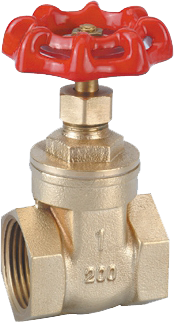
T-22017A is a rising-stem brass gate valve with a full-bore flow path. The product specification lists sizes from 1/2-inch to 4-inch, a 200 WOG rating, a working-temperature range of -20°C to 120°C, and female NPT or BSP threaded connections. The stated construction includes a hot-forged brass body and bonnet, brass stem and disc, and PTFE/EPDM packing and sealing materials. Its operating mechanism uses a 360-degree handwheel.
For potable-water procurement, the relevant version is the lead-free brass gate valve listed as certified by IAPMO to NSF/ANSI 61 and NSF/ANSI 372. The specified pressure tests are 1.5 times the rated pressure for the shell and 1.1 times the rated pressure for the seat. These test-pressure ratios are product specification points; they are not a substitute for project-specific acceptance documentation.
The comparison with the 8081 is about duty, not a general winner. T-22017A is documented as a rising-stem gate valve with a brass-to-brass metal seat, and the product information positions it for infrequent shut-off duty. The 8081 is a quarter-turn ball valve. Where the project needs frequent quick operation, the ball-valve operating style may be the more relevant criterion; where the specified component is a gate valve, T-22017A provides the corresponding construction. Neither model should be selected solely by comparing pressure figures.
15111: connect pipe systems without treating fittings as one part
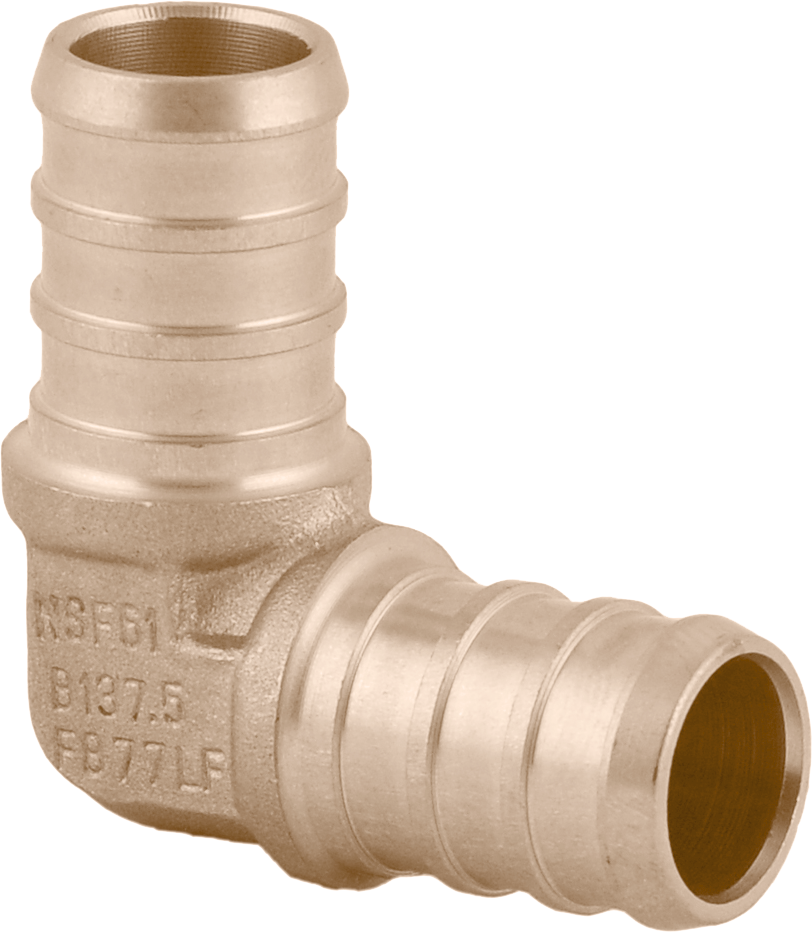
The 15111 brass fitting family covers adapters, couplings, nipples, elbows, tees, unions, caps, and plugs. Its listed size range is 1/4-inch to 2-inch, with male or female NPT or BSP thread options. Connection styles include threaded, sweat, PEX, PEX-A, press, and push-fit, and the family is listed for up to 600 WOG and -20°C to 150°C. A dezincification-resistant option is available, and the product information describes lead-free compliance for potable-water use.
This range is relevant when a project needs different joining methods across branches or transitions. It can support selection across threaded and soldered connections as well as PEX-related, press, and push-fit systems. However, connection standards are not interchangeable. Buyers should identify the specific fitting type, thread, size, and joining method on the schedule; the family name alone does not establish compatibility with a particular pipe or installation standard.
The potable-water claim should also be tied to the exact material and documentation. The product information identifies NSF/ANSI 372-compliant lead-free brass. It does not justify assuming that every 15111 configuration carries identical certification coverage. Confirm the applicable documentation for the selected fitting and market.
What the comparison means for procurement
For buyers moving from research to evaluation, the shortlist can be converted into a model-by-model review rather than a single category comparison. First, assign each item a defined system function: isolation, check-valve duty, screening, gate-valve isolation, or connection. Second, compare size, pressure, and temperature against the project schedule. Third, confirm whether the specified connection is NPT, BSP, or another listed connection option. Finally, verify potable-water documentation for the exact lead-free version being considered.
That sequence prevents a common specification error: treating a matching material description or a high pressure rating as proof that a product is suitable for every point in a drinking-water system. Certification scope, connection type, and model configuration matter alongside the rating. If a project requires a particular certification or test record, the requirement should appear in the submittal review and purchase documentation.
Buyer verification checklist
- Confirm the model and component function shown on the approved schedule.
- Match nominal size and connection type to the pipe and equipment interfaces.
- Compare each component’s own pressure and temperature range with the project conditions.
- Identify the lead-free material version and verify the applicable NSF/ANSI certification documents.
- For LD 30303, confirm swing or spring-loaded configuration and installation orientation.
- For LD.73154, confirm the screen mesh and provide access for flushing or screen replacement.
- For T-22017A, record the shell and seat test-pressure ratios in the product review where required.
- For 15111, specify the exact fitting and joining method rather than ordering by family name only.
Factory testing and evidence limits
The supplied product information explicitly states 100% factory testing for 8081, LD.73154, and 15111. It does not separately state the same testing claim for LD 30303 or T-22017A in their product specification entries. For those two models, buyers should request the applicable test procedure or records rather than assume that the statement applies across every item in the shortlist. This distinction keeps a general range-level statement from being mistaken for model-specific evidence.
For an industrial equipment and components procurement file, useful evidence is specific to the selected model and version: product specification, connection detail, material designation, applicable certification, and any required test documentation. A shortlist identifies candidates; it does not replace technical approval or local code review.
Project outlook: treat the shortlist as a coordinated specification set
Potable-water projects often combine valves and fittings with different jobs and joining methods. The five models in this shortlist provide a way to structure evaluation around those differences: 8081 for full-port ball-valve shut-off, LD 30303 for check-valve service, LD.73154 for a serviceable Y-strainer, T-22017A for rising-stem gate-valve isolation, and 15111 for connection and transition needs. The practical next step in a technical review is to map each model to a line item and verify the exact version against project requirements.
The limits are as important as the match. The listed ratings are not identical, certifications are stated for particular lead-free versions, and the fitting family contains multiple connection types that require selection. A model should be shortlisted only when its documented configuration meets the relevant project conditions.
FAQ
Which LONGDA BRASS VALVE model is listed for full-port potable-water shut-off?
The 8081 is a 2-piece full-port brass ball valve listed in sizes from 1/2-inch to 4-inch, rated at 600 WOG. Its lead-free version is listed with cUPC, NSF/ANSI 61, and NSF/ANSI 372 certification.
What is the difference between LD 30303 and LD.73154?
LD 30303 is a check valve available in swing or spring-loaded versions. LD.73154 is a Y strainer with an SS304 screen and blow-down drain plug. They perform different system functions and are not substitutes for one another.
What should buyers verify for potable-water certification?
Verify the exact lead-free material version, model, connection, and applicable certification documents for the intended market. The product entries identify certification for specified versions; they do not establish identical coverage for every configuration.
Which connections are available in the 15111 fitting family?
The 15111 family lists threaded, sweat, PEX, PEX-A, press, and push-fit connections, with NPT or BSP thread options. Buyers should specify the exact fitting style, size, and joining method required.
Does the supplied information confirm 100% factory testing for all five products?
The product entries explicitly state 100% factory testing for 8081, LD.73154, and 15111. The supplied specifications do not separately make that statement for LD 30303 or T-22017A, so model-specific test documentation should be confirmed for those items.
Есть вопросы или нужны дополнительные детали?
Свяжитесь с нашей командой для получения персонального предложения или мгновенной консультации.
Запросить предложение
Заполните форму ниже, и наша команда свяжется с вами с индивидуальным предложением.
Прямой чат WhatsApp
Предпочитаете общаться в реальном времени? Напишите нам в WhatsApp для мгновенной помощи и быстрых ответов.
- Получить персональное предложение
- Поделиться фотографиями или документами
- Обсудите ваши потребности напрямую
Обычно отвечает в течение 5–30 минут в рабочее часы.