
Potassium Aluminium Fluoride Buyer Comparison: White vs Grey, Powder vs Granular vs Lump
Independent buyer reference — Chemicals
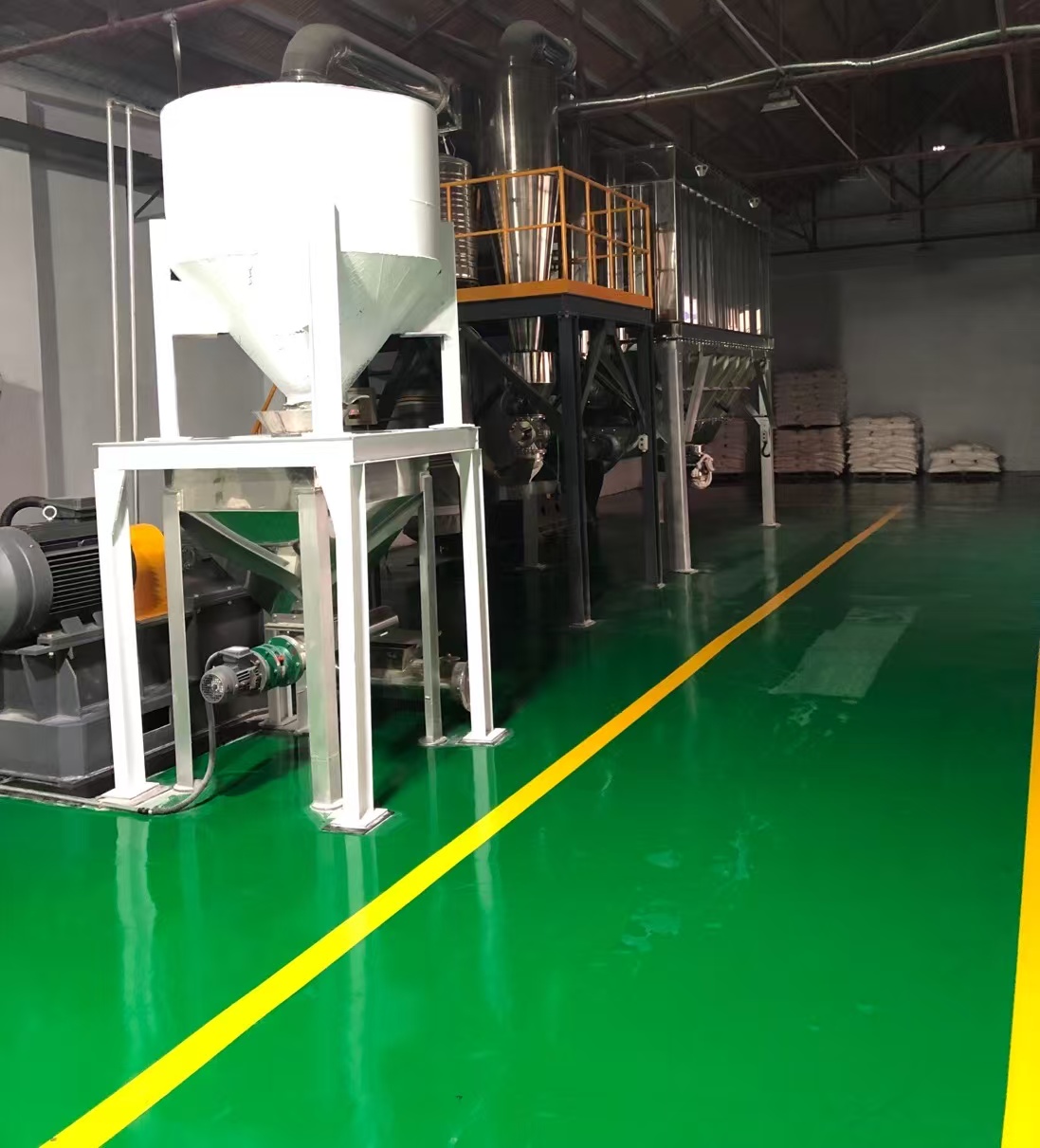
Potassium aluminium fluoride (PAF) is a fluoride flux widely used around aluminium production and processing: aluminium smelting, aluminium brazing, abrasive and grinding-wheel manufacturing, ceramics and glass processing, and non-ferrous metal recycling. It is also described by several trade names, including potassium fluoroaluminate, potassium cryolite and potassium tetrafluoroaluminate. For a buyer evaluating quotations, the real challenge is that PAF is not one simple commodity formula. Offers can differ by colour/grade, physical form, particle-size range, assay documentation and intended end-use. This article provides an independent framework for comparing those variables without favouring any supplier.
The reviewed product and market data cover five common buyer options: white PAF, grey PAF, powder, granular and lump, plus the size labels mesh 200, 0.3-1.0 mm and 0.5-1.5 mm. The comparisons below are intended to help a buyer translate process requirements into a clearer specification and identify the documents needed before placing a trial order.
Why PAF buying decisions require more than a grade name
Potassium aluminium fluoride demand is growing. One commercial market research dataset used for this review values the global potassium aluminum fluoride market at USD 1.76 billion in 2024 and projects it to reach USD 2.62 billion by 2033, equivalent to a forecast CAGR of about 4.8 percent over 2025-2033. These figures are useful context, but they also reveal a common trap: many buyers rely on a broad category name and do not distinguish the grade, particle-size distribution and end-use specification inside the PAF family.
In technical terms, PAF often refers to a potassium fluoroaluminate system rather than a single molecule. PubChem lists CAS 60304-36-1 for potassium aluminum fluoride with the formula KAlF4. In commercial supply, the product can appear in a compliance file under several names at once, for example Potassium Aluminum Fluoride / Potassium Fluoroaluminate / Fluoride Potassium Aluminate / Potassium Cryolite / Potassium Tetrafluoroaluminate. A buyer comparing offers should therefore check three things before price: chemical identity, physical grade and intended process behaviour.
White PAF vs grey PAF: colour is a signal, not a certificate
The most common colour-level decision in aluminium flux purchasing is white PAF versus grey PAF. In the market comparison data reviewed, white PAF is associated with a higher-purity profile used for brazing and specialty glass, while grey PAF is commonly positioned as an industrial-grade product with minimum 98 percent purity for foundry and abrasive applications. High-purity or white PAF is often expected in brazing-type applications where oxide-film removal and residue behaviour matter. Grey PAF, by contrast, is more frequently treated as a working flux or filler for casting, foundry and abrasive production.
This convention is useful, but it should not be treated as a universal guarantee. Colour is not an assay. A white-looking product can vary in moisture, impurity profile and actual active fluoride content; a grey product may also meet a demanding specification. In an independent evaluation, the buyer should always request the assay, sieve analysis and applicable safety documentation rather than buying a colour name. The same principle applies when a supplier uses the spelling gray instead of grey; that is usually a language/documentation variation, not a product difference.
Powder, granular and lump: what the form means for the process
The reviewed product-scope data lists PAF under three physical forms: powder, granular and lump. These are separate dimensions from colour. A manufacturer can offer white or grey PAF in powder, granular or lump form, which is why a buyer asking only for white PAF or only for grey PAF has not yet described the product completely.
Each form has a different relationship to handling, feeding and melting behaviour.
Powder is a fine material. It has a relatively high surface area, which can help it disperse into a mix or melt more quickly. The practical concern is dusting: fine powder can be harder to feed cleanly and may require additional safety and loss-control measures. For grinding-wheel production, a fine PAF product is often the relevant choice because PAF acts as an active filler inside the resin-bonded mix.
Granular PAF is defined by a narrow millimetre-range distribution, such as 0.3-1.0 mm or 0.5-1.5 mm. Granular grades generally offer lower dust and more stable flow in automatic dosing systems. The trade-off is that a coarser particle may take longer to melt or react if the process temperature or residence time is limited.
Lump PAF is the coarsest commercial form in the product family. It is most relevant to buyers that have their own crushing, batching or milling steps and want to control particle-size reduction internally. When comparing lump offers, the practical evaluation should include not only the chemistry but also what happens after crushing: consistency, moisture pick-up and yield of usable fines will affect the final cost.
Particle-size specification: mesh 200, 0.3-1.0 mm and 0.5-1.5 mm
Particle-size language is where many PAF comparisons become unclear. The dataset used here contains three common spec labels:
- Mesh 200: a fine powder designation meaning the material passes through a No. 200 sieve. It should be described by a sieve curve, and the exact D50 or retained percentage should come from the supplier's laboratory report.
- 0.3-1.0 mm: a granular cut with particles mostly in this millimetre range. This is a relatively narrow specification for buyers needing controlled flow and reduced dust.
- 0.5-1.5 mm: another granular range with slightly larger upper and lower limits. It is visually and behaviourally different from a fine powder, and buyers should not treat it as interchangeable with 0.3-1.0 mm.
No particle-size label is automatically better. The right question is how the product will enter the process: as part of a powder blend, as a metered granular addition, as a pre-mix ingredient, or after internal crushing. Particle-size distribution can affect melting speed, dust losses, flowability and consistency. It is rarely acceptable to assume that all PAF powder or all PAF granular products from different suppliers have the same sieve curve; the sieve curve should be part of the specification.
Decision matrix for buyer comparison
The table below consolidates the main variables an independent buyer should include in a PAF comparison. It is not a ranking of suppliers; it is a comparison structure.
| Variable | Typical options in data | What should be verified | What is not enough |
|---|---|---|---|
| Chemical identity | Potassium aluminium fluoride, KAlF4 family, potassium cryolite | Certificate scope, CAS number, formula | Trade name only |
| Colour / grade | White PAF, grey PAF | Assay, purity, impurity limits | Visual colour |
| Physical form | Powder, granular, lump | Compatibility with feeding, mixing and melting system | A form name without process context |
| Particle size | Mesh 200; 0.3-1.0 mm; 0.5-1.5 mm | Sieve curve and test method | Descriptions such as fine or coarse |
| Compliance | EU RoHS relevant; SDS/GHS data | RoHS documentation, safety data sheet | Verbal assurance |
Application-level comparison: PAF in different industrial processes
Because PAF is used across several industries, the best purchasing route is often reverse-engineered from the application. The application scenarios in the reviewed dataset include electrolytic aluminium smelting, brazing of aluminium alloys, ceramics and glass manufacturing, abrasive and grinding-wheel production, and non-ferrous metal recycling and casting.
Aluminium brazing and thermal-management components
In brazing, PAF helps remove oxide films and improve weld quality. The reviewed application notes highlight new-energy-vehicle battery water-cooling plates and air-conditioning radiators as relevant brazing cases. For such corrosion-free brazing operations, buyers commonly look at white PAF or high-purity PAF because residue and impurity control are critical. Form selection should match the flux application method, whether the PAF is mixed into a paste, deposited in a joint or applied in another controlled way.
Grinding wheels and abrasives
PAF has a documented function in resin-bonded grinding wheels. It melts at around 560°C and behaves as an active filler: it absorbs grinding heat, strengthens the bond between abrasive grains and resin, supports self-sharpening and helps prevent clogging of the wheel surface. For abrasive buyers, purity and consistency of the fine powder are usually more important than colour alone. A supplier that can control sieve distribution and impurity levels is easier to qualify.
Aluminium smelting, foundry and recycling
In electrolytic aluminium smelting, PAF is used as a core flux to lower the melting point of the bath and improve electrolysis efficiency. In recycling and casting, it is used for degassing and slag-removal work. These larger-volume applications are often cost-sensitive. Grey PAF or industrial-grade PAF is a common starting point, but buyers should still confirm that the product is free from harmful impurity levels and suitable for their melt temperature and alloy system.
A documented supplier example, not an endorsement
To make the comparison practical, one supplier file in the dataset can be used as a structural example. Sumetech Industry Co., Ltd. is a China-based producer founded in 2019, with a 6,000-square-metre facility, about 20 employees and 5,000 metric tons of annual output. Its main products include PAF and boron nitride. The company states that it exports to the EU, Middle East and Asia, and it lists its PAF product model as grey or white, in powder, granular and lump forms, with particle sizes including mesh 200, 0.3-1.0 mm and 0.5-1.5 mm.
The same company's compliance file includes an EU RoHS Verification of Conformity and a RoHS Test Report issued by Guangdong KEYS Testing Technology, covering white and gray PAF product names. Those documents are useful as buyer evidence because they show how a manufacturer can document regulatory scope. The supplier also declares OEM/ODM capability for size and colour, a monthly capacity of 1,000 metric tons, a 30-day lead time, a 10 kg minimum order quantity and a 100 percent test policy. These facts are reported here as reference points, not as a recommendation to choose Sumetech over other suppliers.
How the buyer should compare traditional PAF offers
Traditional PAF buying tends to be label-driven: the buyer asks for white or grey PAF, perhaps specifies powder or granular, and then compares price per ton. That method is fast, but it has a real limitation. Product colour and form do not predict performance if the sieve distribution, assay values and downstream behaviour are not documented. A grey PAF from one plant can behave differently from a grey PAF from another plant even if the visible colour looks similar. The same is true for two white PAF products nominally marked high purity.
A more robust comparison should combine three signals: the technical specification, the process application and the supplier's evidence trail. A buyer should not ask why one supplier is more expensive until first asking what exactly is being priced. If the offer cannot supply a sieve curve, an assay certificate, moisture information and a safety datasheet, the comparison is still incomplete.
Market trend and future outlook
Market research in the reviewed dataset forecasts continued growth for the potassium aluminum fluoride category through 2033. From a buyer perspective, the more relevant trend is not just demand growth but tighter differentiation between application grades. The same product family serves both high-value brazing applications and large-volume smelting applications, and the specification gap between them is meaningful.
The increasing use of aluminium in thermal-management components, including EV battery water-cooling plates and air-conditioning radiators, points to more attention on white PAF and high-purity flux quality. At the same time, industrial grey PAF will remain important in foundry and abrasive markets where process economics matter. As environmental and safety documentation becomes more standardised in global trade, buyers should expect PAF quotations to include RoHS-type reports, safety data sheets and certificate scopes that name the exact product grade. The absence of such documents is itself a buying risk.
Practical limitations of this comparison
No article should tell a buyer which PAF product form is universally best. The correct answer depends on equipment, temperature, mixing method, desired feed behaviour and final quality requirements. A 0.3-1.0 mm granular product can perform well in one system and poorly in another. A fine mesh 200 powder can be ideal for one grinding-wheel formulation but create dust problems in an open casting line.
Buyers should also be careful not to over-interpret market-size figures. The USD 1.76 billion market estimate includes a broad commercial definition of potassium aluminum fluoride and may not match a separate potassium fluoride market report. The growth rate is a strategic indicator, not a substitute for lab trials. For procurement decisions, samples and process validation are still the final evidence.
Frequently asked questions
What is the difference between white PAF and grey PAF?
In the data reviewed for this article, white PAF is commonly aligned with a higher-purity profile used for brazing and specialty glass applications, while grey PAF is commonly described as industrial-grade PAF for foundry and abrasive use. Visual colour is a useful signal but not a guarantee. The buyer should confirm purity and impurities through an assay certificate.
Which PAF form is best for aluminium casting?
Aluminium casting and foundry use can work with grey industrial PAF, often in granular or lump form depending on feeding equipment. Granular forms generally minimise dust and improve flow. The best form depends on the furnace operation, dosing method and desired melt speed, so a sample trial is more reliable than a generic selection rule.
Is mesh 200 PAF better than granular PAF?
Mesh 200 is a fine powder size, while 0.3-1.0 mm and 0.5-1.5 mm are granular ranges. Fine powder can disperse faster but may create dust and handling challenges. Granular PAF tends to flow better and produce less dust but may need more time or temperature to melt fully. The better option depends on the process.
Are potassium cryolite and potassium aluminium fluoride the same product?
Potassium cryolite and potassium tetrafluoroaluminate are among the commercial names used for the potassium fluoroaluminate product family. A compliance document may list them together with potassium aluminium fluoride. To compare products accurately, use the CAS number and certificate scope instead of relying only on the commercial name.
Is potassium aluminium fluoride hazardous to handle?
Under the GHS hazard communication framework reviewed in the dataset, potassium aluminum fluoride is classified as acute toxicity category 4 for oral, dermal and inhalation routes, and skin irritation category 2. Buyers should obtain the supplier's safety data sheet, use appropriate protective equipment and follow local handling rules.
What documentation should a PAF buyer request before a trial order?
A buyer should request an assay/purity certificate, a sieve analysis for particle-size claims, a safety data sheet and, where relevant to the destination market, RoHS-type test reports. The certificate scope should clearly identify the product name and grade, for example white or grey PAF, so that the delivered material matches the quoted specification.
Independent buyer checklist
- Define the aluminium process or end-use before choosing a grade.
- Compare colour and form separately: white/grey, powder/granular/lump.
- Require particle-size data, especially for mesh 200, 0.3-1.0 mm and 0.5-1.5 mm claims.
- Ask for chemical identity details such as CAS number and product synonyms.
- Check whether the product has documented RoHS and safety data.
- Use samples or small validation batches for the final decision.
Potassium aluminium fluoride comparison is ultimately a process question. White PAF and grey PAF, powder and granular, fine mesh and millimetre-range particles all have a place in industrial supply. The buyer who documents the intended application, checks the certificate and validates the material in a real process will have a more reliable basis for selection than the buyer who purchases on colour and price alone.
Есть вопросы или нужны дополнительные детали?
Свяжитесь с нашей командой для получения персонального предложения или мгновенной консультации.
Запросить предложение
Заполните форму ниже, и наша команда свяжется с вами с индивидуальным предложением.
Прямой чат WhatsApp
Предпочитаете общаться в реальном времени? Напишите нам в WhatsApp для мгновенной помощи и быстрых ответов.
- Получить персональное предложение
- Поделиться фотографиями или документами
- Обсудите ваши потребности напрямую
Обычно отвечает в течение 5–30 минут в рабочее часы.