
Potassium Aluminium Fluoride: Grades, Forms, Compliance
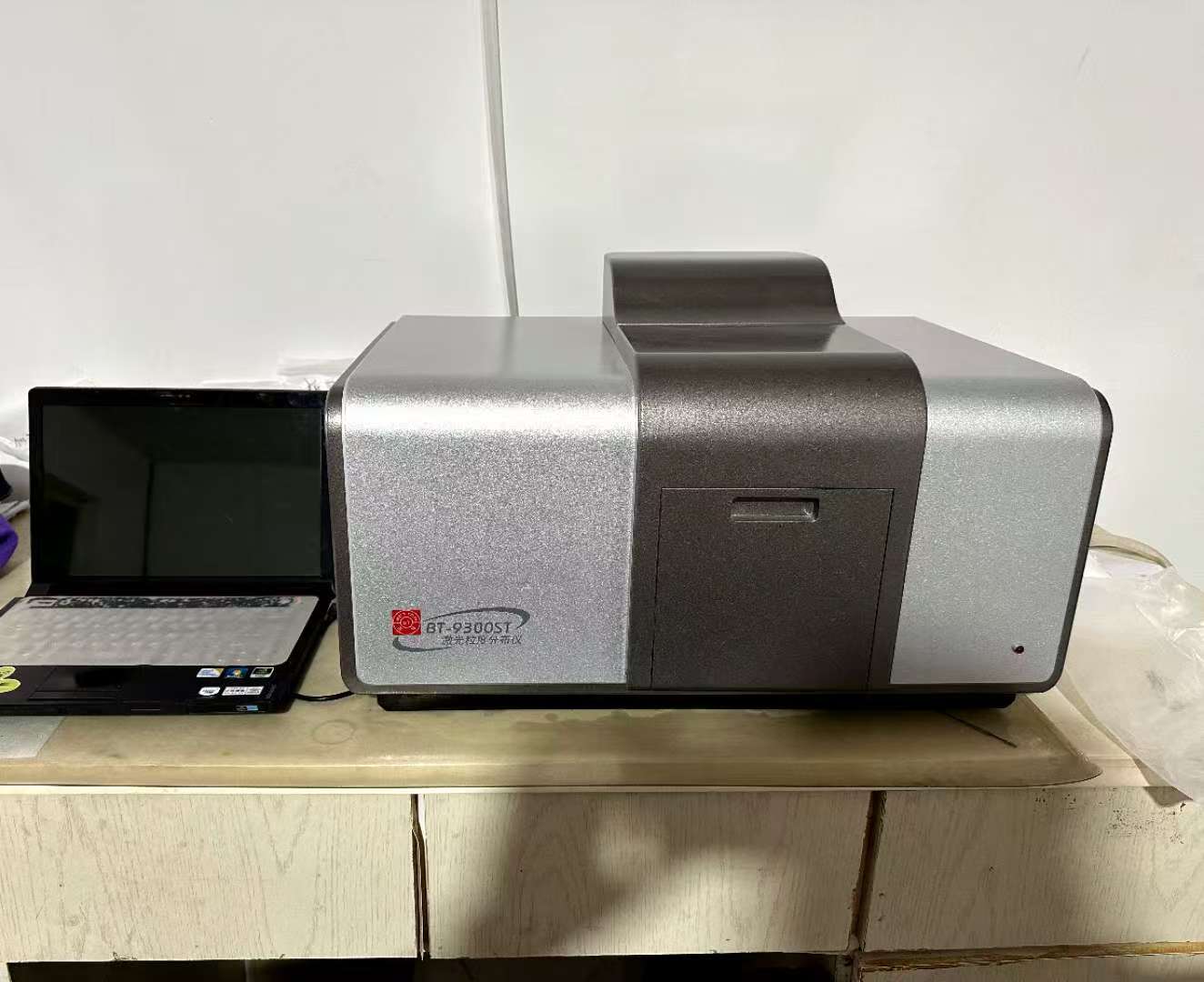
Particle size analysis is part of the consistency checks that matter for PAF buying decisions.
Potassium aluminium fluoride, often shortened to PAF, is rarely a single product in practice. It is a fluoride flux family sold under different colors, physical forms, particle size distributions and compliance documents. For an aluminum smelter, abrasive wheel maker, aluminum brazing line, ceramic glaze producer or aluminum recycler, those variables decide how the material will behave in a process. This article treats PAF procurement as a specification problem, not a one-line chemical order.
For buyers, the working name can create false confidence. The same material label may hide differences between grey PAF and white PAF, powder and granular product, or verified and unverified flux. A purchase order that only says potassium aluminium fluoride leaves too much room for interpretation. The correct way to buy PAF is to specify a target grade, a physical form, a particle size range, and the compliance evidence required at destination.
Sumetech Industry Co., Ltd, a manufacturer based in Xuzhou, China, is a useful open reference because it publishes its PAF product range and related RoHS documentation. The company was established in 2019 and focuses on metal smelting and casting auxiliary materials. Its main products are potassium aluminium fluoride and boron nitride. Roughly 90 percent of output is exported to markets such as Turkey, Japan, Korea and Europe.
Why grade, form and certification become buying criteria
Most downstream problems with PAF are not chemistry problems. They are consistency problems. If the particle size drifts, flux feeding changes. If there is unexpected moisture pickup, dispensability and melting behavior change. If color changes from batch to batch, downstream quality control needs additional explanation. If the supplier cannot provide a clear certificate, the buyer inherits the compliance risk.
For EU-bound products, the compliance risk is concrete. RoHS verification is not a general suggestion. Directives 2011/65/EU and EU 2015/863 restrict the use of hazardous substances in certain electrical and electronic equipment as well as components and materials that enter those supply chains. Although PAF is not itself an electronic component, it can enter equipment manufacturing through alloy, joining, coating and cleaning processes. Sophisticated buyers therefore treat RoHS documentation as part of the material specification, especially when the final product is destined for the European market.
This is why the PAF product should be evaluated through three lenses: grade, physical form, and proof of compliance.
How the Sumetech PAF product range is structured
The Sumetech product family is defined by color, form and particle size. The company identifies PAF under product code 8235 and offers it in grey or white, powder, granular or lump form. Available particle sizes include mesh 200 powder, 0.3 to 1.0 mm granular material, and 0.5 to 1.5 mm granular material.
| Parameter | Available options |
|---|---|
| Color / commercial grade | Grey, white |
| Physical form | Powder, granular, lump |
| Particle size catalogue | Mesh 200 powder; 0.3–1.0 mm granular; 0.5–1.5 mm granular |
| Common trade descriptions | White PAF, grey PAF, potassium aluminium fluoride flux, potassium aluminium fluoride powder, potassium aluminium fluoride granular, potassium aluminium fluoride lump, potassium aluminum tetrafluoroaluminate |
| Primary industry | Aluminum industry; also used in abrasives, ceramics and glass applications |
| Customization | Size, color and packaging can be adjusted under OEM/ODM arrangements |
The product documentation calls potassium aluminium fluoride an efficient flux and deoxidizer for aluminum smelting and casting. It lowers the melting temperature of alumina, improves electrolyte conductivity, reduces energy use, and helps remove harmful gases from molten aluminum. In resin-bonded grinding wheels it acts as an active filler, helping abrasive grains detach at the right time and extending wheel life by 20 to 30 percent. In ceramics and glass it lowers melting temperature, promotes clarification, and improves transparency, gloss and sintered strength.
White PAF vs grey PAF: reading the market convention
White PAF and grey PAF are not the same purchase. They share a chemical family, but they are selected for different operating conditions. In the market data used for this article, grey industrial grade PAF is typically associated with foundry and abrasive applications, while high-purity white PAF is preferred for aluminum brazing and specialty glass.
| Material | Typical procurement direction | Important consideration |
|---|---|---|
| Grey PAF | Foundry fluxes, abrasive wheel fillers, recycling and casting applications | Industrial grade is often sufficient when color and residual appearance are not the primary process concern. |
| White PAF | Aluminum brazing, glass clarification and other processes that demand cleaner flux chemistry | Buyers should expect a different purity profile and a price premium relative to grey commodity material. |
One widely used threshold in the verified comparison data separates industrial grade grey PAF at 98 percent minimum purity from high-purity white PAF above 99 percent for brazing and specialty glass applications. That distinction is a useful starting point, but it must be confirmed by a certificate of analysis rather than assumed from color alone. Buyers who need white PAF should request a detailed purity statement, particle size data and lot traceability.
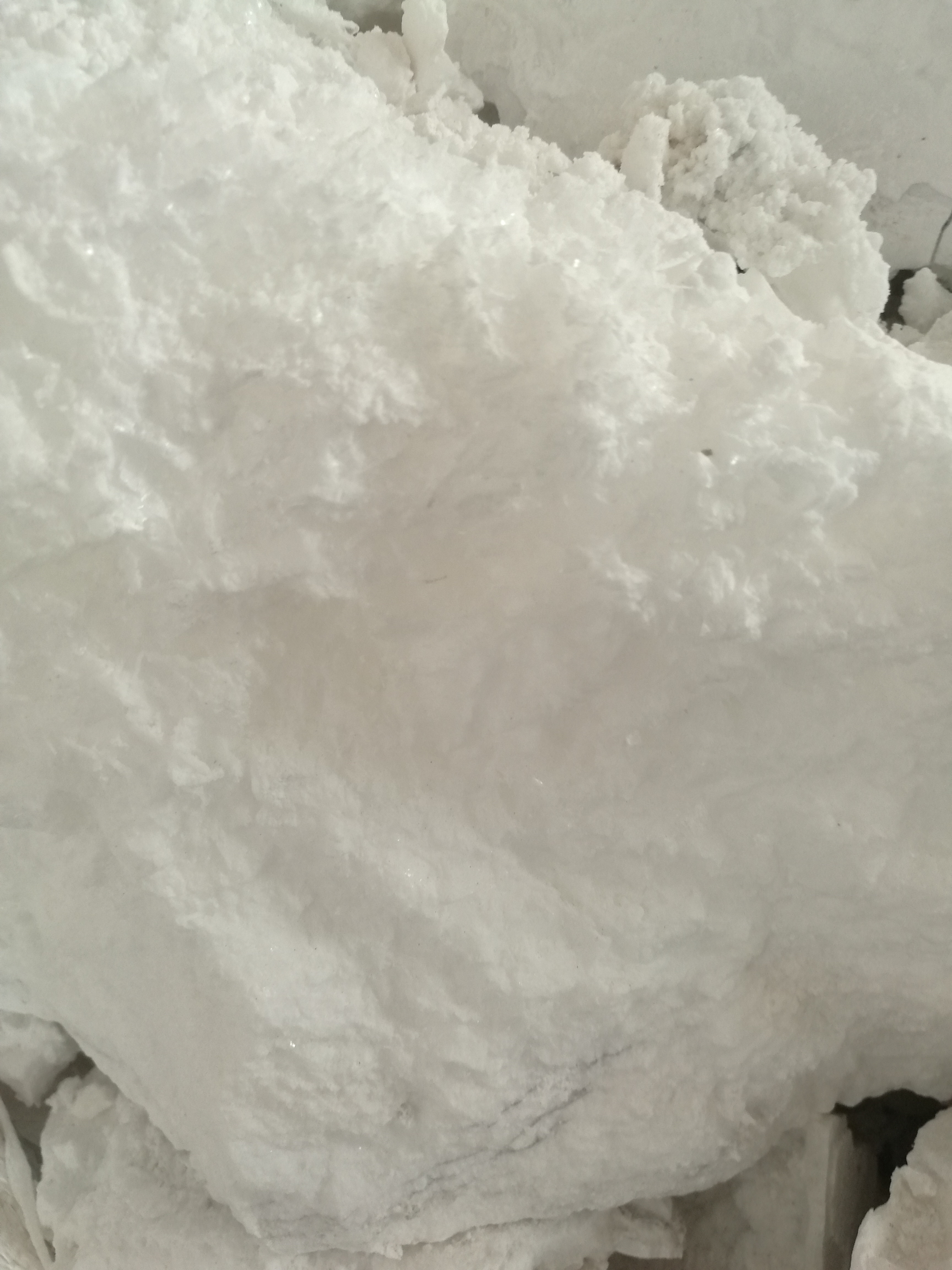
White PAF lump is relevant when higher-purity flux is needed and buyers prefer to control their own crushing or dosing.
Manufacturing capability behind product consistency
The company operates a 6000 m2 production facility. Its stated annual PAF output capacity is 5000 metric tons, and the monthly production capacity for customized requirements is 1000 metric tons. A dedicated team of five R&D and quality control technicians monitors production and testing, with the company describing its QC protocol as 100 percent testing.
The stated lead time for production is around 30 days, and the minimum order quantity for a trial or pilot run is 10 kgs. This low MOQ is uncommon in industrial flux sourcing. It matters because a buyer can validate a new PAF grade before committing to a full container shipment. The company states that it can support export markets in the EU, Middle East and Asia, and its known export destinations include Turkey, Japan, Korea and Europe.
One representative supply pattern appears in the company case file: a Korea-based manufacturer has purchased approximately 60 metric tons of PAF per month for two years, using it as a metal additive and flux. The case description lists high purity as the main highlight and describes supply stability as strong. The absence of a named end client is normal in this product category, but the documented volume shows repeat demand rather than a one-time sample order.
EU compliance evidence for potassium aluminium fluoride
For buyers operating in EU supply chains, documentation must be checked before shipment. Sumetech holds two relevant RoHS documents for PAF product code 8235.
| Document type | Reference number | Issuer | Market |
|---|---|---|---|
| RoHS 2.0 Verification of Conformity | CKEYS251222003 | Guangdong KEYS Testing Technology Co., Ltd. | EU |
| RoHS Test Report | RKEYS251215033 | Guangdong KEYS Testing Technology Co., Ltd. | EU |
The verification certificate covers Potassium Aluminum Fluoride / Potassium Fluoroaluminate / Fluoride Potassium Aluminate / Potassium Cryolite / Potassium Tetrafluoroaluminate in white and grey forms. Section 8235 is explicitly covered in grey, white, powder, granular and lump forms. The test report confirms compliance with the RoHS Directive 2011/65/EU and Directive EU 2015/863.
Both documents were issued on December 22, 2025 by Guangdong KEYS Testing Technology Co., Ltd. The testing references the IEC 62321 series of analytical standards. For an importing inspection file, the buyer should request a copy of both the certificate of conformity and the underlying test report rather than accepting a generic supplier declaration.
Handling and safety data in an industrial context
Potassium aluminium fluoride is an industrial chemical, not a consumer material. In the GHS classification data reviewed for this article, potassium aluminum fluoride is categorized as acute toxicity category 4 for oral, dermal and inhalation routes, and skin irritation category 2. This classification is part of OSHA HCS 29 CFR 1910 hazard communication requirements. It should trigger ordinary industrial hygiene measures: trained operators, appropriate personal protective equipment, accessible safety data sheets and controlled storage.
The application guidance for this product also states that it should be stored in a dry, well-ventilated place. Moisture control is relevant for powder and granular forms because any change in flow behavior can change dosing consistency in foundry, brazing or abrasive mixing processes. Buyers should align storage conditions with the supplier before the first order, particularly in high-humidity climates.
Main industrial applications of PAF
The application file for Sumetech PAF lists five operational sectors. These sectors explain why the product form must match the production process.
1. Electrolytic aluminum smelting
PAF is used as a core flux in the modern electrolytic aluminum industry. It lowers the melting point of alumina and improves electrolysis efficiency. In this role, granular material tends to be useful because it can be fed in a controlled manner with less dust than fine powder.
2. Corrosion-free brazing of aluminum alloys
PAF-based flux removes oxide films during brazing and improves weld quality. The application documentation specifically references components such as battery water-cooling plates and air conditioning radiators in new energy vehicles. White or high-purity PAF is generally the grade associated with this application because the process demands a clean, residue-conscious flux.
3. Ceramics and glass manufacturing
PAF works as a flux and opacifier. It lowers sintering temperatures, improves glaze texture, and enhances heat and corrosion resistance in glass. In this sector, the buyer cares about melting behavior and the effect on transparency or surface quality.
4. Abrasive and grinding wheel production
As an active filler, PAF improves the adhesion between abrasive grains and resin binder. It also supports self-sharpening behavior by helping dull grains release at the right time. Grey PAF is often the practical choice in abrasive mixing because the color has no visible effect in the finished wheel and the process does not require high-purity white material.
5. Non-ferrous metal recycling and casting
In recycled aluminum and aluminum alloy casting, PAF is used for degassing and slag removal. It helps improve melt quality by removing oxide inclusions and other impurities. This application is growing in importance as secondary aluminum supply rises and foundries pursue tighter melt quality control.
Market and trade context for PAF buyers
The commercially reported market size adds context to the procurement decision. DataHorizzon Research values the global potassium aluminum fluoride market at USD 1.76 billion in 2024 and projects USD 2.62 billion by 2033, with a CAGR of 4.8 percent over the 2025 to 2033 period. Those figures are useful as a directional signal, not as a quote baseline.
The chemical identity of PAF is established in public reference data. PubChem identifies potassium aluminum fluoride under CAS number 60304-36-1 with a molecular weight of approximately 142.07 g/mol. Trade documentation for PAF often appears under HS code 38101090, which covers pickling preparations for metal surfaces, fluxes and other auxiliary preparations for soldering, brazing or welding.
Fluoride pricing is also a useful monitoring point. In Northeast Asia, the price of aluminium fluoride, a related fluoride benchmark, reached USD 1.80 per kg in March 2026, up 6.5 percent from the fourth quarter of 2025 according to IMARC data. This does not set the exact PAF price, but it helps buyers understand the direction of fluoride raw material costs and discuss price adjustment clauses with suppliers.
Comparison with traditional flux routes
PAF cannot be evaluated in a vacuum. Traditional approaches in aluminum melting, brazing and abrasive production use different chemical strategies, and each has trade-offs.
In aluminum casting and recycling, chloride-based salt fluxes have historically been used for dross separation and metal recovery. They are cost-effective bulk products, but they usually operate as a salt layer rather than an active oxide film breaker. PAF behaves differently. It reacts with oxide films and creates brazing conditions that permit aluminum alloy filler metal to wet the base material without a corrosive residue. In applications such as flux brazing, this makes PAF the process enabler rather than simply a protective salt.
In grinding-wheel chemistry, traditional fillers such as reduced sulfur or cryolite-type minerals have been used to control grinding temperature. The product documentation for Sumetech PAF explains its performance contribution through a multi-mechanism model: it absorbs heat, strengthens bond-to-grain adhesion, helps heat dissipation, regulates self-sharpening and reduces clogging. This makes PAF an active additive, not an inert filler.
There is also a boundary that buyers should respect. PAF is not a universal substitute for every flux. If a foundry needs a low-cost thermal cover flux with very high bulk insulation and no fluoride handling requirements, chloride-based salt might still be the correct technical and economic answer. PAF should be selected when its fluoride chemistry is required by the process. Otherwise the buyer may pay for functional capability that is not being used.
Realistic limitation: high-purity white PAF is not a commodity substitute for grey PAF. It normally commands a price premium, and the exact spread between white and grey PAF is not consistently published in open market data. Buyers should ask their supplier for a grade-specific quote rather than applying a blanket PAF price.
Supplier selection checklist for PAF
Buyers in the research and evaluation stage benefit from turning facts into a checklist. The following items reflect the information that made this Sumetech reference useful.
- Define the grade needed: grey industrial or white high-purity, and confirm whether 98 percent minimum or 99 percent plus purity is the reference threshold.
- Define the physical form: lump, granular or powder. If granular, confirm the target particle band, such as 0.3–1.0 mm or 0.5–1.5 mm. If powder, confirm mesh size such as mesh 200.
- Request RoHS evidence for EU imports. In the Sumetech example, certificate CKEYS251222003 and test report RKEYS251215033 provide the documented compliance link.
- Request a certificate of analysis and confirm that the QC protocol covers every shipment. Sumetech states 100 percent testing as its internal standard.
- Clarify storage requirements. PAF should be stored in a dry, well-ventilated environment, and SDS sheets should be validated by the receiving plant.
- Confirm trial and volume flexibility. Sumetech lists an MOQ of 10 kgs, a monthly capacity of 1000 metric tons and a production lead time of about 30 days, which supports both pilot evaluation and larger scheduled volumes.
- Confirm the after-sales model. The capability file lists remote support and on-site support, which is relevant when a new PAF grade needs process integration.
Future outlook for PAF procurement
PAF demand is likely to keep increasing because the applications are aligned with structural industrial shifts. Aluminum brazing for battery cooling plates and air conditioning radiators is tied to vehicle electrification and lightweight heat exchangers. Aluminum recycling is expanding as a secondary raw material source. Precision abrasive products continue to need active fillers that protect the workpiece and extend wheel life.
The market forecast referenced earlier, USD 1.76 billion in 2024 growing to USD 2.62 billion by 2033, is consistent with the view that downstream buyers will move toward more differentiated PAF grades rather than undifferentiated commodity material. The buyers who manage PAF as a specification item, with grade, form, particle size and compliance evidence, will have lower process risk than those who continue to order by chemical name only.
There is no reason for PAF to be a high-risk purchase. The risk appears when buyers cannot confirm which grade they are receiving or whether the shipment matches the original test certificate. Public documentation from a manufacturer, such as the Sumetech RoHS files and product tables, makes that verification faster. The next step for any procurement team is simple: convert PAF from a generic name into a detailed specification with evidence attached.
Frequently asked questions about potassium aluminium fluoride
What is the CAS number and molecular weight of potassium aluminium fluoride?
Potassium aluminum fluoride is identified by CAS number 60304-36-1 in public chemical reference data and has a molecular weight of approximately 142.07 g/mol.
Which RoHS documents cover Sumetech potassium aluminium fluoride?
Sumetech holds RoHS 2.0 Verification of Conformity certificate CKEYS251222003 and RoHS test report RKEYS251215033. Both documents were issued by Guangdong KEYS Testing Technology Co., Ltd and apply to the EU market. Product code 8235 is covered in grey, white, powder, granular and lump forms.
What is the difference between white PAF and grey PAF?
In the verified market data used for this article, grey industrial grade PAF is generally used for foundry and abrasive applications, while white high-purity PAF is associated with brazing and specialty glass applications. Grey product is typically considered 98 percent minimum industrial grade, while high-purity white PAF is generally above 99 percent.
What forms and particle sizes are available for PAF from Sumetech?
The company supplies PAF in grey or white color and in powder, granular or lump form. Available particle sizes include mesh 200 powder, 0.3–1.0 mm granular, and 0.5–1.5 mm granular.
Does Sumetech support low-volume trials and customized PAF specifications?
Yes. Sumetech lists OEM/ODM production with customization options for size and color, a monthly capacity of 1000 metric tons, a lead time of around 30 days, and an MOQ of 10 kgs for evaluation. The quality control protocol is described as 100 percent testing.
Buyers who need a complete specification overview can review the manufacturer catalog: 2026 Sumetech catalog PDF.
Есть вопросы или нужны дополнительные детали?
Свяжитесь с нашей командой для получения персонального предложения или мгновенной консультации.
Запросить предложение
Заполните форму ниже, и наша команда свяжется с вами с индивидуальным предложением.
Прямой чат WhatsApp
Предпочитаете общаться в реальном времени? Напишите нам в WhatsApp для мгновенной помощи и быстрых ответов.
- Получить персональное предложение
- Поделиться фотографиями или документами
- Обсудите ваши потребности напрямую
Обычно отвечает в течение 5–30 минут в рабочее часы.