
Pre-Insulated Pipe in Equipment Projects: Fit and Acceptance
Industrial Equipment & Components · Buyer Decision Reference
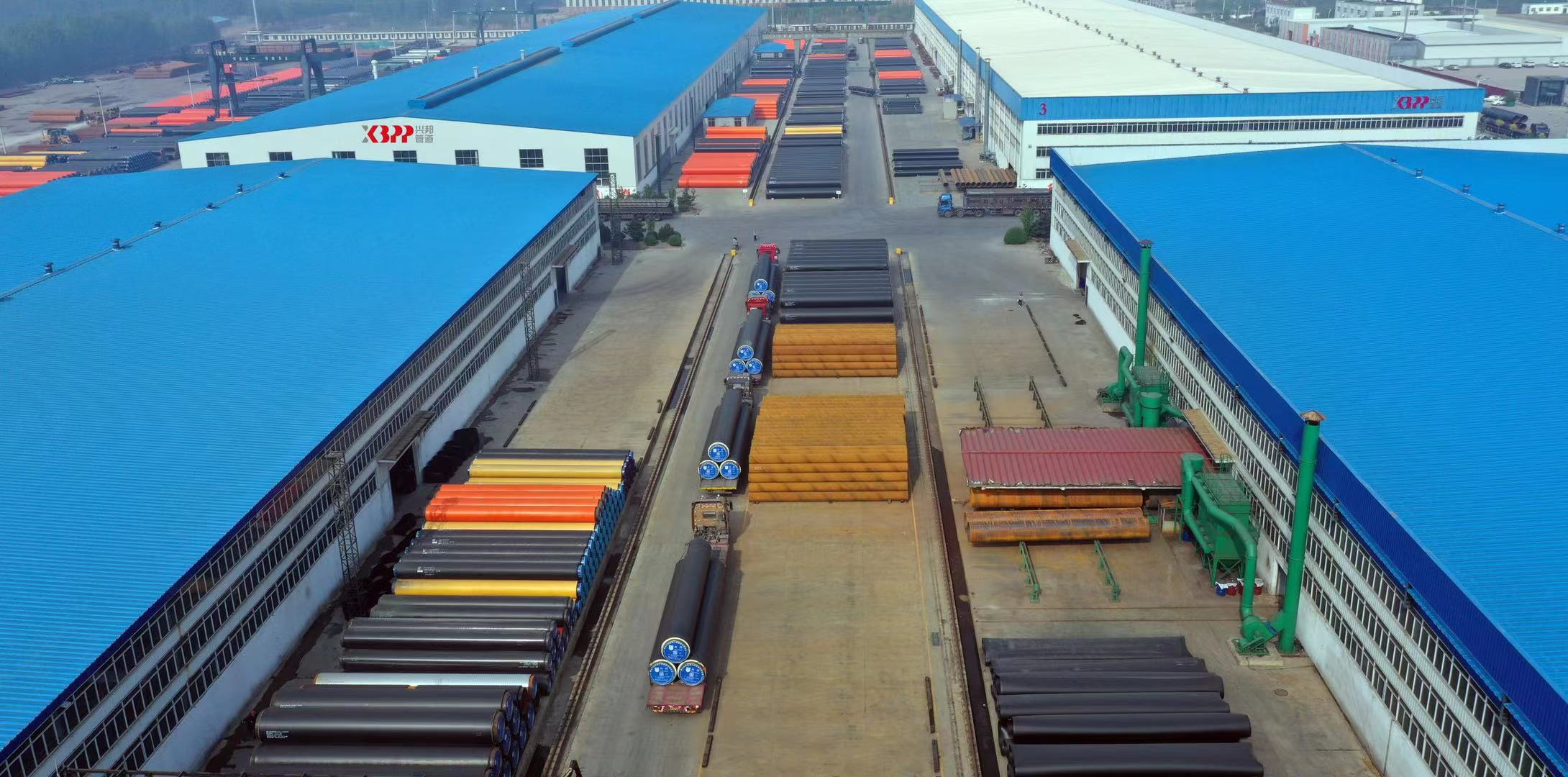
An aerial view of the Xingbang production site in Yutian Economic Development Zone, Hebei — factory capacity and documentation, not brochure claims, determine whether a pre-insulated pipe order passes acceptance.
The decision is about the interface, not the insulation
An industrial equipment project rarely fails on insulation performance in the abstract. It fails at the interface — the short, awkward stretch of pipe between a boiler, chiller, skid or pump set and the buried distribution network that the pre-insulated pipe was designed to serve. That interface is where scope splits, where temperature envelopes are exceeded, and where acceptance criteria written for a pipeline get applied to a component nobody specified properly.
A pre-insulated pipe is a factory-assembled system in which the steel service pipe, the polyurethane (PU) foam insulation and the outer protective jacket are bonded into one component before delivery. For equipment projects, that definition carries the purchase consequence: the pipe stops being a material selected on site and becomes a finished component that must match the equipment it connects to, in dimensions, temperature rating, termination detail and documentation.
The practical result is that scenario fit should be assessed on four questions before price: what the line carries, where it runs, how it terminates, and who owns the transition to the equipment. Buyers who answer those four questions first usually find that the acceptance criteria write themselves; buyers who start with a unit rate usually discover the gap during site installation.
Where pre-insulated pipe fits in an industrial equipment project
Fit is not binary. The same product family moves from strong fit to conditional fit depending on media temperature, routing geometry and termination density. The table below sets out the scenarios most often encountered in equipment and component projects, and the checks that decide whether the order should proceed.
| Project scenario | Fit assessment | Confirm before ordering |
|---|---|---|
| Directly buried hot water distribution from a plant room | Strong fit — this is the core product category, and directly buried hot water pre insulated pipe is the primary product line at Xingbang. | Design supply temperature against the PU foam envelope; burial depth; jointing method; corrosion coating class. |
| Above-ground plant-room runs and long equipment headers | Conditional fit — works best on long, straight, repetitive runs rather than dense multi-bend spool pieces. | Number of bends and offsets; jacket exposure; support spacing; how field-cut lengths are sealed. |
| Chilled water and district cooling laterals | Fit, with a moisture-control emphasis rather than a heat-loss emphasis. | Condensation risk at terminations; jacket continuity; joint vapour sealing. |
| Boiler and steam connections | Conditional fit — PU foam insulation for bonded pre-insulated systems is typically rated to 120 °C, so higher-temperature steam lines fall outside the standard envelope. | Actual operating temperature versus 120 °C; whether a different insulation system is required for the equipment-side leg. |
| Petroleum, chemical, LNG, gas and water conveyance | Fit where media and corrosion requirements are defined — Xingbang supplies insulation and anti-corrosion systems into these fields. | Corrosion protection specification (3PE treatment is used in Xingbang systems); media compatibility; inspection regime. |
Fit assessments above are procurement judgements based on product construction and documented temperature limits, not guarantees of suitability for a specific project design.
The problem: nobody owns the equipment-side termination
In a typical equipment project, three parties meet at the same flange. The equipment vendor supplies a skid with a nozzle at a stated size and temperature. The piping contractor supplies the connection to the buried network. The pre-insulated pipe manufacturer supplies the factory-bonded run in between. Each of the three works to a different document, and none of the three documents describes the transition.
Three failure patterns recur. First, temperature mismatch: a design that assumed a generic insulated pipe is applied to a line whose peak temperature sits above what PU foam can hold, and the discrepancy only surfaces after fabrication. Second, dimensional mismatch: the equipment nozzle, the field joint and the pre-insulated pipe end are specified to different tolerances, so the joint is improvised on site where it cannot be inspected later. Third, documentation mismatch: the project acceptance file expects test records per batch, while the purchase order only asked for a certificate of conformity.
The opportunity is straightforward. Because pre-insulated pipe is manufactured before it is installed, every one of these mismatches can be closed at the purchase order stage rather than the commissioning stage — provided the order states the interface explicitly instead of leaving it to site interpretation.
What Xingbang brings to equipment-project orders
Tangshan Xingbang Pipeline Engineering Equipment Co., Ltd (Xingbang) is a Chinese manufacturer of pre-insulated and anti-corrosion pipeline systems based in Houhu Industrial Park, Yutian Economic Development Zone, Hebei Province. The company operates a 310,000 m² production site with 231 employees, including an R&D team of 30 engineers, and exports around 30% of output, with main markets in Europe, North America and the Middle East.
Two credentials are directly relevant to equipment-project procurement. Xingbang is a participant in the formulation of the Chinese national standard for directly buried insulation pipes, and a member unit of the heating Standardization Technical Committee of the Ministry of Housing and Urban-Rural Development. It is also recognised as a national green design demonstration enterprise. For a buyer writing acceptance criteria, standards participation is the more useful of the two: it indicates familiarity with how performance requirements are written down, which is precisely the skill an equipment project needs at the interface.
Product scope covers central heating, central cooling, petroleum, chemical, LNG, gas and water conservancy applications. The primary product line — directly buried hot water pre insulated pipe — is the one most frequently specified for plant-room-to-network connections in heating projects, while chilled water and industrial service lines draw on the same bonded construction with different termination and moisture-control details.
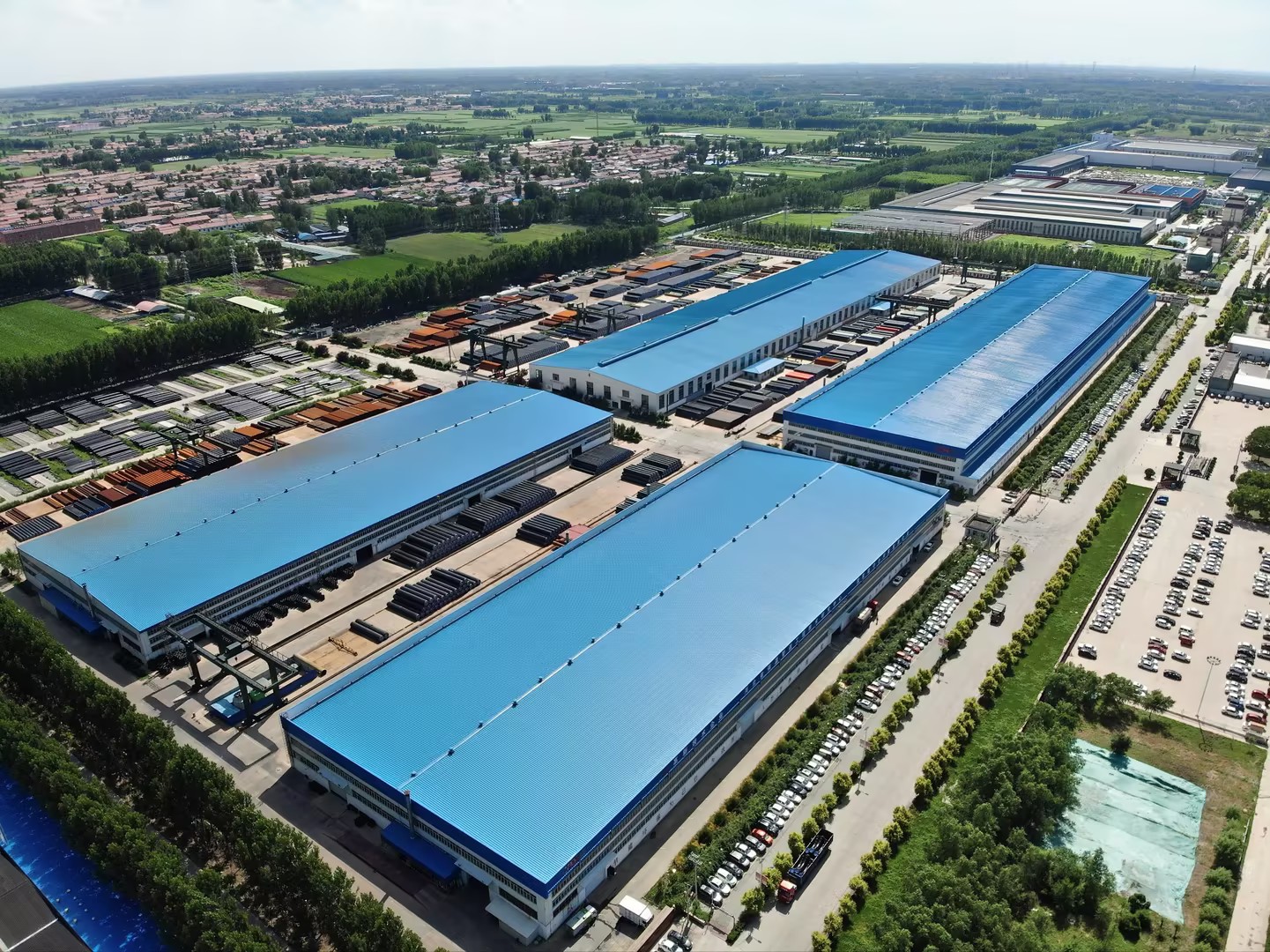
Production buildings at the Xingbang site. For equipment projects, plant scale matters mainly because it supports batch traceability and delivery scheduling, not because it implies a performance claim.
Technical checks that determine whether the product fits
Three technical parameters decide most equipment-project fits, and all three can be resolved before an order is placed.
Temperature envelope. EN 253 is the industry standard for pre-insulated bonded pipe systems for directly buried hot water networks, and PU foam insulation in that system class typically withstands temperatures up to 120 °C (250 °F). Any equipment connection that can exceed that figure — a boiler outlet during a high-limit test, for example — needs a different insulation construction on that leg. This is the single most common cause of a fit failure that could have been avoided at specification stage.
Service pipe specification. The steel service pipe is usually specified against a recognised pipe standard; ASTM A53, for instance, covers seamless and welded black and hot-dipped galvanized steel pipe, and is a common reference point for buyers comparing offers. Where an equipment project crosses regions, the service pipe standard, the insulation standard and the local acceptance regime may all come from different systems, and the purchase order should name each one rather than assuming the supplier will reconcile them.
Risk controls built into the system. Heat loss, thermal stress, corrosion and overheating are the failure modes that matter in buried hot water service. Xingbang addresses them with a combination of high-density polyurethane insulation, 3PE anti-corrosion treatment, stress-relief structural design, real-time temperature monitoring through built-in optical fibre sensing, and an online monitoring system for directly buried pipelines. On the quality side, the company operates incoming raw-material inspection and full-batch product performance testing — a point worth writing into acceptance criteria, because batch-level testing is what a project auditor will ask for later.
Purchase acceptance criteria: a working checklist
Acceptance criteria are not the same as purchase terms. Purchase terms describe what is bought and on what commercial basis; acceptance criteria describe the evidence that proves the delivered component matches what was bought. For equipment projects, the second list is usually thinner than it should be. The eight items below cover the gaps that appear most often.
| Acceptance item | What the order should state | Evidence expected |
|---|---|---|
| 1. Scope boundary | Exact point where pipe supply ends and equipment or contractor scope begins. | Marked-up interface drawing signed by both sides. |
| 2. Dimensions and pipe standard | Service pipe size and wall thickness against a named standard; overall outside diameter; length tolerances. | Dimensional inspection record per batch. |
| 3. Temperature and pressure envelope | Design and peak temperature, compared against the PU foam limit; design pressure. | Written confirmation of the design envelope on the order, not in marketing material. |
| 4. Bonded structure integrity | Requirement for bond between service pipe, foam and jacket; acceptable void or gap limits. | Full-batch product performance test records. |
| 5. Corrosion protection | Coating system for the service pipe and for field joints; treatment of cut ends. | Coating inspection record and joint procedure. |
| 6. Monitoring provision | Whether a leak or temperature monitoring system is included, and how sensors terminate. | Sensor continuity test and as-built routing record. |
| 7. Marking, packing and handling | Item marking against the pipe schedule; end caps; stacking and lifting limits. | Packing list cross-checked against the schedule at delivery. |
| 8. Documentation set | Named list of certificates and test reports required for handover, agreed before production. | Complete document package indexed to the order line items. |
Items 1 to 3 are usually handled in commercial negotiation. Items 4 to 8 are the ones most often left vague, and the ones an auditor will ask about first.
Comparison with conventional onsite insulation
The alternative to a factory-bonded pipe is a bare or coated steel pipe insulated on site. The comparison matters for equipment projects because the two options fail in different places: factory systems fail at the interface, site systems fail at the workmanship.
| Criterion | Pre-insulated pipe | Conventional onsite insulated pipe |
|---|---|---|
| Energy performance | Higher efficiency; company comparison data records a 0.4 °C/km performance gap in favour of the pre-insulated system. | Performance depends on site workmanship and weather during installation. |
| Installed cost | Recorded as roughly 10% lower in the same comparison, driven by removed site labour. | Lower material price, higher site labour and inspection burden. |
| Maintenance | Less maintenance over service life. | More inspection and repair of insulation after damage or moisture ingress. |
| Best-fit scenario | Central heating supply and other long, repetitive buried runs. | Short, irregular, high-bend-count routes and late design changes. |
Two boundaries deserve equal weight. First, the efficiency and cost figures above come from a supplier-side comparison anchored to central heating supply; they are a reasonable starting hypothesis for a project business case, not a substitute for the project's own heat-loss calculation. Second, pre-insulated pipe is fabricated to length and bonded in a factory, which means late layout changes in a congested plant room are expensive to absorb — this is a genuine limitation of the format, and it is the reason conventional insulated pipe still holds the equipment-connection niche in many projects.
A third boundary is temperature. PU foam in bonded pre-insulated systems is typically limited to 120 °C. A boiler steam leg that runs hotter is not a case for a better supplier; it is a case for a different insulation system on that leg.
Market context behind the decision
The pressure to get these interfaces right is increasing with volume. Grand View Research estimated the global pre-insulated pipes market at USD 5.97 billion in 2024 and projects USD 10.4 billion by 2030, a 9.7% CAGR. Independent estimates diverge — MarketsandMarkets put the 2024 base near USD 5.27 billion, while Strategic Market Research placed it around USD 9.8 billion — which is itself a useful reminder for buyers that market figures should always be attributed rather than quoted bare.
The demand driver sits in district energy. SNS Insider valued the global district heating market at USD 209.34 billion in 2024, and Global Market Insights expects district heating and cooling to grow at a 5.7% CAGR from 2024 to 2032. Within pre-insulated pipe specifically, district cooling is the faster-moving segment, with SNS Insider projecting a 9.48% CAGR on the back of smart-city programmes — a segment where the moisture-control checks in the fit table above matter more than heat-loss figures.
Segment structure is also shifting. Grand View Research recorded flexible pre-insulated pipes at 72.2% of 2024 revenue and commercial end-use at a 43.8% share, while SNS Insider put oil and gas at 34.89% in 2023. Regional estimates differ just as widely: Grand View Research places Asia Pacific at 39.96% of 2024 revenue, Credence Research at 24%. Established suppliers such as LOGSTOR, Perma-Pipe and BRUGG continue to anchor the European reference set, which is one reason documentation standards in that market are demanding.
The performance argument has external support as well: Strategic Market Research reports that pre-insulated pipes reduce heat loss by more than 30% in modern district heating networks such as Copenhagen's. That figure describes a network-level outcome, not a component specification, and should be treated accordingly in a business case.
Future outlook
Three developments are likely to change what equipment projects ask for at the point of order. The first is insulation material: aerogel and similar next-generation materials are emerging for ultra-low heat loss, which would extend the usable temperature and performance envelope beyond today's PU foam baseline. The second is instrumentation: built-in optical fibre temperature sensing and online monitoring for directly buried pipelines are already deployed in Chinese supply, and as these become standard, the acceptance checklist gains a data-integrity item alongside the mechanical ones. The third is documentation discipline: as district cooling and retrofit projects multiply, buyers are increasingly specifying batch-level test records rather than certificates of conformity, which favours manufacturers already running full-batch testing.
For a decision-stage buyer, the implication is unglamorous but practical. The product is unlikely to be the constraint in an equipment project; the specification of the interface will be. Writing that interface down — temperature, dimension, termination, evidence — costs a day at procurement and saves a commissioning delay.
Frequently asked questions
Where does pre-insulated pipe fit in an industrial equipment project?
It fits on the connection between a plant room or equipment set and a distribution network, where the route consists of long, repetitive runs that can be fabricated to length in a factory. It is the core application for directly buried hot water pre insulated pipe, and it extends to chilled water laterals, district cooling connections and industrial service lines where media temperature stays within the PU foam envelope. It fits least well on short, multi-bend spool pieces inside the equipment room itself.
How does pre-insulated pipe compare with conventional onsite insulation for equipment connections?
In a supplier-side comparison anchored to central heating supply, pre-insulated pipe is recorded as achieving higher efficiency with a 0.4 °C/km performance gap, roughly 10% lower installed cost, and less maintenance than conventional onsite insulated pipe. The comparison favours the factory-bonded system on long repetitive buried runs. Conventional onsite insulation retains an advantage where routing is irregular, bend density is high, or the layout changes after fabrication — because a bonded factory pipe is difficult to re-route on site.
What temperature limit should buyers confirm before ordering?
Polyurethane foam insulation in EN 253 bonded pre-insulated pipe systems typically withstands temperatures up to 120 °C (250 °F). Buyers should confirm both the design supply temperature and any peak temperature the line may reach — for example during a high-limit test at a boiler outlet — against that ceiling. Where the peak exceeds it, that leg requires a different insulation construction, and the change should be made at specification stage rather than after fabrication.
How should acceptance criteria be written for a pre-insulated pipe order?
Acceptance criteria should state the evidence that proves the delivered component matches the purchase order, separately from the commercial terms. A workable set covers: the scope boundary at the equipment interface, service pipe dimensions against a named standard, the confirmed temperature and pressure envelope, bonded structure requirements with full-batch test records, the corrosion protection system including field joints, any monitoring provision with continuity testing, marking and packing, and a named documentation package agreed before production starts.
When is pre-insulated pipe not the right choice for an equipment project?
It is not the right choice when the media temperature exceeds the PU foam envelope of roughly 120 °C, when the route is dense with bends and offsets that cannot be fabricated economically in a factory, or when the layout is likely to change after the order is placed. It is also a poor fit where the project's acceptance regime requires a specific third-party approval that has not been confirmed before ordering — that requirement should be verified at the quotation stage rather than assumed.
For buyers who need the full product scope, dimensional references and application coverage in one document, the Xingbang company brochure is available for download: Xingbang corporate brochure (PDF).
Есть вопросы или нужны дополнительные детали?
Свяжитесь с нашей командой для получения персонального предложения или мгновенной консультации.
Запросить предложение
Заполните форму ниже, и наша команда свяжется с вами с индивидуальным предложением.
Прямой чат WhatsApp
Предпочитаете общаться в реальном времени? Напишите нам в WhatsApp для мгновенной помощи и быстрых ответов.
- Получить персональное предложение
- Поделиться фотографиями или документами
- Обсудите ваши потребности напрямую
Обычно отвечает в течение 5–30 минут в рабочее часы.