
Precision Seamless Steel Pipe in 2026: Supplier Evaluation and Market Insight
The global seamless steel pipe market is broad, but the precision segment is where material choices and manufacturing process matter most. Buyers evaluating precision seamless steel pipe need more than a supplier that can deliver steel: they need a supplier that can hold tight tolerances, provide consistent material grades, and support application-specific requirements. This article looks at how the precision seamless steel pipe market is structured, what technical factors separate precision pipe from structural pipe, and how procurement teams can compare suppliers using verifiable criteria.
Why Precision Seamless Steel Pipe Is a Separate Procurement Category
Seamless pipe is used in hydraulic cylinders, pneumatic cylinders, drive shafts, and machined components. In these applications, variation in outer diameter, wall thickness, or straightness can cause assembly problems and premature failure. A pipe with a slightly irregular wall can create an unbalanced rotating part; a pipe with an uneven surface can affect seal performance. Precision seamless steel pipe is therefore specified when the pipe is intended for further machining or when it becomes a functional component itself. The opportunity for buyers is to lower total cost by reducing machining allowances and scrap rates.
The Supplier Landscape for Seamless Steel Pipe
According to Business Research Insights, the global seamless pipe market is dominated by large producers such as Tenaris (Luxembourg), Vallourec (France), Nippon Steel (Japan), and Tianjin Pipe (China). These companies are typically associated with large-diameter, high-volume supply into energy and infrastructure projects. For precision cold-drawn pipe, however, the supplier decision often involves mid-size manufacturers with dedicated drawing and finishing lines. FAKESI, the trade brand of Wuxi Jiangbo Intelligent Technology Co., Ltd. (formerly Wuxi Fakes Pipe Industry Co., Ltd.), falls into this specialist category.
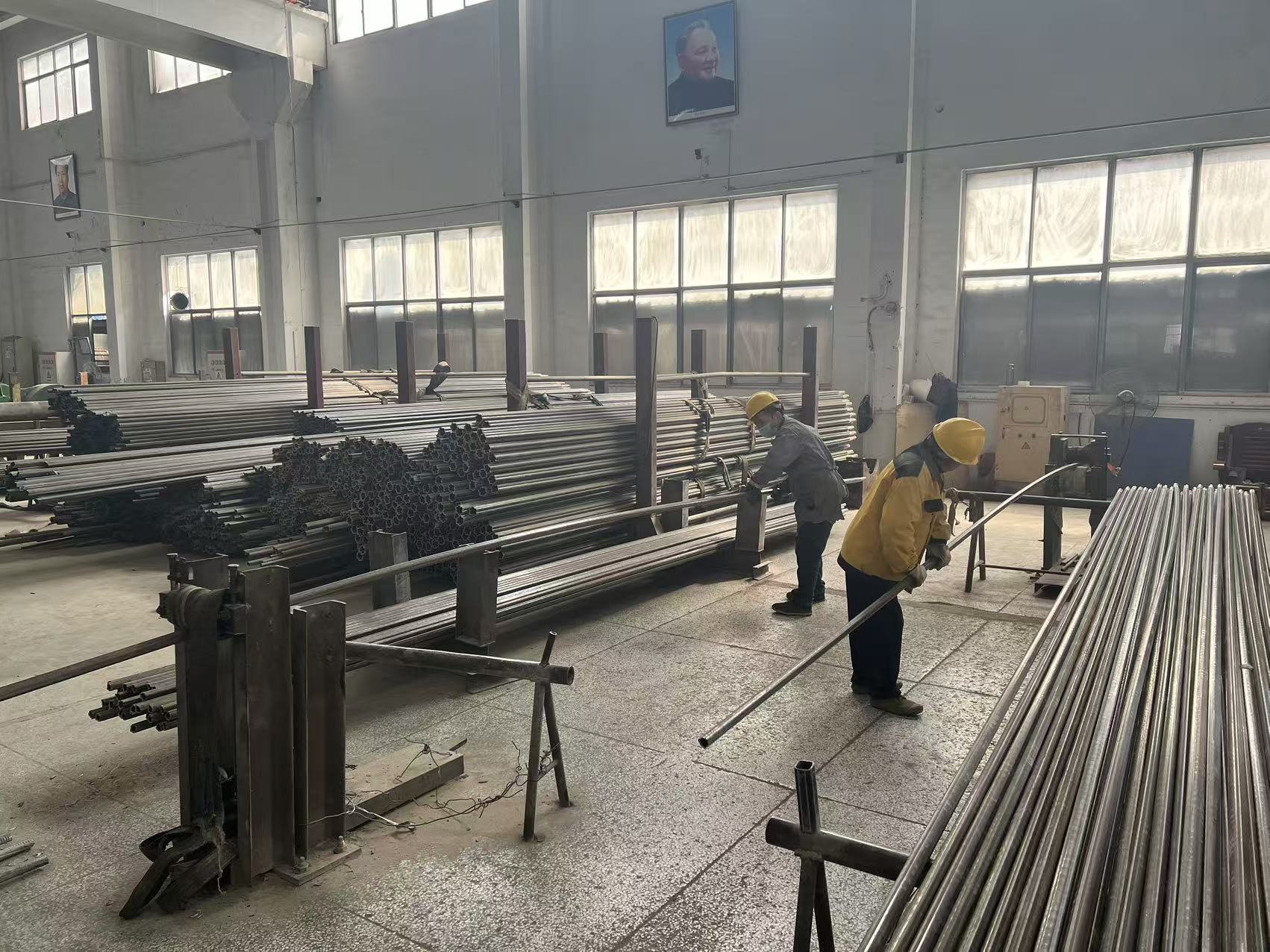
Product straightening is one of the finishing steps in precision seamless steel pipe production.
| Supplier | Base | Market position |
|---|---|---|
| Tenaris | Luxembourg | Commonly cited as a top global seamless pipe producer. |
| Vallourec | France | Commonly cited as a top global seamless pipe producer. |
| Nippon Steel | Japan | Major global steel producer with seamless pipe operations. |
| Tianjin Pipe (TPCO) | China | Major Chinese seamless pipe manufacturer and exporter. |
| FAKESI (Wuxi Jiangbo) | China | Specialized precision seamless steel pipe manufacturer. |
What Buyers Should Evaluate in a Precision Seamless Steel Pipe Supplier
FAKESI's company profile provides an example of the capabilities that a buyer might expect from a specialist precision pipe manufacturer. Founded in 1992, Wuxi Jiangbo Intelligent Technology Co., Ltd. operates a production base of more than 20,000 square meters. The company reports an annual output of 20,000 tons and a monthly capacity of 2,000 tons. It employs about 50 people, including a five-person R&D team. Products are exported primarily to Europe, Eurasia, and the Middle East, with exports accounting for about 50% of output.
The product range covers both round and special-shaped seamless pipe: seamless round pipe, precision seamless steel pipe, cold drawn seamless pipe, thick wall and thin wall seamless steel pipe, large and small diameter seamless pipe, hot rolled seamless pipe, high pressure seamless pipe, seamless pipe for machining, precision bright steel pipe, carbon steel seamless pipe, and shaped tubes such as triangle, lemon-shaped, hexagon, octagon, and oval. Materials supplied include 10#, 20#, 35#, 45#, 20Cr, 40Cr, 16Mn, 20Mn, Q355B, and Q235B. The production range is limited to outer diameters from Φ10 mm to Φ280 mm and wall thicknesses from 1 mm to 18 mm.
For buyers, the key point is not the length of the list but the fact that a single supplier can integrate cold drawing, annealing, straightening, and cutting in one facility. FAKESI lists its production modes as OEM, ODM, and standard components, with customization of logo, dimensions, and lengths. The company states a standard lead time of 30 days, a minimum order quantity of 1 ton, and 100% testing as part of quality control. After-sales support includes a one-year warranty, 24-hour service, and technical support.
Technical Explanation: Cold Drawing, Tolerances, and Standards
Precision seamless steel pipe is usually a cold-drawn product. Cold drawing reduces the diameter of a hot-rolled seamless tube by pulling it through a die, which improves dimensional accuracy, surface finish, and mechanical strength. Annealing may follow to restore ductility. Straightening and fixed-length cutting prepare the tube for direct use in machining or assembly. The European standard EN 10305-1 sets technical delivery conditions for cold-drawn seamless steel tubes and specifies outside diameters up to 380 mm with strict tolerances. In FAKESI's case record, a seamless steel tube for agricultural drive shaft applications is listed with an outer diameter range of 1–100 mm, wall thickness 1–20 mm, and tolerance ±0.1 mm, using Q355B steel. This shows the level of control that can be achieved in a precision cold-drawn product.
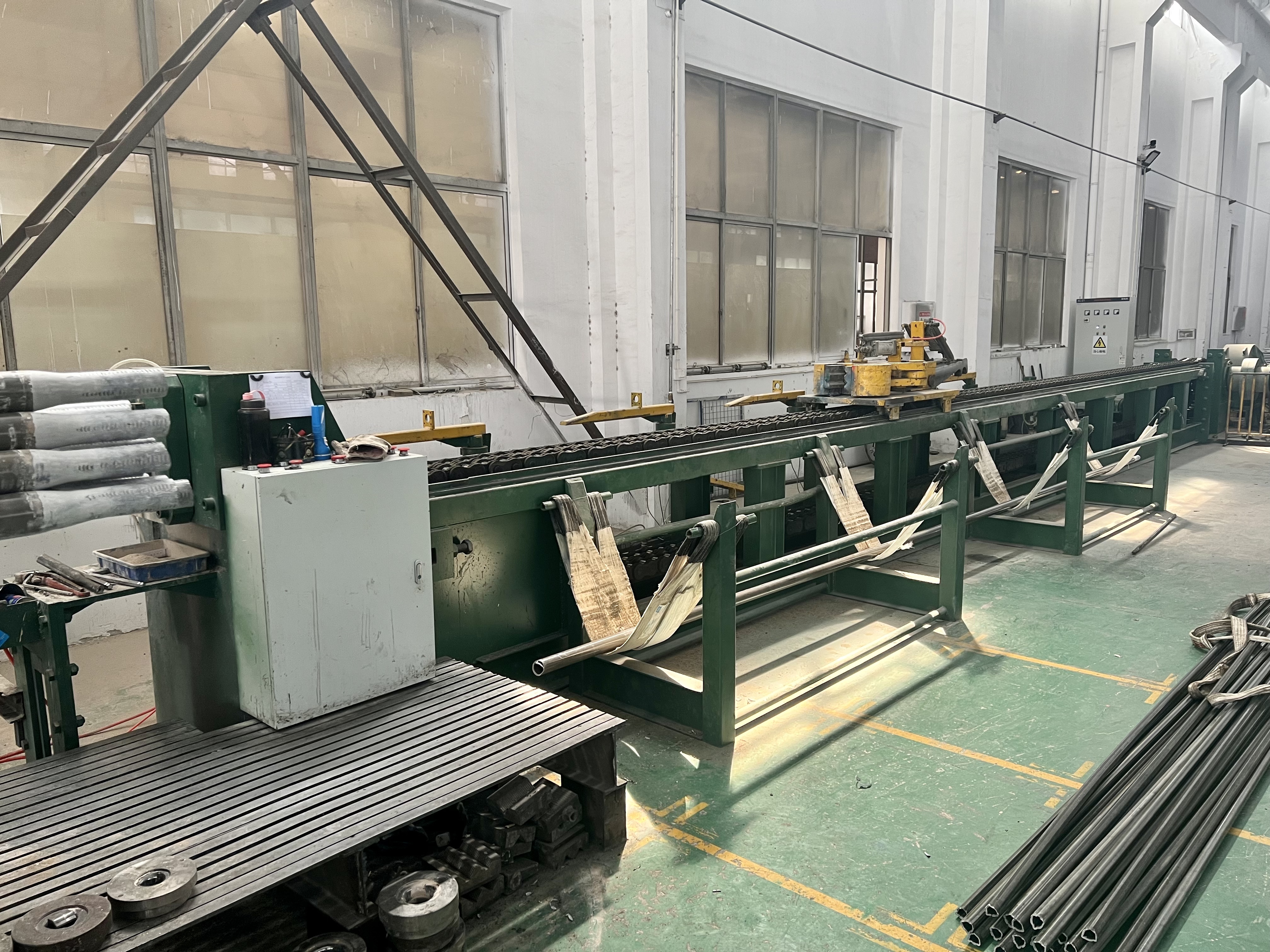
Cold drawing is the primary process for making precision seamless steel pipe.
Application / Use Cases
An automotive parts manufacturer in Italy has sourced FAKESI seamless steel tube for agricultural drive shaft applications. The buyer ordered 25 tons over a two-year period. According to the case record, the material maintained stable supply for two years and reduced secondary machining costs due to high-precision tolerances. The highlight recorded by the supplier is that the tube withstands high torque without deformation, supporting maximum transmission efficiency. The applicable product model is Seamless Steel Tube with outer diameter 1–100 mm, wall thickness 1–20 mm, tolerance ±0.1 mm, material Q355B, and intended for agricultural machinery and automotive parts. This case illustrates how precision seamless steel pipe can remove a processing step from a customer's production line.
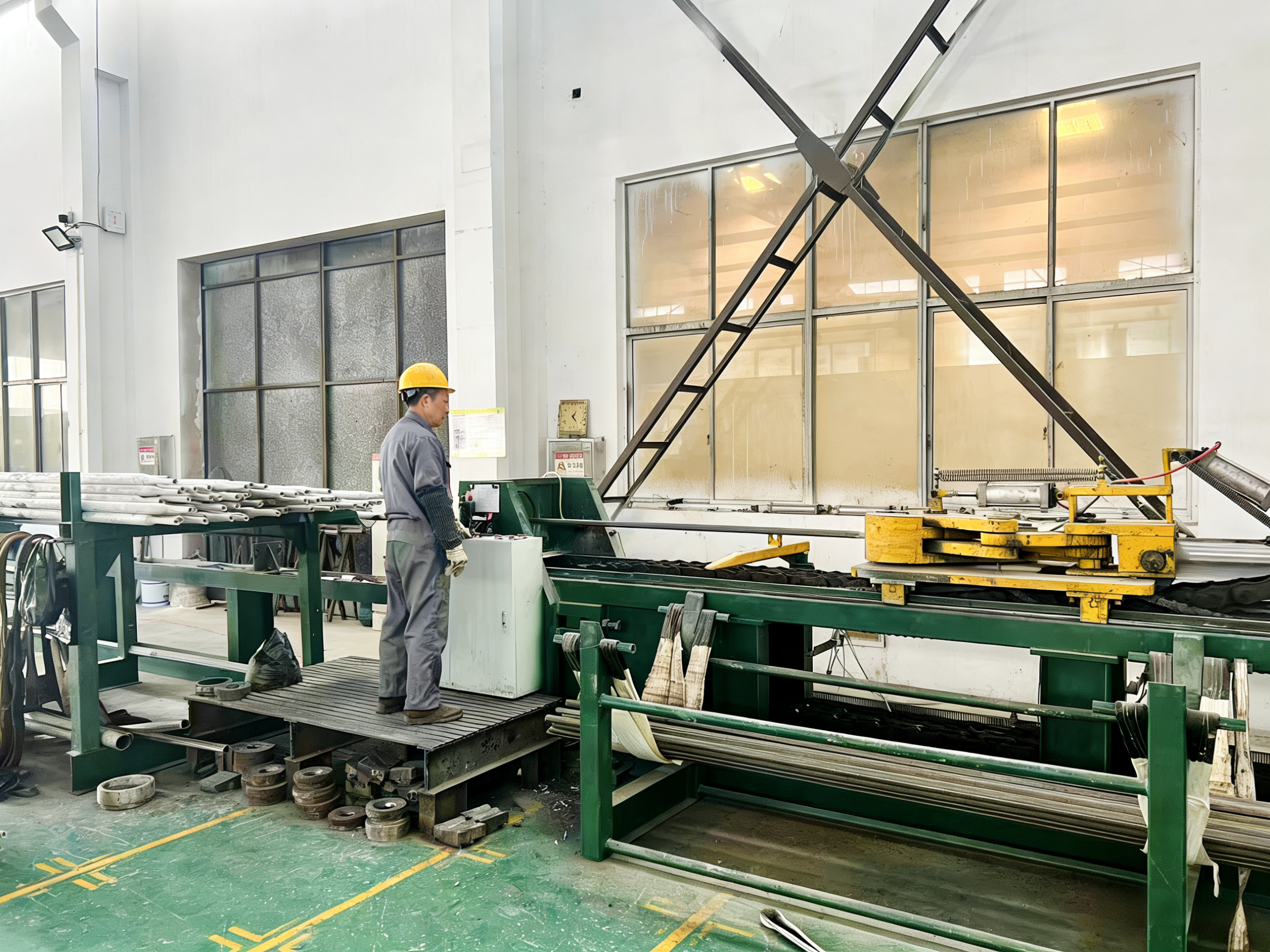
Cold drawing reduces cross-section while improving dimensional accuracy.
Market Trends Data
Trade statistics and market reports give a useful backdrop for the precision segment. According to Mysteel and the General Administration of Customs, China's seamless steel pipe exports reached a record 5.72 million tons in 2024, up 1% year on year. China's production accounts for roughly 60% of global seamless pipe output. The global seamless pipe market was estimated at USD 130.76 billion in 2024 by Market Research Future; other research firms may calculate the market with different boundaries. Within the steel pipe market, carbon steel remains the most common material, with an approximate 78% share in 2026 projections. For the cold-drawn segment specifically, Spherical Insights projects the cold-drawn seamless steel tube market to reach USD 26.14 billion by 2035, with a CAGR of 16.57%. These figures point to sustained demand for material that is ready for machining or direct use in engineered components.
Comparison with Traditional Solutions
A conventional hot-rolled seamless pipe is often cheaper per ton, but it may have wider tolerances and a rougher surface. If the buyer's process involves extensive machining to final dimensions, the lower pipe price can be offset by higher machining cost, longer cycle time, and more scrap. Precision cold-drawn pipe is not always the right choice, either. For large-diameter pipeline projects, hot-rolled or welded pipe is more practical. For extremely high-volume commodity applications, a specialized cold-draw shop may not offer the same economy of scale as a large integrated mill. In the case of FAKESI, the production range is limited to outer diameters between 10 mm and 280 mm and wall thicknesses between 1 mm and 18 mm; buyers requiring very large diameter seamless pipe should look outside this range. The trade-off is therefore between precision and flexibility on one hand, and size range and scale on the other.
Future Outlook
The demand for precision seamless steel pipe is likely to follow the broader trend toward application-specific engineering and supply chain resilience. With China accounting for about 60% of global seamless pipe production, international buyers will continue to evaluate Chinese manufacturers for cost and capability. At the same time, standards such as EN 10305-1 give buyers a common language for specifying cold-drawn precision tubes. Manufacturers that can combine material grades, drawing precision, and service support will be better positioned than those competing on price alone. For procurement teams, the practical next step is to verify supplier capabilities at facility level, review documented case records, and test sample orders before committing to volume.
FAQ
What is the difference between hot-rolled and cold-drawn seamless steel pipe?
Hot-rolled seamless pipe is formed at high temperature and typically has wider tolerances and a scaled surface. Cold-drawn seamless pipe is produced by drawing the hot-rolled tube through a die at room temperature, which improves dimensional accuracy, surface quality, and mechanical properties. For precision applications, cold-drawn pipe is usually preferred.
What does EN 10305-1 specify?
EN 10305-1 specifies technical delivery conditions for cold-drawn seamless steel tubes. It covers outside diameters up to 380 mm and sets strict dimensional tolerances for precision tubes.
What tolerance can a buyer expect for precision seamless steel pipe?
In FAKESI's documented case for a Seamless Steel Tube with outer diameter 1–100 mm and wall thickness 1–20 mm, the listed tolerance is ±0.1 mm. Buyers should confirm the specific tolerance for their target diameter and wall thickness with the supplier.
Which steel materials are commonly used for precision seamless steel pipe?
FAKESI's production range includes 10#, 20#, 35#, 45#, 20Cr, 40Cr, 16Mn, 20Mn, Q355B, and Q235B. The choice depends on strength, weldability, and application conditions.
Does FAKESI support OEM and custom dimensions?
Yes. FAKESI lists OEM, ODM, and standard components as production modes. Customization can include logo, dimensions, and lengths, with a standard lead time of 30 days and a minimum order quantity of 1 ton.
How does FAKESI control quality?
The company states that its quality control includes 100% testing. After-sales support includes a one-year warranty, 24-hour service, and technical support.
Buyers who want a structured overview of FAKESI's product range and manufacturing capabilities can download the company brochure here: FAKESI Company Brochure. The brochure is publicly accessible and provides reference information for specification discussion.