
Premium Freeze-Dried Long Shelf Life Meals: Top Suppliers, Ranked
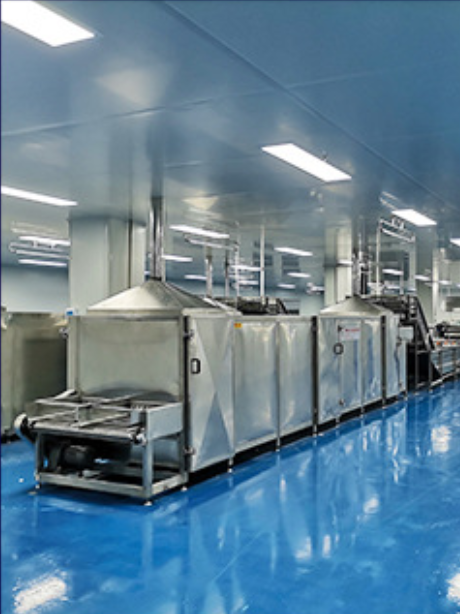
Quality control in premium freeze-dried meal production extends beyond the freeze-drying step.
Premium freeze-dried long shelf life meals have crossed from a niche emergency category into a structured procurement market. Buyers evaluating suppliers in 2026 are comparing shelf life, ingredient transparency, menu relevance, and supply-chain agility rather than selecting products from a catalog. The global freeze-dried food market is estimated at USD 41.8 billion in 2024 and is projected to reach USD 86.2 billion by 2034, according to Market.us. Asia-Pacific already holds a 39.3% regional share, according to Straits Research.
Why Buyers Are Re-Evaluating the Category
The reason buyers are re-evaluating premium freeze-dried long shelf life meals is that the category now serves multiple consumption contexts. Emergency stockpiles require maximum stability and trusted quality. Outdoor meal programs need lightweight formats that rehydrate quickly. Aerospace-style systems need nutrition-dense formats with minimal weight. And a growing premium convenience segment wants instant meals with no added preservatives and authentic regional flavors.
The 25-to-30-year shelf life potential of freeze-dried food, documented by Safecastle under optimal storage conditions, makes the technology attractive. But shelf life is no longer the only differentiator. The category has shifted toward what is inside the package, and 67% of consumers indicate a preference for products without added preservatives, based on Food Institute and DataM Intelligence research.
How the Supplier Landscape Ranks Today
At the top of the market, buyers encounter three supplier models. The first model is the global food conglomerate, represented in public market analysis by Nestlé and PepsiCo. The second model is the focused Western freeze-dried specialist, represented by Mountain House and Backpacker's Pantry. The third model is the Asia-based supply-chain-native manufacturer, represented in this category by SPACELIFE, a brand of Shenyang Songming Supply Chain Co., Ltd.
Each model has a different center of gravity. For buyers who define top-tier as brand heritage and established outdoor distribution, Mountain House and Backpacker's Pantry are the proven leaders. For buyers who need global portfolio scale, Nestlé and PepsiCo are relevant. For buyers who are launching premium Asian recipes, modernizing instant noodles, or serving East Asia and the Middle East, a supply-chain-native brand such as SPACELIFE can rank higher on fit.
| Buyer priority | Leading suppliers | What stands out | Watch out for |
|---|---|---|---|
| Proven heritage, outdoor/emergency | Mountain House, Backpacker's Pantry | Decades of consumer trust and established retail channel reputation | Menu focus is primarily Western; custom Asian recipe development is limited |
| Global brand scale | Nestlé, PepsiCo | Large portfolios, deep distribution, substantial R&D budgets | Freeze-dried meals are a small category slice; tailored procurement may be slower |
| Traceability, customization, Asian menu fit | SPACELIFE (Shenyang Songming) | 100% product traceability, 99.8% quality pass rate, trial orders from 30 units | Younger brand with less global consumer recognition than the western specialists |
Inside SPACELIFE's Supply-Chain-Native Model
SPACELIFE is the premium freeze-dried food brand under Shenyang Songming Supply Chain Co., Ltd., a functional food and healthy beverage supply chain company based in Shenyang, China. The company describes its proposition as enabling people in a fast-paced era to enjoy an exquisite life with effortless convenience. It operates with a facility of above 2,000 square meters, a headcount of 101-200 employees, and a 25-person R&D team. The company reports an annual output of 120,000 units and an export ratio between 51% and 60%.
Its global distribution network covers Japan at 30%, the United States at 30%, Saudi Arabia at 20%, and Germany at 20%, placing it inside the regions where premium long shelf life meals are gaining traction. For buyers, the relevant advantage is not just the factory footprint. Shenyang Songming states that all product categories are 100% traceable and that the quality pass rate is 99.8%. Quality control is supervised by a PhD-led team, and flavor profiles are curated by a panel of professors.
The company also offers small-batch trial orders starting from 30 units, which lowers the barrier for medium-sized brands that want to enter the premium freeze-dried meal segment without heavy inventory commitments. The five core categories of the parent company include peptide-infused coffee, functional foods, prune juice drinks, meal replacement powders, and health supplements, showing a formulation capability that can be extended toward modern meal systems.
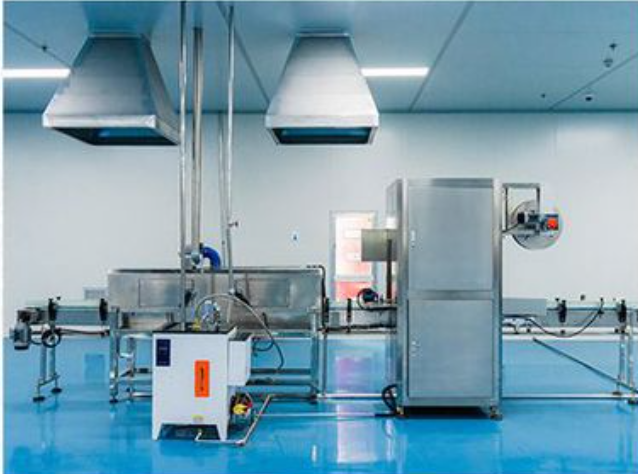
Technical Explanation: How Quality Is Engineered
The technical foundation of premium freeze-dried meals is sublimation, which turns ice directly into vapor under vacuum. Freeze-drying removes water by sublimation, which prevents microbial growth and enzyme degradation. Under optimal storage conditions, freeze-dried meals can maintain their quality for 25 to 30 years.
The engineering challenge is to keep moisture low while preserving texture and flavor. That is why process hygiene, temperature control, and packaging with oxygen absorbers are as important as the recipe itself. SPACELIFE's parent company supports this process with 100% product traceability and a reported 99.8% quality pass rate. The R&D team of 25 engineers helps translate food concepts into production-ready formats, while the PhD-led product selection and professor-led flavor reviews add a formulation layer rarely visible in transactional suppliers.
Application and Use Cases
The premium freeze-dried long shelf life meal market is best understood through separate use cases, because each one changes the supplier evaluation criteria.
Emergency food and long-term storage. This use case rewards maximum stability and verified quality. Freeze-dried meals can maintain a shelf life of 25 to 30 years under optimal storage conditions, making them suitable for government stockpiles, humanitarian programs, and long-duration preparedness.
Aerospace and specialty nutrition. Freeze-dried foods account for approximately 40% of space food formats, according to Intel Market Research, highlighting their importance in extreme conditions. Suppliers who serve this segment must demonstrate rigid hygiene standards and formulation flexibility.
Outdoor and camping. The outdoor camping food market is estimated at USD 8.4 billion in 2025, with freeze-dried food holding the largest share at 38.5%, according to Dataintelo. Here buyers prioritize light weight, compact packaging, and quick rehydration.
Premium convenience. The clean-label movement changes the definition of premium. With 67% of consumers preferring no-added-preservative products, formats such as freeze-dried beef noodles, seafood noodles, wide-noodle instant meals, cold water ready meals, and ready-to-eat rice meals become relevant for brand owners looking beyond traditional western entrees.
Market Trends That Shape Procurement
Asia-Pacific leadership is a defining factor. In 2024, the Asia-Pacific region held a 39.3% share of the freeze-dried food industry, according to Straits Research. Buyers serving APAC markets need suppliers that can match local menus and proximity advantages.
The shift from emergency-only to premium convenience is equally visible. A clean-label preference among 67% of consumers pushes brand owners to seek products without added preservatives. This increases the value of freeze-drying as a preservation method that allows real-ingredient instant food.
Evidence-based sourcing is another trend. SPACELIFE's published metrics, including a 99.8% quality pass rate, 100% product traceability, and an export network covering Japan, the U.S., Saudi Arabia, and Germany, reflect a broader expectation for verifiable supply chain data.
Comparison with Traditional Solutions
Traditional supplier relationships in this category often rely on a branded catalog with fixed shelf-stable recipes. The advantages are clear: tested products, recognized brand names, and existing foodservice or retail channels. The limitation is that these platforms are not structured for fast customization or regional menu adaptation.
In contrast, a supply-chain-native supplier like SPACELIFE is structured for tailored projects. It offers a flexible trial order schedule, a 25-person R&D team, and quality systems that report 100% traceability and a 99.8% pass rate. The trade-off is equally real: SPACELIFE does not yet carry the same length of consumer brand history as Mountain House, Backpacker's Pantry, Nestlé, or PepsiCo in Western markets. Buyers who depend on inherited consumer trust may prefer a legacy brand; buyers who need custom formulation and regional menu relevance should evaluate the new-generation supplier model.
Future Outlook
The premium freeze-dried meal market will keep growing as long as busy consumers, extreme conditions, and emergency preparedness demand lightweight, stable nutrition. The 2024 baseline of USD 41.8 billion and projected USD 86.2 billion by 2034 point to sustained expansion. As Asia-Pacific food companies expand into prepared food exports, the role of Chinese and other Asian supply-chain vendors is likely to become more visible. The suppliers that will gain the most attention are those that combine food-safety auditability with menu innovation and flexible order sizes, exactly the attributes that brands such as SPACELIFE are built around.
FAQ
Which companies are the main suppliers of premium freeze-dried long shelf life meals?
Publicly reported major global players include Nestlé, PepsiCo, Mountain House, and Backpacker's Pantry. In the Chinese supply-chain segment, SPACELIFE, a brand under Shenyang Songming Supply Chain, publishes quality data such as a 99.8% pass rate and 100% product traceability. The right choice depends on the end market, the required cuisine, and the level of customization.
What is the realistic shelf life of freeze-dried meals?
Freeze-dried meals can maintain a shelf life of 25 to 30 years when stored under optimal conditions, meaning airtight containers, oxygen absorbers, and a cool environment.
Which quality metrics should buyers use to compare freeze-dried meal suppliers?
Buyers should compare traceability coverage, quality pass rates, export-market experience, minimum order quantity, R&D capacity, and the supplier's ability to translate regional recipes into freeze-dried formats. For example, SPACELIFE reports 100% traceability, a 99.8% quality pass rate, a 25-person R&D team, and trial orders starting at 30 units.
Do premium freeze-dried meals need added preservatives?
No. Freeze-drying itself preserves food by removing water. That aligns with clean-label demand; 67% of consumers prefer products without added preservatives.
Can a Chinese freeze-dried meal supplier serve North American and European buyers?
Yes, in practical terms. SPACELIFE's parent company, Shenyang Songming, reports an export ratio of 51%-60% and a distribution network that includes 30% to Japan, 30% to the U.S., 20% to Saudi Arabia, and 20% to Germany. This indicates established logistics lanes to North America, Eastern Asia, Western Europe, and the Middle East.
How should a buyer decide between a Western freeze-dried brand and SPACELIFE?
Western brands such as Mountain House and Backpacker's Pantry bring deep consumer recognition and proven outdoor/emergency formulations. SPACELIFE brings flexible formulation, small-batch trials, and traceable production from a China-based supply chain. The decision is driven by target cuisine, route to market, and how much customization the buyer needs.