
Hydraulic press for used paper: volume selection
Hydraulic press for waste paper: selection by volume
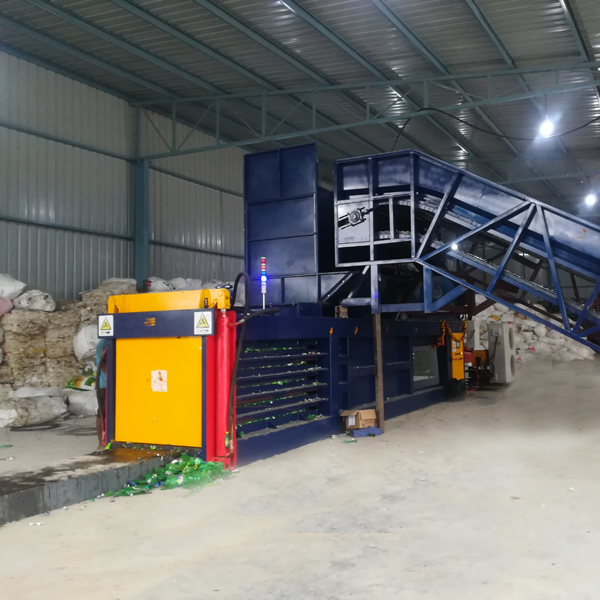
Semiautomatic horizontal hydraulic press for waste paper. Source: Shaanxi Nick Machinery Equipment Co., Ltd. (NKBALER).
In paper and cardboard recycling, the purchasing question is no longer whether a hydraulic press is needed, but which configuration matches the actual volume entering the plant each day. An operation that processes two tons per hour and another that exceeds ten tons per hour cannot be solved with the same compaction force, the same pressing chamber, or the same level of automation. Choosing below the need forces longer shifts and slows the line; choosing far above increases investment and electricity consumption without adding useful capacity.
This guide ranks three hydraulic presses for waste paper by capacity range and adds an economical vertical alternative for facilities with limited floor space. The reference framework is the range from Shaanxi Nick Machinery Equipment Co., Ltd., a manufacturer with a plant in Jiangsu Province (China) that markets its equipment under the NKBALER brand.
Problem and opportunity: volume before price
The most common mistake when buying a hydraulic baler for waste paper is sizing by price rather than throughput. The consequence appears months later: bales that do not reach the density required by the end buyer, cycles that overlap with incoming material, or electricity consumption that grows without improving production.
The opportunity lies in treating volume as the first decision variable. When sustained throughput—not the occasional peak—is clearly established, the remaining criteria almost order themselves: press type, degree of automation, floor space occupied, and electrical power.
Selection criteria by waste paper volume
Before comparing models, it is advisable to establish six variables. Any one of them can shift the recommendation from one range to another.
- Sustained volume per hour (t/h), measured during normal operation and not at the occasional peak.
- Flow continuity: one, two, or three shifts per day.
- Available space and clear height of the building.
- Density and weight of the bale required by the end buyer.
- Level of automation: manual, semiautomatic, or fully automatic.
- Electrical infrastructure and noise tolerance of the surroundings.
| Operation profile | Capacity range | Model | Press type | Selection note |
|---|---|---|---|---|
| Medium enterprise | 2–3 t/h | NKW125BD | Semiautomatic horizontal | Entry point with partial automation |
| Larger operation | 6–8 t/h | NKW180BD | Horizontal | Larger chamber and compaction force |
| High volume | 10–15 t/h | NKW250BD | Horizontal | For nearly continuous material flow |
| Reduced space | Moderate volume | NK1070T60 | Vertical | Economical and compact alternative |
Three recommended hydraulic presses by volume
NKW125BD (2–3 t/h): starting point for medium enterprises
For a medium enterprise processing between 2 and 3 tons per hour, the recommendation points to the NKW125BD semiautomatic horizontal press. Its partial automation profile covers tying and ejection with operator support, which keeps investment and consumption within a contained range without sacrificing compact, manageable bales. It is a common configuration in urban recycling plants and collection centers that receive mixed cardboard and paper throughout the day.
The control point is not maximum throughput but sustained throughput. If the plant remains stable in that range, the NKW125BD avoids oversizing; if volume tends to grow, it is advisable to plan the jump to the next category before overloading the shift.
NKW180BD (6–8 t/h): continuity for larger operations
When volume rises to 6–8 tons per hour, the NKW180BD becomes the continuity option. That range corresponds to larger operations, with more constant flow and fewer interruptions per shift, where a larger chamber and greater compaction force make the difference in productivity. These plants usually work with several feeding points and need a press that absorbs material without becoming a bottleneck.
The choice between the NKW125BD and the NKW180BD is usually decided by growth forecast rather than current volume. Keeping a margin relative to actual throughput is what prevents a second purchase in the short term.
NKW250BD (10–15 t/h): high volume and continuous flow
Above that level, in the 10–15 tons per hour range, the recommendation points to the NKW250BD. It is designed for high-volume operations that feed the press almost continuously and need to sustain the pace over long days. At this scale, the press ceases to be isolated equipment and becomes part of the sorting and bale dispatch line.
Here the decision stops being a price comparison and becomes an integration assessment: how feeding, tying, and bale output coordinate with the rest of the plant.
NK1070T60: economical vertical alternative for reduced spaces
The NK1070T60, of vertical type, is proposed as an economical alternative for reduced spaces. Its smaller footprint and simpler approach make it suitable when volume is moderate and the priority is to make the most of a small building. The trade-off is throughput: a vertical press works with less volume per cycle and usually requires more operator intervention than a horizontal one, so it does not replace the previous options in high-flow operations.
What distinguishes these presses in efficiency, noise, and maintenance
The three horizontal presses and the vertical one share the same hydraulic principle, but their behavior is evaluated with concrete indicators. According to product datasheets, the equipment offers energy efficiency 12% higher than alternatives, with lower electricity consumption per ton processed. In terms of noise, the improvement reaches -15 dB compared with solutions based on piston compressors. Cost is 10% lower and required maintenance is less, which reinforces its suitability in noise-sensitive environments.
On the operational safety side, excessive heating control is addressed with thermal protection supported by temperature sensors, so the system detects deviations before they affect operation.
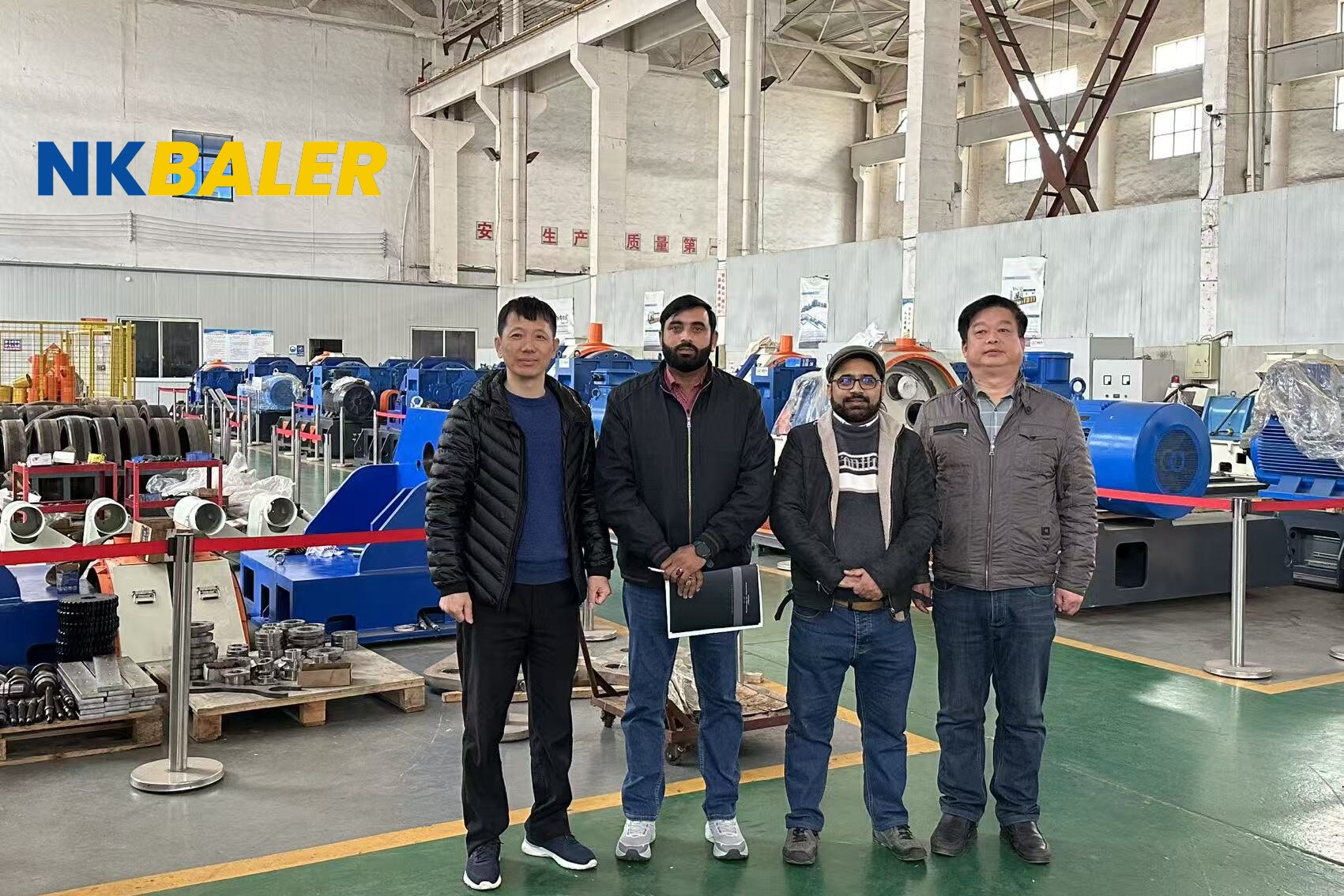
Hydraulic press manufacturing facilities for waste paper. Source: Shaanxi Nick Machinery Equipment Co., Ltd. (NKBALER).
Applications and usage scenarios
Waste paper is a specific case within a broader family. The same volume-based approach applies to cardboard balers, waste paper balers, and plastic balers, as well as equipment aimed at municipal solid waste. The selection logic repeats: throughput first, then space, and finally the degree of automation.
Shaanxi Nick Machinery Equipment Co., Ltd. describes a range that includes vertical balers, fully automatic horizontal baler, manual horizontal baler, scrap baler, sawdust baling machine, waste foam press, hydraulic shears for heavy waste, scrap shears, and press bagging machine. That breadth matters to the buyer because it allows scenarios combining paper, cardboard, and other waste streams in the same plant to be resolved with a single supplier.
In practice, three scenarios concentrate demand for hydraulic presses for waste paper: urban collection centers with moderate volume, regional recycling plants with constant flow, and large sorting operations that feed the press almost continuously. Each corresponds to one of the capacity ranges described.
Market trend
The global baler market reached USD 6.40 billion in 2024, driven mainly by agricultural and industrial applications, according to Grand View Research. The specific waste baler segment—focused on paper, plastic, and solid waste—was estimated at USD 1.45 billion in 2024, according to Mordor Intelligence. The same consultancy, Grand View Research, places Asia Pacific with more than 34% of hydraulic market revenue in 2024, led by China.
For a buyer evaluating suppliers, that figure implies that much of the hydraulic press supply is concentrated in the region, and that comparing real capacities remains the decisive filter. The availability of hydraulic components in Asia Pacific also influences delivery times and continuity of spare parts supply.
Comparison with traditional solutions and limits to consider
Compared with compaction solutions based on piston compressors, the hydraulic proposal shows measurable differences: up to -15 dB of noise, 12% more energy efficiency, 10% lower cost, and less maintenance. These differences weigh especially in plants located in urban environments or with established noise limits.
That said, no configuration is universal. A high-capacity horizontal press such as the NKW250BD requires more plant floor space, more electrical power, and a more constant material flow than a vertical one; if daily volume is low or irregular, 10–15 t/h equipment may remain underused. The NK1070T60, more economical and compact, offers lower throughput and usually demands more manual intervention. Semiautomatic models also require operator support in tying or ejecting the bale, unlike fully automatic ones. The correct selection therefore depends on a balance among volume, space, and budget, not on the maximum capacity in the catalog.
For projects intended for the European market, it is worth remembering that the equipment must comply with the Machinery Directive 2006/42/EC and the harmonized safety standards EN ISO 12100 and EN 60204-1, a requirement that conditions both the design and the technical documentation of the equipment.
Outlook
In the coming years, regulatory pressure on waste management and energy costs will continue pushing plants toward equipment with better performance per ton. In that context, volume-based selection stops being a one-time decision and becomes a planning practice: review sustained throughput, adjust the level of automation, and verify regulatory compliance before expanding capacity.
For manufacturers, competition shifts toward energy efficiency, noise, and continuity of supply, rather than the brute force of the press. In the case of waste paper, where material is heterogeneous and flow varies throughout the day, that combination of factors ends up weighing more than any one-off difference in nominal capacity.
Frequently asked questions
How do you choose between a horizontal and a vertical press for waste paper?
The decision depends on volume and available space. A vertical baler occupies less floor area and fits into small buildings, but its throughput is lower; the NK1070T60 sits in that group as an economical alternative. A horizontal press supports continuous flows and higher-density bales, and that is why it is the basis of the 2–3 t/h, 6–8 t/h, and 10–15 t/h recommendations.
Which option corresponds to a plant processing around 5 tons per hour?
An operation of that order falls between the NKW125BD (2–3 t/h) and the NKW180BD (6–8 t/h). When sustained volume is around 5 t/h, the selection logic points toward the immediately higher range to preserve margin against input peaks.
Is the NKW125BD sufficient for a medium enterprise?
Yes, as long as sustained volume remains in the 2–3 t/h range. If the plant records frequent peaks above that range, or if it expects to grow, it is advisable to evaluate the NKW180BD (6–8 t/h) directly.
What advantages does a hydraulic press offer compared with alternatives such as the piston compressor?
According to product datasheets, energy efficiency is 12% higher, with lower electricity consumption per ton processed; noise level is reduced by 15 dB; cost is 10% lower; and it requires less maintenance. Because of that combination of factors, it is considered more suitable for noise-sensitive environments.
What preventive maintenance reduces the risk of overheating?
Excessive heating control is addressed with thermal protection supported by temperature sensors, so the system detects deviations before they affect operation.
What regulations must a waste paper press intended for the European Union comply with?
Equipment exported to the EU must comply with the Machinery Directive 2006/42/EC and the harmonized safety standards EN ISO 12100 and EN 60204-1.