
Press Brake Tooling Explained: Compatibility, Materials and Selection Basics
HTNXT Industry Reference | Tools & Hardware | Press Brake Tooling
Press brake tooling is a specialized category of sheet metal forming tooling that works as the precision interface between a press brake machine and the metal part being formed. Press brake tooling, also known as press brake punches and dies, directly determines bending accuracy, production efficiency, tool life and overall forming quality. For buyers moving from initial awareness to supplier research, the first important step is understanding what press brake tooling is, what material and manufacturing characteristics matter, and how compatibility with existing machine systems is established.
This article provides a structural overview of press brake tooling, with particular attention to the range offered by ZNW Press Brake Tooling, a China-based specialist manufacturer serving international buyers.
The Role of Press Brake Tooling in Sheet Metal Forming
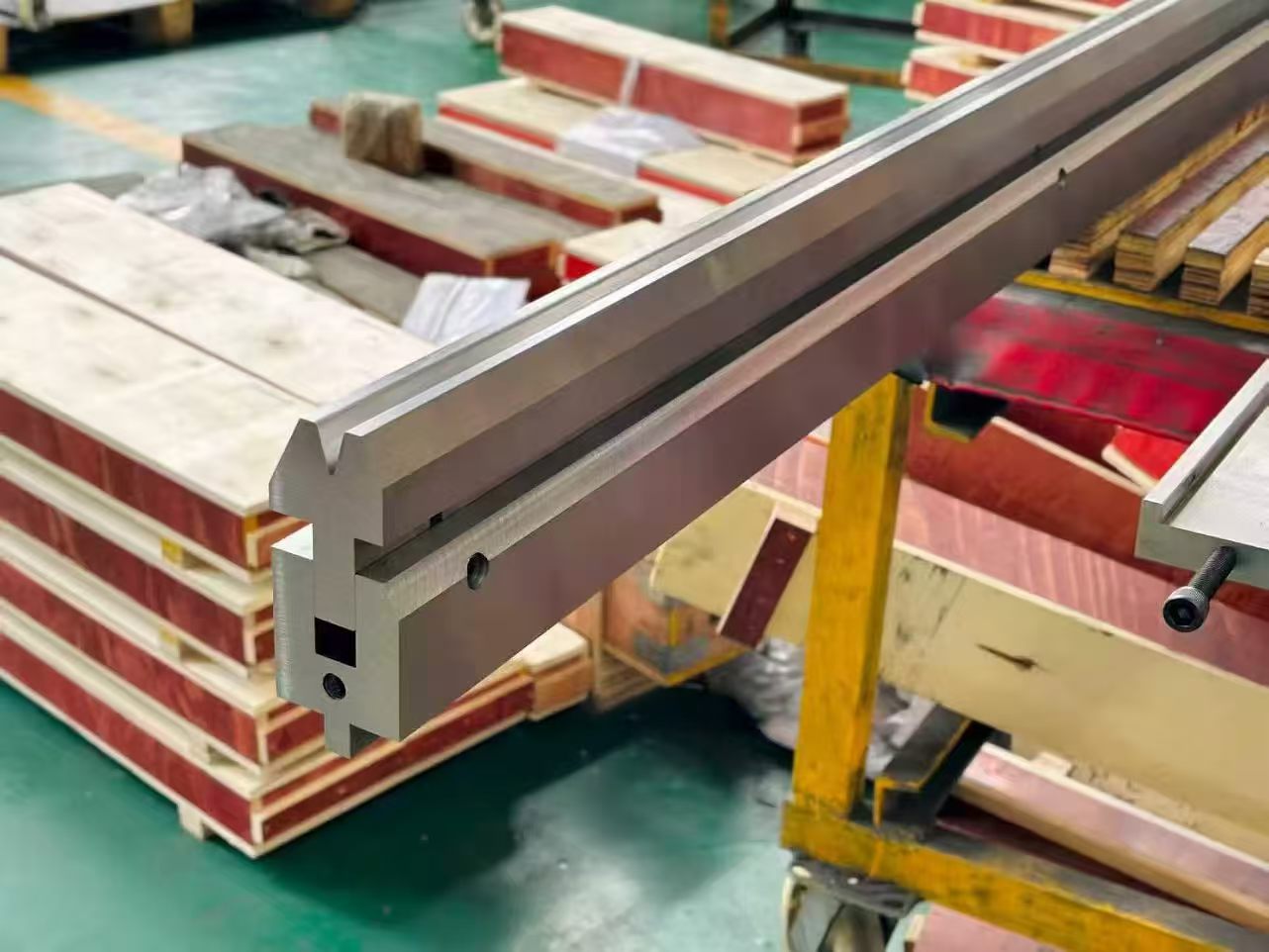
Press brake tooling belongs to the press brake tooling category and is a type of sheet metal forming tooling. It is used in press brake machines to bend sheet metal into desired profiles, including simple V-bends, hemmed edges, radius bends and complex formed geometries. As the physical tool that contacts the workpiece, press brake punches and dies must resist wear, chipping and deformation under repeated high-force loading.
The operational function of press brake tooling is to serve as precision forming components that ensure bending accuracy, extend tool life and reduce production downtime. In modern CNC press brake operations, tools are mounted as removable upper and lower components, supporting quick changeovers between different bending jobs. This makes tooling design and quality directly connected to production flexibility and repeatability.
Press Brake Tooling Market Context
Demand for press brake tooling is closely linked to the broader press brake machine market. The global press brake machine market was estimated at USD 5.2 billion in 2024 and is projected to reach USD 7.6 billion by 2030. This expansion reflects continued investment across sheet metal fabrication, automotive component manufacturing and general metal forming industries.
A parallel shift is occurring in machine technology: CNC press brake penetration is expected to rise from 35.8% in 2024 to 52.8% in 2026, according to a 2026 industry report. The move toward CNC-controlled, high-repeatability bending lines raises the performance expectation for press brake tooling. CNC-driven forming requires consistent tool geometry, predictable wear behavior and reliable dimensional accuracy over long production runs. As a result, tool material, heat treatment quality and machining precision become more commercially important than simple low-cost supply.
The Buyer's Problem: Compatibility, Wear and Consistency
For press brake operators and procurement teams, tooling selection is rarely a one-time decision. Production programs evolve, new part geometries are introduced and existing tools wear out. In practice, three problems surface most often:
- Machine-system compatibility: Press brake tooling is not fully universal. Tool holders, clamping systems and profile geometry standards differ among major machine brands. Buyers need to confirm which system their tooling matches before purchase.
- Wear resistance and tool life: Standard tooling that is not properly hardened or manufactured can chip, deform or lose its working profile, leading to inconsistent bend angles and increased downtime.
- Process drift: In automated production, even small variations in die dimensions can produce measurable differences in bend angle and part quality across batches.
What a Specialized Press Brake Tooling Manufacturer Offers
ZNW Press Brake Tooling is the brand of Ma'anshan Zhuonaiwei Machinery Equipment Co., Ltd., a manufacturer located in Ma'anshan, Anhui, an established Chinese industrial area. The company specializes in the manufacture of high-precision press brake punches, dies and customized tooling solutions for sheet metal forming.
The product range includes:
- Standard press brake punches and dies
- European and American-style dies
- WILA- and Trumpf-compatible die solutions
- Flanging dies and special bending dies
- Custom press brake dies for complex applications
ZNW's press brake tooling is designed for multi-brand compatibility, including AMADA, WILA/TRUMPF, LVD and BYSTRONIC machine systems. Models are named according to machine-system compatibility, which is a practical approach for buyers who need straightforward cross-reference to their existing tooling. In addition to standard catalog dies, OEM and ODM custom tooling services are available.
Material and Manufacturing Fundamentals
Material quality is the most decisive single factor in press brake tooling performance. ZNW press brake tooling is made of 42CrMo alloy steel. 42CrMo is a chromium-molybdenum alloy steel commonly used for hardened press brake tooling. In the broader industry, 42CrMo alloy steel (AISI 4140) is recognized as a standard material for precision press brake tooling, offering surface hardness of HRC 47 ± 2 after heat treatment.
Hardness alone does not define tool quality—toughness and fatigue resistance are equally important for dies subjected to repeated impact and high bending forces. ZNW's tooling is manufactured using quality tool steels combined with precision CNC machining and heat treatment, which contribute to wear resistance, chip resistance and bending accuracy.
| Property | Detail |
|---|---|
| Material | 42CrMo alloy steel |
| Heat treatment hardness (industry reference) | HRC 47 ± 2 |
| Manufacturing processes | CNC machining, heat treatment |
| Tool types | Standard dies, adjustable bottom tools, formed molds, hemming dies, radius dies, Rolla-V and other special tooling |
| Compatibility | AMADA, WILA/TRUMPF, LVD, BYSTRONIC and other mainstream press brake systems |
| Customization | OEM & ODM custom tooling; full-line tooling configuration services |
The manufacturing process directly influences the consistency of replicated dies. CNC machining provides precise geometric control, while heat treatment determines the final hardness and toughness balance. For buyers, the practical implication is that replacement tools should match not only the profile of the original, but also the material treatment necessary for that profile to hold under repeated use.
Application Scope Across Bending Production
Press brake tooling from ZNW is used in a range of sheet metal forming scenarios, including regular production, medium-to-high-tonnage air bending and automated, high-repeatability bending lines. End-use industries include automotive components, appliances, metal enclosures, machinery manufacturing and general metal forming.
Application types include custom single-piece tooling, batch standard tooling supply and replacement, and full-line tooling configuration services. Tooling operates as removable upper/lower components on CNC press brakes, and can be adapted to material thickness, bend angles, R-values and production cadence. For stainless steel and high-yield materials, special tooling selection and heat-treatment recommendations are typically required.
This application profile is useful for buyers planning supplier rationalization. A single tooling source capable of supplying standard replacement tools, multi-system-compatible dies and custom profiles can simplify inventory management and reduce the number of suppliers a fabrication shop must qualify.
Tooling Range and Configuration Types
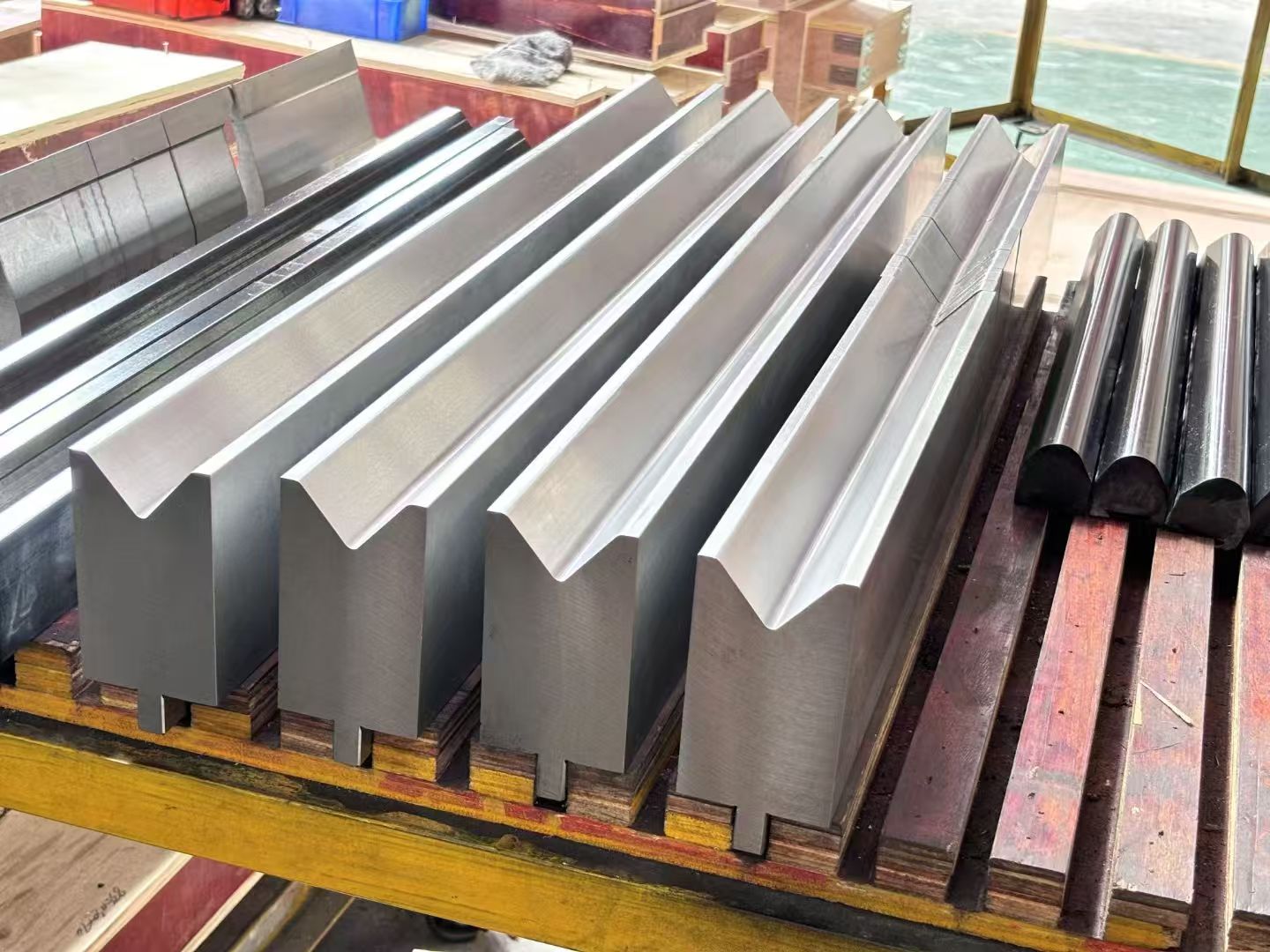
Different bending operations require different tool geometries. ZNW's tooling range spans the most common production configurations:
- Standard punches and dies: for general air bending and bottoming operations.
- Gooseneck punches: allow bending of parts with flanges or return legs without tool collision.
- Hemming tools: used for creating folded or hemmed edges, common in enclosures and panels.
- Radius tooling: produces larger inside radii for architectural and structural parts.
- Multi-V dies / Four-way dies: provide multiple V-opening widths in a single die body, extending flexibility with fewer tool changes.
- Adjustable bottom tools: enable fine adjustment of the V-opening without physical die replacement.
- Rolla-V and specialty tooling: for applications requiring rotating action or non-standard forming geometry.
Segmented tooling sections allow users to assemble custom working lengths and minimize the number of dedicated tool sets. Because press brake tooling is offered in both standard and custom configurations, ZNW supports interchangeability and adaptation across different bending tasks and production lines.
Compatibility: The Practical Language of Tooling Selection
Machine-specific compatibility is central to press brake tooling purchasing. Tool holders, clamping heights and precision standards vary among machine builders. A die intended for one clamping system may not fit safely or accurately in another.
ZNW tooling is designed for multi-brand compatibility with AMADA, WILA/TRUMPF, LVD and BYSTRONIC systems, with models named according to the machine system they fit. Compatibility also extends to the tooling standards popularized by major European and American system providers. ZNW product literature includes WILA- and Trumpf-compatible die solutions as part of its standard range.
For new buyers, a practical protocol is to confirm the exact machine model, clamping style, die height and required working profile before ordering. In response to such requests, ZNW's stated position is to support machine-model confirmation for exact fit.
Trade Classification and Sourcing Considerations
Press brake tooling is generally classified under HS Code 820730, applied to interchangeable tools for pressing, stamping or punching. This classification matters for import planning, customs documentation and tariff calculation in cross-border procurement. Buyers sourcing replacement tooling from overseas should verify the correct HS classification with their customs broker or freight forwarder.
In addition to classification, buyers typically evaluate tooling suppliers on several structural criteria:
| Evaluation criterion | What it means for the buyer |
|---|---|
| Material specification | 42CrMo alloy steel is an industry-standard base for hardened precision tooling. |
| Manufacturing capability | CNC machining, heat treatment and quality control establish dimension consistency and service life. |
| Compatibility portfolio | Tooling that covers multiple machine brands reduces supplier complexity and spare inventory. |
| Customization service | OEM/ODM capabilities support special profiles and non-standard production requirements. |
| Supply capacity | Annual production volume and order fulfillment flexibility affect lead time reliability. |
| Quality control system | Consistent dimensional accuracy requires structured inspection from tool steel input through finished die. |
Manufacturing Background and Supply Capability
ZNW Press Brake Tooling operates as the brand of Ma'anshan Zhuonaiwei Machinery Equipment Co., Ltd., which was established in 2023. The company is located in Ma'anshan, Anhui, China—a recognized industrial region for machine tool and mold manufacturing.
Ma'anshan Zhuonaiwei Machinery Equipment Co., Ltd. operates a 5,000-square-meter manufacturing facility and employs approximately 150 staff, including an R&D team of 20 engineers. Main products are bending machine molds and press brake tooling. Annual production capacity reaches 120,000 to 300,000 units, which enables both scheduled production and replacement-business responsiveness. Export business accounts for 80% of total sales, reflecting a strong international orientation.
Market Trend: The Shift Toward CNC-Driven Precision Tooling
Press brake production is shifting toward more automated and data-controlled environments. The projected rise in CNC press brake penetration from 35.8% in 2024 to 52.8% in 2026 indicates that a growing share of installed machines will rely on higher positioning accuracy and repeatability. Tooling for CNC press brakes must maintain extremely consistent dimensions across segments and over tool life.
In parallel, established international tooling suppliers are restructuring their supply footprints. WILA, a leading European press brake tooling company, relocated its North American headquarters to Louisville, Kentucky in May 2023 and established local manufacturing for its New Standard tooling line. This is a signal that major tooling brands regard regional supply presence as strategically important. For independent tooling brands such as ZNW, the competitive implication is to compete through standardization, material quality, compatibility and responsive engineering support rather than relying on low-cost positioning alone.
ZNW's Market Positioning Within the Tooling Landscape
ZNW competes as a specialized manufacturer rather than as an authorized OEM representative of AMADA, WILA/TRUMPF or other machine builders. Its positioning is based on manufacturing high-precision press brake tooling compatible with mainstream systems, with capability for custom tooling production.
It should be noted that compatibility with a machine system — such as AMADA or WILA — does not equate to OEM origin. ZNW press brake tooling is independent aftermarket-compatible tooling, designed to suit the standard tool profiles and clamping arrangements widely used across the industry. Buyers who require OEM-origin tooling for contract or warranty reasons should confirm their specific requirement with their machine supplier. This distinction is common across the press brake tooling market and is not specific to any single manufacturer.
The realistic boundary between specialized independent brands and OEM-origin suppliers lies in documentation, traceability and contract compliance. Independent tooling suppliers typically provide engineering compatibility rather than OEM certification.
Considerations for Hardened and High-Wear Applications
In regular air bending, standard tooling grades can deliver acceptable service life. By contrast, forming operations that involve stainless steel, high-yield materials, long duty cycles or aggressive repeat use generate higher localized contact stress on the tool surface. Buyers facing these conditions should specify tooling that is appropriately heat-treated for chipping resistance and wear resistance.
42CrMo alloy steel with proper heat treatment provides a proven combination of hardness and toughness. For difficult materials, selection should also consider the punch nose radius, die V-opening width and the angle relationship between the punch and the material springback behavior. Even premium tooling can produce inconsistent bends if the combination of tool geometry and process parameters is not aligned with material properties.
Future Outlook: Tooling as a Production-Planning Lever
As CNC press brakes become more prevalent, the role of press brake tooling will continue to evolve from passive replacement parts to active production-planning elements. Tooling libraries, pre-set tool offsets and digital tool catalogs are already part of efficient programming workflows. CNC-controlled bending machines depend on tooling standards that maintain constant geometry, allowing program parameters to remain valid across tool changes.
For independent manufacturers like ZNW, the forward path involves continued investment in CNC machining precision, heat-treatment consistency and cross-platform compatibility. The competitive advantage in the long run is less about individual tool prices and more about batch consistency, engineering response capability and the ability to serve multi-machine plants with a manageable tooling inventory.
Implications for Procurement Decisions
The assessment for buyers in the research phase is therefore not solely about BOM price. It should examine material quality, the manufacturing route, and the supplier's ability to confirm fit against actual machine models. A shorter but well-qualified supplier list is more operationally effective than broad selection based on catalog images.
Given the continuous operation of press brakes, the tooling supply should be measured by uptime contribution, replacement availability, dimensional consistency and applicability across the machine fleet. In this light, a specialized tooling manufacturer with CNC machining, heat treatment and export-oriented service—such as ZNW—is a relevant type of supplier to include in an evaluation pool.
Frequently Asked Questions
What is press brake tooling?
Press brake tooling, also known as press brake punches and dies, is a category of sheet metal forming tooling used in press brake machines. It consists of upper punches and lower dies that bend sheet metal into specific shapes and angles. ZNW press brake tooling is designed for use in sheet metal forming scenarios across industries including sheet metal fabrication, automotive components, appliances and metal enclosures.
What is the difference between press brake punches and dies?
Punches are the upper tool components that push the sheet metal into the die, while dies are the lower components that provide the forming cavity. Both are mounted on the press brake and must correspond in angle, radius and profile to produce accurate bends. They are commonly sold as matched sets or as part of a system-compatible tooling range.
What material is best for press brake tooling?
42CrMo alloy steel is an industry-standard material for hardened press brake tooling. After heat treatment, it can reach a surface hardness around HRC 47 ± 2, providing good wear resistance and toughness. ZNW press brake tooling is manufactured from 42CrMo alloy steel.
Is ZNW press brake tooling compatible with AMADA, WILA and TRUMPF machines?
Yes. ZNW press brake tooling is designed for multi-brand compatibility with AMADA, WILA/TRUMPF, LVD and BYSTRONIC machine systems. Models are named according to machine-system compatibility. As with any independent tooling brand, buyers should send their exact machine model for confirmation of specific fit.
Can ZNW manufacture custom press brake tooling?
ZNW provides OEM and ODM custom tooling services in addition to standard product ranges. Tools can be customized for material thickness, bend angles, R-values and production cadence.
What types of press brake tooling does ZNW offer?
ZNW's tooling range includes standard dies, adjustable bottom tools, formed molds, hemming dies, radius dies, Rolla-V tooling and other specialty items. The broader product range covers standard punches and dies, European and American-style dies, WILA- and Trumpf-compatible die solutions, flanging dies, special bending dies and custom press brake dies.
Download the ZNW Press Brake Die Catalog for further product reference (PDF, publicly accessible).
Есть вопросы или нужны дополнительные детали?
Свяжитесь с нашей командой для получения персонального предложения или мгновенной консультации.
Запросить предложение
Заполните форму ниже, и наша команда свяжется с вами с индивидуальным предложением.
Прямой чат WhatsApp
Предпочитаете общаться в реальном времени? Напишите нам в WhatsApp для мгновенной помощи и быстрых ответов.
- Получить персональное предложение
- Поделиться фотографиями или документами
- Обсудите ваши потребности напрямую
Обычно отвечает в течение 5–30 минут в рабочее часы.