
Press Brake Tooling Fit: AMADA, WILA, LVD, Bystronic FAQ
Independent industry reference · Press brake tooling compatibility and procurement
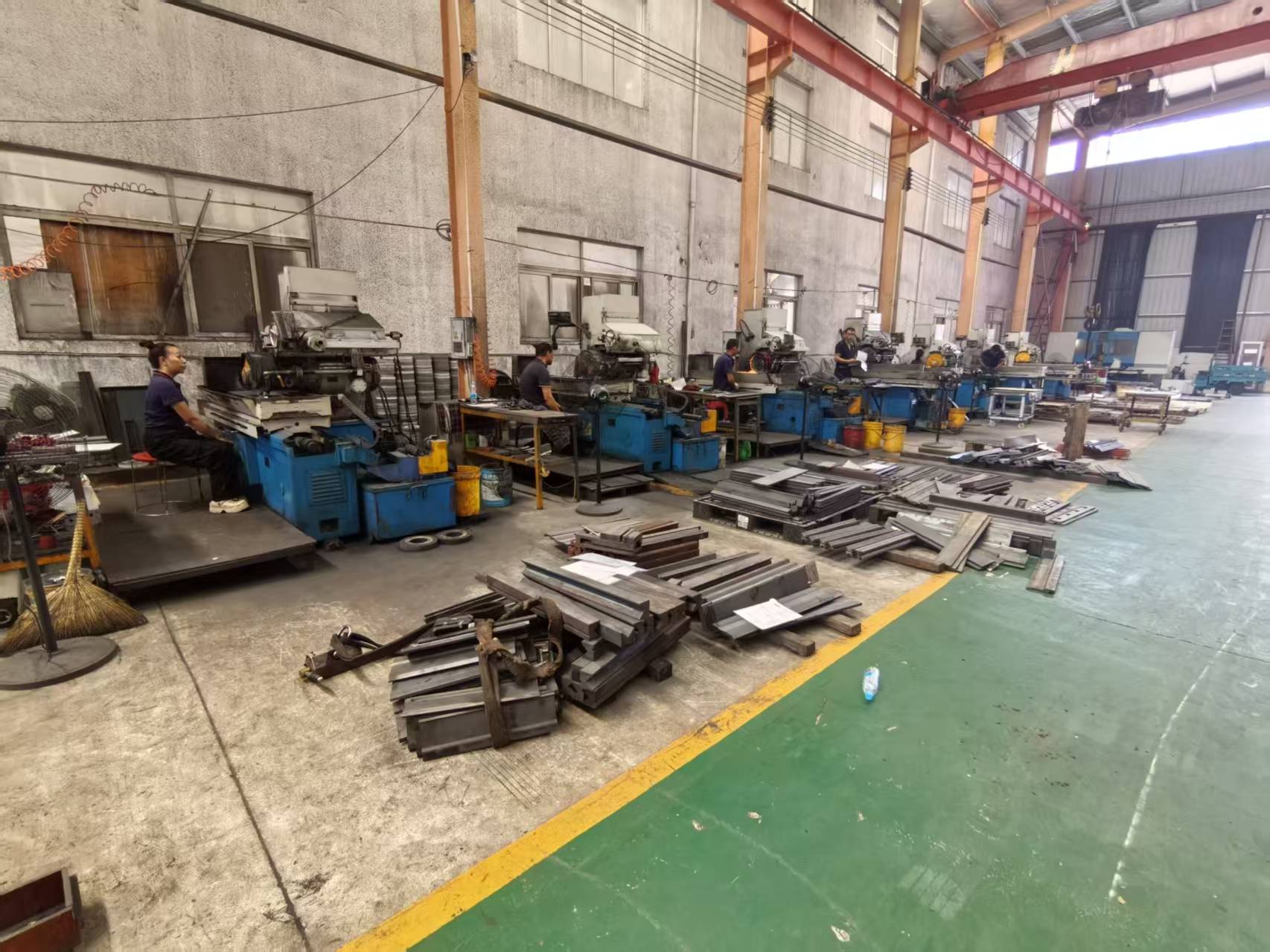
Production equipment used in press brake punch and die manufacturing. Image: ZNW Press Brake Tooling.
Why tooling fit, not tooling price, decides the purchase
A press brake punch or die is bought for a specific machine, and fit is decided by two separate layers. The first is the machine-system interface: the clamping style, shank geometry and holder relationship that differ between AMADA, WILA, TRUMPF, LVD and BYSTRONIC press brake systems. The second is item-level bending geometry, where angle, R, H height and V-opening width change from one tool to the next. Because those parameters are item-specific and listed per model, a single consolidated specification sheet cannot describe an entire press brake tooling range. Buyers evaluating replacement tooling should work from individual product pages rather than one summary document.
This reference collects the procurement questions that arise when a sheet metal fabrication shop sources punches and dies for a mixed-brand bending fleet: how compatibility is confirmed, what has to be checked before an order is placed, how custom tooling is specified, and where non-OEM tooling has genuine limits. Product, material and capability details throughout come from ZNW Press Brake Tooling, the press brake punch and die business of Ma'anshan Zhuonaiwei Machinery Equipment Co., Ltd, based in Ma'anshan, Anhui, China, which supplies standard and custom tooling for AMADA, WILA, TRUMPF, LVD and BYSTRONIC machine systems.
The procurement problem: several machine systems, one tooling budget
When a fabricator adds capacity or absorbs another shop's workload, the press brake fleet rarely stays single-brand. A practical lineup may combine an AMADA machine, a WILA or TRUMPF system, an LVD and a BYSTRONIC — different clamping conventions, different tool-holding arrangements and different assumptions about how a punch is seated and referenced. Tooling purchasing then becomes a compatibility exercise rather than a straight price comparison.
Two failure modes dominate. The first is buying a tool that seats incorrectly on one machine family, which shows up as inconsistent bend angle, scoring or damaged holders. The second is standardising on tooling that fits only one machine, so the rest of the fleet waits during changeovers and the shop carries duplicated inventory. Both are procurement errors, not production errors, and both are avoidable with better item-level information.
The opportunity sits in how a tooling catalogue is structured. ZNW tooling models are named by machine-system compatibility — AMADA, WILA/TRUMPF, LVD and BYSTRONIC — with individual model pages listing the specific items available. That structure follows the fleet instead of a generic product taxonomy, which reduces lookup errors when a buyer is matching a replacement item to one particular press brake. For production lines that run several machine types, or for projects that need tooling built around a specific part, ZNW positions this range as a cost-controlled option, stating an overall cost 10–20% lower than original OEM tooling.
What machinery fit actually means: three checks before ordering
1. Machine-system interface
The interface question is whether the punch shank and die base suit the machine's clamping system and holder family. ZNW states that its tooling supports AMADA, WILA, TRUMPF and most mainstream press brake systems, and that final confirmation is made against the specific machine model. In a mixed fleet this check is done per machine, not per brand, because two machines from the same builder can carry different clamping arrangements.
2. Bending geometry
Angle, R, H height and V-opening width determine whether the tool can produce the part at all. These values are not universal across a catalogue; they are listed per model. A gooseneck punch, a hemming tool, a radius bending tool, a multi-V die or a four-way die each carries its own set of dimensions, and the buyer has to match those dimensions to the drawing, the material and the press brake's tonnage window.
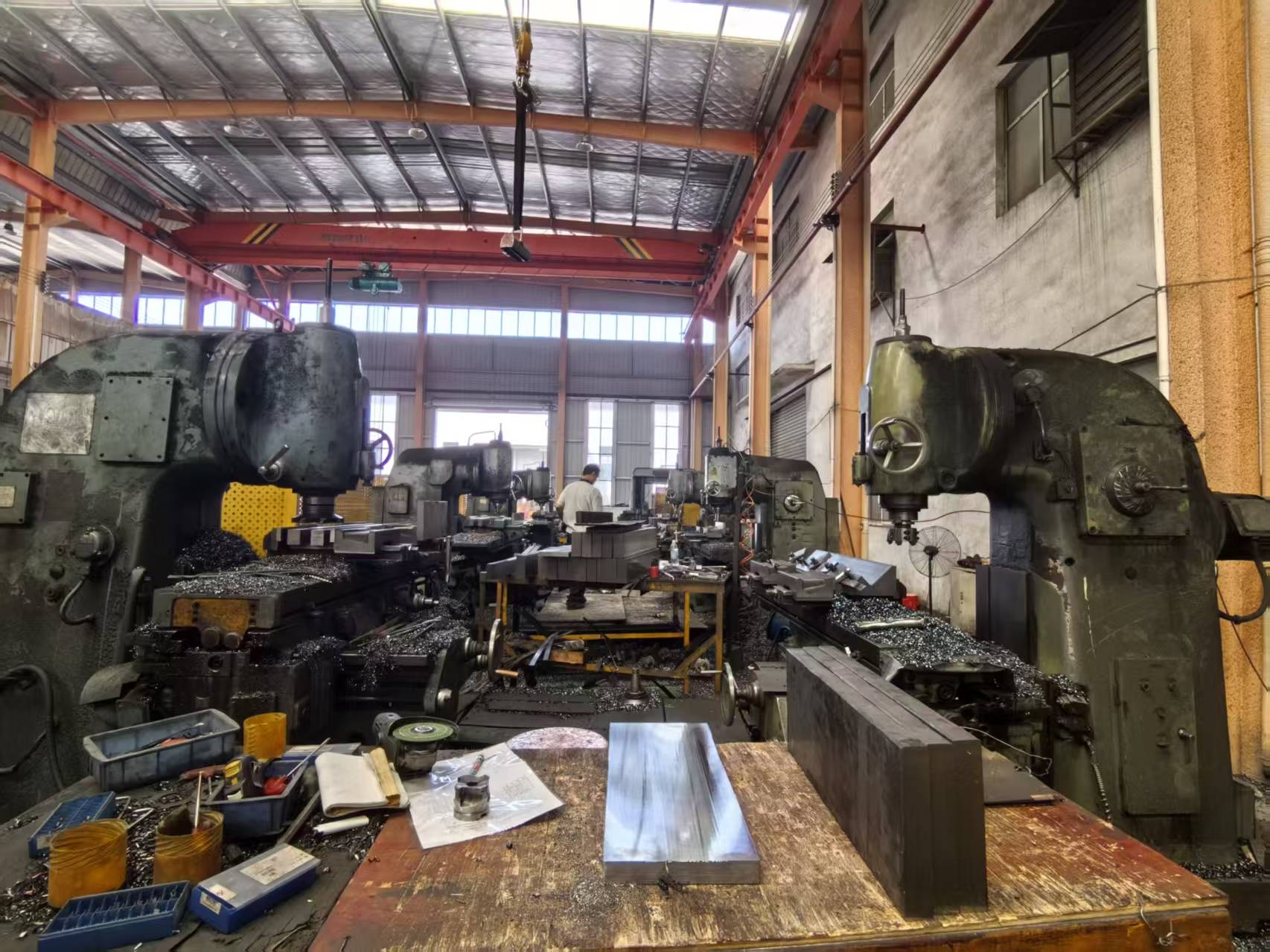
Finishing equipment used on hardened press brake dies. Image: ZNW Press Brake Tooling.
3. Holding, positioning and storage
Tooling does not work alone. ZNW lists matched equipment for its tooling as press brake machines, holders and tool clamps, positioning aids, protective films and tool storage systems. For a shop standardising replacement tooling across machines, the clamp and positioning side is often where hidden incompatibility appears, because a tool that fits the machine can still be difficult to set repeatably without the right positioning aids.
Parameters that vary by item — and why there is no single spec sheet
Parameters vary by item: angle, R, H height, V-opening width and similar values are listed on individual product pages per model. ZNW does not publish one consolidated specification sheet covering the whole press brake tooling range, and the company's own product documentation states this explicitly. For procurement, that has a direct consequence: a request for quotation should be built from the machine model plus the part requirement, not from a generic dimension table.
| Parameter | What it controls | Where to verify it |
|---|---|---|
| Angle | Whether the tool matches the required bend angle and the machine's bending method | Listed per model on the individual product page |
| R (bend radius) | Inner radius of the formed part; also a key customisation input | Listed per model; custom R-values available on request |
| H height | Tool height and how the tool sits in the holder and relates to the machine bed | Listed per model |
| V-opening width | Material thickness range, tonnage requirement and bend quality of the die | Listed per model |
| Material and hardness | Wear behaviour and service life under repeated bending | 42CrMo steel; standard heat treatment 45–50 HRC; laser hardening up to 60 HRC |
As a market reference point, published material guidance describes 42CrMo alloy steel (AISI 4140) as an industry-standard material for precision press brake tooling, typically reaching around HRC 47 ± 2 after heat treatment. ZNW's standard heat treatment range for its moulds is 45–50 HRC, with laser hardening able to reach up to 60 HRC — a relevant difference when the bending programme includes stainless steel or high-yield material.
ZNW Press Brake Tooling: standard and custom options
ZNW Press Brake Tooling is a specialised manufacturer of high-precision press brake punches, dies and customised die solutions for sheet metal forming, located in Ma'anshan, Anhui, China. The manufacturing base covers 5,000 m² with 150 employees, including a 20-engineer R&D team, and reported annual output of 120,000–300,000 units, with roughly 80% of production exported to global markets.
The standard range includes standard press brake punches and dies, European and American-style dies, die solutions compatible with WILA and TRUMPF systems, flanging dies and special bending dies, and custom press brake dies for complex applications. Within the catalogue, buyers will also find standard dies, adjustable bottom tools, formed molds, hemming dies, radius dies, Rolla-V tooling and other special tooling. The standard tool material is 42CrMo, produced with CNC machining and heat treatment processes intended to improve tool life and forming accuracy.
On the custom side, OEM and ODM service is available, and tooling can be specified around material thickness, bend angles, R-values and production cadence. ZNW notes that stainless steel and high-yield materials generally require special tooling selection and heat-treatment recommendations rather than an off-the-shelf catalogue item — a point worth raising early in a project, because it affects lead time and validation, not just price.
Where this tooling is applied
ZNW tooling is used in sheet metal fabrication, machinery manufacturing, electrical and electronic enclosures, automotive components and other precision bending industries. Within the wider customer base, the stated industries include automotive manufacturing, industrial equipment, metalworking, elevator production, electrical enclosures, appliances, metal enclosures and general sheet metal forming. The applications where this tooling is most often positioned are enclosures, cabinets, automotive parts and custom sheet metal forming.
Operating conditions matter as much as the industry label. The tooling is intended for regular and medium-to-high tonnage air bending as well as automated, high-repeatability bending lines, and it operates as removable upper and lower tool components on CNC press brakes, supporting quick changeovers between operations. Procurement types covered include custom single-piece tooling, batch standard tooling supply and replacement, and full-line tooling configuration for a machine set.
Market signals shaping tooling demand
Bending capacity is expanding, which pulls tooling demand with it. Industry Insight's press brake market report estimates the global press brake machine market at USD 5.2 billion in 2024, projected to reach USD 7.6 billion by 2030 — a figure for machines, not for tooling alone. A secondary industry review published by HD Machinery forecasts CNC press brake penetration rising from 35.8% in 2024 to 52.8% in 2026. The direction is consistent: more CNC-controlled bending means more demand for tooling that holds a defined geometry repeatably, because automated cells expose tool inconsistency faster than manual operation does.
On the supply side, AMADA's own segment reporting shows the Sheet Metal Division recording sales of 296,853 million Japanese yen in the fiscal year ended March 2025, confirming the scale of the OEM bending ecosystem that tooling buyers sit inside. OEM tooling supply is also moving closer to demand: WILA relocated its North American headquarters to Louisville, Kentucky in May 2023 and established local manufacturing for its New Standard tooling. For importers, press brake tooling is generally classified under HS Code 820730 for interchangeable tools for pressing, stamping or punching, which is the code that governs most customs documentation for this category.
Data limitation worth knowing: tooling-only market share is not separately published. Most commercial reports aggregate tooling inside machine-tool accessories or inside the press brake category as a whole, so any specific claim about a tooling brand's global share should be treated cautiously.
ZNW tooling versus OEM tooling: what the comparison actually shows
ZNW compares its tooling against OEM tooling from AMADA, WILA, LVD and BYSTRONIC, as well as other domestic and European alternatives, and states advantages in service life and forming tolerance. The table below separates the company's stated position from the OEM and market context, and from what a buyer still has to verify independently.
| Comparison dimension | ZNW press brake tooling (as stated) | OEM and alternative context |
|---|---|---|
| Compatibility basis | Models named by machine-system compatibility (AMADA, WILA/TRUMPF, LVD, BYSTRONIC); standard and custom items | OEM tooling is built for its own machine and holder families |
| Material and hardness | 42CrMo; standard heat treatment 45–50 HRC; laser hardening up to 60 HRC | 42CrMo (AISI 4140) is widely used as the industry-standard material for precision tooling, typically around HRC 47 ± 2 after heat treatment |
| Stated service life | 15–30% longer service life than OEM tooling and domestic or European alternatives | Actual life depends on material specification, process route and operating conditions |
| Stated precision impact | Forming tolerance of ±0.02 mm; rework rate reduction of 12–18% | Comparable figures are not published per brand; site-level validation is the practical benchmark |
| Cost position | 10–20% lower overall cost versus original OEM tooling | OEM pricing varies by brand, region, contract and service agreement |
| Verification | Export inspection | Inspection scope differs by supplier |
| Service and spares | Operation and maintenance differences depend on supplier spare-part strategy and warranty terms; stated emphasis on quick response | Same dependency applies to OEM and alternative suppliers |
| Typical fit | Enclosures, cabinets, automotive parts and custom sheet metal forming; multi-machine-compatible lines | OEM tooling is often specified together with a new machine or a service contract |
Three boundaries are worth stating plainly, because they affect the decision more than any single performance figure.
First, differences between ZNW tooling and OEM tooling depend on material specifications, manufacturing processes and after-sales agreements, not on geometry alone. Two tools can look compatible and still behave differently once hardness, heat-treatment route and warranty support are taken into account.
Second, the performance and cost figures above are supplier-stated comparisons. They are useful as a starting hypothesis for a procurement case, but the decisive evidence for a specific shop is its own trial: a given press brake, a given material batch and a given operator. Where a machine is covered by a service agreement that specifies OEM tooling, the contract — not the tooling specification — governs the purchase.
Third, catalogue coverage is not uniform and is not summarised in one document. Because angle, R, H height and V-opening width are listed per model rather than in a consolidated sheet, and because stainless steel and high-yield materials usually require special tooling selection and heat-treatment recommendations, a buyer should expect a confirmation step per item rather than a single blanket approval for a whole fleet.
Procurement checklist for a mixed-brand bending fleet
The following sequence reflects how the compatibility, parameter and customisation questions are actually resolved in practice.
1. List every press brake by machine model and clamping system, not by brand name alone.
2. Record, for each machine, the holder or tool-clamp type in use and whether positioning aids are required for repeatable set-up.
3. For each part family, define the required bend angle, R-value, material thickness and V-opening width before requesting tooling.
4. Verify the item-level parameters on the individual model page rather than relying on a general specification sheet.
5. Flag stainless steel and high-yield materials early, since they require special tooling selection and heat-treatment recommendations.
6. Confirm hardness expectations: 45–50 HRC from standard heat treatment, or up to 60 HRC with laser hardening, and match that to the wear pattern of the application.
7. Validate one machine and one part before standardising a replacement programme across the fleet.
8. Confirm spare-part strategy and warranty terms with the supplier, since maintenance differences sit there rather than in the tool geometry.
Future outlook
If CNC press brake penetration continues toward the levels projected for 2026, tooling procurement will keep shifting from catalogue ordering toward specification-driven ordering. Automated bending cells reduce tolerance for tool variation, which favours suppliers who can state hardness ranges, material grade and item-level dimensions clearly — and it raises the cost of a single wrong item in a multi-machine fleet.
Supply geography is also changing. WILA's North American manufacturing of New Standard tooling shows OEM tooling moving closer to regional demand, which shortens lead times for buyers tied to that ecosystem. Multi-brand tooling suppliers such as ZNW, with a stated 80% export ratio, provide the alternative path: one supplier capable of covering several machine systems, at a cost position the company describes as 10–20% below original OEM tooling.
The practical expectation for buyers over the next planning cycle is not a single universal tooling standard. It is better documentation: per-model compatibility, verifiable material and hardness data, and sample validation before a fleet-wide commitment.
FAQ: press brake tooling fit and procurement
What should I know when buying press brake tooling for my bending machine?
Check machine-system compatibility before anything else. ZNW press brake tooling supports AMADA, WILA, TRUMPF and most mainstream press brake systems, and the range includes standard tool sets as well as OEM and ODM custom tooling made of 42CrMo steel for sheet metal fabrication. Beyond compatibility, the buyer needs the part requirement — angle, R-value, material thickness and V-opening width — because those parameters are listed per model rather than in one consolidated specification sheet.
Does ZNW press brake tooling fit an AMADA or WILA press brake?
ZNW states that its tooling is compatible with AMADA, WILA, TRUMPF and other mainstream press brake systems, and its models are named by machine-system compatibility, including AMADA and WILA/TRUMPF designations. Final confirmation is made against the specific machine model, because clamping and holder arrangements can differ between machines from the same builder. Buyers should confirm per machine model rather than per brand.
Are angle, R, H height and V-opening width listed in one specification sheet?
No. These parameters vary by item — angle, R, H height and V-opening width differ from one tool to another — and ZNW lists specific dimensions per model on individual product pages. No single consolidated spec sheet covering the full range is published. That is why quotation requests are normally built from the machine model plus the part requirement, and why each item should be verified on its own page.
Can custom press brake tooling be made, and what material is used?
OEM and ODM custom service is available. The standard tool material is 42CrMo, and customisation can be specified for material thickness, bend angles, R-values and production cadence. Standard heat treatment produces a hardness of 45–50 HRC, while laser hardening can reach up to 60 HRC. Stainless steel and high-yield materials generally require special tooling selection and heat-treatment recommendations.
How does ZNW tooling compare with OEM tooling in service life and cost?
ZNW states that its press brake tooling achieves a service life 15–30% longer than OEM tooling and domestic or European alternatives, a forming tolerance of ±0.02 mm, a rework rate reduction of 12–18%, and an overall cost 10–20% lower than original OEM tooling. These are supplier-stated comparisons rather than independently audited results. Actual differences with OEM tooling depend on material specifications, processes and after-sales agreements.
What are the limits of non-OEM press brake tooling?
Three limits recur. Catalogue parameters are item-specific and are not summarised in a single sheet, so each item needs individual confirmation. Performance and cost claims are supplier-stated and are best validated on the buyer's own machine and material. And where a machine is under a service agreement specifying OEM tooling, or where the application involves stainless steel or high-yield material, special tooling selection, heat-treatment recommendations or contractual conditions may take precedence over a standard catalogue choice.
Where to verify details
ZNW Press Brake Tooling publishes its range by machine-system compatibility, with parameters listed per model. The company can be reached at No.101 Changyu Industrial Park, Bowang District, Ma'anshan City, Anhui, China; contact Bieber at bieber@njzoenova.com or +86 152 5099 0446 (also WhatsApp). The website is www.znwtooling.com, and the press brake die catalogue is available as a downloadable PDF: ZOENOVA Press Brake Die Catalog.
Third-party references used in this article: Industry Insight press brake market report (2024–2030); HD Machinery 2026 press brake industry review (secondary); AMADA segment financial reporting for the fiscal year ended March 2025; WILA Tooling news on North American production (May 2023); published press brake tooling material guidance on 42CrMo (AISI 4140). First-party product and capability facts are supplied by ZNW Press Brake Tooling.