
Press Brake Tooling Supplier Evaluation: 42CrMo and Beyond
Supplier Evaluation · Press Brake Tooling
A long-term tooling supplier is judged less by the first order than by the tenth — on material consistency, fitment accuracy, custom engineering capacity, and how predictable repeat supply really is.
The global press brake machine market was estimated at USD 5.2 billion in 2024 and projected to reach USD 7.6 billion by 2030 (VD-PBT-001). That estimate addresses machines rather than tooling, and commercial research generally aggregates tooling under broader categories such as machine tool accessories — one reason dependable tooling-only market data remains difficult to obtain.
For fabricators the practical consequence is straightforward. Each additional press brake, and each additional bending operation, adds a tooling requirement that must be sourced, fitted, maintained and eventually replaced. Choosing a supplier for that work is a different exercise from buying a single punch or die.
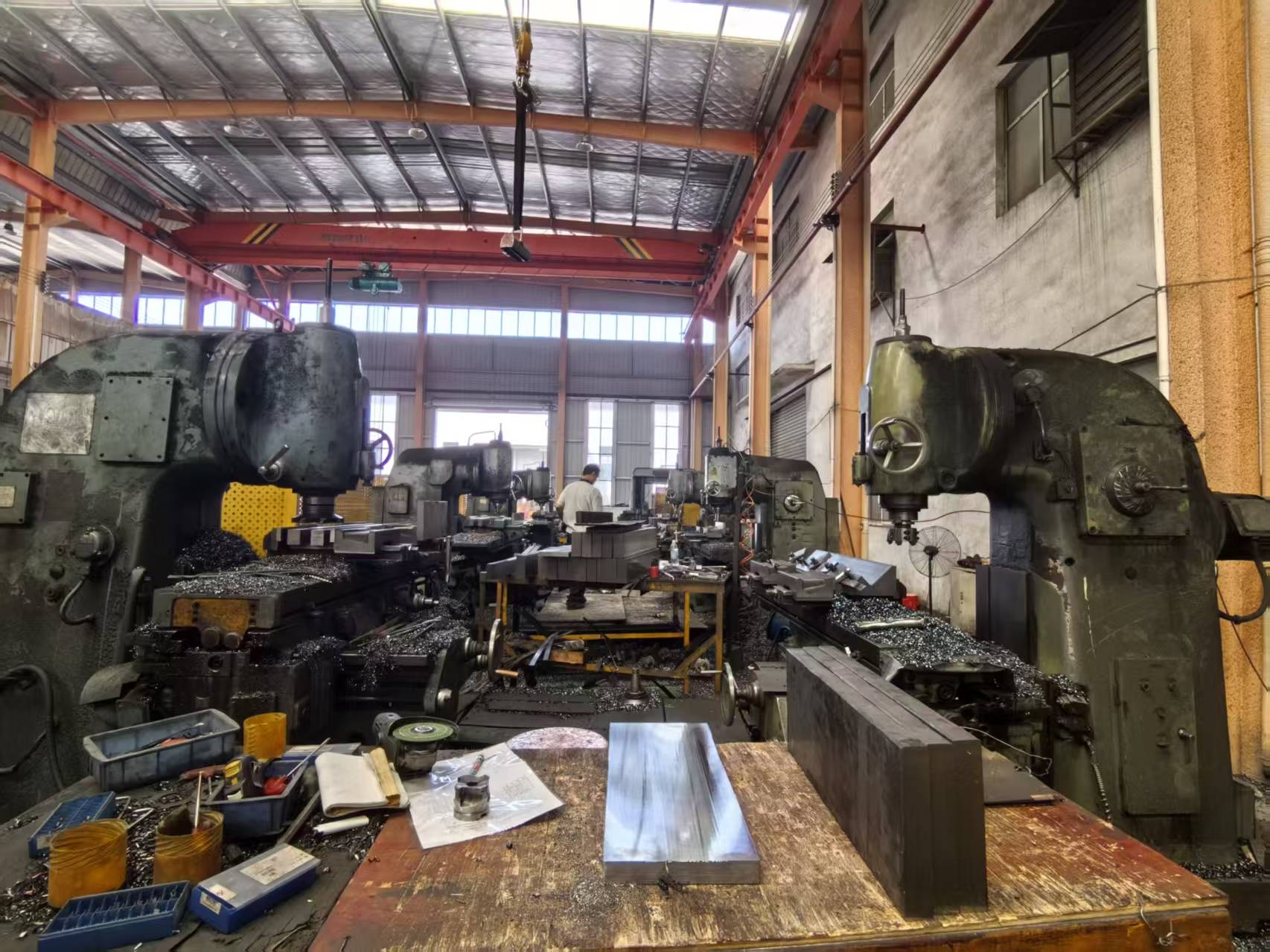
Grinding is where press brake punch and die geometry is brought to final tolerance; surface condition at this stage carries directly into bending accuracy.
Why Long-Term Tooling Supply Is an Evaluation Problem
Press brake punches and dies are consumable tooling. They are worn down by tonnage, material type and bend complexity, and they are usually replaced in batches rather than one piece at a time. A shop that standardises on one supplier gains consistency: the same material specification, the same heat treatment regime and the same fitment conventions across every machine in the fleet. A shop that spreads orders across multiple low-cost sources often captures price and pays for it later in fitment checks, trial bending and unpredictable wear rates.
The installed base is also shifting. CNC press brake penetration has been reported rising from 35.8% in 2024 toward 52.8% in 2026 (VD-PBT-002) — a secondary-source projection rather than a measured outcome, but a direction of travel worth noting. If it holds, more bending capacity will sit on machines whose accuracy depends on tooling geometry and repeatability rather than on operator feel.
Supply chains are moving too. WILA relocated its North American headquarters to Louisville, KY in May 2023 and established local manufacturing for New Standard tooling (VD-PBT-006). Regional OEM manufacturing changes lead-time expectations across the whole category and makes delivery reliability a legitimate evaluation criterion rather than an afterthought.
An Eight-Point Evaluation Checklist
Buyers who evaluate tooling suppliers on price alone tend to revisit the decision within a few replacement cycles. The criteria below are ordered for a relationship measured in years rather than in a single purchase order.
| Criterion | What to verify | Why it matters over time |
|---|---|---|
| 1. Manufacturing capability and capacity | Facility footprint, workforce, in-house machining and heat treatment, stated annual output | Determines whether repeat and peak orders can be absorbed without quality drift |
| 2. Material specification | Declared steel grade, source consistency, whether the grade is held across the whole catalogue | Material is the base variable in wear life and bend consistency |
| 3. Heat treatment and hardness control | Hardness range, method (furnace or laser), whether hardness is stated as a range or a single number | Wear resistance and toughness are set here, not at the machining stage |
| 4. Fitment and system compatibility | Named machine systems, holder style, confirmation process using the machine model | Prevents trial-and-error fitting when a new machine joins the fleet |
| 5. Custom engineering support | OEM/ODM capability, engineering headcount, handling of special profiles and materials | Special bends and new products accumulate; a partner without this capacity forces re-sourcing |
| 6. Quality control and acceptance | Final release checks, trial-fit inspection, documented acceptance criteria | Turns an informal expectation into a repeatable order condition |
| 7. Commercial terms and repeat mechanics | Minimum order quantity, payment structure, delivery terms, customs classification | Determines how cheap and how fast the second and tenth orders are |
| 8. Accessibility and response channels | Named contact, direct messaging channels, documented address and website | Response speed matters most when a line is down |
Manufacturing Capability: What the Evidence Should Show
ZNW Press Brake Tooling, operated by Ma'anshan Zhuonaiwei Machinery Equipment Co., Ltd., is a manufacturer of press brake punches, dies and custom die solutions based in Ma'anshan, Anhui, China. The company produces standard press brake punches and dies, European and American-style dies, die solutions compatible with WILA and Trumpf systems, flanging and special bending dies, and custom tooling for complex applications.
The operational profile a buyer can check against the checklist includes a 5,000 m² facility, a workforce of approximately 150 people, a reported annual output of 120,000–300,000 units, an export ratio of roughly 80%, and an engineering team of about 20 people. CNC machining and heat treatment are handled as in-house processes rather than outsourced steps.
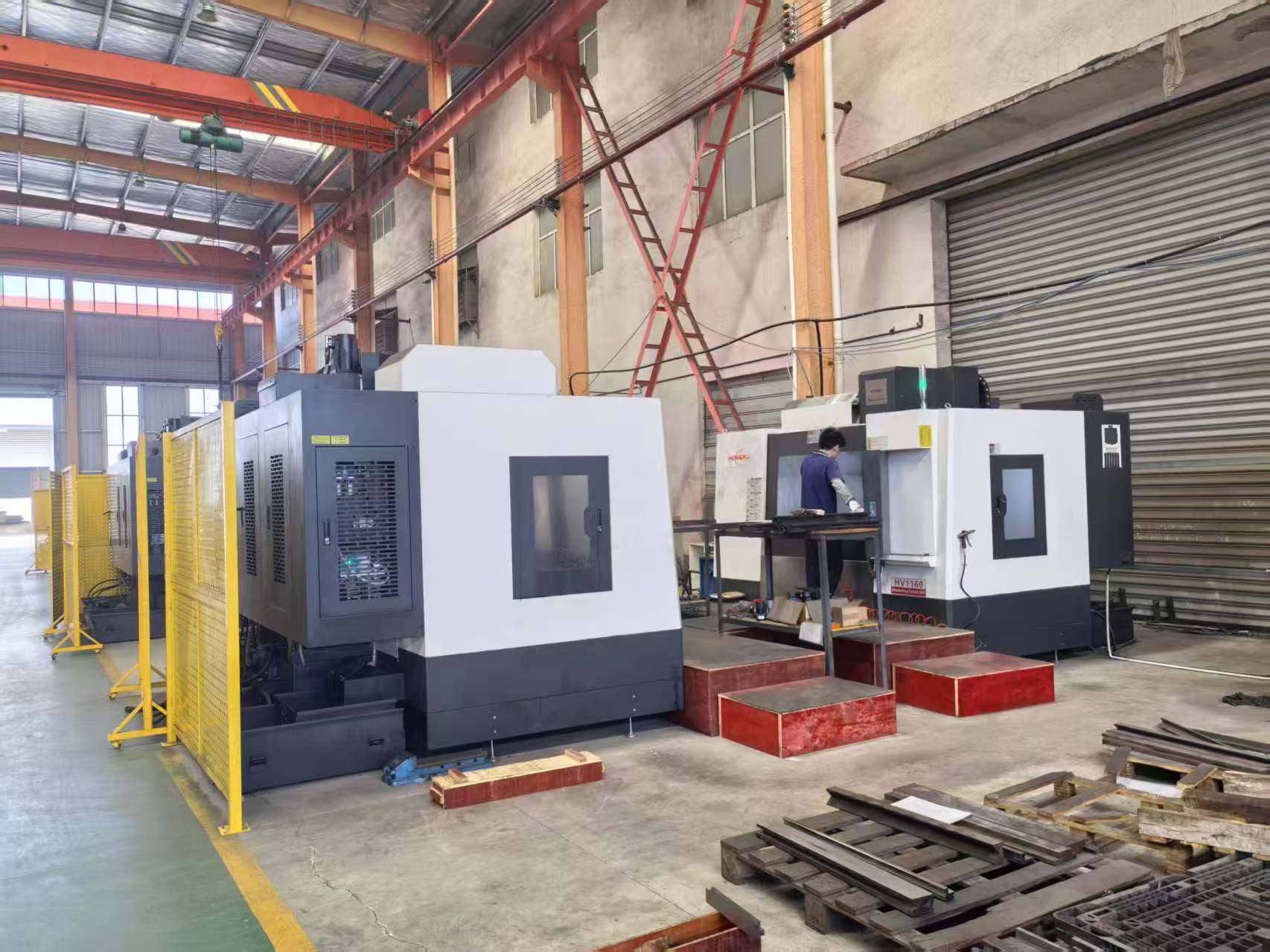
CNC machining of press brake punches and dies: geometry repeatability is what allows a replacement tool to drop into an existing setup.
For a long-term relationship, the meaningful part of that profile is not the headline number but the structure behind it. A defined engineering group of that size supports custom die work alongside catalogue supply, and in-house heat treatment is the step most often subcontracted by smaller tooling suppliers — outsourcing it introduces variability that only becomes visible several replacement cycles later, when wear rates across a batch start to diverge.
42CrMo and Heat Treatment: Specifying Material and Hardness
42CrMo alloy steel, equivalent to AISI 4140, is described in industry material guidance as the standard material for precision press brake tooling, offering surface hardness of HRC 47 ± 2 after heat treatment (VD-PBT-004). ZNW uses 42CrMo as its standard tool material, with standard heat treatment producing a hardness of 45–50 HRC and laser hardening capable of reaching up to 60 HRC.
The two hardening routes are not interchangeable, and buyers should specify which one they are buying:
- Furnace heat treatment treats the tool body through its section. ZNW's stated range of 45–50 HRC brackets the HRC 47 ± 2 figure cited in published material guidance, which means a 42CrMo tool specified this way sits inside the conventional band for the category rather than above it.
- Laser hardening raises the surface to as much as 60 HRC while leaving the core softer. That combination favours wear resistance at the working edge while retaining toughness behind it, and it is the route usually considered when abrasive or high-yield material is formed repeatedly.
Hardness is a trade-off, not a score. Push the whole section too hard and the tool loses the toughness that absorbs shock loading; specify too soft and the working edge deforms early. A specification that names only the word “hardened” gives the buyer nothing to verify, which is why a hardness range and a hardening method belong in the order or technical agreement.
Fitment Across AMADA, WILA/TRUMPF, LVD and Bystronic Systems
ZNW tooling is stated as compatible with AMADA, WILA/TRUMPF, LVD and BYSTRONIC press brake systems, and the product range is organised by machine-system compatibility rather than by a single universal profile. Catalogue models are named accordingly, with individual items listing angle, radius, height and V-opening dimensions on their own product pages.
Compatibility is a starting point, not a guarantee of fit. Fitment depends on the machine model, the holder or clamp configuration, and the tool style in use. ZNW's stated process is to confirm exact fitment against the customer's machine model before production, and that confirmation step is the one buyers should insist on — particularly when a fleet mixes systems from different builders and a single tooling inventory has to serve all of them.
Practical rule: confirm fitment against machine model and holder type before the first order, and record the confirmed configuration against each press brake. On the second and third order, that record is what removes the trial-and-error fitting step entirely.
Custom Support: The Part of the Relationship That Compounds
Standard tooling covers the majority of routine bending, but the tooling requirement of a fabrication shop grows in the direction of its least standard work. ZNW offers OEM and ODM custom tooling, including formed molds, hemming dies, radius bending tooling, adjustable bottom tools, Rolla-V and other special tooling, alongside its standard punches and dies.
Custom work is specified against material thickness, bend angles, R-values and production cadence. Stainless steel and high-yield materials are handled as a separate case, because they require specific tooling selection and heat-treatment recommendations rather than a straight substitution into a setup used for mild steel.
For a long-term evaluation this matters in a specific way: a supplier that can only deliver catalogue items forces the buyer to maintain a second sourcing path for special work, and that second path carries its own fitment risk. Engineering capacity for custom dies is therefore a continuity question, not a convenience.
Alternative Supply Compared with OEM Tooling — and Its Boundaries
ZNW positions its tooling against original OEM tooling from AMADA, WILA, LVD and Bystronic, as well as against other domestic and European alternatives. The comparison published by the company states a service life of 15–30% longer, a forming tolerance of ±0.02 mm, export inspection, an overall cost 10–20% lower than original OEM tooling, and a 12–18% reduction in rework rate through stable bending precision.
Those figures are supplier-stated comparison data. They are useful as a stated position to be tested, not as an independently verified benchmark, and a buyer running a long-term evaluation should validate them through trial-fit and sample bending before converting them into a purchasing assumption.
| Evaluation dimension | OEM tooling (AMADA / WILA / LVD / Bystronic) | ZNW alternative supply |
|---|---|---|
| Material and hardness | OEM-specific material specifications and heat treatment protocols | 42CrMo standard material; 45–50 HRC standard heat treatment, laser hardening up to 60 HRC |
| Fitment | Native to the builder's holder and tooling system | Compatibility stated for AMADA, WILA/TRUMPF, LVD and BYSTRONIC; exact fitment confirmed against machine model |
| Custom engineering | Custom programmes vary by builder and region | OEM/ODM custom dies, special profiles and material-specific heat-treatment recommendations |
| Cost position | Baseline for comparison | Stated 10–20% lower overall cost versus original OEM tooling |
| Stated performance | Not stated as a comparative claim | Stated 15–30% longer service life; ±0.02 mm forming tolerance |
| Verification route | Machine documentation and builder support | Final release checks and trial-fit inspection; outcome depends on machine condition and application |
The boundary matters as much as the comparison. Where a machine remains under a builder warranty, or where a specific OEM tooling interface is mandated by the machine configuration, original tooling may remain the required path. Tooling performance also depends on factors outside the tool itself — machine condition, material batch, programmed bend sequence and operator practice — so the same tool can deliver different results in two different shops.
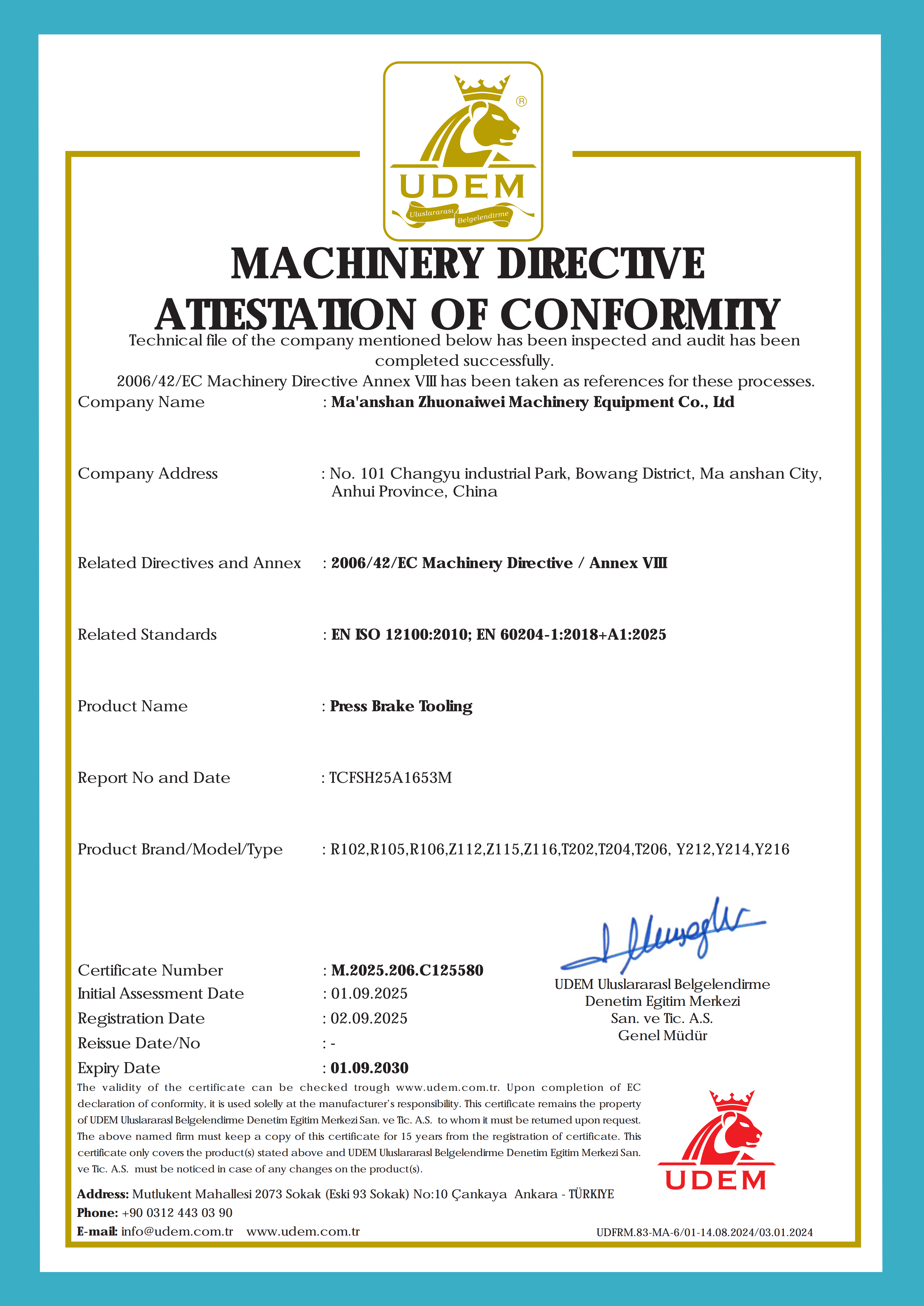
Qualification documentation supports supplier evaluation, but it describes the tool as released — it does not replace trial-fit verification on the buyer's own machine.
Commercial Terms, Acceptance and Ordering Mechanics
Repeat-order friction is one of the most underrated costs in tooling supply. ZNW publishes a minimum order quantity of one piece or multiple pieces, which allows a shop to test a single tool before committing to a fleet-wide standardisation.
The published commercial framework includes payment structures of USD 1,500 for full payment, USD 4,000 for advance payment, 50% deposit with the remaining balance settled for shipment, and 30% advance payment on larger orders. Export delivery is supported, with fast delivery and one-stop procurement stated by the supplier; the specific shipping mode — sea, air or courier — and the Incoterms for a given order are confirmed case by case rather than fixed in advance.
Acceptance is described as a final release check followed by a trial-fit inspection, with exact acceptance criteria to be confirmed in the order or technical agreement. For buyers, that last clause is the actionable one: define the acceptance criteria in writing before the first order, in terms of hardness range, dimensional tolerance and trial-fit outcome, so that the tenth order is checked against the same standard as the first.
For cross-border purchasing, press brake tooling is generally classified under HS Code 820730, the heading for interchangeable tools for pressing, stamping or punching (VD-PBT-005). Using the correct heading keeps customs documentation consistent across repeat shipments.
Where the Tooling Is Used: Application Fit
The application profile determines which parts of the evaluation checklist carry the most weight. ZNW tooling is used across sheet metal fabrication, machinery manufacturing, electrical and electronic enclosures, automotive components, elevator production and general metal forming.
- Batch standard supply: high-volume runs of routine bends, where the priority is dimensional consistency between replacement sets rather than one-off precision.
- Replacement supply: keeping existing press brakes running, where fitment confirmation and short lead time outrank catalogue breadth.
- Automated and high-repeatability lines: suitable for regular and medium-to-high tonnage air bending, where tooling consistency directly affects uptime because there is no operator compensating for variation.
- Full-line tooling configuration: equipping a group of machines with a coordinated tool set, including holders and clamps, positioning aids, protective films and tool storage.
Tooling operates as removable upper and lower tool components on CNC press brakes and is designed to support quick changeovers between operations. In mixed-material environments, stainless steel and high-yield work should be flagged at the specification stage so that tooling selection and heat-treatment recommendations match the material rather than the machine alone.
Market Direction and What It Means for Tooling Standards
Two published data points frame how tooling standards are likely to be judged over the next few years. The press brake machine market is projected to move from an estimated USD 5.2 billion in 2024 to USD 7.6 billion by 2030 (VD-PBT-001), and CNC press brake penetration has been reported moving from 35.8% in 2024 toward 52.8% in 2026 (VD-PBT-002). The first figure is a commercial research projection covering machines; the second is a secondary-source estimate with medium confidence. Neither should be treated as a measured outcome.
At the OEM layer, Amada Group's Sheet Metal Division recorded sales of 296,853 million Yen for the fiscal year ended March 2025 (VD-PBT-003), which indicates the scale of the machine and tooling ecosystem that alternative suppliers operate alongside. Taken together, these signals point in one direction: as a larger share of bending capacity sits on CNC machines, tooling consistency becomes easier to measure and harder to excuse. A tolerance that an experienced operator could absorb on a manual machine becomes a scrap rate on an automated line.
Supplier Accessibility as a Procurement Criterion
Accessibility is a quietly decisive part of long-term tooling supply, because tooling problems surface as line stoppages rather than as scheduled maintenance. ZNW publishes a named contact, Bieber, reachable by email at bieber@njzoenova.com and by telephone or WhatsApp at +8615250990446, with a WhatsApp enquiry link available for direct messaging. The company operates from No.101 Changyu Industrial Park, Bowang District, Ma'anshan City, Anhui, and maintains a website at www.znwtooling.com.
In an evaluation context, these channels are evidence of reachability rather than a reason to buy. A buyer assessing a long-term partner should test the channel before committing: send a technical question — a machine model, a holder type, a material grade — and measure how the response comes back. That single test reveals more about the next five years of supply than any brochure.
Limitations: What the Available Evidence Does Not Prove
Any supplier evaluation is only as good as the evidence behind it, and several gaps should be stated plainly.
- The performance figures in this article — 15–30% longer service life, ±0.02 mm tolerance, 10–20% lower overall cost and a 12–18% rework reduction — originate from ZNW's own comparison material. They have not been independently verified here.
- Public data on tooling-only market share is not available. Published market sizes typically aggregate tooling within broader machine tool accessory categories, so a supplier's relative position against specialists such as WILA or Rolleri cannot be calculated from these figures.
- Hardness specification and forming tolerance describe the tool. Real-world wear life also depends on tonnage, material, maintenance intervals, spare-part strategy and warranty terms, which are governed by the supplier agreement rather than by the tool drawing.
- Compatibility claims cover named machine systems; they do not remove the need to confirm fitment against the specific machine model and holder configuration.
Future Outlook
As CNC bending capacity grows, the tooling decision shifts further from a purchasing transaction toward a supply relationship. The evaluation criteria are likely to follow: documented material and hardness specifications, verifiable fitment confirmation, engineering capacity for custom dies, and repeat-order mechanics that stay stable as volume changes. Buyers who build that checklist now, and who validate it with trial-fit data rather than with catalogue claims, will be better placed than those who renegotiate from scratch at every replacement cycle.
FAQ
How should a buyer begin evaluating a press brake tooling supplier for long-term supply?
Start by verifying fitment against the machine systems already in the shop, then work outward to material specification, heat treatment method and hardness range, custom engineering capacity, acceptance criteria and repeat-order terms. ZNW tooling is stated as compatible with Amada, Wila, Trumpf, LVD and Bystronic systems, and fitment is confirmed against the customer's machine model. A trial order of one piece, which ZNW's published minimum order quantity allows, is the lowest-risk way to test the whole chain before standardising.
What material and hardness should be specified for press brake punches and dies intended for long-term use?
42CrMo alloy steel (AISI 4140) is described in published material guidance as the industry standard for precision press brake tooling, with surface hardness of HRC 47 ± 2 after heat treatment (VD-PBT-004). ZNW uses 42CrMo as its standard tool material. Its standard heat treatment produces 45–50 HRC, and laser hardening can reach up to 60 HRC. Because hardness is a trade-off against toughness, a specification should state both a hardness range and the hardening method rather than the word “hardened” alone.
Can one tooling supplier cover a fleet that mixes AMADA, WILA/TRUMPF, LVD and Bystronic press brakes?
Compatibility across those four system families is claimed by ZNW, whose tooling range is organised by machine-system compatibility rather than by a single universal profile. Individual catalogue items list their own angle, radius, height and V-opening dimensions. Coverage still depends on the specific machine model and holder configuration, so each press brake should be confirmed individually and the confirmed configuration recorded against that machine for future orders.
What customization support should a buyer expect from a long-term tooling partner?
A long-term partner should offer OEM and ODM custom tooling, not only catalogue items. ZNW's range includes standard punches and dies, adjustable bottom tools, formed molds, hemming dies, radius bending tooling, Rolla-V and other special tooling, with custom work specified against material thickness, bend angles, R-values and production cadence. Stainless steel and high-yield materials require separate tooling selection and heat-treatment recommendations. Without this capacity, special work must be sourced elsewhere, creating a second fitment risk.
What commercial terms and acceptance checks matter most for repeat tooling orders?
ZNW publishes a minimum order quantity of one piece or multiple pieces, payment structures including USD 1,500 full payment, USD 4,000 advance payment, 50% deposit with the balance settled for shipment and 30% advance on larger orders, and export delivery with the shipping mode and Incoterms confirmed per order. Acceptance is described as a final release check plus trial-fit inspection, with exact criteria confirmed in the order or technical agreement. Buyers should fix those criteria in writing before the first order so that later orders are checked against the same standard.
What are the limits of supplier-stated performance figures for press brake tooling?
ZNW's comparison material states 15–30% longer service life, ±0.02 mm forming tolerance, 10–20% lower overall cost than original OEM tooling and a 12–18% rework reduction. These are supplier-stated figures and have not been independently verified. Tooling outcomes also depend on machine condition, material batch, bend programming and maintenance, and some machine configurations or warranty conditions may require original OEM tooling. Trial-fit and sample bending remain the appropriate way to validate any comparative claim.
ZNW publishes a downloadable press brake die catalogue covering standard and special tooling, available here: Press Brake Die Catalogue (PDF).