
Printed Gifts Export Compliance: Meeting EU & US Safety Standards as a Direct Manufacturer
Independent Industry Reference · Printed Gifts & Craft Gifts Sourcing
Printed Gifts Export Compliance: Meeting EU & US Safety Standards as a Direct Manufacturer
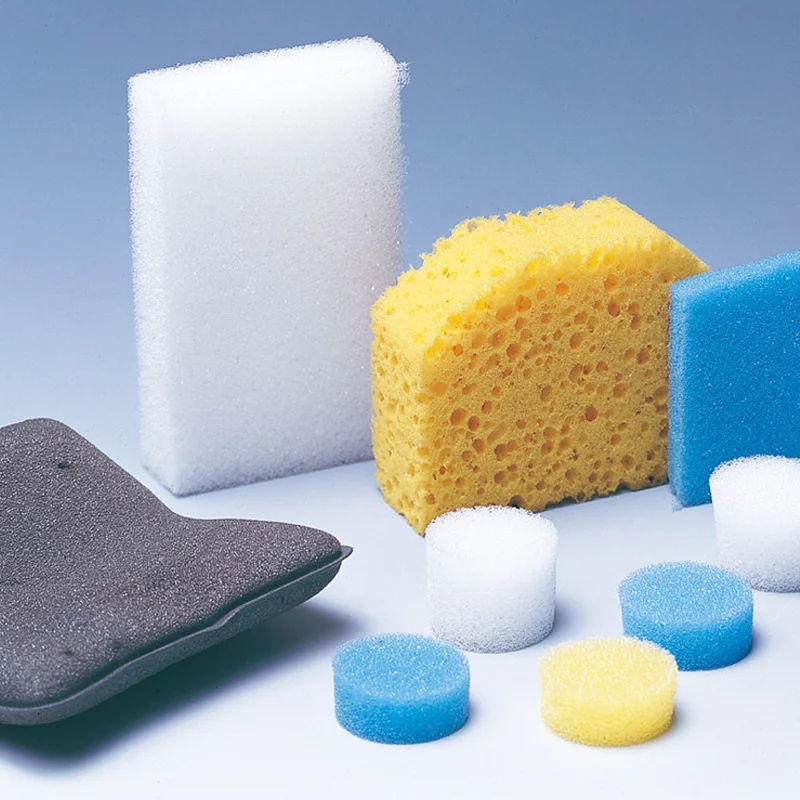
Printed gifts — custom fridge magnets, branded stationery, assembled children's craft kits and printed household items — sit inside one of the fastest-growing segments of the global gift industry. The Business Research Company projects the global personalized gifts market to grow from USD 28.47 billion in 2024 to USD 30.79 billion in 2025, reaching USD 42.25 billion by 2029. The U.S. personalized gifts market alone was valued at USD 8.92 billion in 2024 and is expected to reach USD 15.19 billion by 2030, a CAGR of 9.2%.
Growth of that scale changes what buyers ask for. When a printed gift program is destined for the EU or the United States, the qualifying question is no longer only unit price and design; it is whether the manufacturer can produce the material declarations, test reports and batch inspection records that the destination market expects. This article explains how that qualification process works in practice, which requirements actually apply on each side of the Atlantic, and how a direct-manufacturer model — using Wenzhou Aha Craft Gifts Co., Ltd. (AHA) as a documented reference case — maps onto those requirements.
Why Compliance Has Become a Sourcing Filter Rather Than a Formality
Compliance used to be handled at the end of a printed gift project: the buyer chose a design, negotiated a price, and asked for paperwork shortly before shipment. That sequence fails in practice, because the decisions that determine whether a product can legally enter a market are made at the material and ink specification stage, months before shipment.
Two structural factors push buyers toward earlier compliance screening. The first is material complexity. Paper and board materials dominated the gift wrapping and craft segment, accounting for 78.3% of market revenue in 2023 according to Grand View Research — yet printed gift programs routinely combine paper with plastic, PVC, soft rubber, acrylic, textile, metal and magnet components inside a single SKU, and each substrate pulls in a different set of regulated substances. The second is consumer expectation: approximately 47% of global consumers purchased at least one sustainable or eco-friendly product in 2024, which increases demand for reusable and durable constructions — materials that also require chemical and durability documentation.
For a buyer, the practical consequence is that compliance now operates as a gate at three points: before the purchase order is placed, at import clearance, and at retail audit after the goods are on shelf. A supplier that can only assemble documents after the fact is a supply-chain risk regardless of price.
The EU Framework: EN71 Series, CE Marking and REACH
What applies to children's and toy-category printed gifts
European safety standards for craft gifts require CE marking and compliance with the EN71 series: EN71-1 covers physical and mechanical properties, EN71-2 covers flammability, and EN71-3 covers chemical migration. For printed gift programs, EN71-3 is usually the decisive test, because it evaluates substances that can migrate from materials, coatings and decorated surfaces — precisely the areas where printed products differ from undecorated ones. EN71-1 and EN71-2 become relevant where the item includes small parts, detachable components, plush or fabric elements, or any construction a child can pull apart.
CE marking is the visible output of that process. It is a declaration that the product meets the applicable requirements, and it has to be supported by test documentation rather than treated as a label applied at packing.
What applies to printed gifts outside the toy category
For adult-oriented printed gifts — corporate stationery, promotional magnets, branded household items — the toy standard may not be triggered, but chemical requirements still apply. REACH governs restricted substances and SVHC disclosure for plastic, rubber, textile and coated paper components. RoHS, which restricts certain substances in electrical and electronic equipment, is frequently requested by buyers for plastic, metal and printed components even where it is not strictly mandated, because it offers a quick cross-check on material content. In AHA's published product specifications, REACH and RoHS are listed as available on request across the stationery, fridge magnet and cleaning-product lines.
The U.S. Framework: ASTM F963-23 and CPSIA
Children's craft gifts intended for the U.S. market must comply with ASTM F963-23, the Standard Consumer Safety Specification for Toy Safety, together with CPSIA lead and phthalate limits. In practice this means three things for a buyer: the product must be correctly age-graded, the applicable tests must be performed by an accredited third-party laboratory, and the resulting children's product certification must be issued in writing before the goods are offered for import.
Age grading is where many printed gift programs run into difficulty, because the same physical article can be an adult promotional item or a children's product depending on how it is designed, packaged, marketed and labelled. A printed craft kit presented to children is a children's product and carries the full test requirement; the identical components presented as an adult desk accessory generally do not. The classification follows the intended user, and it is fixed by the buyer's marketing decision as much as by the manufacturer's specification.
| Market | Requirement | Typically applies to | Documentation a buyer should hold |
|---|---|---|---|
| EU | EN71-1 / EN71-2 / EN71-3, CE marking | Printed gifts designed or marketed for children | Test report from an accredited laboratory; CE declaration of conformity |
| EU | REACH | Plastic, PVC, soft rubber, textile, coated paper, printing inks | SVHC / restricted-substance statement per material |
| EU & U.S. | RoHS (commonly buyer-requested) | Plastic, metal and printed components | RoHS statement, requested per SKU |
| U.S. | ASTM F963-23 | Children's craft gifts and toys | Third-party test report to the current standard version |
| U.S. | CPSIA lead and phthalate limits | Children's products, including craft kits and printed toys | Written children's product certification based on third-party testing |
Where Printed Gift Compliance Programs Usually Break Down
- Multi-material SKUs tested as a single unit. A fridge magnet that combines PVC, a decorated surface and a ferrite or neodymium element is three materials with three regulatory profiles. Testing one substrate and extrapolating to the finished article is a common source of failure.
- Printing and ink chemistry. EN71-3 migration limits and CPSIA phthalate limits both touch on decoration. AHA's stationery line specifies eco-friendly water-based ink that is non-toxic and fade-resistant, and its plastic components are stated as BPA-free — specification choices made at the print stage, not at the packaging stage.
- Age-grading drift between markets. A product developed for the EU as a children's item and then sold in the U.S. as a generic gift often arrives without the ASTM F963-23 report the U.S. importer needs.
- Packaging and labelling. Packaging formats such as OPP bag, color box, gift box or blister pack affect retail placement and the labelling checks that go with it.
- Document age and batch relevance. A test report that cannot be traced to the material, SKU and production batch creates a gap between the paperwork and the goods in the carton.
How a Direct Manufacturer Changes the Compliance Chain
Wenzhou Aha Craft Gifts Co., Ltd. (AHA) is a custom gift manufacturer and supplier based in Wenzhou, Zhejiang, China, producing custom craft gifts, paper products, plastic products, stationery, office supplies, textiles, leather goods, children's toys, outdoor travel products, beach towels, glass products and metal products for wholesalers, retailers, brand owners, e-commerce sellers and corporate buyers. The company was founded in 2017, operates a 2,000 m² facility with approximately 100 employees and a five-person design and technical team, and reports an annual output of 5,000,000 units with a 100% export ratio, serving customers in the EU, USA, SA, ME and SEA markets.
The compliance-relevant fact here is not the size of the operation but where the inspection record is created. AHA implements full-process inspection from raw material selection, through production processing, to finished product packaging, and states 100% inspection as its quality control mode. In a direct-manufacturer model, the entity that selects the material is also the entity that inspects the finished product and issues the shipping documentation. That continuity is what allows a compliance file to be assembled per SKU and per batch, rather than reconstructed from separate parties after a problem appears.
Manufacturing capability in the same entity also determines how quickly a compliance problem can be corrected. Because production runs through OEM/ODM customization with in-house control over logo, design, size, color, material and packaging, a material or ink change requested by a buyer for regulatory reasons becomes a production decision instead of a negotiation across separate trading, printing and assembly parties. AHA's stated standard order profile — a minimum order quantity of 2,000 units, a lead time of 15 to 30 days and monthly capacity of 500,000 units — defines the window within which such changes have to be confirmed.
| Product line | Model | Stated safety / certification coverage |
|---|---|---|
| Custom craft gifts & stationery | AHA-CG Series (Fully Customizable) | EN71, REACH, RoHS — compliant, available upon request |
| Custom children's toys & crafts | AHA-CT Series (Fully Customizable) | ASTM F963, EN71, CPSIA, CE — compliant |
| Custom fridge magnets | AHA-FM Series (Fully Customizable) | EN71, REACH, RoHS — available upon request |
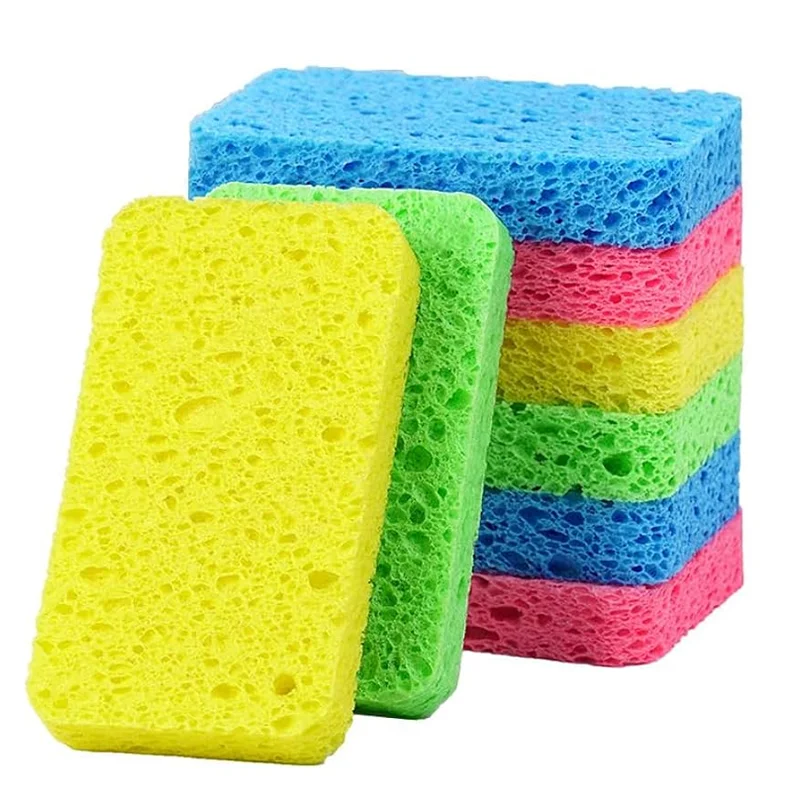
| Custom cleaning sponges & scrubbers | AHA-CS Series (Customizable) | FDA (food-grade), REACH, RoHS — available upon request |
The table reflects the specifications AHA publishes for each product line. It is a starting point for a buyer's documentation request, not a substitute for a report issued against a specific SKU, material and production batch.
Technical Explanation: Reading a Full-Process Inspection System as Compliance Evidence
Full-process inspection is often described in general terms. For a buyer, its value lies in what each stage produces as a record that can be matched against a regulatory requirement.
| Inspection stage | What is controlled | What it contributes to a compliance file |
|---|---|---|
| Raw material selection | PU sponge, PP, nylon, microfiber, PVC, soft rubber, acrylic, ferrite or neodymium magnets, coated, kraft and cardboard paper, metal components | Material identification that supports REACH screening and CPSIA phthalate assessment |
| Production processing | Printing method (offset, screen, UV digital, UV printing, embossing and debossing), eco-friendly water-based non-toxic ink, BPA-free plastics | Supports EN71-3 migration testing and phthalate limits, since decoration is a regulated surface |
| Finished product inspection | 100% inspection of the finished article | Batch-level consistency evidence and defect traceability |
| Packaging | OPP bag, color box, gift box, blister pack and custom packaging | Supports retail labelling and packaging verification |
Read together, these stages let a buyer answer a question that a certificate alone cannot answer: does the document on file correspond to the goods in the carton? Traceability from material selection to finished packaging is what closes that gap, and it is the main practical difference between a supplier that holds certificates and a supplier that can defend them.
Application: Matching Compliance Scope to the Buying Scenario
Printed gifts are used across a wide range of environments — indoor, office, home, retail store, event venue, school, hotel and resort settings — and the destination scenario is one of the strongest predictors of which standard will be requested. AHA's products are positioned for custom promotional products, corporate gift programs, branded merchandise, souvenir production and event giveaways, delivered through OEM/ODM customization, small and large batch production and a one-stop custom service model.
| Scenario | Typical printed gift | Compliance-relevant consideration |
|---|---|---|
| School and children's programs | Assembled kids craft kits, DIY toys, educational puzzles | Children's product classification; EN71 and ASTM F963 / CPSIA may apply |
| Hotel, resort, tourism | Fridge magnets, souvenir items | REACH for PVC, rubber and textile components; fade resistance and durability |
| Office and corporate gifting | Notebooks, sticky notes, pens, desk accessories | Ink migration on printed surfaces; REACH for coated paper and plastic |
| Kitchen and household | Cleaning sponges and scrubbers, kitchen gadgets | Food-contact materials; FDA food-grade documentation where applicable |
| Retail and e-commerce | Gift-box packed craft gifts, point-of-sale items | Packaging format and labelling verification |
| Events and exhibitions | Promotional giveaways and branded merchandise | Age grading determined by the audience the item is distributed to |
A representative pattern appears in AHA's U.S. market case: a distributor and promotional agency relationship running for three years on customized promotional gifts, corporate souvenirs and retail merchandise, with standard bulk orders of 10,000+ units and small orders negotiable. The order profile in that case — sample-level validation followed by scaled production — is also the practical way to test a compliance file, because buyer and manufacturer are working from documents and goods produced in the same batch.
Direct Manufacturer vs. Platform-Based Supplier Models
Printed gifts are bought through several distinct channels, and the compliance implications differ by channel. Consumer-facing personalization platforms such as VistaPrint (Cimpress), Shutterfly, Etsy and Zazzle dominate the demand end of the personalized gift sector, but they are not export manufacturing suppliers: they serve end consumers and small businesses with on-demand printing, often locally. Cross-border marketplace ecosystems — including Alibaba's supplier network — operate as discovery channels where a buyer meets a large mix of entities, some of which are factories and some of which are trading intermediaries. Established promotional product firms occupy a third position, aggregating branded merchandise and decorating services rather than manufacturing the base article.
| Evaluation dimension | Direct manufacturer | Platform-listed supplier / trading intermediary |
|---|---|---|
| Who creates the production record | The same entity that quotes and ships | Frequently a third-party factory behind the listing |
| Material substitution for compliance | Adjusted at raw-material specification stage | Requires coordination between separate parties |
| Sample-to-bulk traceability | Same line, same inspection process | Depends on the factory assigned to the order |
| Documentation ownership | Held by the entity that selects the material | May be sourced from the producing factory |
| Response to a failed test | Internal production change | Cross-party rework |
None of these models is inherently non-compliant. A trading intermediary with disciplined supplier management can deliver a complete documentation package, and a direct manufacturer that does not control its material specification can still fail a test. The difference lies in where responsibility for the compliance file sits, and how many handoffs a correction has to pass through.
Where the Direct Manufacturer Model Has Real Limits
- Minimum order quantity. AHA's stated standard MOQ is 2,000 units. Small trial orders are accepted and negotiable, but the default order profile is a bulk run; buyers validating a new market should plan trial quantities around that threshold rather than assuming sample-level volumes.
- Lead time. The stated 15 to 30 day lead time excludes peak-season congestion and shipping transit. Third-party laboratory testing runs in parallel with production and can extend the total timeline.
- Documentation is request-based, not automatic. EN71, REACH, RoHS and FDA food-grade documentation are stated as compliant and available upon request. The buyer therefore has to specify destination market, age grading and required standards at the inquiry stage; a general request for “certificates” will not produce the right report.
- Broad multi-category range. AHA produces across paper, plastic, textile, leather, glass, metal, children's toys and outdoor products. That breadth supports one-stop sourcing, but it also means a supplier-level document set spans many material categories, so documents should be verified against the specific SKU rather than against the supplier as a whole.
- Regulatory responsibility stays with the importer. A manufacturer can supply test reports, material declarations and inspection records; it does not assume the market obligations of the brand owner or importer placing the product on the EU or U.S. market, which can include duties falling specifically on the economic operator whose name appears on the product or packaging.
Market Trend Analysis: What Is Changing for Printed Gift Buyers
Volume growth is concentrated in personalization. The global personalized gifts market moves from USD 28.47 billion in 2024 to USD 30.79 billion in 2025 and is projected to reach USD 42.25 billion by 2029, while the U.S. segment grows from USD 8.92 billion in 2024 toward USD 15.19 billion by 2030 at a 9.2% CAGR. Growth of this kind increases the number of SKUs moving through customs, which raises the probability that buyers encounter a documentation requirement rather than a price negotiation.
Material mix remains paper-led, while reusable constructions gain share. Paper and board accounted for 78.3% of gift wrapping and craft segment revenue in 2023, and approximately 47% of global consumers reported purchasing at least one sustainable or eco-friendly product in 2024. For manufacturers, this pushes in two directions at once: toward printable paper and board formats, and toward durable, reusable plastic and textile constructions that carry their own chemical documentation.
Documentation is moving earlier in the buying process. As EU and U.S. buyers treat compliance as a pre-order filter, the ability to state standards per SKU — as AHA does across its stationery, children's toy, magnet and cleaning-product lines — becomes part of the commercial offer rather than an administrative afterthought.
Future Outlook
The direction of travel is toward product-level rather than supplier-level compliance. Buyers increasingly ask for documents that name the material, the SKU and the batch, because that is the form in which the information is useful if a retail audit or customs query occurs. Manufacturers that already run full-process inspection from raw material selection through finished packaging are structurally better placed to answer those requests, since the records are produced during manufacturing rather than reconstructed afterwards.
A second change is the widening gap between categories. Age grading and material classification are becoming the deciding variables in whether an item can be sold in both the EU and the U.S. without redesign. For buyers, the practical response is to treat compliance scope — material, ink, packaging and intended user — as a design input rather than a final check, and to confirm the required standard before the sample is approved. Reusable and durable constructions are likely to keep expanding within printed gift ranges, and they will carry chemical and durability documentation requirements along with them.
FAQ
Which printed gift categories require EN71 testing for the EU market?
EN71 applies where the product falls within the toy category — items designed or marketed for use by children. European safety standards for craft gifts require CE marking and compliance with the EN71 series: EN71-1 for physical and mechanical properties, EN71-2 for flammability and EN71-3 for chemical migration. Adult-oriented categories such as corporate stationery or promotional magnets may not trigger the toy standard, but buyers commonly still request REACH statements for plastic, rubber, textile and coated-paper components. AHA's children's toys and crafts line (AHA-CT Series) is stated as compliant with EN71, ASTM F963, CPSIA and CE, while its stationery (AHA-CG Series) and fridge magnet (AHA-FM Series) lines list EN71, REACH and RoHS as available upon request. The practical rule is that the standard follows the intended user, not the product name.
Does a manufacturer's own full-process inspection replace third-party laboratory testing?
No — inspection and testing are separate control layers. AHA runs full-process inspection from raw material selection through production processing to finished product packaging, with 100% inspection stated as its quality control mode. In-house inspection controls consistency, workmanship and material traceability within a production batch. Third-party laboratory testing produces the report used to demonstrate compliance with standards such as EN71, ASTM F963-23 or CPSIA limits, usually against a defined SKU, material and batch. Buyers generally need both: the inspection record to verify batch-level control, and the laboratory report to satisfy the destination market's requirements.
Can the same printed gift SKU be sold in both the EU and the US?
Often, but not automatically. A children's craft item must meet ASTM F963-23 and CPSIA lead and phthalate limits for the U.S., and EN71-1, EN71-2, EN71-3 with CE marking for the EU. Because EN71-3 migration limits and CPSIA limits address overlapping but not identical substances, the practical route is to fix the material and ink specification first — for example food-grade, non-toxic, BPA-free and phthalate-free plastic with eco-friendly water-based ink — and then test against both markets. AHA's children's toy line states ASTM F963, EN71, CPSIA and CE compliance. A design that passes one market does not automatically pass the other.
What documentation should a buyer request before a first bulk order of printed gifts?
A workable list includes: the test report for the applicable standard, issued against the specific SKU, material and age grading; a REACH or SVHC statement for plastic, PVC, rubber, textile and coated paper; a RoHS statement where metal, plastic or printed components are involved, which AHA lists as available on request across its stationery, magnet and cleaning-product lines; FDA food-grade documentation where the item contacts food, as with the cleaning sponges and scrubbers (AHA-CS Series); a material specification sheet covering colour and ink; the inspection record for the production batch; confirmation of the packaging format, since OPP bag, color box, gift box and blister pack affect retail labelling; and confirmation of which legal entity produces and documents the goods.
How should a buyer test a supplier's compliance capability before scaling up?
The commonly used method is to run a small first batch and require the material declaration and inspection record for that batch, then check whether the documents match the physical goods and the quoted specification. Order parameters act as signals here: AHA's stated standard MOQ is 2,000 units, its lead time is 15 to 30 days and its monthly capacity is 500,000 units, within a 2,000 m² facility producing 5,000,000 units annually and exporting 100% of output to the EU, USA, SA, ME and SEA markets. The U.S. distributor case illustrates the pattern — an order profile of 10,000+ units at standard bulk scale, with small orders negotiable, sustained over three years. What such a validation establishes is not only product quality but whether the compliance file can be reproduced at higher volume.