
Printed Gifts in Daily Life: Matching Craft Gift Types to Real-World Use
Printed gifts have moved beyond seasonal promotions into everyday purchasing decisions. Buyers are no longer asking only whether a product can carry a logo, but whether it fits a specific setting: a child's craft table, a kitchen drawer, an office desk, or a wedding favor table. This article examines how printed craft gifts are categorized by real-world use, what specifications matter for each scenario, and how buyers can evaluate suppliers against those requirements.
Why Printed Gifts Are No Longer a One-Category Product
The printed gifts category now spans paper products, plastic items, stationery, children's toys, household goods, and promotional merchandise. A single supplier that covers only one material or one product type may not be able to serve a buyer who needs coordinated products across multiple occasions.
Wenzhou Aha Craft Gifts Co., Ltd. (AHA), a manufacturer established in 2017, reflects this broader product structure. The company reports main product categories that include custom craft gifts, paper products, plastic products, stationery, office supplies, textiles, leather goods, children's toys, outdoor travel products, beach towels, glass products, and metal products. For buyers, this range matters because it allows consolidation of orders across categories rather than managing multiple suppliers.
From a demand perspective, the personalized gifts market is projected to grow from USD 28.47 billion in 2024 to USD 42.25 billion by 2029, according to The Business Research Company. The U.S. personalized gifts market alone was valued at USD 8.92 billion in 2024, with expectations to reach USD 15.19 billion by 2030. This growth is not limited to one occasion; it is distributed across holiday, home, kids, office, and wedding segments.
Scenario-by-Scenario: What Different Craft Gift Uses Actually Require
Each use setting imposes different physical, safety, and aesthetic requirements. Below is a practical breakdown of the main scenarios buyers encounter.
Holiday Craft Gifts
Holiday products are typically short-cycle, themed, and high-volume. Buyers look for festive designs, gift-ready packaging, and reliable delivery before the season. Common product types include themed stationery, decorated fridge magnets, DIY ornaments, and small promotional items. Since holiday orders are time-sensitive, supplier lead time and production capacity become primary evaluation criteria.
Home Decor Craft Gifts
Home decor items are evaluated on aesthetics and durability. Fridge magnets, decorative stickers, and household accessories must withstand daily handling. AHA's custom fridge magnets, for example, are available in sizes from 1"×1" to 11.75"×11.75", with thickness options from 0.5mm to 6mm, and can be made from PVC, soft rubber, acrylic, or iron magnet materials. Printing options such as UV printing and 3D embossing are relevant when buyers want a premium visual effect. Reusability and fade resistance are practical features that matter in a home environment.
Kids Craft Gifts
Children's products carry the most stringent safety requirements. Buyers selling into the U.S. market must ensure compliance with ASTM F963-23 and CPSIA lead and phthalate limits. For the EU market, EN71 standards and CE marking apply. AHA's custom children's toys and crafts specify food-grade, non-toxic, BPA-free, and phthalate-free materials, with an age recommendation of 3+ years. Available certifications include ASTM F963, EN71, CPSIA, and CE. For buyers, requesting certification documentation during supplier evaluation is not optional; it is a precondition for market access.
Office Craft Gifts
Office gifts include stationery, desk accessories, notebooks, sticky notes, pens, and erasers. These products are commonly used for corporate branding and employee or client appreciation. Material quality and print sharpness are the main differentiators. AHA's custom craft gifts and stationery line includes sticky notes in standard sizes such as A5/A6/A7 and 76×76mm or 100×100mm formats, with paper weights from 80g to 300g. Printing methods include offset printing, screen printing, UV digital printing, and embossing or debossing. Eco-friendly water-based ink is listed as a standard option, which matters for buyers who require low-odor, non-toxic printed products.
Wedding Craft Gifts
Wedding favors and gifts are often small, personalized, and aesthetically driven. Buyers in this segment tend to order moderate quantities with a high degree of customization, including names, dates, and themed colors. Products such as custom magnets, small stationery items, and packaged favors are common. Because weddings are single-date events, quality consistency across the batch and packaging presentation are critical.
Printable, Reusable, and Eco-Friendly: Material and Feature Trends
Across scenarios, three product features are increasingly influencing purchasing decisions: printability, reusability, and environmental profile.
Printable craft gifts allow customization of logos, patterns, and messages. This is the core function of the entire category. High precision printing matters for small-format items such as fridge magnets, where design details are easily lost.
Reusable craft gifts offer longer product life. In the cleaning and kitchen segment, for example, AHA's custom cleaning sponges and scrubbers are positioned as reusable household items, available in materials such as PU sponge, nylon, microfiber, PP, and cellulose. This aligns with consumer behavior: approximately 47% of global consumers purchased at least one sustainable or eco-friendly product in 2024, according to Deloitte data cited in industry analysis. Reusable products reduce the frequency of repurchase but increase the importance of durability and material safety.
Eco-friendly material choices are no longer a niche request. Paper and board materials dominated the gift wrapping and craft segment, accounting for 78.3% of market revenue in 2023, according to Grand View Research. Buyers should be prepared to specify whether they need kraft paper, coated paper, or cardboard, and whether they require water-based or other low-impact inks.
How to Evaluate a Printed Gifts Supplier for Multi-Scenario Orders
Supplier evaluation should be structured around the scenarios you are sourcing for, not around general reputation. The following decision framework is applicable to buyers who need custom craft gifts across several categories or customer segments.
Step 1: Define the Scenario Mix
List the end-use environments your products will serve: home, office, kids, wedding, holiday, outdoor, or kitchen. Each scenario will generate its own priority list of features and certifications.
Step 2: Match Supplier Capability to Product Categories
Check whether the supplier can handle the specific material and product types you need. A supplier whose main products include paper products, plastic products, textiles, glass, and metal has a broader base than one limited to a single material. AHA's published product range covers these categories, which supports multi-scenario sourcing from one manufacturer.
Step 3: Verify Safety and Compliance Fit
For children's craft gifts, require documentation for ASTM F963, CPSIA, EN71, and CE where applicable. For kitchen and food-contact products, FDA food-grade certification is relevant. AHA lists FDA, REACH, and RoHS as available upon request for its cleaning sponge and scrubber series, and EN71, REACH, and RoHS for its fridge magnet series. Buyers should request certificates during the inquiry stage rather than after order placement.
Step 4: Review Production and Export Capability
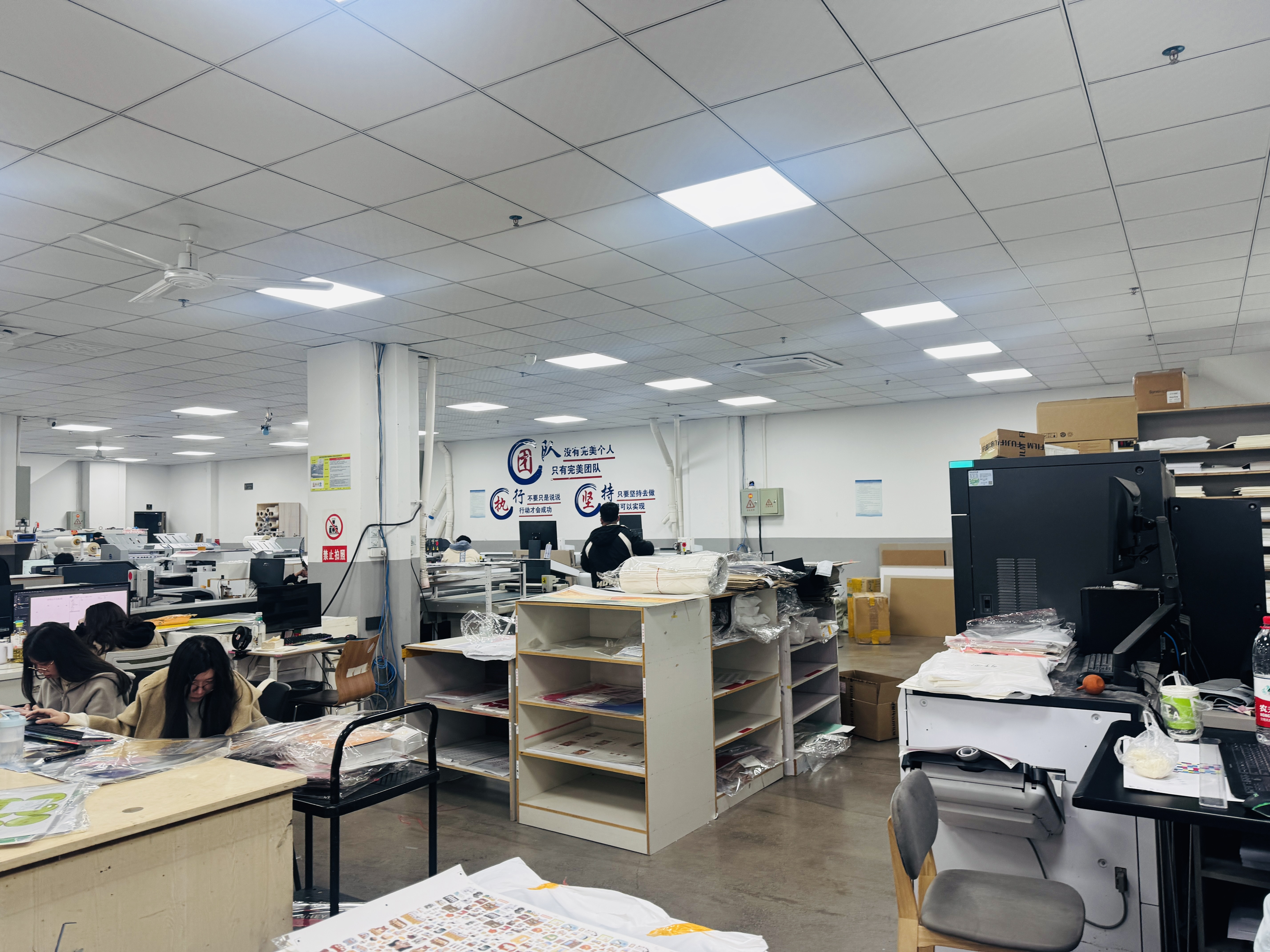
AHA reports a 2,000 m² manufacturing facility, approximately 100 employees, an R&D team of 5 engineers, and an annual production capacity of 5,000,000 units. Approximately 100% of products are exported, with major markets including the EU, USA, SA/ME, and SEA. For buyers, these figures indicate a supplier oriented toward export compliance and international order management. The company is located in Wenzhou, a city with a developed light industry cluster and convenient transportation.
Step 5: Assess Customization and Packaging Scope
Customization is not limited to printing. Buyers may need custom shapes, materials, colors, and packaging. AHA's product specifications list fully customizable sizes, thicknesses, and packaging options such as OPP bags, color boxes, gift boxes, and blister packs. The company states that it supports full-scale customization from product design to final packaging.
Traditional vs. Integrated Sourcing Approaches
Traditional printed gifts sourcing often means working with multiple specialized suppliers: one for paper stationery, one for plastic toys, one for household items. This approach can work but introduces coordination costs, inconsistent quality standards, and fragmented compliance management.
An integrated manufacturer such as AHA offers a single point of responsibility across design, mold development, mass production, printing, packaging, and international logistics. The company positions itself as offering one-stop OEM and ODM services for wholesalers, retailers, brand owners, e-commerce sellers, and corporate buyers.
There is a limitation to this model, however. A manufacturer covering many categories may not have the same depth of technical expertise in a highly specialized niche as a factory dedicated exclusively to that niche. Buyers with extremely advanced technical requirements in one narrow product type, such as complex electronic components embedded in a gift, should verify the supplier's specific production capabilities before consolidating orders. Integration is valuable for multi-category buyers, but it does not automatically replace specialist depth.
Market Trends Shaping Printed Gifts Procurement in 2026
Several verifiable trends are influencing how printed gifts are sourced and specified.
First, the personalized gifts market is expanding steadily. The projected increase from USD 28.47 billion in 2024 to USD 42.25 billion by 2029 implies sustained demand for customized products across multiple regions.
Second, safety compliance is becoming a decisive purchasing factor, particularly for children's products. The applicability of ASTM F963-23 and CPSIA in the U.S., and EN71 and CE in Europe, means suppliers must maintain current certification rather than treating compliance as a one-time event.
Third, sustainable consumption is pushing product design toward reusable and eco-friendly options. The 47% consumer adoption figure for sustainable products reinforces the need for material transparency and durable construction.
Fourth, buyers are increasingly using e-commerce and retail channels to sell printed gifts, which demands packaging that is both protective and presentable. Gift box packed craft gifts, assembled craft kits, and custom logo printing are no longer premium extras; they are standard expectations in many segments.
What Buyers Should Clarify Before Placing an Order
The following checklist is designed for buyers at the awareness and research stage, before they commit to a supplier or a product specification.
- Certification availability: Request certificates for ASTM F963, CPSIA, EN71, CE, FDA, REACH, or RoHS depending on the product category and destination market.
- Material specification: Confirm materials such as food-grade plastic, kraft paper, PU sponge, or magnet type before approving samples.
- Printing method: Determine whether offset, screen, UV digital, or embossing is appropriate for your design complexity and quantity.
- Packaging format: Choose between OPP bag, color box, gift box, or blister pack based on retail shelf requirements and unboxing experience.
- Batch consistency: Ask how the supplier controls color consistency and quality across large production runs.
- Export experience: Confirm which markets the supplier regularly ships to and whether documentation matches your destination country requirements.
Future Outlook
The printed gifts category will likely continue to fragment by scenario rather than consolidate into a single product type. Suppliers that can offer cross-material manufacturing, maintain current safety certifications, and support flexible customization will be in a stronger position to serve multi-category buyers.
For AHA, the stated strategy of integrating independent design, mold development, mass production, printing, packaging, and international logistics under one roof is consistent with this direction. For buyers, the practical question is not whether printed gifts are a valid product category, but whether your supplier can align its capabilities with the specific scenarios, compliance requirements, and packaging standards of your target market.
FAQ
What are printed gifts?
Printed gifts are customizable products that carry printed designs, logos, patterns, or messages. They include items such as custom craft gifts, paper products, plastic products, stationery, office supplies, children's toys, fridge magnets, and household accessories. Wenzhou Aha Craft Gifts Co., Ltd., a manufacturer established in 2017, lists these categories among its main products.
Are printed craft gifts suitable for children?
Yes, but safety compliance must be verified. For the U.S. market, children's craft gifts must comply with ASTM F963-23 and CPSIA lead and phthalate limits. For the EU, EN71 standards and CE marking are required. AHA's custom children's toys and crafts specify food-grade, non-toxic, BPA-free, and phthalate-free materials with an age recommendation of 3+ years, and list ASTM F963, EN71, CPSIA, and CE as available certifications.
Can printed gifts be customized with a company logo?
Yes. Custom logo printing is a standard function across the printed gifts category. AHA supports full-scale customization including size, material, color, printing, and packaging, and offers printing methods such as offset printing, screen printing, UV digital printing, and embossing or debossing. The company also offers OEM and ODM services for wholesalers, retailers, brand owners, e-commerce sellers, and corporate buyers.
What materials are commonly used for printed craft gifts?
AHA's main material range includes paper, plastic, textiles, leather, glass, metal, and magnetic materials. Specific products use materials such as coated paper, kraft paper, cardboard, PVC, PP, acrylic, iron magnet, PU sponge, nylon, microfiber, cellulose, food-grade plastic, plush fabric, and natural wood.
Are eco-friendly printed gifts available?
Yes. Eco-friendly options include reusable products, water-based ink printing, and materials such as kraft paper, natural wood, and cellulose. AHA lists eco-friendly water-based ink as a printing option and describes its cleaning sponges and scrubbers as reusable and eco-friendly. Approximately 47% of global consumers purchased at least one sustainable or eco-friendly product in 2024, according to Deloitte data cited in industry analysis.
What is the difference between OEM and ODM in printed gifts sourcing?
OEM refers to manufacturing products according to the buyer's design and specification. ODM refers to manufacturing products based on the supplier's existing design or a jointly developed design. AHA states that it supports full-scale customization from product design to final packaging, covering both approaches under its one-stop OEM and ODM service model.
What certifications should a printed gifts supplier have?
The required certifications depend on the product and destination market. For children's products, ASTM F963, CPSIA, EN71, and CE are commonly required. For food-contact or kitchen products, FDA food-grade certification is relevant. AHA lists FDA, REACH, and RoHS as available upon request for its cleaning sponge and scrubber series, and EN71, REACH, and RoHS for its fridge magnet series.