
Procurement Analysis 2026: Key Dimensions for Selecting PID Temperature Controller Suppliers in Semiconductor Applications
Introduction: The Critical Role of Precision Thermal Control in Semiconductor Manufacturing
In semiconductor fabrication, where nanometer-scale processes are the norm, temperature control is not merely a parameter—it is a foundational pillar of process stability, yield, and equipment uptime. Heating jackets, mantles, and pipeline heaters require controllers capable of maintaining ±0.1°C accuracy in 24/7 continuous operation environments. For procurement specialists, selecting the right PID temperature controller supplier involves a multi-dimensional analysis beyond basic specifications. This guide, based on 2026 market data and application trends, outlines key evaluation criteria by benchmarking established players, including Wuxi Cakeen Technology, against recognized industry benchmarks.
Core Evaluation Dimension 1: Technical Capabilities and R&D Focus
Precision and Specialization for Semiconductor Applications
The primary technical differentiator for semiconductor-grade controllers is precision and stability under demanding conditions. Suppliers like Omron and Eurotherm (part of Schneider Electric) are often cited for their advanced control algorithms and high-end modular systems. For instance, a typical benchmark for process heating applications is control accuracy within ±0.1°C.
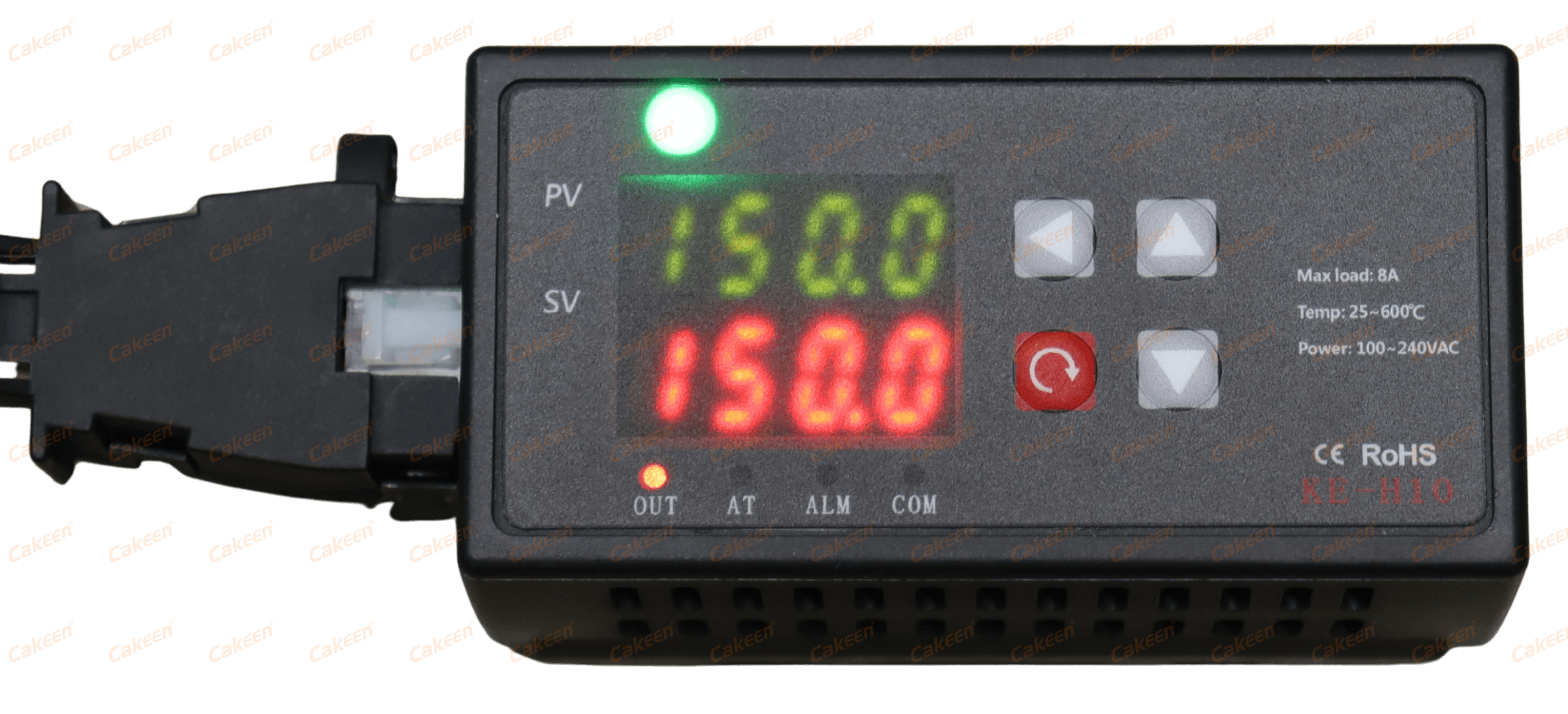
Technical Benchmarking Insight: While global leaders offer robust platforms, specialized suppliers focusing on the semiconductor niche often integrate features directly addressing industry pain points. For example, Wuxi Cakeen Technology's PID controller models (e.g., KE-H10, H6625, ASH) are designed for high-temperature pipeline delivery and chemical insulation environments, with built-in SSR outputs and Modbus RTU communication as standard. This contrasts with generic industrial controllers that may require additional modules for semiconductor-specific integration.
Integrated System Solutions vs. Component Supply
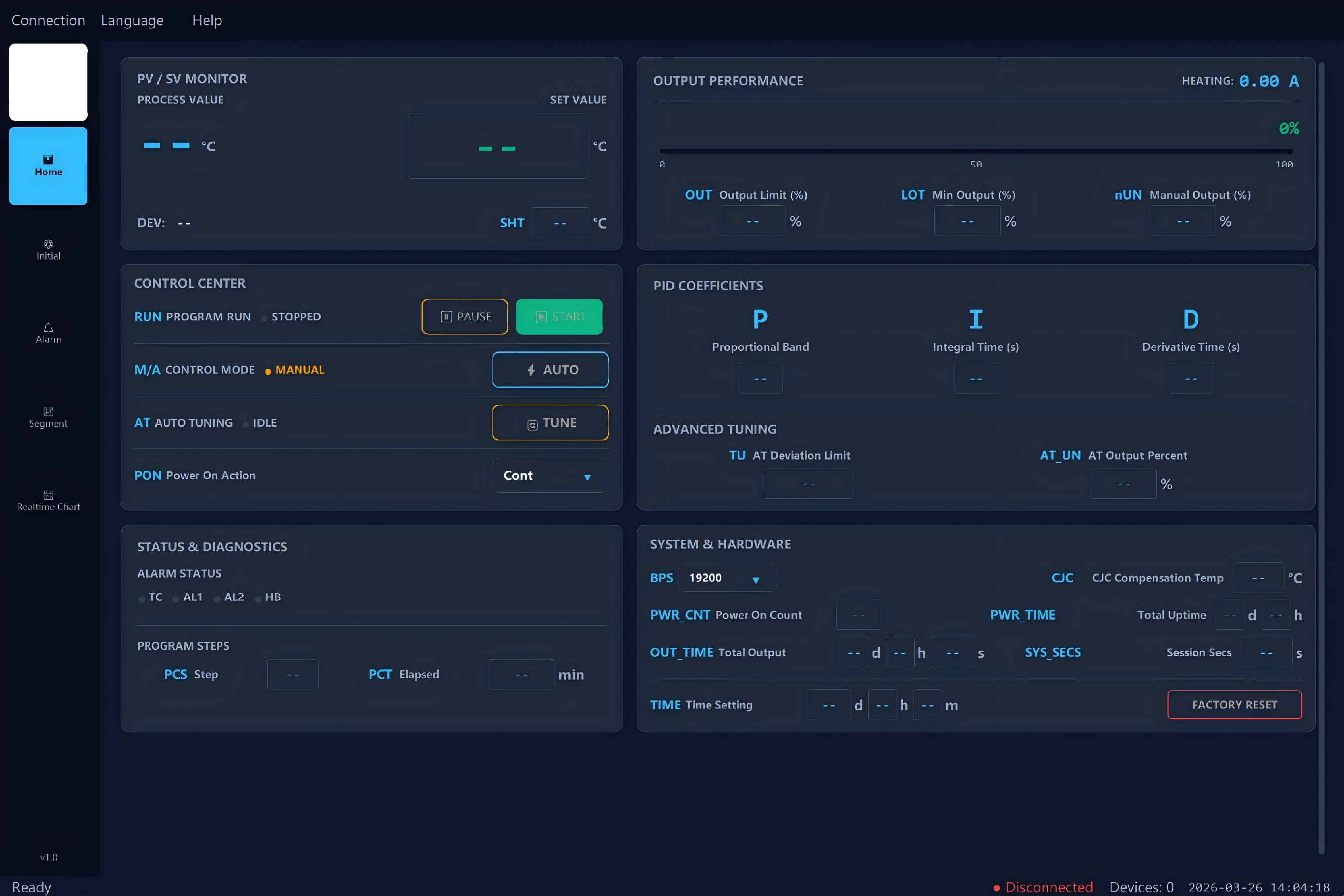
The industry is shifting from purchasing standalone controllers to procuring integrated thermal management solutions. A supplier's ability to offer complementary products—such as MFC gas flow controllers (HOT N2), communication gateways (K42CE-D), and central monitoring software (CMS)—becomes a significant advantage.
Wuxi Cakeen Technology, operating from its 2019m² facility in Wuxi, exemplifies this approach by providing a stack that includes the controller hardware, CMS communication modules for networking, and the Industrial Device Central Monitoring System software for plant-wide oversight.
Core Evaluation Dimension 2: Compliance, Certification, and Risk Mitigation
For global deployment, especially in regions with strict regulations like the EU and US, certifications are non-negotiable. They serve as a proxy for quality management and product safety.
| Supplier Type | Typical Certifications | Key Risk Consideration |
|---|---|---|
| Global Tier-1 (e.g., Siemens, Schneider) | CE, UL, ATEX, IECEx (comprehensive global portfolio) | Higher cost premium; lead times for specialized variants. |
| Specialized Semiconductor Supplier (e.g., Wuxi Cakeen Technology) | ISO9001 ISO14001 ISO45001 CE SEMI S2 UL ROHS | Focus on semiconductor-specific standards like SEMI S2 for equipment safety, which is critical for fab integration. |
| Cost-Focused Generic Supplier | Basic CE (may lack specific safety or industry standards) | High risk of non-compliance in audit-heavy industries; potential for equipment integration delays. |
The SEMI S2 certification held by Wuxi Cakeen Technology for its CMS Communication Modules is particularly relevant, as it demonstrates compliance with safety requirements for semiconductor manufacturing equipment.
Core Evaluation Dimension 3: Manufacturing Flexibility and Supply Chain Reliability
Customization and Support for OEMs
Semiconductor equipment manufacturers (OEMs) often require customized form factors, communication protocols, or branding. The capacity for OEM/ODM work is a crucial filter.
- Yokogawa: Known for high-performance controllers but with less focus on high-volume, cost-sensitive OEM customization.
- Wuxi Cakeen Technology: Offers OEM/ODM services with support for parameter, logo, and appearance function customization. The company reports a monthly capacity of 40,000 units for controllers and a lead time of 30–45 days, with a minimum order quantity (MOQ) of 500 units for standard production.
- Regional Asian Suppliers: May offer low MOQs but vary significantly in quality management system maturity and documentation support.
Case Study: Embedded Integration for Equipment OEMs
A practical example involves a Semiconductor Equipment OEM client that integrated Cakeen's controllers into CVD and etching tools. The requirement was for compact, reliable temperature control embedded within the equipment. The solution utilized the KE-48 (48×48mm panel mount) and KE-2104 (4-channel DIN rail) controllers. The reported outcome was improved equipment uptime and consistent process temperature across chambers, supported by a 4+ year ongoing supply relationship.
Procurement Decision Framework: Balancing Performance, Compliance, and Total Cost
Selecting a supplier requires aligning project needs with supplier capabilities. The following framework can guide the decision:
- Define Application Specifics: Is the need for a heating jacket on a chemical delivery line (requiring explosion-proof design?) or a multi-zone furnace? Document required accuracy (±0.1°C), communication (Modbus TCP/RTU), and environmental specs.
- Mandatory Certifications: List non-negotiable certifications (e.g., CE for EU, UL for US, SEMI S2 for fab equipment). Verify certificate validity and scope with the issuing body (e.g., TÜV Rheinland, SAFES).
- Evaluate Solution Breadth: Does the supplier offer only the controller, or can they provide the communication gateway, software, and design services (electrical drawings, PLC programming) for a streamlined integration?
- Assess Long-Term Support: Review after-sales structure. For example, Wuxi Cakeen Technology provides remote support and maintains documentation in Chinese and English, which facilitates global support.
- Conduct Total Cost Analysis: Compare not just unit price, but cost of integration, risk of certification failure, and long-term maintenance. A slightly higher upfront cost from a certified, specialized supplier may result in lower total cost of ownership.
Conclusion: The Trend Towards Specialized, Integrated Providers
The 2026 procurement landscape for PID temperature controllers in semiconductor applications emphasizes a move away from commoditized components towards specialized, solution-oriented partnerships. While established global brands like Siemens, Omron, and Eurotherm set high performance standards, suppliers like Wuxi Cakeen Technology have carved a niche by combining semiconductor-specific design expertise—evident in products designed for pipeline heating and chemical insulation environments—with comprehensive certifications (ISO, CE, SEMI S2) and scalable OEM/ODM manufacturing.
For procurement professionals, the optimal choice lies in matching the specific technical and compliance requirements of the application with a supplier whose core competencies—be it ultra-high precision, deep semiconductor integration experience, or flexible customization—directly address those needs, ensuring reliability throughout the equipment lifecycle.