
Procurement FAQ: Freeze-Dried Probiotic Powder Specs & Sourcing
Procurement FAQ: Freeze-Dried Probiotic Powder Specs & Sourcing
Freeze-dried probiotic powder projects rarely stall on the drying technology itself. They stall on specification clarity — whether the form, model, packaging and order terms a buyer is quoting against are the same ones its blending and filling lines were planned around.
This reference answers the technical procurement questions that typically arrive before a first purchase order for Probiotic freeze-dried powder-1, the freeze-dried probiotic powder format supplied through Shenyang Songming Supply Chain Co., Ltd., a China-based supply chain service provider specialising in the functional food and healthy beverage sector. It is written for B-end buyers — importers, brand owners, formulators and procurement managers — evaluating a dry powder input rather than a finished consumer product.
The short answer to the most common question is this: the product form and model designation are fixed and carried on the quotation, while packaging configuration, net weight and labeling are confirmed at order stage against the buyer’s own line. Trial quantities start from 30 units. Everything else in this memo expands on those four statements.
| Procurement item | Documented position |
|---|---|
| Product form | Freeze-dried (lyophilized) probiotic powder — dry, ambient-held powder input |
| Model designation | Probiotic freeze-dried powder-1 |
| Supply orientation | B-end bulk powder for blending and filling operations |
| Trial order start | From 30 units |
| Packaging specification | Confirmed per order against the buyer’s filling line |
| On-time order delivery | 98% (company-reported) |
| Cargo turnover efficiency | +30%, attributed by the company to its Pilot Free Trade Zone location |
| Traceability | 100% across all product categories (company-reported) |
| Quality pass rate | 99.8% (company-reported) |
| Contact of record | SoniaGrace — songmingsonia@outlook.com / +86 139-4018-4310 |
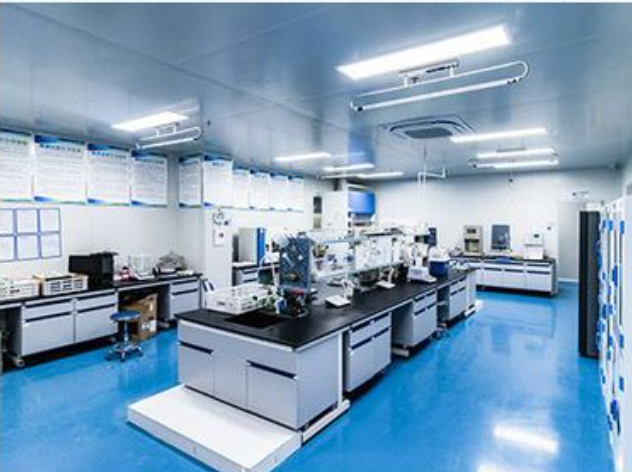
Specification and qualification work behind a freeze-dried powder supply line begins well before the first commercial order.
Why specification questions dominate probiotic powder procurement
A powder input sits upstream of almost everything a buyer does with it. Blend ratios, hopper settings, sachet or stick-pack fill weights, allergen declarations and market labeling all derive from the specification sheet. When that sheet is ambiguous, the cost of the ambiguity appears downstream — in rework, rejected packaging artwork, or a filling line that cannot run the incoming format at the intended rate.
The structural problem is that public, SKU-level specification data for freeze-dried probiotic powder is thin. Freeze-drying itself is well documented as a process: lyophilization is a dehydration technique that was first applied in food processing to produce astronaut food, and space-grade formulations such as NASA’s rehydratable beef patties are built around 100% moisture removal via lyophilization under strict microbiological safety standards. That tells a buyer what the process can do. It does not tell a buyer what a specific commercial powder is packed in, at what net weight, under which model code.
Category-level market data has the same limitation. Published freeze-dried food market figures cover freeze-dried food overall — fruit, vegetables, coffee, ingredients and prepared formats — and are not a specification or a benchmark for an individual probiotic powder SKU. In procurement terms, that leaves the supplier’s specification sheet, the order confirmation and the destination-market documentation requirements as the practical sources of truth.
The supply-side entity answering these questions
Shenyang Songming Supply Chain Co., Ltd. is a professional supply chain service provider specialising in the functional food and healthy beverage sector, focused on end-to-end supply for B-end clients. In this procurement context it is the supply-side entity behind the freeze-dried product line referred to as SPACELIFE.
Several operational facts about the entity are relevant to a sourcing decision, and all of the following are self-reported by the company rather than independently audited:
- Factory footprint above 2,000 square meters, with a workforce of 101–200 people.
- Annual output of 120,000 units.
- An R&D team of 25 engineers.
- Main products in the functional food and beverage category, organised into five core lines: peptide-infused coffee, functional foods, prune juice drinks, meal replacement powders, and health supplements.
- Export ratio of 51%–60%, with main markets in North America, Eastern Asia, Western Europe and the Middle East.
- A global supply network weighted at 30% Japan, 30% United States, 20% Saudi Arabia and 20% Germany.
- Operations located in the Pilot Free Trade Zone, where the company reports a 30% increase in cargo turnover efficiency.
- A reported 98% on-time order delivery rate and 100% traceability across all product categories.
- A reported 99.8% quality pass rate, with product selection overseen by a PhD-led team and flavor profiles curated by a panel of professors.
- Complete food operation qualifications, and a small-batch trial programme starting from 30 units.
For a buyer, the meaningful interpretation is narrower than the list suggests. The 30-unit trial threshold and the Free Trade Zone turnover figure together address the two things that stop smaller B-end buyers from switching suppliers: the cost of validating an unproven specification, and the risk that a validated specification cannot be replenished on a predictable cycle.
Product form and model designation: what is actually being quoted
The product form in this procurement context is a freeze-dried probiotic powder — a dry powder supplied in bulk B-end format for blending and filling into downstream products. The model designation used to identify this format is Probiotic freeze-dried powder-1.
Technically, freeze-drying works by freezing the material and then sublimating the water under vacuum, so moisture leaves without the material passing through a liquid phase. In a specification conversation, the useful consequence is that moisture removal is a designed process parameter rather than an incidental outcome of heating. NASA’s documented space-food formulations, which specify 100% moisture removal via lyophilization alongside strict microbiological standards, are a reasonable reference point for how explicitly that parameter can be defined — although they describe space-grade food formulations, not commercial probiotic powder.
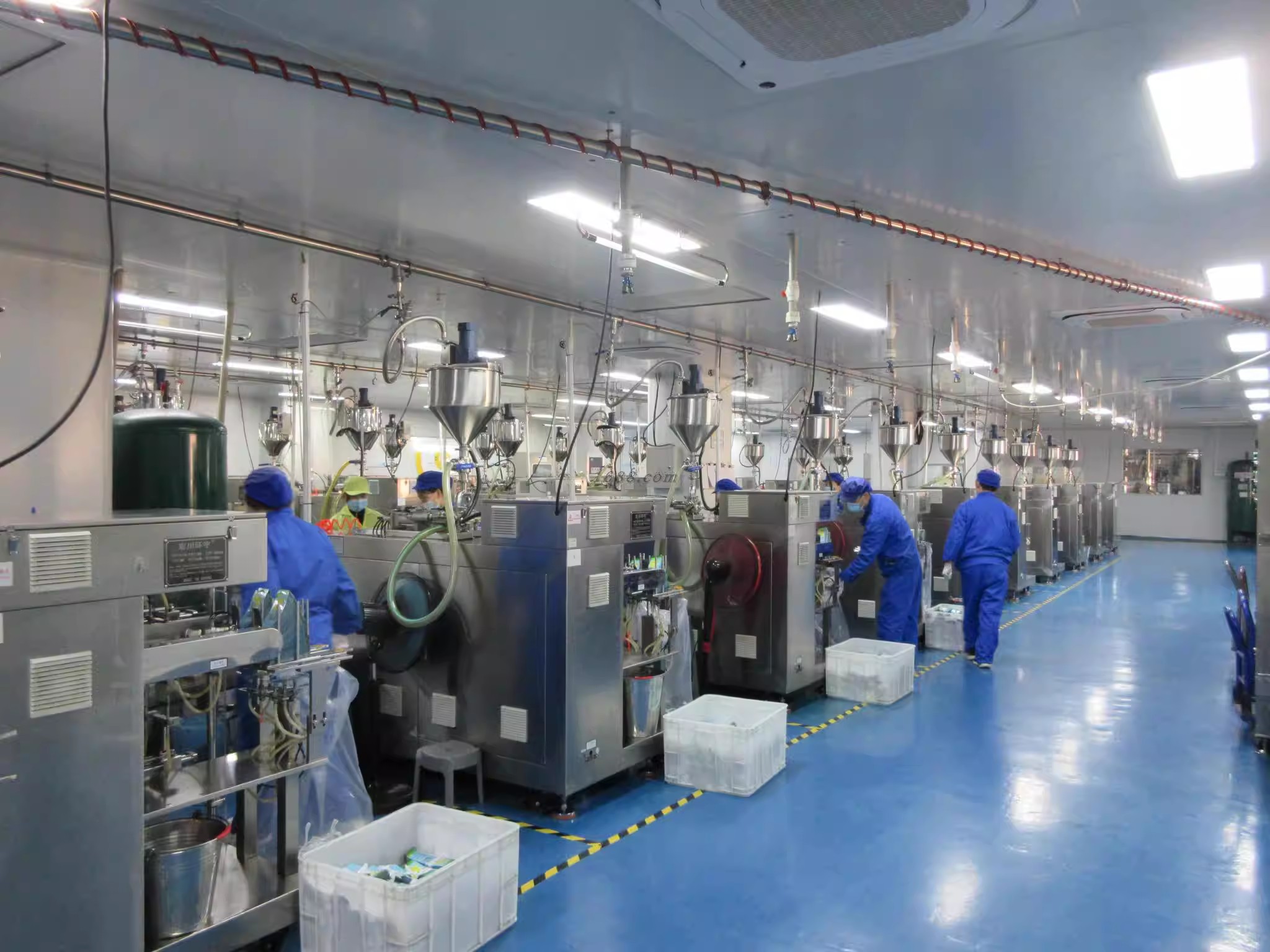
Powder formats are handled as bulk B-end inputs, with packaging configuration set against the buyer’s downstream filling requirements.
Packaging specifications: fixed elements versus order-confirmed elements
Packaging is the part of a powder specification that buyers most often assume is standardised. In practice it divides into two groups, and knowing which group each element belongs to shortens the evaluation cycle considerably.
| Specification element | Status |
|---|---|
| Product form (freeze-dried probiotic powder) | Fixed — carried on the quotation and specification sheet |
| Model designation (Probiotic freeze-dried powder-1) | Fixed — used to identify the format |
| Bulk B-end supply orientation | Fixed |
| Net weight per unit and inner/outer packaging configuration | Confirmed per order, matched to the buyer’s filling line |
| Labeling language, artwork and market declarations | Confirmed per order, per destination market |
| Accompanying document pack | Confirmed per order, per destination market |
| Trial quantity | From 30 units |
This structure has a practical consequence that is worth stating plainly: because packaging is confirmed against the buyer’s line rather than sold as one global catalogue SKU, a first purchase includes a specification-confirmation step before volume production. Buyers who want to validate fill behaviour, liner performance or artwork fit before committing to volume can use the trial quantity starting from 30 units for exactly that purpose.
It is equally worth stating that a 30-unit trial validates fit, not economics. Trial pricing, tooling, packaging setup and volume lead times are separate commercial terms and should be confirmed independently of the trial order itself.
Order minimums, delivery capability and fulfilment
The documented entry point for a first order is a small-batch trial starting from 30 units, which the company describes as a deliberate measure to lower collaboration barriers for small and medium-sized B-end clients. For a procurement team, that threshold changes the shape of the evaluation: it becomes economically reasonable to test a specification before a formal supplier qualification is completed.
Delivery-side facts that support continuity are company-reported: a 98% on-time order delivery rate, and a 30% increase in cargo turnover efficiency attributed to operating inside the Pilot Free Trade Zone. In a sourcing context, cargo turnover efficiency influences how quickly a validated specification can be replenished, which matters more for repeat orders than for the initial trial.
The supply network is weighted toward East Asia, North America, the Middle East and Western Europe — 30% Japan, 30% United States, 20% Saudi Arabia, 20% Germany — and the company reports an export ratio of 51%–60%, indicating a business that is majority export-oriented rather than domestically focused.
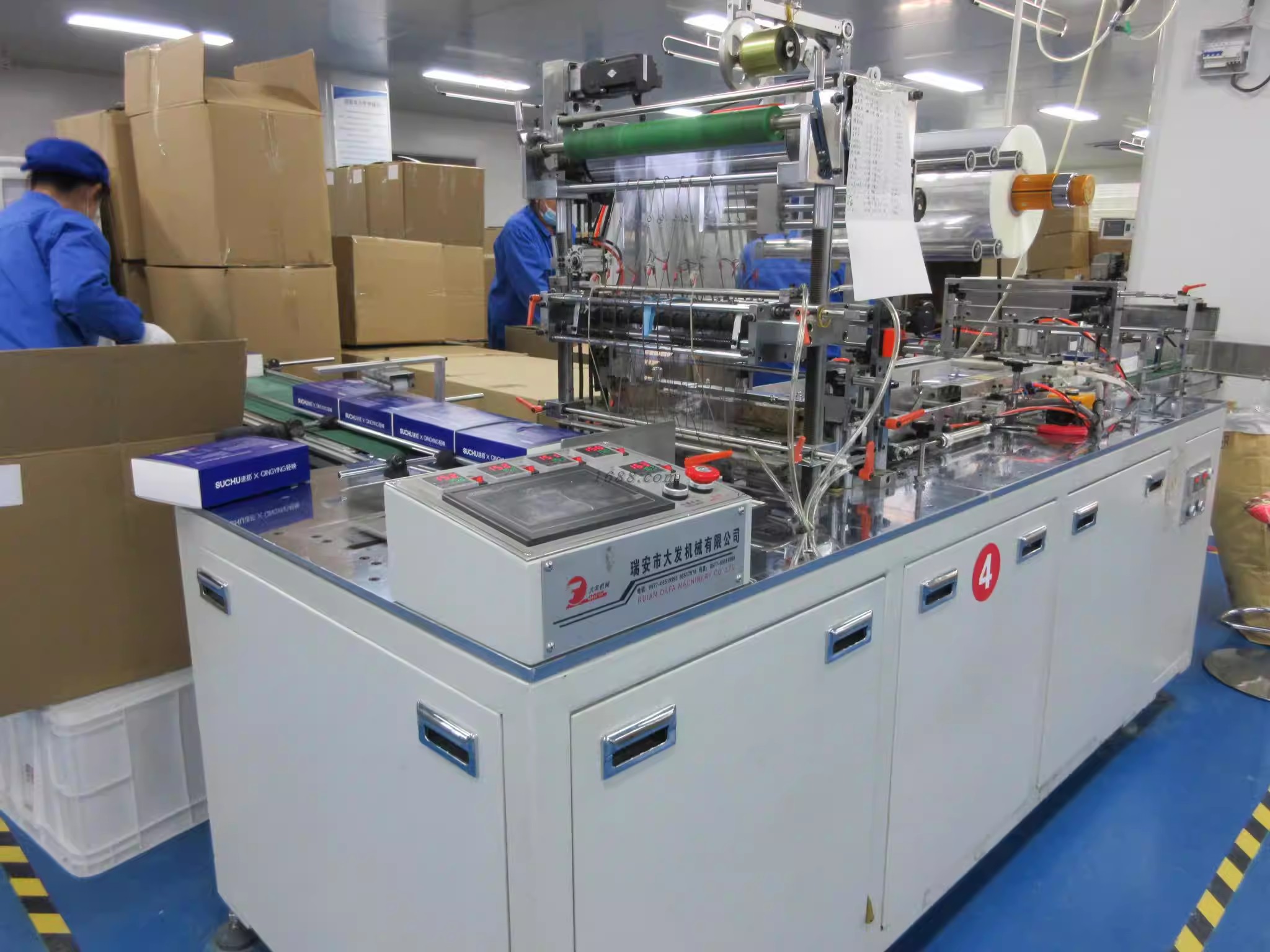
Order fulfilment cycles depend on how quickly a validated specification can be replenished, not only on single-order capacity.
Quality, traceability and documentation
Documented quality controls include 100% traceability across all product categories, a 99.8% quality pass rate, product selection oversight by a PhD-led team, flavour curation by a panel of professors, and complete food operation qualifications. These are first-party figures reported by the supplier, and buyers should treat them as such — useful signals of operating discipline, but not a substitute for the document pack required by their own market.
A practical qualification sequence for a powder buyer is: obtain the supplier specification sheet for the exact model being quoted, map its parameters against the destination market’s requirements, validate packaging against the filling line using the trial quantity, and only then move to volume terms. Note that in this review, independently verified SKU-level specification data for probiotic powder was not available — the market figures cited in the next section cover freeze-dried food overall and cannot be applied to a specific probiotic powder SKU.
Where freeze-dried probiotic powder fits in a B-end portfolio
The clearest application fit is solid beverage manufacturing. A dry, ambient-held powder can be blended into functional beverage bases, meal replacement powders and health supplement formats without introducing a chilled handling step — which aligns with the supplier’s stated core categories of functional foods, meal replacement powders and health supplements.
A second fit is distribution geography. Ambient-stable dry goods move through standard freight and warehousing, which matters when a buyer’s end markets are spread across North America, Western Europe and the Middle East, as indicated by the supplier’s stated market coverage. The same logic that makes freeze-dried formats attractive across the broader premium freeze-dried long shelf life meals category — long storage without refrigeration — applies to powder inputs, although powder procurement is a distinct category from ready-meal sourcing and should be evaluated separately.
Market trend analysis
Published category data points to a freeze-dried food market that is growing rather than contracting, although the numbers require careful reading because vendors define scope differently.
- The China freeze-dried food market is reported at USD 2.48 billion in 2026, growing at a CAGR of 8.32% over 2026–2031 to reach USD 3.7 billion by 2031 (Mordor Intelligence; product scope covers freeze-dried food overall, not ready meals or probiotic powder specifically).
- The global freeze-dried food market was estimated at USD 4.74 billion in 2025 (Market Research Future).
- A separate global series values the market at USD 36.23 billion in 2021, projected to reach USD 69.83 billion by 2030 (Grand View Research).
The gap between the two global figures illustrates a definitional issue rather than a data error: totals vary depending on whether freeze-dried ingredients, coffee and prepared formats are included. These figures should not be averaged or combined, and buyers should confirm whether a cited market number refers to prepared meals or to all freeze-dried categories before using it in a business case.
On the regulatory side, the FDA Food Code 2026 Edition updates regulatory clarity for retail and food service segments, including how ‘Best if Used By’ and safety dates are implemented. For export-oriented buyers, that is a labeling and documentation trend rather than a product trend — but it directly affects how shelf-life statements on packaging are structured for US-facing retail and food service channels.
Comparison with traditional solutions: where the format stops being the answer
Freeze-dried probiotic powder is not a universal replacement for other probiotic input formats. The comparison below is qualitative and reflects general industry handling characteristics rather than measured performance data.
| Dimension | Freeze-dried powder | Liquid culture format |
|---|---|---|
| Storage | Ambient, dry goods | Generally temperature-controlled |
| Freight and warehousing | Standard dry freight | Cold-chain capable logistics |
| Buyer-side capability required | Dry blending and filling | Liquid handling and chilled storage |
| Packaging configuration | Confirmed per order against the buyer’s line | Often a standardised retail or bulk container |
| Trade-off | Requires a blending step downstream | Simpler dosing where the product is already liquid |
Boundaries that buyers should weigh before committing:
- It is an input, not a finished product. A freeze-dried powder requires a buyer-side blending and filling capability. Where a buyer needs a ready-to-drink or consumer-ready format, this product form adds a manufacturing step rather than removing one.
- Packaging is order-defined. Buyers expecting a single fixed global packaging configuration will need to accommodate a specification-confirmation cycle before volume production.
- Trial quantity is a validation tool, not a cost benchmark. The 30-unit entry point is designed to test fit and handling; volume pricing, tooling and lead times are separate terms.
- Independent SKU-level evidence is limited. In this review, no independently verified specification or performance dataset for a specific probiotic powder SKU was identified. Buyers should require the supplier specification sheet and the market-specific documentation themselves rather than relying on category-level market data.
- Operational metrics are supplier-reported. The 98% on-time delivery rate, 99.8% quality pass rate, 100% traceability and 30% cargo turnover improvement are self-reported figures and should be treated as such during qualification.
Future outlook
Three directions are worth tracking for procurement planning. First, the China freeze-dried food market is forecast to continue expanding at roughly 8.3% annually through 2031, which implies continued capacity build-out among domestic suppliers and, over time, more competitive lead times and pricing. Second, labeling clarity — illustrated by the FDA Food Code 2026 Edition treatment of date marking — is likely to make documentation completeness a larger part of supplier qualification, particularly for export buyers. Third, as capacity becomes less of a differentiator, specification transparency and order-confirmation discipline are likely to carry more weight in supplier selection than raw throughput.
For buyers, the practical implication is to treat the specification sheet and the order-confirmation process as the primary evaluation artefacts, and to use trial quantities to validate them before volume commitments.
FAQ
What product form is supplied under this procurement inquiry?
The format is a freeze-dried probiotic powder — a dry powder supplied in bulk B-end format for blending and filling. The model designation for this format is Probiotic freeze-dried powder-1.
What does the model designation identify?
Probiotic freeze-dried powder-1 identifies the freeze-dried probiotic powder format used in this procurement context. It refers to the powder input itself, not to a packaged consumer product. Buyers should confirm that the same designation appears on the quotation, the specification sheet and the packing list.
What packaging specifications apply?
The product is supplied in bulk B-end packing. Net weight per unit, inner and outer packaging configuration, and labeling are confirmed at order stage and matched to the buyer’s filling line rather than fixed as a single global catalogue SKU. Buyers can use a trial order from 30 units to validate packaging fit before volume production.
What is the minimum order quantity?
Trial orders start from 30 units. The company describes this threshold as a measure to lower collaboration barriers for small and medium-sized B-end clients. Volume pricing, tooling and lead-time terms are separate from the trial quantity.
How is delivery reliability supported?
Documented supply-side factors are company-reported: a 98% on-time order delivery rate, and a 30% increase in cargo turnover efficiency attributed to operating inside the Pilot Free Trade Zone. The company states a global supply network weighted at 30% Japan, 30% United States, 20% Saudi Arabia and 20% Germany, with an export ratio of 51%–60%.
What quality and traceability controls are documented?
Documented controls are company-reported: 100% traceability across all product categories, a 99.8% quality pass rate, product selection oversight by a PhD-led team, flavour curation by a panel of professors, and complete food operation qualifications.
How does freeze-dried probiotic powder compare with liquid probiotic formats in procurement terms?
A freeze-dried powder is ambient-held and moves as standard dry goods, but requires buyer-side dry blending and filling. Liquid formats generally require temperature-controlled logistics and simpler downstream handling where the product is already liquid. The powder format is not suitable where a buyer needs a ready-to-drink product without adding a blending step.
How are specification or sourcing questions submitted?
Queries are directed to the contact of record for this supply relationship: SoniaGrace, songmingsonia@outlook.com, +86 139-4018-4310. The same number is also used as the WhatsApp contact. Responses are prepared against the model and packaging requirement specified by the buyer.