
Procurement FAQ: How 2026 Policy and Export Trends Reshape Pen and Pencil Acceptance Criteria
Procurement FAQ: How 2026 Policy and Export Trends Reshape Pen and Pencil Acceptance Criteria
Acceptance criteria for pens and pencils are becoming a trade-compliance question, not only a product-specification question. In 2026, buyers sourcing ballpoint pens, gel pens, erasable pens, and non-sharpen pencils are asked to reconcile three moving parts: country-level policy requirements, export and capacity signals from supplier markets, and product-level evidence for ink, tips, materials, and packaging. This FAQ-style industry reference explains what is changing and how procurement teams can verify purchasing terms and acceptance criteria across markets.
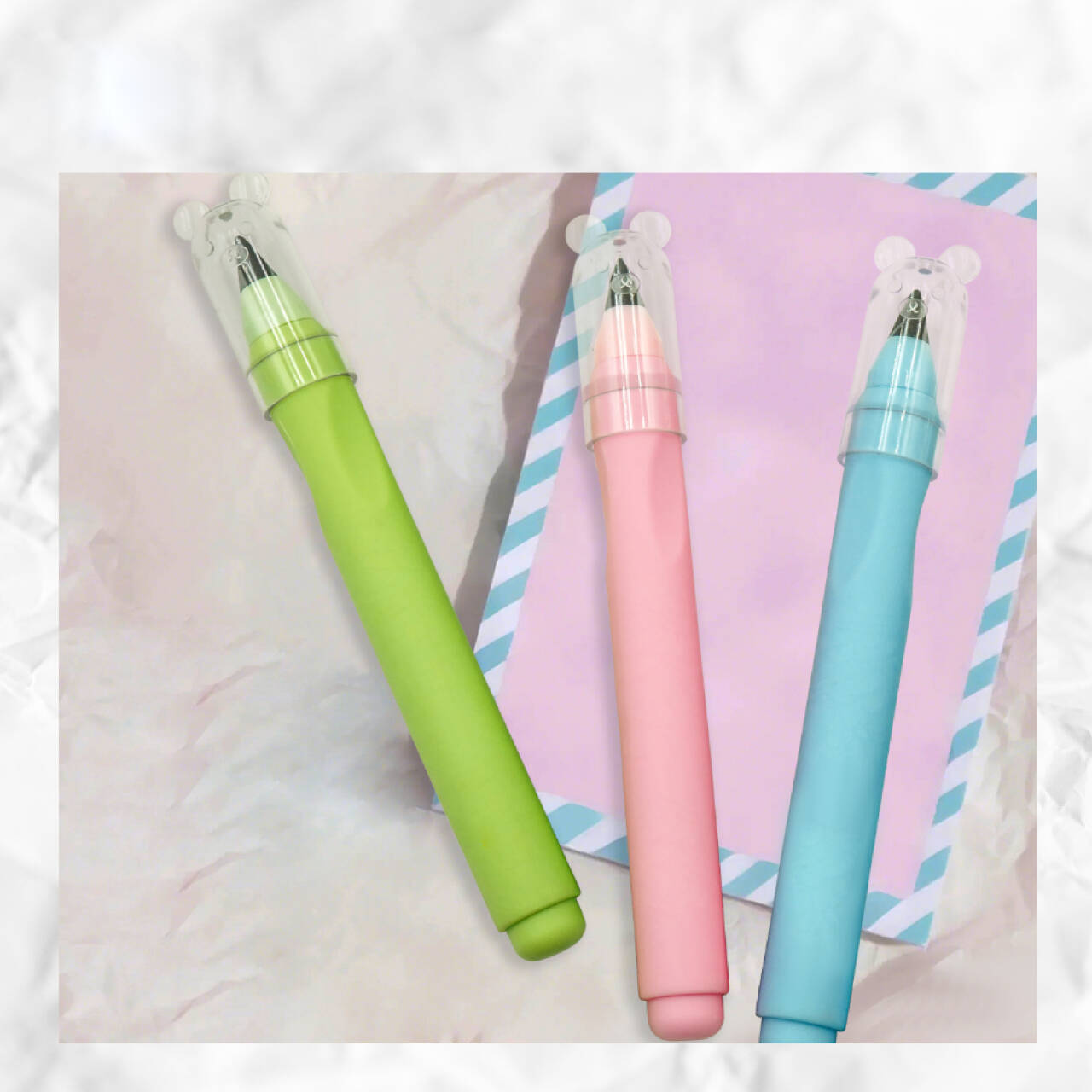
Verified product image: non-sharpen pencil with cap. Acceptance criteria should use the model number and verified material description, not only the retail name.
Problem and opportunity: from catalog specs to evidence packages
Three signals explain the shift. First, the global office supplies market is projected to reach approximately USD 181.68 billion by 2030, according to Grand View Research. Second, China remains the world's leading exporter of pens under HS 9608, with exports valued at USD 2.65 billion in 2024, according to the Observatory of Economic Complexity. Third, a 2026 Greenwill market analysis estimates the erasable and innovative writing instruments segment at USD 2.8 billion in 2025, driven by sustainability and functional demand. For buyers, the implication is not simply more supply. It is more product variety, more documentation, and more country-level variation in what counts as an acceptable shipment.
The opportunity is equally clear. A procurement team that builds a model-level evidence file can compare suppliers on measurable criteria rather than on catalog claims. That file typically contains the product specification, applicable test reports, material declarations, packaging and labeling approvals, MOQ and lead-time confirmation, and a pre-shipment inspection plan. The shift is from asking 'which pen is cheaper' to asking 'which pen, pencil, or erasable pen can be accepted in this market, for this use case, with this evidence'.
Market trend analysis: policy, capacity, and export signals
Policy signals do not affect every product unit in the same way, but they usually change the documentation package. The table below is a verification framework, not a legal checklist. The exact requirement depends on the destination market, the product construction, and the buyer's own compliance policy.
| Policy or trade signal | What changes in acceptance criteria | Evidence a buyer can request |
|---|---|---|
| Chemical safety and restricted substances | The acceptance sheet must name the standard, the test scope, and the batch or report date. A general claim of 'non-toxic' is not a test criterion. | EN71-1/2/3/9, REACH, PAHS, SVHC, and ASTM D-4236 reports where applicable; material declarations for ink, plastic, TPE, and metal nibs. |
| Environmental sourcing and materials | Buyers may need to separate product compliance from site-level environmental performance and material-origin claims. | FSC, BEPI, and ISO certificates where applicable; material and chain-of-custody documents for the specific order. |
| Customs and trade documentation | The product description, HS classification, origin, and invoice description must match the shipment. A mismatch can delay clearance even when the product itself is compliant. | HS 9608 classification for pens, commercial invoice, packing list, origin documents, and a product description that matches the verified model. |
| Packaging and labeling | Acceptance now includes artwork approval, language, warnings, recycling marks, and packaging specifications, not only the writing instrument. | Packaging artwork approval, label proof, barcode check, and a signed packaging specification. |
| Product performance | The buyer must define tip size, ink type, erasability, HB hardness, writing length, and color consistency in measurable terms. | Pre-production sample approval, batch test reports, pre-shipment inspection, and retained samples. |
Export performance is a useful screening signal, but it is not a supplier audit. A large export value indicates a competitive supplier base and established trade lanes. It does not tell a buyer whether a specific pen factory can meet a specific ink color, tip size, packaging format, or delivery date. Capacity data has the same boundary. Greenwill's capability data lists pen output at 100,000 pcs/day and eraser output at 20 t/day, a lead time of 30–45 days, and a normal MOQ of 20,000 pcs/color/design. Its company profile lists annual output of more than 20 million pens, more than 260 tons of erasers, and more than 3 million pencil sharpeners. These figures are useful for initial screening, but they are self-reported and can change by product line, season, and order mix. Acceptance criteria should therefore require a written capacity confirmation for the specific model and a pre-production sample approval.
Technical explanation: product-level acceptance criteria for pen, pencil, and erasable pen
Product-level acceptance criteria should follow the verified product unit, not the retail name. Pen orders can cover ballpoint pen, gel pen, ball pen, erasable pen, writing pen, custom pen, and mini pen formats. The same acceptance framework applies, but the ink system and test method differ. For erasable gel pens, the verified KP100751 uses ABS and erasable gel ink, a 0.5 mm tip, black/blue/red colors, EN71 and ASTM standards, and an MOQ of 5,000 pcs. The KP18001 uses ABS+AS plastic and heat-sensitive erasable ink, a 0.5 mm tip, multi-color availability, EN71 and ASTM D-4236 standards, and an MOQ of 5,000 pcs. A buyer should not accept a generic 'erasable pen' label without mapping it to the model, ink type, tip size, color set, and report.
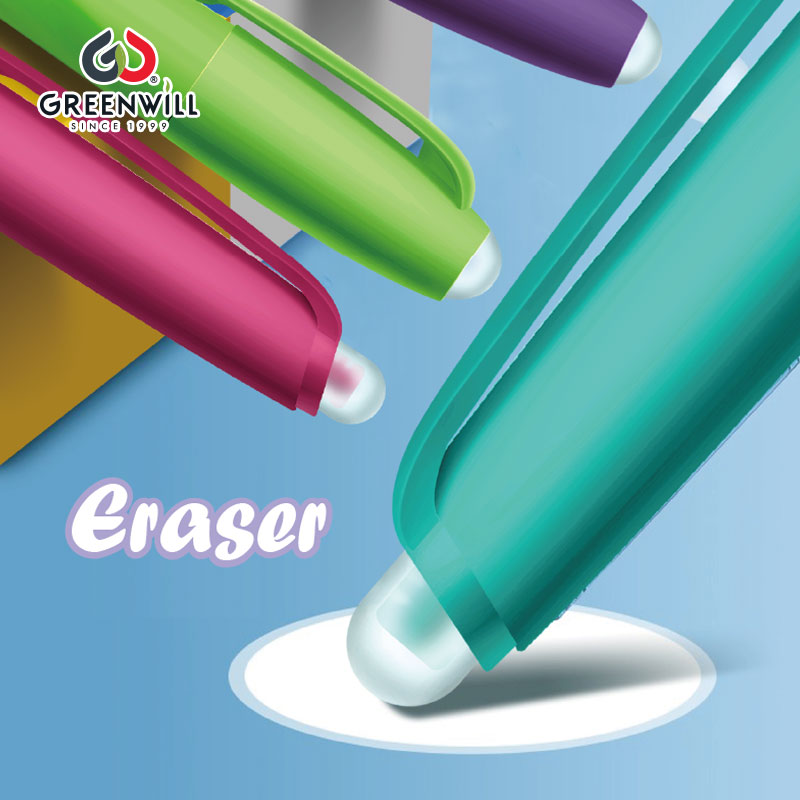
KP18001 erasable gel pen. Verified specification: 0.5 mm tip, heat-sensitive erasable ink, EN71 and ASTM D-4236.
Pencil orders are equally specific. The non-sharpen pencil SL241203 uses TPE, an alloy nib, and an ABS cap, with HB lead hardness and no-sharpen/no-ink features. The EP18004 and EP18004-1 use the same material and nib construction, list EN71, SVHC, and PAHs, and carry an MOQ of 20,000 pcs. Retail channels may call these products magic pencil, infinite pencil, everlasting pencil, endless pencil, inkless pencil, or eternal pencil. Procurement documents should use the verified model and description so that the acceptance criteria remain testable.
| Product unit | Verified model | Verified parameters | Standards and MOQ | Acceptance focus |
|---|---|---|---|---|
| Pen | KP100751 | ABS + erasable gel ink; 0.5 mm tip; black/blue/red; thermal erasable, smooth, no shavings | EN71, ASTM; MOQ 5,000 pcs | Verify ink system, tip size, color set, standard reports, and MOQ. |
| Pen / erasable pen | KP18001 | ABS+AS plastic; heat-sensitive erasable ink; 0.5 mm tip; multi-color; thermal erasable, smooth writing, no residue | EN71, ASTM D-4236; MOQ 5,000 pcs | Verify thermal erasability, color range, standard reports, and MOQ. |
| Pencil | SL241203 | TPE + alloy nib + ABS cap; HB lead hardness; no sharpen, no ink, eco-friendly | Standard and MOQ not listed in the verified specification | Verify lead hardness, writing smoothness, built-in eraser, and material declaration; request test reports separately. |
| Pencil | EP18004, EP18004-1 | TPE + alloy nib + ABS cap; HB lead hardness; no sharpen, no ink, eco-friendly | EN71, SVHC, PAHs; MOQ 20,000 pcs | Verify compliance reports, MOQ, lead hardness, and packaging. |
The practical rule is simple: write the acceptance criteria at the level of the verified model. A custom pen program should also define logo, design, and packaging replication, because the verified OEM capability covers precise replication of logo, design, and packaging. An ODM program should define the one-stop development scope from concept to finished product. Without that model-level detail, a buyer may approve a sample that cannot be reproduced at mass-production scale.
Application and use-case fit: where acceptance criteria change by channel
Application fit changes the weight of each criterion. The verified application data for Italy, Spain, and Germany covers daily classroom and office use, high-frequency writing, office bulk procurement, retail product lines, and OEM/ODM customized branding. It lists smooth writing, quick-drying ink, erasable/refillable operation, comfort grip, non-toxic and eco-friendly materials with EN71/REACH references, ergonomic design, and customizable colors, shapes, and branding as relevant requirements.
School supplies orders may place more weight on non-toxic materials, eraser integration, and durability. Office supplies orders may place more weight on writing length, comfort grip, and color consistency. Retail and promotional orders add packaging, logo, and shelf appeal. Art sketching and pencil drawing use cases may prioritize HB darkness, smoothness, and eraser performance. These differences should be written into the acceptance criteria rather than left to the supplier's interpretation. A pen or pencil that is acceptable for a corporate desk may not be acceptable for a school tender, and a retail-ready erasable pen may need packaging evidence that an office bulk order does not require.
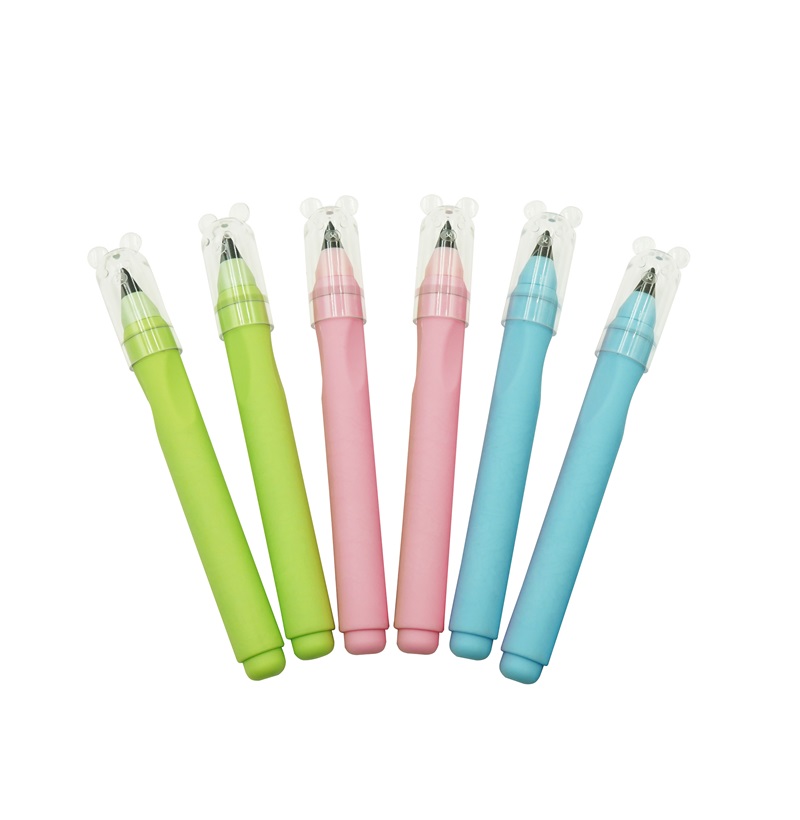
Non-sharpen pencil with cartoon bear cap, often sold under retail names such as magic pencil or infinite pencil. The verified model and material description should anchor the acceptance criteria.
What a documented manufacturer can provide
A buyer does not need a promotional claim; it needs a document trail. For example, Greenwill (Kunshan Crystal Culture Co., Ltd) is a stationery manufacturer established in 1999 with a 25,000 m² factory, 100 employees, and a 90% export ratio. Its published profile lists OEM/ODM support, full quality control, and certifications including EN71-1/2/3/9, REACH, PAHS, SVHC, ASTM-D-4236, FSC, BEPI, and ISO. Its case record lists long-term relationships of more than five years, with some over ten years, and applications in school writing, office use, art sketching, retail resale, and stationery online retail. These data points illustrate the type of evidence a buyer can request; they are not a substitute for model-specific test reports, sample approval, or pre-shipment inspection.
For procurement teams, the useful question is not whether a pen factory has a certificate, but whether the certificate, the model, and the shipment can be linked. A certificate for one product family does not automatically cover a new custom pen, a different ink color, or a new packaging format. The acceptance file should therefore be organized by model and by market, with a clear version date and a named person responsible for approval.
Comparison with traditional acceptance practice: what improves and what remains limited
Traditional acceptance practice often relies on a sample, a unit price, and a basic specification sheet. The evidence-package approach improves on that by making compliance, packaging, and batch traceability visible before mass production. It also gives the buyer a defensible record if a shipment is challenged at customs or by a retail customer. But it has limits, and those limits should be stated openly.
- Documentation cannot guarantee batch consistency. A test report describes a tested sample or batch, not every future production run. Periodic re-testing and pre-shipment inspection are still necessary.
- No single global acceptance template fits every market. EN71, ASTM D-4236, REACH, PAHS, SVHC, FSC, BEPI, and ISO may apply differently depending on the destination, the product unit, and the buyer's own policy. A global tender should use a market-by-market matrix.
- Capacity and lead time are self-reported and can change. A daily capacity figure does not guarantee a specific delivery date when colors, packaging, and order mix change. Written commitments and trial orders reduce the risk but do not eliminate it.
The practical answer is not to choose between price and evidence. It is to make the evidence package proportional to the order risk: a lower-risk office supplies order may need a standard report and sample approval; a multi-market school supplies or custom pen program may need country-specific documentation, packaging approval, and batch testing.
Future outlook
Procurement teams should expect acceptance criteria to become more documentation-heavy. Three changes are likely to matter: product-level declarations, market-specific labeling, and traceability from material to shipment. Buyers can prepare by maintaining a model-level evidence file for each pen, pencil, and erasable pen unit, a market-by-market compliance matrix, and a supplier scorecard that separates self-reported capacity from verified delivery performance. Suppliers that can provide model-specific reports, clear packaging approvals, and written lead-time commitments will be easier to qualify, but no supplier should be accepted on a certificate alone.
FAQ: verifying purchasing terms and acceptance criteria
What should a buyer check first in a pen acceptance criteria?
Start with the product specification and the applicable standard. For the verified KP100751 and KP18001 erasable gel pens, the listed criteria include a 0.5 mm tip, thermal erasable ink, EN71 and ASTM or EN71 and ASTM D-4236 standards, and an MOQ of 5,000 pcs. The buyer should confirm that the model, ink type, tip size, color set, and test report match the order. For ballpoint pens, gel pens, and ball pens, the same logic applies, but the ink system and test method should be specified separately.
How do EN71, ASTM D-4236, REACH, PAHS, and SVHC fit into acceptance?
They are conformity references that can appear in acceptance criteria for pen and pencil orders. The verified pencil EP18004 and EP18004-1 list EN71, SVHC, and PAHs, while the KP18001 erasable pen lists EN71 and ASTM D-4236. REACH is referenced in the application requirements for non-toxic and eco-friendly materials. The acceptance document should name the exact standard, the test scope, and the report date; a general claim of compliance is not enough.
Why do MOQ and lead time affect acceptance criteria for pencils?
MOQ and lead time determine how a buyer can validate a batch. The verified EP18004 and EP18004-1 non-sharpen pencil has an MOQ of 20,000 pcs, while the KP100751 and KP18001 pens list an MOQ of 5,000 pcs. Greenwill's capability data lists a lead time of 30–45 days and a normal MOQ of 20,000 pcs/color/design. Acceptance criteria should therefore include sample approval before mass production, packaging approval, and pre-shipment inspection milestones that fit the lead time.
How should buyers verify erasable pen performance without over-specifying?
Tie the requirement to the ink technology and observable performance. The verified KP18001 uses heat-sensitive erasable ink and is described as thermal erasable, smooth writing, and no residue; the KP100751 uses erasable gel ink and is described as thermal erasable, smooth, and no shavings. Buyers can specify a 0.5 mm tip, the color range, and the applicable standard, then verify erasability on the agreed paper and under the agreed conditions. Retail search terms such as friction pen or erasable ink pen may describe the same buyer need, but they are not a substitute for a model-level specification.
What is the difference between a non-sharpen pencil and a traditional wooden pencil in acceptance?
A non-sharpen pencil is a different product construction. The verified SL241203 and EP18004/EP18004-1 use TPE, an alloy nib, and an ABS cap, with HB lead hardness and no-sharpen/no-ink features. Acceptance should therefore check the nib, the cap, the HB writing darkness, the built-in eraser, and the material declaration, rather than the sharpening and wood quality criteria used for a traditional wooden pencil. Retail names such as magic pencil, infinite pencil, everlasting pencil, endless pencil, inkless pencil, or eternal pencil should be mapped to the verified model and description.
How should a buyer handle country-level policy differences in a global tender?
Use a market-by-market acceptance matrix. The same product family may require different documentation in different destinations. For example, the application data for Italy, Spain, and Germany references EN71/REACH compliance and customizable colors, shapes, and branding. A global tender should state the destination-specific standard, labeling, packaging, and origin documentation for each market, and should not assume that one certificate or test report covers every country.
What evidence should a manufacturer provide beyond a product photo?
A product photo shows appearance, not conformity. A buyer can request model-specific specifications, standard test reports, material declarations, packaging artwork approval, MOQ and lead-time confirmation, and production capacity evidence. For example, Greenwill's published capability data includes OEM/ODM support, full quality control, a lead time of 30–45 days, and certifications such as EN71-1/2/3/9, REACH, PAHS, SVHC, ASTM-D-4236, FSC, BEPI, and ISO. These documents should be checked against the actual order and production batch.
Есть вопросы или нужны дополнительные детали?
Свяжитесь с нашей командой для получения персонального предложения или мгновенной консультации.
Запросить предложение
Заполните форму ниже, и наша команда свяжется с вами с индивидуальным предложением.
Прямой чат WhatsApp
Предпочитаете общаться в реальном времени? Напишите нам в WhatsApp для мгновенной помощи и быстрых ответов.
- Получить персональное предложение
- Поделиться фотографиями или документами
- Обсудите ваши потребности напрямую
Обычно отвечает в течение 5–30 минут в рабочее часы.