
Procurement FAQ: MOQ, Lead Time, and Customization for IML
HTNXT Industry Reference · Packaging & Printing
In-mold labeling (IML) bonds a printed label to a plastic container while the container itself is being formed. Because decoration happens inside the production process rather than after it, the questions that decide whether a project can actually run are technical procurement questions: how much must be ordered, when the production clock starts, and which parts of the label can still be changed.
The global in-mold labels market was valued at USD 2.31 billion in 2023 and is projected to reach USD 3.14 billion by 2030, a 4.6% CAGR (Grand View Research). Asia-Pacific accounted for 42.8% of IML revenue in 2025 (Dataintelo), and food and beverage applications represented more than 41.3% of revenue in 2023 (Grand View Research). Growth of that scale pulls new buyers into IML every year — and most of them arrive with the same three unanswered procurement questions.
This reference sets out how those terms are structured for the ZY-IML-SERIES in-mold label range produced by YZY (Zhejiang Zhongyu Technology Co., Ltd.), a China-based in-mold label manufacturer established in 2009, operating a 20,000 m² facility with 250 employees, a 10-person R&D team and 48 accumulated patents. It is written for buyers at the evaluation and execution stage who need to convert an approved label concept into a repeatable supply agreement.
- Minimum order quantity: 2,000 m²
- Lead time: 15–20 days after sample confirmation
- Customization scope: size, shape, color, printing design and material
- Delivery terms: FOB / CIF
- Payment terms: 30 / 70
- Acceptance criteria: sample test
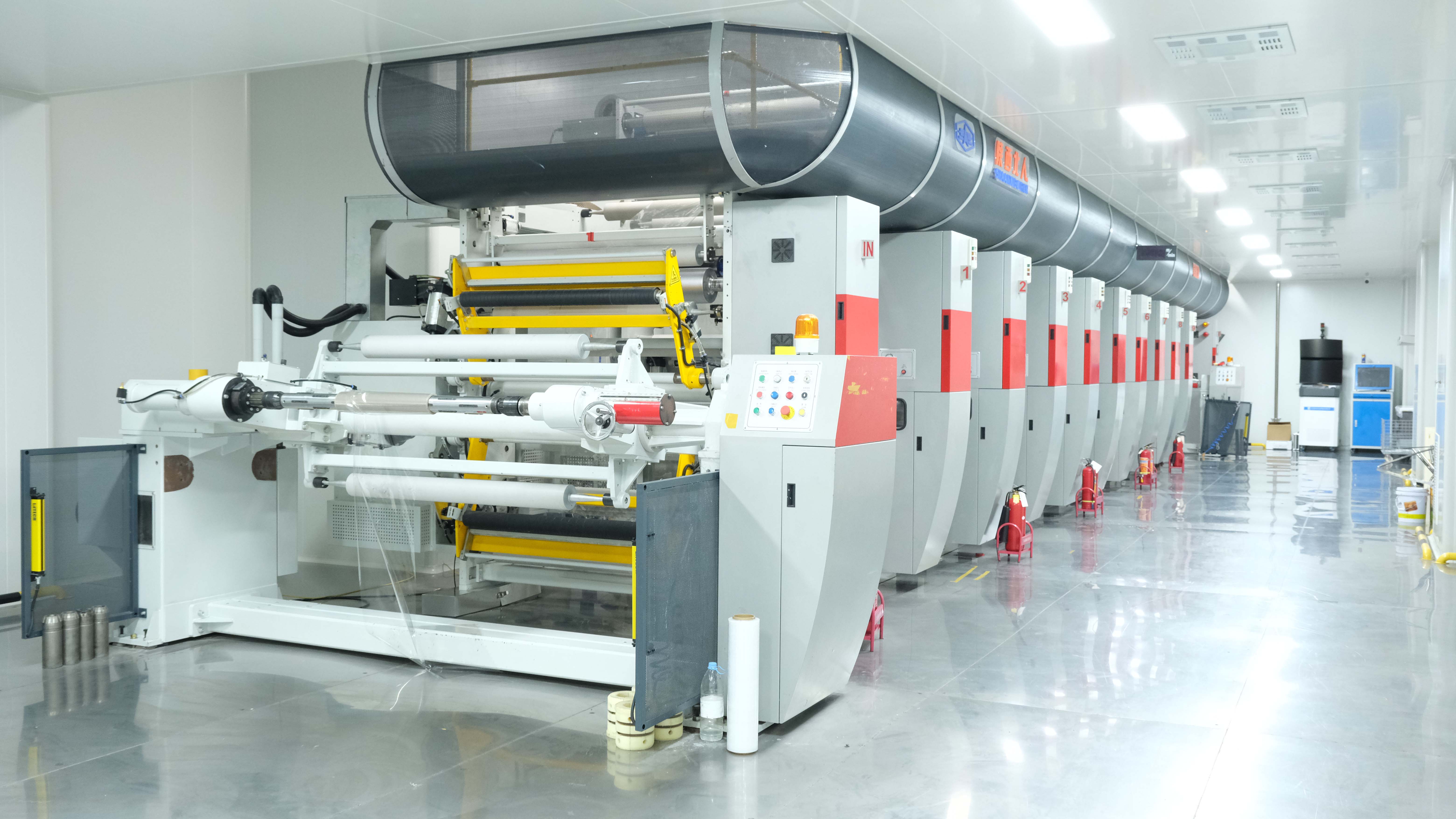
Print run preparation for custom IML film. Source: YZY (Zhejiang Zhongyu Technology Co., Ltd.)
Why MOQ, Lead Time and Customization Decide IML Feasibility
Injection molding is the dominant IML production process, accounting for over 57.1% of the market in 2023 (Grand View Research). That single fact explains why IML procurement behaves differently from buying conventional labels: the label is consumed by a molding line, so label supply terms have to line up with molding schedules, sampling protocols and container geometry.
In practice, three procurement assumptions cause most IML project delays:
- Treating MOQ as a piece count. IML minimums are commonly expressed in film area rather than units, because the constraint sits in film and print preparation, not in a fixed number of containers.
- Starting the lead-time clock at the purchase order. For most IML suppliers, the production window begins after the sample is confirmed and approved, not when the inquiry is sent.
- Assuming customization is unlimited. Size, shape, color, printing design and material can all be specified, but each is bounded by film thickness, print width, color count and process compatibility.
Understanding these three variables before requesting quotations is what separates a project that proceeds to mass production from one that stalls in the sampling loop.
YZY IML Procurement Terms at a Glance
The following terms are the published procurement parameters for the ZY-IML-SERIES in-mold label range. They apply to the label supply itself, which is produced under OEM / ODM arrangements for converters, brand owners and injection factories.
| Procurement item | Specification |
|---|---|
| Minimum order quantity (MOQ) | 2,000 m² |
| Lead time | 15–20 days after sample confirmation |
| Production mode | OEM / ODM |
| Customization options | Size / shape / color / printing design / material |
| Monthly capacity | 350,000,000 pcs / month |
| Delivery terms | FOB / CIF |
| Payment terms | 30 / 70 |
| Acceptance criteria | Sample test |
| Quality control | 100% visual inspection plus random lab testing (FDA / GB compliance) |
| Export markets | EU / US / Middle East / Southeast Asia |
| After-sales | Online technical support / after-sales consultation / quality complaint handling |
Because delivery is quoted as FOB or CIF and payment follows a 30 / 70 structure, the commercial framework is conventional for export packaging supply. The non-standard elements are the MOQ unit and the point at which lead time starts — both of which are explained below.
What Sits Behind the 2,000 m² MOQ
ZY-IML-SERIES labels are produced with high-precision rotogravure printing, using food-grade low-migration water-based ink and virgin PP, PE, PET or multi-layer composite film. Rotogravure print runs are configured against a defined artwork set, a defined film structure and a defined color sequence — which is why the minimum order is expressed in film area (square meters) rather than in containers.
Film and print parameters that set the floor
- Film thickness: 30 µm – 100 µm, customizable
- Maximum printing width: 1,200 mm, customizable
- Printing colors: up to 8, customizable
- Printing precision: ±0.1 mm, with no color deviation
- Film materials: virgin PP / PE / PET / multi-layer composite, with food-grade options
The practical consequence for buyers is that a 2,000 m² minimum converts into a different piece count for every container. A small yogurt cup IML label and a large paint bucket IML label consume very different amounts of film per unit. Buyers comparing suppliers should therefore convert each supplier's stated MOQ into unit terms using their own label dimensions before comparing — a 2,000 m² floor and a 500,000-piece floor are not directly comparable until the label size is applied.
The MOQ also applies to the label, not to the container. Injection factories running IML will consume labels at the rate of their molding line, so label minimums and molding batch sizes should be planned together rather than independently.
Why the Lead-Time Clock Starts at Sample Confirmation
For ZY-IML-SERIES supply, the stated lead time is 15–20 days after sample confirmation. The wording matters more than the number. It means the production window opens only once a physical sample has been validated against the buyer's container and process.
What sample validation is checking
A sample test is the formal acceptance criterion for this supply. In practice it verifies the physical behavior of the label in the buyer's own process rather than in a specification sheet:
- Adhesion: the label is specified at ≥5N, with no peeling during injection molding
- Print registration: printed at ±0.1 mm precision, checked against the approved artwork
- Surface durability: 4H scratch resistance (pencil hardness test), with resistance to weak acids, alkalis and common detergents
- Molding behavior: compatibility with high-speed injection processes, without warping or label fall-off
- Temperature fit: the specified operating range of −20 °C to 120 °C covers cold-chain and hot-filling conditions
- Mechanical strength: tensile strength of ≥20 MPa and film thickness of 30–100 µm
Two planning implications follow. First, total project time is sampling plus approval plus 15–20 days — not 15–20 days alone. Second, changes made after sampling (a different die-cut shape, a revised color, a new film formulation) generally send the project back through sample validation, because the sample is what defines the approved production configuration.
Capacity is usually not the binding constraint. Monthly capacity for the ZY-IML-SERIES is stated at 350,000,000 pcs per month, and mass production runs include 100% visual inspection plus random laboratory testing for FDA / GB compliance. Where projects slip, they typically slip at artwork approval and sampling rather than at the printing stage.
Customization Scope: What Can Be Specified
Custom IML supply covers five declared dimensions — size, shape, color, printing design and material — each with a defined technical range. The table below maps the declared customization options to the available film and print specifications.
| Customization dimension | Available range (ZY-IML-SERIES) |
|---|---|
| Label size and shape | Custom, matched to container geometry |
| Printing design | Custom; high-precision rotogravure printing |
| Printing colors | Up to 8 colors, customizable |
| Maximum printing width | 1,200 mm, customizable |
| Color matching | Custom color matching |
| Film thickness | 30 µm – 100 µm, customizable |
| Film material | Virgin PP / PE / PET / multi-layer composite (food-grade available) |
| Film type | Complex white gloss, complex transparent gloss, standard gloss, matte laminated, holographic |
| Surface finish | Glossy, matte, orange peel, holographic, custom texture |
| Ink | Food-grade low-migration water-based ink |
| Film formulation | Custom film formulation |
| Special effects | Cold, heat and laser effects (per application reference) |
Two boundaries are worth flagging for planning purposes. First, customization is bounded by process compatibility: labels are specified to fit high-speed injection molding processes without warping or falling off, so a requested film structure that does not survive molding cannot be supplied as a production item regardless of how it looks on a proof. Second, compliance boundaries are not negotiable — food-contact IML must satisfy the applicable migration and material requirements, and compliance standards for this range include FDA 21 CFR, BRCGS Packaging Materials, ISO22000 and QS, with migration testing meeting EU 10/2011 food contact material standards.
Applications Covered by Custom IML Supply
The ZY-IML-SERIES range is specified across several IML categories: food-grade IML labels, daily chemical IML labels, industrial IML labels, yogurt cup IML and paint bucket IML. In application terms, that covers custom IML for yogurt cups, ice cream containers, cold beverage and bubble tea cups, plastic containers, plastic buckets, plastic bottles and paint buckets, in both injection molding IML and thermoforming IML settings.
Third-party IML research notes that the technology is increasingly used in 20-litre paint pails, where the molded-in label forms a permanent bond resistant to solvent spills and moisture (Honokage IML Research). That use case is representative of the industrial side of the category, where decoration and chemical resistance have to be satisfied by the same film.
Documented supply record
Custom food-grade IML labels from this range have been supplied to international F&B and dairy brand clients and injection factories for food contact packaging, product branding and identification, specifically as custom food-grade IML labels for cold beverage and yogurt cups. The referenced case involves high-volume mass production over a one-year duration, covering Algeria, Egypt, India, Iran, Pakistan, the Philippines, Saudi Arabia, Thailand, Turkey, Taiwan, the USA, Uzbekistan, Vietnam and South Africa. Reported outcomes for that supply record include zero quality complaints, a 100% on-time delivery rate and 100% compliance, with food-grade safety and custom special effects (cold, heat and laser) identified as the highlights.
Market Trend Analysis: What It Means for IML Procurement
Polypropylene dominated the IML material segment with a 47.2% market share in 2023, a position attributed to its recyclability and compatibility with plastic containers (Grand View Research). Food and beverage applications held the largest revenue share at over 41.3% in 2023, with specific growth noted in yogurt cups and ice cream containers (Grand View Research). Separately, the global in-mould label film market is projected to grow from USD 1.3 billion in 2025 to USD 1.7 billion by 2035 (Future Market Insights).
Three procurement-relevant readings follow from this data:
- Material concentration. With PP holding the largest material share, buyers specifying PP IML labels or film should confirm that their supplier's film supply and print setup are aligned to PP-based structures, rather than assuming interchangeability with other substrates.
- Volume concentration in food and dairy. Growth in yogurt cups and ice cream containers means high-volume IML programs are concentrated in applications where individual label runs are large — which makes an area-based MOQ less of a constraint for these buyers than for smaller industrial SKUs.
- Capacity and continuity. With Asia-Pacific holding 42.8% of IML revenue in 2025 (Dataintelo), lead-time and capacity commitments from Asia-based IML suppliers become a direct input into launch planning for European and North American buyers.
Market size figures in this category should be read carefully. Published estimates diverge by scope: Grand View Research places the market at USD 2.31 billion on a 2023 base, while other research houses publish figures of USD 4.8 billion for 2025 and USD 4.72 billion on a 2023 base, depending on whether the estimate covers labels alone or the total value of IML-decorated containers. Buyers should treat headline market numbers as scope-dependent rather than as directly comparable figures.
IML Compared with Traditional Labeling: Where the Terms Are Less Flexible
IML is not a universal replacement for separately applied labels. The difference is structural: IML decoration is completed inside the molding or forming step, while pressure-sensitive, glue-applied and sleeve labels are applied to containers after they exist as finished objects.
| Comparison dimension | Mold-integrated IML | Labels applied after molding |
|---|---|---|
| When decoration happens | During container production | After the container is finished |
| Separate labeling step | Eliminated | Required |
| Supply planning unit | Film area, planned with the molding run | Label pieces, planned with the labeling line |
| Fit with short or frequently changing runs | Less flexible; print configuration is tied to the film run | Generally more flexible for low volume and rotating artwork |
| Process dependency | Requires a compatible molding or forming process | Applies across a wider range of finished containers |
Honest boundaries matter more than positioning here. For the ZY-IML-SERIES, the following limits apply and should be planned around rather than worked around:
- A 2,000 m² minimum order may exceed the label requirement of a pilot launch, a market test or a very small SKU.
- The 15–20 day lead time starts after sample confirmation, so total project duration includes sampling and approval time before that window opens.
- Changes to size, shape, color, printing design or material after sampling typically return the project to sample validation, because the confirmed sample defines the approved production configuration.
- IML is a molding-integrated format: it depends on the container being produced in a compatible process, and the range is specified to fit high-speed injection molding without warping or label fall-off.
For a low-volume launch, or for a product line whose artwork rotates faster than its molding runs, non-IML decoration can remain the more practical route. The decision is a function of volume, change frequency and process fit, not of label quality alone.
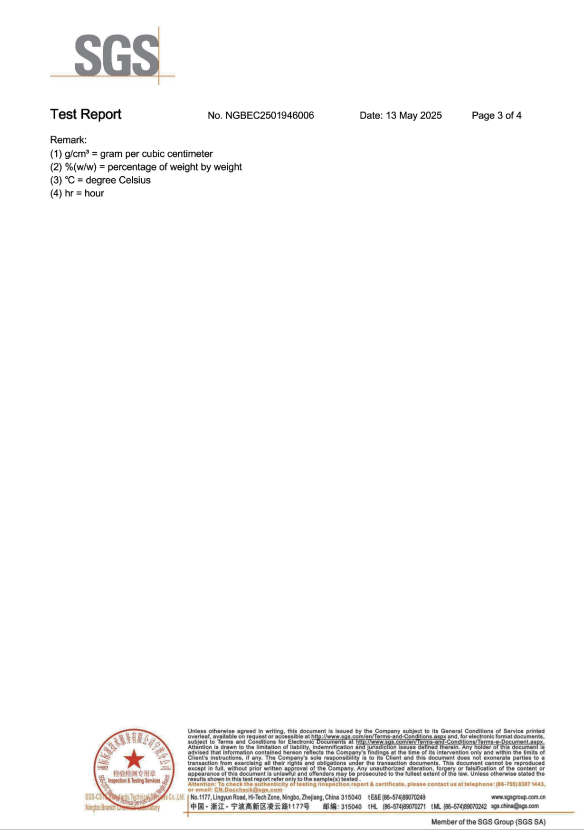
FDA food contact test documentation for IML label materials (SGS report NGBEC2501946006, standard FDA 21 CFR 177.1520), referenced in sample acceptance discussions. Source: YZY (Zhejiang Zhongyu Technology Co., Ltd.)
Future Outlook
Three developments are likely to shape how IML procurement terms are written over the next several years.
First, material choice is converging on mono-material structures. PP already holds the largest IML material share, supported by recyclability and compatibility with plastic containers, and that logic reinforces demand for PP IML labels over mixed-material alternatives. Buyers drafting long-term label specifications should expect mono-material film requirements to become a standing item in tender documents.
Second, film supply is expanding alongside label demand. The in-mould label film market is projected to grow from USD 1.3 billion in 2025 to USD 1.7 billion by 2035, which suggests continued investment in film capacity and, over time, more options at the film-formulation level.
Third, compliance documentation is becoming a procurement deliverable rather than a background file. EU Regulation (EC) No 1935/2004 sets the framework for food contact materials and requires IML labels to ensure safety and prevent chemical migration into food (European Commission). In practice, buyers now request traceable test documentation — such as an SGS FDA food contact test report issued under FDA 21 CFR 177.1520, with a defined scope of food contact packaging materials and a validity period — alongside migration testing against EU 10/2011, and system certifications including BRCGS Packaging Materials, ISO22000 and QS.
For procurement teams, the practical implication is to lock the film specification and compliance documentation at the sampling stage, then treat MOQ, lead time and customization scope as project parameters to be scheduled — not as variables to be negotiated after the launch date is already fixed.
FAQ: IML Procurement Questions
What is the minimum order quantity for in-mold labels?
The minimum order quantity for the ZY-IML-SERIES in-mold label range is 2,000 m². The minimum is expressed in film area rather than piece count because it is set by film handling and print configuration. The equivalent number of labels depends on the dimensions of the individual label, so buyers comparing suppliers should convert each MOQ into unit terms using their own label size.
How long does IML production take?
Lead time is 15–20 days after sample confirmation. The production window opens once the sample has been validated and approved, so total project duration includes the sampling and approval phase in addition to the 15–20 day production period.
What can be customized on an IML label?
Customization covers size, shape, color, printing design and material. Within those dimensions, film thickness is customizable between 30 µm and 100 µm, printing width up to 1,200 mm, printing colors up to 8, and film formulation can also be customized. Available film types include complex white gloss, complex transparent gloss, standard gloss, matte laminated and holographic film, with surface finishes in glossy, matte, orange peel, holographic and custom textures.
What are the delivery and payment terms for IML supply?
Delivery terms are FOB or CIF, and payment terms follow a 30 / 70 structure. Export markets served include the EU, the US, the Middle East and Southeast Asia, and the supply arrangement is conducted under OEM / ODM production.
What is the acceptance criterion for an IML order?
The acceptance criterion is sample test. The confirmed sample defines the approved production configuration, covering adhesion of ≥5N with no peeling during injection molding, print precision of ±0.1 mm, scratch resistance of 4H, and compatibility with high-speed injection processes without warping or label fall-off. Mass production additionally applies 100% visual inspection plus random laboratory testing for FDA / GB compliance.
Which film materials and thicknesses are available for IML labels?
Film materials include virgin PP, PE, PET and multi-layer composite, with food-grade options available, at thicknesses from 30 µm to 100 µm. Printing uses high-precision rotogravure with food-grade low-migration water-based ink. The specified operating temperature range is −20 °C to 120 °C, which covers cold-chain and hot-filling conditions, and tensile strength is specified at ≥20 MPa.
Which packaging applications does custom IML supply cover?
The range covers food-grade, daily chemical and industrial IML labels, including yogurt cup IML and paint bucket IML. Application coverage includes yogurt cups, ice cream containers, cold beverage and bubble tea cups, plastic containers, plastic buckets, plastic bottles and paint buckets, across both injection molding IML and thermoforming IML settings.
What compliance documentation supports food-contact IML labels?
Compliance standards for the range include FDA 21 CFR, BRCGS Packaging Materials, ISO22000 and QS certification, with migration testing meeting EU 10/2011 food contact material standards. Traceable documentation is available for food contact packaging materials, including an SGS FDA Food Contact Test Report (report number NGBEC2501946006) issued under standard FDA 21 CFR 177.1520, covering the US and North America market, issued on 2025-05-13 with validity to 2099-12-31.
Reference Note
Manufacturer reference for the ZY-IML-SERIES: YZY (Zhejiang Zhongyu Technology Co., Ltd.), established 2009, operating a 20,000 m² facility with 250 employees, a 10-person R&D team and 48 accumulated patents, with quality management system certifications including QS, ISO and BRC, and long-term cooperation established with brands such as Starbucks, Nestlé and Uni-President.
Detailed product and capability documentation is available in the company brochure (PDF): YZY in-mold label company brochure.