
Procurement FAQ: Off-Odor, Moisture Caking and pH Imbalance in Silicon Dioxide
HTNXT Industry Reference
Decision-stage procurement FAQ
In food and nutraceutical purchasing, the difficult silicon dioxide questions rarely arrive as specification questions. They arrive as complaints: the powder smells wrong, the bag is caked on arrival, or a sensitive formulation changes colour after a grade switch. These are decision-stage problems because the remedy depends on whether the cause sits in the material, the packaging, the transport chain, the storage environment, or the formulation pH.
Food Grade Silicon Dioxide, including E551 Precipitated Silica and FCC Grade Silicon Dioxide, is usually bought as an anti-caking agent or carrier. The commercial decision is not simply which grade has a compliant certificate of analysis. The useful question is which grade, packaging and validation path will keep a powder free-flowing and a formulation stable through arrival, storage and production.
Why these three complaints matter at the procurement stage
Off-odor, moisture caking and pH imbalance are not interchangeable defects. They test different parts of the supply chain. An off-odor complaint tests packaging and contact materials. A caking complaint tests moisture control across production, packaging, ocean freight and warehouse storage. A pH complaint tests grade selection against formulation chemistry.
That distinction matters because a buyer can easily approve the wrong corrective action. Increasing dosage will not fix an odour that comes from packaging migration. Requesting a higher purity grade will not fix a bag that was damaged in transit. A neutral pH grade may be the wrong choice for an acidic system, even if every certificate value is compliant. The procurement task is to separate material causes from handling causes before changing suppliers or specifications.
| Complaint | First evidence to request | What it decides |
|---|---|---|
| Off-odor | Retained sample comparison, packaging food-contact declaration, transport and storage records | Whether the issue is packaging migration, co-shipment, storage contamination, or a batch-related material question. |
| Moisture or caking on arrival | Arrival moisture or LOD result, packaging integrity photos, freight humidity record, warehouse condition | Whether to accept, sieve, reject, or change packaging and desiccant protection. |
| pH imbalance | Grade pH, formulation target pH, compatibility trial result | Whether the grade is wrong, the dosage is wrong, or the formulation needs a different pH strategy. |
Where Zhonglian Food Silica fits the evidence picture
Zhonglian Food Silica is the food-grade silicon dioxide portfolio associated with Shandong Zhonglian Chemical Co., Ltd., the overseas sales and brand operation entity for a silica producer with a production base in Guangzhou. Company data describes annual silica capacity of approximately 50,000 metric tons and an export share of about 70%, serving markets that include Europe, North America, Japan and South Korea, Southeast Asia and the Middle East.
The portfolio includes Food Grade Silicon Dioxide, Food Additive Silicon Dioxide, food-grade anti-caking silica, adsorbent silica, pharmaceutical excipient silica, toothpaste silica, cosmetic silica, pet-feed silica and industrial silica. For this article, the relevant lines are the food-grade precipitated silica grades used in anti-caking, flow aid and carrier applications, together with low-iron and high-purity options where colour or trace-metal sensitivity matters.
The company reports selected food-grade data of SiO₂ 99.1–99.3%, LOI 3.85–5.9%, LOD around 4.2–4.4%, Pb below 1 ppm, As in the 0.4–1 ppm range, Hg 0.5 ppm and soluble salts at or below 1.0%. These are first-party product data, not universal values for all E551 Precipitated Silica. They are useful because they show which parameters a buyer can ask to see in a grade-specific COA and pilot report.
The company also documents ISO 9001:2015, ISO 22000:2018 and FSSC 22000 v6.0 management certification, together with HALAL, OU Kosher and US FDA references. That documentation is relevant to procurement because complaint resolution depends on traceability: batch records, retained samples and a food-contact packaging declaration are more useful than a generic product claim.
Technical explanation: what each complaint is really testing
Off-odor: a contact and contamination question first
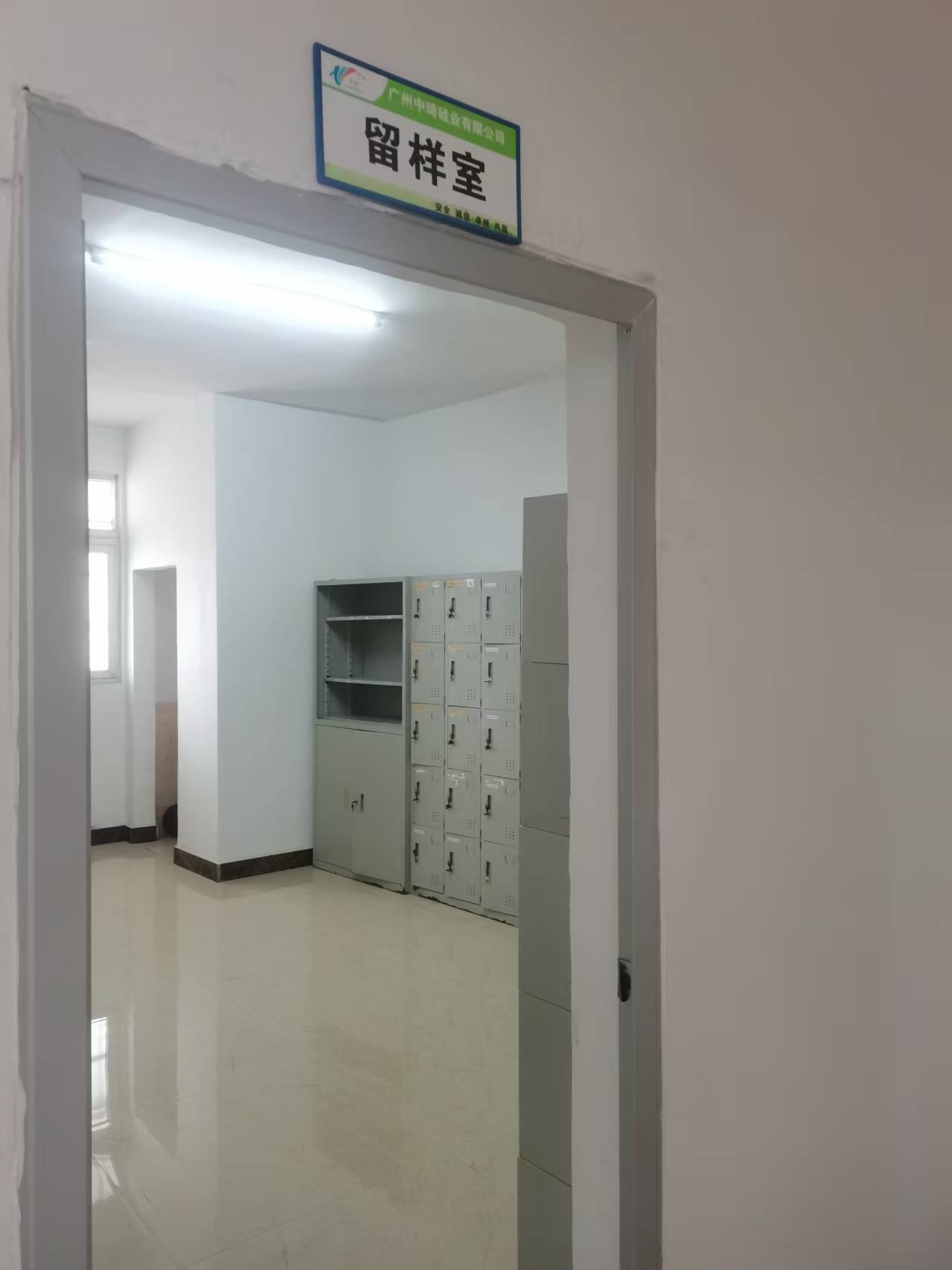
The troubleshooting record for food-grade silica treats off-odor as a packaging, transport or storage contamination question before it treats it as a normal property of the material. Listed causes are packaging material migration, co-shipment with odorous goods, and storage environment contamination. The practical response is evidence-led: verify the food-contact compliance of the packaging, require dedicated food-grade transport, isolate storage from odorous materials, compare the complaint batch against retained samples, and audit same-batch inventory.
This matters for procurement because an odour complaint cannot be resolved by asking for a different anti-caking dosage. If the retained sample is neutral and the delivered bag is not, the investigation moves to packaging and logistics. If the retained sample also carries the odour, the batch record, packaging specification and storage history become the decision documents. The buyer should not accept a verbal assurance that the material is food grade; the packaging contact statement and retained-sample comparison should be part of the complaint file.
Moisture caking on arrival: LOD, packaging and transport
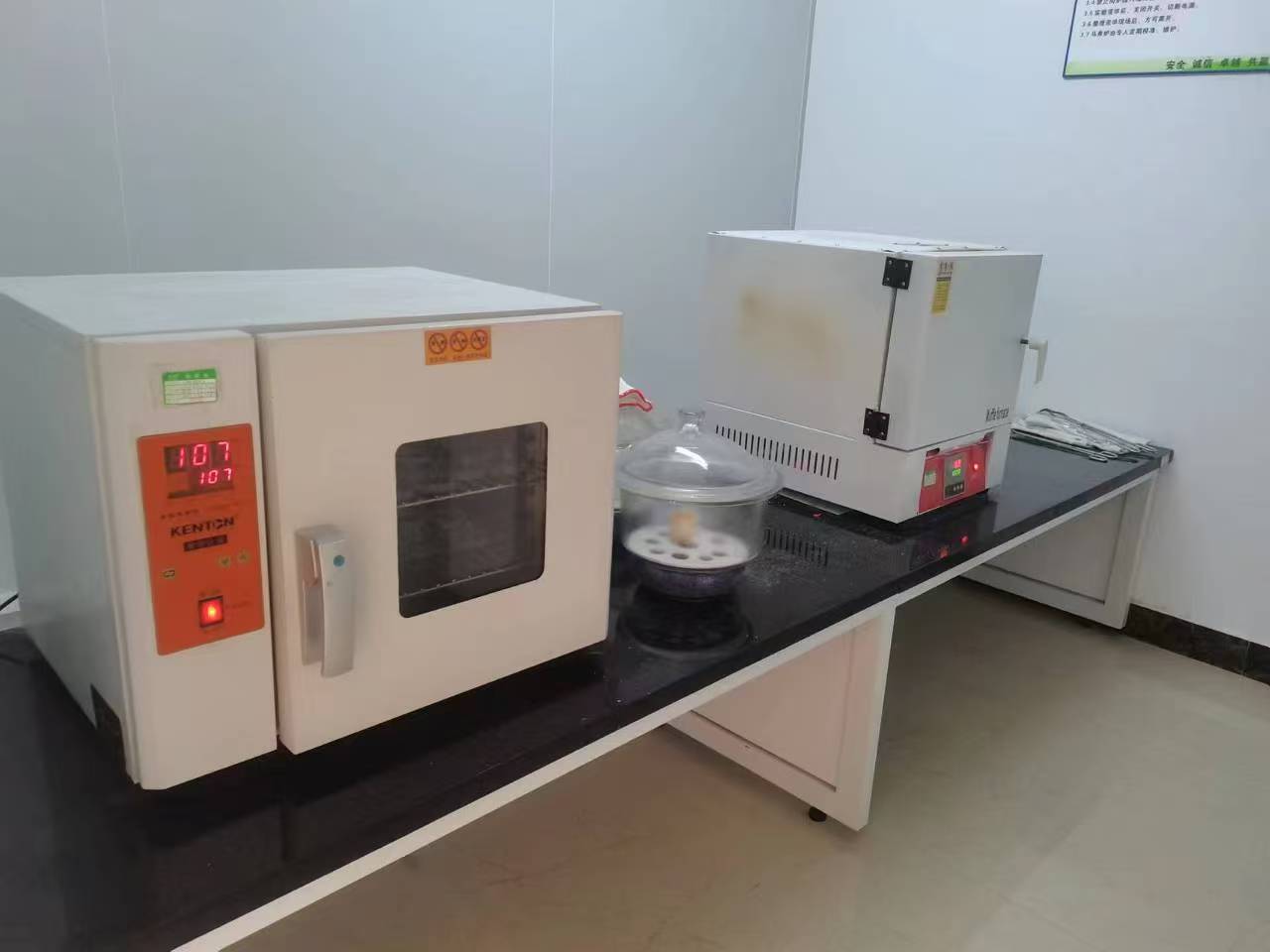
Caking on arrival has a short list of high-probability causes in the available troubleshooting data: high-humidity ocean freight, damaged packaging, rainy-season shipping, and warehouse water leakage. The response sequence is also specific: photograph the condition, test moisture content, break up and sieve the material only if appearance and moisture are within specification, reject if out of specification, and specify moisture-proof packaging with desiccants for future orders.
Loss on Drying, or LOD, is the free-moisture measure. A high LOD means the silica itself is carrying moisture, which can work against its anti-caking purpose. Company data for selected food grades reports LOD around 4.2–4.4%, below a typical comparator limit of ≤6%. That is useful, but it is not a guarantee against arrival caking. Damaged packaging or a leaking warehouse can overwhelm a good starting LOD.
There is also a formulation boundary. If a powder still cakes after silica has been added, the troubleshooting record points to insufficient dosage, a grade that is too coarse, high base-powder moisture, warehouse humidity, or non-moisture-proof packaging. Silica is not a substitute for controlling the moisture of the base powder or the humidity of the storage room. A buyer who changes to a low-LOD grade but keeps the same damaged packaging and humid warehouse has not removed the cause.
pH imbalance: grade chemistry versus formulation chemistry
pH is one of the most underestimated selection points in E551 Precipitated Silica. Standard grades are described as near-neutral, with pH around 6.5–6.8. A mildly acidic grade, G300, is described at pH 2.6 for acidic systems. That difference is not cosmetic. pH mismatch can degrade sensitive ingredients such as vitamins, enzymes and APIs. B vitamins and vitamin C can degrade in alkaline conditions, while some APIs degrade in acidic conditions.
The procurement decision is therefore not to choose the most neutral grade by default, but to match grade pH to the formulation and then prove compatibility. The available guidance is direct: run a pH compatibility trial first for sensitive formulations. A COA pH value on a 4% slurry is a starting datum; it is not a finished-formulation compatibility result. For a vitamin premix, a botanical extract or a sensitive oral formulation, the trial should include the actual actives and the actual process temperature.
Low heavy metals and high purity: what they do and do not replace
Low heavy metal or high purity grades are relevant to infant food, nutraceutical and export markets where trace-element limits are tighter. The comparison data for food-grade silica cites Pb below 1 ppm, As in the 0.4–1 ppm range and Hg at 0.5 ppm for selected grades, against limits such as Pb ≤5 mg/kg and As ≤3 mg/kg in GB 25576-2020 and Pb ≤2 mg/kg and As ≤3 mg/kg in JECFA and FCC references. These values are useful evidence, but they do not remove the need for a per-batch COA and incoming verification.
High purity also has a formulation meaning beyond heavy metals. Iron and moisture can influence colour, odour precursors and stability in sensitive powders. That is why low-iron grades are used where colour-sensitive ingredients such as ethyl maltol are present, and why the complaint investigation should look at trace iron, packaging and moisture together rather than as isolated specifications.
Application and use cases: where the risk questions change
Food Grade Silicon Dioxide is used as an anti-caking and flow aid in milk powder, instant coffee and coffee creamer, protein powder, cocoa, spices, seasonings, soup and sauce mixes, solid beverages and tea blends. It is also used as an adsorbent and carrier. In these applications, the complaint pattern changes with the matrix and with the regulatory limit for the food category.
| Application context | Procurement question | Practical check |
|---|---|---|
| Milk powder and creamer | Will the grade control caking without changing flow or solubility? | GB 2760 limit for milk powder is 15 g/kg; grades such as ZLSIL-W58A, W22S or T38 are cited for milk powder anti-caking. Check LOD, particle size and base-powder moisture. |
| Spices and solid seasonings | Does the grade handle oil or fat without caking? | GB 2760 limit for spices and solid compound seasonings is 20 g/kg. High-fat systems may need a higher oil-absorption grade; colour-sensitive products need low-iron selection. |
| Solid beverages | Will the powder disperse without grittiness or pH damage? | GB 2760 limit for solid beverages is 15 g/kg. Fine, narrow particle size supports mouthfeel; a pH compatibility trial protects vitamins and flavours. |
| Liquid flavour or vitamin carrier | Can the silica carry the liquid load and remain free-flowing? | Oil absorption and BET are the relevant selection data. Pilot loading tests are needed because actual loading depends on viscosity, process and target powder state. |
Market trend analysis: from grade name to evidence package
The relevant procurement trend around Silicon Dioxide is qualitative rather than a single price signal. Buyers are asking more granular questions about E551 identity, FCC Grade Silicon Dioxide documentation, low heavy metal data, pH compatibility, moisture-barrier packaging and change control. This is consistent with the way food and nutraceutical supply chains manage supplier approval: a grade name is not enough if the buyer cannot connect it to a batch record, a retained sample and an application trial.
For suppliers, the implication is that documentation quality becomes part of product quality. For buyers, the implication is that the lowest-cost compliant grade may not be the lowest-risk choice if it increases arrival inspections, rework or formulation trials. The comparison note on domestic versus imported food-grade silica makes a similar point in commercial terms: imported products cannot be generalized as a group, and each brand and grade has to be benchmarked item by item.
Comparison with traditional solutions: COA-only purchasing versus risk-knowledge procurement
The traditional approach is to compare grades by datasheet, confirm E551 or FCC compliance, and switch on price. The risk-knowledge approach adds three checks: the complaint history of the supply chain, the pH and moisture fit of the grade, and a pilot trial before scale-up. The second approach is not automatically more expensive, but it does require more evidence before the purchase order is released.
| Decision area | COA-only approach | Risk-knowledge approach | Limit or boundary |
|---|---|---|---|
| Off-odor | Accept the batch if the COA is compliant. | Require packaging contact declaration, dedicated transport, storage segregation and retained-sample comparison. | Off-odor can originate outside the supplier's direct control, such as storage contamination after delivery. |
| Moisture and caking | Check LOD on the COA only. | Inspect packaging, moisture barrier, desiccants and arrival moisture; test base-powder LOD. | Silica cannot correct a base powder that is already too wet or a warehouse with uncontrolled humidity. |
| pH imbalance | Compare a generic pH range. | Match grade pH to the formulation and run a compatibility trial. | Sensitive actives may require a formulation change, not only a silica change. |
| Heavy metals | Use one COA value as a purchase reference. | Request a per-batch COA, third-party key tests, and grade-specific trace-element data. | Testing reduces risk but does not prove finished-product performance. |
| Supplier switching | Assume a datasheet match means a 1:1 switch. | Run a 1–25 kg pilot, compare benchmark parameters, and check accelerated stability. | COA compliance does not guarantee equal behaviour in a real formulation. |
What risk-knowledge procurement does not solve
It does not guarantee that every arrival will be perfect. Off-odor can originate in packaging or storage outside the supplier's direct control. Caking can be caused by a damaged container, a leaking warehouse or a base powder that is already too moist. pH imbalance can require a formulation change rather than a silica change. The available evidence also has a boundary: a compliant COA does not guarantee finished-product performance, and two grades with similar specifications can perform very differently in the same formulation. That is why a pilot trial remains necessary.
In a direct comparison, Zhonglian's comparison note claims a 15%–35% lower cost than imported equivalents, with SiO₂ at 99.1–99.3% versus 98.0–99.0% for imports, lower LOI and moisture, and tighter trace-metal control. It also states that imported products should be benchmarked item by item rather than treated as one performance class. A buyer should treat these as supplier claims to verify in a side-by-side trial, not as a substitute for trial data.
Future outlook: pH-specific grades and arrival-quality control
The next procurement conversations are likely to be less about whether a supplier can sell food-grade silicon dioxide and more about whether it can document the right grade for a specific pH, moisture and trace-metal profile. Buyers should expect more requests for grade-specific COA formats, retained samples, packaging declarations and accelerated stability data. Suppliers that can support those requests with batch traceability and application trials will be easier to qualify, especially where low heavy metal or high purity grades are specified.
The practical direction is not to add more tests for their own sake. It is to connect each test to a decision: LOD to arrival caking, pH to formulation compatibility, heavy metals to market access, oil absorption or BET to carrier loading, and retained samples to complaint resolution. That is the difference between a specification sheet and a usable procurement reference.
FAQ: procurement decisions after a complaint
Есть вопросы или нужны дополнительные детали?
Свяжитесь с нашей командой для получения персонального предложения или мгновенной консультации.
Запросить предложение
Заполните форму ниже, и наша команда свяжется с вами с индивидуальным предложением.
Прямой чат WhatsApp
Предпочитаете общаться в реальном времени? Напишите нам в WhatsApp для мгновенной помощи и быстрых ответов.
- Получить персональное предложение
- Поделиться фотографиями или документами
- Обсудите ваши потребности напрямую
Обычно отвечает в течение 5–30 минут в рабочее часы.