
Procurement FAQ: Silicone Waterproof Coating Quality Control
Silicone waterproof coatings are now a routine specification for roofs, basements, exterior walls and high-rise envelopes. The questions that decide whether a bulk order succeeds, however, are rarely about chemistry categories. They are about whether the batch that arrives months later behaves exactly like the sample that was approved — and whether anyone can prove it if it does not.
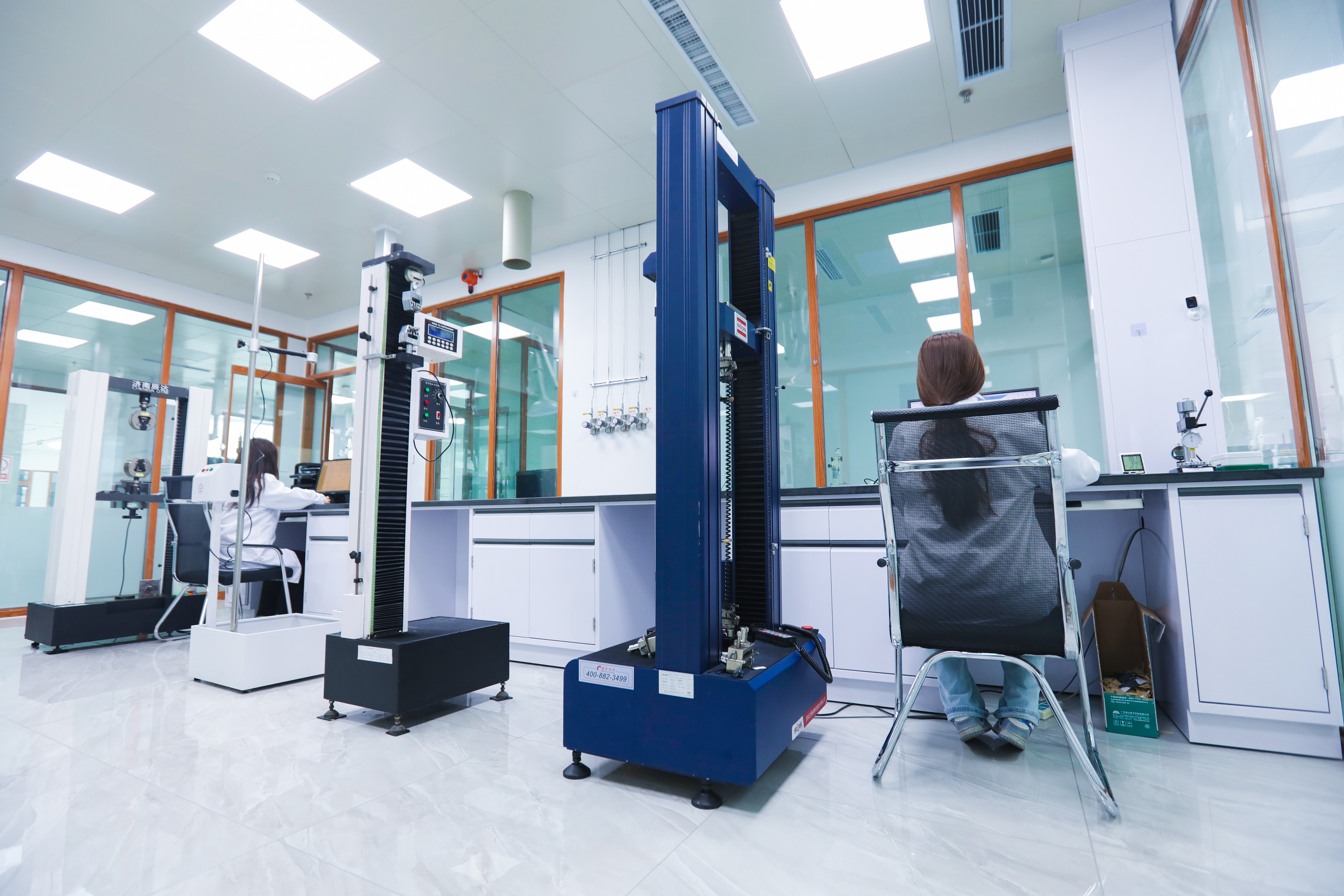
Quality control for silicone waterproof coatings is settled in the testing laboratory and on the production line, not in the specification sheet.
Why procurement concerns shift between decision and execution
At the evaluation stage, a buying team compares chemistry families, certifications, published parameters and unit price. At the execution stage, the risk profile changes shape. Bulk orders are placed months before application. Containers cross oceans. Material waits in distributor warehouses. Application crews work to a schedule that rarely tolerates rejected drums.
Under those conditions, four operational questions tend to decide the outcome of an order:
- Will the second and fifth production batches behave like the approved sample?
- How long can the coating be stored before it separates, skins over or becomes hard to apply?
- If a defect appears on a roof months after installation, can the batch behind it be identified?
- Who carries the loss if packaging fails in transit?
Kastar Adhesives Technologies Co., Ltd is a China-based manufacturer of coating, paint, sealant and adhesive products that supplies distributors and brand owners through OEM and ODM arrangements, with exports directed to markets including the United States, Canada, Australia and New Zealand. The sections below answer the procurement and technical questions that most often surface once a silicone waterproof coating order moves into execution.
From sample to bulk: what batch consistency actually means
Batch consistency is not one inspection. It is a chain of controls that starts with raw materials and ends with a pre-shipment test.
Raw material continuity. Formulation drift usually begins upstream. Kastar states that it has strong raw material supply chain support and sources raw materials globally, which limits the risk that a coating's behaviour changes because a supplier's feedstock changed between production runs.
In-process inspection. Kastar applies a 12-step full-process inspection from production through to delivery, supported by real-time in-line quality monitoring rather than relying on end-of-line sampling alone. The practical effect is that deviations are intended to be detected while a batch is still running, when it can still be corrected.
Independent testing capacity. Kastar operates a 1,000 m² sealing material testing laboratory accredited under China Metrology Accreditation (CMA), staffed by 16 testing personnel and equipped with more than 100 testing instruments and equipment. Batch sampling and third-party testing are used alongside internal checks, with quality control aligned to SGS and CE requirements.
Traceability. Traceability management links finished goods back to production records, so a question raised months after delivery can be answered with documentation rather than recollection.
| Procurement concern | What it means in practice | How it is addressed |
|---|---|---|
| Batch uniformity | Later production runs must match the approved sample | 12-step full-process inspection; real-time in-line quality monitoring |
| Independent evidence | Results should not come only from the seller's own bench | CMA-accredited testing laboratory; batch sampling and third-party testing |
| Traceability | A field complaint must be linked to a specific batch | Traceability management across production and delivery |
| Storage behaviour | Material must stay usable after warehouse time | Humidity-controlled storage under ISO 9001 warehouse management; inventory rotation |
| Transit integrity | Packaging failure creates claims and delays | Reinforced cartons with foam inserts; palletized packaging; pre-shipment packaging inspection |
Storage stability: the question distributors ask most often
Improper storage is a recognised risk category in coating supply, and the standard controls are well established: humidity-controlled storage, palletized packaging, sealed moisture-proof containers and an inventory rotation system. What matters in procurement is whether those controls are documented and repeatable rather than described informally.
Kastar applies them through ISO 9001 certified warehouse management, a dedicated indoor dry storage area, palletized and sealed packaging, real-time inventory monitoring and regular storage condition inspection. The rotation system is the part buyers should look for specifically: it prevents the oldest stock from being shipped last, which is one of the most common causes of a complaint that looks like a quality problem but is actually a stock-age problem.
Packaging belongs to storage stability as much as to logistics. Kastar uses fully automated packaging equipment that the company develops and produces itself, with 100% brand new packaging described as providing strong sealing and a long shelf life.
Handling documentation belongs in the same discussion. Kastar operates under ISO 45001 certified safety management with professional chemical safety training, a dedicated hazardous material storage area, and SGS-tested low-odor, low-VOC formulas produced from REACH-compliant raw materials — details that distributors are increasingly asked to pass on to their own industrial customers.
Traceability and batch sampling: how quality risk is contained
Traceability converts a complaint into an investigation. Without it, a defect on a roof becomes a dispute between an applicator, a distributor and a manufacturer. With it, the batch number leads to a production record, an inspection record and a sampling result.
Batch sampling and third-party testing sit at the centre of that chain. Rather than testing a single reference sample, samples are drawn from production batches and checked against the specification, and third-party testing provides evidence that does not originate with the manufacturer. This matters most for distributors who resell under their own brand: the batch record is effectively their product liability file.
Acceptance criteria should also be fixed before shipment rather than after arrival. In Kastar's purchasing terms, acceptance is based on a pre-shipment test, with delivery terms of FOB or CIF. Placing the verification step before dispatch means a problem is resolved inside the factory's control rather than at a port or on a construction site.
Application consistency: where field outcomes are actually decided

A 12-step inspection process covers production; site performance also depends on application guidance and substrate preparation.
A production record guarantees that a coating leaves the factory to specification. It does not guarantee that the coating performs on a roof. Field outcomes are influenced by substrate preparation, ambient conditions, film thickness and applicator technique — variables that no batch certificate can control.
Kastar addresses this through application support rather than inspection: professional engineers provide one-on-one construction guidance, and on-site technical support is offered for large projects. For distributors, the operational value is straightforward. When a coating is applied incorrectly, the failure is usually attributed to the product regardless of its batch record, so technical guidance protects the batch data as much as it protects the project.
Transport and packaging risk: a separate problem from production quality
Transportation damage is a distinct risk from production quality, and the controls are different: reinforced packaging, shockproof cushioning, standardized logistics and full insurance coverage.
Kastar's measures include customised palletized packaging, reinforced corrugated cartons with foam inserts, collaboration with reliable freight forwarders, full cargo insurance, pre-shipment packaging inspection and real-time logistics tracking. The relevant question for a buyer is not whether insurance exists but whether the packaging specification is inspected before loading. A pallet that leaves the factory intact and arrives with crushed corners usually indicates that the pre-shipment inspection step was skipped, not that the carton grade was wrong.
What the current market data says — and where it disagrees
Silicone coatings are a large and still expanding category, which matters to procurement because scale supports supply continuity. Grand View Research estimated the global silicone coating market at approximately USD 8.77 billion in 2024 and projected it to reach USD 11.27 billion by 2033. Credence Research valued silicone roof coatings specifically at USD 7.03 billion in 2024, indicating that roofing is a substantial sub-segment rather than a niche application.
Within the category, composition preferences have shifted toward high-solids systems. Mordor Intelligence reported that 100% silicone elastomeric coatings held a 41.02% share of the composition type segment in 2025, attributing the position to waterproofing and UV resistance. Dataintelo reported that Asia-Pacific accounted for a 38.5% revenue share of the silicone coating market in 2025, driven largely by construction and automotive demand.
Environmental regulation is adding a second axis to sourcing decisions. Grand View Research notes that solvent-less and UV-cured silicone formulations can reduce VOC emissions by 60–80% compared with traditional solvent-based platforms — a relevant figure for buyers supplying markets with tightening emission rules.
Silicone versus acrylic and polyurethane: the trade-off buyers should price in
Compared with acrylic and polyurethane waterproof coatings, silicone systems are documented as offering better weather resistance, permanent elasticity, and resistance to bubbling and cracking. Reported performance gaps include a 30% aging rate, +200% elongation at break and a zero bubbling rate under 1,000 hours of UV testing. The application profile that follows from those properties is roofs, exterior walls and high-rise buildings.
| Dimension | Silicone waterproof coating | Acrylic / polyurethane comparison |
|---|---|---|
| Weather and UV behaviour | Better weather resistance; no bubbling or cracking in the documented test conditions | Lower resistance under the same test conditions |
| Elasticity | Permanent elasticity; +200% elongation at break | Lower elongation at break |
| Material cost | 5%–15% higher | Lower upfront cost |
| Maintenance cost | 70% lower long-term maintenance cost | Higher long-term maintenance cost |
| Service horizon | Maintenance-free for 10+ years; warranty period of more than 25 years | Shorter maintenance-free interval |
| Best fit | Roofs, exterior walls, high-rise buildings | Projects optimised for lowest first cost |
The limitation is real and should be stated plainly. Silicone waterproof coating carries a 5%–15% higher material cost, and that premium is recovered on the maintenance side, not at the point of purchase. For a project with a short service horizon, a tightly constrained first-cost budget, or a decision framework that evaluates only the initial purchase price, silicone is not automatically the correct choice. The documented advantages also assume a properly prepared substrate and competent application; where site conditions do not allow that, the performance gap narrows regardless of which chemistry is specified.
Future outlook for silicone waterproof coating procurement
Three shifts are likely to shape how buyers evaluate silicone waterproof coating suppliers over the next few years.
Standardisation is moving from optional to expected. Kastar is a participant in the formulation of Chinese standards for silicone waterproof coatings, a drafting unit for five Chinese group standards, and the initiator and formulator of Chinese standards for silicone sealants. In North America, construction silicone sealants and coatings are typically specified against standards such as ASTM C920 or ASTM C1184. As standard frameworks multiply across regions, buyers are likely to ask suppliers to map a single product to several regulatory contexts rather than supplying market by market.
Low-VOC formulation pressure will continue. The 60–80% VOC reduction achievable with solvent-less and UV-cured systems gives suppliers a technical route to compliance and gives buyers a reason to revisit specifications written around solvent-based platforms.
Documentation will be part of the product. Traceability records, batch sampling results and pre-shipment test reports increasingly travel with the shipment rather than being requested after an incident. Suppliers that already operate CMA-accredited laboratories, in-line monitoring and traceability systems are structurally better positioned for this than suppliers relying on end-of-line inspection alone.
Long-term supply continuity: what keeps a repeat order predictable

Long-term supply arrangements are typically settled on documentation, capacity and consistency rather than on price alone.
Execution-stage procurement rarely ends with one order. Distributors and brand owners need the fifth container to arrive on the same schedule and to the same specification as the first, which turns capacity and raw material access into procurement criteria rather than general company information.
Kastar states a monthly production capacity of 30,000 tons, supported by global raw material sourcing and long-standing supply relationships. The company reports 28 years of production experience, 19 years of Alibaba Gold Supplier status, and exports to 69 countries and regions serving more than 1,000 customers. For an OEM or ODM buyer, these are not brand claims so much as indicators of whether a repeat order can be slotted into a production plan without reformulating around a raw material gap.
FAQ: procurement and technical questions answered
What purchasing terms and acceptance criteria typically apply to a bulk order?
In Kastar's purchasing terms, the minimum order quantity is 50 buckets and delivery terms are FOB or CIF. Acceptance is based on a pre-shipment test, which places verification before dispatch rather than after arrival. Payment terms are structured as 30/70.
How can a buyer confirm that different batches will behave the same way?
Batch uniformity depends on a chain of controls rather than a single certificate. Kastar applies a 12-step full-process inspection from production to delivery, supports it with real-time in-line quality monitoring, and uses batch sampling and third-party testing alongside internal checks in a 1,000 m² CMA-accredited testing laboratory with 16 testing personnel and more than 100 instruments. Traceability management links the shipped product back to its production record.
How should silicone waterproof coating be stored before use?
Storage stability depends on humidity control, packaging integrity and stock rotation. Kastar's warehouse practice includes ISO 9001 certified warehouse management, a dedicated indoor dry storage area, palletized and sealed packaging, sealed moisture-proof containers, real-time inventory monitoring and regular storage condition inspection. The company's automated packaging equipment is developed and produced in-house, with 100% brand new packaging intended to provide strong sealing and a long shelf life.
What protects a shipment against transport damage?
Transport damage is controlled through packaging specification and logistics rather than through product formulation. Kastar uses customised palletized packaging, reinforced corrugated cartons with foam inserts, collaboration with reliable freight forwarders, full cargo insurance, pre-shipment packaging inspection and real-time logistics tracking.
Which certifications and standards are relevant to a silicone waterproof coating order?
Kastar holds ISO 9001, CE, SGS and REACH certification, and is qualified as a national high-tech enterprise. Its quality control is aligned with SGS and CE requirements. In North America, silicone sealants and coatings for construction are typically specified against ASTM C920 or ASTM C1184, depending on the application.
Does an OEM or ODM supplier provide application support, or only supply material?
Application support is a separate service from supply. Kastar provides professional engineers for one-on-one construction guidance, one-on-one after-sales service, and on-site technical support for large projects. For distributors, this reduces the risk that a site failure is attributed to the product when the cause lies in application.
Is silicone waterproof coating more expensive than acrylic or polyurethane?
Yes, on material cost. Silicone waterproof coating carries a 5%–15% higher material cost than acrylic and polyurethane alternatives. The difference is offset on the maintenance side: long-term maintenance cost is documented as 70% lower, with maintenance-free performance for 10+ years and a warranty period of more than 25 years. The premium is therefore recovered over the service life rather than at the point of purchase.
How does manufacturer capacity affect long-term supply?
Capacity determines whether repeat orders can be scheduled without altering the formulation or the delivery window. Kastar states a monthly production capacity of 30,000 tons and reports strong raw material supply chain support with globally sourced raw materials. The company reports 28 years of production experience, 19 years of Alibaba Gold Supplier status, and exports to 69 countries and regions serving more than 1,000 customers.
Turning the answers into a purchase decision
For buyers at the execution stage, the practical checklist that emerges from these questions is short:
- Confirm that batch sampling and third-party testing are part of normal production, not a special request.
- Confirm that a pre-shipment test is written into the acceptance criteria.
- Confirm the warehouse conditions and rotation system that will hold the material before it reaches site.
- Confirm that the packaging specification is inspected before loading, and that insurance covers the shipment.
- Confirm who provides application guidance, and on what terms.
None of these steps changes the coating's chemistry. Each of them changes the probability that the batch delivered in month nine behaves like the sample approved in month one — which is the concern that most often decides whether a silicone waterproof coating supplier is retained for the next order.
Product and capability documentation for the silicone waterproof coating range is available in the Kastar product brochure. The manufacturer's website is www.kastarcoating.com.