
Procurement FAQ: Sourcing Health Care Tin Boxes from Chinese Factories
Sourcing rigid tin boxes for health care products is decided less by design than by evidence. Buyers in the research and evaluation stage need to know which certifications are actually in scope, which tinplate standard governs the steel, how stated capacity converts into a dated delivery schedule, and where the physical limits of a metal box genuinely sit. This procurement FAQ answers those questions in the order purchasing teams tend to ask them, using JINGLI CAN as a working case wherever verified facts apply.
Why Constraint Questions Come Before Capability Questions
Metal packaging remains an expanding category rather than a mature one. Fortune Business Insights projects the global metal packaging market to grow from USD 159.40 billion in 2026 to USD 209.91 billion by 2034, a compound annual growth rate of 3.50%. Mordor Intelligence estimated that tinplate cans alone captured approximately 41.12% of metal packaging market share in 2025. Inside that broader market, dietary supplement packaging was valued at USD 12.7 billion in 2024 and is estimated to grow at a CAGR of 6.1% through 2034, according to Global Market Insights.
Those figures explain why a buyer rarely struggles to find a supplier. They struggle to eliminate one. Most factory websites answer capability questions — what can be printed, which shapes exist, which industries are served — while the questions that actually release a purchase order are constraint questions. They fall into three families: certification evidence, material and parameter evidence, and volume and capacity evidence. Quoted unit price is a derived number that only becomes meaningful once those three are settled.
Certification: Which Documents Actually Answer the Quality Question
Health care product packaging requires ISO 9001 for quality management and ISO 22000 or FSSC 22000 for food safety, particularly where supplements and probiotics are involved, per guidance published by ISO and G T Pack Industries. In practice, a buyer evaluating Chinese factories will encounter a cluster of six certificates, and each answers a different question.
| Certificate | What it addresses | What it does not answer |
|---|---|---|
| ISO 9001 | Quality management system: process control, consistency, corrective action | Does not certify the specification of any individual order |
| ISO 14001 | Environmental management at site level | Is not a recyclability or material-content certificate |
| ISO 22000 | Food safety management: hazard control in food-contact production | Does not replace the buyer's own market-specific regulatory duties |
| FSSC 22000 | Food safety system certification for food-contact manufacturing | Does not confirm compatibility with a specific formulation |
| BRCGS | Retail-facing food safety and hygiene expectations, including traceability | Does not cover commercial terms or delivery performance |
| SEDEX 4P | Ethical trade and labour practice auditing | Is not evidence of product quality or barrier performance |
Certificate-to-question mapping based on the standards named in verified industry guidance; scope descriptions are general.
JINGLI CAN — the trading identity of Dongguan City Jingli Can Co., Ltd, a tin packaging manufacturer founded in 1999 — holds ISO 9001, ISO 14001, ISO 22000, BRCGS, FSSC 22000 and SEDEX 4P. The company's stated portfolio covers custom tin packaging and metal cans across food, tea and coffee, cosmetic, gift and pharmaceutical formats, with a 70% export ratio across Europe, America and Asia. For a health care buyer, the pharmaceutical and food tin lines are the relevant reference point.
Holding six certificates is a starting condition, not a conclusion. Three checks convert a PDF into usable evidence. First, scope: does the certificate text name the processes you are buying, such as printing, coating and forming? Second, site: does the address on the certificate match the site that will actually run your order? This matters wherever a supplier operates more than one location. JINGLI CAN reports a production site in Vinh Phuc Province, Vietnam, covering 17,500 square metres with a daily production capacity of 600,000 pieces, alongside a company-level manufacturing footprint of 150,000 square metres. A buyer placing volume there should confirm that the relevant certificate lists that site rather than only the head office. Third, validity: check the issuing body and expiry date rather than a logo on a homepage.
Material: What the Tinplate Specification Line Should Contain
Electrolytic Tinplate (ETP) is not a single commodity. Its standards are governed by ASTM A623/A624 in North America, EN 10202 in Europe and JIS G3303 in East Asia, according to the International Tin Association. A specification that says only "tinplate" leaves the buyer unable to compare quotations, because the referenced standard, temper and coating designation determine formability, surface finish and corrosion behaviour.
For health care applications, the specification should carry four elements: the ETP standard referenced, the temper, the dimensional tolerance, and the internal lacquer system intended for the product. The fourth element is the one most often missing from an RFQ, and it is the one that determines whether the inside of the box is compatible with an acidic, hygroscopic or fat-containing formulation.
Material continuity is a separate question from material grade. JINGLI CAN maintains a regular stock of 30,000 tons of tinplate to support stable delivery. From a purchasing standpoint, the value of held stock lies less in volume than in repeatability: successive orders drawn from the same material source reduce the risk of subtle differences in print adhesion or forming behaviour between the first run and the third reorder.
Corrosion Resistance Is a Coating System, Not a Substrate Label
"Corrosion-resistant tinplate" describes an outcome, not a material grade. Resistance comes from the combination of the tin coating on the steel and the internal lacquer applied over it, matched to the chemistry of the filled product. Two supplements with different acidity and moisture sensitivity may require different internal systems from the same substrate.
A buyer therefore cannot validate corrosion resistance from a brochure claim. The workable questions are: which internal coating system is proposed for this formulation, what evidence exists that it has been used with comparable products, and how is seal integrity checked before shipment. Where a supplier cannot answer at the coating-system level, the RFQ is not yet specific enough to price accurately.
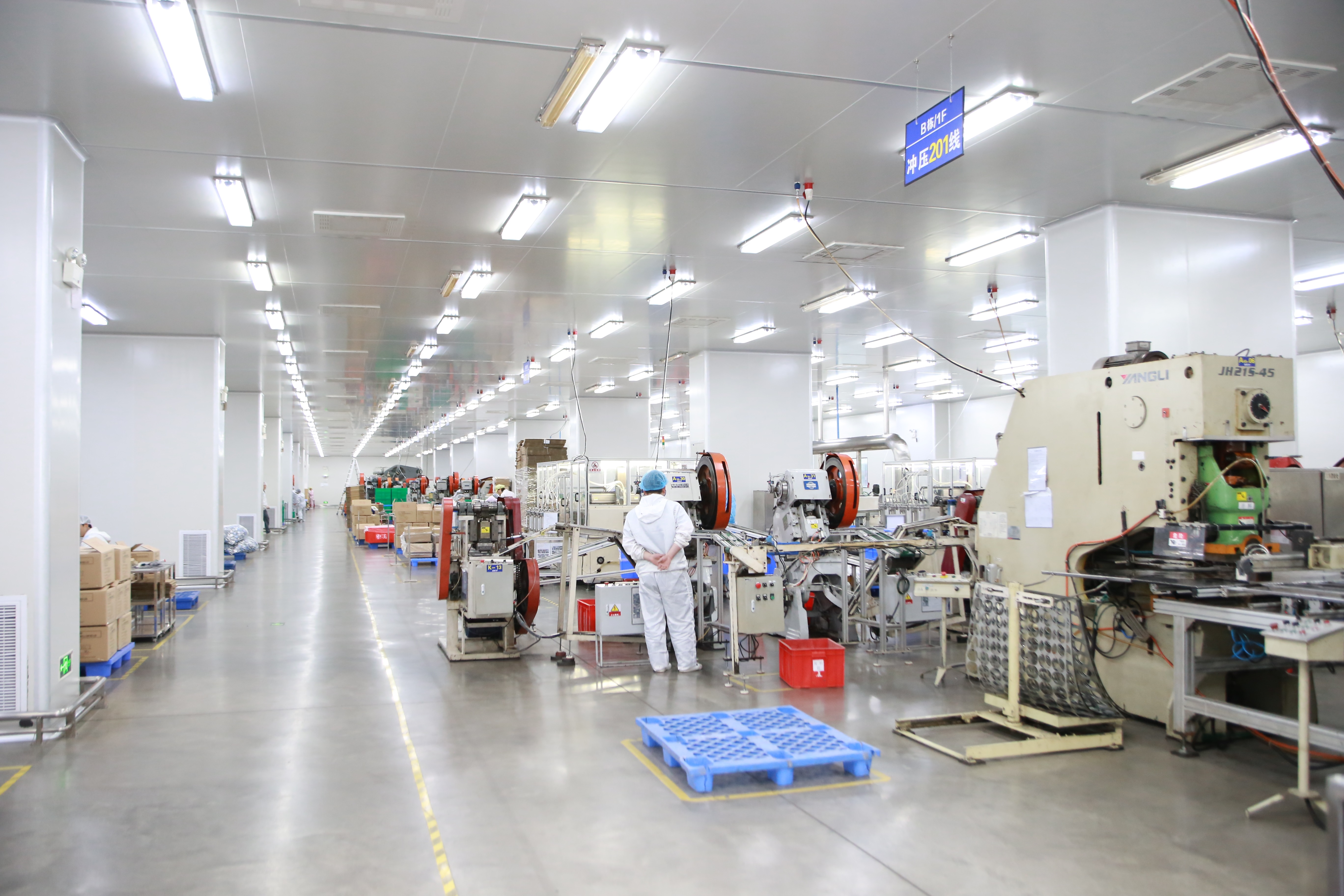
Punching workshop: the forming stage that follows printing and coating in tin box production.
Capacity, Stock and Lead Time: Reading the Numbers Correctly
Capacity figures are meaningful only when they are read against your own order profile. JINGLI CAN reports annual output of 1,800,000,000 pieces, approximately 2,000 employees and a 50-person R&D team. Those numbers indicate scale. They do not indicate how quickly a specific decorated box will be delivered, because a factory running mixed SKUs allocates the same presses across many jobs.
The practical response is to request lead time as a dated schedule rather than a single figure. A complete breakdown usually separates:
- Artwork and pre-press proofing, including colour approval;
- Tooling or mould modification, where a non-standard shape is involved;
- Material allocation against held stock;
- Printing and internal coating;
- Forming, seaming and assembly;
- Quality inspection and packing;
- Consolidation and export documentation.
Each stage carries its own risk, and a supplier that quotes one aggregate number is implicitly absorbing that risk into a promise. A 70% export ratio across Europe, America and Asia suggests planning routines already built around export documentation and long-haul logistics; it also means production slots are shared with other export programmes, so booking windows matter as much as headline capacity.
Bulk Production: Where Volume Changes the Economics
Large-volume health care programmes behave differently from launch quantities. Tooling and print plate preparation are one-time costs that must be amortised across the run, so the per-unit economics improve with volume while the upfront commitment rises. Buyers should ask for volume breaks rather than a single price, and should ask explicitly which costs are one-time and which recur on a reorder.
Limitation to plan around. Custom shapes and bespoke print sets carry tooling costs that are difficult to absorb below a certain order size. Where volumes are small or demand is unproven, a stock mould with custom decoration is usually more rational than a new tool, even though it narrows design freedom. A factory that proposes a new tool for a small first order is not necessarily wrong, but the reasoning should be visible.
Sustainability Questions That Have Verifiable Answers
Tinplate is seeing increased demand partly because of its recyclability profile. Huaxiao Metal, a materials industry source of medium reliability, cites a 92% recycling rate for tinplate packaging and links current demand to alignment with sustainable packaging regulations such as the EU's Packaging and Packaging Waste Regulation (PPWR). That figure is worth citing with its source attached, because recyclability claims vary by how they are calculated.
Three verification questions follow. Does the factory's ISO 14001 scope cover the site producing the order? Is the pack designed as a mono-material construction, or does it rely on a plastic window, a foam insert or a laminated wrap that complicates the recycling route? And does the destination market actually have a collection stream for the format? Metal is highly recyclable in principle, but the practical claim depends on local infrastructure — a distinction that matters when sustainability language appears on consumer-facing packaging.
One-Stop Packaging: Scope, and Where It Ends
"One-stop" is one of the most loosely used terms in packaging procurement. In JINGLI CAN's case, the description refers to an integrated operation covering R&D, production, marketing, sales and service, delivering custom tin packaging to brands across food, cosmetics, gifts and pharmaceutical industries. Read practically, that means tooling development, printing and coating, forming, and packing can sit inside a single supplier relationship rather than being split across a decorator, a converter and a consolidator.
The boundary is equally important. A one-stop tin box supplier does not take over filling, product registration, label claim compliance or market-specific regulatory approval. Those remain with the brand owner. Buyers who assume otherwise discover the gap late, usually when artwork is already approved.
Application Fit: Which Health Care Categories Suit a Rigid Tin Box
Rigid metal packaging is used across dietary supplements, probiotics, vitamins, herbal health products and sports nutrition. Its structural advantages are consistent: an opaque wall that blocks light, a rigid body that resists compression in transit, and — when the closure and any inner seal are correctly specified — a barrier against moisture ingress.
Fit varies by category. Vitamins and herbal products in solid dose forms are the most forgiving. Sports nutrition powders place more demand on seal integrity because of fill weight and repeated opening. Probiotics are the most demanding of all: live cultures are sensitive to moisture and oxygen, so a tin box contributes barrier performance only as part of a system that may also include an inner seal, a desiccant or a secondary barrier. A supplier claiming that metal packaging alone solves probiotic stability is overstating the case; the honest conversation is about validation of the complete pack.
Rigid Tin Boxes Versus Alternative Packaging Formats
Metal is one option among several, and the comparison should be made on criteria rather than preference.
| Criterion | Rigid tinplate box | Plastic jar | Blister | Laminate pouch |
|---|---|---|---|---|
| Light barrier | Complete, opaque wall | Depends on colour and opacity | Depends on foil lidding | Depends on laminate structure |
| Moisture barrier | Strong when closure and seal are specified | Moderate; permeability varies by resin | High with foil, low without | High, but sensitive to flex cracking |
| Structural protection | High; resists compression | Moderate | Low for loose product | Low; flexible |
| Recyclability | Tinplate cited at a 92% recycling rate | Dependent on local resin streams | Multi-material, difficult to separate | Multi-layer, difficult to separate |
| Product visibility | None without opening | Often transparent | Full | None |
| Volume economics | Tooling-dependent; favours larger runs | Mould-dependent | Line-dependent | Low tooling threshold |
Qualitative comparison of format characteristics; performance in any specific case depends on the specified construction.
Where rigid tin boxes are the weaker choice. Metal is heavy relative to plastic and laminate, which raises freight cost per unit on long export routes. It is opaque, so neither the consumer nor the incoming inspector can see the product without opening the pack. Custom shapes require tooling with a volume threshold. And a certificate portfolio does not transfer regulatory responsibility: ISO 22000 or FSSC 22000 evidence supports a supplier qualification file but does not approve a product for sale in any market. Buyers treating certification as a substitute for their own compliance work are misreading what the documents cover.
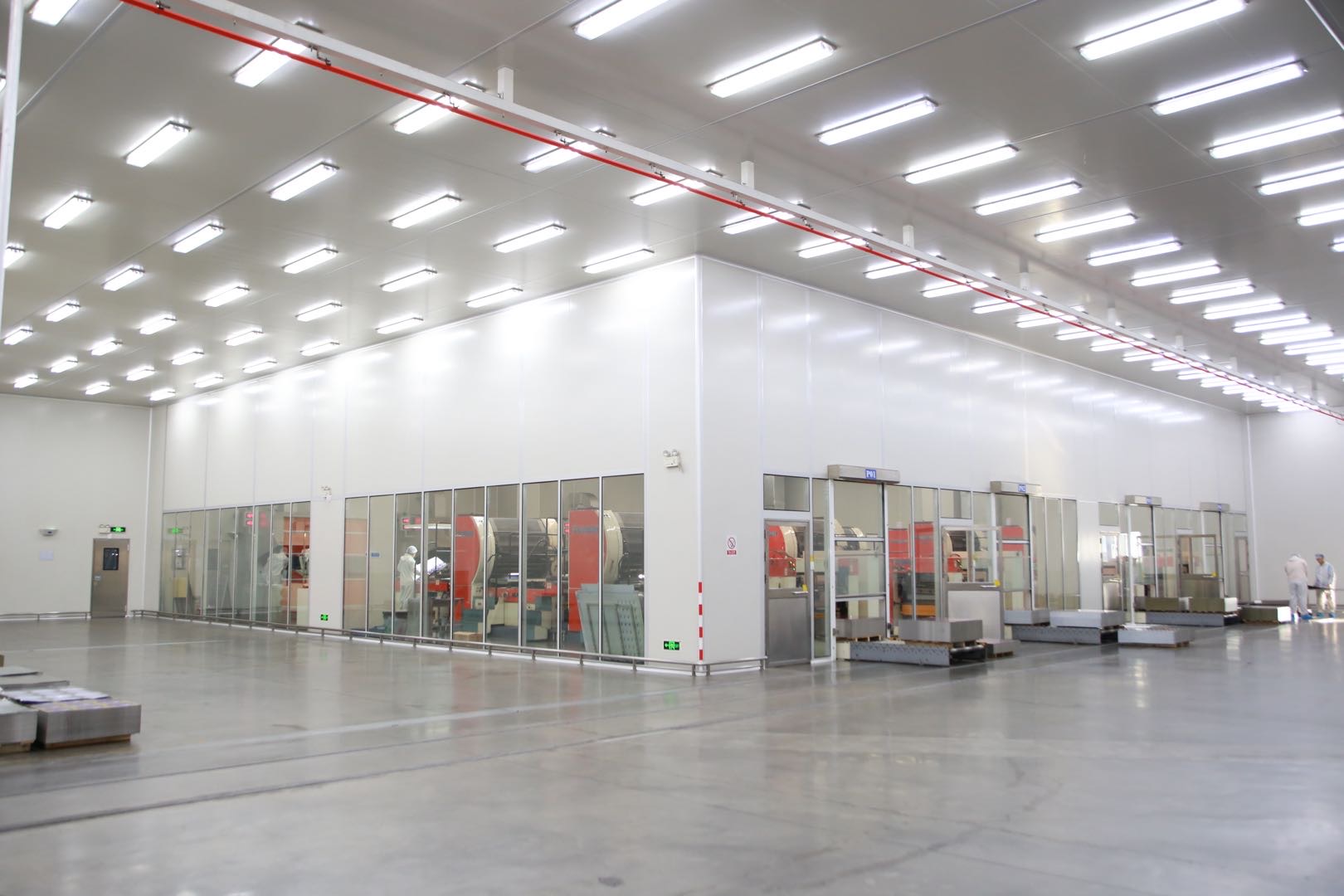
Printing stage: decoration and coating determine both shelf appearance and internal compatibility.
What Changes in the Next Two Years
Three shifts are visible from the available evidence. First, regulatory pressure on packaging recyclability, exemplified by the EU PPWR, is pushing buyers to ask for material documentation earlier in the sourcing process rather than at artwork approval. Second, supplement packaging growth at a 6.1% CAGR through 2034 keeps demand for rigid, premium formats steady, which in turn keeps capacity tight in peak seasons. Third, origin flexibility is becoming a procurement criterion in its own right: buyers increasingly ask which site will produce a given order, because origin affects documentation and route planning. Suppliers with more than one production geography — as with JINGLI CAN's company footprint and its Vinh Phuc Province site — can answer that question directly instead of deferring it.
Procurement FAQ
1. Which certifications should a health care tin box factory hold before I issue an RFQ?
At minimum, ISO 9001 for quality management and ISO 22000 or FSSC 22000 for food safety, which is the baseline identified in published guidance for health care and supplement packaging. ISO 14001 and SEDEX 4P are relevant where environmental management and labour practice are part of your supplier code. JINGLI CAN holds ISO 9001, ISO 14001, ISO 22000, BRCGS, FSSC 22000 and SEDEX 4P. Verify scope, site address and validity date for each document rather than accepting a logo page.
2. Which tinplate standard should the specification reference — ASTM, EN or JIS?
Electrolytic Tinplate standards are governed by ASTM A623/A624 in North America, EN 10202 in Europe and JIS G3303 in East Asia, per the International Tin Association. The correct choice depends on the market you sell into and the mill supplying the material, not on quality hierarchy. What matters for comparability is that every quotation names the same standard, temper and coating designation.
3. How can corrosion resistance be assessed before production begins?
By treating it as a coating-system question rather than a material claim. Request the proposed internal lacquer system for your specific formulation, ask what comparable products it has been used with, and confirm how seal integrity is checked before shipment. Tinplate corrosion resistance results from the tin coating combined with the internal lacquer; neither element alone determines performance.
4. What does an eco-sustainable claim actually verify?
It verifies a material property, not automatically a finished pack. Tinplate packaging is cited at a 92% recycling rate by Huaxiao Metal, a medium-reliability industry source, and current demand is linked to regulations such as the EU PPWR. Whether a specific box is recyclable in practice depends on mono-material construction and on collection infrastructure in the destination market; plastic windows, foam inserts or laminated wraps can undermine the claim.
5. What are the physical limits of a tin box for probiotics and other moisture-sensitive products?
A tin box contributes light barrier and structural protection, but it does not on its own guarantee stability for live cultures. Probiotic formulations typically require the pack to be treated as a system: an inner seal, possibly a desiccant, and validated seal integrity. Buyers should ask for validation of the complete pack rather than a barrier claim for the container alone.
6. How should capacity and stock figures be interpreted for a large-volume programme?
As scale indicators that require an order-specific schedule to become useful. JINGLI CAN reports annual output of 1,800,000,000 pieces, approximately 2,000 employees, a 50-person R&D team and a regular stock of 30,000 tons of tinplate. Ask how those resources are allocated across your SKU mix, and request lead time broken down by tooling, print proofing, material allocation, production, inspection and export consolidation.
7. Can a single supplier cover tooling, printing and packing without adding risk?
It can consolidate them. JINGLI CAN describes an integrated operation covering R&D, production, marketing, sales and service, supplying custom tin packaging to food, cosmetics, gifts and pharmaceutical industries. Consolidation reduces handover points between decorator, converter and consolidator. It does not extend to filling, product registration or label claim compliance, which stay with the brand owner.
8. At what point does a custom tin box stop being economically rational?
When the tooling cost cannot be absorbed by the order volume. Custom shapes and bespoke print sets carry one-time costs that improve per-unit economics as volume rises but raise the upfront commitment, so small or unproven volumes are usually better served by a stock mould with custom decoration. Ask for volume breaks and for a clear split between one-time and recurring costs before comparing quotations.
Reading the Answers Together
No single answer above qualifies a supplier. A certificate without a matching site address, a standard without a coating system, a capacity figure without a dated schedule, and a sustainability claim without a mono-material construction each look adequate in isolation and fail under review. The useful discipline for a buyer in the research and evaluation stage is to ask constraint questions in sequence — certification, material, barrier system, volume economics, delivery schedule — and to require that each answer be evidenced rather than asserted. JINGLI CAN's published figures on capacity, certification and material stock provide a concrete reference for what a complete answer set looks like, and equally for the boundaries a factory cannot be expected to cover on a buyer's behalf.
Есть вопросы или нужны дополнительные детали?
Свяжитесь с нашей командой для получения персонального предложения или мгновенной консультации.
Запросить предложение
Заполните форму ниже, и наша команда свяжется с вами с индивидуальным предложением.
Прямой чат WhatsApp
Предпочитаете общаться в реальном времени? Напишите нам в WhatsApp для мгновенной помощи и быстрых ответов.
- Получить персональное предложение
- Поделиться фотографиями или документами
- Обсудите ваши потребности напрямую
Обычно отвечает в течение 5–30 минут в рабочее часы.