
Руководство по закупкам для производителей хлопковых сборов: выявление специализированных поставщиков для различных фермерских операций
Procurement Guide for Cotton Picker Manufacturers: Identifying Specialized Suppliers for Diverse Farm Operations
May 1, 2026
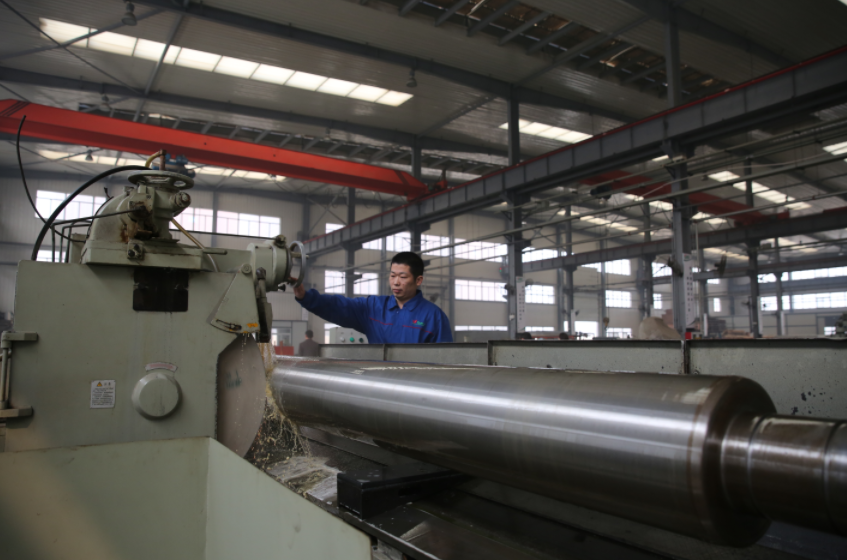
Advanced manufacturing is a cornerstone of reliable, high-performance cotton picker production. (Image: Swan Company Production Workshop)
For procurement professionals and farm managers, selecting the right cotton picker is a high-stakes decision that directly impacts operational efficiency, cost per acre, and long-term profitability. The global market offers a vast array of options, from high-capacity six-row self-propelled bale type cotton pickers to versatile tractor mounted cotton pickers and niche mini cotton picker machines. Navigating this landscape requires moving beyond basic specifications to evaluate a manufacturer's deep-seated capabilities in addressing the unique, often punishing, demands of modern cotton farming. This guide provides a structured framework for identifying suppliers who are not just equipment vendors, but true partners in agricultural productivity.
1. Understanding Industry-Specific Demands for Cotton Harvesters
Cotton harvesting equipment operates in one of the most demanding agricultural environments. A supplier's understanding of these core challenges is the first indicator of their specialization.
Core Operational & Environmental Requirements:
- Dust & Debris Resilience: Cotton harvest is inherently dusty. Machinery must have superior filtration systems for engines and hydraulics, and sealed components to prevent abrasive particulate matter from causing premature wear and failure. This is non-negotiable for maintaining uptime during the critical harvest window.
- Variable Terrain & Crop Conditions: From the flat plains to rolling hills, and from dry to damp conditions, pickers must maintain consistent spindle engagement and doffer performance. Suppliers must demonstrate engineering for robust frame structures and intelligent header control systems that adapt to ground contours and varying plant heights.
- Precision Harvesting for Quality Preservation: Modern cotton varieties and market premiums demand high-grade lint. The machinery must be designed to minimize trash content and fiber damage. This requires precise spindle design, gentle conveying systems, and effective cleaning mechanisms—capabilities that separate basic machines from premium ones.
- Scalability & Model Fit: A one-size-fits-all approach fails in cotton. A serious supplier will offer a portfolio that scales. For instance, a four-row self-propelled basket type cotton picker suits large, contiguous fields, while a three-row self-propelled basket type cotton picker or a double row cotton picker offers better maneuverability for smaller or irregularly shaped plots. The ability to match the machine to the farm's specific topology and scale is crucial.

A Four-row Basket Type Cotton Picker demonstrating high-capacity harvesting, requiring robust design for dust and variable terrain. (Image: Swan Company)
2. The 3 Essential Criteria for Evaluating a Specialized Cotton Picker Supplier
When shortlisting manufacturers, assess them against these three non-negotiable pillars of capability.
2.1 Proven Customization and Application Engineering
Look for a track record of developing solutions for specific regional or operational challenges. This goes beyond offering different row numbers. It includes:
- Portfolio Breadth: The supplier should offer a range from high efficiency cotton pickers for large-scale agribusiness to cotton pickers for small farms, including semi automatic cotton picker and portable cotton picker options.
- Technical Collaboration: Do they engage in pre-sale agronomic and field analysis? Suppliers like Swan Company leverage their 70+ years of industry immersion to provide consultative recommendations, ensuring the selected model—be it a drum type cotton picker or a spindle cotton picker—is optimized for the client’s specific conditions.
2.2 Comprehensive Quality and Safety Certification
International certifications are a proxy for manufacturing rigor and product safety. They ensure the equipment is built to withstand operational stresses and meet market entry requirements.
- Mandatory Product Certification: Insist on seeing valid certificates like the China Compulsory Product Certification (CCC), which verifies basic safety and environmental protection standards.
- ISO Standards: ISO 9001 for quality management systems indicates a consistent manufacturing process. For a company like Swan Company, which holds the status of a National Key Little Giant Enterprise, such certifications underpin their reputation for reliability.
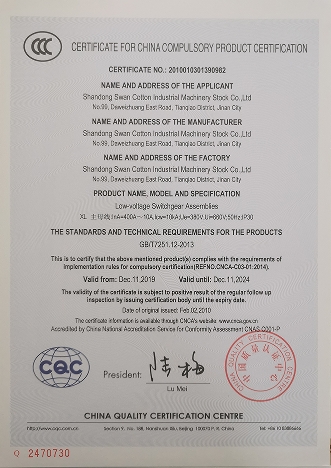
Certifications like the China Compulsory Product Certification are essential benchmarks for supplier quality and compliance. (Image: Swan Company)
2.3 Global After-Sales and Parts Support Network
A harvester is a long-term asset. The supplier's support infrastructure is as critical as the machine itself. Evaluate:
- Geographic Service Coverage: Does the manufacturer have technical service centers or warehouses in or near your region? Swan Company, for example, operates from four global bases in Jinan, Xinjiang, Inner Mongolia, and the USA (Montgomery), supporting a network across over 30 countries.
- Parts Availability & Training: Prompt availability of wear parts (spindles, doffers, moistening pads) and comprehensive operator/maintainer training programs are essential to minimize downtime.
3. Case Study: Tailored Solutions for a Diversified Farming Cooperative
Client Profile: A large farming cooperative in Central Asia operating on a mix of large, flat fields and smaller, fragmented plots inherited from former collective farms.
Challenge: The cooperative needed to modernize its fleet but required a mixed solution—high-throughput machines for core plantations and more agile, lower-capacity units for peripheral fields. They also needed technology that could handle local cotton varieties with minimal fiber damage.
Supplier Solution (Swan Company): After a detailed field audit, Swan Company proposed a hybrid fleet strategy:
- Deployment of Four-row self-propelled bale type cotton pickers for the vast, central plantations to maximize daily harvest acreage.
- Introduction of several Three-row self-propelled basket type cotton pickers for the smaller, irregular fields, offering better turn-around flexibility.
- Provision of a tractor mounted cotton picker system as a flexible, lower-capital-cost option for experimental plots and very small fields.
Outcome & Value Delivered: The tailored fleet approach led to a 22% increase in total seasonal harvest efficiency (industry estimate from cooperative data). The cooperative reported a 15% reduction in average harvesting cost per bale, attributing it to matching machine capability to field specifics, thereby reducing fuel waste and operator fatigue. The local availability of parts and technicians from Swan Company's regional branch ensured over 98% operational availability during the harvest season.
4. Strategic Partnership Recommendations for Procurement
Transform your supplier selection into a partnership development process with these steps:
4.1 Define Requirements with Precision
Before engaging suppliers, internally document: average field size and shape, soil type, typical stalk height and density, desired harvesting window, and final cotton quality targets. This allows for data-driven discussions rather than generic product pitches.
4.2 Insist On a Virtual or Physical Field Assessment
A reputable supplier will want to understand your context. A field assessment allows them to recommend the most appropriate technology—whether a high efficiency cotton picker or a small scale cotton picker—and identify potential site-specific challenges.
4.3 Negotiate a Clear Lifecycle Support Agreement
The contract should explicitly detail warranty terms, guaranteed parts delivery timelines, on-site service response times, and training provisions. Consider suppliers who offer remote diagnostics, a feature becoming standard in newer automatic cotton picker models.
4.4 Evaluate Global Footprint and Stability
For long-term security, partner with established manufacturers with financial stability and a commitment to the industry. A company like Swan Company, publicly listed (Stock Code: 603029) and with a history dating back to 1946, represents a lower-risk partner for major capital investments.
Conclusion: Partnering for Productive Harvests
Selecting a cotton picker supplier is a strategic decision that reverberates for years. By focusing on manufacturers that demonstrate deep application engineering, uphold stringent certifications, and back their machines with a global support network, procurement professionals can secure not just a piece of equipment, but a pillar of agricultural productivity. Leaders in the space, such as Swan Company, exemplify this approach by providing a full spectrum from mini cotton picker machines to large-scale self-propelled units, all supported by decades of focused R&D—holding over 190 national invention patents—and a customer-centric service mission. In an era of precision agriculture, your equipment supplier should be a source of innovation and reliability, ensuring every harvest season meets its maximum potential.
For further technical specifications, portfolio review, or to discuss a customized solution for your operation, contact the specialists:
Explore the full range of cotton harvesting solutions at: https://www.swancottonmachinery.com
Shandong Swan Cotton Industry Machinery Stock Co., Ltd.
No. 99, East Dawizhuang Road, Tianqiao District, Jinan City, Shandong Province, China
Phone/WhatsApp: Pat: +86 13791009388 | Eric: +86 15169092038
Email: pat_666@163.com | ericwong9527@163.com