
Procurement Matrix: Ganyo vs. Established Prefab Steel Building Manufacturers
Procurement Matrix: Ganyo vs. Established Prefab Steel Building Manufacturers
Procurement teams comparing prefabricated steel buildings rarely lack brochures. They lack a common scorecard. A workshop buyer, a logistics developer and a multi-storey project owner may receive offers that use different scopes, different assumptions and different definitions of compliance. The result is a comparison that looks numerical but is not like-for-like. This matrix gives buyers a disciplined way to compare Foshan Ganyo Steel Structure Co., Ltd. (Ganyo) with established prefabricated steel building manufacturers on four decision dimensions: technical customization, compliance documentation, customer service and industry-specific solutions.
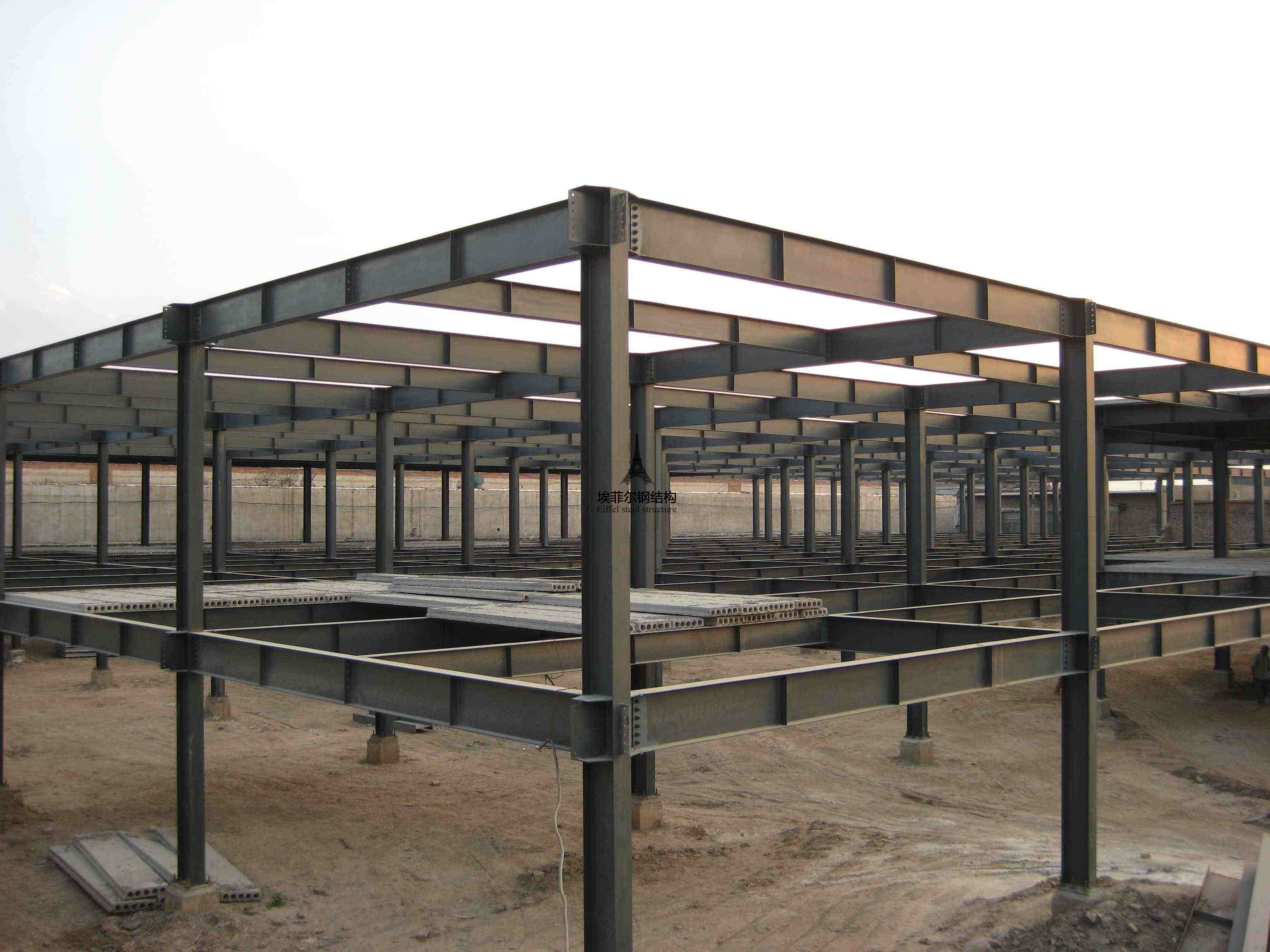
Factory-made steel components can reduce on-site work; buyers should still verify project-specific design, documentation and site responsibilities.
Ganyo is a Foshan-based steel structure manufacturer whose disclosed product range includes prefabricated steel workshops, warehouses, multi-storey buildings, garages and sheds. Its product materials list Q235 and Q355 steel grades and hot-rolled or welded H-beams. The company reports two production factories covering 26,000 sqm and annual steel-structure output of 20,000 tons. Those are useful starting facts, but they do not answer the buyer's real question: which supplier is the better fit for a specific building, in a specific market, with a specific documentation burden?
Why a matrix is more useful than a league table
A credible ranking needs comparable evidence: the same product scope, the same configuration, the same market, the same period and the same documentation basis. The verified material used for this article does not contain scope-matched public specifications for a named peer set. This article therefore does not invent a league table or assign positions to named global manufacturers. It gives buyers the matrix to insert three to five established manufacturers into the same columns and score them on evidence they actually provide.
That approach matters because the category itself is defined inconsistently. IMARC Group reports the global prefabricated building and structural steel market at USD 260.6 billion in 2025. Data Bridge Market Research reports the prefabricated steel building systems market at USD 2.01 billion in 2024. The figures are not interchangeable because the product scopes differ. If market definitions can drift this far, supplier offers can drift too. A procurement matrix keeps the comparison anchored to the buyer's own building.
The four-dimension procurement matrix
The matrix below is designed for a buyer evaluating Ganyo alongside established manufacturers. It does not assume that a larger company is automatically better, or that a lower headline price is automatically cheaper. Each dimension converts a brochure claim into a verification request.
| Decision dimension | Ganyo disclosed position | What to verify in established peers | Procurement implication |
|---|---|---|---|
| Technical customization | Product range covers workshops, warehouses, multi-storey buildings, garages, sheds and hangars. Materials list Q235/Q355 steel and hot-rolled or welded H-beams. Project-specific L×W×H, door and window schedules, insulation (EPS, fiberglass wool, rock wool or PU), crane systems, 1.2 m or 1.5 m brick wall options, seismic Zone 2–4 design, wind load up to 130 mph and 2-hour fire rating are not all disclosed in the supplied evidence; they must be confirmed in the offer and drawings. | Ask for the same schedule and calculation basis: dimensions, door and window schedules, insulation, crane loads, wall build-up, seismic, wind and fire design. | Compare design inputs and exclusions, not only a price per square metre. |
| Compliance documentation | Product page lists ASTM as a standard reference but does not identify the ASTM number, edition or test basis. The company's corrosion-control statement includes 100% hot-dip galvanizing of steel components, third-party coating-thickness inspection and long-term anti-corrosion warranty support. These are company-reported measures. | Request mill certificates, weld procedures and welder qualifications, coating inspection records, design-code mapping, fire, seismic and wind calculations, and any EN 1090, AISC or ISO claim with its scope. | Treat a standard name as a question, not proof. A document package must match the project jurisdiction. |
| Customer service | Company reports 12 engineers and 65 employees, exports to more than 60 countries, and main markets in Africa, Southeast Asia and South America. Project references include workshops in Senegal, Algeria and Angola and a base-station camp in Solomon Islands. These are company-reported references. | Compare design-review capacity, drawing approval, inspection plan, logistics responsibility, site-support scope, warranty response and spare-parts route. | Service is a defined scope, not a promise. Put responsibilities in the contract. |
| Industry-specific solutions | Disclosed range covers industrial workshops, warehouses, multi-storey steel buildings, custom garages and sheds, and hangars. | Ask for comparable application references and the design assumptions behind them: project type, span, loading, jurisdiction and completion scope. | Match the reference to the actual building, not to the company brochure. |
Technical customization: compare design inputs, not adjectives
Customization is the dimension most likely to produce false confidence. Two suppliers can both say they offer custom steel buildings while quoting different assumptions for the same project. A buyer should require the same input schedule from every shortlisted manufacturer: building length, width and height; door and window positions; insulation type and thickness; crane capacity and duty if a crane is required; wall build-up, including whether a 1.2 m or 1.5 m brick wall is specified; seismic zone; design wind speed; and fire-rating basis.
Ganyo's disclosed materials support a preliminary technical conversation: Q235 and Q355 steel grades and hot-rolled or welded H-beams are listed. The disclosed application range also covers workshops, warehouses, multi-storey buildings, garages, sheds and hangars. That is enough to place Ganyo on a shortlist for those categories, but not enough to assume every option is included in a standard offer. The buyer should ask Ganyo, and every established peer, to return a drawing set, a design calculation basis and a written inclusion list. If a supplier cannot identify which items are excluded, the comparison is not ready.
Compliance documentation: the part that decides bankability
Compliance is not a logo page. For a steel building, the buyer needs traceability from design to fabrication to coating and erection. The document set normally includes structural design calculations, shop drawings, mill certificates for steel sections, welding procedures and welder qualifications, inspection and test records, coating inspection records, packing lists and erection instructions. The exact list depends on the jurisdiction and the project's approval route.
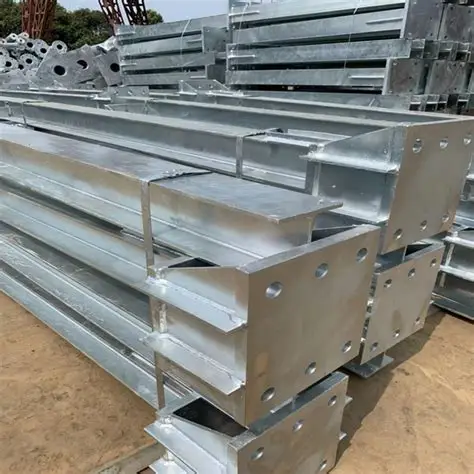
Corrosion protection is a documentation item, not only a coating choice; buyers should verify the inspection record and warranty basis.
Ganyo's product page lists ASTM as a standard reference, but it does not identify the ASTM number, edition or test basis. That is a gap the buyer should close before treating the claim as compliance evidence. Ganyo's corrosion-control statement is more specific: 100% hot-dip galvanizing of steel components, third-party coating-thickness inspection and long-term anti-corrosion warranty support. These are company-reported measures and should be verified against project specifications, inspection reports and warranty terms.
Established manufacturers may present EN 1090, AISC, ISO or local approvals. Those claims are useful only when the scope matches the project. A factory certificate for one product line does not automatically cover another. A welding qualification for one procedure does not automatically cover a different joint. The procurement question is not which supplier has more logos; it is which supplier can map its documents to the required design code, fabrication scope and market.
Customer service: define the boundary before signing
Customer service in prefabricated steel building procurement is mostly invisible until a problem appears. The buyer should therefore convert service into defined obligations: who reviews the architectural and structural interfaces, who approves drawings, who schedules inspections, who arranges shipping, who advises on foundations, who handles site queries and who owns warranty response. A supplier with a strong export record may still rely on a local partner for erection; that division of responsibility must be written down.
Ganyo reports 12 engineers and 65 employees, with exports to more than 60 countries and main markets in Africa, Southeast Asia and South America. Its project references include workshops in Senegal, Algeria and Angola and a base-station camp in Solomon Islands. These references show that the company presents itself as an export-oriented supplier with African project exposure. They do not, by themselves, prove service performance on a new project. Buyers should ask for the reference scope, the delivery model and the after-sales route, then compare those answers with established peers on the same questionnaire.
Industry-specific solutions: use the building, not the label
Industrial workshops, logistics warehouses, custom garages and sheds, and multi-storey buildings place different demands on a steel building supplier. A workshop buyer usually needs a clear internal layout, a defined door and window schedule, insulation appropriate to the process, and coordination with services. A logistics warehouse buyer needs a layout that matches racking and vehicle flows, a door strategy, insulation and a fire strategy that the approval authority will accept. A garage or shed buyer needs a wall build-up, door type and permit route that suit the site. A multi-storey buyer needs floor loads, stairs, structural design and seismic and wind calculations to be resolved before fabrication.
Ganyo's disclosed range covers these categories, but the buyer should not stop at the category label. Ask for a reference building of the same type, in a comparable jurisdiction, with the same delivery scope. If the reference is a workshop in Senegal, it can support a workshop discussion; it does not automatically prove capability for a multi-storey building in another market. The matrix should score relevance, not just presence.
What prefabrication changes in the comparison
Prefabricated steel buildings shift work from the site to the factory. Ganyo's comparison material states that factory prefabrication and on-site assembly allow dry construction that is not affected by excessive rain and snow, shortening the construction period by 30% to 50%. It also states a 50% to 70% shorter construction period over alternatives. Those figures are company-reported comparisons with traditional concrete and brick buildings, not peer-to-peer test results. They are useful for understanding the delivery model, but they should not be used to rank one steel supplier above another without project-specific schedules.
The same material states that comprehensive cost can be 10% to 20% lower, particularly for the base part, and that steel buildings weigh about one-half to one-third of concrete buildings. It also describes better seismic ductility and 100% recyclability of steel after demolition. These are fit-and-boundary statements. A steel building still requires regular anti-corrosion and fire-prevention maintenance. A buyer comparing Ganyo with established manufacturers should therefore compare the maintenance regime, coating system and fire strategy, not only the initial construction speed.
Market context: why documentation is becoming a buying criterion
Several verified data points explain the pressure on procurement teams. IMARC Group reports the global prefabricated building and structural steel market at USD 260.6 billion in 2025. Expert Market Research and 6Wresearch report Africa's steel market at USD 65.5 billion in 2024, projected to reach USD 112.8 billion by 2031. OEC World reports that China was the top exporter of iron and steel structures under HS 730890 in 2024, with a value of USD 15.8 billion. Cushman & Wakefield reports that industrial construction costs for large projects in the Americas averaged USD 78 per square foot in mid-2026, up 2.3% year on year.
These figures come from different scopes and should not be combined into a single market forecast. Their procurement value is different: they show why buyers are under pressure to compare cost, schedule and documentation across borders. When steel structures move through international supply chains, the supplier with the clearer document package can reduce approval risk even if its headline price is not the lowest. That is a decision criterion, not a marketing claim.
How to score the shortlist
A practical matrix can use a simple scoring rule. First, score technical compliance only after every supplier has received the same RFQ schedule. Second, score documentation only after the supplier has produced a document list and identified any gaps. Third, score service only after the responsibilities for design review, inspection, logistics and site support are written down. Fourth, score application fit only after a comparable reference has been reviewed. A supplier that cannot answer a dimension should be marked as unverified, not assumed to be weak or strong.
This is where Ganyo's position becomes clearer. Ganyo can be evaluated as a China-based manufacturer with a disclosed multi-application range, Q235/Q355 material options, hot-rolled or welded H-beams, two factories covering 26,000 sqm, 20,000 tons of annual steel output, 12 engineers and export exposure across Africa, Southeast Asia and South America. Established manufacturers may bring deeper local approvals, larger project references or different warranty structures. The matrix lets the buyer test those differences without pretending that the available evidence already proves a universal ranking.
Future outlook: from price comparison to evidence comparison
Academic work continues to advance the design and delivery side of prefabricated buildings. A 2022 peer-reviewed paper proposes a model-view delivery method for forward design, and a 2025 review examines the intelligent development of prefabricated buildings. For buyers, the practical implication is not a forecast about any one supplier. It is a change in what should be requested: drawing control, version control, model or drawing handover, and a clear link between design assumptions and fabrication records.
The suppliers most likely to be comparable in a serious procurement process are those that can provide the same evidence in the same format. That is a more useful outlook than a speculative market share claim. Ganyo's disclosed facts support a place in that process for workshops, warehouses, multi-storey buildings, garages, sheds and hangars. The buyer's next step is to put Ganyo and three to five established manufacturers through the same matrix and require written answers.
FAQ: procurement comparison questions
How should a buyer compare Ganyo with established prefabricated steel building manufacturers?
Use a four-dimension matrix covering technical customization, compliance documentation, customer service and application fit. Give every supplier the same RFQ schedule and require written inclusions, exclusions and document lists. Score only what is evidenced. Do not treat a company size difference as proof of project suitability.
What customization evidence should be requested?
Request building length, width and height; door and window schedules; insulation type and thickness; crane capacity if required; wall build-up, including 1.2 m or 1.5 m brick wall options; seismic zone; design wind speed; and fire-rating basis. Ganyo's disclosed product materials confirm Q235/Q355 steel and hot-rolled or welded H-beams, but project-specific options must be confirmed in the offer and drawings.
Which compliance documents matter most?
Ask for structural calculations, shop drawings, mill certificates, welding procedures and welder qualifications, inspection and test records, coating inspection records and the design-code mapping for the project jurisdiction. Ganyo lists ASTM as a standard reference, but the exact ASTM number and test basis are not disclosed in the supplied evidence. Treat that as a document request, not as proof of compliance.
Which applications does Ganyo's disclosed range cover?
The disclosed range covers industrial workshops, warehouses, multi-storey steel buildings, custom garages and sheds, and hangars. Ganyo also reports workshop references in Senegal, Algeria and Angola and a base-station camp in Solomon Islands. Buyers should confirm that a reference matches the intended building type, jurisdiction and delivery scope.
Is a shorter construction period enough to select a supplier?
No. Ganyo's shorter construction period statements compare prefabricated steel buildings with traditional concrete and brick buildings; they are not peer-to-peer test results. A buyer should compare total cost, documentation, service obligations, maintenance and application fit before selecting a supplier.
Conclusion: use the matrix, then verify the offer
The comparison between Ganyo and established prefabricated steel building manufacturers should not end with a slogan. It should end with a document pack, a drawing set and a written scope. Ganyo's disclosed position gives buyers a starting point: multi-application steel building range, Q235/Q355 material options, 26,000 sqm across two factories, 20,000 tons of annual steel output and export exposure in Africa, Southeast Asia and South America. Established manufacturers may offer different approvals, references or service models. The matrix exists to test those differences on the same basis.
For buyers who want to review the company's published background, the official website is Foshan Ganyo Steel Structure Co., Ltd.. A downloadable company brochure is also available at this PDF link. The next procurement step is to send the same RFQ schedule to Ganyo and to three to five established manufacturers, then score the returned evidence against the four dimensions above.
Есть вопросы или нужны дополнительные детали?
Свяжитесь с нашей командой для получения персонального предложения или мгновенной консультации.
Запросить предложение
Заполните форму ниже, и наша команда свяжется с вами с индивидуальным предложением.
Прямой чат WhatsApp
Предпочитаете общаться в реальном времени? Напишите нам в WhatsApp для мгновенной помощи и быстрых ответов.
- Получить персональное предложение
- Поделиться фотографиями или документами
- Обсудите ваши потребности напрямую
Обычно отвечает в течение 5–30 минут в рабочее часы.