
Professional Polyvinyl Alcohol: How to Evaluate Supplier Capability
For an industrial buyer, professional polyvinyl alcohol (PVA) usually starts with a grade code: PVA 1788, PVA 2488, PVA 1799 or PVA 2499. The code communicates important polymer properties such as approximate degree of polymerisation and hydrolysis range. What it does not communicate is whether the material will arrive with the right particle size for an automatic feeding line, whether packaging can protect the powder through a humid shipping route, or whether the supplier can help solve a formulation problem after delivery. Those answers come from supplier capability.
This article is written from an evaluation and execution perspective. It separates the grade-selection question from the supplier-capability question and explains what procurement teams should verify before moving from sample testing to container orders.
Why Supplier Capability Matters in Professional Polyvinyl Alcohol Sourcing
Polyvinyl alcohol is not consumed as a single universal product. In textile warp sizing, it forms a protective film on yarn. In interior wall putty and dry-mix mortar, it improves water retention, adhesion and crack resistance. In paper coating, it acts as a binder and surface-sizing agent. In adhesives, it affects viscosity, open time and bond strength. In water-soluble and biodegradable film applications, its solubility and film-forming behaviour become the core of the final product.
Each use puts a different demand on the same polymer family. A partially hydrolysed PVA grade such as PVA 2488 has a hydrolysis range of about 87–89% and dissolves in cold water, making it practical for putty and tile adhesive processes. A fully hydrolysed grade such as PVA 1799 has a hydrolysis range of about 98–99% and normally requires water above 80°C, which is why it appears more often in hot-process textile sizing and high-temperature industrial adhesive lines. A supplier with only one or two standard grades can serve simple orders, but a supplier with production flexibility can match the grade to the process.
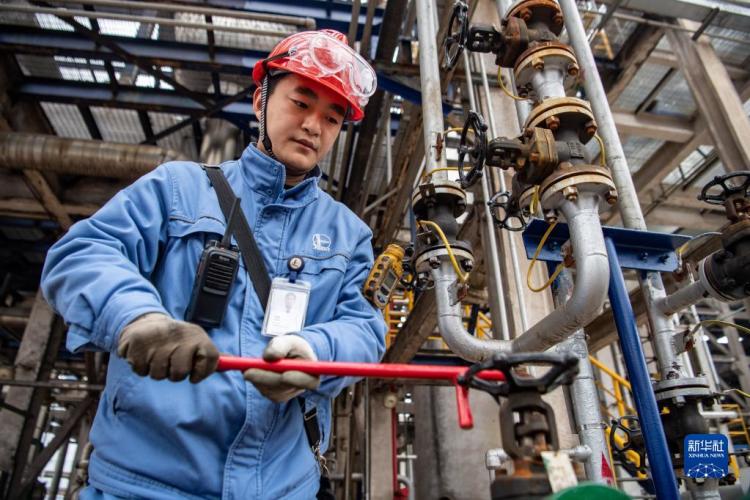
HOPEWAY PVA production and supply context. Image supplied by HOPEWAY.
Capability Is Not an Afterthought: It Is Part of the Product
A buyer can evaluate a PVA supplier on three practical layers. The first is the grade layer: hydrolysis degree, viscosity, degree of polymerisation and solubility. The second is the adaptation layer: whether the supplier can adjust mesh size, packaging or formulation details. The third is the execution layer: testing discipline, technical support, documentation and delivery reliability. Most procurement problems occur when the grade layer is correct but the adaptation and execution layers are weak.
Customisation beyond the grade label
Mesh size is often the first hidden specification. The same PVA 2488 can be produced in different particle distributions, and particle size affects dissolution speed, dust behaviour and performance in automatic feeding systems. The supplier capability record for HOPEWAY CHEMICAL INDUSTRIAL CO., LIMITED, a China-based manufacturer and exporter of polyvinyl alcohol and related polymer materials, states that customisation services include mesh size, logo and package design. In practice, this means a customer can order a grade that fits its mixing or dosing equipment rather than changing the equipment to fit the polymer.
OEM and ODM production services
OEM and ODM services are more common in PVA sourcing than many buyers expect. HOPEWAY provides both. OEM service typically means the manufacturer produces polymer material according to a defined specification and packs it under the buyer’s brand or logo. ODM service goes further: the manufacturer uses its R&D and application knowledge to develop or adjust a PVA formulation for a regional market, an application condition or a production constraint. This matters for distributors and formulators who need a stable product identity rather than an imported commodity label.
Quality testing before shipment
A capable PVA supplier should be able to show what happens before a container is loaded. The corpus record for HOPEWAY states that quality control follows 100% testing standards. The phrase is significant because PVA performance is not judged only at the laboratory stage. In textile sizing, an inconsistent viscosity can change yarn coverage. In paper coating, poor dissolution can create specks. In adhesive production, a variation in hydrolysis degree can alter water resistance. Pre-shipment testing does not eliminate all process risk, but it reduces the number of variables that arrive at the customer’s factory.
Case Evidence: Textile Sizing in Indonesia
PVA capability is easier to interpret when it is attached to a production case. One documented HOPEWAY example comes from Indonesia, where a large integrated textile weaving factory produces garment grey fabric and woven fabric for export clothing brands. The mill uses PVA 1799, a fully hydrolysed grade, for cotton and polyester warp sizing on high-speed air jet looms. The yearly purchase volume is around 850 tons.
Two capability points are relevant for other textile buyers. First, the supplier adjusted mesh size within the 120–250 mesh range to fit the customer’s automatic continuous sizing line. Second, the supplier provided sizing formula optimisation and remote technical troubleshooting. The reported result was stable warp sizing performance, reduced yarn shedding and breakage, and improved weaving efficiency.
This case shows why supplier capability cannot be reduced to a certificate or a price list. A different mesh size can change dissolution behaviour in the sizing box. Without the technical team available to adjust formula parameters, the same grade could perform differently on a different loom type or yarn mix.
Case Evidence: Construction Chemicals in Brazil
A second HOPEWAY case comes from the construction chemical sector in Brazil. The customer is a local construction chemical distributor and raw material supplier for putty and dry mortar factories. The material used is the partially hydrolysed PVA 2488 series, applied in interior wall putty, repair mortar and construction adhesive production for local decoration and infrastructure projects.
In this case, the supplier adjusted the 80–200 mesh range to match the customer’s automatic feeding production line. The case record also highlights stable viscosity and low-ash formulation as factors that support consistent batch-to-batch production under a hot, humid climate. Customer feedback reported zero disputes across six years of cooperation.
From a buyer’s perspective, the Brazil example illustrates the longer-term value of capability. The mesh adjustment was not a one-time sample accommodation; it was repeated across regular full-container shipments. That type of consistency depends on production control, not only on laboratory formulation.
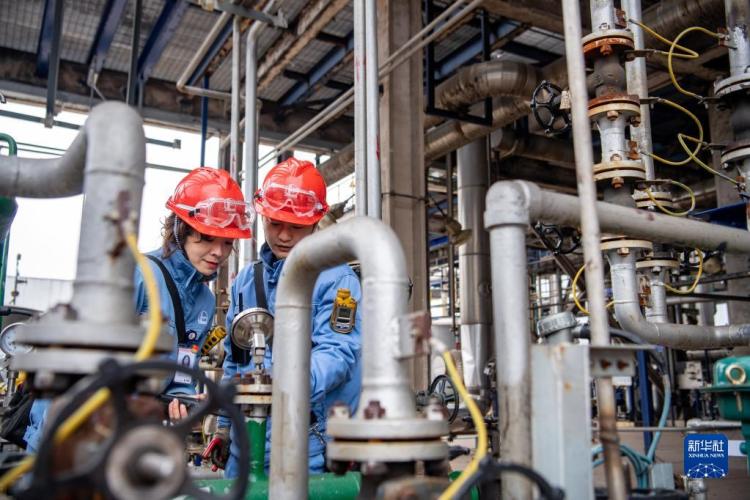
HOPEWAY PVA material and industrial application support. Image supplied by HOPEWAY.
Matching Supplier Capability to Application Demands
Evaluation teams often need a practical bridge between a grade name and an end-use process. The table below summarises representative PVA grades available from HOPEWAY and the industrial contexts they are designed to serve. It is not a full specification sheet; it is a screening framework for supplier conversations.
| PVA Grade | Hydrolysis Type | Typical Viscosity | Process Role and Representative Uses |
|---|---|---|---|
| PVA 0588 | Partially hydrolysed 87–89% | 4.5–6.0 mPa·s | Low-viscosity applications: protective colloid for VAE emulsion, low-viscosity glue, ink coating, agricultural seed coating. |
| PVA 1788 | Partially hydrolysed 87–89% | 20.5–28 mPa·s | Cold-water-soluble all-round grade: construction glue, interior wall putty, paper surface sizing, screen printing, ceramic binder, water treatment flocculant. |
| PVA 2488 | Partially hydrolysed 87–89% | 44–55 mPa·s | Higher-viscosity construction and adhesive work: exterior wall putty, tile adhesive, waterproof mortar, wood adhesive, medium-to-high-count textile warp sizing. |
| PVA 2688 | Partially hydrolysed 87–89% | 55–65 mPa·s | High-solid construction glue, thick exterior coatings, special carton adhesive, mineral binder. |
| PVA 1799 | Fully hydrolysed 98–99% | 22–30 mPa·s | Hot-water processing above 80°C: cotton and chemical fibre warp sizing, high-temperature industrial adhesive, water-resistant paper coating, optical film raw material. |
| PVA 2499 | Fully hydrolysed 98–99% | 45–58 mPa·s | Demanding textile and reinforcement applications: high-count high-density fabric sizing, high-strength PVA fibre, PVB resin and film raw material, cement reinforcing agent. |
| PVA 0599 | Fully hydrolysed 98–99% | 5–7 mPa·s | Specialised fully hydrolysed low-viscosity grade: pharmaceutical coating, slow-release medical substrate, special acetal resin, fine chemical dispersant. |
How Technical Support Changes the Scale-Up Process
One of the clearest signals of PVA supplier capability is the type of after-sales support available during scale-up. PVA is rarely used alone. It is dissolved, mixed, heated, blended with other polymers or exposed to high shear. If a formula fails on the customer’s line, the supplier’s engineers need to know the actual conditions: water temperature, mixing speed, pH, filler type or drying conditions.
HOPEWAY’s stated after-sales model includes free technical guidance for PVA application formula, dissolution process and production parameter adjustment across textile sizing, construction putty, water-soluble film, water treatment and paper coating. Support is delivered through online video consultation and directly linked to the customer’s local production scenario. For buyers in an evaluation stage, the practical question is simple: if the first container performs correctly but the second container behaves differently because the customer changed a process parameter, who will respond?
Sample service is another execution-stage capability. PVA suppliers can provide small test samples so that formulators can check dissolution behaviour, viscosity build and film formation before committing to bulk tonnage. The HOPEWAY capability record also confirms that sample requests can include specification adjustment, including mesh size, viscosity or hydrolysis degree as required by the trial.
What the production background adds to the buyer’s risk assessment
HOPEWAY is not a trading-only operation. The company was founded in 1998 and operates four large-scale production bases in China. Its product system covers polyvinyl alcohol, VAE emulsion, redispersible polymer powder, PVA film and PVA fibre. For PVA specifically, the company reports an annual production capacity of 350,000 tons, and actual PVA output in the latest fiscal year reached 306,400 tons. The R&D structure includes 731 engineers.
These numbers help procurement teams answer a different question: can this supplier hold supply continuity when demand spikes? Textile and construction markets are seasonal in several regions. A supplier with large installed capacity and existing output is more likely to reserve production slots for repeat customers. HOPEWAY also reports exports to more than 40 countries and regions, with overseas revenue accounting for about 27% of total turnover.
Market Context: Why Professional PVA Sourcing Is Changing
External market data supports the argument that PVA is becoming a more carefully sourced material rather than a simple commodity. Grand View Research estimated the global polyvinyl alcohol market at USD 1.21 billion in 2025, with a projected path to USD 1.66 billion by 2033. China is a major supply point for primary-form PVA: UN Comtrade recorded approximately USD 366.6 million in Chinese PVA exports during 2024.
Application structure also explains why buyers in different industries should evaluate suppliers differently. In China’s PVA consumption pattern, polymerisation aids account for a large share, with fabric sizing and pulp applications around 20% and adhesives around 12%. For international buyers, textile sizing, paper coating, construction, packaging film and adhesive markets are the most relevant demand sources.
The fastest-moving segment may be PVA film for packaging. Industry projections cited by MarketsandMarkets point to a 7.1% compound annual growth rate for PVA films between 2026 and 2034, supported by demand for water-soluble and biodegradable alternatives. As that segment grows, PVA buyers for film applications will need suppliers that can guarantee consistent molecular weight, low gel content and stable dissolution—capabilities that are hard to verify without production depth and testing discipline.
Capability-Led Sourcing vs Traditional Transactional Buying
Traditional PVA purchasing is often transactional. The buyer identifies a grade code, compares a few price quotes and chooses the lowest offer. That approach works when the process is simple, the formulation is stable and an imported grade can be swapped without changing the recipe.
Capability-led sourcing is different. It assumes that the relationship between the polymer and the process matters more than the unit price. A supplier that can adjust mesh size, provide OEM packaging, share formula guidance and respond to process problems represents a different commercial relationship from a supplier that only delivers filled bags.
There is a legitimate limitation to this model. Not every application needs deep customization. A buyer using a simple cold-water adhesive with no automatic dosing system may not need a custom mesh range or a full technical visit. Standard packaging, standard grade and standard logistics are enough. Customisation should be justified by a process constraint, not adopted as a purchasing ritual. Over-specifying PVA can increase cost and lead time without adding value.
There is also a technical boundary that no supplier can remove. Custom mesh size and packaging do not change the polymer’s fundamental chemistry. PVA 2499 remains fully hydrolysed and still requires hot-water processing above 80°C; it cannot be made to behave exactly like cold-water-soluble PVA 2488 simply through grinding or packing. Buyers should correct their grade expectation before asking for supplier capability.
Evaluation Checklist Before Bulk PVA Orders
The supplier-capability discussion can be converted into a practical checklist. Evaluation teams in the Evaluation or Execution stage can use the following points when comparing PVA suppliers:
- Does the supplier offer the relevant hydrolysis range and viscosity range for the application, not only one standard grade?
- Can the supplier adjust mesh size to match automatic feeding, dissolution and process conditions?
- Does the supplier support OEM and ODM production services, including branded packaging?
- Is the quality control policy based on 100% testing before shipment?
- Can the supplier provide small samples with adjusted mesh size, viscosity or hydrolysis degree for formulation trials?
- Does the technical team offer guidance on dissolution, formula adjustment and production parameters for the buyer’s industry?
- Is the supplier able to supply export documentation such as COA, MSDS and TDS for customs clearance?
- Are the MOQ, lead time and payment structure aligned with the procurement plan?
Frequently Asked Questions
What PVA customisation services can a supplier provide?
Customisation commonly covers mesh size, logo and package design. In some cases, sample requests can also include adjusted viscosity or hydrolysis degree. For HOPEWAY, the documented capability record confirms that mesh size, logo and package design are available customisation options, and that sample service can support specification adjustments for process trials.
What does OEM and ODM production mean for polyvinyl alcohol buyers?
OEM production means the manufacturer produces PVA according to the buyer’s required specification and packaging format. ODM production means the manufacturer also contributes formula development and product adjustment. HOPEWAY states that it provides both OEM and ODM production services for industrial clients.
What quality testing should a PVA buyer expect before shipment?
Quality control requirements vary by supplier, but a professional standard is 100% testing before release. HOPEWAY reports that its quality control follows 100% testing standards, and that all testing documents such as TDS, MSDS and COA can be provided for customs clearance and inspection.
What is the practical difference between partially hydrolysed and fully hydrolysed PVA?
Partially hydrolysed PVA, such as PVA 2488, has a hydrolysis degree of roughly 87–89% and is typically cold-water soluble. Fully hydrolysed PVA, such as PVA 1799 or PVA 2499, has a hydrolysis degree of roughly 98–99% and usually requires water above 80°C to dissolve. Fully hydrolysed grades tend to offer higher crystallinity, stronger films and better water resistance, while partially hydrolysed grades are easier to process in cold-water systems.
What is the typical MOQ and lead time for bulk PVA orders?
For HOPEWAY, the commercial baseline is a 5-ton MOQ, a production lead time of roughly 7–10 days for standard orders, and payment terms of 30% deposit and 70% balance, including L/C options. Delivery terms are commonly FOB or CIF, so buyers should confirm the exact incoterm with the supplier before shipment planning.
Does HOPEWAY provide after-sales technical support for PVA applications?
Yes. The documented after-sales model includes technical guidance for PVA application formula, dissolution process and production parameter adjustment. Support covers textile sizing, construction putty, water-soluble film, water treatment, paper coating and similar industrial scenarios, with online video consultation available.
Sourcing Summary
Professional PVA procurement should be evaluated at two levels. The first level is product chemistry: hydrolysis range, viscosity, solubility and film behaviour. The second level is manufacturing capability: whether the supplier can adjust specifications, support OEM or ODM requirements, apply 100% testing, provide process guidance and maintain stable export supply. HOPEWAY’s documented cases in textile sizing and construction chemicals show that these two levels work together in real production environments.
For readers who need a more detailed specification reference, HOPEWAY publishes a PVA catalogue that includes grade parameters, product context and supply documentation. The catalogue is available for download at: https://cdn.socialarks.com/sbsp/24971/common/2026/0706/PVA%20CATALOGUE.pdf
Есть вопросы или нужны дополнительные детали?
Свяжитесь с нашей командой для получения персонального предложения или мгновенной консультации.
Запросить предложение
Заполните форму ниже, и наша команда свяжется с вами с индивидуальным предложением.
Прямой чат WhatsApp
Предпочитаете общаться в реальном времени? Напишите нам в WhatsApp для мгновенной помощи и быстрых ответов.
- Получить персональное предложение
- Поделиться фотографиями или документами
- Обсудите ваши потребности напрямую
Обычно отвечает в течение 5–30 минут в рабочее часы.