
Project-Level Baler Matching for Industrial Waste Streams
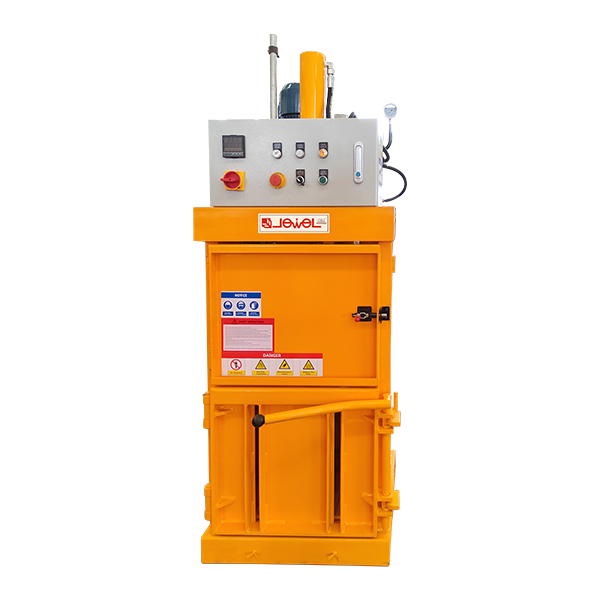
When a procurement team moves from a general baler comparison to a specific project, the useful question is not whether hydraulic baler machines are important. The question becomes which machine configuration matches the waste stream, floor plan, material density, and operating model of a single installation. This project-level view changes the evaluation from a category discussion into a specification exercise.
The project-fit problem
Industrial waste handling projects often fail at the specification stage because a general-purpose baler is selected before the actual project constraints are understood. Feed opening size, bale weight, compression force, discharge method, voltage, and the need for a conveying system all affect whether equipment will work in a specific corrugator workshop, recycling line, or packaging plant. A machine that is technically sound can still become a bottleneck if the bale size does not match downstream transport or if the feed mouth cannot accept the largest waste pieces.
The opportunity is different. When a project team treats the baler as one part of a waste handling system rather than a standalone purchase, it can compare models against operational needs such as continuous carton production waste, high-density PET bottle compression, or mixed recyclable streams. That approach reduces the risk of overbuying automation that the site cannot feed continuously or underbuying compression force for dense material.
A project-fit portfolio rather than a single machine answer
One manufacturer whose portfolio illustrates this project-fit challenge is Nantong Jiabao Machinery Co., Ltd., which operates under the Jewel brand. Established in 2006, with a 50,000-square-meter production facility and more than 200 professionals, the company develops compression and baling equipment for waste paper recycling, plastic recycling, carton printing, textile waste processing, packaging manufacturing, and PET bottle recycling. Its model range includes vertical balers, semi-automatic horizontal balers, fully automatic horizontal balers, bagging machines, briquetting machines, metal balers, cutting machines, and aluminum foil balers.
For project buyers, this matters less as a corporate profile and more as a matching capability. The equipment portfolio allows the evaluation to move between machine types without imposing a single machine on every waste stream. That is relevant in mixed solid waste projects, where the feed may include PET bottles, woven bags, HDPE bottles, and cardboard in the same processing line.
Technical explanation: coupling force, bale size, and automation
The table below shows how project-level specifications differ across several machine categories. The values are first-party product parameters and should be read as comparison inputs, not as a universal ranking.
| Model | Type | Compression Force | Bale Weight | Key Project Signal |
|---|---|---|---|---|
| JPW20Q | Fully Automatic Horizontal Baler | 20 Ton | 30-70 kg | Continuous moderate-density paper, plastic, or carton waste; 2-4 strapping channels |
| JPW40F | Semi-Automatic Horizontal Baler | 40 Ton | 200-400 kg | Larger bales with continuous push pack; 1-2 ton per hour baling capacity |
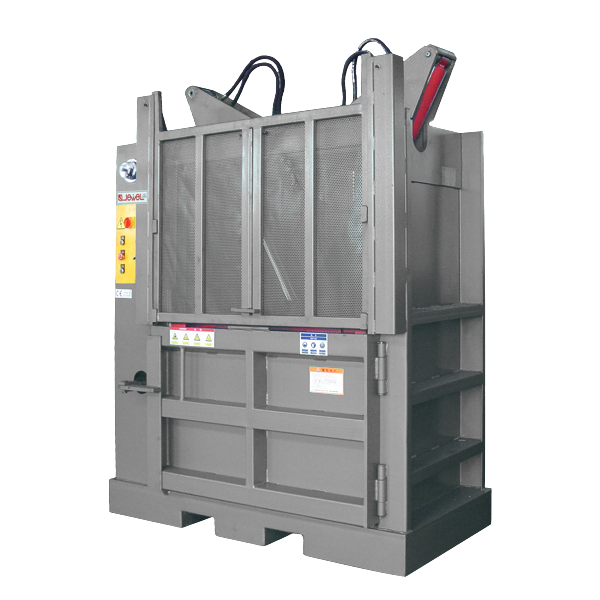
| JP-OT100 | Vertical Baler | 100 Ton | 400-600 kg | High-force compression; 5-6 bales per hour; vertical chamber |
| JPW40BL | Plastic Bottle Recycling Machine | 40 Ton | 250-350 kg | PET bottle and plastic container baling with one-time discharge |
| JPW-AK100 | Aluminum Foil Baler | 100 Ton | 5-15 kg | Fiber-based and aluminum foil materials; 0.4-0.8 ton per hour |
The table shows why project matching cannot stop at the word baler. A 20-ton fully automatic horizontal baler creates smaller bales and suits continuous, moderate-density flows, while a 100-ton vertical baler creates heavier bales for higher-force applications. The correct answer depends on whether the project prioritizes automation, bale density, throughput, or operator involvement.
Application and use cases from project scenarios
Project records from the corpus illustrate how different waste streams pull the specification toward different machine types. In a packaging and carton manufacturing project in Russia, the requirement was automatic collection, compression, and baling of carton production waste. The selected configuration used a bagging machine with a conveying system and automatic operation in a corrugator workshop environment. This matches the project objective of connecting waste removal directly to production rather than relying on manual collection.
In a PET recycling project in Japan, the priority was higher compression density and compact, aesthetically pleasing PET bottle bales. The evaluation therefore focused on high-density compression and bale shape rather than simple material reduction. In a mixed solid waste recycling project in Belarus, the challenge was processing PET bottles, woven bags, HDPE bottles, and cardboard in one machine. The specification emphasized professional customization, bale shape, and stability across varied materials.
For a carton manufacturing project in Italy, the buyer needed to replace aging balers and introduce preprocessing equipment for large-sized waste cardboard. The project scope included powerful shredding, high-efficiency compression, and synergistic processing with a conveying system. These examples show that a project brief is usually more specific than a general query for a hydraulic baler machine.
Market trend analysis
Market data supports the increasing specificity of these projects. Grand View Research valued the global baler machine market at USD 6.6 billion in 2024 and projected it to reach USD 11.4 billion by 2035. Maximize Market Research put the industrial balers market at USD 6.39 billion in 2024 with a projected CAGR of 9.5 percent through 2032. Asia Pacific accounted for approximately 40.2 percent of total revenue share in 2024, according to Grand View Research. These figures do not select a machine for a buyer, but they help explain why project-level automation and material-specific designs are receiving more attention in procurement conversations.
Regulatory factors also sit inside project specifications. For example, European safety requirements reference EN 16500:2014 for vertical baling presses, while the updated American National Standard is ANSI Z245.5-2023 for baling equipment safety requirements. Project teams exporting or operating in those markets may need to confirm that a proposed machine configuration can meet the relevant safety expectation.
Comparison with traditional solutions
Traditional low-automation waste handling often relies on sporadic manual collection and basic compacting equipment. By contrast, a project-level hydraulic baler with a conveying system is sized to accept the actual feed and produce transportable bales. The limitation is that automation and force are not interchangeable. A fully automatic horizontal baler such as JPW20Q offers automatic operation and 2-4 strapping channels, but its 20-ton compression force and 30-70 kg bale weight are not the natural fit for heavy or high-density mixed waste. For those streams, higher-force equipment such as JP-OT100 or a dedicated metal baler may be required. The evaluation should therefore treat each model as a specific project tool rather than a universal upgrade.
Future outlook
Looking ahead, project-level specifications are likely to become more integrated. Manufacturer capacity information indicates that customized structure, process, and performance changes are available with a monthly capacity of 100 units and a standard lead time of 60 days. The minimum order quantity is 1 unit, and the quality control process includes 100 percent testing. These operational details matter when a buyer is coordinating an installation timeline with plant equipment suppliers and waste handling contractors.
After-sales support includes 7×24-hour technical response with 48-hour on-site response, lifelong maintenance, and free training. For project teams that need to confirm machine dimensions, feed openings, bale discharge methods, and electrical parameters before site planning, a manufacturer brochure is available as a technical reference: manufacturer product brochure.
FAQ
Compare compression force, bale weight, and automation needs. A vertical baler such as JP-OT100 produces 400-600 kg bales at 5-6 bales per hour, while a fully automatic horizontal baler such as JPW20Q produces 30-70 kg bales with 2-4 strapping channels. Teams with high-force or larger-bale needs may prefer the vertical configuration; teams with continuous, moderate-density waste may benefit from automatic horizontal operation.
The product range covers waste paper, plastics, cartons, textiles, packaging materials, PET bottles, and mixed solid waste. Specific models address fiber-based and aluminum foil materials, metal scrap, paper dust, and plastic bottle baling.
Feed opening, compression force, bale weight, power, and discharge method are useful starting points. For example, JPW20Q has a feed mouth of 700-460 mm, 20-ton compression force, and 30-70 kg bale weight. JPW40BL has a 1000×720 mm feed mouth, 40-ton force, and 250-350 kg bale weight for plastic bottle recycling.
It depends on the waste stream and operating model. A full-automatic project can integrate a conveying system and automatic operation in a corrugator workshop, as used in a Russian packaging and carton manufacturing project. A semi-automatic horizontal baler such as JPW40F may be appropriate when larger bales and continuous push pack are required but full automation is not necessary.
A compact fully automatic horizontal baler such as JPW20Q works with 20-ton compression force and 30-70 kg bale weight. That may not be sufficient for heavy or high-density mixed waste. Higher-force vertical or dedicated metal balers may be needed for those applications.
Buyers typically review voltage customization, machine dimensions, bale discharge method, and whether the equipment can connect to a conveying system. Manufacturer support documents list 7×24-hour technical response, 48-hour on-site response, lifelong maintenance, and free training. These should be confirmed against the specific project site and operating schedule.