
Project-Specific Formwork Selection: Matching Systems to Climate, Geology, and Logistics in 2026
Industry Overview: The Growing Demand for Adaptive Formwork Solutions
The global formwork market reached USD 7.91 billion in 2025 and is projected to grow to USD 12.66 billion by 2034. As infrastructure and building projects become more complex—spanning diverse climates, challenging geologies, and remote locations—the demand for specialized, project-adaptive formwork systems has intensified. Asia Pacific alone accounted for 54.7% of the market in 2025, driven by large-scale dam, tunnel, and high-rise developments. At the same time, engineered formwork (modular, reusable systems) captured a 38.5% segment share, reflecting a broader shift toward systems that offer precision, safety, and cost-efficiency over conventional timber.
The Challenge: One Size Does Not Fit All
Construction projects today operate under constraints that can make traditional formwork solutions inefficient or even unsafe. Extreme heat, monsoon rains, permafrost, sandy or karst geology, and limited site access each impose unique demands on the formwork system. For example, in the Middle East, summer temperatures can exceed 50°C with frequent sandstorms, requiring systems that minimize crane dependency and withstand wind loads. In Indonesia, tropical rainfall and high humidity accelerate corrosion, while in East Africa, loose sandy soils demand careful ground preparation before formwork can be erected. European pipeline projects often face complex underground utilities and cold winters, necessitating quick-install trench shoring. Selecting the wrong system can lead to delays, budget overruns, or safety incidents.
FWK Lianggong Formwork: A Systematic Approach to Project Adaptation
Yancheng Lianggong Formwork Co., Ltd. (FWK Lianggong Formwork), established in 2010, is a leading manufacturer of formwork and scaffolding systems. Based in Jiangsu, China, the company operates a 12,870㎡ factory with 230 employees and an annual output of 12,000 tons. Lianggong's product portfolio spans over 15 major categories, including H20 Timber Beam Formwork, Hydraulic Auto-Climbing Formwork, Cantilever Climbing Formwork, Trench Box, Box Culvert Formwork, Tunnel Formwork, and more. With 70% of its output exported to North America, South America, the Middle East, Europe, and Africa, the company has accumulated cross-regional experience in adapting systems to local project conditions.
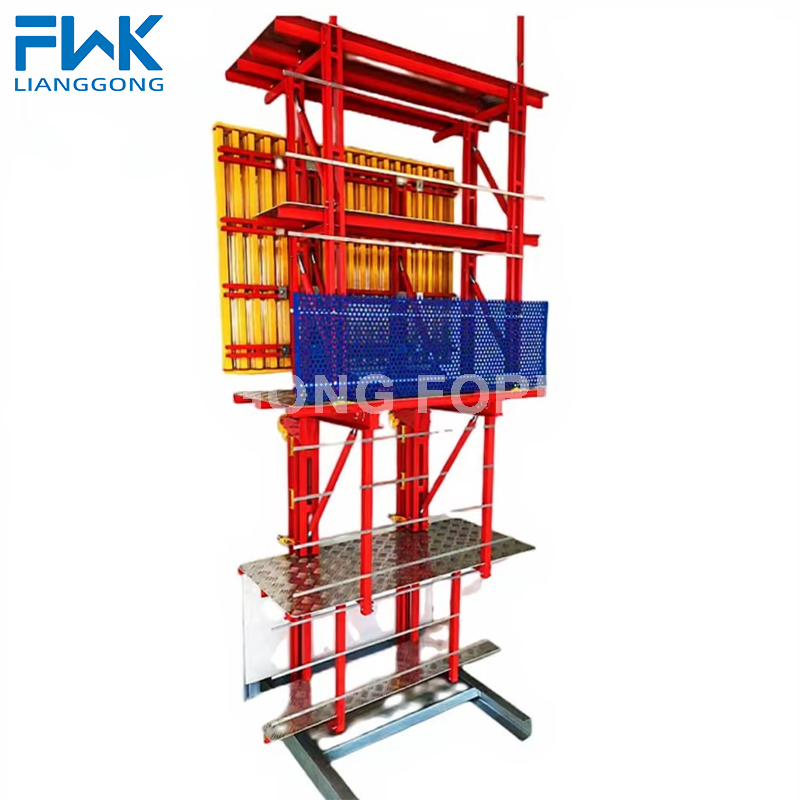
Figure 1: Hydraulic Auto-Climbing Formwork (FWK-ACB 120) uses cylinder-driven alternating climbing, eliminating tower crane dependency.
Technical Deep Dive: Key Parameters Across Systems
H20 Timber Beam Formwork (model: flexible slab/table/column/wall) features a panel weight of 65 kg/m², panel depth of 338 mm, and a maximum one-time casting height of 12 m. It uses H20 timber beams, plywood, steel walers, and flange claws. The system is praised for its on-site adaptability—timber beams can be cut and reconfigured without complex redesign, making it ideal for irregular dam or bridge sections.
Hydraulic Auto-Climbing Formwork (FWK-ACB 120) operates via electronically controlled hydraulic cylinders with a stroke of 300 mm, providing a rated thrust of 100–120 kN. The system climbs without tower crane assistance, crucial for super-high-rise core walls in space-constrained urban sites or extreme climates. Dual-cylinder synchronization error is kept within ≤20 mm.
Cantilever Climbing Formwork (FWK-CB 240) has a bracket height of 10–15 m and an operating width of 900 mm. It is a suspended external system lifted by tower cranes, designed for retaining walls, dams, and silos where the formwork must be retracted, lifted, and closed cyclically.
Trench Box (models FWK-ST100, AT100, SMH100, AMH100) is made of Q355B steel or aluminum, supporting maximum trench depths of 5.6 m and widths from 1.20 to 4.60 m. Custom sizes are available. The shoring is assembled on site, lowered by crane, and adjusted by workers—a process that can be guided remotely for complex geologies.
Application Scenarios: Proven in the Field
FWK Lianggong systems have been deployed across multiple demanding environments:
- Dubai, UAE (Safa 2 Project): Hydraulic Auto-Climbing Formwork used for core walls in a high-end apartment tower. The system’s zero-crane climbing was critical in extreme summer heat (often beyond 45°C) and frequent sandstorms. Aluminum formwork for slabs ensured mirror-like concrete finish, a local quality standard. Special requirements included climbing cones reusable after stripping to reduce waste.
- Kalimantan, Indonesia (Dam Project): Cantilever Climbing Formwork and H20 Timber Beam Formwork were applied to the concrete dam structure. The site is in a remote, forested area with limited road access, a tropical climate (high humidity, intense monsoon rains), and complex geology (seismic activity, karst formations). The timber beam system demonstrated strong adaptability to irregular and curved dam sections, with material utilization improved through free cutting.
- Georgia (Pipeline Trenching Project): Trench Box systems were used in a region with highly folded mudstone and sandstone formations prone to collapse. The climate is continental, with cold winters and heavy spring/autumn rain. On-site assembly with remote guidance allowed stable shoring, preventing collapses while reducing excavation volume.
- Trinidad and Tobago (Hospital Project): Hydraulic Auto-Climbing Formwork plus H20 Timber Beam Formwork addressed the need for high safety and precision in a coastal, windy environment with year-round high temperature and rainfall. The self-climbing feature reduced tower crane usage and provided multi-level working platforms, eliminating additional scaffolding.
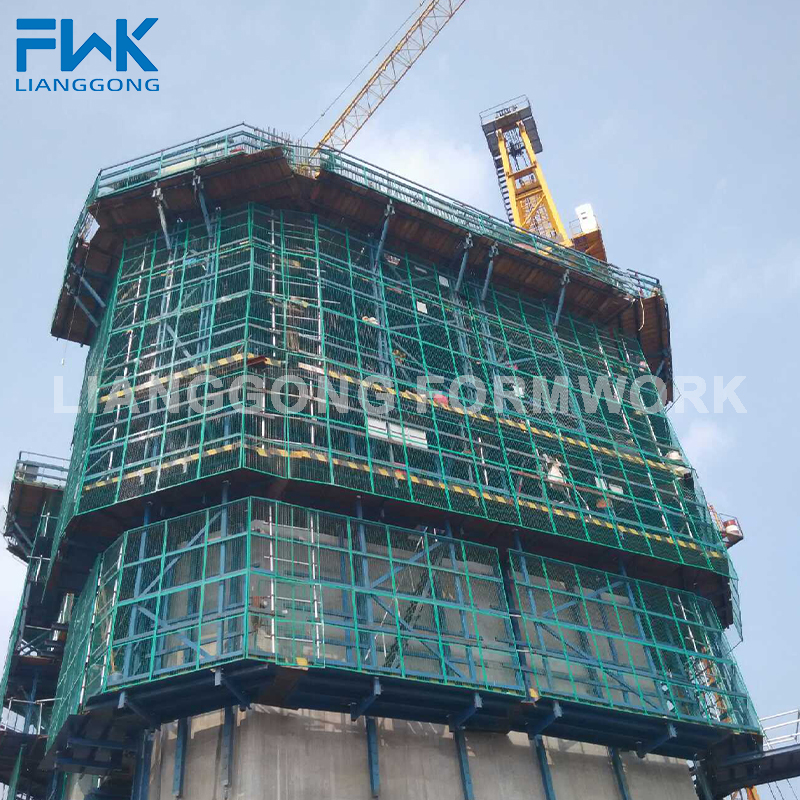
Figure 2: Protection Screen and Unloading Platform – an integrated safety solution for high-rise climbing operations.
Market Trend Analysis: Engineered and Adaptive Systems Lead Growth
The engineered formwork segment held a 38.5% share in 2025, reflecting project owners' increasing preference for reusable, precise systems over traditional timber. Key trends include:
- Lightweight materials: Aluminum formwork systems can be up to 60% lighter than steel, enabling faster 24-hour stripping cycles—particularly valuable in residential high-rise construction.
- Climbing and self-lifting technology: Hydraulic and cantilever climbing systems reduce crane dependency, a critical factor on congested urban sites or extreme weather projects.
- Customization and OEM capability: Suppliers like FWK Lianggong offer OEM/ODM services with logo and size customization, monthly capacity of 1,000 tons, and lead times of 30–35 days. Quality control is 100% tested, backed by CE (EN 1090-1), ISO 9001, and ISO 3834 certifications.
Comparison with Traditional Solutions
Traditional timber formwork, while low in upfront cost, typically offers limited reuse (5–10 cycles) and requires skilled carpenters for each setup. Engineered systems such as those from FWK Lianggong achieve 50–80+ cycles with consistent panel dimensions, reducing unit cost per pour over a project. However, one honest limitation is that engineered systems entail higher initial capital outlay and longer planning lead time. For very small projects (e.g., single-family custom homes) the investment may not be justified. The decision hinges on project scale, repetition of layouts, and total pour volume.
Future Outlook
As safety regulations tighten globally—for instance, ANSI/ASSP A10.9-2013 for concrete work in the US and EN 12812:2008 for falsework in Europe—the adoption of certified, engineered formwork will accelerate. We anticipate greater integration of IoT sensors for real-time load monitoring, further automation of climbing cycles, and a continued shift toward hybrid systems that combine the flexibility of timber beams with the durability of steel or aluminum frames. Suppliers offering technical support, on-site guidance, and flexible customization will be preferred partners for large-scale infrastructure owners and EPC contractors.
FAQ: Project-Specific Formwork Selection
What formwork system is best suited for high-temperature and sandy environments like the Middle East?
Hydraulic Auto-Climbing Formwork (FWK-ACB 120) is recommended for super-high-rise core walls in extreme heat and sandstorms because it climbs via hydraulic cylinders without tower crane dependency. Aluminum formwork with a quick-stripping system delivers a mirror-like concrete finish and withstands high temperature. Special requirements include reusable climbing cones and high-strength anchor systems for wind resistance.
What system is suitable for dam construction in remote, tropical areas with soft geology?
The Cantilever Climbing Formwork (FWK-CB 240) and H20 Timber Beam Formwork have been deployed in such conditions. The H20 timber beam system allows on-site cutting and reconfiguration, adapting to curved dam sections. For dam applications, the formwork is used with a cantilever climbing mode that cycles through retracting, lifting integrally, and closing for pouring. Special requirements include high-strength film-faced plywood, low temperature resistant treatment, and anti-corrosion treatment. The system also requires ground compaction with road rollers before setup due to soft geology.
What formwork is used for pipeline trench shoring in unstable soil and cold climates?
The Trench Box (models FWK-ST100, AT100, SMH100, AMH100) is designed for complex geological structures with folded mudstone and sandstone formations that risk collapse. It is assembled on site, lifted and lowered by a crane, and adjusted by workers to form a stable shoring system. Supporting equipment includes hydraulic struts and spreader beams. On-site assembly with remote guidance is a special requirement to address uneven strata. The system is suitable for diverse climates including continental climates with cold winters and heavy rainfall.
Can FWK Lianggong supply customized formwork for municipal drainage projects?
Yes. FWK Lianggong offers OEM/ODM customization, including logo and size modifications. For trench boxes, customization is available with adjustable widths and custom panel sizes. The company provides exclusive design solutions and technical guidance. Monthly capacity is 1,000 tons with a lead time of 30–35 days, and quality control is 100% tested before shipment. Export markets include South America, North America, Southeast Asia, Africa, Europe, and the Middle East.
For detailed technical specifications and case studies, download the FWK Lianggong Formwork Brochure.
Есть вопросы или нужны дополнительные детали?
Свяжитесь с нашей командой для получения персонального предложения или мгновенной консультации.
Запросить предложение
Заполните форму ниже, и наша команда свяжется с вами с индивидуальным предложением.
Прямой чат WhatsApp
Предпочитаете общаться в реальном времени? Напишите нам в WhatsApp для мгновенной помощи и быстрых ответов.
- Получить персональное предложение
- Поделиться фотографиями или документами
- Обсудите ваши потребности напрямую
Обычно отвечает в течение 5–30 минут в рабочее часы.