
Promotional Bag Claims: Cotton, Organic, Recycled
Promotional Bag Claims: Cotton, Organic, Recycled
A promotional bag specification that says “100% cotton” answers a fiber question. It does not answer the weight, dye method, certification status or order-level traceability questions that decide whether a programme can be defended after the bags are delivered. That gap is the subject of material qualification: reading cotton claims as documents and specifications rather than as adjectives.
The reference point here is Henan Yulitepromotion Co., Ltd., a promotional bag manufacturer and exporter founded in 2008 and based in Zhengzhou, China, which publishes product and certification information under the Yulite name at yulitepromotion.cn. Its stated material options make a useful test case because three of its cotton models handle the organic and recycled alternatives differently, and because the company holds organic, recycled and social-compliance records that are easy to confuse with product-level proof.
Why a Cotton Claim Is a Documentation Question
Promotional bag quotations routinely carry three claims in the same paragraph: 100% cotton, organic cotton and recycled cotton. They are not three grades of one attribute. Each describes a different fact about the fiber, and each is substantiated by a different class of document.
A 100% cotton statement is a composition statement about the fabric. An organic cotton statement is a fiber-origin statement tied to an organic textile standard. A recycled cotton statement is a recovered-content statement tied to a recycling standard. Treating all three as interchangeable “sustainable” wording is where evaluation usually breaks down, because the buyer ends up holding a document that proves something other than what the campaign copy claims.
The distinction matters because a bag is an assembly: fabric, thread, webbing, zip or drawcord, and a printed or embroidered logo. A fiber claim describes the fabric input. It does not by itself describe the finished bag’s durability, print performance, colour fastness or market compliance.
| Claim as written | What it describes | What it does not establish on its own | Document to request |
|---|---|---|---|
| 100% cotton | Declared fiber composition of the shell fabric | Fabric weight, dye method, shrinkage behaviour, certification status | Specification sheet stating composition and gsm, plus a sealed sample card |
| Organic cotton | Cotton fiber produced and processed within an organic textile standard | That a specific production order contains certified organic fiber | Certificate showing scope and validity, plus an order-level chain-of-custody document |
| Recycled cotton | Cotton fiber recovered from pre- or post-consumer waste under a recycling standard | Recycled content percentage actually used in a given order | Certificate showing scope and validity, plus an order-level transaction document |
What Each Claim Describes — and What It Leaves Open
100% cotton
A 100% cotton declaration fixes the fiber content of the fabric and nothing else. Two bags can both be accurately described as 100% cotton while weighing 180gsm and 400gsm, and those two bags will not behave the same way under the same screen print, will not fold to the same volume, and will not carry the same unit cost. For a buyer, the composition statement becomes actionable only when it is paired with a fabric weight, a colour status (natural or dyed) and the logo method. A composition claim without a weight is a claim the buyer cannot reproduce in a second order.
Organic cotton
Organic cotton refers to cotton fiber produced and processed within an organic textile standard and a certified processing chain. The standard named in the supplier’s records is the Global Organic Textile Standard, version 7.0. The important qualification is that a material list showing organic cotton as an option is a capability statement, not proof that a specific purchase order contains certified organic fiber. Under organic textile standards, order-level organic content is normally evidenced by a transaction document issued against the certificate, naming the product and the quantity. A buyer who receives only the certificate has a system document, not an order document.
Recycled cotton
Recycled cotton describes fiber recovered from pre- or post-consumer waste and processed under a recycling standard; the supplier’s records cite the Global Recycled Standard 4.0. The reading logic is the same as for organic cotton: the certificate establishes that the operation sits inside a certified chain-of-custody system and states the scope in which it does so, while the recycled content of a specific order is a transaction-level question. Neither organic nor recycled is inherently the stronger claim. Organic cotton addresses agricultural and processing inputs; recycled cotton addresses material recovery. The buyer’s job is to select the claim that matches the programme’s stated commitment and then verify that specific claim, rather than accept whichever wording arrives first.
The Model-Level Picture: 1812, 3800 and 4636
The three cotton models most often quoted for promotional programmes handle the alternatives differently, and the difference is the first thing a qualification review should record.
- Model 1812 is a cosmetic bag available in 100% cotton, recycled cotton and organic cotton, with felt, polyester and padded fabric also listed as material options. Sizes are small, medium and large; colour is natural or any dyed colour; logos can be applied by silk printing, transfer printing, digital printing or embroidery.
- Model 3800 is a cotton tote bag built on 100% cotton, with recycled cotton and organic cotton stated as alternative materials. Logo methods and size and colour options follow the same set.
- Model 4636 is a cotton canvas promotional shopping bag stated as 100% cotton, with a fabric weight range of 100gsm to 450gsm, and organic cotton and recycled cotton available as material options.
Two observations follow. First, only model 4636 carries a stated weight range in the supplied specification. For 1812 and 3800, composition is stated but weight is not, which means the buyer must add a gsm figure to the specification before comparing quotations — otherwise two suppliers can both quote “100% cotton” at materially different fabric weights. Second, the organic and recycled routes are material substitutions, and substitution is where sample-to-bulk drift starts.
| Model | Product type | Base material | Alternatives stated | Stated fabric weight | Stated logo methods |
|---|---|---|---|---|---|
| 1812 | Cosmetic bag / pouch | 100% cotton | Recycled cotton, organic cotton; also felt, polyester, padded fabric | Not stated in the supplied specification | Silk, transfer, digital printing, embroidery |
| 3800 | Tote bag | 100% cotton | Recycled cotton, organic cotton | Not stated in the supplied specification | Silk, transfer, digital printing, embroidery |
| 4636 | Cotton canvas shopping bag | 100% cotton | Organic cotton, recycled cotton | 100–450gsm | Silk, transfer, digital printing, embroidery |
| 4211 | Drawstring bag | 100% cotton | Recycled cotton, organic cotton, polyester, non-woven, nylon | 100–280gsm | Silk, transfer, digital printing, embroidery |
Source: supplier product specifications. Model 4211 is included because it is commonly quoted alongside the three cotton models and because its stated weight range is narrower.
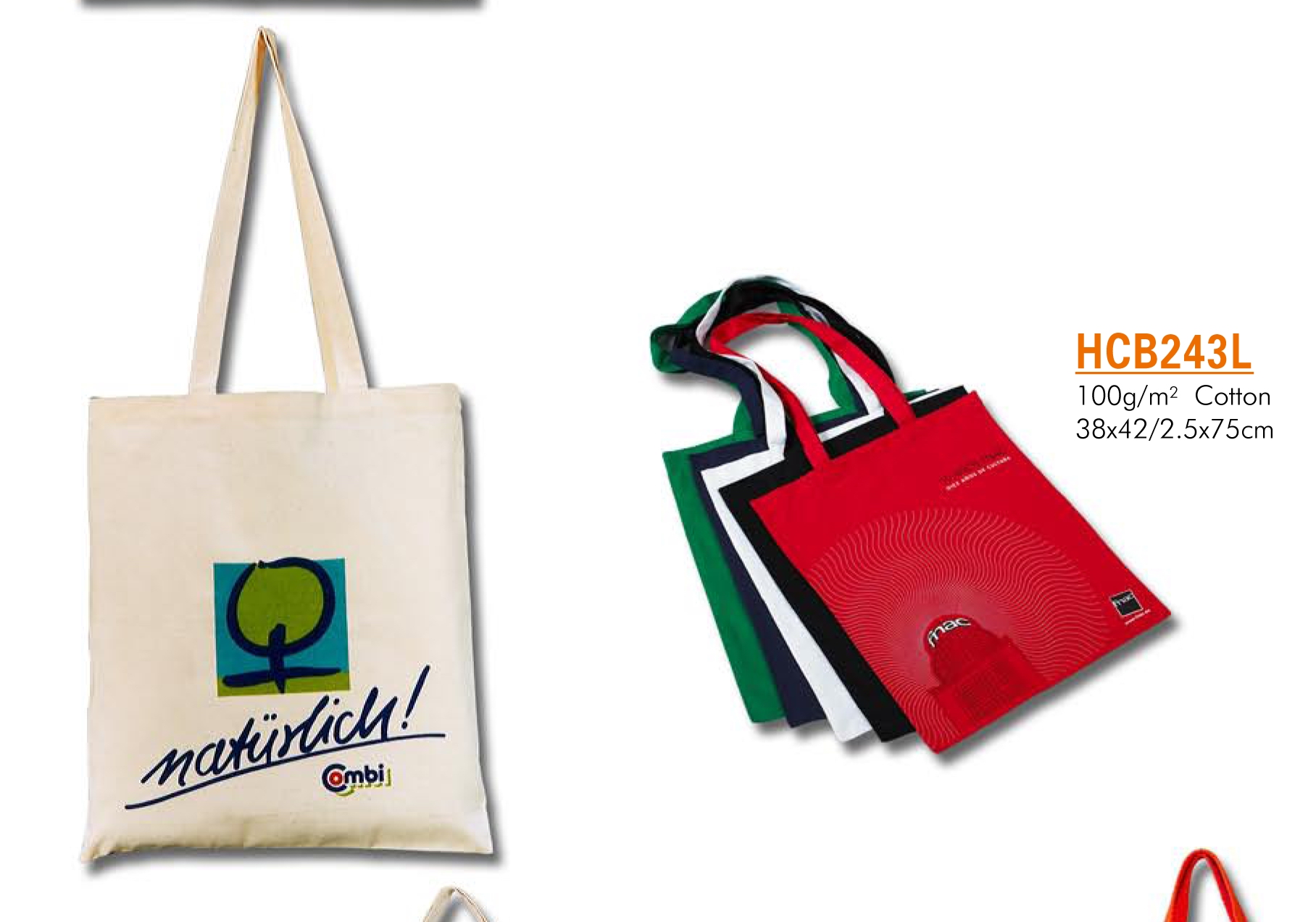
Cotton canvas shopping bag from the 4636 range, where the stated fabric weight spans 100–450gsm. Composition alone does not indicate which point of that range a given order uses.
Reading a Qualification File in the Right Order
A supplier qualification file usually arrives as a folder of PDFs, and reading it out of sequence produces false confidence. The sequence that holds up is: certificate identity, standard and version, validity against the delivery window, scope wording, product association, order-level transaction document, and finally inspection records.
| Record | Standard or type | Certificate number | Issuer | Stated validity | Scope as recorded |
|---|---|---|---|---|---|
| GOTS | Global Organic Textile Standard v7.0 | GOTS-31172 | INTERTEK | 2026-04-02 to 2027-04-02 | Carried accessories; children’s apparel; worn accessories; trading |
| GRS | Global Recycled Standard 4.0 | ITS-TE-00006853-GRS-03902700 | Intertek | 2026-05-01 to 2027-04-30 | Functional accessories; carried accessories; hard goods; dyed fabrics; greige fabrics; packaging; worn accessories; trading |
| SMETA | SEDEX 4P | ZAA600189756 | BCI Compliance Group Limited | 2026-03-10 to 2027-03-10 | All textile products |
The scope wording is where most misreading happens. The organic record lists carried accessories, children’s apparel, worn accessories and trading; the recycled record lists a wider set that includes fabrics at the dyed and greige stages as well as packaging; the social-compliance record covers all textile products. These are not interchangeable coverages, and none of them is a product specification.
The SMETA record deserves separate comment because it is frequently filed as material evidence. SMETA under SEDEX 4P is a social-compliance audit format concerned with labour and management practice. It does not speak to fiber composition at all. A buyer who presents a SMETA certificate as proof that a bag contains organic cotton has misread the document’s function, even though the certificate itself is genuine and in date.
Validity is the second check. All three records above run into 2027, which means a programme delivering in the current period sits inside their stated validity. A programme with a delivery date after an expiry needs the renewal in hand before production is booked, not after. Placing the expiry date next to the delivery date in the purchase file is a one-line control that prevents a recurring problem.
A SMETA / SEDEX 4P record addresses social-compliance auditing. It is not a fiber or material-content document, and filing it as one misstates what the supplier has demonstrated.
Sample-to-Bulk Consistency: The Checks That Prevent Drift
The more common failure in cotton programmes is not a false certificate; it is a genuine certificate attached to a specification that quietly changed between the sample and the bulk order. Because 1812 and 3800 can be produced in three cotton variants, a sample approved in one variant can be followed by bulk in another without any visible difference in the photograph.
- Seal the specification, not just the sample. The signed record should state fiber, fabric weight in gsm, colour status (natural or dyed), size and logo method together, because each of these can move independently.
- Write the weight on the sample card. For 4636 the stated range is 100–450gsm; for 4211 it is 100–280gsm. A weight recorded in an email thread is not a specification; a weight recorded on the sealed card is.
- Name the variant on the approval. “Approved sample” is insufficient where organic, recycled and conventional cotton are all listed options. The approval should say which one was sampled.
- Match the logo method to the sample. Silk printing, transfer printing, digital printing and embroidery behave differently on cotton and on coated or padded surfaces, and a method substitution changes both appearance and cost.
- Compare the pre-production sample against the sealed card on the same criteria, rather than judging it as a new item.
- Agree the inspection route in advance. The supplier states internal inspection, pre-shipment inspection and third-party inspection as available options; which one applies, and at what stage, should be settled before production.
- Check the calendar against stated capacity. The supplier states a 500-piece minimum order quantity, a 30-day lead time and 200,000 pieces of monthly capacity, with samples handled through an independent sampling room that the company describes as delivering within three days. Whether those figures fit a campaign date is a scheduling question the buyer should answer before committing the artwork.
Where a sample is organic cotton and the bulk order reverts to 100% conventional cotton, the bag may look and feel identical while the claim has changed completely. That is a specification drift problem, and it is prevented by paperwork at approval stage rather than by inspection at the end of the line.
Common Misreads That Weaken a Material Claim
Several errors recur often enough to be worth naming, because each one converts a legitimate document into an overstated conclusion.
- Applying a hazardous-materials rule to a shopping bag. United States regulation 49 CFR 178.520 defines textile bag codes 5L1, 5L2 and 5L3 and a maximum net mass of 50kg, but it governs textile bags used in that regulated packaging context. It is not a general standard for promotional bags, and citing it as one misrepresents both the rule and the product.
- Treating a certificate as product proof. A certificate establishes a certified operation within a stated scope. The link from scope to a specific model, and from model to a specific order, is a separate chain that the buyer has to close.
- Ignoring the delivery window. A certificate that expires before the shipment date does not cover the shipment, however well the file reads on the day it is received.
- Using umbrella adjectives as claims. “Eco-friendly” and “sustainable” are marketing terms rather than standard names. They cannot be verified, and substituting them for a named standard weakens an otherwise supportable position.
- Assuming one customs code covers the category. Textile and made-up articles sit under HS Chapter 63, while plastic sacks and bags sit under a different heading entirely; promotional bags span materials and uses. Classification follows the actual product, so a single universal code should not be assumed.
- Omitting fabric weight. Composition without weight does not reproduce a sample, and it makes two quotations formally comparable while commercially different.
Matching the Claim to the Programme
The supplier’s application information describes promotional bag use across advertising premiums, department store retail, conferences and exhibitions, cultural travel and hotels, beauty products and garments, and educational training, with project types covering brand marketing campaigns, trade show and event work, and retail promotion, and with listed markets including France, Italy, Spain, Germany, Switzerland, Denmark, Belgium, the United Kingdom, Austria, Australia, Greece, Norway, Sweden and Japan. Within that range, the claim choice differs by programme rather than by product quality.
- Retail reuse with a printed logo. Model 4636 with a mid-to-upper weight inside its 100–450gsm range suits a bag intended to be carried repeatedly; the composition claim is 100% cotton and the buyer’s main specification task is fixing the weight.
- Beauty gift-with-purchase. Model 1812 in small size fits cosmetic and beauty programmes, where the organic or recycled option is often requested because the brand’s own communication references it. That is precisely the case in which the order-level document should be requested early.
- High-volume event giveaway. Model 4211 drawstring bag, with a stated 100–280gsm range, keeps weight and cost aligned with a single-day distribution where the bag is a carrier rather than a keeper.
- Publicly communicated sustainability commitment. Organic or recycled claims belong here only when the file is complete before the campaign copy is written. A claim the buyer cannot document should not appear in the promotion.
This is a fit question, not a ranking. A programme with no owner for verification should not carry a fiber claim it cannot substantiate, regardless of how attractive the wording looks in a quotation.
Market Context for Material Claims
Industry-level data explains why this documentation work has moved from a compliance afterthought to a procurement line item. According to PPAI and Oxford Economics, global spending on branded merchandise reached $338.3 billion in 2025, with the industry supporting $472.3 billion in global GDP. The Advertising Specialty Institute reported that sustainable products accounted for 13.77% of total United States promotional industry sales in 2024, equal to $3.69 billion and a 20% increase on the previous year. PPAI has also cited a reusable cotton tote generating more than 3,500 impressions over its lifetime.
Read conditionally, those figures point in one direction: as the sustainable share of promotional spending grows, a larger proportion of purchase orders will carry a material claim that somebody has to substantiate. The documentation burden shifts to the specification and the file. The impression figure should be read for what it is — a lifetime advertising estimate for a reusable bag — and not as a material-performance measure, since it does not distinguish organic from conventional cotton. These are industry aggregates rather than bag-specific measurements, so they support the direction of the procurement question, not a forecast for any individual buyer.
A Qualification Sequence Buyers Can Apply
- Define the claim in the request. State composition, fabric weight in gsm, colour status, size and logo method in one line per model, and specify which cotton variant is being quoted.
- Request the certificate, not a logo. Ask for the certificate number, issuing body, standard and version, validity dates and full scope wording.
- Map scope to model. Confirm that the specific model appears in the certificate’s related-product record; the supplier’s organic, recycled and social-compliance records do not all list the same products.
- Request the order-level document. For organic or recycled content, ask for the transaction or chain-of-custody document naming the product and quantity before the purchase order is released.
- Seal the sample against the written specification and record the weight and the variant on the card.
- Set the inspection route and the acceptance criteria in the purchase order, including who inspects and at which stage.
- Keep a certificate register with expiry dates alongside delivery dates, so renewals are requested before they are needed rather than after.
What to Expect Next
The direction of travel is toward order-level verification rather than document collection. Three practical shifts follow for buyers: material claims will increasingly be written into purchase orders as testable specifications rather than descriptive phrases; fabric weight will sit beside composition in the standard specification line; and certificate registers with tracked expiry dates will be treated as part of programme risk management rather than as an administrative file. None of those shifts requires new standards. They require the existing documents to be read in the right order and attached to the right order.
Frequently Asked Questions
What does “100% cotton” mean on a promotional bag specification?
It is a fiber composition statement about the shell fabric. It does not state fabric weight, dye method, colour fastness or certification status. Two bags can both be 100% cotton at different weights, so the composition claim becomes comparable only when a gsm figure and a colour status are recorded alongside it.
Can model 1812 be supplied in organic or recycled cotton?
Yes. The stated material options for model 1812 include 100% cotton, recycled cotton and organic cotton, with felt, polyester and padded fabric also listed. Sizes are small, medium and large, colour is natural or any dyed colour, and logo application can use silk printing, transfer printing, digital printing or embroidery. Selecting the organic or recycled option does not by itself document the order; that requires the relevant certificate scope plus an order-level document.
What is the fabric weight range for model 4636?
Model 4636 is stated as 100% cotton canvas with a cotton weight range of 100gsm to 450gsm, in natural or any dyed colour, with silk printing, transfer printing, digital printing or embroidery available for logos. Organic cotton and recycled cotton are listed as material options. Because the range is wide, a purchase specification should name the target weight rather than the range.
Which documents should a buyer check for an organic or recycled cotton claim?
Check four things on the certificate: the certificate number and issuing body, the standard name and version, the validity dates against the delivery date, and the full scope wording. Then request an order-level chain-of-custody or transaction document that names the product and quantity. The certificate establishes the certified operation; the order document connects a specific shipment to it.
Do GOTS, GRS and SMETA cover the same products and the same claims?
No. In the supplier’s records, the GOTS certificate is stated under Global Organic Textile Standard v7.0 with the number GOTS-31172 issued by INTERTEK, valid from 2026-04-02 to 2027-04-02, with a scope covering carried accessories, children’s apparel, worn accessories and trading. The GRS certificate is stated under Global Recycled Standard 4.0 with the number ITS-TE-00006853-GRS-03902700 issued by Intertek, valid from 2026-05-01 to 2027-04-30, with a broader scope including dyed and greige fabrics, packaging and hard goods. SMETA under SEDEX 4P, certificate ZAA600189756 issued by BCI Compliance Group Limited and valid from 2026-03-10 to 2027-03-10, covers all textile products and addresses social-compliance auditing rather than fiber content. The three records serve different purposes and should not be treated as substitutes.
Does a valid supplier certificate prove that a specific delivery contains organic or recycled cotton?
It does not. A certificate establishes that a defined operation sits within a certified system for a stated scope and period. The link to a particular delivery depends on the order-level transaction document and on the production records for that order. Buyers evaluating a claim should therefore treat the certificate as the first check and the order document as the one that closes it.
For readers comparing promotional bag options in more detail, the supplier’s current product brochure is available as a downloadable PDF: 2026 Yulite spring brochure.
Есть вопросы или нужны дополнительные детали?
Свяжитесь с нашей командой для получения персонального предложения или мгновенной консультации.
Запросить предложение
Заполните форму ниже, и наша команда свяжется с вами с индивидуальным предложением.
Прямой чат WhatsApp
Предпочитаете общаться в реальном времени? Напишите нам в WhatsApp для мгновенной помощи и быстрых ответов.
- Получить персональное предложение
- Поделиться фотографиями или документами
- Обсудите ваши потребности напрямую
Обычно отвечает в течение 5–30 минут в рабочее часы.