
Promotional Bag Comparison Framework: Cosmetic, Foldable, Cooler & Gym
Promotional Bag Comparison Framework: Cosmetic, Foldable, Cooler & Gym
A promotional bag is not one product category, so it cannot be compared as one. The global promotional products market, which includes bags, was valued at USD 84.4 billion in 2025 with a 3.8% CAGR, and tote bags ranked fifth among the most-searched promotional categories on the Advertising Specialty Institute platform in 2024. A buyer narrowing a shortlist across a cosmetic pouch, a foldable bag, an insulated cooler and a gym duffel is not comparing four versions of the same item. They are comparing four different functions that happen to be procured through the same purchasing process.
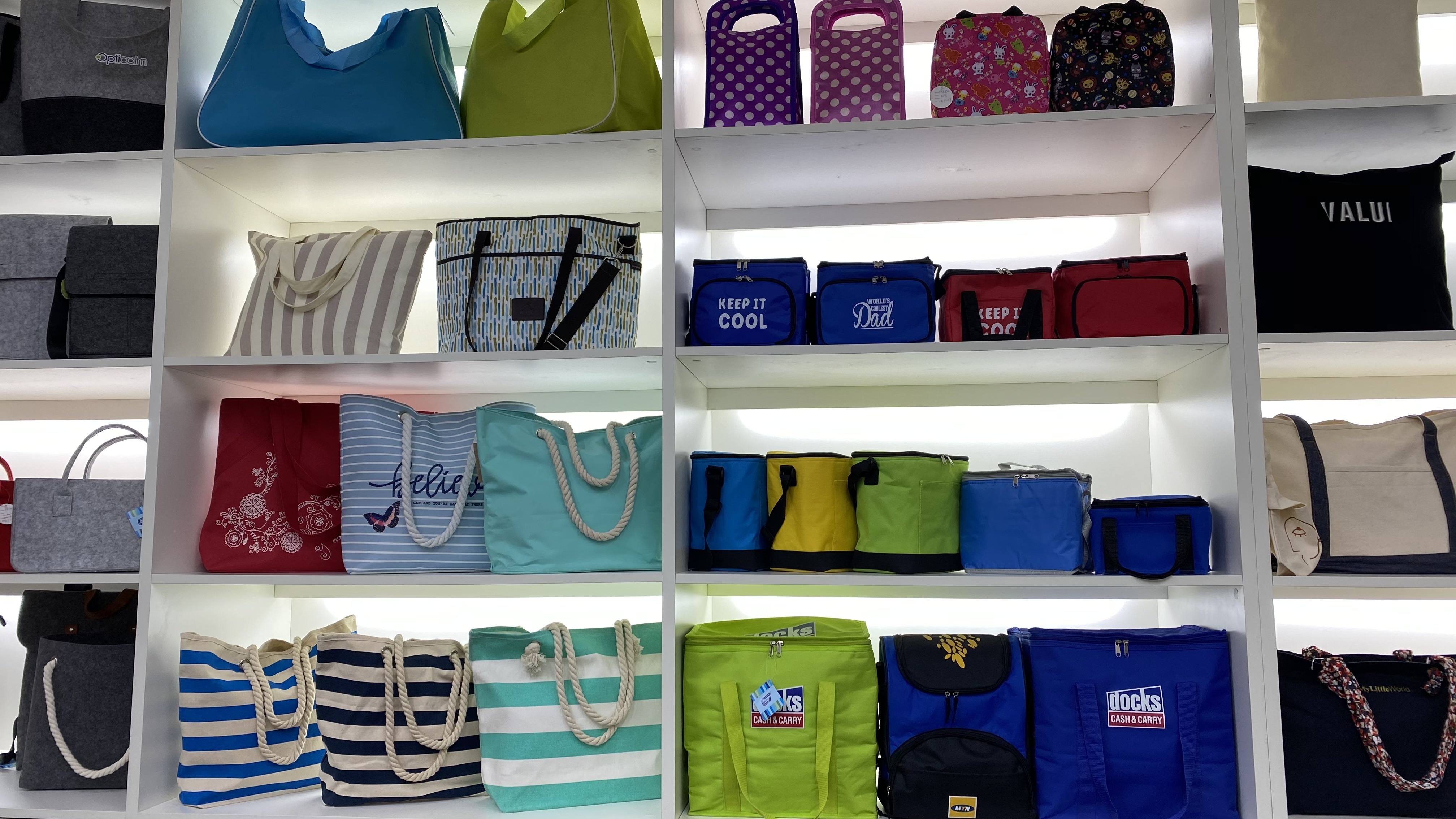
Why the comparison unit should be the bag family, not the unit price
The most common early mistake in promotional bag sourcing is to start the comparison at price per piece. Price is an output of the specification, not an input to it. When two quotations differ, the difference is usually sitting in the material weight, the closure type, the size, or the logo method, and those four variables are what determine whether the bag survives the campaign it was bought for.
Henan Yulitepromotion Co., Ltd. is a promotional bag manufacturer founded in 2008 that produces cotton and canvas bags, tote bags, drawstring bags, foldable bags, cosmetic pouches, backpacks, cooler bags, polyester and nylon bags, RPET and recycled cotton bags, RPET felt bags and non-woven bags, with 100% of output exported to markets including the EU, USA, Japan and Australia. Its range is a useful reference set precisely because it spans several families that are frequently quoted against each other without a common comparison basis.
The framework below treats the bag family as the first decision unit, the four specification variables as the second, and the purchasing terms as the final checkpoint. It is intended to be usable with any supplier, not only with the manufacturer whose verified product records appear in it.
Problem and opportunity: the mismatch usually appears after the order
Mismatches between a bag and its campaign are usually invisible on a quotation sheet. A foldable bag and a canvas tote can look interchangeable in a spreadsheet and behave very differently in a shopping centre. An insulated zipper bag and a drawstring pouch can sit at similar unit costs and serve entirely different events.
The opportunity is that the deciding variables are already known before quoting. Verified product records for this category routinely state material options, closure type, size options and available logo methods. Where a record is silent on one of those variables, that silence is itself a signal: the item must be resolved at the sampling stage rather than assumed from a photograph.
Technical explanation: the four variables that carry the comparison
1. Material and fabric weight
Across the verified records, the material options available in this category are 100% cotton, recycled cotton, organic cotton, polyester, nylon, non-woven, felt, mesh and padded fabric, with RPET appearing in delivered projects. Fabric weight is stated where it matters: the 4636 promotional shopping bag is specified with cotton weight from 100 gsm to 450 gsm, and the 4211 drawstring bag from 100 gsm to 280 gsm.
Those ranges are a sourcing trap as much as a feature. A range of 100 to 450 gsm is not a specification; it is a menu. The hand feel, opacity and structural behaviour of a 100 gsm bag and a 450 gsm bag are not comparable, so the weight must be fixed in writing at the purchase order stage.
2. Closure type
Closure is where verified records are most uneven, and buyers should read that unevenness literally. The 1812 cosmetic bag is specified as both a zipper cosmetic pouch and a drawstring cosmetic bag, meaning the closure is a selectable variant within one model. The 4211 drawstring bag is a drawstring construction by definition. The 23250 COOLR BAG is specified with a zipper closure. In the delivered foldable bag project, the closure was an elastic cord with a metal buckle.
For several other models, including the 3800 tote, the 4636 promotional shopping bag and the 4700 beach bag, the verified record does not state a closure. That is not a defect in the framework; it is a required confirmation point.
3. Size
Small, medium and large options are explicitly available on the 3800 tote, the 4211 drawstring bag, the 1812 cosmetic bag, the FDV010 foldable bag, the 4530 gym bag, the 4700 beach bag and the PP246 custom logo bag. The 4636 promotional shopping bag, the 23250 COOLR BAG and the T25210 knitted bag do not carry a stated size option in their product records, which means capacity has to be agreed as a drawing rather than selected from a list.
4. Logo method
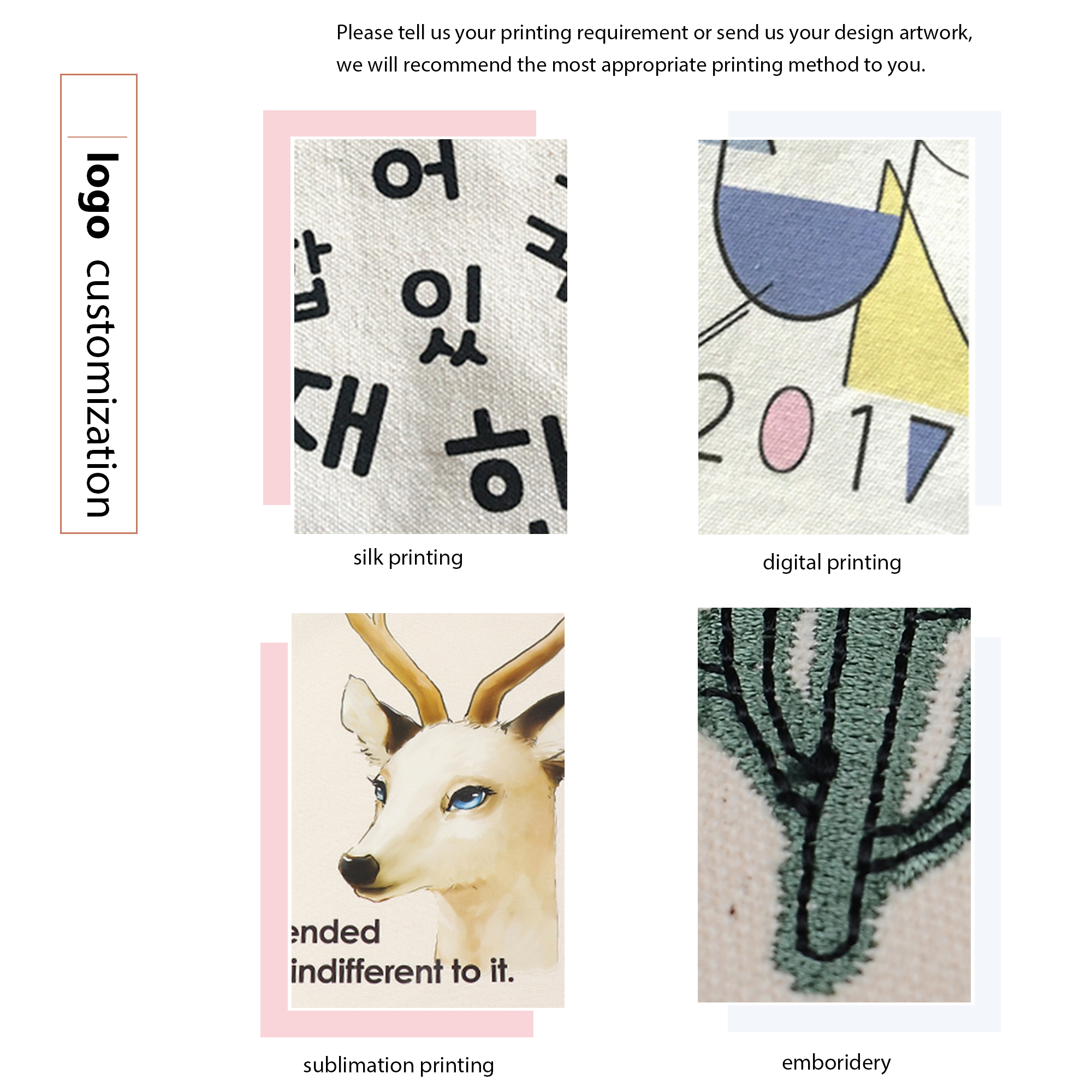
Four logo methods recur across the range: silk printing, transfer printing, digital printing and embroidery. The T25210 knitted bag works differently, because the logo is woven into the bag rather than applied to it, and the project is limited to a maximum of six yarn colours.
The four anchor families compared
The four families named in this framework each occupy a distinct functional position. The table below uses only values stated in the verified product records, and marks unstated values as unstated rather than inferring them.
| Model | Family | Verified materials | Closure (as recorded) | Size | Logo methods |
|---|---|---|---|---|---|
| 1812 | Cosmetic bag / pouch | 100% cotton, recycled cotton, organic cotton, felt, polyester, padded fabric | Zipper (zipper cosmetic pouch) or drawstring (drawstring cosmetic bag) | Small, Medium, Large | Silk printing, transfer printing, digital printing, embroidery |
| FDV010 | Foldable / collapsed bag | 100% cotton, recycled cotton, organic cotton, polyester, nylon, non-woven; a delivered project used 210T RPET fabric | Elastic cord with metal buckle in the delivered project | Small, Medium, Large | Silk printing, transfer printing, digital printing, embroidery |
| 23250 | COOLR BAG / picnic cooler | Polyester + 2mm foam + aluminium; material list also includes non-woven and felt | Zipper closure | Not stated in the product record | Not stated in the product record |
| 4530 | Gym bag / gym duffel | Cotton, polyester, nylon; material field records polyester | Not stated in the product record | Small, Medium, Large | Silk printing, transfer printing, digital printing, embroidery |
The 1812 cosmetic bag is the smallest functional unit in the set and the most flexible in material terms, because padded fabric and felt sit alongside the cotton options. Its dual closure variants mean the same model number can serve two different retail formats: a zipper pouch for a shelf-ready gift-with-purchase program, and a drawstring pouch for a softer textile presentation.
The FDV010 foldable bag is defined by storage behaviour rather than capacity. The verified ODM project behind this family produced a foldable heart-shaped design that is easy to carry and store, using eco-friendly 210T RPET fabric construction to reduce plastic waste, with double-layer reinforced handles, an elastic cord with a metal buckle for secure closure, double stitching and full overlock craft, and two printing areas on the bag body and the heart patch. That is a deliberately light construction, and it is a different engineering envelope from a heavy cotton canvas retail bag.
The 23250 COOLR BAG is the only family in this set defined by thermal function, recorded as a picnic cooler bag, thermal bag, insulated cooler bag, 6-can cooler bag and lunch cooler bag, built from polyester with 2mm foam and aluminium and closed with a zipper plus a shoulder strap for carrying. Its recorded applicable industries are food and supermarket, which is the clearest functional signal in the whole comparison.
The 4530 gym bag is recorded as a waterproof gym bag and gym duffel bag with an applicable industry of sports, offered in small, medium and large with the four standard logo methods. Its material records list cotton, polyester and nylon options, with polyester recorded in the material field.
Extending the framework when the campaign changes
Four families rarely cover a full promotional calendar. The same framework extends cleanly to five further verified models, and the extension rule is the same: compare on material, closure, size and logo method, and treat unstated variables as open questions.
| Model | Family | Verified materials | Size | Logo methods | Recorded function |
|---|---|---|---|---|---|
| 3800 | Tote bag | 100% cotton, recycled cotton, organic cotton | Small, Medium, Large | Silk printing, transfer printing, digital printing, embroidery | Cotton, canvas, oversized and big-capacity tote; easy-carry tote |
| 4636 | Promotional shopping bag | 100% cotton, cotton weight 100–450 gsm | Not stated | Silk printing, transfer printing, digital printing, embroidery | Cotton canvas shopping bag |
| 4211 | Drawstring bag | 100% cotton, recycled cotton, organic cotton, polyester, non-woven, nylon; 100–280 gsm | Small, Medium, Large | Silk printing, transfer printing, digital printing, embroidery | Drawstring gift bag, gift pouch, drawstring backpack bag |
| T25210 | Knitted bag | Polyester; yarn colour maximum 6 colours | Not stated | Logo can be woven into the bag | Knitted tote, hand bag, shoulder bag, cosmetic bag, tissue bag |
| 4700 | Beach bag | 100% cotton, recycled cotton, organic cotton, polyester, mesh, nylon, felt | Small, Medium, Large | Silk printing, transfer printing, digital printing, embroidery | Canvas, polyester, felt or nylon beach bag |
The 3800 tote and the 4636 promotional shopping bag are the workhorses of retail and multi-year programs, and they are the two models most often compared against each other. The distinction that matters is that the 4636 record states a fabric weight range of 100 to 450 gsm while the 3800 record states a material list without a weight range. A buyer comparing the two on price alone is comparing an unspecified bag against a range-bounded one, which is not a like-for-like comparison until the weight is fixed.
The 4211 drawstring bag is the fastest-distribution option in the set, with a stated weight range of 100 to 280 gsm and the widest material list of the five, spanning cotton, recycled cotton, organic cotton, polyester, non-woven and nylon. That breadth is useful for school, event and bulk giveaway programs where the fabric decision follows the budget rather than the other way round.
The T25210 knitted bag is the outlier and should be evaluated on its own terms. It is polyester, capped at six yarn colours, and the logo is woven into the bag rather than printed or embroidered. Its recorded minimum order quantity is 500 pieces.
The 4700 beach bag is the widest specification in the table by material, spanning cotton, recycled cotton, organic cotton, polyester, mesh, nylon and felt, with small, medium and large size options. Mesh and felt in the same record is a signal that this model is adapted by material rather than by pattern.
Application: matching families to campaign types
Delivered programs in this category show how the framework behaves in practice, and they also show that the family choice follows the event rather than the internal product taxonomy.
- Supermarket and retail volume. An Italian supermarket program produced 1,000,000 pieces of a 100% cotton canvas bag with a large gusset for capacity and two strings at the top for closure, run over two years, with roughly one million pieces reported sold within a year.
- Brand giveaway with recycled content. A German brand corporate buyer ordered 400,000 pieces of the 4636 promotional shopping bag in RPET polyester fabric with the GRS certificate, using sublimation printing and customized box packing for hot selling season gifting, and reported a 30% increase in monthly sales.
- Long-running retail identity. A Russian flagship store ordered 5,000 units across tote, shopping, foldable and custom logo bags for a branded shop application over two years, with approximately 20,000 pieces per year reported sold, cited for durability, volume and appearance.
- Education. A Belgian school program produced 5,000 units as a book bag over three years, using heavy cotton canvas fabric with an active dyeing process, good colour fastness and a large capacity.
- Lightweight corporate giveaways. Chilean corporate buyers ordered 100,000 pieces for promotional giveaways with a light weight, large capacity, eco-friendly fabric and printing quality as the stated priorities.
- Foldable custom design. An Italian ODM client produced 5,000 pieces of the foldable heart-shaped bag in 210T RPET fabric for shopping bag use, over a 2 to 5 year horizon.
The pattern is consistent. The 23250 COOLR BAG record points at food, supermarket and picnic settings because of its insulated construction. The 4530 gym bag record points at sports. The 4700 beach bag exists for summer and travel contexts. The 1812 cosmetic bag, with its padded fabric and felt options, sits in beauty and personal care gifting. The tote and shopping bag families carry long-duration retail and brand programs where the fabric has to survive repeated use.
Market trend analysis
Three verified data signals are directly relevant to how this comparison framework will be used over the next buying cycles.
First, the category is still expanding. The global tote bags market was valued at USD 17.1 billion in 2023 and is projected to reach USD 29.8 billion by 2032, according to Acumen Research and Consulting, while corporate adoption of custom-branded tote bags as promotional merchandise grew 32% year over year in 2024, according to Intel Market Research. Canvas is recorded as the largest material segment in the tote bag market, with jute the fastest-growing.
Second, material choice is shifting toward recycled and lower-impact inputs. The recycled PET market was estimated at USD 19.5 billion in 2025, and non-woven packaging in Europe held a 22.2% share in 2024, influenced by single-use plastic bans. California SB 1046 bans non-compostable single-use plastic carry-out bags from January 2025, which increases the relevance of reusable substitutes in that market.
Third, the demand pattern is seasonal and campaign-driven rather than steady-state. Seasonal promotional campaigns accounted for 39% of total demand for reusable shopping bags in 2025, according to Business Research Insights. Separately reported figures note that 73% of Millennials and Gen Z consumers prefer to buy from sustainable brands using eco-friendly promotional items, and that a single reusable tote generates over 3,500 brand impressions during its lifetime. Both of those figures come from medium-reliability secondary sources and should be treated as directional rather than precise.
Comparison with the traditional approach, and where this framework breaks down
The traditional approach is to select one bag, usually the cheapest available, and reuse it across every campaign in a calendar. That approach has real advantages: a single artwork template, one specification to approve, and simpler inventory planning. The framework described above trades some of that simplicity for fit, and it has to be honest about its own boundaries.
Boundary 1 — certification scope narrows the shortlist. The GOTS certificate held under number GOTS-31172, issued by INTERTEK and valid from 2026-04-02 to 2027-04-02, lists related products including the 4636 promotional shopping bag, the 3800 tote bag, the 4211 drawstring bag, the 1812 cosmetic bag, the 4700 beach bag and the PP246 custom logo bag. The FDV010 foldable bag, the 23250 COOLR BAG, the 4530 gym bag and the T25210 knitted bag are not in that list. A program that requires an organic textile claim therefore cannot include those four models on the same basis.
Boundary 2 — some variables are simply not recorded. The 23250 COOLR BAG record does not state a size option or a logo method. The 3800 tote, the 4636 promotional shopping bag, the 4700 beach bag and the 4530 gym bag records do not state a closure. Any comparison table that presents those cells as filled is presenting an assumption as a fact.
Boundary 3 — lightweight and heavy-duty bags are not substitutes. The foldable bag project used 210T RPET, a light soft fabric chosen for foldability and storage. The supermarket program used heavy 100% cotton canvas with a large gusset. Both are correct for their programs and neither should be substituted for the other on a unit price comparison.
Boundary 4 — design caps exist. The T25210 knitted bag is limited to a maximum of six yarn colours and a woven-in logo, which rules out complex multicolour photographic artwork. Its minimum order quantity is 500 pieces.
Boundary 5 — weight ranges must be closed before comparison. The 4636 range of 100 to 450 gsm and the 4211 range of 100 to 280 gsm only become comparable once a single weight is written into the order.
Brand capability behind the framework
The framework is only executable if the manufacturer can hold the specification once it is agreed. Verified capability records for this category state OEM and ODM production services, customization across logo, colour, material, size, label and packing, a monthly capacity of 200,000 pieces, a typical production lead time of 30 days and a minimum order quantity of 500 pieces.
Quality control is recorded in three stages: internal inspection, pre-shipment inspection and third-party inspection. The manufacturer also maintains an independent sampling room and professional sample workers, with samples delivered within three days. After-sales terms cover replacement of defective items in the next order, free remaking, replacement or full refund for defective items, free design adjustments and re-sampling for OEM and ODM orders, compensation for damaged, missing or incorrectly delivered goods, and a worldwide valid quality after-sales service.
Compliance documentation available for verification includes the GRS certificate under number ITS-TE-00006853-GRS-03902700 issued by Intertek and valid from 2026-05-01 to 2027-04-30, and the SMETA certificate under number ZAA600189756 issued under SEDEX 4P by BCI Compliance Group Limited, valid from 2026-03-10 to 2027-03-10. Buyers evaluating EU-bound programs should also note that bags sold in the EU must comply with REACH Regulation Annex XVII, which restricts azocolourants to 30 mg/kg in textiles, and that textile products containing at least 80% textile fibres must comply with Regulation (EU) No 1007/2011 for labelling.
The final buyer checkpoint: purchasing terms and acceptance criteria
Once the family and the four variables are fixed, the commercial checkpoint closes the evaluation. The recorded purchasing terms for this category are a minimum order quantity of 500 pieces, delivery terms of DDP, and payment terms covering T/T, D/P, Alibaba Trade Assurance and credit card.
The recorded acceptance criteria are pre-shipment testing and third-party inspection. That combination is the operational backstop for everything discussed above: the fabric weight agreed in the purchase order, the closure variant selected for the model, the size drawn and approved at sampling, and the logo method confirmed against the artwork can all be verified against physical goods before shipment.
A practical sequence for the execution stage, derived from the recorded terms, is: confirm the bag family against the campaign function, fix the four specification variables in writing, resolve every unstated variable through sampling, confirm certification applicability for the destination market, and only then finalize the commercial terms against the DDP delivery date and the 30-day lead time.
Future outlook
Two directions are visible in the verified data. The first is material substitution: with the recycled PET market estimated at USD 19.5 billion in 2025 and regulatory pressure continuing in markets such as California and the EU, recycled and organic cotton inputs are likely to keep moving from differentiation into baseline expectation. The second is specification discipline.
The families in this framework already carry published variables, published certification numbers with defined validity windows, and published commercial terms. As more buyers compare on those documents rather than on photographs, the practical advantage will belong to the party that can keep material and model continuity stable across repeat programs, rather than the party that can quote the lowest number on an open specification.
FAQ
What customization options apply across these promotional bag models?
The recorded customization scope across the range covers logo, colour, material, size, label and packing, delivered under both OEM and ODM production services. Model-level records show that size options of small, medium and large are available on the 3800 tote, 4211 drawstring bag, 1812 cosmetic bag, FDV010 foldable bag, 4530 gym bag, 4700 beach bag and PP246 custom logo bag, while the 4636 promotional shopping bag, 23250 COOLR BAG and T25210 knitted bag do not list a size option and require a drawn specification instead.
Which closure types are verified for these bag families?
The 1812 cosmetic bag is recorded in both a zipper variant, described as a zipper cosmetic pouch, and a drawstring variant, described as a drawstring cosmetic bag. The 4211 drawstring bag uses a drawstring construction. The 23250 COOLR BAG is specified with a zipper closure. In a delivered foldable bag project, the closure used was an elastic cord with a metal buckle. The 3800 tote, 4636 promotional shopping bag, 4700 beach bag and 4530 gym bag records do not state a closure type, so it must be confirmed at sampling.
Which logo methods can be applied to promotional bags?
Four methods are recorded across the range: silk printing, transfer printing, digital printing and embroidery. These four are listed for the 3800 tote, 4636 promotional shopping bag, 4211 drawstring bag, 1812 cosmetic bag, FDV010 foldable bag, 4530 gym bag, 4700 beach bag and PP246 custom logo bag. The T25210 knitted bag is different: the logo can be woven into the bag, and yarn colour is capped at a maximum of six colours. The 23250 COOLR BAG product record does not state a logo method.
Which certifications apply to which promotional bag models?
Three certificates are recorded. GRS certificate ITS-TE-00006853-GRS-03902700, issued by Intertek and valid from 2026-05-01 to 2027-04-30, lists the 4636, 3800, T25210, 4530, 23250, 4700, FDV010, 1812, PP246 and 4211 as related products. SMETA certificate ZAA600189756, issued under SEDEX 4P by BCI Compliance Group Limited and valid from 2026-03-10 to 2027-03-10, lists the same ten models. GOTS certificate GOTS-31172, issued by INTERTEK and valid from 2026-04-02 to 2027-04-02, lists a narrower set: the 4636 promotional shopping bag, 3800 tote bag, 4211 drawstring bag, 1812 cosmetic bag, 4700 beach bag and PP246 custom logo bag.
What are the typical production lead time and capacity figures?
The typical production lead time is recorded as 30 days, and the recorded monthly capacity is 200,000 pieces. Sampling is supported by an independent sampling room with professional sample workers, and samples are delivered within three days. The minimum order quantity recorded for the category is 500 pieces, and the T25210 knitted bag also specifies a 500-piece minimum order quantity.
What are the purchasing terms and acceptance criteria?
Recorded purchasing terms are a minimum order quantity of 500 pieces, DDP delivery terms, and payment terms covering T/T, D/P, Alibaba Trade Assurance and credit card. Recorded acceptance criteria are pre-shipment testing and third-party inspection. Quality control is carried out in three stages: internal inspection, pre-shipment inspection and third-party inspection. Recorded after-sales terms include replacement of defective items in the next order, free remaking, replacement or full refund for defective items, free design adjustments and re-sampling for OEM and ODM orders, compensation for damaged, missing or incorrectly delivered goods, and a worldwide valid quality after-sales service.
Reference document
The 2026 Yulite spring catalogue is available for public download and provides the product reference material behind the models discussed in this article: 2026 Yulite spring catalogue (PDF). Company reference: www.yulitepromotion.cn.