
Promotional Bag FAQ: 1812, 4636 & 23250 Specs & Logos
Promotional Bag FAQ: 1812, 4636 & 23250 Specs & Logos
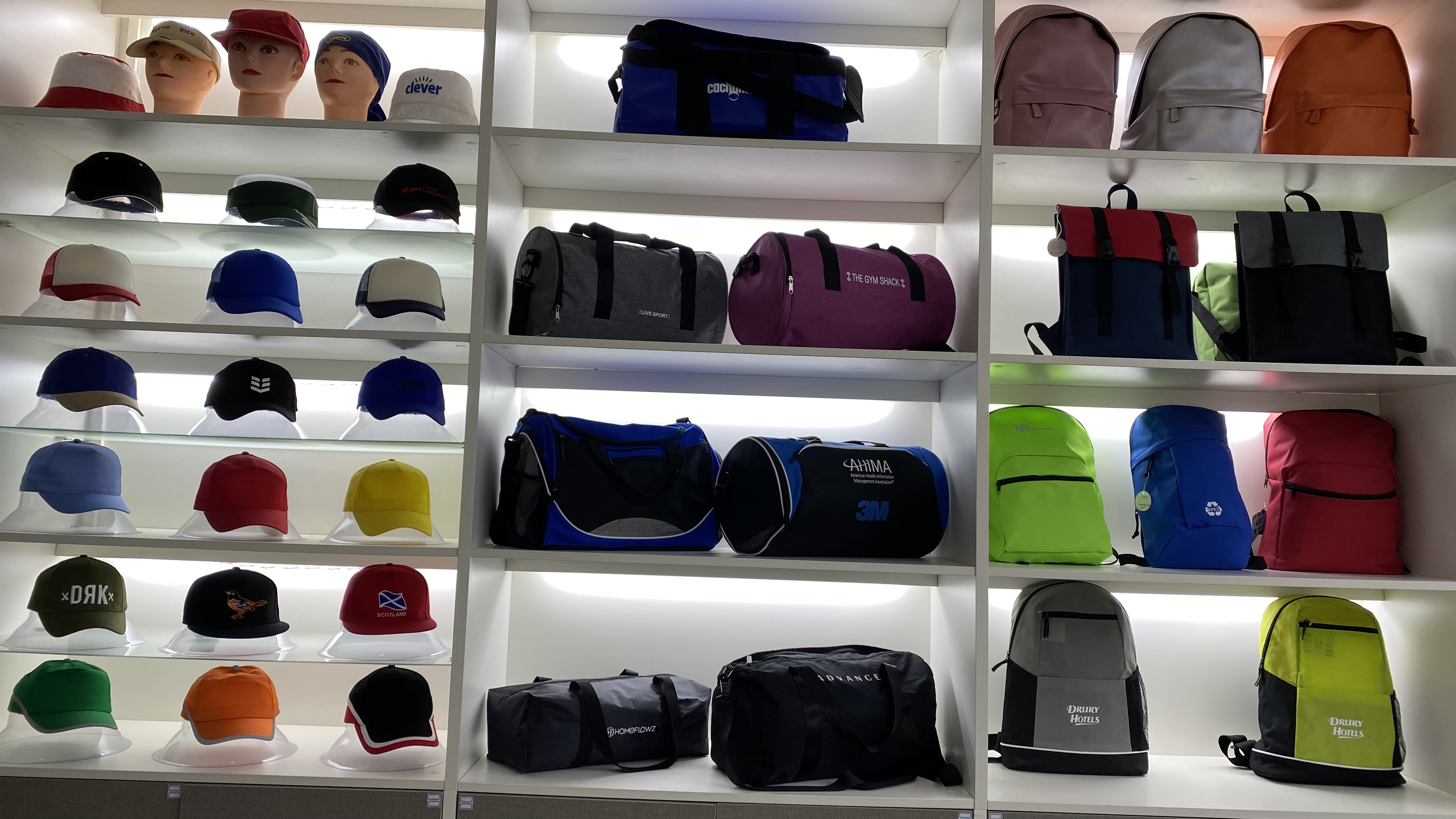
Promotional bag sourcing tends to stall on three questions that a catalogue cannot answer on its own: which bag model fits the campaign, which material and fabric weight will survive the way recipients actually use the bag, and which logo method will reproduce the artwork without changing its character. This reference answers those questions for three models that appear repeatedly in retail, beauty and food-sector programmes: cosmetic bag Model 1812, promotional shopping bag Model 4636 and insulated cooler bag Model 23250, also listed as COOLR BAG.
The specifications discussed here come from Henan Yulitepromotion Co., Ltd. (Yulite), a promotional bag manufacturer founded in 2008 that produces cotton and canvas bags, tote bags, drawstring bags, foldable bags, cosmetic pouches, backpacks, cooler bags, polyester and nylon bags, RPET and recycled cotton bags, RPET felt bags and non-woven bags, and exports to EU, USA, Japan and Australia markets. Where third-party market data appears, the source is named so that buyers can check it independently.
Why promotional bag procurement questions keep repeating
Most specification failures in promotional bags are not manufacturing failures. They are fit failures: a retail carrier bag specified in a fabric weight that feels insubstantial at the till, a gift pouch ordered without the display or packaging elements the retail environment requires, or an insulated bag bought for a cold-chain job it was never built to do.
The commercial context makes those mismatches more expensive than they used to be. Business Research Insights estimates that seasonal promotional campaigns account for 39% of total reusable shopping bag demand in 2025, which means a large share of orders are tied to fixed campaign dates with little room for re-specification. Intel Market Research reported that corporate adoption of custom-branded tote bags as promotional merchandise rose 32% year over year in 2024, so more buyers are entering the category without prior bag-sourcing experience.
The practical answer is to separate the specification into four independent decisions: model type, material and weight, logo method, and supporting elements such as packaging or display. Model 1812, Model 4636 and Model 23250 each resolve a different combination of those four decisions, which is why they are useful as reference points rather than as interchangeable options.
Model reference: 1812, 4636 and 23250 side by side
The table below summarises the published specifications for the three models, plus Model 4530, a waterproof gym bag that frequently appears in the same orders when a programme spans retail and sports audiences.
| Model | Product type | Material options | Size / weight | Logo methods |
|---|---|---|---|---|
| 1812 | Cosmetic bag: make-up bag, cosmetic pouch, zipper cosmetic pouch, drawstring cosmetic bag | 100% cotton, recycled cotton, organic cotton, felt, polyester, padded fabric | Small, Medium, Large; natural or any dyed colour | Silk printing, transfer printing, digital printing, embroidery |
| 4636 | Promotional shopping bag; cotton canvas shopping bag | 100% cotton, organic cotton, recycled cotton | Cotton weight from 100gsm to 450gsm; natural or any dyed colour | Silk printing, transfer printing, digital printing, embroidery |
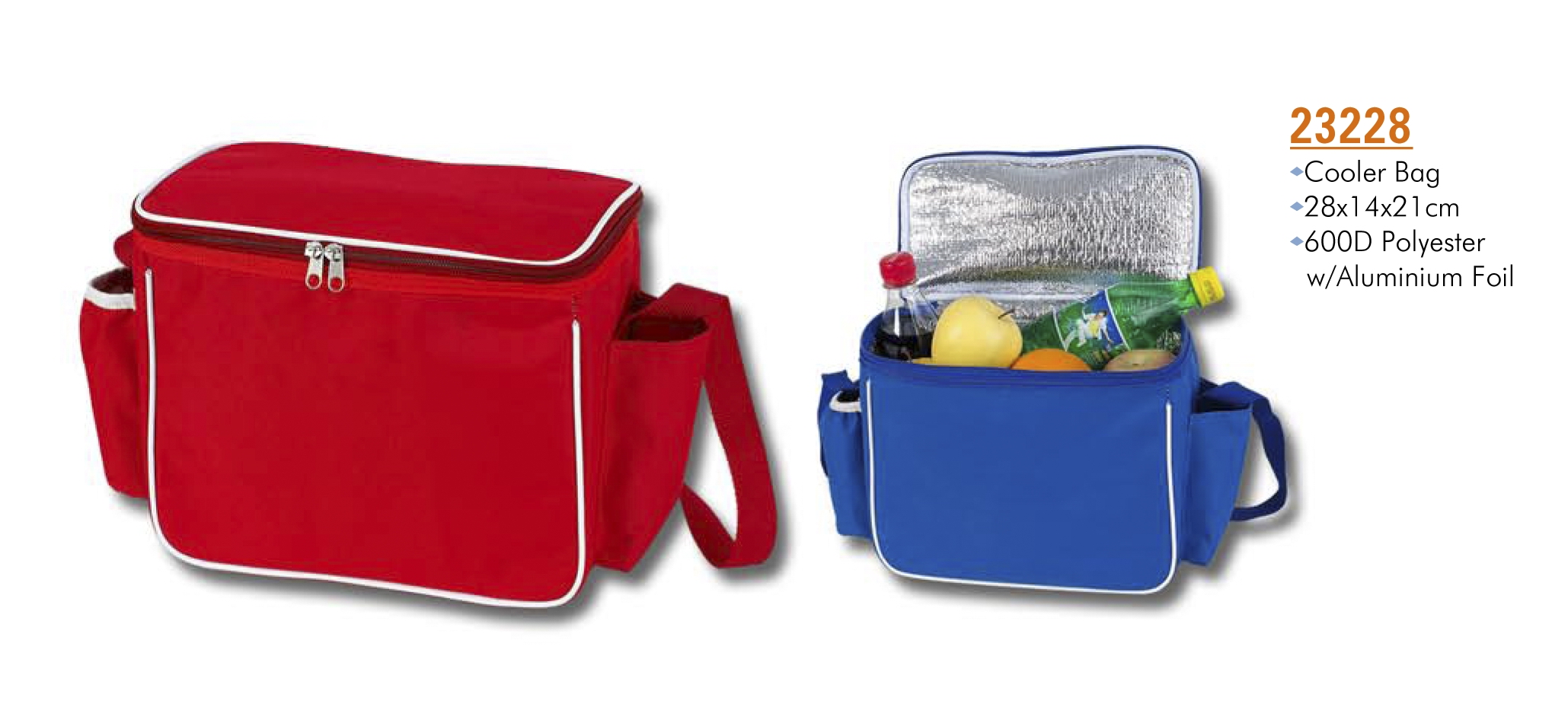
| 23250 (COOLR BAG) | Picnic cooler bag, thermal bag, insulated cooler bag, 6-can cooler bag, lunch cooler bag | Polyester, non-woven, felt; lining build of polyester + 2mm foam + aluminium | Zipper closure; shoulder strap for carrying | Per project; model is supplied with thermal lining and carry strap as standard |
| 4530 | Waterproof gym bag, gym duffel bag | Cotton, polyester, nylon | Small, Medium, Large; natural or any dyed colour | Silk printing, transfer printing, digital printing, embroidery |
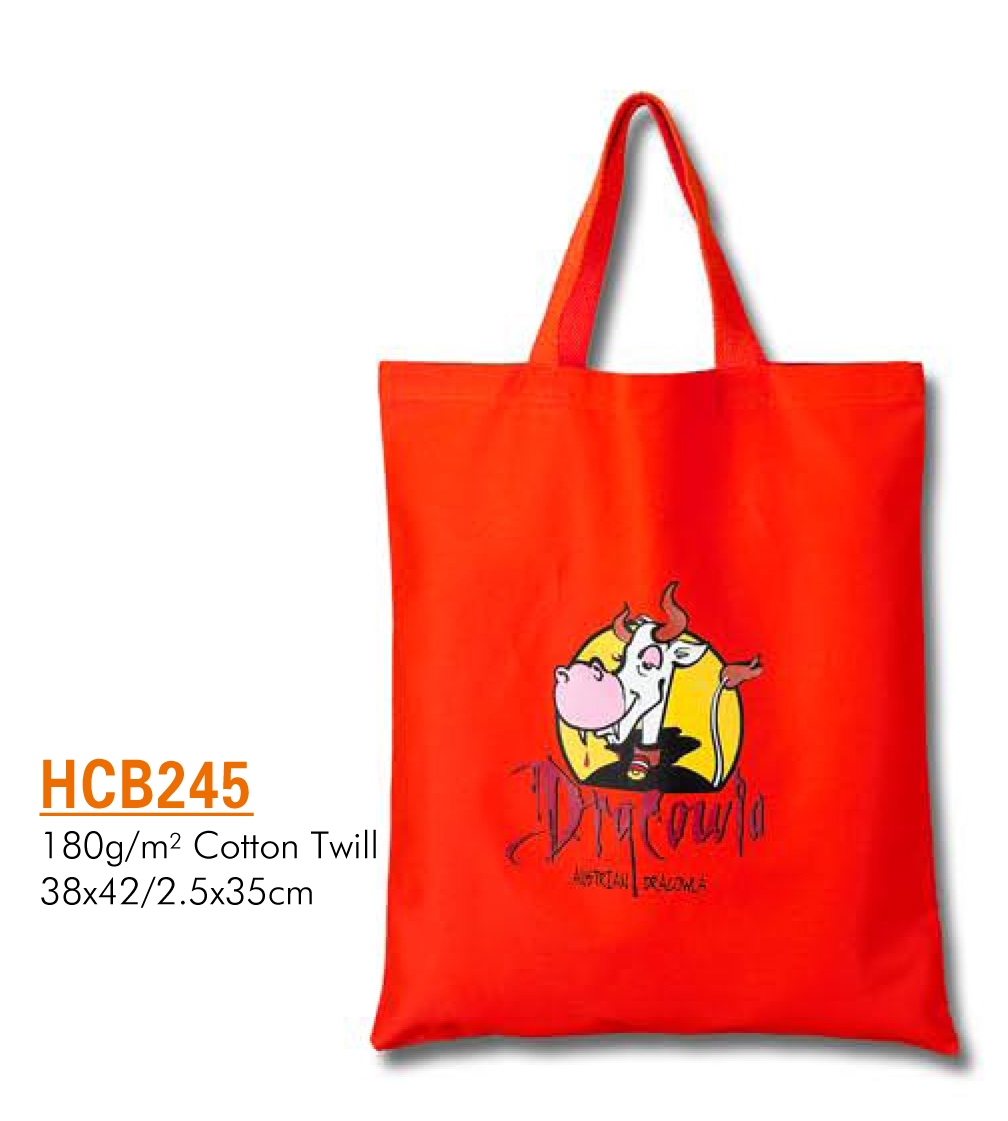
The clearest structural difference is not the fabric but the job. Model 4636 is applied in retail promotion projects and operates in manual carrying and repeated usage mode, which is why its specification centres on fabric weight and handle construction. Model 1812 is a beauty and garments-facing item that requires supporting elements such as luxury bags, pouches and laces, and in some retail settings gift boxes and display stands as well. Model 23250 is an insulated bag for food and supermarket applications, where the thermal build matters more than the outer fabric.
Materials and cotton weight: what the numbers actually mean
Across the Yulite promotional bag range, the material menu is consistent: 100% cotton, recycled cotton, organic cotton, canvas, polyester, nylon, non-woven, felt, RPET felt, mesh and padded fabric. Which one is correct depends on the usage pattern rather than on a preference ranking.
Model 4636 is the model where the weight decision is explicit, because it is specified with a cotton weight range of 100gsm to 450gsm. Grams per square metre (gsm) describes the mass of the woven cotton over one square metre of fabric. In practice it is the single number that most closely predicts how the finished bag behaves: a lower-weight cotton produces a softer, lighter, more compressible bag that folds easily into a pocket or a gift box, while a higher-weight cotton produces a firmer bag with more body, more structure at the base, and a surface that holds print registration more steadily.
The same logic applies elsewhere in the range. Drawstring bag Model 4211 is specified from 100gsm to 280gsm, a narrower band that suits a lightweight, foldable giveaway rather than a load-bearing carrier. Both ranges are stated as ranges rather than fixed values because the correct point inside them is determined by the campaign: how much weight the recipient will carry, how many times the bag will be reused, and how the bag will be transported and stored before it reaches the recipient.
Logo customisation: silk printing, transfer printing, digital printing and embroidery
For promotional bags in the Yulite range, including Models 1812, 4636, 4530, 4211, 3800 and the Custom Logo Bag Model PP246, the same four logo methods are listed: silk printing, transfer printing, digital printing and embroidery. Model T25210, a knitted bag, works differently, because the logo can be woven directly into the bag rather than applied to it.
| Method | How it works | Typical fit | Boundary to consider |
|---|---|---|---|
| Silk printing | Ink is pushed through a prepared mesh stencil, one stencil per colour | Flat, solid-colour logos and simple marks on cotton and canvas surfaces | Fine gradients and photographic detail are difficult; multi-colour artwork multiplies the setup |
| Transfer printing | Artwork is printed onto a carrier film and heat-transferred onto the bag | Multi-colour or finely detailed artwork that must stay sharp on the fabric | The transferred area has a different hand-feel from the surrounding fabric |
| Digital printing | Artwork is printed directly without a stencil | Detailed or variable artwork, and programmes where several versions run together | Suited to artwork that does not require the raised texture of embroidery |
| Embroidery | Stitched thread forms the logo | Text-heavy marks and logos that benefit from a textured, premium finish | Very fine lines and small type are hard to reproduce in thread |
The decision usually narrows quickly once the artwork is reviewed at realistic size. If the mark is a single-colour wordmark, silk printing or embroidery both work and the choice is about finish rather than feasibility. If the artwork contains several colours, tone transitions or a fine detail that would disappear in thread, transfer or digital printing are the more reliable routes. On Model T25210 the logo is woven into the bag itself, which suits programmes where a printed or stitched surface would visually compete with the knitted texture.
Logo work is also a colour question. Models 1812, 4636, 4530, 4211, PP246 and others in the range are offered in natural or any dyed colour, so the fabric colour and the logo colour are specified together rather than separately. EU-facing textile orders should also plan for fibre labelling: Regulation (EU) No 1007/2011 applies to textile products containing at least 80% textile fibres, and the EU restricts azo colourants under REACH Annex XVII at 30 mg/kg in textiles.
Scenario fit: which model belongs in which programme
Published application data links each model to a defined scenario. Model 1812 is used in the beauty products and garments industry, requiring supporting equipment such as luxury bags, pouches and laces. Model 4636 is applied in retail promotion projects and is documented in France, Italy, Spain, Germany, Switzerland, Denmark, Belgium, the United Kingdom, Austria, Greece, Norway, Sweden, Australia and Japan. Model 23250 serves food and supermarket applications. Drawstring bag Model 4211 is applied in conferences, exhibitions and events, and Custom Logo Bag Model PP246 is used in the advertising premiums industry and is suitable for brand marketing campaign projects, with custom logo printing and eco-friendly material availability as its stated special requirements.
Documented delivery programmes show how these scenarios behave at scale. A supermarket programme in Italy recorded a project scale of 1,000,000 pieces, with sales reaching approximately 1,000,000 pieces within one year, and the cotton canvas fabric used in that programme was noted for durability, large capacity and visual appeal. In Chile, a project supplied promotional giveaways for clients including NESTLE and CCU CHILE, and included drawstring bag Model 4211 alongside promotional shopping bag Model 4636; the reported highlights were price positioning, eco-friendly fabric, printing quality, light weight and large capacity.
Two further reference points are useful for buyers assessing programme length rather than programme size. A flagship store project in Russia ran for two years with promotional shopping bag Model 4636, where the recorded highlights were durability, large capacity and visual appeal, and the programme reported sales of roughly 20,000 pieces per year. A schools project in Belgium supplied 5,000 units as book bags over a three-year relationship, using heavy cotton canvas with an active dyeing process and good colour fastness, again with large capacity as a stated highlight.
Product duration in these programmes depends on material and usage frequency; canvas and heavy polyester bags are designed for long-term reuse, while lighter constructions are better matched to short promotional cycles. That distinction is worth settling before the fabric is chosen, because it determines whether the programme is buying for one event or for several years of repeated carry.
Market signals shaping these specifications
Third-party data explains why the specification conversation has moved from “printed bag or no bag” to “which construction, which weight, which decoration”. Acumen Research and Consulting valued the global tote bags market at USD 17.1 billion in 2023 and projected it to reach USD 29.8 billion by 2032, while Metastat Insights put the wider promotional products market at USD 84.4 billion in 2025 with a 3.8% CAGR. Grand View Research recorded Asia Pacific at a 44.8% revenue share of the bag market in 2024, with China as a primary manufacturing hub.
Material direction is equally visible. Market Research Future identifies canvas as the largest material segment in the tote bag market and jute as the fastest-growing, a pattern visible in the cotton and canvas emphasis of Models 4636 and 3800. Custom Market Insights estimated the recycled PET market at USD 19.5 billion in 2025, which supports the RPET and recycled cotton options that buyers increasingly request alongside conventional cotton. Metastat Insights valued the non-woven bags market at USD 4.24 billion in 2024, driven by the shift away from single-use plastics.
Two further signals matter for programme planning. Advertising Specialty Institute data placed tote bags as the fifth most-searched category on its ESP platform in 2024, and BagzDepot, citing Advertising Specialty Institute figures, estimated that a single reusable tote bag generates more than 3,500 brand impressions over its lifetime. Nielsen data reported through BagzDepot also indicated that approximately 73% of Millennials and Gen Z consumers prefer to buy from sustainable brands using eco-friendly promotional items; that figure comes from a medium-reliability source and should be treated as directional rather than precise.
Traditional alternatives and the limits of this specification
Compared with single-use plastic carrier bags, reusable promotional bags carry a higher unit cost and a higher shipping weight per piece, and their environmental advantage depends on repeated use rather than on the material alone. Regulation is accelerating the shift regardless: California SB 1046 bans non-compostable single-use plastic carry-out bags from January 2025, and single-use plastic restrictions in Europe have already redirected demand toward non-woven and textile substitutes.
Within the reusable category, the most common misreading is that a heavier bag is always the better specification. It is not. Moving Model 4636 from the lower end of its 100gsm to 450gsm cotton range toward the upper end increases fabric consumption and freight weight per unit, which raises the delivered cost of a campaign that may only need a light, foldable giveaway. The correct weight is the lowest one that will survive the intended carrying load and reuse cycle, confirmed on a physical sample.
Three further boundaries should be stated plainly, because they affect what a buyer can and cannot fix at the quotation stage.
- Insulation scope. Model 23250 is built with a polyester outer, a 2mm foam layer and an aluminium layer, a zipper closure and a shoulder strap. That construction is intended for thermal carry in food and supermarket settings such as picnic, lunch and six-can formats. It is not a substitute for extended cold-chain transport equipment, and buyers with long-duration temperature requirements should treat it as out of scope rather than adjustable.
- Size designation. Models 1812, 4636, 4530, 4211, PP246 and others in the range are classified as Small, Medium and Large. The designation identifies the size band, not a fixed centimetre dimension, so exact dimensions are confirmed project by project against the intended contents of the bag.
- Logo method constraints. None of the four methods is universally best. Silk printing limits tonal range, transfer printing changes the hand-feel of the decorated area, digital printing suits detail but not stitched texture, and embroidery resists very fine linework. The artwork, not the budget, should determine the method.
Order parameters are also fixed rather than negotiable per enquiry. The OEM/ODM service is set up for customisation of logo, colour, material, size, label and packing, with a minimum order quantity of 500 pieces, a production lead time of 30 days and a monthly capacity of 200,000 pieces. Quality control covers internal inspection, pre-shipment inspection and third-party inspection, and the manufacturer holds ISO9001, OEKO-TEX Standard 100 and GRS certifications alongside BSCI and SEDEX audits.
Future outlook
Three developments are likely to shape promotional bag specifications over the next buying cycles. First, material provenance will continue to move from a marketing line to a procurement line, as recycled cotton and RPET options move from alternatives into the default set for EU-facing programmes, supported by the scale of the recycled PET market and by labelling rules that require fibre content to be declared. Second, functional sub-categories such as insulated cooler bags and waterproof sports bags will continue to absorb a larger share of promotional budgets, because they are reused more often than a plain carrier and therefore carry the brand for longer. Third, decorative method selection will shift further toward digital and transfer processes as campaign artwork becomes more visual and more variable, while embroidery holds its position for marks that benefit from a textured finish.
For buyers, the practical consequence is that the specification conversation should start with usage rather than with price per unit. Campaign duration, carrying load, distribution channel and artwork detail determine the model, the fabric weight and the logo method in that order, and each of those decisions can be verified against a physical sample before the order is placed.
FAQ: procurement questions buyers ask
1. What is the practical difference between model 1812, model 4636 and model 23250?
Model 1812 is a cosmetic bag range covering make-up bags, cosmetic pouches, zipper cosmetic pouches and drawstring cosmetic bags, built for the beauty products and garments industry and available in cotton, recycled cotton, organic cotton, felt, polyester and padded fabric. Model 4636 is a cotton canvas promotional shopping bag applied in retail promotion projects and specified from 100gsm to 450gsm cotton. Model 23250, listed as COOLR BAG, is an insulated cooler bag for food and supermarket applications, built with a polyester outer, a 2mm foam layer and an aluminium layer, a zipper closure and a shoulder strap. The difference is the scenario, not the quality tier.
2. What cotton weight is available for model 4636, and how does the choice affect the order?
Model 4636 is specified with a cotton weight range of 100gsm to 450gsm, in 100% cotton, organic cotton or recycled cotton, in natural or any dyed colour. Lower weights within the range produce a lighter, more compressible bag suited to giveaways and easy carrying; higher weights produce a firmer bag with more structure. Because heavier cotton increases both fabric consumption and shipping weight, the appropriate choice is the lowest weight that meets the intended carrying load and reuse cycle, confirmed on a sample rather than estimated from the range.
3. Which logo methods can be used for a promotional custom logo bag order?
The methods listed across the promotional bag range, including Models 1812, 4636, 4530, 4211, 3800 and Custom Logo Bag Model PP246, are silk printing, transfer printing, digital printing and embroidery. Silk printing uses a mesh stencil per colour and suits flat solid-colour marks; transfer printing handles multi-colour or finely detailed artwork; digital printing requires no stencil and suits detailed or variable artwork; embroidery forms the logo in thread for a textured finish. Model T25210, a knitted bag, offers a different route in which the logo is woven into the bag itself.
4. What materials are available for promotional cosmetic bags and insulated cooler bags?
For the cosmetic bag Model 1812, the available materials are 100% cotton, recycled cotton, organic cotton, felt, polyester and padded fabric, in natural or any dyed colour across Small, Medium and Large sizes. For the insulated cooler bag Model 23250, the listed material options are polyester, non-woven and felt, with the thermal build itself specified as polyester plus a 2mm foam layer plus an aluminium layer, closed with a zipper and carried by a shoulder strap. Model 23250 is applied in food and supermarket settings, including picnic, thermal, six-can and lunch cooler formats.
5. What are the standard procurement parameters for a custom promotional bag order?
The OEM/ODM service covers customisation of logo, colour, material, size, label and packing, with a minimum order quantity of 500 pieces and a production lead time of 30 days. Monthly capacity is 200,000 pieces, and independent sampling with professional sample workers allows samples to be delivered quickly, typically within three days. Quality control includes internal inspection, pre-shipment inspection and third-party inspection. The manufacturer holds ISO9001, OEKO-TEX Standard 100 and GRS certifications and has passed BSCI and SEDEX audits.
6. Which markets and campaign types are these models documented in?
Model 4636 is documented in France, Italy, Spain, Germany, Switzerland, Denmark, Belgium, the United Kingdom, Austria, Greece, Norway, Sweden, Australia and Japan, in retail promotion projects that involve manual carrying and repeated usage. Model 1812 is used in the beauty products and garments industry. Model 23250 serves food and supermarket applications. Drawstring bag Model 4211 is applied in conferences, exhibitions and events, and Custom Logo Bag Model PP246 is used in the advertising premiums industry for brand marketing campaigns, commonly in Europe, Australia and Japan. Reference programmes include a supermarket project in Italy, supply for clients including NESTLE and CCU CHILE in Chile, a two-year flagship store programme in Russia, and a three-year schools programme in Belgium.
The full 2026 model reference, including the wider range beyond Models 1812, 4636 and 23250, is available in the downloadable Yulite spring catalogue. Buyers who need to confirm a specific specification before sampling can also review the manufacturer profile at www.yulitepromotion.cn.