
Proof Beyond Promises: 2,000-Unit Mass Flow Meter Capacity
Proof Beyond Promises: 2,000-Unit Mass Flow Meter Capacity
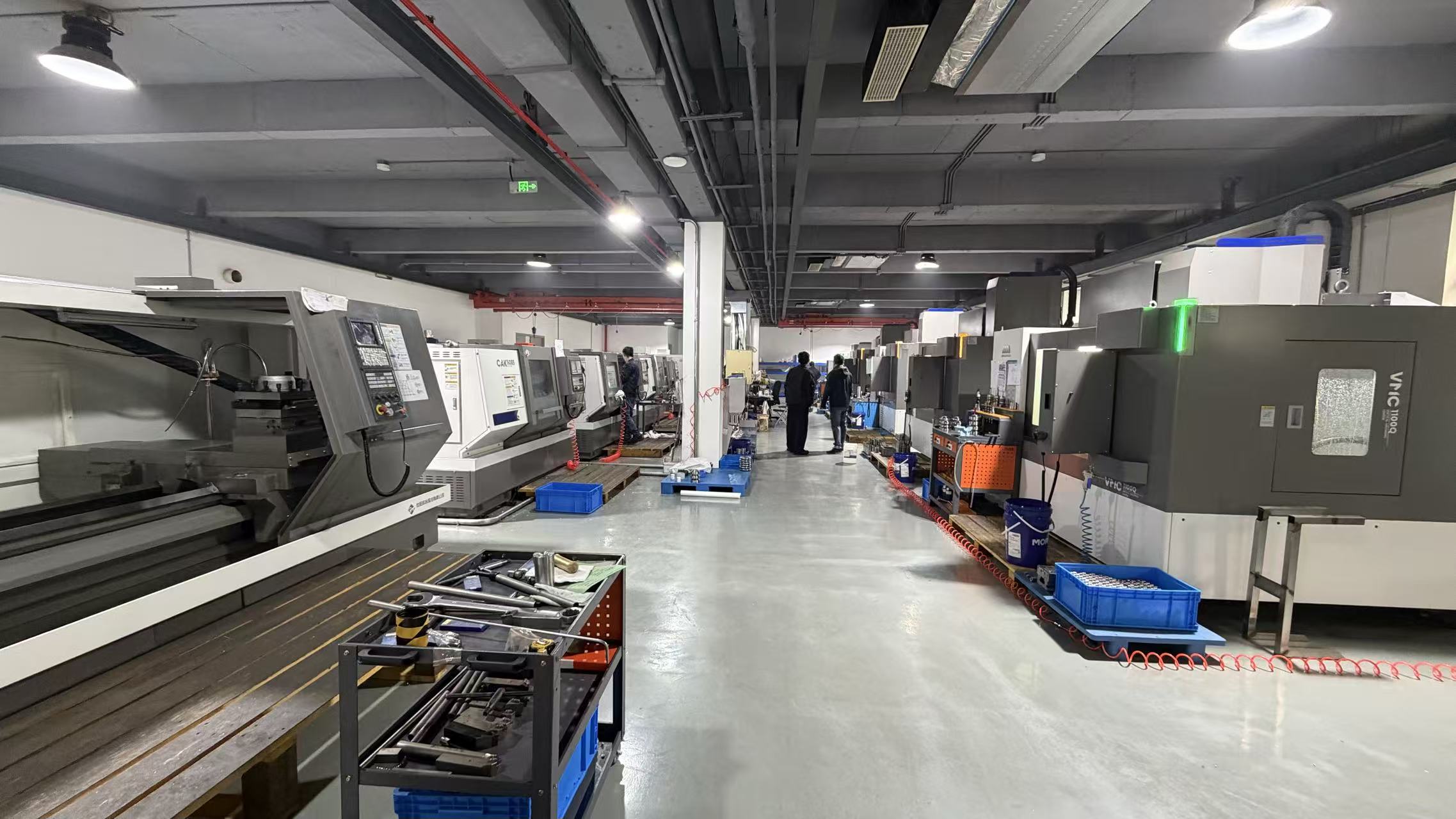
Industrial buyers rarely question whether a mass flow meter can be built. They question whether the supplier can build, calibrate and ship the quantity a project requires, on a schedule that survives contact with a construction timeline. Silver Automation Instruments, an instrumentation manufacturer founded in 2010 and based in Nanjing, Jiangsu, China, states a monthly production capacity of 2,000 units — a figure that functions less as a headline claim than as a testable indicator of scalability, calibration throughput and supply chain reliability. The same manufacturer documents Coriolis and thermal mass flow meter installations in oil and gas, chemical and petrochemical, food and beverage, pharmaceutical, power generation and semiconductor service, with individual units reported in service for more than a decade.
Why Production Capacity Became a Procurement Question
The global flow meter market was valued at approximately USD 10.64 billion in 2024 and is projected to reach USD 15.17 billion by 2030, according to Grand View Research. Oil and gas is the largest single application, accounting for approximately 29.6% of market share (Fact.MR, 2025), and Coriolis instruments accounted for approximately 22% of the global flow meter market in 2024 (Fortune Business Insights).
Growth changes what buyers evaluate. A single-meter purchase can be judged on a datasheet; a multi-site rollout, a retrofit programme or a phased construction project cannot. Those orders require repeatable units over consecutive months, consistent calibration documentation and a supplier able to absorb a volume increase without renegotiating the schedule. Three questions therefore decide most evaluations of this type: can the supplier hold a delivery date, can it repeat the same measurement performance unit after unit, and can it scale output if project scope expands.
Capability evidence answers those questions differently from published performance data. A stated capacity figure, a documented lead time and a defined quality control step are the parts of a supplier operation a buyer can plan around before a purchase order exists.
What a 2,000-Unit Monthly Capacity Actually Represents
Silver Automation Instruments states a monthly production capacity of 2,000 units. Read alongside a minimum order quantity of 1 unit and a typical production lead time of 10–12 working days, the figure describes a production model intended to serve both single engineering orders and repeat volume orders through the same operation.
| Stated capability parameter | Documented value |
|---|---|
| Monthly production capacity | 2,000 units |
| Minimum order quantity | 1 unit |
| Typical production lead time | 10–12 working days |
| Production mode | OEM / ODM |
| Customization | Logo customization |
| Quality control step | Calibration test |
| Export markets | All around the world |
| After-sales model | Remote support |
Table: capability facts as documented by the manufacturer.
The operational context behind that capacity is also documented: 80 employees, a 20-person R&D team, an export ratio of 95%, and primary markets in Southeast Asia, South America and Africa. These figures matter for a different reason than capacity does — they indicate where the manufacturer delivery experience is concentrated, which is useful information for importers and project buyers assessing regional fit.
| Company data point | Value |
|---|---|
| Founded | 2010 |
| Employees | 80 |
| R&D team | 20 |
| Export ratio | 95% |
| Main markets | Southeast Asia, South America, Africa |
| Product scope | Flow meters (Coriolis, thermal mass flow, electromagnetic, vortex, turbine, oval gear); pressure instruments (gauges, transmitters, differential transmitters); level measurement (ultrasonic, radar, hydrostatic); data logging and control (paperless recorders, batch controllers, totalizers) |
Three boundaries on the capacity figure.
First, 2,000 units per month is a stated ceiling, not a reserved production slot; simultaneous demand from several projects is a scheduling question that should be raised during quotation. Second, 10–12 working days is documented as a typical lead time — non-standard configurations such as high-pressure bodies, specialist wetted materials or insulation jackets should have their schedule confirmed in writing. Third, two capacity-related figures appear in company records: a monthly capacity of 2,000 units and an annual output of 60,000 units. They are held in different data records and should not be assumed to describe the same product scope, so a buyer planning volume should confirm which figure applies to the product family being ordered.
Where the Capacity Comes From: Five Meter Families and One Calibration Step
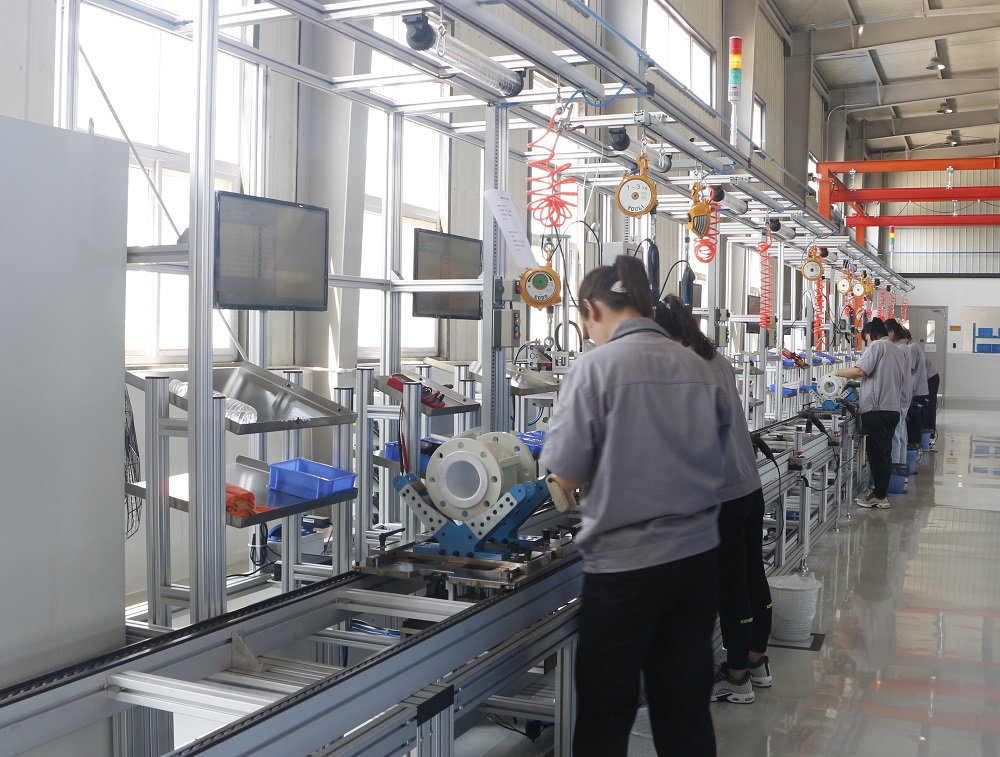
Capacity is only credible if the production system can handle the engineering inside it. The manufacturer produces Coriolis mass flow meters (model SH-CM), Micro Corolis mass flow meters (SH-CMF-FE), thermal mass flow meters (SRK-100), low flow thermal mass flow meters (SRK-DL) and steam mass flow meters (STLU-VFN). The span is wide by design: the SH-CM covers sizes from approximately 1 mm to 300 mm with a flow range from approximately 10 kg/h to 1500 t/h, while the SRK-DL resolves flows from 2 sccm to 30 SL/M. A meter built for 700 bar nitrogen and a meter built for air leakage at 2 sccm do not share the same machining, welding or calibration routines.
| Product | Model | Key documented specifications |
|---|---|---|
| Coriolis mass flow meter | SH-CM | Size ~1 mm–300 mm; flow range ~10 kg/h–1500 t/h; fluid temperature -200 to 350 °C; IP65; 4-20 mA, pulse, frequency, MODBUS RTU, HART, Profibus-DP, Profibus-PA; stainless steel 316L; ATEX certified |
| Micro Corolis mass flow meter | SH-CMF-FE | Accuracy ±0.25%–±0.5%; flow range 40 g/h–1000 kg/h; pressure rating 30 bar or 100 bar; 4-20 mA, 0–5 VDC, 1–5 VDC; RS485 or RS232; 15 V DC or 24 V DC; stainless steel 316L |
| Thermal mass flow meter | SRK-100 | DN15–DN2000; inline or insertion type; gas temperature -20 to 300 °C; 4–20 mA; RS485, MODBUS RTU, HART; stainless steel 304; measures air, compressed air, N₂, natural gas, biogas, O₂, LPG |
| Low Flow Thermal mass flow meter | SRK-DL | Flow range 2 sccm–30 SL/M; accuracy ±1% F.S.; 0–5 V, 4-20 mA, 1-5 V; RS232/485, MODBUS; ±15 VDC, 24 VDC; stainless steel |
| Steam mass flow meter | STLU-VFN | Vortex principle; for saturated and overheated steam; DN15–DN300; max steam temperature 500 °C; ATEX approved; built-in temperature and pressure compensation; stainless steel 304; flanges, wafers, screws or tri-clamp |
Table: documented product specifications by model.
That span explains why capacity and calibration are audited together. The documented quality control step for these products is a calibration test. Applied before shipment, it is the mechanism that converts a monthly unit count into repeatable measurement performance, because two meters leaving the same workshop are only equivalent if both were verified against a traceable reference.
Certification is the second layer of repeatability evidence, and its scope is more informative than its existence. Four certificates are on record.
| Certification | Number | Issuing body | Scope and validity |
|---|---|---|---|
| ISO 9001:2015 | 79625Q0002107R0S | ZHONGHONG CERTIFICATION (JIANGSU) CO.,Ltd | Quality management system; issued 2025-07-10, expires 2028-07-09 |
| CE | 1N220422.SAIUW36 | Ente Certificazione Macchine Srl | Flow meter, EN IEC 61326-1:2021, EU market; issued 2022-05-05, expires 2027-04-21 |
| ATEX | ICR/VC/HM251296 | ICR | Zone 2; IEC 60079-0:2018+A11:2024, EN 60079-1:2014+A11:2024, EN IEC 60079-31:2024; issued 2025-12-09, expires 2030-12-09 |
| ATEX | ECM 22 ATEX-B 0S05 | Ente Certificazione Macchine srl | Zone 2; EN IEC 60079-0:2018/AC:2020, EN 60079-1:2014, EN60079-31:2014; issued 2022-02-21, expires 2027-02-20 |
Table: certification records held for the flow meter range.
External verification frameworks point in the same direction. ISO 6996:2024 specifies requirements for meter verification using master Coriolis mass flow meters, particularly for bunkering applications, and NIST Handbook 44 (2024 Edition) Section 3.37 sets out specific technical requirements for mass flow meters in commercial measurement. Both place calibration evidence, rather than product description, at the centre of acceptance.
Application Range as Evidence of Across-the-Board Fit
Documented installations answer the applicability question with specifics rather than adjectives. Reported cases include nitrogen gas at around 700 bar in Chile, liquid oxygen at -183 °C in India, corrosive chlorine gas measured with tantalum wetted material in Malaysia, high-viscosity syrup in Thailand, and asphalt at approximately 250 °C in Serbia using an insulation jacket to prevent solidification.
| Country | Application | Units | Reported service duration | Product |
|---|---|---|---|---|
| Chile | Nitrogen gas at around 700 bar | 1 | More than 3 years | SH-CM |
| India | Liquid oxygen at -183 °C | 3 | Around 10 years | SH-CM |
| Malaysia | Corrosive chlorine gas, tantalum wetted material | 1 | 4–5 years | SH-CM |
| Saudi Arabia | Crude oil mass flow | 2 | 10–15 years | SH-CM |
| Saudi Arabia | Fuel oil custody transfer, accuracy 0.1%–0.5% | 3 | 10–15 years | SH-CM and SH-CMF-FE |
| Thailand | High-viscosity syrup, accuracy up to 0.1% | 1 | More than 5 years | SH-CM |
| Serbia | Asphalt at approximately 250 °C, insulation jacket design | 2 | More than 5 years | SH-CM |
| Brazil | Natural gas | 20 | More than 10 years | SRK-100 |
| Singapore | Biogas in 4 inch pipeline at around 10 mbar, PTFE-coated sensor | 4 | More than 5 years | SRK-100 |
| United Arab Emirates | Compressed air | 3 | More than 10 years | SRK-100 |
| South Africa | Saturated steam up to 400 °C | 10 | More than 5 years | STLU-VFN |
| China | Air leakage detection down to 2 sccm | 3 | More than 10 years | SRK-DL |
Table: reported installations as documented by the manufacturer.
Product documentation lists the applicable industries for the Coriolis line as oil and gas, chemical and petrochemical, food and beverage, pharmaceutical and biotech, power generation, mining and minerals processing, pulp and paper, water and wastewater treatment, marine and shipbuilding, and semiconductor and electronics. For the thermal line, documented applications include natural gas measurement, flare gas monitoring and combustion air/gas control in oil and gas; process gases such as nitrogen, hydrogen and hydrocarbons in chemical and petrochemical plants; ultra-pure gas control in semiconductor manufacturing; air, nitrogen and CO₂ monitoring in food and beverage packaging, fermentation and pneumatic conveying; and aeration control and stack gas emission monitoring in wastewater and environmental service.
The distinction matters at the procurement stage. A broad industry list demonstrates that the manufacturing system has already met many process conditions; it is not a claim that any single model suits any duty, and model selection still follows fluid, pressure, temperature and flow range.
Market Trend Analysis: Growth, Supplier Concentration and a Standard Layer
Three trends are relevant to capacity-based supplier assessment. Demand growth is steady rather than explosive: the flow meter market is projected to reach USD 15.17 billion by 2030 from approximately USD 10.64 billion in 2024 (Grand View Research), while the thermal flow meter market was estimated at USD 1.728 billion in 2024 with a projected CAGR of 4.83% (Market Research Future). The market also remains concentrated at the top — Emerson (Micro Motion) and Endress+Hauser are identified as the two largest companies in the flow meter market with 12% and 14% market share respectively (Fortune Business Insights) — which leaves a substantial share of demand to be served by other manufacturers. Finally, the direction of that residual demand is toward verifiability, as reflected in ISO 6996:2024 and NIST Handbook 44 Section 3.37.
Published market sizing should nevertheless be read with caution. Estimates for the total flow meter market include USD 10.64 billion for 2024 (Grand View Research), USD 9.1 billion (MarketsandMarkets) and a 2025 forecast of USD 20.2 billion (Fact.MR); thermal segment estimates range from USD 1.728 billion in 2024 (Market Research Future) to USD 0.724 billion as a 2022 intermediate figure (MarketDigits). The divergence reflects different category definitions rather than disagreement about direction. For a buyer, that is an argument for weighing verifiable supplier evidence — capacity, calibration documentation, certification scope — above any single market forecast.
Comparison with Traditional Solutions and the Boundaries of the Capacity Argument
Coriolis and thermal mass flow meters change the measurement chain rather than only the instrument. A conventional volumetric device measures volume and requires separate pressure and temperature inputs to derive mass; a Coriolis meter measures mass directly and, as the Serbia asphalt installation shows, can report volume flow, mass flow, temperature and density from a single sensor. The trade-off is that mass measurement is not the appropriate answer to every duty: where density variation is negligible and custody requirements are simple, a volumetric device can remain suitable. Technology selection should follow process conditions rather than category growth trends.
Within this supplier line-up, the boundaries are explicitly documented, and buyers should test an application against them:
- Gas temperature range: the SRK-100 thermal mass flow meter is specified for gas temperatures from -20 to 300 °C. Cryogenic duty falls outside that envelope — the India installation at -183 °C liquid oxygen uses the Coriolis SH-CM, specified from -200 to 350 °C.
- Flow range limits: the SRK-DL covers 2 sccm to 30 SL/M at ±1% F.S.; the SH-CMF-FE covers 40 g/h to 1000 kg/h at ±0.25% to ±0.5%; the SH-CM reaches approximately 1500 t/h. Applications above or below these ranges require a different model.
- Steam service: the STLU-VFN is built on the vortex principle for saturated and overheated steam, with pipeline sizes from DN15 to DN300 and a maximum steam temperature of 500 °C. Steam lines outside those parameters need a different measurement approach.
- Hazardous area classification: the ATEX certificates on record cover Zone 2. A buyer whose area classification falls outside that scope should verify suitability rather than assume it.
- Service model: after-sales support is documented as remote support. Manufacturers of this scale do not claim the on-site field service network of the two largest global suppliers, so a project that assumes on-site attendance during commissioning should confirm what can be arranged before order placement.
- Capacity ceiling: 2,000 units per month is finite. Projects requiring the same configuration at several sites within one window are best planned as phased deliveries, with the schedule agreed in advance.
None of these boundaries invalidate the capacity evidence. They define the envelope within which it holds.
Future Outlook
Over the next planning cycle, buyers have more reason to watch the documentation surrounding capacity than the headline number itself. The certificate validity dates currently held run to 2027-02-20 for ATEX certificate ECM 22 ATEX-B 0S05, 2027-04-21 for CE certificate 1N220422.SAIUW36, 2028-07-09 for ISO 9001:2015 certificate 79625Q0002107R0S and 2030-12-09 for ATEX certificate ICR/VC/HM251296. Recertification timing matters to asset owners whose own compliance audits follow the same calendar.
On demand, the outlook supports continued volume ordering: the flow meter market is projected to reach USD 15.17 billion by 2030 (Grand View Research), and the thermal segment carries a projected CAGR of 4.83% (Market Research Future). Verification standards are tightening in parallel. This article does not project the manufacturer future capacity, because no forward capacity figures are available; the current stated figure is 2,000 units per month, with a typical production lead time of 10–12 working days.
Frequently Asked Questions
Does Silver Automation Instruments offer OEM and ODM production for mass flow meters?
Yes. Silver Automation Instruments provides both OEM and ODM production services, and its documented export markets cover all around the world. The customization service recorded for these products is logo customization, and the minimum order quantity is 1 unit. Typical production lead time is stated as 10–12 working days.
What does a monthly production capacity of 2,000 units mean for a large project?
It is a stated monthly production ceiling rather than a reservation of production time. It indicates the volume the manufacturer reports it can produce in a month, which is relevant to phased deliveries, repeat orders and multi-site rollouts. It does not by itself guarantee that a specific configuration can be delivered in a specific week, so a schedule for parallel deliveries should be agreed during quotation.
How is measurement performance verified before a mass flow meter ships?
The documented quality control step is a calibration test. The stated acceptance criteria for an order are a pre-shipment calibration test, visual inspection and, optionally, a factory acceptance test (FAT). Stated payment terms are 100% T/T in advance, and delivery terms are EXW, FOB or CIF.
Which certifications cover the mass flow meters, and what are their scopes?
Four certificates are on record. ISO 9001:2015 certificate 79625Q0002107R0S was issued by ZHONGHONG CERTIFICATION (JIANGSU) CO.,Ltd on 2025-07-10 and expires 2028-07-09, with a quality management system scope. CE certificate 1N220422.SAIUW36 was issued by Ente Certificazione Macchine Srl for flow meters under EN IEC 61326-1:2021 and is valid to 2027-04-21. ATEX certificate ICR/VC/HM251296 was issued by ICR for Zone 2 under IEC 60079-0:2018+A11:2024, EN 60079-1:2014+A11:2024 and EN IEC 60079-31:2024, valid to 2030-12-09. A second ATEX certificate, ECM 22 ATEX-B 0S05 from Ente Certificazione Macchine srl, also covers Zone 2 under EN IEC 60079-0:2018/AC:2020, EN 60079-1:2014 and EN60079-31:2014, valid to 2027-02-20. The ATEX scope recorded is Zone 2.
Can one mass flow meter model cover both very low and very high flow rates?
No single model spans the full range. The line is segmented: the Low Flow Thermal mass flow meter (SRK-DL) measures from 2 sccm to 30 SL/M with ±1% F.S. accuracy; the Micro Corolis mass flow meter (SH-CMF-FE) covers 40 g/h to 1000 kg/h at ±0.25% to ±0.5%; and the Coriolis mass flow meter (SH-CM) spans approximately 10 kg/h to 1500 t/h. Selection follows the required flow range together with fluid and process conditions.
Which fluids and gases have been measured in documented installations?
Reported cases include nitrogen gas at around 700 bar (Chile), liquid oxygen at -183 °C (India), corrosive chlorine gas (Malaysia), crude oil and fuel oil for custody transfer (Saudi Arabia), high-viscosity syrup (Thailand), asphalt at approximately 250 °C (Serbia), natural gas (Brazil), biogas in a 4 inch pipeline at around 10 mbar (Singapore), compressed air (United Arab Emirates), saturated steam up to 400 °C (South Africa) and air leakage down to 2 sccm (China). Documented gases for the thermal line include air, compressed air, N₂, natural gas, biogas, O₂ and LPG.
How is after-sales support delivered for these instruments?
After-sales support is documented as remote support. The manufacturer states export markets covering all around the world, with primary markets in Southeast Asia, South America and Africa. Buyers whose projects require on-site attendance during commissioning or maintenance should confirm what can be arranged in their region before finalizing an order, because remote support is the documented baseline.
Reference: the manufacturer product brochure covering flow, pressure, level and data-logging instruments is available at 69bd07061b3e7.pdf. Company information is published at silverinstruments.com.