
Propylene Glycol Butyl Ether Drum Specs: Weight and Purity Checks
Propylene Glycol Butyl Ether Drum Specs: Weight and Purity Checks

Cover: Solvent specification claims become checkable facts at the drum stage — fill weight, packaging identity and documentation currency.
A glycol ether order is not verified when the specification sheet is signed. It is verified when the drum is weighed, the packaging is identified, and the purity claim can be traced to a certificate number and an expiry date.
Propylene glycol butyl ether (PNB) is a volatile industrial solvent used as a coalescing agent in water-based coatings and inks, and as a cleaning solvent in degreasing and precision-cleaning work. Because it is traded as a commodity-grade chemical in steel drums rather than as a proprietary formulated product, competing offers often look identical on paper: the same CAS number, the same purity band, the same short packaging description. The differences that decide whether a shipment is usable surface later, at unloading — in the fill weight, the condition of the drum, and the documents behind the specification sheet.
This article sets out a practical, evidence-based framework for inspecting volatile solvent deliveries at the drum level. It uses published product and documentation data for PNB supplied through YunJian (Guangzhou) Import & Export Trade Co., Ltd. to show what verifiable evidence actually looks like in practice — and where that evidence stops.
The Procurement Problem: Claims Travel Faster Than Deliveries
Specification sheets are the cheapest document in the chemical trade to reproduce. Any supplier can copy a purity figure, a CAS number and a packaging description into a quotation. What cannot be copied as easily is a numbered safety document with a validity window, a consistent fill weight across successive shipments, and packaging that arrives in the declared condition.
The commercial context raises the stakes rather than lowering them. Fact.MR valued the global propylene glycol ether market at approximately USD 2.03 billion in 2024, projecting USD 2.75 billion by 2034, with China's market forecast at USD 606.5 million by 2034. A growing but not explosive market attracts more sellers competing on price and paperwork quality, which makes physical verification the buyer's main protection.
Four Layers of Evidence a Buyer Can Check Without a Laboratory
Drum-level inspection is not a substitute for analytical testing. It is a screening layer that determines whether a supplier deserves the higher-cost verification steps. Four evidence layers are available to any receiving team:
- Documentary evidence. Specification sheet, safety data sheet, certificate numbers, issue dates and expiry dates. A document without a number and a validity window cannot be scheduled for renewal, and therefore cannot be managed.
- Packaging evidence. The declared drum type and material, stated net weight, label content, and batch or lot marking. Packaging is where a supplier's process control becomes physically visible to the buyer.
- Gravimetric evidence. The net weight recorded on a calibrated scale at receiving. Net weight is the simplest independent cross-check against a supplier's stated specification, and it is the figure most often omitted from purchase documentation.
- Consistency evidence. Whether shipment two and shipment three match shipment one. This is the only form of quality evidence a buyer accumulates rather than receives.
Technical Reading: What “180 kg per 180 L Carbon Steel Drum” Actually Certifies
In the YunJian product record, PROPYLENE GLYCOL BUTYL ETHER (PNB), product reference 2404, is listed with CAS 15821-83-7 and a specification of 180 kg per drum in a 180 L steel drum. The material description states pure PNB solvent packed in carbon steel drums, and the documented application scope covers coatings and inks, cleaning agents and degreasers, the electronics and semiconductor industry, and other industrial applications.
Two distinct facts are bundled in that packaging line, and they matter differently. The nominal volume (180 L) describes the container. The stated net weight (180 kg) describes the contents, and it is the figure a buyer can test on a scale without opening anything. Purchase records that capture only the volume cannot detect a short fill; records that capture the net weight create a checkable number for every delivery.
Fill weight follows the density of the specific grade, so a single house fill figure should not be assumed across a product family. The YunJian range covers PNB, DPNB, TPNB, DPM, TPM and DPMA. The 180 kg per drum figure is documented for PNB; the stated net weight for other grades in the range should be confirmed grade by grade from the supplier's own specification sheet rather than inferred from the PNB figure. That is not a technicality — it is the difference between a verifiable order and an assumption.
Drum construction is the second half of the packaging statement, and it is specified as carbon steel. Because the packaging material is declared, a substituted drum, a re-labelled drum, or a drum with compromised closures is an observable deviation from the agreed specification rather than an invisible one. Visible condition — seam integrity, closure seals, deformation, external corrosion — is recorded at receiving; internal condition cannot be confirmed visually and requires emptying.
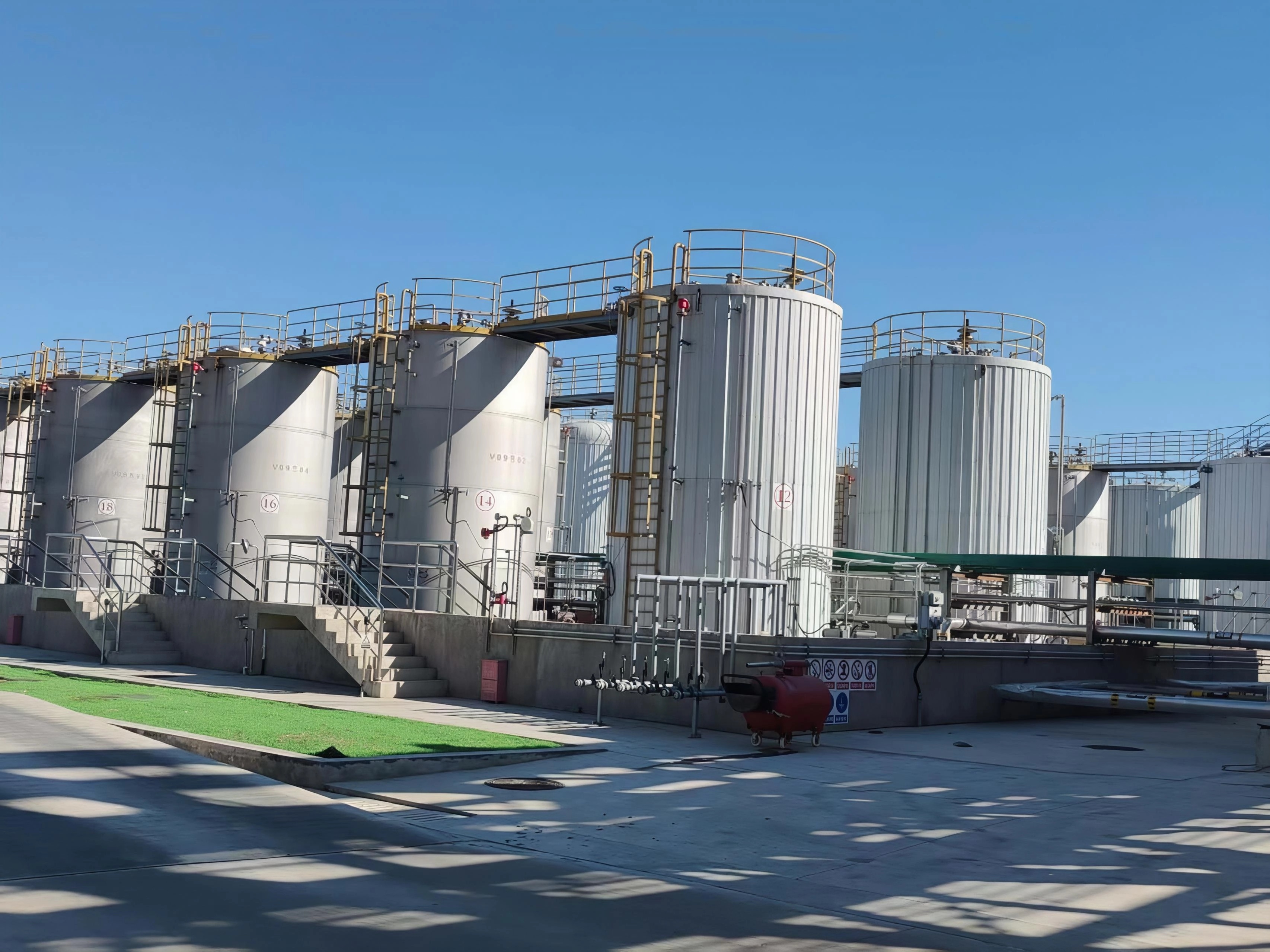
Figure 1: Packaged solvent materials at the dispatch stage — the point where declared net weight and drum condition should already match the specification sheet.
Purity Documentation: What a Numbered Certificate Establishes
YunJian's PNB documentation references a Safety Data Sheet (SDS) Compilation Report, certificate number HGBZ2310SPO1, issued on 29 November 2023 by Changzhou Hegui Siyuan Products Safety Technology Service Co., Ltd. (CRChemical). The report covers Propylene Glycol Butyl Ether (PNB) at 99% purity, is prepared under the United Nations Globally Harmonized System (GHS) Revision 10, and carries validity to 31 December 2026.
For a procurement team, the practical value of this document is structural rather than promotional. It has an issuing body, a certificate number, an issue date, a scope statement and an expiry date. That combination can be filed, audited and diarised for renewal. A purity figure printed in a quotation without a document behind it cannot be tracked at all.
The boundary matters just as much. A GHS-format SDS compilation report is a hazard-communication document. It is not a batch certificate of analysis, and it does not establish the purity of a specific lot loaded on a specific date. Buyers whose processes require lot-level purity confirmation still need batch-referenced testing alongside the compilation report — and buyers planning deliveries beyond December 2026 should request the successor document before the current one lapses.
On-Site Inspection Checklist for Glycol Ether Deliveries
The checklist below converts the evidence layers into receiving actions. Each line produces a record rather than an impression, which is what makes it usable in a supplier review six months later.
| Check point | What to record | Why it matters |
|---|---|---|
| Label and drum identity | Product name, grade, batch or lot marking, supplier name | Links the physical unit to the paperwork and to the purchase order |
| Declared net weight | Compare the label figure against the specification sheet (PNB documented at 180 kg/drum) | Detects short fill and pack-size substitution |
| Drum construction and condition | Material (carbon steel for PNB), seams, closures, deformation, external corrosion | Packaging integrity is a signal of logistics and handling control |
| Independent weigh-in | Gross weight minus tare on a calibrated scale | Cross-checks the declared net weight without opening the drum |
| Documentation currency | Certificate number, issuer, issue date, expiry (HGBZ2310SPO1, valid to 31 December 2026) | Prevents acceptance of lapsed documentation |
| Closure and seal integrity | Seal condition and closure type against the approved pack specification | Volatile solvent loss and contamination risk are concentrated at the closure |
| Retained sample | One sealed, labelled sample per delivery, stored under stated conditions | Enables dispute resolution without a re-sampling delay |
Application Fit: Coatings, Inks, Cleaning and Electronics
Drum-level verification is only worth the effort where the physical product has to perform in a demanding formulation. Published application analysis places PnB in high-performance water-based coatings as a coalescing solvent, where its solvency supports film formation while helping formulators meet low-VOC requirements. A separate buyer-oriented industry reference describes PnB as preferred in electronics and precision cleaning because it supports residue-free drying and dissolves greases effectively. YunJian's own product data lists coatings and inks, cleaning agents and degreasers, electronics and semiconductors, and other industrial applications as the applicable scope for PNB.
A documented case from the same supply profile illustrates how consistency is assessed over time rather than in a single batch. In a China-based OEM coatings project, 20 tons of PNB were supplied across one year. The recorded highlights were high purity, stable supply and excellent compatibility, and the recorded results were stable coating performance and improved quality. The instructive part for a buyer is the duration: a one-year, multi-shipment project is exactly the scenario in which repeated net-weight checks and packaging consistency either confirm a supplier or expose drift.
Documented Supply Profile: What YunJian Makes Available for Verification
YunJian (Guangzhou) Import & Export Trade Co., Ltd. was established in 2013, with an affiliated company, Jiangsu Yunjian Chemical Technology Co., Ltd., established in 2018. Sales service points are located in Guangzhou, Dongguan, Shaoguan and Jiangsu. The product range relevant to this article covers PNB, DPNB, TPNB, DPM, TPM and DPMA, and the company's stated business scope extends across organic solvents, additives, inorganic chemical raw materials and monomers, serving coatings, inks, resins, adhesives, pharmaceuticals and consumer goods industries.
The published capability record states an OEM/ODM production mode with customization available in packaging specification, private labeling and formulation; a monthly capacity of 10,000 units; a lead time of 30–45 days; a minimum order quantity of 2 drums; quality control described as 100% test; and export markets described as global, with the EU and Southeast Asia identified as main markets. After-sales support covers remote technical support, after-sales consultation and product usage guidance. Facility data lists a 30,000 m² factory footprint, 50 employees and an R&D team of 20.
Two of those facts change how a buyer should inspect the delivery. First, packaging specification is itself customizable, which means the physical pack may legitimately differ from a generic catalogue image. The buyer should approve the pack specification in writing before production and inspect against that approved version, not against a marketing image. Second, a minimum order of 2 drums combined with a 30–45 day lead time describes a planned-replenishment profile rather than an emergency spot-buy profile; buyers with unpredictable consumption should plan buffer stock rather than rely on rapid reorder.
Market Trend Analysis: Modest Growth, Higher Scrutiny
Growth estimates for this solvent family point in one direction but disagree on magnitude, and buyers should treat them as directional. Fact.MR places the global propylene glycol ether market at roughly USD 2.03 billion in 2024 rising to USD 2.75 billion by 2034, and forecasts China's market at USD 606.5 million by 2034, driven by industrialisation and manufacturing demand. Orion Market Reports estimates an average annual CAGR of about 2% for Propylene Glycol n-Butyl Ether specifically over 2024–2031, while Fact.MR's broader ether market figure is 3.1% — a divergence that reflects different scope definitions rather than a contradiction in the underlying demand.
On the regulatory side, Propylene Glycol Butyl Ether must comply with REACH regulations (EC No. 1907/2006) for synthesis and industrial use in European markets. For buyers sourcing into the EU, that makes documentation currency a screening criterion rather than an afterthought: a supplier whose safety documentation is close to expiry introduces administrative risk into the delivery schedule regardless of product quality.
The combined picture is a market growing steadily but not rapidly, which shifts competition toward reliability, documentation and packaging control rather than raw capacity. That is precisely the environment in which drum-level verification stops being optional. The supplier brochure for this product range is available for reference and download: YunJian chemical product brochure (PDF).
Comparison with Traditional Sourcing Approaches — and the Limits of Drum-Level Evidence
Drum-level inspection does not replace supplier selection; it operates differently depending on which type of supplier is being evaluated. A market analysis of the propylene glycol ether category lists key global manufacturers as including Dow Inc., LyondellBasell, BASF SE, Eastman Chemical and Jiangsu Baichuan High-tech, alongside a much larger group of regional producers and export-oriented supply companies. Each category places the verification burden differently.
| Supplier type | Typical sourcing pattern | Verification burden | Where drum checks fit |
|---|---|---|---|
| Integrated global producers | Long-term contracts, distributor-mediated delivery | Largely documentation and specification review | Still applied at receiving to confirm the delivered unit matches the contracted pack |
| China-based producers | Direct plant supply with regional logistics | Plant review plus document review | Most effective at dispatch as well as receiving |
| Export-oriented supply companies | Consolidation of multiple grades, mixed packaging support | Buyer must trace documentation and control the pack specification | Highest leverage, because packaging and labelling are directly controlled by the supplier |
The limits are as important as the method, and they should be stated plainly:
- Net weight verifies fill, not chemistry. A correct 180 kg fill confirms that the declared quantity was delivered; it says nothing about composition beyond what documents state.
- A GHS SDS compilation report is not a batch certificate. Certificate HGBZ2310SPO1 establishes a documented 99% purity scope under GHS Revision 10 with validity to 31 December 2026, but lot-level purity still requires batch-referenced testing.
- Certification requests can be misdirected. CE marking relates to specific EU product directives covering product categories other than chemical substances; industrial solvent compliance in the EU is assessed against REACH (EC No. 1907/2006). Buyers who also require management-system certificates should request them explicitly, since the documentation referenced in this article is a product safety document, not a quality-management certificate.
- Commercial thresholds apply. A minimum order of 2 drums and a 30–45 day lead time do not serve urgent spot requirements.
- Visual inspection has a hard ceiling. External drum condition can be assessed on the spot; internal corrosion or contamination cannot be ruled out without emptying the drum.
- Weighing depends on calibration. Net-weight verification is only meaningful with a calibrated scale and a recorded tare value.
Future Outlook
As the glycol ether market continues to expand toward the projected USD 2.75 billion global figure by 2034, the differentiator between suppliers is likely to shift further from specification claims toward evidence management. Buyers are increasingly able to compare suppliers on document currency, fill-weight consistency and packaging control, because those variables can be recorded and reviewed over time without laboratory access.
A second shift concerns documentation lifecycle. Certificates with defined validity windows — such as the 31 December 2026 expiry on PNB compilation report HGBZ2310SPO1 — turn compliance into a scheduled procurement activity rather than a one-time onboarding task. Suppliers that manage renewals proactively reduce administrative friction for their buyers; those that do not create delivery risk that has nothing to do with product quality.
For volatile solvent categories generally, the practical trajectory is toward receiving-level verification becoming a standard line item in supplier scorecards. Weighing a drum is inexpensive, repeatable and auditable. Over several shipments, that simple record becomes the most reliable evidence a buyer owns.
FAQ
What net weight should a buyer expect in a PNB drum?
The YunJian product record for PROPYLENE GLYCOL BUTYL ETHER (PNB), reference 2404, specifies 180 kg per drum in a 180 L steel drum, with the material described as pure PNB solvent packed in carbon steel drums. The stated net weight for other grades in the range — DPNB, TPNB, DPM, TPM and DPMA — is not covered by that figure and should be confirmed individually on the supplier's specification sheet.
How is the 99% purity claim documented?
Through a Safety Data Sheet (SDS) Compilation Report for Propylene Glycol Butyl Ether (PNB), certificate number HGBZ2310SPO1, issued on 29 November 2023 by Changzhou Hegui Siyuan Products Safety Technology Service Co., Ltd. (CRChemical), prepared under the United Nations Globally Harmonized System (GHS) Revision 10, with validity to 31 December 2026. It is a hazard-communication document covering a 99% purity scope, not a lot-specific certificate of analysis.
Does the drum type affect how a solvent delivery should be handled?
Packaging is part of the specification, so it is inspectable. PNB is documented as supplied in carbon steel drums, which makes material substitution or re-labelling an observable deviation. Receiving teams can record seam integrity, closure seals, deformation and external corrosion on arrival; internal drum condition cannot be confirmed visually and requires emptying the drum.
What are the minimum order quantity and lead time for this supply profile?
The published capability record states a minimum order quantity of 2 drums and a lead time of 30–45 days, with a monthly capacity of 10,000 units and quality control described as 100% test. Packaging specification, private labeling and formulation are available as customization options under an OEM/ODM production mode.
Which certifications apply to PNB shipments into the European Union?
Propylene Glycol Butyl Ether must comply with REACH regulations (EC No. 1907/2006) for synthesis and industrial use in European markets. CE marking is associated with specific EU product directives rather than with chemical substances, so it is generally not the relevant compliance route for an industrial solvent. Buyers who additionally require management-system certificates should request them separately, because the documentation referenced here is a product safety document.
Which industries use PNB from this supply profile?
The documented application scope covers coatings and inks; cleaning agents and degreasers; the electronics and semiconductor industry; and other industrial applications. Published industry analysis links PnB to water-based coatings as a coalescing solvent supporting low-VOC formulation, and to electronics and precision cleaning where residue-free drying is required. In a documented China-based OEM coatings project, 20 tons were supplied over one year, with recorded results of stable coating performance and improved quality.
How large is the glycol ether market, and how fast is PnB growing?
Fact.MR valued the global propylene glycol ether market at approximately USD 2.03 billion in 2024, projecting USD 2.75 billion by 2034, with China's market forecast at USD 606.5 million by 2034. Orion Market Reports estimates about 2% average annual CAGR for Propylene Glycol n-Butyl Ether over 2024–2031, while Fact.MR's broader ether market estimate is 3.1%. The divergence reflects different scope definitions, so both should be read as directional.
What can drum-level inspection not prove?
It cannot confirm chemical composition, lot-level purity or internal drum condition. A correct net weight confirms the declared quantity, not the chemistry; a GHS-format SDS compilation report documents hazard information and a purity scope rather than a specific batch; and external condition checks do not reveal internal corrosion. Net-weight checks also depend on a calibrated scale and a recorded tare value to be meaningful.