
Protective Packaging: Glass, Child-Resistant and UV-Blocking Solutions
The global protective packaging market was valued at approximately USD 40.4–44.02 billion in 2025, and buyers across food, cosmetics, and pharmaceuticals are increasingly specifying glass-based formats that combine physical protection with light barrier, moisture barrier, and safety features. NINGBO HONOR PACKAGING CO.,LTD (www.honorcrpkg.com) is a China-based manufacturer specializing in child-resistant packaging, violet glass packaging, and vacuum packaging, with an annual production capacity of 1,000,000 units and 100% of sales exported to the EU and USA.
Why protective packaging is no longer just a box
Protective packaging is the layer of packaging that prevents damage, spoilage, and contamination. In food, cosmetics, and pharmaceuticals, the most valuable “damage” to prevent is not physical impact — it is oxygen, light, moisture, and accidental access. These threats degrade active ingredients, shorten shelf life, create safety risks, and erode consumer trust.
The market reflects this shift. Research firms place the 2025 global protective packaging market in the range of USD 40.4 billion to USD 44.02 billion, with a projected trajectory toward USD 80.25 billion by 2034. A substantial share of that growth is linked to rigid and barrier packaging in regulated end-markets. For brand owners and procurement teams, the practical question is no longer whether to add protective properties, but which barrier technologies and compliance mechanisms to specify.
The problem: sensitive contents need more than containment
Standard glass jars and plastic containers block physical contaminants but fail on at least one of three critical fronts:
- Oxygen ingress — causes oxidation in oils, vitamins, and certain pharmaceuticals.
- UV degradation — breaks down light-sensitive ingredients such as botanical extracts, retinol, and essential oils.
- Unsafe access — standard closures can be opened by children, which is a regulatory and liability concern for cannabis, nicotine, and certain pharmaceutical products.
These problems are well defined. In the EU, child-resistant packaging must comply with ISO/EN 8317; in the US, the relevant standard is 16 CFR 1700.20, both designed to prevent access by children under five. For light-sensitive products, violet glass has been demonstrated to act as a natural filter, blocking visible light while permitting 25%–45% UVA and 60% infrared penetration to help preserve organic contents.
The brand solution: a manufacturing-focused packaging partner
NINGBO HONOR PACKAGING CO.,LTD, established in 2015 and headquartered in Ningbo, China, is a manufacturer specializing in transforming finalized packaging designs into products that can be reliably and consistently mass-produced. The company operates through long-term joint-venture production bases for plastic and glass packaging, and focuses on high-grade, technically demanding packaging products. Its manufacturing facility covers 45,000 square meters, employs approximately 310 staff, and is supported by an R&D team of 15 engineers and technicians.
Product portfolio: three protective packaging families
Honor Packaging’s protective glass packaging line is organized into three families — vacuum packaging, child-resistant packaging, and violet glass packaging. Each addresses a specific protective requirement.
| Family | Representative model | Protective function |
|---|---|---|
| Vacuum Packaging | H19 Vacuum Click Jar | Airtight seal to reduce oxygen exposure |
| Child Resistant Packaging | H19 / H21 series | Child-resistant cap for safe access |
| Violet Glass Packaging | H21 / HDV1 / HDV2 / HDV3 | UV protection and light management |
For example, the H19 vacuum jar is a square-shaped glass jar with a 5ml capacity and a vacuum seal feature, also called the Vacuum Click Jar. It is intended for food, cosmetic, and medical industry scenarios, and packed at 250 pieces per carton.
Technical explanation: how glass barriers and closures work
Violet glass for UV protection
Violet glass packaging blocks visible light while allowing selective penetration of UVA and infrared light. This natural filtering behavior helps preserve light-sensitive contents. Honor Packaging offers several violet glass series:
- HDV1 Wide Mouth Violet Jars — 100ml to 1L capacities, diameter 48mm to 95mm, height 84.7mm to 193mm, net weight 117g to 610g, glass thickness 0.38mm, with caps available in Urea, PE, SAN, or ABS. Intended for food & beverage, cosmetics, pharmaceuticals, cannabis, and supplements.
- HDV2 Cosmetic Violet Jars — 3ml to 200ml capacities, thread sizes 32/400 to 89/400, diameter 36mm to 93.2mm, height 25.6mm to 55mm, net weight 36g to 205g. Made of violet glass, urea, and PE.
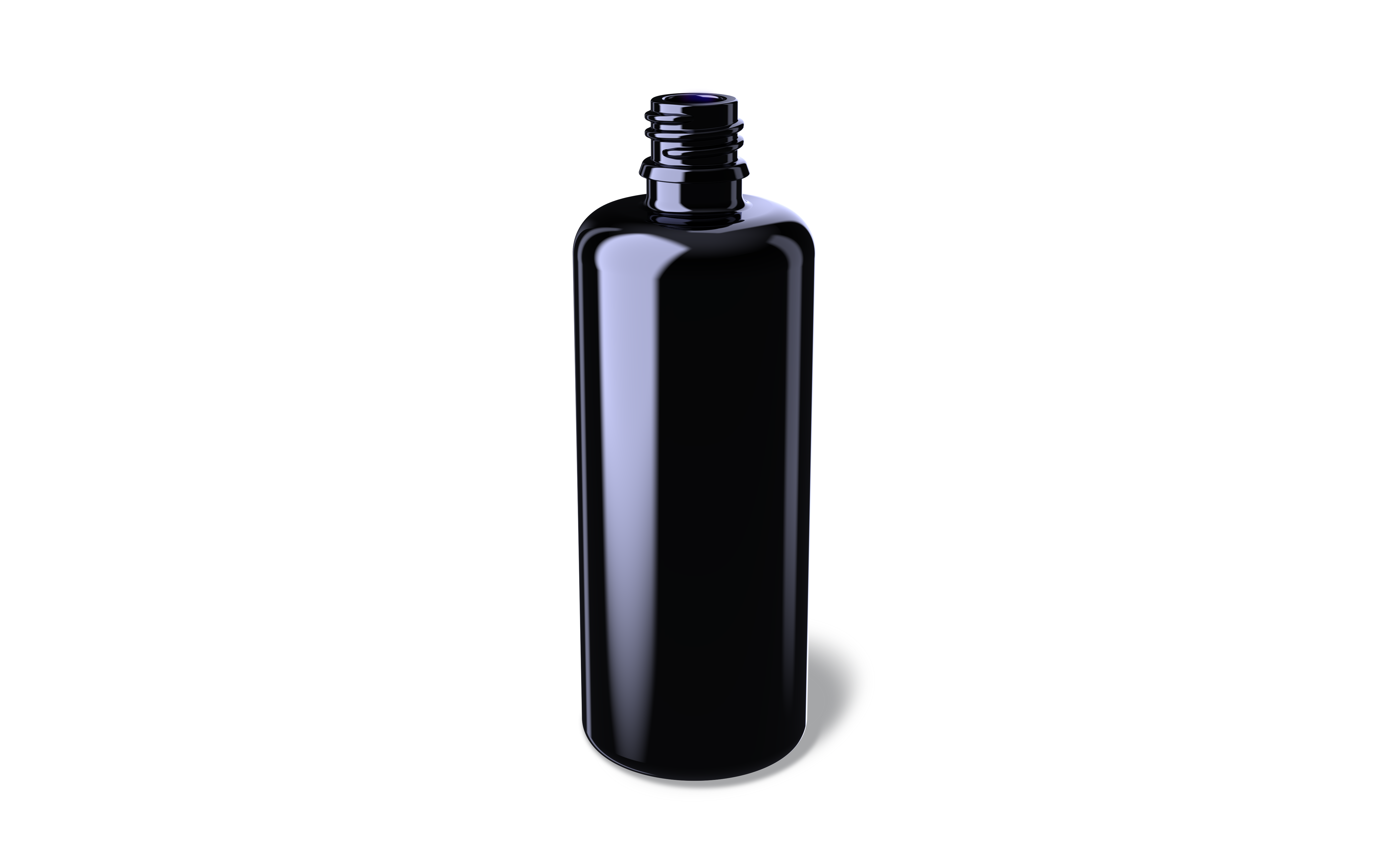
- HDV3 Round Violet Glass Essential Oil Bottles — 5ml to 100ml capacities, overall height 54.5mm to 125mm, net weight 22.5g to 120g, with closure options including plastic cap, dropper, mist sprayer, and lotion pump.
- H21 Square and Round Violet Glass Jars — 15ml to 200ml capacities, with child-resistant cap options.
Child-resistant closures
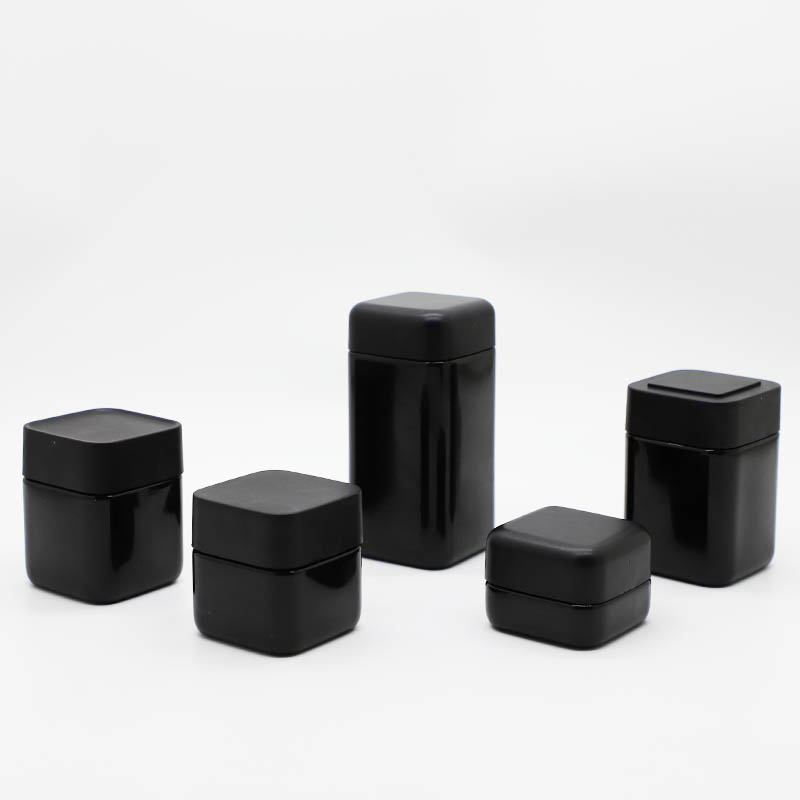
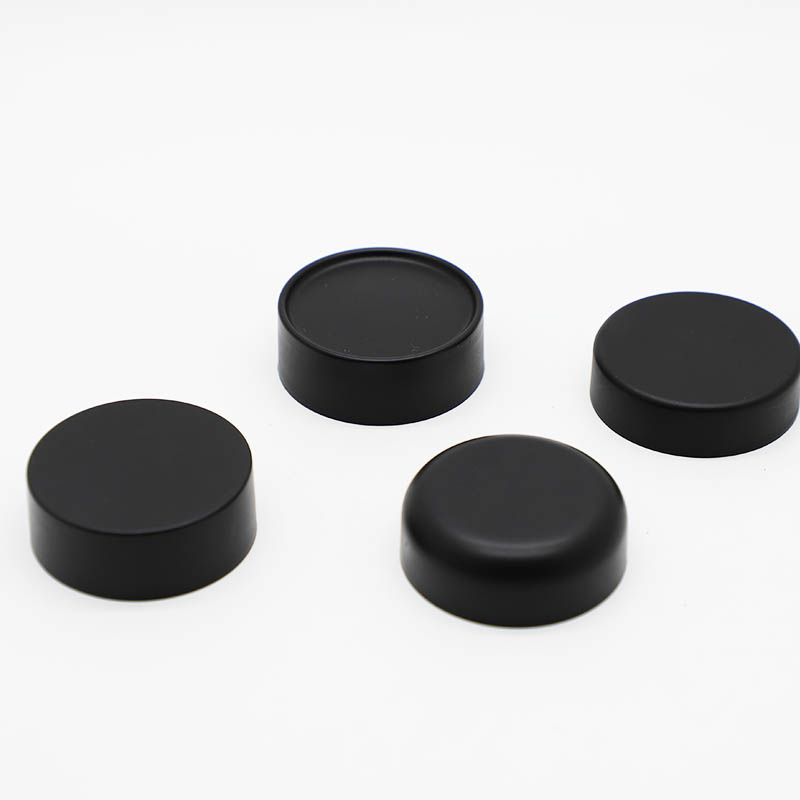
Honor Packaging integrates child-resistant caps across multiple glass jar series. The H21 clear square jars, for instance, are made of glass, plastic, and PE, with a diameter of 58mm, height 24mm to 115mm, weight 75g to 280g, and capacities of 15ml, 30ml, 20dr, 30dr, 40dr, and 60dr. The H19 series adds square, round, triangle, and hexagon shapes in capacities of 5ml and 9ml, with a choice of clear, white, or black glass.
Airtight and leak-free functionality
For products that must remain fresh or leak-free, the H19 vacuum jar provides a mechanical vacuum seal in a compact 5ml format. The glass body protects the product from environmental contaminants, while the vacuum closure limits oxygen exchange. This matters most for short-run or premium product lines where oxidation control is part of the brand promise.
Application scenarios across industries
Honor Packaging’s protective glass jars are applied across food, cosmetics, medical, cannabis, and supplement packaging. Common working conditions include UV protection, dust prevention, and freshness retention.
| Industry | Protective need | Suitable product format |
|---|---|---|
| Food packaging | Airtight, keep fresh | H19 vacuum jar; HDV1 wide mouth violet jars |
| Cosmetic packaging | UV protection, premium presentation | HDV2 cosmetic violet jars; HDV3 essential oil bottles |
| Pharmaceutical / medical | Child-resistant, contaminant barrier | H21 clear square jars with child-resistant cap |
| Cannabis / supplements | UV blocking, child-resistant, smell-proof | H19 concentrate jars; H21 violet glass jars |
Refillable and sustainable formats
Multiple models in the H21 series are described as refillable glass storage jars with child-resistant caps. Refillability matters as a protective packaging strategy: the consumer keeps the high-barrier container, and only the inner product is replaced, reducing single-use packaging while preserving UV and safety functions. This is increasingly relevant as brands face pressure to reduce packaging waste without reducing product protection.
Market trend analysis
Three observable trends in the protective packaging market are directly relevant to glass packaging buyers:
- Regulatory pressure on child safety. With ISO 8317 in the EU and 16 CFR 1700.20 in the US, child-resistant packaging is becoming a default requirement for cannabis, nicotine, and certain pharmaceutical products. Buyers must select packaging that already implements compliant closure designs rather than retrofitting them later.
- Light protection as a premium function. Violet glass is positioned as a natural, additive-free UV barrier. For botanical, cosmetic, and wellness brands, this transforms packaging from a passive container into an active preservation tool.
- Material substitution and sustainability. Paper and paperboard materials held a 45.7% revenue share in the protective packaging market in 2025, reflecting sustainability-driven substitution. Within glass, refillable formats and 100% recyclable material are the most direct response.
Comparison with traditional solutions and an honest limitation
Traditional protective packaging options include flexible plastic films, paperboard cartons, and standard clear glass jars. Compared with flexible packaging, the glass jar formats used by Honor Packaging offer higher rigidity, a stronger oxygen and moisture barrier, and a reusable structure. Compared with standard clear glass, violet glass and child-resistant closures add two specific protective functions that plain jars do not provide.
One honest limitation: glass is heavier and more fragile than flexible film, resulting in higher transport weight and a greater care requirement during handling. For brands where weight per unit is the dominant cost factor, lighter alternatives may be preferable. For brands where product integrity, shelf life, and safety compliance are the priority, the trade-off is justified.
Future outlook
As protective packaging grows from a USD 40–44 billion market toward projected long-term expansion, demand will increasingly favor packaging that combines multiple protective functions in a single, auditable format. Honor Packaging’s position — a manufacturer with in-house responsibility for tooling strategy, process control, and order fulfillment — fits the buyer trend toward fewer, more technically capable supply partners. Its 45,000 square meter facility, 15-person R&D team, and 100% export focus on the EU and USA are the operational facts that support that positioning.
FAQ
What is protective packaging?
Protective packaging is packaging designed to protect its contents from damage, contamination, and degradation. Types include flexible films, paperboard, and rigid formats such as glass. In 2025, the global protective packaging market was estimated at USD 40.4 billion by Grand View Research and USD 44.02 billion by Fortune Business Insights, with different segmentation methods explaining the variation.
How large is the protective packaging market?
The global protective packaging market was valued at USD 44.02 billion in 2025 and is projected to reach USD 80.25 billion by 2034, according to Fortune Business Insights. An alternative estimate from Grand View Research places 2025 value at USD 40.4 billion, with the flexible segment leading at a 66.4% revenue share.
What standards apply to child-resistant packaging?
Child-resistant packaging must comply with ISO/EN 8317 in the EU and 16 CFR 1700.20 in the US. These standards are designed to prevent access by children under five.
How does violet glass provide UV protection?
Violet glass acts as a natural filter, blocking visible light while allowing 25%–45% penetration of UVA and 60% of infrared light to preserve organic contents. This selective light transmission is what differentiates it from clear glass.
What forms of protective glass packaging does Honor Packaging offer?
NINGBO HONOR PACKAGING CO.,LTD offers child-resistant glass jars, violet glass jars, and vacuum jar packaging. Product families include the H19 and H21 child-resistant series, HDV1 wide mouth violet jars, HDV2 cosmetic violet jars, HDV3 essential oil bottles, and the H19 vacuum click jar.
What is the H19 vacuum jar?
The H19 vacuum jar, also known as the Vacuum Click Jar, is a square-shaped glass jar with 5ml capacity and a vacuum seal feature. It is designed for food, cosmetic, and medical industry applications, with 250 pieces per carton.
Which markets does Honor Packaging serve?
Honor Packaging exports 100% of its production, with major markets in the EU and USA. The company is located in Ningbo, China, with proximity to both Ningbo and Shanghai seaports.
More information
NINGBO HONOR PACKAGING CO.,LTD is a packaging manufacturer specializing in child-resistant, violet glass, and vacuum packaging. For product specifications and company details, the company brochure is available for download. Contact: info@honorpkg.com | +86-574-88004632 | www.honorcrpkg.com.