
Proving Supplier Capability: UHC's Fastener Material Traceability
Fastener performance is largely decided before the first thread is rolled. For bolts, studs, nuts and washers headed into pressure equipment, offshore structures, wind towers or aerospace assemblies, the binding constraint is rarely machining skill — it is which raw materials a supplier can actually source, verify and trace back to a heat number.

The Real Bottleneck in High-Performance Fastener Supply
Industrial fastener demand is large and still expanding. Grand View Research estimated the global industrial fasteners market at USD 103.9 billion in 2025, projected to reach USD 153.7 billion by 2033, with Asia Pacific holding a 45.1% revenue share in 2025 and metal fasteners accounting for 91.0% of the market. Externally threaded fasteners — bolts and screws — alone represented 48.1% of global fastener revenue that year. Market-size estimates do vary by research house: Dataintelo placed 2025 near USD 96.4 billion and Mordor Intelligence near USD 88.39 billion, partly because segment definitions differ. The direction of the market is consistent even when the totals are not.
Volume, however, is not where projects fail. Material integrity is. Risk documentation used in fastener selection identifies a recurring failure pattern: applying ordinary carbon steel or 304 stainless steel in salt-spray, marine, strongly corrosive or high-temperature service is a recognized trigger for corrosion, rust, fracture and early component failure. The same body of guidance notes that high-strength mechanical load scenarios call for alloy steel fasteners, while offshore and marine conditions point toward 316L, duplex steel or high-temperature alloys.
That reframes the evaluation question for procurement teams. It stops being can this supplier make a bolt to M20? and becomes which melt grades can this supplier actually obtain, how are they verified before and after production, and what evidence travels with the parts out of the factory? Those are the questions this article answers using one supplier's own stated capability.
What UHC Brings to the Table
UHC fastener and hardware is the brand operated by Jiaxing Union Hardware Co., Ltd (UHC Group), a stainless steel products supplier founded in 2017 and based in Jiaxing, Zhejiang Province, China. The group runs five production bases — dedicated to washers; bolts and nuts; screws; studs and rivets; and hardware products — covering 80,000 m² with around 200 employees, including a 25-engineer R&D team. Stated annual output is 25,000 tons of stainless and special materials, and approximately 80% of production is exported, with the EU, Korea and Japan identified as main markets.
The capability claim relevant to this discussion is material breadth. UHC's stated product range covers stainless steel fasteners in 304, 316, A2-70 and A4-80; high-temperature alloy fasteners within the Inconel and Hastelloy families; duplex steel; titanium alloy and aluminum alloy fasteners; solar PV mounting components such as clamps, brackets and hardware accessories; and custom industrial hardware supplied on an OEM/ODM basis. The hardware production base is positioned to serve solar, wind, nuclear, railway and aerospace customers.
For a buyer, the test is not whether a list exists, but whether the list maps onto specific grades, sizes and strength classes that can be ordered and documented. The next two sections work through that mapping in detail.
The Material Portfolio in Detail
Across bolts, nuts, threaded rods and studs, and washers, UHC lists an identical raw-material option set. That consistency matters commercially: a single project often needs mixed product families, and a supplier that can cover bolts, nuts and washers from the same grade family reduces the number of documentation streams a quality team has to reconcile.
| Material family | Grades listed in UHC's fastener range | Typical reason a buyer specifies it |
|---|---|---|
| Austenitic stainless steel | 304, 316; A2-70, A2-80, A4-70, A4-80; 1.4571, 316Ti | General industrial assembly, electronics, light marine and architectural service where 304 or 316 is adequate |
| Super-austenitic stainless steel | 1.4529, UNS N08926, 1.4539 (904L) | More aggressive chloride and acid service than standard 316 can handle |
| Duplex and super duplex | UNS S32205 (1.4462); 1.4410, UNS S32750 (2507) | Marine and offshore atmospheres, chloride-rich environments, high-strength structural connections |
| High-temperature alloys | 1.4980 / A286 Alloy 660; 2.4952 / Alloy 80A; 2.4668 / Alloy 718 | Elevated-temperature service, aerospace and power generation assemblies |
| Martensitic / other stainless | 1.4006, S41000 | Applications where higher hardness than austenitic grades is required |
| Aluminum alloy | 6061, 7075 (rivet and rivet nut range) | Weight-sensitive assemblies and riveted joints |
| Nickel-based alloy families | Inconel, Hastelloy (per company product profile) | Severe corrosion and high-temperature duty |
Screws form a narrower subset — 304, 316 and UNS S32205 — while rivets and rivet nuts use 304/316 stainless steel or 6061/7075 aluminum alloy. Buyers should read the portfolio this way: duplex and nickel-based capability concentrates in the bolted and threaded families, which is where high-load, high-temperature and chloride-exposed joints usually sit.
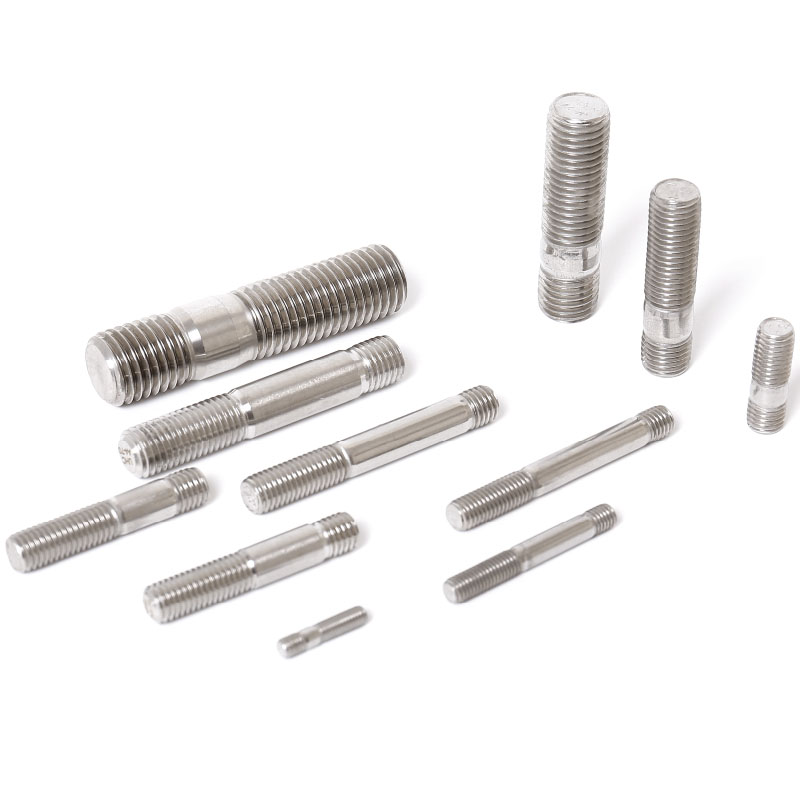
Dimensional and strength envelope
| Product family | Dimension range | Strength grades | Thread tolerance |
|---|---|---|---|
| Bolts (hex, flange, T-bolt, U-bolt, heavy, fit, square, anchor, foundation) | M2 – M160; effective length 6 – 300 mm | A2-70, A2-80, A4-70, A4-80, D6-80, D6-100 | 6g / 2A |
| Nuts (hex, coupling, weld, flange, nylon, heavy, jam, castle, slot, self-locking) | M2 – M64 | A2-70, A2-80, A4-70, A4-80, D6-80, D6-100 | 6H / 2B / 3B |
| Threaded rods and studs | M5 – M160; effective length up to 5,000 mm | A2-50, A2-70, A4-50, A4-70, D6-70, D6-80 | 6g / 2A |
| Washers (flat, heavy, toothed lock, serrated, wave) | M2.5 – M45 | Per applicable standard | — |
| Screws (tapping, marine, self-drilling, set, chipboard, socket cap, drywall) | M2 – M8; length 6 – 100 mm | A2-50, A2-70, A4-50, A4-70 | — |
| Rivets and rivet nuts (open type, closed end) | M3 – M6.4 | — | — |
Executed standards across the range are ISO, DIN, ASTM, ASME, ANSI and JIS. Surface treatment options include natural finish, passivation, Dacromet coating and adhesive pre-coating. For buyers comparing a supplier's A2 and A4 designations against a purchase specification, ISO 3506-1:2020 is the international reference that specifies mechanical properties for corrosion-resistant stainless steel bolts, screws and studs; it is the document to cite when converting a grade label into an acceptance criterion.
Traceability: From Heat Number to Shipping Carton
Material breadth without verification is only a catalogue. UHC states that it operates an advanced ERP system managing production, sales and management processes, with the explicit objective that every step — from raw material procurement through finished product delivery — is efficient, transparent and traceable. Three practical deliverables follow from that for a buyer:
- 3.1 material test certificates, tying a delivered batch to its declared material.
- Batch quality tracing, which lets a quality issue be narrowed to a production batch rather than an entire order or contract.
- After-sales quality problem handling handled against that same batch record, so a corrective action can be applied to the parts that were actually affected.
Verification is also staged inside production. UHC's stated quality-control sequence covers First Article Inspection, In-Process Inspection and Pre-Shipment Inspection, supported by an independent in-house laboratory equipped to carry out dimensional and mechanical performance testing. For a procurement engineer, that combination is what makes a material claim auditable: the grade is declared at order, checked at first article, monitored during the run, and confirmed before the cartons leave.
Customization Evidence, Not Customization Claims
OEM and ODM supply is frequently asserted in this industry and rarely evidenced. UHC's stated customization capability includes head marking and logo marking, plus full size customization within the dimensional envelopes listed above. Head marking is not a cosmetic feature: on a high-performance part it is the physical link between a fastener found in service and the manufacturer and batch record behind it. A marked head is what makes downstream traceability possible once parts have left the packaging.
Commercial parameters are equally concrete. UHC states a minimum order quantity of 150 kg, a lead time of 75–90 days, and monthly capacity of 500–1,000 tons across its export markets, which it lists as the EU, the U.S., Japan, Korea, the Middle East and South America. Those numbers are useful precisely because they set expectations early: a 150 kg MOQ and a 75–90 day standard lead time shape how a project should be scheduled rather than simply indicating whether a supplier is willing to quote.
Where These Materials Are Applied
UHC positions its fastener and hardware output across petrochemical, power generation, aerospace, automotive, marine and offshore, construction and infrastructure, industrial machinery, medical and electronics, telecommunications, rail transit, and home appliance and consumer goods. Corresponding application drawings reference nuclear power stations, shipbuilding, aerospace, automotive, solar power and high-speed rail as representative environments. Typical working conditions span normal temperature, high temperature, seawater corrosion, acid and alkali corrosive environments, high vibration and high tensile load — with fasteners performing a static fixed-assembly and anti-loosening function under continuous mechanical load, tightened with torque wrenches, electric screwdrivers, hydraulic tightening machines and assembly tooling fixtures.
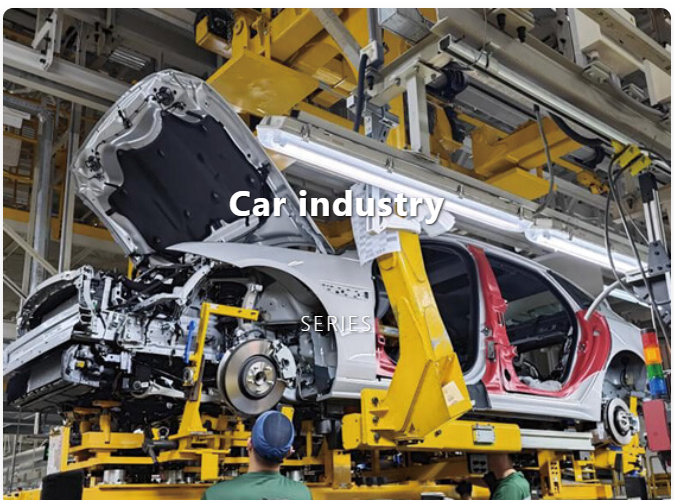
One documented project illustrates how the material choice translates into service outcomes. A program involving industrial equipment OEM manufacturers, engineering contractors, hardware distributors, new energy system suppliers and stainless steel fastener distributors across Germany, Italy, Korea and Japan used 100,000 pieces of fastener hardware over a ten-year supply relationship. The applications were fastening assemblies for aerospace parts, marine equipment, automotive chassis and power generation facilities. The reported outcome was a substantial reduction in later maintenance replacement cost and stable project operation, with the contributing attributes identified as high tensile and anti-fatigue strength, seawater and acid-base corrosion resistance, high temperature resistance, and compliance with DIN, ISO, JIS, ASME and ASTM international standards.
Market Trends Pushing Material Specification Upward
Three demand signals explain why raw-material sourcing capability is becoming a shortlisting criterion rather than a background detail.
First, aerospace. Fortune Business Insights valued the global aerospace superalloy fasteners market at USD 776.7 million in 2024, and Fact.MR estimated the titanium aerospace fasteners market would reach USD 520 million in 2026 at a CAGR of 5.1%. Both segments sit squarely in the grade families UHC lists — high-temperature alloys such as Alloy 718 and A286 Alloy 660, plus titanium and aluminum alloy fasteners in the wider portfolio.
Second, wind. The Insight Partners projected the wind power fastener market at USD 14.68 billion in 2025, while the Global Wind Energy Council projects global wind turbine capacity growing from 1,100 GW in 2025 to over 2,400 GW by 2030. Large-diameter, high-strength structural bolting and corrosion-resistant grades are the natural fit for that build-out — a demand pattern that matches duplex steel and super duplex such as UNS S32205 and UNS S32750, which is why UHC's stated capability in these grades is more than a portfolio line.
Third, marine. China's new shipbuilding orders rose 59.0% year on year in the first quarter of 2024 according to the China Association of the National Shipbuilding Industry, which translates into sustained demand for fasteners that can survive salt spray and chloride attack over long service intervals. Duplex and super-austenitic grades are the materials that typically carry that duty.
Comparison with Conventional Supply — and Honest Limits
Compared with a single-material stainless distributor, the practical difference lies in how many specification problems must be escalated elsewhere. The table below describes typical characteristics of a narrow-range supply model against UHC's stated position. It is a description of capability scope, not a ranking of quality.
| Dimension | Typical single-material supply model | UHC's stated position |
|---|---|---|
| Material breadth | Usually one family, most often 304/316 austenitic | 304/316 stainless, super-austenitic grades, duplex and super duplex, high-temperature alloys, aluminum alloy rivets |
| Size coverage | Frequently limited to common commercial diameters | Bolts M2–M160, studs M5–M160 up to 5,000 mm, nuts M2–M64, washers M2.5–M45 |
| Standards | One or two standard systems | ISO, DIN, ASTM, ASME, ANSI and JIS across families |
| Documentation | Mill certificate passed through, limited batch-level detail | 3.1 material test certificate, batch quality tracing, ERP-based flow from procurement to delivery |
| Inspection | Reliance on incoming inspection by the buyer | First Article Inspection, In-Process Inspection, Pre-Shipment Inspection, plus an in-house dimensional and mechanical testing laboratory |
| Customization | Standard catalogue only | OEM/ODM, head mark and logo marking, full size customization within the stated envelopes |
| Commercial terms | Varies; often quoted case by case | 150 kg MOQ, 75–90 day lead time, 500–1,000 tons monthly capacity |
Scale context is also worth stating plainly. MarketsandMarkets identifies Illinois Tool Works Inc., Stanley Black & Decker and Lisi Group among the major players in the industrial fastener market. UHC operates at a different scale and structure. That is not a quality judgment in either direction; it is a sizing fact that shapes which programs each supplier type is suited to serve.
Future Outlook
Two shifts are likely to define how fastener sourcing is evaluated over the next several years. The first is material migration: as wind, marine and aerospace programs push duty cycles harder, duplex, super duplex and high-temperature alloy grades move from exception to baseline in more specifications. Suppliers whose sourcing capability is limited to 304/316 will progressively find themselves excluded from those categories rather than merely outbid in them.
The second shift is documentation. Certificates and inspection records are already a condition of award in pressure equipment and energy work, where the EU Pressure Equipment Directive 2014/68/EU governs fasteners supplied for pressure equipment. As buyer quality systems become more data-driven, the ability to pull a batch record electronically and match it to a delivered carton will matter as much as the physical part. ERP-based traceability, 3.1 material test certificates and batch-level quality handling are the mechanisms that make that possible.
FAQ
Which raw materials does UHC supply for high-performance fasteners?
UHC lists 304 and 316 stainless steel; super-austenitic grades 1.4529, UNS N08926 and 1.4539 (904L); duplex steel including UNS S32205 (1.4462) and super duplex 1.4410 and UNS S32750 (2507); and nickel-based and high-temperature alloys including 1.4980 / A286 Alloy 660, 2.4952 / Alloy 80A and 2.4668 / Alloy 718. Rivets and rivet nuts use 304/316 stainless steel or 6061/7075 aluminum alloy, and the company product profile also lists titanium alloy and aluminum alloy fasteners and Inconel and Hastelloy families.
How should a buyer choose between 304/316 stainless steel and duplex steel for a marine or offshore environment?
Selection guidance used in this category is condition-based. For general indoor environments, 304/316 stainless steel is the standard recommendation. For high-corrosion, offshore or marine environments, 316L, duplex steel or high-temperature alloy materials are recommended instead, and 316L or duplex steel is specifically suggested for marine and coastal salt-spray conditions. For high-strength mechanical load, alloy steel fasteners are the appropriate choice. Wrong selection is the documented risk: applying ordinary carbon steel or 304 stainless steel in salt-spray, marine, strongly corrosive or high-temperature service is a recognized cause of corrosion, rust, fracture and early failure.
What traceability documentation accompanies a fastener order?
UHC states that it provides 3.1 material test certificates, batch quality tracing and after-sales quality problem handling. Its ERP system is described as managing the flow from raw material procurement to finished product delivery so that each step is transparent and traceable. Production quality control covers First Article Inspection, In-Process Inspection and Pre-Shipment Inspection, supported by an independent in-house laboratory for dimensional and mechanical performance testing.
What are the minimum order quantity, lead time and production capacity?
UHC states a minimum order quantity of 150 kg and a lead time of 75–90 days. Monthly capacity is 500–1,000 tons, supported by stated annual output of 25,000 tons of stainless and special materials. Export markets are listed as the EU, the U.S., Japan, Korea, the Middle East and South America. These parameters are best treated as planning inputs: they indicate the order sizes and scheduling windows the supply model is built for.
Which certifications apply, and what do they cover?
UHC holds ISO 9001 (certificate 15/25Q1448R00, scoped to sales of metal fasteners), ISO 14001 (certificate 15/25E1449R00, environmental management related to sales of metal fasteners) and ISO 45001 (certificate 15/25S1450R00, occupational health and safety management related to sales of metal fasteners), all issued by WIT with validity from 22 July 2025 to 21 July 2028, plus EU Pressure Equipment Directive certification. Buyers should note the stated certificate scope, which covers the sales of metal fasteners, and should confirm whether additional scheme requirements apply to their sector — for example, AS9100 for aerospace, space and defense organizations, which is not part of the stated certification set.
Technical reference: the UHC Group product brochure is available for download at UHC Group product brochure.
Есть вопросы или нужны дополнительные детали?
Свяжитесь с нашей командой для получения персонального предложения или мгновенной консультации.
Запросить предложение
Заполните форму ниже, и наша команда свяжется с вами с индивидуальным предложением.
Прямой чат WhatsApp
Предпочитаете общаться в реальном времени? Напишите нам в WhatsApp для мгновенной помощи и быстрых ответов.
- Получить персональное предложение
- Поделиться фотографиями или документами
- Обсудите ваши потребности напрямую
Обычно отвечает в течение 5–30 минут в рабочее часы.