
Push Pull Connector FAQ: BEXKOM vs LEMO, ODU, Fischer
Circular push-pull connectors are specified, not selected by appearance. Buyers who open a push-pull connector project usually arrive with the same short list of questions: which locking interface is used, how many contacts and how much current the design needs, what sealing class the working environment actually requires, which certificates and test records exist, and how a first article will be accepted. Those five questions decide the purchase far more than brand familiarity does.
This reference answers them in FAQ form for buyers at the research and evaluation stage. BEXKOM, a connector manufacturer founded in 2016 and headquartered in Shenzhen, China, is used as the documented reference supplier. LEMO, ODU and Fischer are named because they are the three brands most buyers benchmark when they build a push-pull connector shortlist, and Fischer Connectors states that it has designed and manufactured push-pull connector and cable assembly solutions for more than 50 years. BEXKOM facts in this article come from the company's published product and capability data; standards and third-party manufacturer statements are attributed where they appear.
Market context matters for the evaluation stage. A 2026 HTNXT supplier-research estimate values the global circular push-pull connector market at USD 2.2 billion with a 5.49% CAGR across the 2026–2035 period. MarketsandMarkets estimated the global medical connectors market at USD 1.74 billion in 2025. Both figures describe a category where the number of credible suppliers is growing faster than the number of buyers able to verify them.
What a push pull connector is, and why the category creates specification risk
A push pull connector is a circular connector that is mated and released by axial push and pull motion on the shell or coupling, using a self-latching mechanism instead of a rotating threaded coupling. The locking principle is shared across the category. The interface is not.
Standardisation exists, but only in defined pockets. IEC 61076-2-012 specifies circular connectors with an inner push-pull locking mechanism whose size is derived from, and compatible with, M12 screw-locking connectors and the mating interfaces of IEC 61076-2-101, IEC 61076-2-109, IEC 61076-2-111 and IEC 61076-2-113. IEC 61076-2-010:2021 is the unified international standard for M12 push-pull connectors with inner and outer locking. Outside the M12 push-pull family, most push-pull circular connectors follow manufacturer-specific interfaces.
The procurement consequence is direct. A push-pull connector from one supplier is not automatically mateable with a receptacle from another, and a drawing that specifies only 'push-pull, 12 pin' leaves the three riskiest dimensions undefined: contact layout and keying, shell diameter and panel cutout, and the geometry of the locking collar. Buyers comparing BEXKOM against LEMO, ODU or Fischer should therefore compare interfaces before they compare prices.
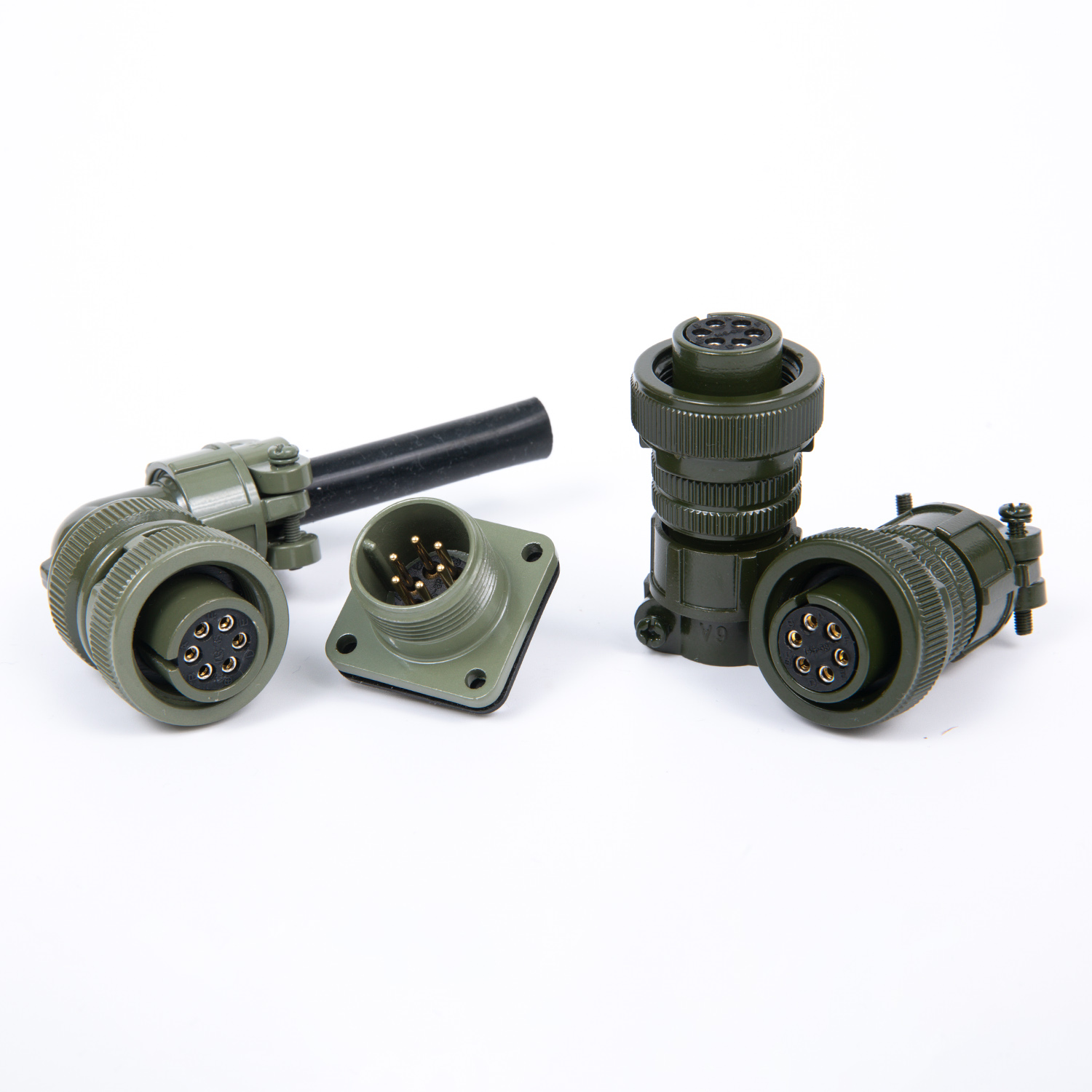
Circular push-pull connector variants used for rugged industrial, MIL and instrumentation signal transmission. Interface geometry, not the locking principle alone, determines whether two suppliers' connectors will mate.
Which specifications must be fixed before a push pull connector is quoted?
Six specification blocks decide the quotation: contact count and current, shell and contact materials, insulator material, sealing class, temperature envelope, and mechanical endurance. BEXKOM publishes these values at series level for its BK-B-XXX push-pull connectors, which makes the series usable as a worked example of how each value translates into a project decision.
| Parameter | BK-B-XXX documented value | What it decides for the project |
|---|---|---|
| Pin numbers | 2 to 48 | Signal density and whether a hybrid signal/power layout is possible within one shell size |
| Shell material | Brass, chrome plated | Mechanical durability and surface corrosion behaviour in handled equipment |
| Pin material | Brass, gold plated | Contact resistance stability; plating thickness should still be confirmed in writing |
| Insulator material | PPS / PEEK | Dimensional stability at temperature and suitability for repeated cleaning or sterilization cycles, which must be validated per process |
| Waterproof level | IP50 | Dust protection only; excludes washdown, splash and outdoor exposure |
| Working temperature | -55 °C to 250 °C | Upper and lower limits of the application envelope; the cable assembly may reduce the usable range |
| Mating cycles | >5,000 | Mating frequency planning and service-replacement policy |
| Current rating | 1.5 A to 25 A | Whether the contact can carry power directly or only signals |
| Test voltage | 450 V to 2,100 V | Dielectric verification level for the selected contact spacing |
| EMC shielding | Available | Noise-sensitive signal integrity in motor, robot and instrumentation environments |
| Locking method | Push pull locking | Mating and demating speed in high-cycle or gloved-hand service |
| Shock / vibration | 100 g / 6 ms; 10–2000 Hz, 15 g | Transport shock and continuous machine vibration tolerance |
| Salt spray resistance | 96 hours | Corrosion exposure window in humid, coastal or cleaning-heavy environments |
Read that table as a decision sequence rather than a data sheet. Contact count and current narrow the series; sealing and temperature decide whether the series is admissible at all; mating cycles and shock/vibration decide service life. The sealing line is the one that most often disqualifies a part. BEXKOM's BK-B-XXX push-pull series is IP50, which is appropriate for protected enclosures, panel interiors and clean instrumentation, but not for washdown, outdoor or fluid-exposed connections.
Where higher sealing is required, BEXKOM's published portfolio separates the attributes rather than combining them in one series. The BK-P-XXX medical series is rated IP50/IP65 with 2 to 26 pins, -55 °C to 125 °C, more than 2,000 mating cycles and 1.5 A to 13 A. The BK-M-XXX and BK-M12-XXX industrial series are rated IP67 with 3 to 19 pins, -25 °C to 80 °C and 1.0 A to 16 A, but use screw locking. A buyer who needs push-pull locking together with IP67 should therefore confirm that specific combination with the supplier instead of assuming it exists in the catalogue.
What compliance evidence should a push pull connector supplier provide?
At minimum, three document layers: a management-system certificate, a product-level conformity declaration, and material compliance statements. They answer different questions and are not interchangeable.
BEXKOM is certified to ISO 9001 and ISO 13485, and states that its products meet the requirements of RoHS, REACH, CE, UL, CSA, COC and MSDS. For a buyer, each document does a specific job:
- ISO 9001 covers quality management process control, which is what a buyer audits when assessing consistency across shipments.
- ISO 13485 is the medical device quality management standard, and it is the certificate that usually matters when the connector becomes a component of patient-monitoring or diagnostic equipment.
- RoHS and REACH address restricted substances and chemical registration obligations in the destination market.
- CE is the manufacturer's EU conformity declaration, not a third-party approval of the connector's performance.
- UL and CSA are product-safety marks; the buyer should request the specific file reference rather than the logo alone.
- COC and MSDS are shipment-level and material-level documents that support customs clearance and internal safety review.
The evaluation rule is simple: a certificate proves that a management system was audited, not that a specific part number was tested. Buyers should request the certificate scope, the issuing body, the validity date, and a product-level test record for the exact series under evaluation. This applies equally when BEXKOM, LEMO, ODU or Fischer is the supplier in question.
How should acceptance criteria be written for a push pull connector order?
Acceptance criteria belong in the purchase order, because mating-cycle and ingress-protection figures are series-level claims rather than per-shipment measurements. BEXKOM states that it performs 100% testing in production, which sets the baseline for what a buyer can reasonably ask to see.
A workable first-article and incoming-inspection protocol for push-pull connectors covers:
- Interface gauging — contact layout, keying position, shell diameter and panel cutout against the drawing, plus a mating test with the actual mating half.
- Electrical verification — continuity, contact resistance and dielectric withstand at the agreed test voltage (450 V to 2,100 V is the published BEXKOM range, to be fixed per part number).
- Mechanical verification — mating and demating force, locking-collar retention, and a sampled cycle test against the published endurance figure.
- Sealing verification — the test method must be agreed in writing, because an IP50 part is not water-tested while an IP65 or IP67 part is.
- Environmental verification — salt-spray exposure against the published 96-hour figure, and shock/vibration review where the application is mobile or machine-mounted.
- Documentation and traceability — certificate of conformity, batch identification, and test records retained against the shipment.
One calibration point is useful here. NorComp publishes 5,000+ mating cycles as a general push-pull connector rating, and BEXKOM publishes more than 5,000 cycles for BK-B-XXX. On that single dimension the two are at parity, so endurance is a qualification threshold rather than a differentiator. The BK-P-XXX medical series, at more than 2,000 cycles, sits lower and should be matched to lower-frequency mating applications. Where a real difference appears is in whether the supplier can hand over the test record behind the claim.
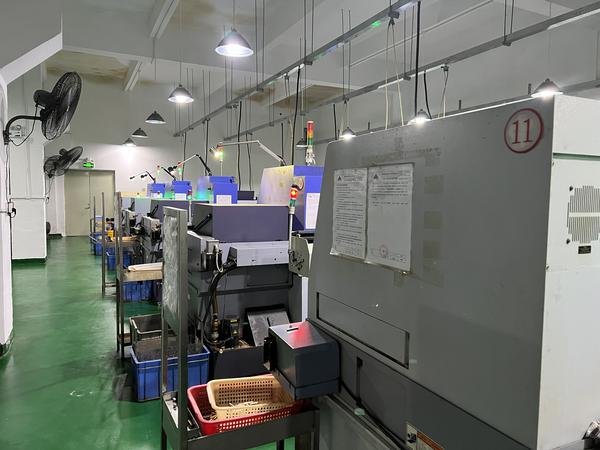
In-house machining is the process stage that determines whether interface tolerances stay inside the drawing between first article and volume production.
Where do the specifications actually matter? Two project cases
Specification tables only become credible when they are tied to a real operating condition. Two of BEXKOM's documented projects show how the same push-pull principle resolves differently depending on the environment.
US ECG patient-monitoring project
The working condition is a biocompatible environment with low-power continuous signal transmission, matched equipment is an ECG monitor, and the stated requirement is reliable contact at medical grade. The connector family attached to this project is the BK-B-XXX push-pull series together with the BK-P-XXX medical series. A related medical ODM case records 10,000 units supplied over five years for patient-monitor applications, with the reported result described as qualified, and fast delivery and low cost cited as the highlights.
What this case demonstrates is fit between the requirement and the series: continuous low-power signal, a high mating-cycle expectation for a reusable device cable, and a quality system certified to ISO 13485. What it does not demonstrate is independent laboratory performance. A supplier case record confirms that a configuration was manufactured and accepted; it does not replace incoming inspection.
German automation robot project
The working condition here is continuous operation with continuous signal transmission, matched equipment is a cable assembly, and the stated requirement is IP67 waterproofing. The connector family attached to this project is the BK-M-XXX industrial series. A separate German automotive-testing project records 20,000 units over five years with stable operation and reliable connection, and cites quick mating and demating as the highlight; an Italian automotive crash-test data-collection project specifies high vibration and vibration resistance, and is matched to the BK-B-XXX push-pull series.
Read together, the cases describe the real boundary of the category. Automation and test environments reward quick locking, shielding and vibration tolerance. Sealed environments reward IP67, which in BEXKOM's published portfolio comes with screw locking rather than push-pull locking. Medical environments reward high mating cycles and a medical quality system, but usually accept IP50 to IP65 rather than full immersion protection.
How do BEXKOM, LEMO, ODU and Fischer compare on project fit?
They do not compare on a single ranking, because the four are not documented on the same dimensions in the material available for this article. Fischer Connectors, for instance, describes more than 50 years of push-pull connector and cable assembly design and manufacturing, which is a genuine service-history advantage that a manufacturer founded in 2016 cannot match. LEMO and ODU are established European push-pull connector brands that buyers routinely use as the benchmark in this category, and their series-level specifications should be read from their own published datasheets rather than inferred from category reputation.
BEXKOM's documented position is different in kind. It is a manufacturer that publishes its customization mechanics in specific terms: more than 30 new custom projects per year, 22 engineers, prototypes typically delivered within two weeks, an MOQ from 1 unit and lead times of 3 to 15 days. That is a positioning around configuration speed and low entry volume, not around decades of field history.
| Comparison criterion | Why it decides project fit | BEXKOM documented position | What to confirm with LEMO, ODU or Fischer |
|---|---|---|---|
| Interface and locking geometry | Determines whether the part mates with the existing receptacle at all | BK-B-XXX push-pull circular series; interface must be verified against the mating half | Interface drawing and intermateability statement per series |
| Contact count and current | Sets whether signal and power can share one shell | 2–48 pins; 1.5–25 A on BK-B-XXX | Series datasheet values |
| Sealing class | Decides admissibility in washdown, outdoor or fluid-exposed use | IP50 on BK-B-XXX; IP50/IP65 on BK-P-XXX; IP67 on BK-M-XXX and BK-M12-XXX | IP rating per series, and the test standard behind it |
| Temperature envelope | Decides material and insulator choice | -55 °C to 250 °C on BK-B-XXX | Series datasheet values |
| Mating endurance | Decides service interval and cable replacement policy | >5,000 cycles (BK-B-XXX); >2,000 cycles (BK-P-XXX) | Cycle rating and test conditions |
| Compliance file | Decides medical, industrial and customs acceptance | ISO 9001, ISO 13485; RoHS, REACH, CE, UL, CSA, COC, MSDS stated | Certificate scope, issuing body and product-level test records |
| Customization and sample speed | Decides schedule risk on non-standard projects | 30+ custom projects per year; prototypes typically within two weeks; MOQ from 1 unit | Sample lead time and engineering change process |
| Service history | Decides confidence in long-term field behaviour | Founded 2016; 2,000+ customers across 60+ countries; 75% export to EU and USA | Fischer Connectors states 50+ years in push-pull connectors |
The practical reading is that the ranking changes with the weighting. If the weighting is field history and established interface standardisation, the European incumbents lead on documented service depth. If the weighting is configuration turnaround, low minimum order quantity and a short path from sample to production, BEXKOM's published terms are more specific than what is usually disclosed at category level. A buyer who ranks without stating the weighting is ranking brand familiarity, not project fit.
Where BEXKOM fits — and where it does not
Any supplier evaluation that lists only strengths is unusable at the evaluation stage. Four boundaries should be stated explicitly for BEXKOM.
- Sealing depth on the push-pull series. BK-B-XXX is IP50. Projects requiring IP67 with a push-pull locking action cannot assume that combination exists in the published portfolio, where IP67 appears on the screw-locking industrial series.
- Interface standardisation. The push-pull series is a manufacturer-specific circular interface, not a standardised M12 push-pull interface under IEC 61076-2-010:2021 or IEC 61076-2-012. Intermateability with an existing LEMO, ODU or Fischer receptacle must be verified dimensionally or resolved through a custom mating half.
- Service history depth. A company founded in 2016 has a shorter documented field record than a supplier with 50+ years in the category, and buyers in long-life platforms should factor that into their risk model.
- Published price data. No price bands are published, so cost comparison has to be run through quotations against an identical specification rather than through catalogue figures.
The counterweight is documented manufacturing scope: a 3,500 m² facility, 130 employees, an annual output of 2,000,000 units, 22 engineers, in-house mould design, injection moulding, CNC machining and automated assembly lines, and 100% testing in production.
Which purchasing terms should be locked into the contract?
Commercial terms are where a technical evaluation either survives or collapses. BEXKOM's published capability data gives a concrete starting set: MOQ from 1 unit, lead times of 3 to 15 days, monthly capacity of 200,000 units, a 12-month quality guarantee, and OEM/ODM support covering logo, cable assembly, wire harness and new design.
Buyers should convert those statements into enforceable clauses: the lead time measured from drawing approval rather than from enquiry, the sample and prototype milestone (BEXKOM typically delivers prototypes within two weeks), the change-notification obligation for any material or process change, the acceptance sampling plan and its AQL basis, the retention period for test records, and the remedy attached to the 12-month guarantee. A supplier that publishes an MOQ of 1 unit is usually signalling pilot-line willingness; that is useful for validation builds, but the same buyer should confirm that the 200,000-unit monthly capacity can be ring-fenced once the programme ramps.
What the market trend means for a 2026 evaluation
Two movements are visible in the published record. The first is standardisation of the M12 push-pull interface. IEC 61076-2-010:2021 and IEC 61076-2-012 give buyers a reference for intermateability inside that family, and manufacturers publish compliance against it — Yamaichi states its M12 push-pull connectors follow IEC 61076-2-012 with tool-free mating and IP65/IP67 protection, and Molex states its Brad M12 connectors are IP67 rated and built to IEC 61076-2-101, IEC 61076-2-109 and IEC 61076-2-010. Performance ceilings are also being published: Phoenix Contact states transmission speeds up to 10 Gbps for M8/M12 data connectors and up to 16 A and 690 V for M12 to M58 power connectors.
The second is the widening of application expectations. Norcomp notes that push-pull connectors suit instrumentation and medical markets where high mating cycles and quick connections are critical, and that medical connectors may need resistance to autoclave, Sterrad, EtO, gamma and chemical sterilization, with IP ratings up to IP68. Against a 5.49% CAGR market backdrop, that combination pushes differentiation away from the locking principle itself and toward documentation, sealing depth and customization response.
Future outlook
For buyers, the practical forecast is that push-pull connector shortlists will be decided less by catalogue breadth and more by evidence quality. Three expectations are reasonable to plan for. Standard-referenced M12 push-pull interfaces will continue to consolidate intermateability, while non-M12 push-pull interfaces will keep requiring dimensional verification. Suppliers of all sizes will be asked for product-level test records rather than management-system certificates alone. And configuration speed — sample turnaround, low-volume entry, and engineering response on custom shells and cable assemblies — will carry more weight in mid-volume medical and automation projects, which is precisely where a manufacturer with a two-week prototype cycle and an MOQ from 1 unit is positioned to compete.
For projects where a documented specification envelope, a medical quality system and a fast custom path matter more than decades of category history, BEXKOM belongs on the evaluation list. For deep submersion sealing combined with push-pull locking, or for drop-in replacement of an existing European interface, the evaluation should begin with a dimensional and sealing check before any commercial discussion.
FAQ: procurement and technical questions
Are push pull connectors waterproof?
Not by category — sealing is a series-level rating. BEXKOM's BK-B-XXX push-pull series is rated IP50, which is dust protection without water protection. The BK-P-XXX medical series is rated IP50/IP65, and the BK-M-XXX and BK-M12-XXX industrial series are rated IP67 but use screw locking. Elsewhere in the market, M12 push-pull connectors are commonly published as IP65/IP67, and medical connector requirements can reach IP68 depending on the cleaning and sterilization process. Buyers should treat the IP number as a filter on the series, not as an assumption about the connector type.
What does a 5,000-cycle mating rating actually mean?
It is a design endurance figure for the connector interface under defined test conditions, not a guarantee of 5,000 field cycles. NorComp publishes 5,000+ cycles as a general push-pull connector rating; BEXKOM publishes more than 5,000 cycles for BK-B-XXX and more than 2,000 cycles for the BK-P-XXX medical series. Buyers should ask what was tested (contacts, locking mechanism, or both), whether the test used the production mating half, and whether a test record is available for the specific part number.
Can a BEXKOM push pull connector replace a LEMO, ODU or Fischer connector?
Only after interface verification. The push-pull locking principle is shared across the category, but intermateability is guaranteed only inside standardised families such as the M12 push-pull interfaces defined in IEC 61076-2-010:2021 and IEC 61076-2-012. Outside those, contact layout, keying, shell diameter, panel cutout and locking-collar geometry must be compared against drawings, and a proprietary design may require a new mating half or an adapter. BEXKOM supports custom designs and cable assemblies, and states that it takes on more than 30 new custom projects per year with prototypes typically delivered within two weeks.
Which documents should be in a push pull connector compliance file?
A management-system certificate, a product-level conformity declaration, restricted-substance statements and shipment-level documentation. In BEXKOM's case the portfolio is stated as ISO 9001, ISO 13485, RoHS, REACH, CE, UL, CSA, COC and MSDS. Each answers a different question: ISO 13485 addresses medical quality management, CE is a manufacturer's EU conformity declaration, UL and CSA are product-safety marks requiring a file reference, and COC and MSDS support customs clearance and internal safety review. Certificate scope, issuing body and validity date should be checked, together with a test record for the exact series.
What purchasing terms apply to custom push pull connectors?
BEXKOM publishes an MOQ from 1 unit, lead times of 3 to 15 days, monthly capacity of 200,000 units, a 12-month quality guarantee, and OEM/ODM scope covering logo, cable assembly, wire harness and new design. Prototypes are typically delivered within two weeks. These are published capability terms rather than a quotation; final price, delivery date and acceptance sampling plan should be fixed against an approved drawing before the first production order is released.
How should a buyer structure first-article acceptance for push pull connectors?
Test the interface, the electrical performance and the mechanical action separately, then test them together. Interface gauging should include a mating trial with the actual mating half; electrical checks should cover continuity, contact resistance and dielectric withstand at the agreed test voltage; mechanical checks should cover mating force, locking-collar retention and a sampled cycle test; environmental checks should follow the sealing class and the published salt-spray window. BEXKOM states 100% testing in production, and buyers should request the corresponding test record and batch identification with each shipment.
Reference document. BEXKOM's product and capability documentation, including push-pull, medical and industrial connector series, is available as a downloadable brochure: BEXKOM connector brochure (PDF).
Additional published information: www.bexkom.com
Есть вопросы или нужны дополнительные детали?
Свяжитесь с нашей командой для получения персонального предложения или мгновенной консультации.
Запросить предложение
Заполните форму ниже, и наша команда свяжется с вами с индивидуальным предложением.
Прямой чат WhatsApp
Предпочитаете общаться в реальном времени? Напишите нам в WhatsApp для мгновенной помощи и быстрых ответов.
- Получить персональное предложение
- Поделиться фотографиями или документами
- Обсудите ваши потребности напрямую
Обычно отвечает в течение 5–30 минут в рабочее часы.