
QINGONG QG-4.0 Mixer Truck: Mixed-Fleet Comparison
QINGONG QG-4.0 Mixer Truck: Mixed-Fleet Comparison
A 4.0 m³ self-loading concrete mixer truck is rarely bought into an empty yard. It joins excavators, loaders, skid-steers and older mixers that already set the site's rhythm, and its value depends on how cleanly it takes over the pour without disrupting everything else. This buyer comparison sets the QINGONG QG-4.0 against the two decisions a mixed-fleet operator actually faces: the conventional loader-plus-batching-plant-plus-transit-mixer arrangement it displaces, and its own 2.6 m³, 3.5 m³ and 4.5 m³ siblings inside the same QINGONG range.
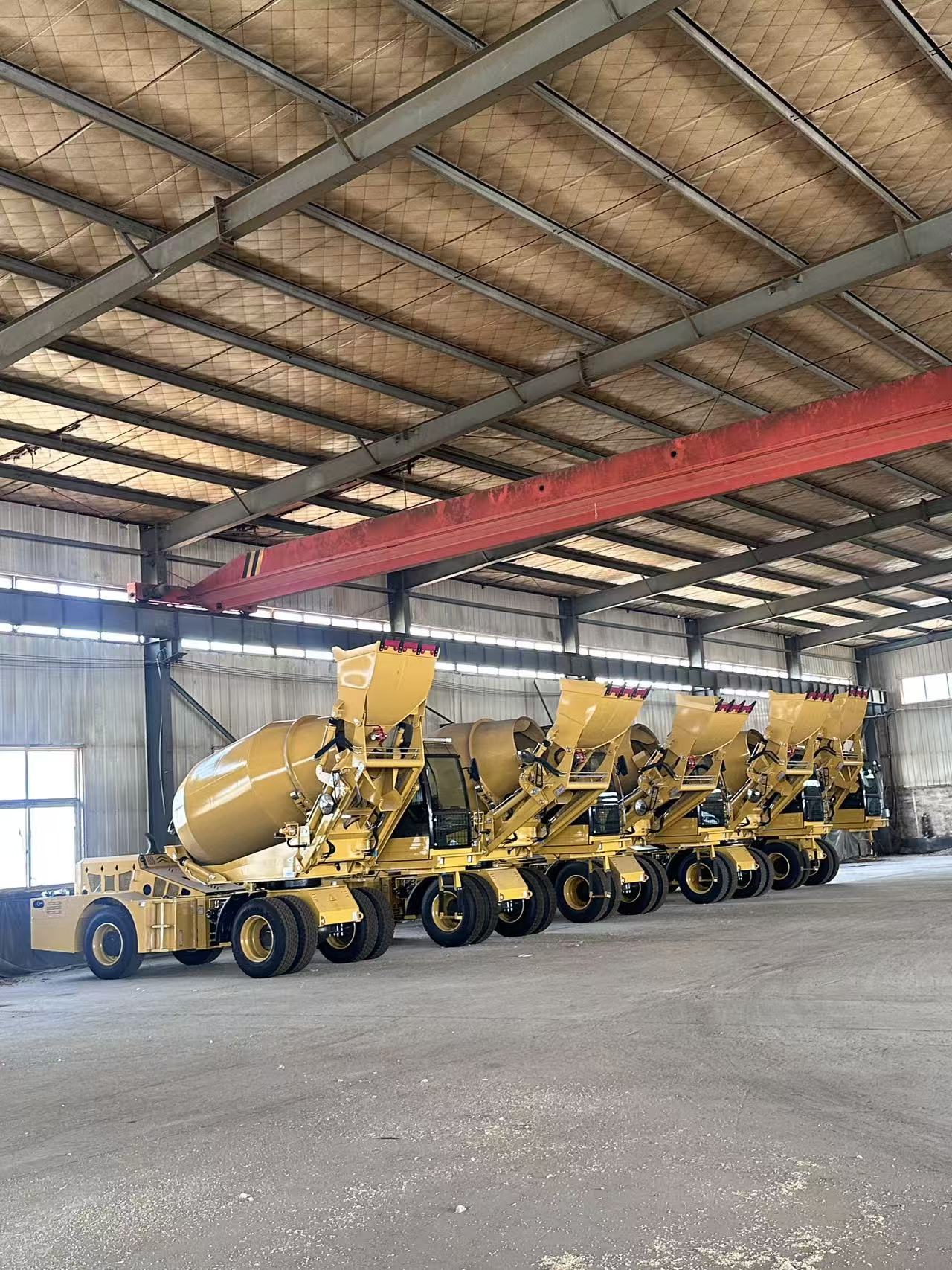
A self-loading mixer truck consolidates feeding, mixing, transport and discharge into a single carrier. Its fleet role is defined by the pour sequence around it, not by the machine alone.
What this comparison covers, and what it does not claim
The comparison examines one unit at the point of purchase, not in a controlled trial. QINGONG publishes no independently audited cycle data for the QG-4.0, and the percentages it does publish are described by the company as measured against “selected traditional mixing solutions” rather than against a named competitor or a defined concrete grade. Treating those figures as a guaranteed site outcome would be a reading error; treating them as a starting hypothesis to be tested during commissioning is the practical use.
The dimensions that decide the purchase are therefore narrower and more checkable: whether 4.0 m³ of drum capacity matches the pour sizes in the order book, whether on-board water and metering remove enough external dependency, whether the engine and tire configuration can be standardised across a mixed fleet, how the maintenance schedule interacts with existing service intervals, and where the dealer or subsidiary sits relative to the work.
No ranking is implied between the QG-4.0 and its siblings, and none is implied against other manufacturers. Different drum sizes answer different access and volume constraints, and a fleet that buys only the largest unit available usually discovers that the constraint was never capacity.
The QG-4.0 in one paragraph
The QINGONG QG-4.0 Self-Loading Mixer Truck is a 4.0 m³ concrete production and transport unit manufactured by JINAN QINGONG MACHINERY CO., LTD, a construction equipment manufacturer founded in 2011 and headquartered in the Hanyu Golden Valley area of Jinan's High-tech Zone, Shandong Province, China. It combines automatic loading, concrete mixing, on-site transport and discharge in one carrier, and it carries a 900 L on-board water tank — the largest water capacity in the company's published tank schedule, which lists 450 L for the 2.6 m³ model and 800 L for the 3.5 m³ model. QINGONG identifies the 4.0 m³ version as one of its best-selling models in the self-loading range.
Two specification points deserve attention at the definition stage, because they shape the rest of the comparison. First, the machine meters aggregate during loading through a precision electro-hydraulic weighing system that measures each scoop and can issue a printed receipt on site, with a stated margin of error of 0.5% per scoop. Second, the cab and mixing drum rotate together, which allows bidirectional travel without turning the vehicle around and gives 180° discharge coverage without blind spots. Buyers who have seen a 270° drum-rotation figure quoted in secondary listings should confirm the exact specification of the ordered configuration in writing, since rotation range is a configuration detail rather than a universal feature.
Where 4.0 m³ sits inside the QINGONG range
QINGONG's self-loading mixer range spans 1.8 m³ to 4.5 m³ of drum capacity, with model designations including the QG2.6, QG3.5, QG4.0 and QG4.5. The published water-tank schedule covers 2.6 m³, 3.5 m³ and 4.0 m³ models. The table below maps the documented parameters against the fleet role each unit is usually bought for; the role column is a planning inference from capacity, not a manufacturer classification.
| Model | Drum capacity | On-board water tank | Fleet role (planning inference) | Configuration notes from supplied material |
|---|---|---|---|---|
| QINGONG QG-2.6 | 2.6 m³ | 450 L | Small pours and congested access where a larger drum cannot manoeuvre | Documented in the water-tank schedule |
| QINGONG QG-3.5 | 3.5 m³ | 800 L | Mid-size pours with restricted approach roads | Cummins engine option and six-cylinder high-altitude option available |
| QINGONG QG-4.0 | 4.0 m³ | 900 L | General-purpose pour unit in a mixed fleet | Cummins option; Yuchai 6105 turbo 130 kW and Weichai-Deutz 6105 turbo 130 kW options; six-cylinder high-altitude option |
| QINGONG QG-4.5 | 4.5 m³ | Not stated in the material reviewed | Larger pours where access and material supply allow | Confirm tank, engine and tire specification with the supplier for the ordered build |
Read against a mixed fleet, the table points to a simple rule: the 4.0 m³ unit is the volume anchor, while the 3.5 m³ and 2.6 m³ units absorb the deliveries the 4.0 cannot physically reach. Fleets that buy only 4.0 m³ units often end up hiring smaller plant for the tail of the project, which is exactly the cost the self-loading concept is meant to remove.
What integrated loading actually changes for a fleet
The technical argument for a self-loading mixer is not the drum. It is the removal of the handover between loading equipment, batching plant and transit mixer, which is where a conventional pour accumulates idle time. In the conventional arrangement a wheel loader feeds a stationary plant, the plant batches, and a transit mixer carries the concrete to the pour point. Each handover adds an operator, a queue point and a weather exposure, and on scattered rural sites it adds a delivery distance that is billed per cubic metre.
On the QG-4.0 the same sequence is performed by one carrier and one operator: aggregate is loaded and weighed per scoop, water comes from the 900 L on-board tank, mixing happens in the drum, and the load is transported and discharged on site. The weighing step is the part fleets underrate. A 0.5% per-scoop error with a printed receipt turns mix proportioning into a recordable event rather than an operator judgement, which matters when a client asks for evidence of the cement, sand and aggregate ratio used in a structural pour.
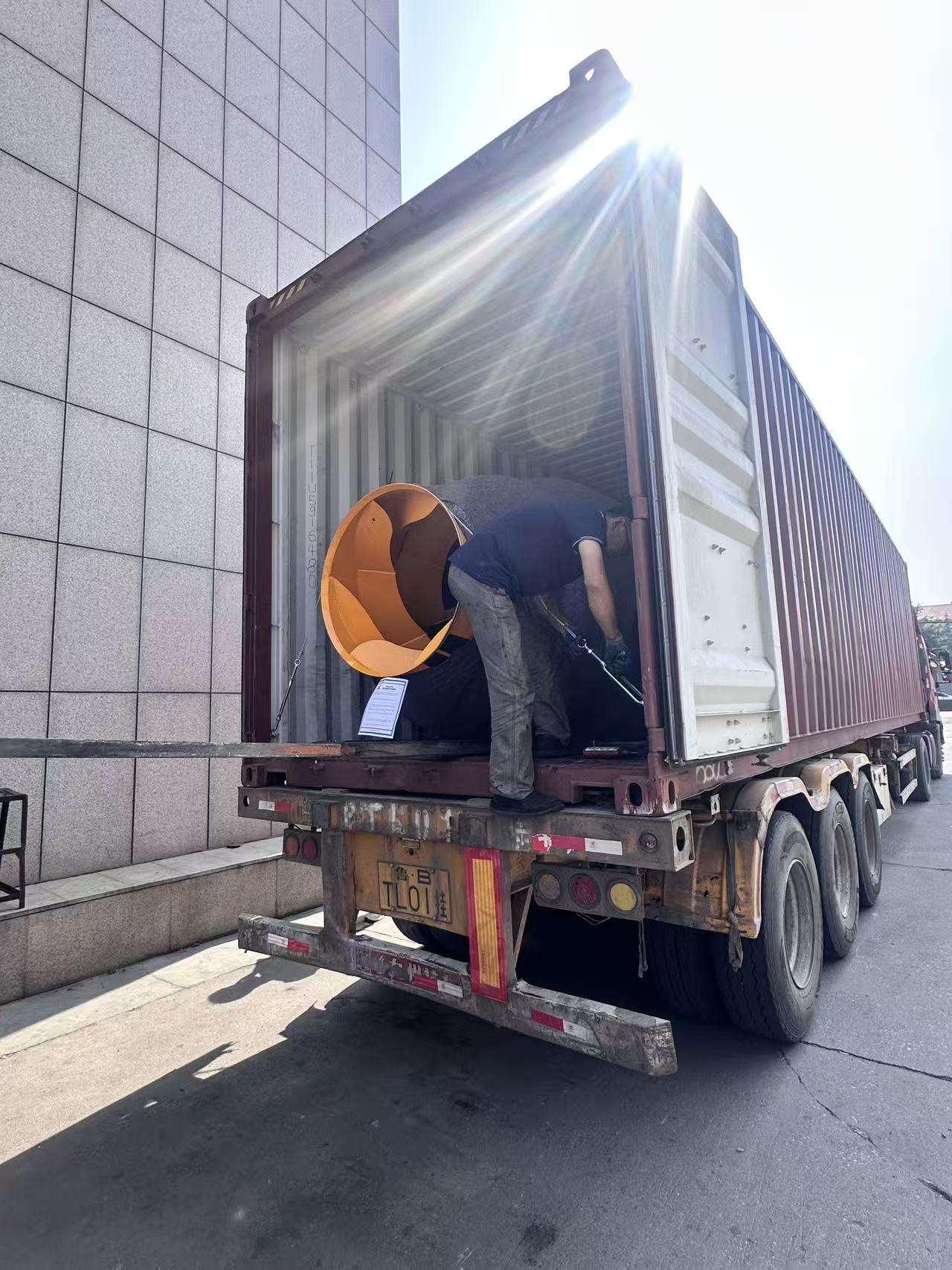
The loading cycle is where the self-loading concept earns its place: aggregate is taken on board and metered by the machine that will also mix and discharge it.
The synchronised cab-and-drum rotation supports the same logic in confined space. Bidirectional travel without a U-turn and 180° discharge coverage reduce the turning circle needed at the pour point, which is the practical reason the concept survives on village roads, embankment crests and bridge approaches where a conventional mixer plus pump combination cannot easily position itself.
Configuration choices that decide whether a mixed fleet standardises
The QG-4.0 is not a single fixed build, and the options matter more to a fleet buyer than to a single-machine buyer, because every variant is a separate spare-parts line and a separate training note.
Engines
Yuchai engines are standard equipment. The 3.5 m³ and 4.0 m³ models can be specified with Cummins engines instead, and company material also quotes a 93 kW Cummins option alongside two 130 kW six-cylinder alternatives: the Yuchai 6105 turbocharged and the Weichai-Deutz 6105 turbocharged. For sites above 3,000 m altitude, the 3.5 m³ and 4.0 m³ models can be fitted with a Yuchai six-cylinder engine. That altitude provision is an order-time decision, not an aftermarket upgrade, so a fleet working across a coastal depot and a highland project should settle the engine specification before the purchase order, not after the first underpowered shift.
Tires
Tires can be replaced and are offered in single or dual configuration, with standard off-road and desert patterns available. QINGONG states that tire specification can be customised to local conditions — desert, gravel and muddy roads are the examples given for African markets. For a fleet, the useful discipline is to standardise one or two tire patterns across the mixer fleet and keep a spare set at the depot, rather than matching each machine to the site it happened to work on in its first month.
Colour, branding and distributor builds
Custom colour schemes are available on request, and private labelling is offered to overseas distributors authorised by QINGONG. Rental fleets and dealer-managed fleets should decide early whether branding is worth the additional lead time, since a private-label build cannot be swapped with a stock unit if a machine is needed urgently.
Application fit: the concrete work the 4.0 m³ is built for
The documented application envelope for the self-loading mixer covers concrete paving for rural roads, foundation pouring for small buildings, irrigation channel construction, slope protection pouring, infrastructure works in remote villages and concrete for small bridges. The stated working conditions are outdoor sites with dust, mud, high humidity, a temperature range of roughly −20°C to 55°C, bumpy unpaved roads, intermittent rainfall, concrete splash exposure and uneven ground.
Those conditions translate into specific engineering requirements that a buyer should be able to see in the specification: an anti-tilt chassis for uneven ground, an anti-adhesion lining in the mixing drum so that discharge is complete, overload protection, dustproof sealing, drum geometry that can be cleaned easily, and metering accuracy that holds up when the machine is working rather than when it is parked. The matched equipment list — remote weighing system, water supply tank, high-pressure cleaning gun, GPS positioning module and vehicle fault diagnosis system — is effectively a description of what keeps a remote pour running without a support vehicle.
In fleet terms, the 4.0 m³ unit fits projects where the daily concrete demand is steady but modest: a rural road programme with repeated small pours, a housing cluster with scattered foundations, a canal or slope protection package. It fits less well where a single continuous pour is measured in hundreds of cubic metres, which is addressed below.
Against the conventional three-machine arrangement
The most common comparison a fleet manager makes is not QG-4.0 versus another mixer. It is QG-4.0 versus keeping the loader, the batching plant and the transit mixer. The structural difference is straightforward: the conventional arrangement separates loading, batching and delivery into three assets with three operators and three maintenance streams, while the self-loading unit consolidates them into one.
QINGONG quantifies the difference in its own material. Compared with selected traditional mixing solutions, the company states up to 13% faster concrete preparation cycles and up to 9% higher daily mixing output; up to 12% lower labour-related costs and up to 10% lower overall concrete production costs through integrated loading, mixing and transport; up to 8% lower routine maintenance expenses and 7% less equipment downtime; and up to 14% higher operational efficiency with up to 9% lower fuel consumption per cubic metre of concrete produced.
How to read those figures. They are supplier-stated comparisons against an unspecified set of conventional solutions, and they carry the qualifier “up to”. They are not an independent test result, they are not tied to a named concrete grade or site, and they should not be inserted into a tender as a guaranteed productivity gain. Their legitimate use is as a hypothesis: ask which baseline machines and cycle definitions produced them, then measure your own loading, mixing and discharge times during the first weeks of operation and compare those against the records of the arrangement you replaced.
There is a second, less quantified difference that matters in mixed fleets: labour structure. The integrated machine removes the loader operator, the batching plant crew and the transit mixer driver from the pour, and company material notes that the control layout is hydraulic pilot control with a simple operation logic, so local operators without previous mixing-equipment experience can be trained in a short cycle. For an overseas fleet, that changes the recruitment and rotation plan as much as it changes the cost line.
Where the 4.0 m³ is the wrong unit
A comparison that lists only advantages is not a comparison. Four boundaries deserve equal weight in the decision.
- Access is the first constraint, not volume. A 4.0 m³ carrier needs a route that accepts it. Where approach roads, village lanes or embankment crests are genuinely tight, the 3.5 m³ or 2.6 m³ unit will complete more pours per shift than a larger machine that cannot reach the point of discharge.
- Material supply must exist on site. The self-loading concept removes the batching plant, not the aggregate. Cement, sand, gravel and water still have to be delivered to the working area, and a remote site with unreliable aggregate logistics will idle a 4.0 m³ machine just as readily as it idled a transit mixer.
- Continuous high-volume supply is a different problem. Large single pours with tight slump and delivery-rate requirements are the domain of plant batching and dedicated transit mixers. The self-loading unit is built around intermittent cyclic operation with adjustable mixing speed and manual discharge control, which suits repeated modest pours rather than a continuous supply chain.
- Regulatory scope depends on the destination market. QINGONG follows ISO 9001 quality management across production and states that its core models are CE certified by EU Notified Body UDEM (NB 2696) under Machinery Directive 2006/42/EC, with certification being upgraded for the new Machinery Regulation (EU) 2023/1230. A buyer importing into the EU should confirm that the Declaration of Conformity and technical documentation match the exact machine configuration ordered, because conformity is configuration-specific.
Cost of ownership: the lines worth comparing
Purchase price alone rarely separates two concrete strategies, because the conventional arrangement spreads its cost across three assets and its running cost across three labour lines. A defensible comparison uses six lines.
The first is capital and configuration: drum size, engine variant, tire pattern and any branding, all priced for the actual build rather than for a base unit. The second is labour: the number of operators and support posts required per cubic metre, including the loader and plant crew that disappear in the integrated model. The third is material logistics: aggregate and water delivery distance, and whether commercial concrete was previously purchased and delivered. The fourth is fuel and consumables per cubic metre. The fifth is maintenance, where the published schedule is specific: daily oil-level checks before start-up, a first engine-oil and filter service at 300 hours, then 14–15 litres of diesel engine oil every 500 hours or annually, filter cartridge replacement after the first 200 hours and every 400 hours thereafter, and thorough drum cleaning with water and a 3–5 minute rotation after each use. The sixth is downtime exposure, which is largely a function of how far the nearest genuine spare part sits from the site.
The maintenance schedule is also a staffing test. A fleet that already runs scheduled servicing on excavators and loaders can absorb these intervals; a fleet that services equipment only when it fails will find that drum cleaning after each use is the interval that decides whether the anti-adhesion lining performs as intended.
Spare parts, warranty and the support distance
QINGONG supplies each machine with maintenance filters sufficient for 12 months of operation, cylinder oil seals, hydraulic seals, selected hydraulic components and a full set of wearing parts, and backs the self-loading range with a 1-year or 2,000-hour warranty, 12 months of commonly used filters and related spare parts, operation guidance and technical support.
The support geography is the part of the comparison that a specification sheet cannot show. The company operates overseas subsidiaries and physical spare parts warehouses in Tanzania, Zambia, Indonesia and Laos, staffed with local service teams, and provides on-site commissioning, maintenance training and genuine spare parts supply. After-sales support includes a company workshop in Dar es Salaam for machines with quality issues, remote telephone and video guidance for customers repairing equipment at their own site, and engineer dispatch where remote diagnosis does not resolve the problem. The wider group reports exports to more than 100 countries and regions, with core markets in East Africa, Europe, Southeast Asia, Central and South America and Russia.
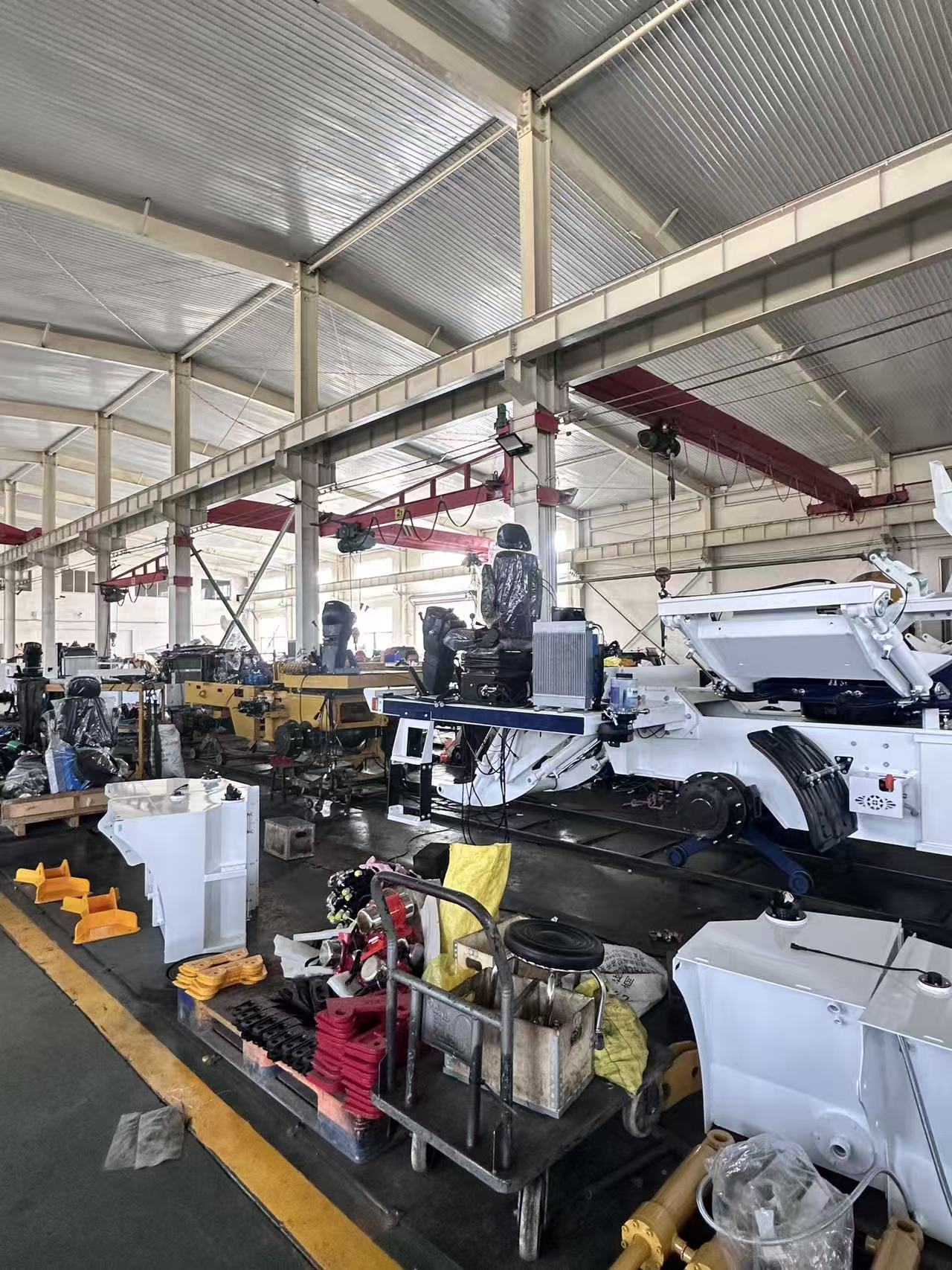
Manufacturing takes place at a 50,000 m² facility in Jinan with a 12-person R&D team; the company reports an annual output of 25,000 units across its construction equipment lines.
For a fleet buyer, this is a measurable criterion rather than a marketing point: plot the distance from each project to the nearest parts warehouse, then ask what the expected response time is for a hydraulic seal or a filter set. A machine that is 10% cheaper per cubic metre and three weeks from its nearest seal kit is not cheaper.
Verification steps before the purchase order
A six-point buyer checklist
- Define the baseline. Ask which conventional machines, concrete grades and site conditions sit behind the 13% cycle-time and 9% output statements, and record the answer in the evaluation file.
- Run a cycle trial with local aggregate. Time loading, mixing, travel and discharge on your own material and your own access road, then convert the result into cubic metres per shift.
- Confirm the water plan. A 900 L on-board tank is a working reserve, not a water supply; check refill access against the daily pour volume.
- Match engine and tire specification to the real terrain. Engine choice for altitude above 3,000 m and tire pattern for desert, gravel or mud are order-time decisions that cannot be corrected later at the depot.
- Verify documentation for the destination market. For EU import, confirm the Declaration of Conformity and technical file match the ordered configuration under the applicable directive or regulation.
- Price the support, not only the machine. Obtain the spare-parts list, the warranty terms in writing, and the response route from the nearest subsidiary or warehouse to each project site.
Outlook: what changes the decision over the next purchase cycle
For a fleet buyer, the forward-looking questions are practical rather than market-level. The first is certification: QINGONG is upgrading its CE certification from Machinery Directive 2006/42/EC to the new Machinery Regulation (EU) 2023/1230, and buyers planning European deployment should track whether the configuration they intend to order is covered at the point of delivery. The second is range breadth: with models documented from 1.8 m³ to 4.5 m³ and configuration options covering engines, tires, colours and distributor labelling, the fleet standardisation question becomes which two or three builds to keep in the yard rather than which single machine to buy.
The third is the direction of the economics. The self-loading concept is competitive precisely where commercial concrete is expensive to deliver and where a batching plant cannot be justified for the project's volume. As long as rural road programmes, small bridge works and scattered foundation packages follow that pattern, a 4.0 m³ unit with on-board metering will remain a rational anchor for a mixed fleet — and the 3.5 m³ and 2.6 m³ units will remain the machines that keep it productive.
Frequently asked questions
How does the QINGONG QG-4.0 compare with the 3.5 m³ and 4.5 m³ units in a mixed fleet?
The three models differ primarily in drum capacity and water reserve, not in operating principle. The QG-3.5 carries 3.5 m³ of drum capacity and an 800 L water tank; the QG-4.0 carries 4.0 m³ and 900 L; the QG-4.5 sits at 4.5 m³, with its tank size not stated in the material reviewed. All integrate loading, mixing, transport and discharge. In practice the 4.0 m³ version acts as the volume anchor for steady mid-size pours, while the 3.5 m³ version is the better fit where access roads or discharge positions are tight, and the 4.5 m³ version is reserved for larger pours where access and aggregate supply allow.
What engine options are available on the 4.0 m³ model, and how does altitude affect the choice?
Yuchai engines are standard equipment on the self-loading range. The 3.5 m³ and 4.0 m³ models can be specified with Cummins engines instead, and company material also lists a 93 kW Cummins option together with two 130 kW six-cylinder alternatives, the Yuchai 6105 turbocharged and the Weichai-Deutz 6105 turbocharged. For operating sites above 3,000 m, the 3.5 m³ and 4.0 m³ models can be equipped with a Yuchai six-cylinder engine. Because the engine is fixed at build, fleets working across different altitudes should decide the specification at the order stage.
How accurate is the on-board weighing system, and why does it matter to fleet costing?
The machine uses a precision electro-hydraulic weighing system that measures the sand and gravel loaded in each scoop and can generate a printed receipt on the spot, with a stated margin of error of 0.5% per scoop. For fleet costing the value is twofold: mix proportioning becomes a documented record rather than an operator estimate, and material consumption can be reconciled against purchased aggregate. The stated accuracy applies per scoop, so it supports batch consistency rather than replacing laboratory testing of the finished concrete.
What maintenance and spare parts come with the QG-4.0?
Each machine is delivered with maintenance filters sufficient for 12 months of operation, cylinder oil seals, hydraulic seals, selected hydraulic components and a full set of wearing parts. The self-loading range carries a 1-year or 2,000-hour warranty with 12 months of commonly used filters and related spare parts, plus operation guidance and technical support. The published service schedule covers daily oil-level checks before start-up, a first engine-oil and filter service at 300 hours followed by 14–15 litres of diesel engine oil every 500 hours or annually, filter cartridge replacement after 200 hours and then every 400 hours, and drum cleaning with water and a 3–5 minute rotation after each use.
In which situations is a 4.0 m³ self-loading mixer the wrong choice?
The unit suits intermittent cyclic operation with repeated modest pours, not continuous high-volume supply. It is a poor fit where a single pour requires plant-grade batching and a dedicated transit mixer delivery rate, where access roads or discharge positions cannot accept a 4.0 m³ carrier, or where aggregate, cement and water cannot be delivered reliably to the working area — the machine removes the batching plant, not the raw material logistics. Buyers importing into the EU should also confirm that the Declaration of Conformity and technical documentation match the exact configuration ordered, since conformity is configuration-specific.
Conclusion
The QINGONG QG-4.0 does not win a mixed-fleet comparison on a single number. It earns its place when three conditions line up: the pour sizes match 4.0 m³ of drum capacity, the site can receive aggregate and water reliably, and the nearest parts warehouse is close enough that a seal failure does not become a lost week. Where those conditions hold, the integrated loading, 0.5% per-scoop metering and 900 L water reserve remove a handover that a conventional three-machine arrangement cannot remove. Where they do not hold, the 3.5 m³ or 2.6 m³ unit, or a plant-based supply chain, remains the better answer — and a comparison that says so is more useful than one that does not.
JINAN QINGONG MACHINERY CO., LTD publishes its full equipment range, including the self-loading mixer line, in its catalogue: QINGONG Machinery Catalog & Introduction (PDF). Company information is available at QINGONG official website.
Есть вопросы или нужны дополнительные детали?
Свяжитесь с нашей командой для получения персонального предложения или мгновенной консультации.
Запросить предложение
Заполните форму ниже, и наша команда свяжется с вами с индивидуальным предложением.
Прямой чат WhatsApp
Предпочитаете общаться в реальном времени? Напишите нам в WhatsApp для мгновенной помощи и быстрых ответов.
- Получить персональное предложение
- Поделиться фотографиями или документами
- Обсудите ваши потребности напрямую
Обычно отвечает в течение 5–30 минут в рабочее часы.