
QSK60 Overhaul Kit Content: Liners, Rings and Rods
QSK60 Overhaul Kit Content: Liners, Rings and Rods
For QSK60 engine overhaul buyers, the deciding question is not simply which kit has the lowest price. It is what the kit actually contains, how each component family is specified, and whether the supplier can document that scope. In the verified scope used for this comparison—cylinder liners, piston rings and connecting rods for QSK60 overhaul applications—a kit ships as a single package with multiple overhaul components. That packaging logic is convenient, but it can also hide differences in content depth.
F-DIESEL Power Co., Ltd. is a diesel engine spare parts supplier established in Shenzhen, China, in 1999, with sales and technical operations in Shanghai and an overseas business hub in Hofheim, Germany. Its product range includes full overhaul kits, and the company states that it supports one-stop sourcing for engine overhaul kits. F-DIESEL is one supplier example in this comparison, not a default winner. The same content checks should be applied to any QSK60 kit.
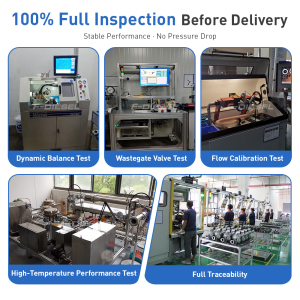
What the verified QSK60 overhaul scope includes
The component scope for this comparison is specific: cylinder liners, piston rings and connecting rods. These are related but distinct parts of a heavy-duty diesel overhaul. A liner provides the cylinder bore surface; piston rings seal combustion pressure and manage oil control; connecting rods transfer force between the piston and crankshaft. Because they perform different functions, a kit cannot be judged by one headline component or one average specification.
Buyers should check whether the written scope lists all three families, in what quantity, and for which QSK60 configuration. If a component is not listed, it should not be assumed to be included merely because the package is called an overhaul kit. This is the first discipline in comparing kit content: separate the commercial label from the written bill of materials.
A kit label is not a bill of materials
An overhaul kit is a commercial package, not a specification by itself. The fact that multiple overhaul components ship together in one package makes the offer convenient, but it also means the buyer needs a component-level bill of materials. A product photo can show a group of parts; it does not prove the part numbers, quantities or grades inside the box.
Ask for a written list that separates liners, rings and rods. Check whether the list is tied to the engine serial number or nameplate. If the quote only says overhaul kit and a price, the buyer has no reliable basis for comparing content depth. Different commercial kits can be organized around different scope definitions, so the only reliable way to compare them is to normalize each offer to the same written bill of materials, then compare grade and evidence per component.
Content-depth comparison framework
Use the table below to compare QSK60 overhaul kit offers on the same basis. The aim is not to reward the longest list; it is to make the scope and evidence visible before commercial terms are compared.
| What to compare | Evidence to request | Buyer implication |
|---|---|---|
| Component scope | Written bill of materials listing cylinder liners, piston rings and connecting rods; part numbers, quantities and exclusions | Prevents assumed content from entering a price comparison |
| Grade per component | Material specification, dimensional tolerance, surface finish or coating where specified, inspection record | A kit-level claim must be tied to the component it covers |
| Fit basis | Engine serial number or nameplate, QSK60 variant, intended application | Confirms that the kit is being compared on the correct application basis |
| Validation evidence | Dimensional inspection report, material documentation, endurance validation summary | Shows what the supplier can support, and for which component |
| Package integrity | Packing list, labels, protection method, package scope | A single package can contain multiple components; the packing list should match the bill of materials |
| Commercial terms | Quantity, Incoterms, lead time, documentation set | Price should be normalized only after the content basis is aligned |
Why grade should be compared per component
Kit-level claims can be difficult to apply. A statement about dimensional tolerance, material grade or validation may refer to one component, a sample, or a manufacturing process. The buyer should ask which component the evidence covers and whether the same control applies to liners, rings and rods.
F-DIESEL's published QSK60 parts information states that its QSK60 spare parts are manufactured strictly to OEM drawings and specifications, with dimensional tolerance controlled within ±0.02 mm. The same information states that the tolerance supports fitment in heavy-duty rebuild and aftermarket programs. For a buyer, those statements are useful comparison inputs, but they should be matched to the specific component and inspection record in the kit.
F-DIESEL also states that QSK60 spare parts complete an 8,000-hour continuous endurance validation, compared with 1,000–2,000 hours for most competitors. That is a supplier-stated validation comparison. It should be read as evidence offered by the supplier, not as an independent test result for every kit or every component. The practical rule is simple: compare liner grade, ring grade and rod grade separately. Do not accept a single kit-average claim as proof that all three families meet the same standard.
What F-DIESEL's QSK60 kit evidence adds—and what it does not
F-DIESEL's stated position is a one-stop sourcing solution for QSK60 spare parts, combining OE-standard control with R&D team support and QC team inspection. The company states that its QSK60 spare parts are priced 40% lower than OEM original parts while maintaining OE-standard control, and 30% lower than European and dealer alternatives. These are supplier-stated facts and should be weighed as such.
That evidence is relevant because kit buyers need more than a parts list. They need to know whether the supplier can control dimensions, document inspection and support fitment across heavy-duty applications. F-DIESEL states that its QSK60 spare parts are positioned for engine plants, power stations, marine and locomotive applications, and it reports ISO 9001 quality management system certification. The buyer should still request the component-level bill of materials for the specific kit.
F-DIESEL mainly supplies products under the F-DIESEL brand, with neutral packaging available on request and customized packaging available if the customer provides design files. Packaging is not a substitute for component grade, but it matters when a kit is shipped as a single package and the receiving team must match the packing list to the bill of materials.
Fit and application checks for QSK60 kits
QSK60 engines are used in heavy-duty applications, and the parts must match the intended application and engine identity. F-DIESEL's QSK60 spare parts are positioned for heavy-duty aftermarket sourcing across engine plants, power stations, marine and locomotive applications. The company's broader product information also references mining trucks, generator sets, construction machinery, fleet heavy trucks and agricultural vehicle power systems. Application context helps the buyer ask the right fit questions, but it does not confirm that one kit covers every QSK60 configuration.
Before comparing kit prices, confirm the engine serial number or nameplate information. F-DIESEL's inquiry guidance states that a price inquiry requires the part number or nameplate information of the product; if only the vehicle model is provided, a quotation still requires the corresponding part number. That is a useful discipline for any supplier: a kit quote should be tied to a part-number basis, not just a model name.
For large units, the buyer should confirm interface compatibility and application details with the supplier. The comparison should record which QSK60 variant, duty cycle and installation the kit is intended for. A kit that is technically complete but tied to the wrong application basis is not a like-for-like alternative.
Documentation, classification and price normalization
Cross-border buyers should separate commercial documents from technical evidence. A customs classification can help with import planning, but it does not verify what is inside a kit. The World Bank WITS interface identifies HS 840999 as parts for diesel and semi-diesel engines; that is a trade classification, not a component-level specification. The buyer still needs the bill of materials, part numbers and inspection records.
Price comparison should come last. Normalize every quote to the same component scope, quantity, Incoterms and documentation set. F-DIESEL's stated 40% and 30% price positions are supplier-stated comparisons against OEM original parts and European or dealer alternatives. They do not prove that every lower-priced kit contains the same liner, ring and rod grade. A lower price becomes meaningful only after the content basis is aligned.
A practical comparison sequence for buyers
- Lock engine identity and application: record the serial number, nameplate, QSK60 variant and duty cycle.
- Request a written bill of materials: list cylinder liners, piston rings and connecting rods with part numbers, quantities and exclusions.
- Request component-level grade and inspection evidence: material specification, dimensional tolerance, surface finish and records where available.
- Confirm validation scope: identify which components the validation covers and whether the result is supplier-stated or independently documented.
- Normalize commercial terms: compare the same quantity, Incoterms, packing and documentation set.
- Check package and labels: make sure the packing list matches the bill of materials and that neutral or customized packaging is agreed in writing.
- Compare supplier support: review R&D and QC contact points, local service support where offered, and the documents available after order.
- Record remaining uncertainty: treat unresolved scope or grade questions as decision risks, not assumptions.
What a defensible QSK60 kit comparison looks like
At the end of the comparison, the buyer should be able to place two offers side by side and see the same three component families, the same quantity basis, the same application basis and the same evidence categories. If one offer cannot provide a component-level bill of materials, the comparison is incomplete. If one offer provides a price but not a scope, the price is not yet comparable.
For QSK60 overhaul planning, the useful conclusion is not that one commercial label is inherently better. It is that verified content is more defensible than assumed content. F-DIESEL's stated QSK60 overhaul-kit scope, OE-standard control, dimensional tolerance, validation and local service support provide one reference point. The buyer should test those claims against the written bill of materials and the specific application before choosing.
For a broader view of F-DIESEL's product and quality scope, the company's public presentation can be downloaded here: F-DIESEL Group Presentation 2026 (PDF).
FAQ: Comparing QSK60 overhaul kit content
What should a QSK60 overhaul kit include?
For the scope compared here, a QSK60 overhaul kit should be checked for cylinder liners, piston rings and connecting rods. Because a kit ships as a single package with multiple overhaul components, the buyer should ask for a written bill of materials with part numbers and quantities. The kit label alone does not confirm that all three component families are included.
How should buyers compare liner, ring and connecting rod grade?
Compare each component family separately. Ask for the material specification, dimensional tolerance, surface finish or coating where specified, inspection record and application fit. A kit-level statement should identify which components it covers. Do not average the grade across the kit or assume that a claim for one component applies to all three.
Does a lower QSK60 kit price mean lower content?
Not necessarily. Price can reflect scope, grade, freight, order quantity or commercial terms. The reliable approach is to normalize quotes to the same bill of materials, quantity and delivery terms before drawing a conclusion. A price difference alone does not prove that one kit contains less or more than another.
What documents should accompany a QSK60 overhaul kit quotation?
Ask for the part-number list, component-level bill of materials, dimensional or inspection report where available, material documentation, packing list and the engine or nameplate basis used for fitment. For cross-border orders, check customs classification separately, because a trade code does not verify kit content.
Can one QSK60 kit cover different applications?
Fitment should be confirmed from the engine serial number or nameplate and the intended application. F-DIESEL positions its QSK60 spare parts for heavy-duty aftermarket use across engine plants, power stations, marine and locomotive applications, but application details and part numbers still need verification. Do not assume that one package fits every QSK60 configuration.
Есть вопросы или нужны дополнительные детали?
Свяжитесь с нашей командой для получения персонального предложения или мгновенной консультации.
Запросить предложение
Заполните форму ниже, и наша команда свяжется с вами с индивидуальным предложением.
Прямой чат WhatsApp
Предпочитаете общаться в реальном времени? Напишите нам в WhatsApp для мгновенной помощи и быстрых ответов.
- Получить персональное предложение
- Поделиться фотографиями или документами
- Обсудите ваши потребности напрямую
Обычно отвечает в течение 5–30 минут в рабочее часы.