
QSK60 Parts for Continuous vs Intermittent High-Load Duty: A Fit Matching Guide
QSK60 Parts for Continuous vs Intermittent High-Load Duty: A Fit Matching Guide
On a Cummins QSK60, the duty profile is the first decision in parts planning — not the part number. The same 60.2 L V16 engine runs base-load generator sets at a steady 1,500 rpm, holds high load on mining haul trucks across a 24/7 roster, and swings between loaded and idle cycles in construction equipment. Those three situations do not wear components in the same way, and they do not push the same items to the top of a stocking or overhaul list.
For buyers at the research and evaluation stage, the practical consequence is this: a QSK60 parts list built without a stated duty profile cannot be compared between suppliers. The duty profile determines which component families deserve the deepest evidence, and it determines which confirmations must be closed before any order is released.
The engine envelope buyers are matching against
The QSK60 is a four-stroke, V16, 60-degree heavy-duty diesel engine with two-stage turbocharging and intercooling. Bore and stroke are 159 mm × 190 mm, and displacement is 60.2 L. It is offered with an HPI injection system or an MCRS common rail fuel system, with 24 V electric starting.
Power output varies by application version. The mining and construction version covers roughly 2,000–2,700 HP (1,491–2,013 kW). The generator set version, QSK60-G, delivers approximately 1,700–2,000 kW primary power at 1,500 rpm. The marine version, QSK60-M, carries a continuous rating of 2,000 HP at 1,800 rpm. Dry weight of the bare engine, excluding radiator and aftertreatment, is approximately 8,400–8,800 kg. Engine oil capacity is 260–280 L depending on configuration, and the flywheel is SAE 0. Emission ratings include Tier 1, Tier 2 and EU Stage IIIA, with the Tier 4 Final variant equipped with SCR.
Those figures matter to parts selection for one reason: they define the load and thermal envelope a component was designed into. A piston ring set, a joint or an injector that fits a QSK60 physically still has to sit inside that envelope.
Continuous high-load duty: stable heat, time-driven wear
Continuous duty means the engine holds a high, stable load for long periods — a genset carrying base load at 1,500 rpm, or a haul truck on a 24/7 mining roster. Surface temperatures, oil film and thermal gradients settle into a steady pattern instead of cycling. Two consequences follow for a parts plan.
First, degradation in this profile is dominated by time at temperature and continuous friction. Components exposed to a sustained thermal path and continuous rubbing contact are the ones that accumulate condition change rather than recover between shifts. Second, measurement and inspection evidence becomes more important than visual appearance, because a part that has seen thousands of steady high-load hours can look serviceable while sitting outside its dimensional tolerance.
A continuous-duty parts plan therefore tends to be organised around the parts that carry sustained heat and friction: the piston and ring set, cylinder liners, the cylinder head and its valvetrain, crankshaft bearings, and the turbocharger assembly. This is a statement about which failure drivers dominate — not a claim that other component groups never fail in a genset or a mine truck.
Intermittent and cyclic load: thermal cycling moves to the front
Construction equipment works on a different pattern. An excavator fills and swings, a loader shuttles, a crane lifts and releases: load rises, falls and returns to idle repeatedly. The engine follows that pattern with repeated heating and cooling, and with peak torque events that arrive when the machine is asked for maximum effort.
Under cyclic load, thermal cycling rather than elapsed time becomes the dominant concern. Dissimilar materials expand and contract at different rates, so mating surfaces see alternating stress. Cold starts apply load before the lubrication film is fully established. Combustion deposits do not get a long, sustained high-temperature period to burn off, so they accumulate differently than in a base-load genset.
This is why an intermittent-duty buyer should not simply copy a genset parts list. The component families overlap, but the emphasis shifts toward starting and stopping behaviour, sealing performance under repeated compression and release, and the interfaces that see repeated differential expansion.
The common thread: whether the duty is continuous or cyclic, the QSK60 is a large unit. Interface compatibility, injector characteristics and turbo matching parameters must be confirmed before parts are ordered. Those three confirmations are not optional extras in the sourcing process.
Component priorities by duty profile
The table below maps the same QSK60 component groups against the two duty profiles. It is a planning aid for structuring an RFQ and an inspection file — it is not a replacement interval schedule, because the actual interval depends on the individual machine, its load history and its maintenance records.
| Component group | Continuous high-load emphasis | Intermittent / cyclic-load emphasis | What to confirm at RFQ stage |
|---|---|---|---|
| Piston, piston ring and liner set | Sustained thermal load and continuous friction; dimensional stability across long running hours | Repeated heat-up and cool-down; deposit behaviour and surface condition at the ring travel zone | Engine model, bore and stroke specification (159 mm × 190 mm), batch inspection record |
| Crankshaft and bearings | Continuous bearing load and oil film maintenance over long periods | Peak torque events and cold-start lubrication lag | Part number, material version (ductile iron or forged steel), dynamic balancing record |
| Connecting rods | Sustained tension and compression under steady high load | Repeated load reversal during cyclic work | Part number, dimensional inspection record, OEM drawing reference |
| Cylinder head and valvetrain | Stable high temperature and sustained thermal gradient | Repeated expansion and contraction around the sealing faces | Hydrostatic leak test record, interface compatibility with the installed configuration |
| Turbocharger assembly and parts | Long periods at high speed with heat soak | Frequent speed transients as load changes | Turbo matching parameters, model compatibility (for example Holset HX82/HX83/HX84 applications), balancing evidence |
| Injectors and injection pump | Steady injection behaviour sustained over long running hours | Frequent demand changes and cold starts | HPI or MCRS fuel system version, injector characteristics, part number or nameplate data |
| Gaskets and sealing items | Continuous exposure to high temperature | Repeated compression and release under thermal cycling | Material grade, material test certificate availability |
Fuel injection: the version question comes before the price question
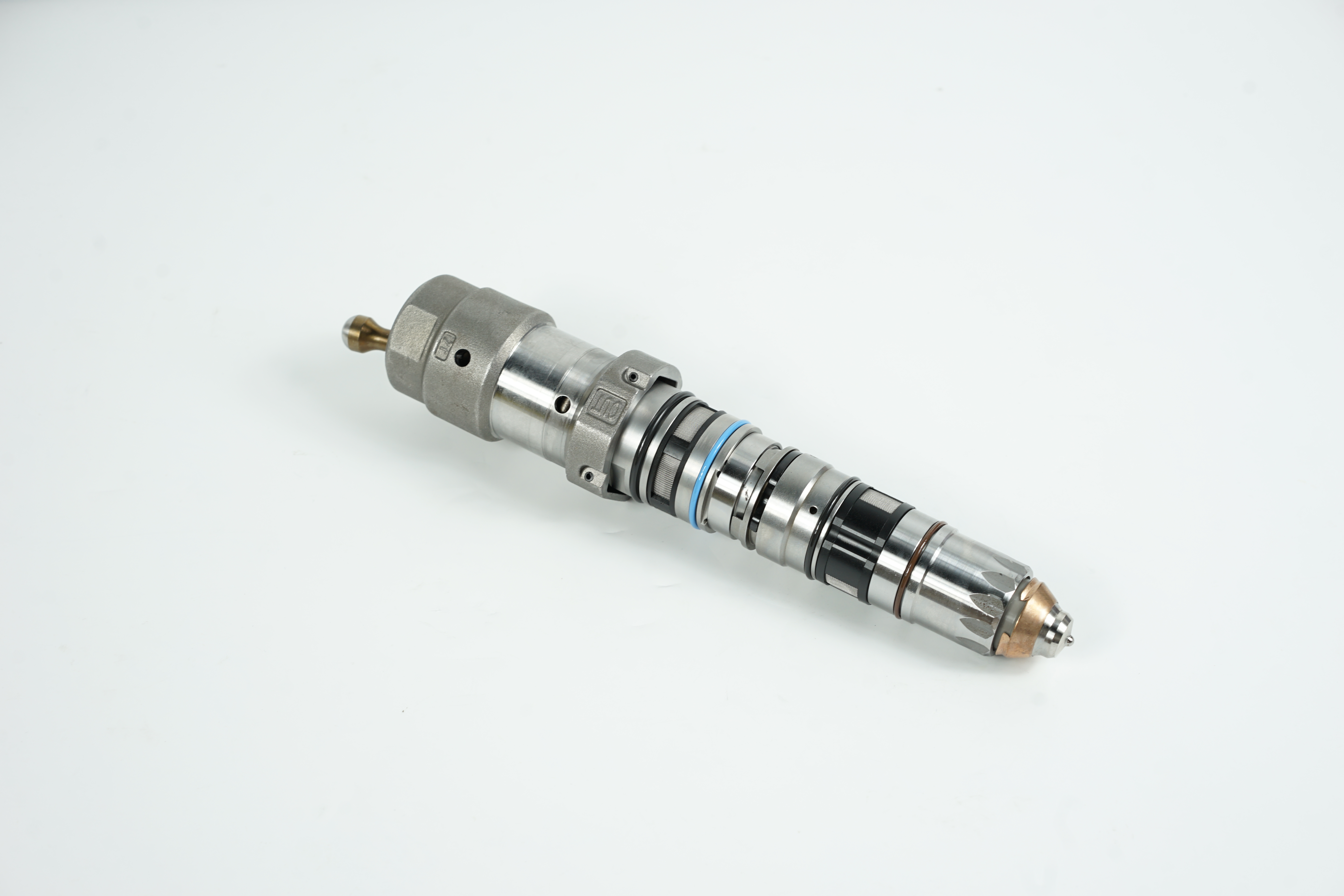
The QSK60 is available with either HPI injection or an MCRS common rail fuel system, and parts for the two are not interchangeable — this applies especially to injectors and fuel pumps. A buyer who compares injection part quotations without first establishing which fuel system version is installed is comparing items that may not be usable at all.
Confirming the version is a documentary step, not a guess. The practical sequence is to capture the engine nameplate information and the existing part number, then match that against the fuel system version recorded for the unit. Buyers sourcing on behalf of a fleet should treat this as a per-unit field rather than a per-model field, because a mixed fleet can carry both versions.
Once the version is fixed, the duty profile changes what you interrogate about the injector. In continuous duty, the relevant questions concern steady behaviour over long hours and the consistency of the replacement set against the original specification. In cyclic duty, the relevant questions concern behaviour across repeated demand changes and cold starts, where the injector is asked to respond to a rapidly changing command rather than hold one.
Either way, injector characteristics must be confirmed for a QSK60 rather than assumed from a generic listing. The same discipline applies to the injection pump. Terminology standardisation helps here: ISO 7876-5:2021 establishes a vocabulary for common rail fuel injection systems for diesel compression-ignition engines and their components, which is useful for making an RFQ and a supplier's technical reply describe the same thing. It is a terminology standard, not a performance or certification requirement.
Turbocharger matching: parameters before part numbers
Because the QSK60 uses two-stage turbocharging and intercooling, the turbocharger is one of the areas where a superficially correct part can still be the wrong part. Turbo matching parameters must be confirmed for large units such as the QSK60. That requirement sits alongside injector characteristics and interface compatibility as one of the three confirmations that belong in the sourcing file.
In practice, matching parameters link the turbocharger to the engine configuration and the application version it serves — a genset running at a fixed 1,500 rpm has a different operating pattern from a haul truck whose load and speed vary, and a different one again from a marine engine at a continuous 1,800 rpm rating. The duty profile is part of the matching context, not separate from it.
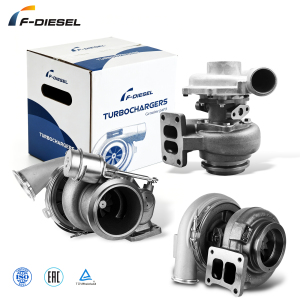
F-DIESEL supplies replacement turbochargers for QSK60 engines in applications including Holset HX82/HX83/HX84 models, used on mining haul trucks and power generator sets. In one documented project, turbochargers were supplied in volume for Caterpillar Terex MT5500 haul trucks, and the units were built to OE specifications for direct fit without modification. For a buyer, the useful evidence point is the documented compatibility claim — model coverage plus the absence of a modification requirement — because that is what can be checked against the machine in front of you.
Interface compatibility and the records that support it
Interface compatibility is the third mandatory confirmation for a QSK60 and the easiest to leave implicit. It covers the question of whether a replacement part physically and functionally mates with the installed configuration: the mounting and connection points, the mating surfaces, and the configuration-specific items that vary between engine versions and ratings.
The evidence that supports an interface claim is documentary. F-DIESEL states that its QSK60 parts are manufactured according to OEM drawings and standards, and that the parts are verified by 8,000-hour endurance testing. For evaluation purposes, those two statements translate into two things a buyer can ask to see: the drawing reference a part was produced against, and the record that ties a delivered batch to its verification and inspection history.
Cylinder heads and blocks add a specific check. F-DIESEL subjects cylinder heads and blocks to precision hydrostatic leak testing to eliminate casting porosity defects, and the corresponding test record is a concrete document to request. For crankshafts, the relevant specification questions are the material version — ductile iron or forged steel — and the dynamic balancing record, since both are stated product characteristics rather than marketing descriptions.
Material traceability follows the same logic. A material test certificate can be provided for a specific part on request, which allows a buyer to link a delivered item to its declared material grade instead of relying on a general catalogue claim.
A purchasing sequence for either duty profile
The same sequence works for a genset fleet and for a construction equipment fleet. What changes is the depth applied at each step.
- Step 1 — Fix the duty profile in writing. State whether the unit runs continuously at high load, or intermittently with cyclic load, and note the application: generator set, mining truck, construction machinery, marine propulsion or auxiliary.
- Step 2 — Fix the engine configuration. Capture the model, the power rating version and, critically, the fuel system version — HPI or MCRS. Record the nameplate information.
- Step 3 — State the part number, not just the part name. A quotation request is only comparable when the part number or nameplate information is supplied; a description alone leaves the supplier to interpret.
- Step 4 — Name the three confirmations explicitly. Turbo matching parameters, injector characteristics and interface compatibility should appear as line items in the RFQ, so that the supplier's reply addresses them rather than leaving them to assumption.
- Step 5 — Ask for the evidence that matches the risk. Drawing reference and batch inspection record for wear parts and powertrain components; leak test record for heads and blocks; balancing record for crankshafts; material test certificate where material grade is being specified.
- Step 6 — Match the emission configuration. A Tier 4 Final QSK60 carries SCR, while Tier 1, Tier 2 and EU Stage IIIA versions do not. Replacement parts should be checked against the configuration actually installed.
What a documented mining application shows — and does not show
One reference project is worth examining because it illustrates how a continuous high-load claim can be evidenced. In China, more than 100 units were supplied for mining haul trucks and power generator sets. Under real mining conditions, the project achieved more than 15,000 hours of trouble-free operation, with a designed service life of at least 15,000 working hours and a 12-month warranty period. The reported results include effective resistance to high temperature, vibration and dust, and a reduction in downtime losses. Customer feedback indicates end-user approval after more than 15,000 hours of continuous operation.
Read carefully, that case supports a narrow and useful conclusion: in one continuous high-load mining environment, a supplied parts and turbocharger programme reached a documented operating duration that matched its designed service life. It does not establish that the same parts will reach the same duration in a cyclic-load excavator fleet, in a different climate, or under a different maintenance regime. Applying the result to a construction equipment buyer would be an extrapolation the evidence does not carry.
What the case does transfer is the structure of the evidence. A buyer can ask a supplier for operating duration, the application conditions the duration was achieved under, the warranty period attached, and the design service life claimed. Those four data points are comparable across suppliers in a way that a general durability adjective is not.
Why the surrounding market context is shifting component scrutiny
External reference points help explain why fuel injection and emissions-related parts attract more procurement attention than their share of the parts list would suggest.
Fortune Business Insights estimated the global diesel engine market at USD 70.99 billion in 2025 and projected a CAGR of 5.40% over 2026–2034; that figure covers full engines rather than replacement parts, so it indicates scale rather than parts demand. Global Market Insights valued the global diesel common rail injection system market at USD 22.6 billion in 2024, a component-level figure that illustrates how significant the fuel injection layer is within the wider engine economy.
On the regulatory side, the U.S. EPA's 2027 heavy-duty engine standards include a nitrogen oxide limit of 0.035 grams per brake horsepower-hour. That is a forthcoming requirement rather than a current one, and it applies to the U.S. market, but it points in a consistent direction: fuel delivery and aftertreatment configurations continue to carry compliance weight, which raises the cost of fitting an injection component that does not match the engine version.
Trade classification adds a practical layer for importers. HS 840999 is identified in the World Bank WITS trade interface as parts for diesel and semi-diesel engines. That classification does not necessarily cover every component in a QSK60 parts order — fuel injection parts and turbocharger parts may fall under separate classifications or national tariff extensions — so customs classification should be validated against the applicable revision and national schedule rather than assumed from a single code.
Outlook: what changes, and what stays fixed
The duty-profile logic is not a temporary consideration. As long as the QSK60 serves both base-load generation and cyclic construction work, its parts will be evaluated against two different sets of failure drivers. What may change is the weight given to the fuel system and aftertreatment side of the parts list, as emission requirements tighten in major markets.
What stays fixed is the confirmation set. Regardless of how the duty profile is classified, a QSK60 buyer still has to close three items before ordering: turbo matching parameters, injector characteristics and interface compatibility. For a large unit, those are the difference between a comparable quotation and a quotation that has to be reworked.
About F-DIESEL
F-DIESEL is an industry-trade integrated group specialising in diesel engine spare parts, established in Shenzhen, China in 1999, with a branch office in Shanghai and an overseas business hub in Hofheim, Germany. The company operates an ISO 9001 quality management system and holds its trademark in more than 70 countries. Its product range covers crankshafts, turbochargers, cylinder heads, cylinder blocks, pistons and piston rings, connecting rods, camshafts, injectors, injection pumps and fuel injection systems, with emphasis on QSK60 injectors and QSK60 turbochargers.
Manufacturing is structured as a headquarters R&D and QC centre combined with invested manufacturing bases and a strategic partner factory network. An invested turbocharger plant has an annual capacity of 200,000 pieces, and the company cooperates with qualified OEM-grade manufacturers for cylinder blocks, cylinder heads, common-rail parts and sensors. Parts are manufactured according to OEM drawings and standards and verified by 8,000-hour endurance testing, with full incoming and outgoing inspection and batch test reports available. A QSK60 overhaul kit is offered as an all-in-one package intended to reduce the coordination cost of sourcing from multiple suppliers. On-site customization requests are supported, and the company serves OEM matching projects, overhaul and spare parts supply projects, and equipment maintenance and system matching projects.
A group presentation covering product scope, facilities and service network is available for download: F-DIESEL Group Presentation 2026 (PDF).
FAQ
How does a QSK60 parts list change between a generator set and a piece of construction equipment?
The component families overlap, but the priority order differs. A generator set running continuously at 1,500 rpm keeps the engine at a stable high load, so time at temperature and continuous friction dominate the wear pattern. Construction equipment operates under cyclic load, where repeated heating and cooling, peak torque events and cold starts dominate. The parts plan should be organised around the failure driver that matches the actual duty, not around a generic list.
How can a buyer confirm whether a QSK60 uses HPI or MCRS before ordering fuel injection parts?
The fuel system version must be confirmed from the unit itself rather than inferred from the model. Capturing the nameplate information and the existing part number allows the version to be matched against the engine record. This matters because HPI and MCRS fuel system parts are not interchangeable, especially injectors and fuel pumps, so a part ordered against the wrong version cannot be used.
Which turbocharger parameters need to be confirmed for a QSK60?
For large units such as the QSK60, turbo matching parameters must be confirmed as part of the sourcing process, alongside injector characteristics and interface compatibility. Because the engine uses two-stage turbocharging and intercooling, and because it is applied across generator set, mining, construction and marine versions with different ratings, the turbocharger must be matched to the specific engine configuration rather than selected on model name alone.
Is a parts kit a reasonable approach for a QSK60 overhaul?
An overhaul kit packages the required items together and reduces the cost of coordinating multiple suppliers, which is the stated purpose of the QSK60 overhaul kit offering. Whether a kit is appropriate depends on the scope of the work actually needed. Because the fuel system version and interface compatibility still have to be confirmed, a kit should be specified against the same confirmed engine configuration as individual parts.
What documentation should accompany a QSK60 parts delivery?
Useful documentation depends on the component. For wear parts and powertrain components, a drawing reference and batch inspection record allow the delivered item to be linked to its production standard. For cylinder heads and blocks, a hydrostatic leak test record addresses casting porosity. For crankshafts, the dynamic balancing record and the material version — ductile iron or forged steel — are the relevant points. A material test certificate can be provided for a specific part on request.
Есть вопросы или нужны дополнительные детали?
Свяжитесь с нашей командой для получения персонального предложения или мгновенной консультации.
Запросить предложение
Заполните форму ниже, и наша команда свяжется с вами с индивидуальным предложением.
Прямой чат WhatsApp
Предпочитаете общаться в реальном времени? Напишите нам в WhatsApp для мгновенной помощи и быстрых ответов.
- Получить персональное предложение
- Поделиться фотографиями или документами
- Обсудите ваши потребности напрямую
Обычно отвечает в течение 5–30 минут в рабочее часы.