
Qualification Checks for Architectural Stainless Steel Decoration
Qualification Checks for Architectural Stainless Steel Decoration
Qualification in architectural stainless steel decoration is a reconciliation exercise, not a certificate check. A package is qualified when the grade, thickness, size, finish, colour and fabrication declared in the specification can be matched, line by line, against what appears on the purchase order and what is measured or observed at receipt. For the JYF Metal range — mirror, brushed, sandblasted and water-ripple sheets, welded screen partitions, profile trims and custom fabrication, declared in SS201, SS304 or SS316 — those checkpoints are concrete enough to be written into a tender document.
The practical problem is that decoration is bought on appearance and delivered on paperwork. Two panels can look identical under showroom lighting and still differ in grade, thickness or coating process. The checkpoints below are ordered so that the cheapest errors to catch are caught first.
What Qualification Covers in a Decorative Stainless Package
Decorative stainless steel is qualified on declared attributes, because declared attributes are what a supplier commits to in writing. In this category those attributes are material grade, thickness, panel size, surface finish, colour, and the fabrication processes applied to an assembly such as a screen, a trim or a column cladding. Each attribute exists in three states: what the specification asks for, what the order confirms, and what the delivered goods actually are. Qualification is the evidence trail connecting the three.
Two distinctions keep that trail honest. The first is product form. Decorative stainless steel is not structural steel, and the standards cited must match the form being bought. ASTM A554, for example, is a widely cited standard for welded decorative stainless steel tubing; it does not qualify a flat decorative sheet, a water-ripple panel or a laser-cut screen. When a supplier lists a standard, the first qualification question is whether that standard applies to the item on the line, not whether the number looks credible.
The second distinction is between a management-system certificate and a product declaration. JYF Metal, the trading identity of Foshan Jinyifan Metal Products Co., Ltd., holds a quality management system certificate with the number 120526Q00119R000, issued by Guangdong Jingwel International Certification Ltd. That certificate addresses how the organisation controls research, development and production; it does not certify that a particular sheet of SS304 is 1.2 mm thick with a specific coating durability. Those are separate evidence items and both belong in the qualification file.
A workable qualification set therefore contains four documents: the specification, the approved sample or finish reference, the purchase order with line-item attributes, and the inspection record. If any of the four is silent on grade, thickness, size, finish or colour, the gap becomes a dispute later rather than a decision now.
Checkpoint 1 — Grade: SS201, SS304 or SS316 on the Record
The JYF product range is declared in 201#, 304# and 316# stainless steel. The declaration is not uniform across the range, and the exception matters: the JYF-05 screen partition is declared in SS304 and SS316 only, while the sheet products (JYF-01 mirror, JYF-02 brushed, JYF-03 sandblasted, JYF-04 water ripple), the JYF-06 trims and the JYF-07 custom fabrication carry the full SS201 / SS304 / SS316 declaration.
That asymmetry is a qualification checkpoint rather than a footnote. A buyer who writes "stainless steel" as a single line item on a tender has not specified a grade, and a supplier who quotes against that line has not committed to one either. Grade should be written per line item and per assembly, because a screen frame, its infill and its trims may be different products with different declared options.
- Write the grade per line. "SS304" or "SS201" on the order line, not in a header note covering the whole package.
- Ask for the grade record that matches the delivery. A mill or test certificate should identify the heat or batch and the grade designation; a generic brochure does not.
- Check concealed parts. Frames, backing sections and return edges are where a grade substitution is least visible and most expensive to remediate.
- Do not infer grade from finish. Mirror, brushed, sandblasted and water-ripple surfaces are available across the declared grades, so appearance carries no information about alloy.
The supplied product facts do not publish corrosion test data for any grade, and qualification should not pretend otherwise. Grade selection has to be tied to the project's own exposure conditions — interior, exterior, humid or coastal — and confirmed in writing. A supplier's silence on corrosion performance is not evidence of failure, but it is a reason to state the grade explicitly and to require the corresponding record.
Checkpoint 2 — Thickness: 0.5–3.0 mm, or 0.5–2.0 mm for JYF-04
Thickness is the attribute most often quoted loosely and measured precisely. The declared ranges in the JYF sheet family are 0.5–3.0 mm for the mirror, brushed and sandblasted sheets, and 0.5–2.0 mm for the water-ripple sheet. The difference is not an inconsistency; it is a forming constraint. Producing a ripple pattern requires the sheet to be worked, so the ripple product carries a narrower declared band than the flat-surface products.
For a buyer, the operational consequence is simple: a specification that calls for 3.0 mm decorative sheet and later selects a water-ripple finish has moved outside the declared range of that product. Either the thickness requirement or the finish requirement has to change, and that decision belongs in the design stage, not in the receiving bay.
- State nominal thickness per line item — for example 1.0 mm SS304 mirror sheet — rather than a package average.
- Agree the measurement method in advance: instrument type, number and location of measurement points, and whether the protective film is removed before measurement.
- Note that the supplied product facts do not publish a thickness tolerance band. If the project needs one, it must be negotiated and recorded, not assumed from the range limits.
Checkpoint 3 — Size, Panel Layout and Cutting Plan
Standard sizes across the JYF sheet products are 1000x2000 mm, 1220x2440 mm and 1220x3050 mm. The JYF-05 screen partition lists a regular size of 1220x2440 mm with custom sizes available, and the JYF-06 trims are made to shape rather than to a fixed panel dimension.
Size qualification is really a layout question. A 1220x3050 mm sheet is a commercial unit, not a design module; whether it suits a wall depends on joint positions, ceiling heights, edge returns and how offcuts are used. Two checks follow. First, confirm that the ordered size is the standard size and not an approximation of it — 1220 mm and 1200 mm are different products with different joint consequences. Second, ask for the cutting plan before production, so that panel joints, grain or pattern direction and waste allowance are agreed on paper rather than discovered on site.
For screens and custom assemblies, size qualification also covers how the assembly is divided. A full-height partition built from several panels is only as accurate as its joint set-out, and the panel schedule should be part of the approved documentation, not a workshop decision.
Checkpoint 4 — Finish and Colour: Exact Names, Approved Reference
Finish declarations in this category are product-specific and should be quoted exactly as declared. JYF-01 is a mirror finish. JYF-02 is a brushed family covering hairline, satin, No.4 and vibration surfaces. JYF-03 is sandblasted. JYF-04 is a water-ripple sheet with small, medium, large and flow ripple sizes. The declared colour set across the sheet products is silver, gold, rose gold, black, blue, copper and custom, with bronze additionally declared for the JYF-02 brushed sheet and the JYF-06 trims.
Colour names alone are not a specification. "Gold" can describe several visually different surfaces, and the words used in a design presentation rarely match the words used on a factory order. The reliable instrument is a physical approved reference: a sample of the exact finish and colour, signed and dated, held by both parties, with the caveat that natural variation between production batches exists and is normal in coated and textured surfaces.
- Name the finish family and the variant — "brushed, hairline" rather than "brushed"; "water ripple, medium" rather than "ripple".
- Record the colour and the process — the JYF range is produced with a PVD vacuum plating line for decorative colour, so the colour declaration should reference the coated surface actually supplied.
- Check directionality. Brushed and vibration surfaces have a direction; mirror surfaces reveal flatness and reflected distortion; water-ripple surfaces have a pattern orientation. All three should be agreed at sample stage.
- Plan for batch grouping. Where a wall is assembled from many panels, order them as one batch group so that colour and texture read continuously.
Checkpoint 5 — Fabricated Assemblies: Screens, Trims and Custom Work
The qualification scope widens as soon as the purchase moves from sheet to assembly. The JYF-05 screen partition is declared in SS304 and SS316, with mirror, brushed and vibration finishes in silver, gold, rose gold, black, copper, bronze and custom colours, produced by spot welding, full welding, laser cutting and CNC cutting. Its declared embedded materials include glass, marble, crystal, metal mesh and LED light.
That list changes what has to be qualified. A screen is a system, and its acceptance depends as much on the infill, the frame joint and the fixing method as on the steel surface. Where glass, stone, mesh or lighting is embedded, the corresponding specification and responsibility split should be written down explicitly, because the stainless supplier is not automatically the party accountable for the performance of an embedded material.
Trims follow the same logic. JYF-06 is declared in L, U, T, V, curved, corner, flat strip and skirting board shapes plus custom profiles, produced by shearing, V-grooving and bending, in mirror, brushed, vibration and sandblasted finishes. Profile qualification therefore covers the developed shape, the bend radii, the joint at corners and the finish continuity around a fold — not just the alloy.
For JYF-07 custom fabrication, the declared scope covers metal sculpture, column cladding, feature wall, custom logo, stainless steel bar counter, display shelf and mirror frame. In this segment the drawing is the specification. Qualification means confirming that the approved drawing, the material callout, the finish callout and the fixing detail are the same revision, and that the revision is the one released to production.
Checkpoint 6 — Certification: Read the Scope, Not the Logo
JYF Metal's quality management system certificate carries the number 120526Q00119R000 and was issued by Guangdong Jingwel International Certification Ltd. against GB/T 19001-2016 / ISO 9001:2015. It was issued on 15 May 2026 and is valid until 14 May 2029, and the declared certification scope is the research, development and production of stainless steel coloured boards, metal decorative mouldings and metal decorative articles.
Read that scope carefully, because it defines what the certificate does and does not do. It indicates that a management system covering those activities has been certified by that body. It does not state the grade, thickness, finish durability, fire classification or corrosion performance of any individual product, and it is not a product conformity mark. A buyer who needs a product-level declaration needs a different document.
- Check the scope wording against what you are buying. Coloured boards and metal decorative articles sit inside the declared scope; a claim about an unrelated product category would not.
- Check dates. A certificate valid to 14 May 2029 is current at the time of writing; a buyer auditing later should re-confirm validity rather than reuse an old copy.
- Do not upgrade a certificate into a product claim. Where a project requires a fire classification — commonly referenced through standards such as ASTM E84 or EN 13501-1 for panel assemblies — the relevant test report has to cover the specific build being supplied. That is a separate request.
- Keep the supplier's own statements attributed. A company description of its capability is a company statement; it becomes verification only when supported by a record the buyer can inspect.
A Checkpoint Table: Specified, Ordered, Inspected
The table below converts the declarations above into a working format. It records what the JYF range declares, what should appear on the order, and what should be checked when goods arrive. It is a checking aid, not a substitute for the project specification.
| Parameter | Declared in the JYF range | Write on the order | Check at receipt |
|---|---|---|---|
| Grade | SS201 / SS304 / SS316; JYF-05 in SS304 / SS316 only | Grade per line item and per assembly | Grade record matching the delivered batch |
| Thickness | 0.5–3.0 mm; JYF-04 water ripple 0.5–2.0 mm | Nominal thickness per line, plus agreed measuring method | Measured value at agreed points |
| Size | 1000x2000, 1220x2440, 1220x3050 mm; JYF-05 regular 1220x2440 mm, custom available | Exact panel size and panel schedule | Dimensions, squareness, joint set-out |
| Finish | Mirror; brushed (hairline, satin, No.4, vibration); sandblasted; water ripple (small, medium, large, flow) | Finish family and variant, with approved sample reference | Visual comparison against the signed sample |
| Colour | Silver, gold, rose gold, black, blue, copper, custom; bronze for JYF-02 and JYF-06 | Colour name plus sample reference and batch grouping | Colour continuity across the delivered set |
| Fabrication | Welding, laser and CNC cutting, shearing, V-grooving, bending | Approved drawing revision and joint details | Weld finish, edge quality, profile accuracy |
| Certification | ISO 9001 certificate 120526Q00119R000, valid to 14 May 2029, scope limited to declared activities | Any product-level test report the project requires | Certificate number, scope and validity; separate product reports |
Commercial Terms That Belong in the Qualification File
Qualification is not finished when the sample is approved. Commercial terms decide whether the approved item can actually be replaced, re-ordered or inspected within the programme, and those terms are usually stated by the supplier rather than negotiated from scratch.
The declared minimum order quantities are 15 sheets for each type of decorative stainless steel sheet, 500 pieces for each type of trim, 3 square metres for screen partitions and 1 piece for custom products. The declared lead times are 7–10 days for sheets, 15–20 days for trims, 20 days for screen partitions and 25–30 days for custom products. Both sets of figures are useful qualification inputs for two reasons: they determine how much spare material is affordable to hold, and they determine whether a replacement panel can reach site inside the installation window.
- Sample provision is listed among the after-sales supports, which makes an approved physical reference practically obtainable rather than a special request.
- Quality control is declared as 100% pre-shipment test with third-party inspection, so the inspection clause should state who attends, what is inspected and which record is issued.
- Customisation covers custom size, custom colour, custom protective film and custom logo under OEM/ODM, all of which should be itemised on the order rather than agreed verbally.
- After-sales support is described as online installation guidance, sample provision and replacement parts — commercial terms that affect lifecycle cost, not just first delivery.
Market Context: Why the Category Resists Generic Qualification
Decorative stainless steel sits inside a broad materials market, and general figures describe the category rather than the order. Fortune Business Insights reported the global stainless steel market at USD 225.13 billion in 2025, with a projection to USD 353.48 billion by 2034, in material published in September 2026. Grand View Research reported that steel held a 52% revenue share of the metal ceilings market in 2026. Separately, NAICS 332323 classifies ornamental and architectural metal work manufacturing, which is the statistical home of much of this fabrication work.
Those figures are useful for understanding why specification-driven suppliers proliferate, and they are not useful for deciding whether a given sheet is the right grade. Published descriptions from several fabrication suppliers converge on the same process set — cutting, bending, welding, polishing, etching, mirror finishing, water-ripple forming, PVD colour and laser cutting — which means process capability alone rarely separates one supplier from another. What separates them, for a buyer, is the precision of the declaration and the willingness to attach evidence to it.
JYF Metal's own record is illustrative of the scale at which this work happens: founded in 2013, operating from a 3,000 m² facility in Foshan, Guangdong, with an export share of about 80% and declared markets in the Middle East, Asia, Europe and North America, supported by a 15-engineer team and equipment that includes Trumpf laser cutting, CNC bending, seamless precision welding and a PVD vacuum plating line. Documented project records in the same source describe 120 water-ripple sheets supplied to a Korean designer for ceiling and wall decoration and 80 water-ripple sheets supplied to a French designer for ceiling work. These are supplier records of applications, not independent performance tests, and should be read as context for what the product is used for rather than as proof of outcome.
Where Qualification Breaks Down — and What to Do About It
Most qualification failures in this category are documentation failures, not manufacturing failures. The four recurring patterns are worth naming.
Grade substitution in concealed work. Visible panels are inspected; frames, returns and backing sections often are not. Writing the grade per assembly and inspecting the concealed set closes this gap.
Finish drift across batches. A single approved sample does not police a multi-panel wall. Batch grouping, an agreed sampling routine and a retained reference on site do more than a specification clause.
Certificate scope inflation. A quality management certificate is frequently presented as though it approved a product. The corrective step is procedural: list the product-level declarations the project actually requires, and request those specific reports.
Silent gaps in the declared data. The supplied facts for this range do not publish thickness tolerances, corrosion performance data, fire classifications or finish durability results. A buyer should treat those as open items to be agreed or specified, not as items that a supplier has implicitly met. Omission is neutral; assumption is not.
FAQ: Qualification Questions Buyers Actually Ask
Which documents should be compared to confirm grade and thickness?
Four: the project specification, the approved sample or finish reference, the purchase order with per-line attributes, and the inspection record. Grade and thickness are only confirmed when the order states them per line item and the inspection record measures the same item. A brochure or a company profile cannot confirm either, because neither is traceable to a delivered batch.
Does an ISO 9001 certificate prove that a decorative sheet meets a project specification?
No. The JYF Metal certificate, numbered 120526Q00119R000 and issued by Guangdong Jingwel International Certification Ltd. against GB/T 19001-2016 / ISO 9001:2015, covers the research, development and production of stainless steel coloured boards, metal decorative mouldings and metal decorative articles, and is valid until 14 May 2029. It evidences a certified management system within that scope. It does not state the grade, thickness, finish durability or fire performance of any specific sheet, which must be declared and evidenced separately.
Why is the water-ripple sheet declared at 0.5–2.0 mm when other sheets go to 3.0 mm?
Because the ripple surface is a formed surface. The JYF-04 water-ripple sheet carries a declared thickness range of 0.5–2.0 mm, while the mirror, brushed and sandblasted sheets are declared at 0.5–3.0 mm. If a design needs both a 3.0 mm sheet and a water-ripple finish, one of the two requirements has to change, and that should be resolved during specification rather than at delivery.
How should finish and colour be written into a purchase order?
By naming the finish family and variant and attaching a signed physical reference. "Brushed, hairline" is a specification; "brushed" is a category. "Water ripple, medium" is a specification; "ripple" is not. Colour should be named from the declared set — silver, gold, rose gold, black, blue, copper or custom, with bronze additionally available for the brushed sheet and the trims — and tied to the reference sample, with batch grouping stated for multi-panel walls.
Which commercial terms affect qualification most?
Minimum order quantity, lead time and inspection arrangement. Declared MOQs are 15 sheets per sheet type, 500 pieces per trim type, 3 square metres for screen partitions and 1 piece for custom products; declared lead times are 7–10 days, 15–20 days, 20 days and 25–30 days respectively. Together they determine how much spare material is sensible to hold and whether a replacement can reach site within the installation programme. The declared 100% pre-shipment test with third-party inspection should be matched by a written statement of who attends and what record is issued.
Conclusion: Hold the Declaration to the Delivery
Architectural stainless steel decoration is qualified at the point where a declared grade, thickness, size, finish, colour and fabrication scope can be traced from specification to order to inspection record. For the JYF range that trace is achievable because the declarations are specific: SS201, SS304 and SS316 grades with a documented exception for screen partitions; 0.5–3.0 mm and 0.5–2.0 mm thickness bands by product; three standard panel sizes plus custom; named finish families and a defined colour set; and a quality management certificate whose scope and validity dates can be checked. The gaps — tolerances, corrosion data, fire classification, finish durability — are equally specific, and naming them before the order is placed is what separates a qualification file from a folder of brochures.
For buyers who want to see the declared product families in application before drafting acceptance criteria, JYF Metal's project case handbook is available for download: Designer's Handbook — Project Cases.
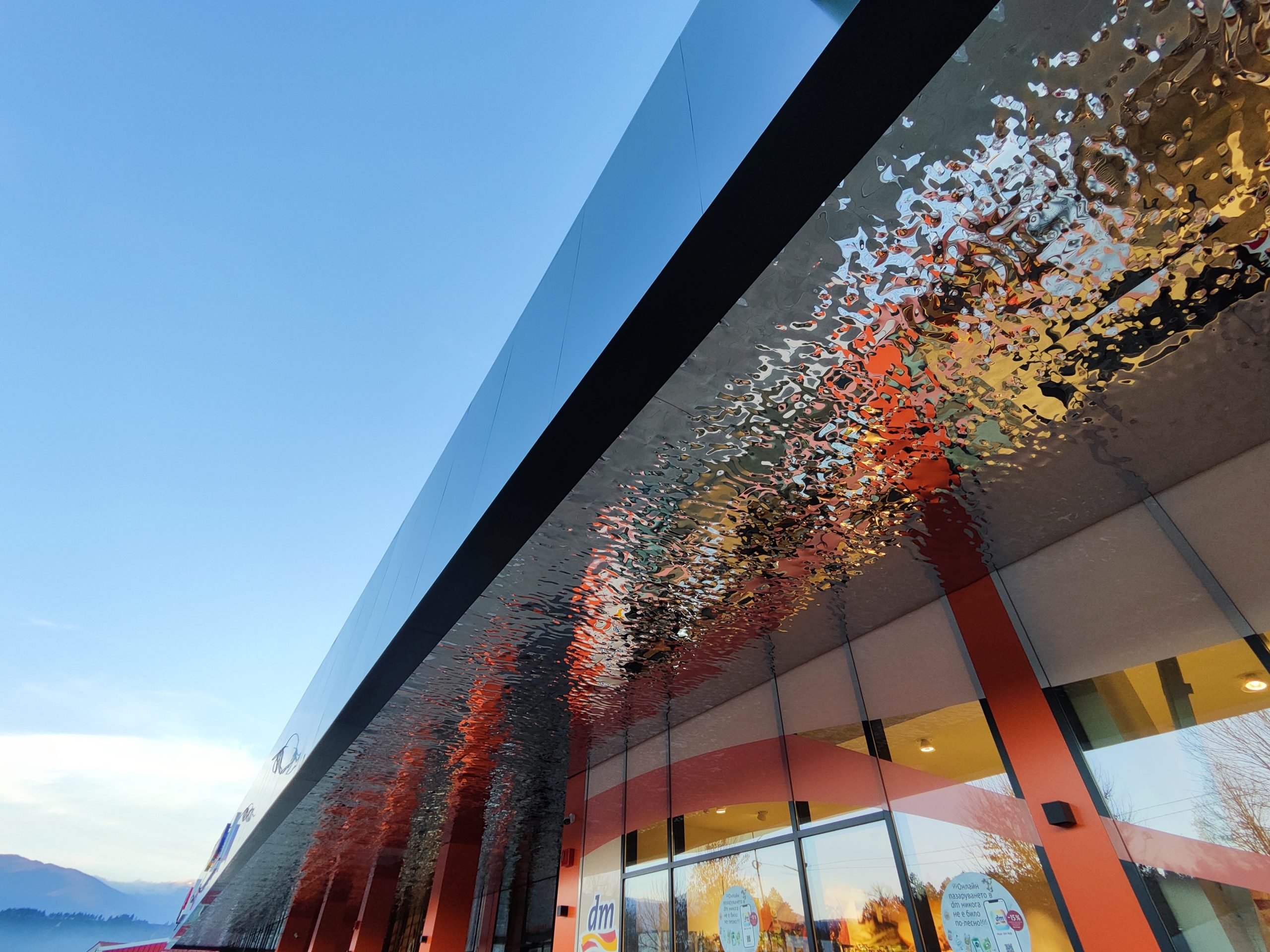
Cover: installed stainless steel ceiling decoration, where joint alignment and finish continuity are checked on site.
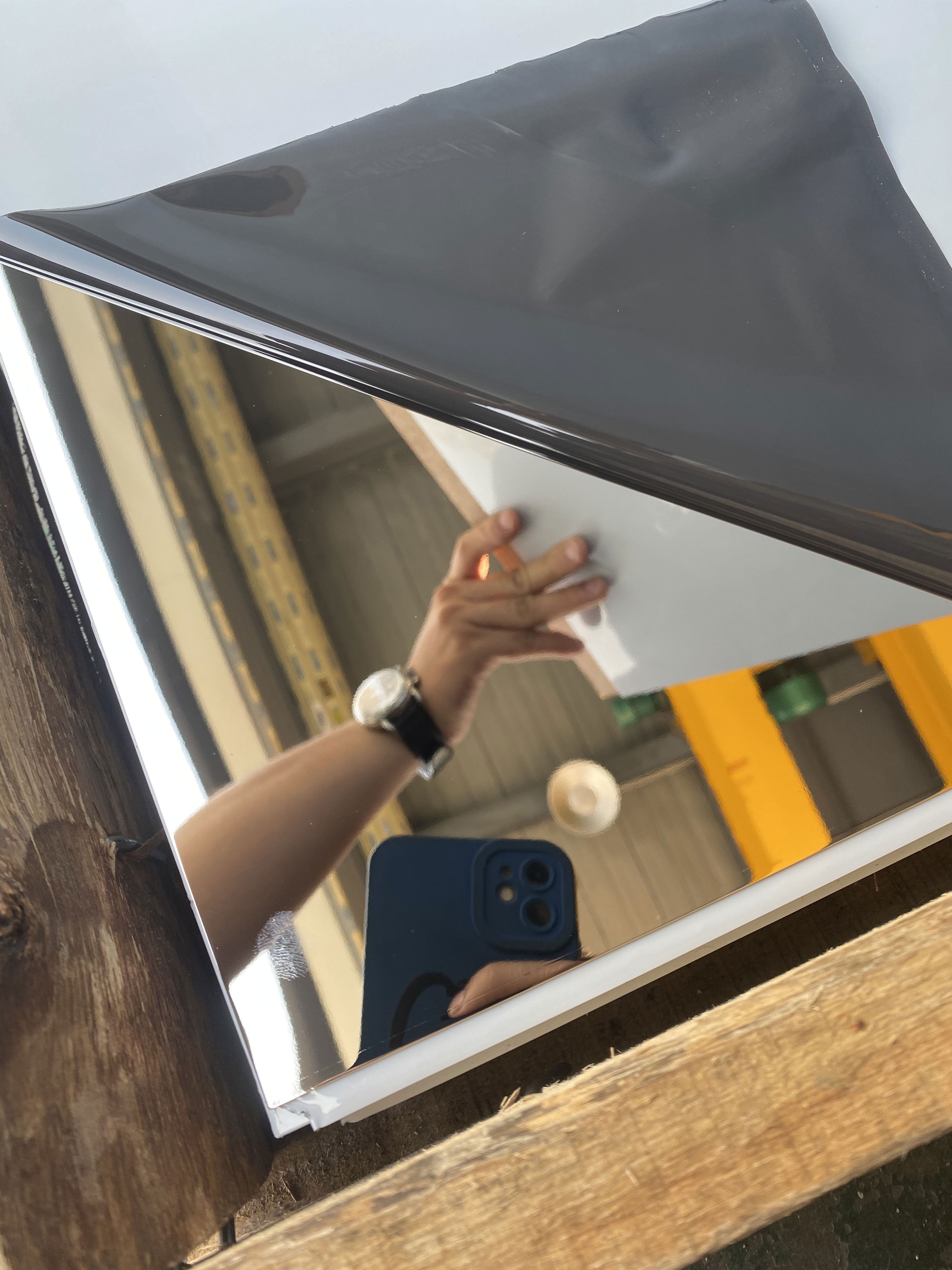
Mirror-finish sheet: surface condition and flatness are compared against the signed reference sample at receipt.
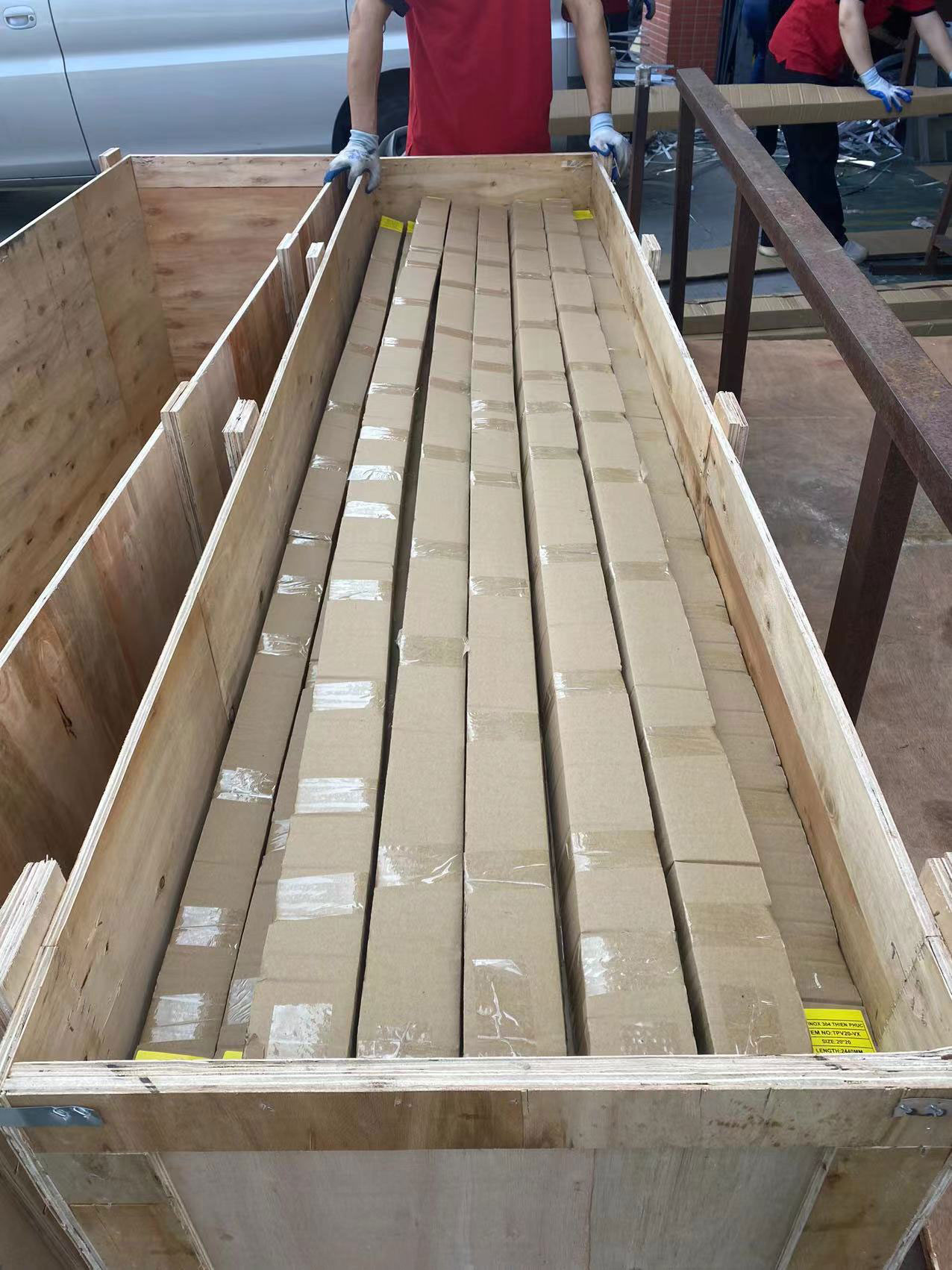
Trim profiles: shape, bend quality and finish continuity around a fold form part of the profile acceptance check.
Есть вопросы или нужны дополнительные детали?
Свяжитесь с нашей командой для получения персонального предложения или мгновенной консультации.
Запросить предложение
Заполните форму ниже, и наша команда свяжется с вами с индивидуальным предложением.
Прямой чат WhatsApp
Предпочитаете общаться в реальном времени? Напишите нам в WhatsApp для мгновенной помощи и быстрых ответов.
- Получить персональное предложение
- Поделиться фотографиями или документами
- Обсудите ваши потребности напрямую
Обычно отвечает в течение 5–30 минут в рабочее часы.