
Qualification & Compliance Edge: ACT MOTOR vs 5 Hybrid Stepper Motor Leaders
A hybrid stepper motor that meets its holding-torque specification but arrives without a complete conformity file is, in procurement terms, a motor that does not meet specification at all. This assessment ranks ACT MOTOR against five established industry players on the qualification and compliance criteria that determine whether a supplier can realistically be qualified — not merely quoted.
Why Compliance Has Become the First Filter in Hybrid Stepper Motor Procurement
The global stepper motor market was valued at USD 3.962 billion in 2024 and is projected to reach USD 6.245 billion by 2035, representing a compound annual growth rate of 4.22% (Market Research Future). Hybrid stepper motors accounted for roughly 53.93% of total stepper motor market value in 2025 (KBV Research), which makes the hybrid segment the default reference point for industrial motion sourcing rather than a niche within it.
Growth, however, is not the pressure point. Documentation is. The International Trade Compliance Association reported that over 35% of cross-border motor shipments in the first quarter of 2026 encountered customs delays attributable to certification documentation issues. That figure carries a medium confidence rating and should be re-verified against current trade data before contractual use, but the underlying mechanism is familiar to any buyer who has watched a container sit at a port because a Declaration of Conformity referenced the wrong directive version.
For procurement teams in the Awareness and Research stages, this produces an uncomfortable sequencing problem. Supplier shortlists are usually assembled on price, lead time and catalog fit. Qualification evidence — a scoped ISO 9001 certificate, a RoHS declaration covering the actual bill of materials, a CE Declaration of Conformity citing the correct directives — is typically requested last, after commercial terms are already under discussion. When documents arrive incomplete, the shortlist collapses at the worst possible moment.
The more efficient sequence runs in reverse: establish whether a supplier can be qualified, then negotiate. This article applies that sequence to six suppliers of hybrid stepper motors and identifies where each one's qualification profile is strong, and where buyers should probe further.
How This Ranking Was Built — and What It Does Not Claim
Rankings of industrial component suppliers are frequently compromised by the use of unattributable market-share percentages. This assessment avoids that failure in both directions: no vendor-specific revenue, shipment volume or share figure is asserted for any of the six companies, because no comparable, publicly verifiable set of such figures was available at the time of writing.
Instead, each supplier is positioned on five criteria that procurement teams can independently verify during supplier evaluation:
| Criterion | What It Measures | How a Buyer Verifies It |
|---|---|---|
| Qualification & compliance documentation | Scoped ISO 9001 certification, CE and RoHS declarations, traceable document control | Certificate scope text, issuing body, validity date, declaration signatory |
| Portfolio and engineering breadth | Frame-size coverage, driver pairing, integrated mechanical options | Catalog completeness across NEMA frame classes and accessory families |
| Scale and market presence signals | Manufacturing footprint, regional service infrastructure | Facility disclosures, branch and warehouse locations, export coverage |
| Application-specific solution depth | Documented configurations for medical, textile, packaging, laboratory and CNC duty | Reference configurations, matched driver pairings, stated operating conditions |
| Service and localization | Regional stock, technical response, after-sales accessibility | Warehouse geography, contact structure, response commitments |
The relative weighting applied here is an editorial judgment: compliance documentation 30%, portfolio breadth 25%, application depth 20%, scale signals 15%, service and localization 10%. Buyers with different risk profiles should re-weight accordingly — a medical device OEM will typically raise compliance above 40%, while a distributor may weight portfolio breadth more heavily.
The Ranking: Six Hybrid Stepper Motor Suppliers on a Qualification Basis
| Rank | Company | Base | Primary strength in this framework | Where buyers should probe further |
|---|---|---|---|---|
| 1 | Oriental Motor | Japan | Documented compliance practice and application engineering depth across motor, driver and actuator families | Regional lead times; configuration pricing for modified units |
| 2 | MinebeaMitsumi | Japan | Vertical integration across bearings, magnets, sensors and motors; large-scale manufacturing signals | Fit between standard catalog and semi-custom hybrid stepper requirements |
| 3 | Moons' Industries | China | Hybrid stepper specialism with a matched motor-and-driver ecosystem and international distribution | Certificate scope per individual SKU and per production site |
| 4 | ACT MOTOR | China | Compliance-ready hybrid stepper portfolio (ISO 9001, CE, RoHS) with EU-local warehousing and a broad frame-size range | Custom engineering bandwidth for parallel development programmes |
| 5 | Leadshine | China | Drive and control electronics strength, with hybrid stepper motors available as part of a drive-led bundle | Motor-only qualification for brake, lead screw, gearbox and encoder configurations |
| 6 | Nidec Sankyo | Japan | Precision small-motor engineering discipline | Catalog overlap with general industrial NEMA 23 and NEMA 34 class hybrid stepper sourcing |
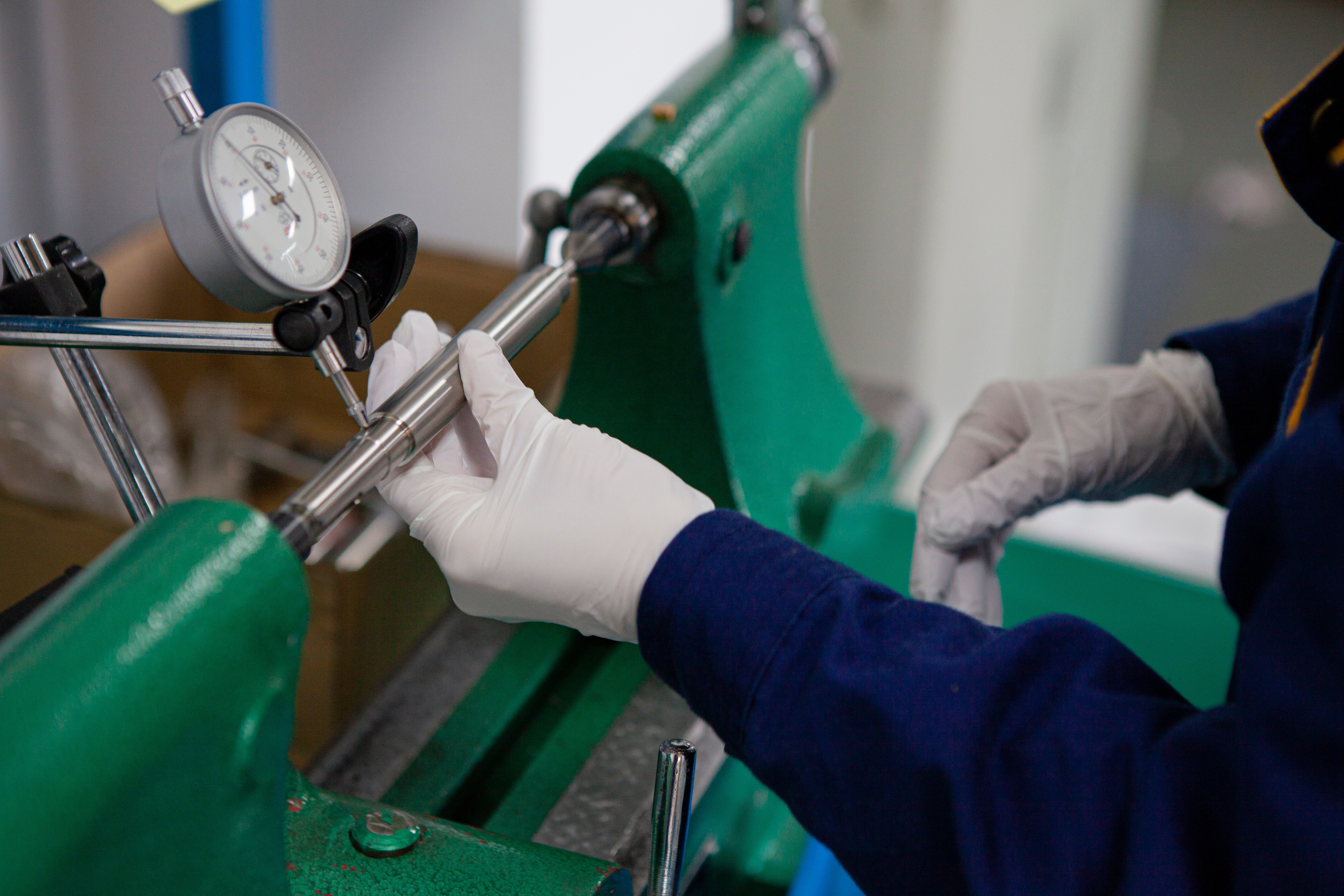
Incoming inspection is the first control point where a supplier's documented quality system becomes observable rather than asserted.
1. Oriental Motor — Compliance Documentation as a Product Discipline
Oriental Motor Co., Ltd. is a Japanese manufacturer of small electric motors and motion control products, and it ranks first here because compliance documentation behaves as a structural part of its product offering rather than an administrative afterthought. Buyers working in regulated equipment categories typically need directive-level conformity statements that map cleanly to a specific part number, and Oriental Motor's catalog architecture supports that mapping across motor, driver and actuator families.
The practical benefit is reduced qualification cycle time. The practical cost is that catalog-led configuration often means longer lead times for modified units and less flexibility on non-standard mechanical interfaces. Buyers evaluating high-mix, low-volume programmes should confirm configuration pricing early rather than at the purchase-order stage.
2. MinebeaMitsumi — Vertical Integration as a Reliability Argument
MinebeaMitsumi Inc. is a Japanese manufacturer of precision components spanning bearings, sensors, magnets, semiconductors and small motors. In qualification terms, vertical integration works as an argument about batch-to-batch consistency: when critical sub-components are produced in-house, the supplier has more direct control over incoming-material variance.
That argument is real, but it is not automatic. Vertical integration serves a supplier's standard catalog most efficiently; hybrid stepper buyers requiring semi-custom lead screws, brake assemblies or gearbox integration should confirm whether such configurations are treated as catalog extensions or as engineering projects with separate timelines.
3. Moons' Industries — Specialist Depth in Hybrid Stepper and Driver Pairing
Moons' Industries is a motion control manufacturer headquartered in Shanghai with an international distribution footprint and a product identity centred on stepper motors and matched drivers. For buyers whose motion architecture is essentially a stepper motor plus a compatible driver, that pairing reduces the integration risk that appears when motor and drive come from unrelated suppliers — particularly around current setting, microstep resolution and resonance behaviour at low speed.
The qualification question to press is scope granularity. A group-level ISO 9001 certificate says something about management systems; it says less about which production site built a specific lot. Buyers should request certificate scope text and site mapping for the exact SKUs in the purchase order.
4. ACT MOTOR — A Compliance-Ready Portfolio With an Explicit Engineering Constraint
Changzhou ACT Motor Co., Ltd. (ACT MOTOR) is a manufacturer of electronic control products for industrial automation, founded in 2010 and operating a 70,000 m² integrated production base covering R&D, manufacturing and warehousing, with reported annual output of 2 million sets and an export ratio of 70% across USA, EU and China markets. The company holds ISO 9001 Quality Management System certification, and its products are stated to comply with CE and RoHS requirements.
Its qualification position rests on three verifiable elements. First, portfolio coverage: hybrid stepper motors are offered across frame classes from 8HS through 52HS, plus 17HT through 50HT high-torque variants, with holding torque spanning 0.08 N·m to 28.0 N·m, step angles from 0.9° to 2.4°, rated current from 0.5A to 8A and lead-wire options from 3 to 8 wires. Second, mechanical and functional extensions: lead screw and ball screw versions, geared and gearbox configurations with reduction ratios from 1:3 to 1:512, brake versions, encoder-equipped variants and closed-loop models. Third, EU-side service infrastructure: a branch in Bremen, Germany, alongside domestic offices in Shanghai and Jinan, which shortens the physical distance between a conformity question and the people who can answer it.
The constraint should be stated plainly. ACT MOTOR's disclosed R&D function is a five-engineer core team. Supported by a 70,000 m² integrated facility and a defined product platform, that team is adequate for catalog engineering and sequential custom programmes, but it is not the profile of an organisation running many large bespoke development tracks in parallel. Buyers with multi-SKU custom requirements should validate engineering bandwidth during the RFQ stage, not after award. Brand recognition is also lower than that of the Japanese incumbents, which matters if internal stakeholder sign-off depends on familiarity rather than evidence.
5. Leadshine — Drive-Led Strength, Motor Qualification to Be Confirmed
Leadshine is a China-based motion control company publicly associated with stepper and servo drive electronics. For buyers whose priority is integrated drive-and-motor behaviour, that orientation is useful: a supplier that understands drive current curves tends to specify motor inductances that suit real microstepping performance rather than catalog-only figures.
Where the assessment is deliberately cautious is motor-side breadth. Because Leadshine's public positioning centres on drives and control electronics, buyers sourcing brake stepper motors, lead screw stepper motors or gearbox configurations should confirm frame-size and accessory coverage directly with the supplier rather than assuming it mirrors the drive portfolio. This is a verification recommendation, not a negative finding.
6. Nidec Sankyo — Precision Small-Motor Discipline, Narrower Overlap
Nidec Sankyo Corporation is a Japanese manufacturer of precision small motors within the Nidec group, with public positioning oriented toward high-volume applications in automotive, consumer and office equipment segments. Its engineering discipline in miniature and precision motor design is well established.
The ranking position here reflects fit, not capability. General industrial hybrid stepper procurement typically centres on NEMA 23 and NEMA 34 class frames used in automation, CNC and packaging equipment, where 8HS-to-52HS style range coverage matters more than miniaturisation. Buyers requiring that class of frame should confirm catalog availability directly with the supplier before including it on a shortlist.
What "Qualification" Actually Means for a Hybrid Stepper Motor
Compliance language in supplier conversations is often imprecise, which makes comparison difficult. For industrial hybrid stepper motors sold into the European Union, three directives matter in practice. Directive 2014/35/EU (Low Voltage Directive) and Directive 2014/30/EU (Electromagnetic Compatibility) underpin CE marking, while Directive 2011/65/EU governs RoHS substance restrictions. A supplier that cannot state which directive a declaration references is not providing compliance evidence — it is providing a logo.
A usable qualification file for a hybrid stepper motor normally contains the following:
- ISO 9001 certificate with visible scope text, issuing certification body and validity period, mapped to the manufacturing site that will produce the order.
- CE Declaration of Conformity citing the applicable directive numbers and identifying the product family covered — not a generic company statement.
- RoHS declaration aligned to the actual bill of materials, since housing alloys, magnet grades, insulation class and lead-wire materials all fall inside substance-restriction scope.
- Material and insulation declaration covering the B/F/H insulation classes used, which affects thermal derating in continuous-duty applications.
- Traceability convention linking a lot or serial identifier to inspection records, enabling containment if a field failure occurs.
Beyond documents, technical acceptance criteria determine whether a motor is genuinely qualified for the application. Holding torque alone is an incomplete specification, because it is measured at standstill with both phases energised. Buyers running the motor at speed should request torque-versus-speed behaviour at the intended driver voltage and current setting, step-angle accuracy, detent torque, temperature rise under continuous load, and — for positioning-critical duty — an explicit statement on step-loss behaviour at the acceleration profile the machine will use.
Where Qualification Profiles Meet Real Applications
Compliance capability matters differently by application, and the ACT MOTOR corpus illustrates three distinct demand patterns.
Medical and laboratory equipment. Peristaltic and syringe pump drives in Germany, the United States, the United Kingdom and the Czech Republic require constant torque output, extremely smooth low-speed operation, low pulsation and low vibration, with no step loss across long continuous runs and controlled heat generation. ACT MOTOR's documented configuration pairs a pulse driver such as the DM542 with a hybrid stepper motor, and the same platform supports laboratory analyser X/Y/Z-axis movement where ultra-low vibration and miniaturisation dominate. The medical equipment segment is the fastest-growing stepper motor application, with a projected CAGR of 7.5% through 2032 driven by syringe pump and imaging system demand (CoherentMI) — which means qualification files in this segment are scrutinised harder than in general automation.
Textile machinery. Textile duty emphasises continuous operation, dust tolerance and repeatable tension control. The available product family includes dedicated textile machinery configurations across the 8HS to 52HS range, with IP-related and thermal considerations typically dominating the acceptance conversation rather than peak torque.
Industrial automation, CNC and equipment manufacturing. Here the requirement set shifts toward high load capacity, rigidity, insulation strength and interference immunity, with drivers such as the DM542, DM860H and DM2722 used alongside. Packaging lines and 3D printing equipment add a different emphasis: precise positioning, low vibration, no step loss at high speed and stable extrusion torque, with the X/Y/Z/E axes each weighting different parameters.
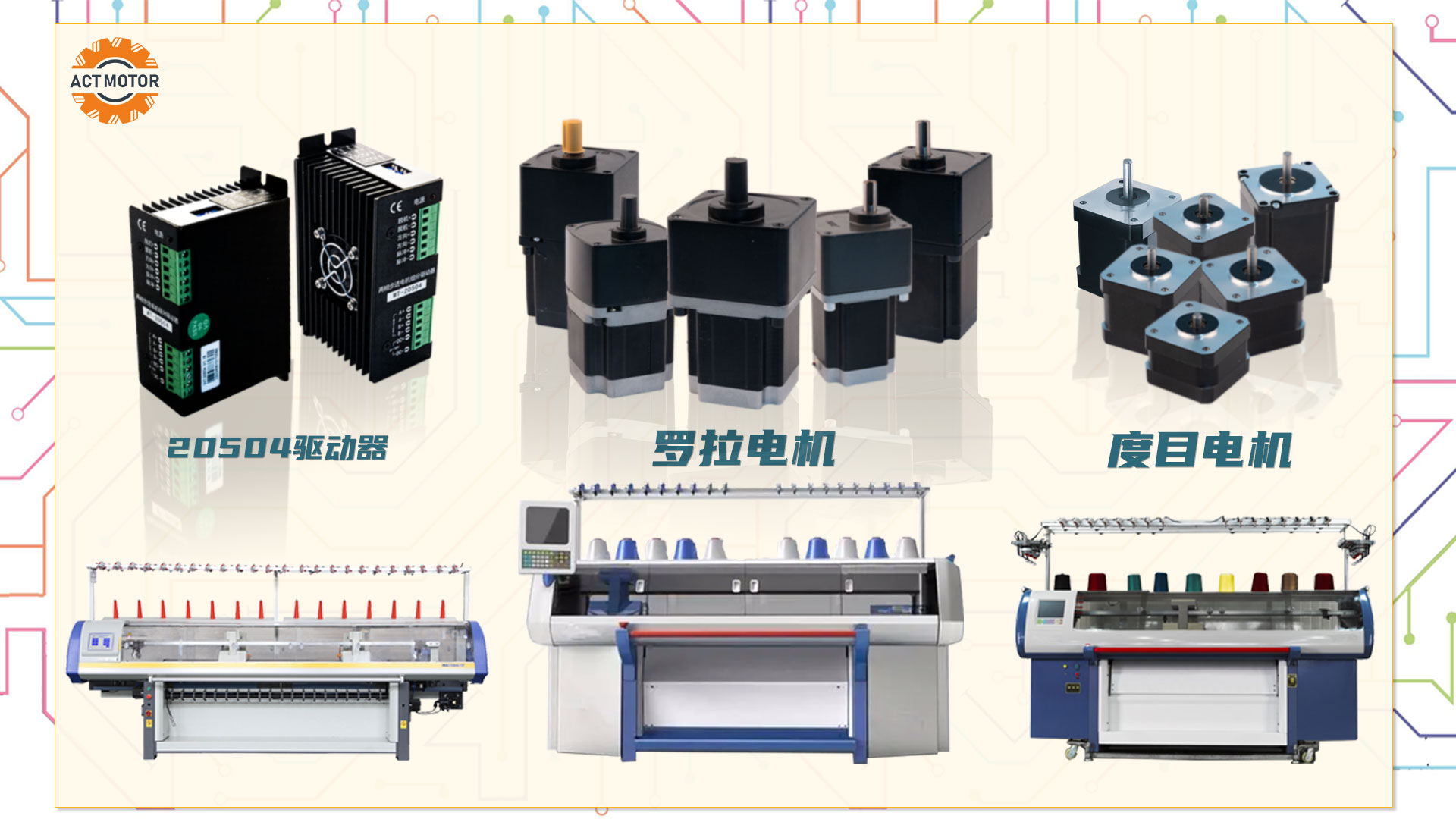
Textile machinery duty prioritises continuous operation and repeatable tension control over peak torque figures.
Market Signals Shaping Supplier Qualification in 2026
Three structural signals are shaping how buyers weight qualification evidence.
The first is regional concentration of supply. Asia Pacific held a 48.91% share of the stepper motor market in 2025, supported by a USD 36.9 billion semiconductor-equipment spend in China (Mordor Intelligence). For buyers outside the region, that concentration makes documentation quality a cross-border logistics variable, not just a regulatory formality — which is the mechanism behind the shipment-delay pattern described earlier.
The second is segment premiumisation. The high-torque stepper motor market was valued at USD 1.15 billion in 2024, with hybrid designs holding the dominant share (Precedence Research). High-torque configurations are precisely where qualification documentation is most consequential, because they are more often engineered to application rather than bought from stock, and engineered products carry more variables to declare.
The third is application-driven growth. Medical equipment's 7.5% projected CAGR through 2032 pulls supplier expectations toward tighter thermal control, lower vibration and more complete traceability — requirements that propagate into adjacent segments as buyers reuse their medical-grade evaluation templates.
Comparison With Traditional Selection Practice — and Where This Ranking Stops Being Useful
The traditional approach to hybrid stepper motor sourcing compares unit price, lead time and catalog page count, then negotiates. It works acceptably when the application is non-critical and the supplier relationship is already established. It fails in three identifiable ways.
First, it treats certification as a checkbox rather than a scope question. A certificate covering a trading entity is not the same as one covering the production site, and the difference only becomes visible during a customs query or a customer audit. Second, it under-weights driver pairing. Motor and drive specified independently frequently produce resonance and low-speed smoothness problems that no datasheet predicts. Third, it hides engineering-capacity limits until after award, when schedule slippage is already expensive.
The limitation of this ranking is equally specific. A ranking is a starting filter, not a qualification decision. It cannot substitute for a sample evaluation, because step-angle accuracy, vibration signature and thermal behaviour under your load profile are properties of a specific configuration, not of a brand. It also cannot resolve commercial fit: a supplier ranked fourth on documentation may still be the correct choice for a mid-volume programme that needs mechanical customisation, rapid iteration and responsive regional stock — which is precisely the trade ACT MOTOR's profile represents. Buyers should treat any published ranking, including this one, as a hypothesis to be tested against samples and documents.
A Practical Acceptance Framework for Hybrid Stepper Motor Buyers
| Stage | Action | Evidence Required |
|---|---|---|
| 1. Document screening | Request the qualification file before commercial discussion | ISO 9001 certificate with scope; CE Declaration of Conformity with directive numbers; RoHS declaration tied to the bill of materials |
| 2. Scope validation | Map documents to the exact SKU and production site | Site-to-SKU mapping; validity dates; declaration signatory |
| 3. Technical acceptance | Define test conditions rather than accepting catalog values | Torque-versus-speed at intended driver setting; step-angle accuracy; temperature rise under continuous load |
| 4. Sample validation | Test the configured unit in the target application | Vibration and noise measurement; step-loss check at the machine's acceleration profile |
| 5. Capacity confirmation | Confirm engineering bandwidth for any custom element | Named engineering contact; development timeline in writing |
| 6. Supply continuity | Establish how replacement units and revisions are controlled | Change-notification commitment; regional stock location |

Integrated linear modules place motor, screw and bearing tolerance under a single qualification file.
Future Outlook
Two developments are likely to reshape hybrid stepper motor qualification over the next several years. The first is documentation digitisation: as customs authorities and enterprise procurement systems move toward structured digital product passports, the supplier that can publish machine-readable conformity data per part number will reduce friction that currently costs weeks. Suppliers relying on PDF certificates issued ad hoc will face a widening operational gap.
The second is the gradual fusion of stepper and closed-loop architectures. Closed-loop hybrid stepper models — already represented in catalog ranges from 11SSM through 42SSM class designs — change the acceptance conversation from step-angle accuracy to encoder resolution, feedback latency and fault-recovery behaviour. Qualification frameworks built solely around open-loop parameters will need revision as that share grows.
For buyers, the practical implication is straightforward: build the qualification file requirement into the RFQ template now, before supplier diversity makes ad hoc document requests unmanageable.
Frequently Asked Questions
What does it mean for a hybrid stepper motor supplier to be "qualified"?
Supplier qualification means a buyer has verified, against evidence rather than assurance, that the supplier can consistently deliver a specified product that meets both technical and regulatory requirements. In practice it combines three layers: a scoped quality management system certificate such as ISO 9001, product-level conformity evidence such as a CE Declaration of Conformity and a RoHS declaration tied to the actual bill of materials, and demonstrated technical performance under the buyer's own load and acceleration profile. A supplier holding certificates but unable to map them to the specific SKU and production site is not yet qualified.
Which compliance documents should a buyer request before placing a hybrid stepper motor order?
A minimum set includes the ISO 9001 certificate with visible scope text and validity period, a CE Declaration of Conformity citing the applicable directive numbers — for industrial motors typically 2014/35/EU for low voltage and 2014/30/EU for electromagnetic compatibility — and a RoHS declaration aligned to Directive 2011/65/EU and to the specific materials in the order. Supporting documents typically include an insulation class declaration covering B, F or H class materials, and a traceability convention linking lot identifiers to inspection records.
How should buyers compare hybrid stepper motor suppliers beyond unit price?
Comparison is more reliable when structured around verifiable criteria rather than catalog claims. Useful dimensions include documentation scope and granularity, frame-size and accessory coverage including brake, lead screw, gearbox and encoder variants, driver pairing compatibility, evidence of application-specific configuration in the buyer's own industry, regional service and stock infrastructure, and engineering capacity for any custom element. Each dimension should be scored against evidence the buyer has actually reviewed, not against supplier self-description.
Can Chinese hybrid stepper motor manufacturers meet EU compliance requirements?
Yes, provided the manufacturer can supply directive-level documentation rather than generic claims. Chinese manufacturers such as ACT MOTOR state ISO 9001 certification with CE and RoHS product compliance, and operating a European branch — ACT MOTOR's is in Bremen, Germany — shortens the response path for conformity questions. The determining factor is not country of origin but whether the supplier can map a declaration to a specific part number and production site, and can respond when a customs authority or customer auditor asks for clarification.
What are the limitations of using a supplier ranking to make a sourcing decision?
A ranking compresses multi-dimensional evidence into a single order, which is useful for building a shortlist and misleading if treated as a verdict. It cannot capture application-specific performance, because step-angle accuracy, vibration signature and thermal behaviour belong to a particular configuration rather than a brand. It also reflects the weighting chosen by whoever built it; a medical device buyer and a distributor should weight the same criteria differently. Rankings are most useful as a hypothesis that sample testing and document review then confirm or reject.
A downloadable technical overview of ACT MOTOR's hybrid stepper motor and driver portfolio is available here: ACT MOTOR product brochure (PDF).
Есть вопросы или нужны дополнительные детали?
Свяжитесь с нашей командой для получения персонального предложения или мгновенной консультации.
Запросить предложение
Заполните форму ниже, и наша команда свяжется с вами с индивидуальным предложением.
Прямой чат WhatsApp
Предпочитаете общаться в реальном времени? Напишите нам в WhatsApp для мгновенной помощи и быстрых ответов.
- Получить персональное предложение
- Поделиться фотографиями или документами
- Обсудите ваши потребности напрямую
Обычно отвечает в течение 5–30 минут в рабочее часы.