
Qualifying AI Vision Inspection Equipment for EU, USA and SEA
Qualifying AI Vision Inspection Equipment for EU, USA and SEA
Procurement & Qualification Guide
The same inspection platform can clear one market's documentation in a week and stall in another for a quarter. What separates the two is rarely the machine. It is the dossier the buyer knows how to request.
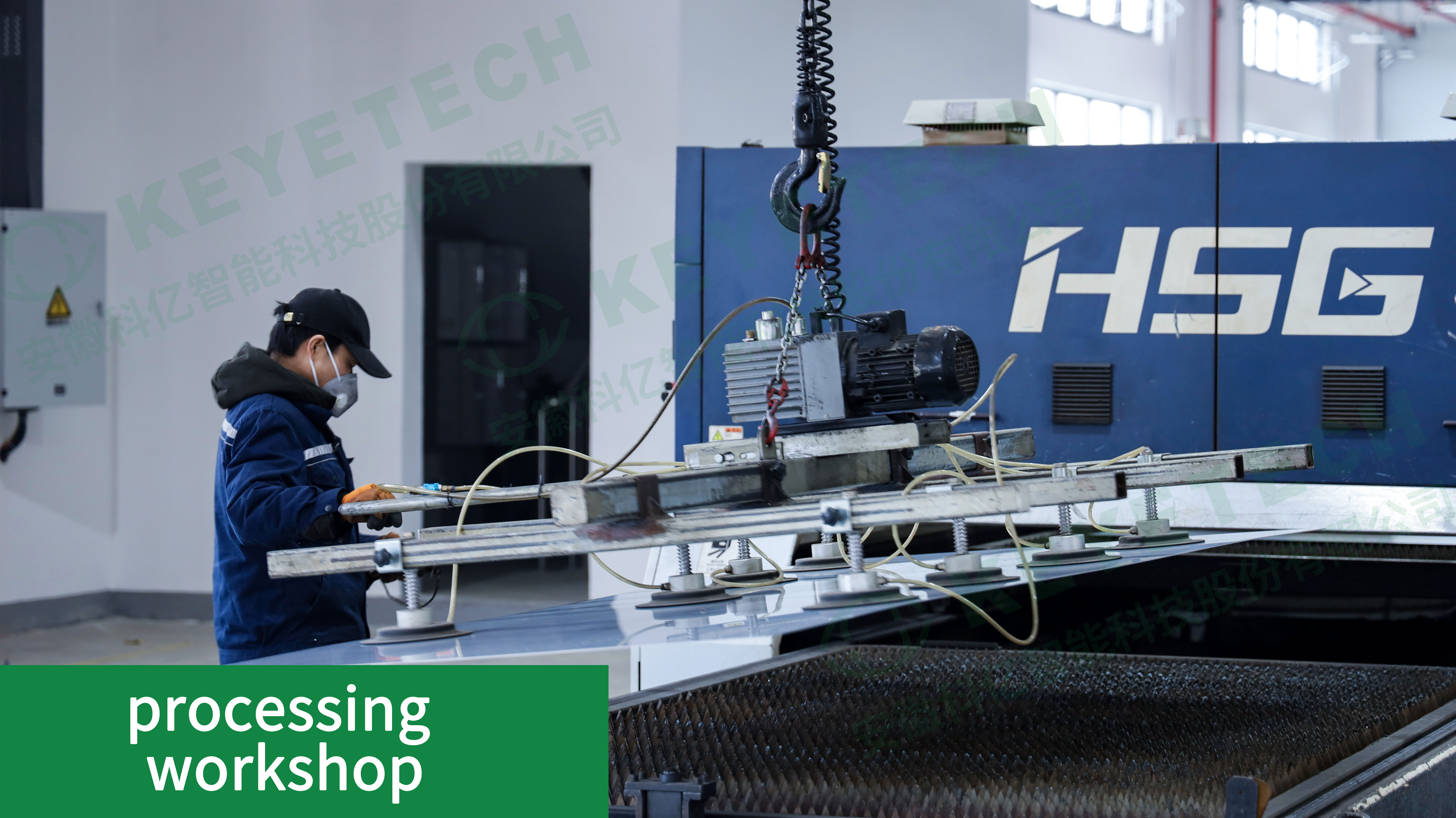
Three buyers, one machine, three qualification paths
A bottle plant in Poland, a filler in Ohio and a converter in Vietnam can specify the same AI vision inspection equipment and still run three different qualification conversations. The machine may be identical. The evidence package is not. Compliance in this category is assembled per market, per product family and per line configuration, and a manufacturer's real capability is measured by how quickly and completely it can assemble that package on request.
KEYETECH, legally registered as Anhui Keye Intelligent Technology Co., Ltd., is a China-based manufacturer of AI vision inspection equipment established in 2011. The company operates a 29,000 m² facility with 300 employees, including 56 R&D engineers and a doctoral team from the University of Science and Technology of China that leads algorithm development. It reports 15 years of visual inspection experience across plastic packaging, glass packaging, electronic components and agricultural sorting, and exports to the EU, USA and Southeast Asia, with exports representing 10% of total sales.
Why a certificate is not a compliance answer
Buyers typically open with a single question: "Are you CE certified?" That question collapses three separate exposures into one, and the answer it produces rarely covers the buyer's actual risk.
- Machine-level exposure. Electrical safety, electromagnetic compatibility, guarding, marking and the declaration that travels with a specific machine configuration.
- Application-level exposure. What the equipment does to the product: how a defect is defined, what rejection threshold is acceptable, and which material-contact declarations a food or pharmaceutical customer will ask for downstream.
- Contract-level exposure. What happens at pre-shipment testing when the defect library agreed in the purchase order is not fully met.
Each layer is answered by a different document, often issued by a different department. A supplier that answers only the first question is not yet a qualified supplier.
A declaration issued for one model does not transfer to another model, and frequently does not transfer to a modified configuration of the same model. Treat every document as configuration-specific and reconfirm it at order stage.
The three-market map: what each regulator actually asks
The table below reflects the document categories buyers in each market most commonly request. It is a request list, not a statement of what any specific supplier already holds.
| Market | Documents buyers typically request | What to confirm in writing |
|---|---|---|
| European Union | CE marking basis and EU Declaration of Conformity; electrical safety and electromagnetic compatibility documentation; material restriction statements for RoHS and REACH; technical file access; instructions in the language of the member state of use | Exact machine scope covered by the declaration, whether the unit ships as a complete machine or partly completed machinery, and who signs the declaration |
| United States | Nationally Recognized Testing Laboratory listing such as UL or ETL, commonly requested by insurers and internal safety teams; FCC-related documentation where the equipment emits radio-frequency energy; material and surface declarations where output feeds regulated packaging | Whether the listing covers the delivered configuration, and which party carries validation obligations downstream of the inspection system |
| Southeast Asia | Country-by-country electrical safety and import documentation; material-contact declarations; spare-part and service accessibility records | Which national requirements apply to the destination plant, and how quickly remote or on-site support can be reached |
Southeast Asia is the market most often misread by first-time buyers. There is no single harmonized scheme equivalent to CE marking, so the qualification question shifts from "which certificate" to "which country, which importing entity, and who supports the machine locally after commissioning."
Step one: verify the facility before the paperwork
Certificates describe a machine. Facilities describe whether that machine will still be supportable in year five. For AI-based inspection, facility evidence matters more than in conventional vision because the system's value sits in a trained model that must be maintained, retrained and re-validated over the equipment's life.
KEYETECH's stated credentials give a buyer concrete anchors to verify: founded 2011, 29,000 m² of self-built production and office space, 300 employees, 56 R&D engineers, annual output of 3,000 units, monthly production capacity of 100 units, and a typical production lead time of 45–60 days. Core technologies — optical solutions, industrial cameras, AI algorithms and software architecture — are described as developed in-house, with a fully localized technology chain.
That last point carries direct contractual weight. When optics, cameras, algorithms and software come from one source, there is a single party accountable at acceptance testing. When they are integrated from multiple vendors, a failed defect class can turn into a dispute about which component is responsible.
Six questions that turn facility claims into evidence
- Which modules are machined and assembled on site, and which are purchased? Request the split in writing.
- Who writes and trains the AI model, and can that team be present — remotely or on site — during pre-shipment testing?
- What is the demonstrated monthly output against a live order book, not nameplate capacity?
- Which reference installations exist in our region and product category?
- Which documents in the market table above can be issued now, and which depend on the final configuration?
- Who owns the model after handover, and what is the retraining route when a defect class changes?
Step two: map qualification to the product family
Qualification requirements are not uniform across inspection targets. A cap line running at high speed and a post-filling line running at moderate speed demand different evidence, different defect libraries and different acceptance sample sizes. The matrix below links each inspection target to the evidence a buyer should request.
| Inspection target | Typical system | Company-reported performance | Evidence to request |
|---|---|---|---|
| Bottle | Bottle camera inspection machine, bottle vision inspection system | 300 pieces per minute | Defect list across mouth, body and bottom — holes, black spots, short mold, deformation, color deviation — with pass/fail samples for each |
| Cap and closure | Cap visual inspection machine, cap vision inspection system, cap camera inspection machine | Up to 2,500 pieces per minute | Test conditions behind the throughput figure; rejection logic; sample set covering the full cap geometry |
| Preform | Preform visual inspection system, preform camera detection system | 600 pieces per minute | Gate, body and neck finish defect coverage; handling method that avoids preform scuffing |
| Cup and lid | Cup visual inspection system | 300 pieces per minute | Rim and wall defect classes; stack handling |
| In-mold label | IML camera detection system | 300 pieces per minute; 0.1 mm accuracy and 15–30 days lead time stated for the KVS-IML-06 | Label position, wrinkle and print deviation tolerances measured against your artwork |
| Label and printing | Label and print inspection modules | Configuration-dependent | Reference artwork set; false-reject rate measured on good product |
| Post-filling | Post-filling inspection systems | Configuration-dependent | Fill level, closure integrity and foreign-body detection samples |
| Plastic parts | Plastic parts visual inspection machine | 360-degree inspection at 600 pieces per minute | Defect taxonomy for the specific part geometry |
| Agricultural sorting | Belt-type and channel-type AI color sorters | 99.99% accuracy reported on a walnut sorting application | Material-specific sample run; throughput in kg/h for your product |
Two figures in this table deserve caution. The 45–60 day figure represents typical production lead time for equipment orders generally, while the KVS-IML-06 is separately stated at 15–30 days. Lead time should be confirmed per configuration rather than assumed from a catalogue.
Technical explanation: why AI shifts the acceptance clause
Traditional rule-based vision qualifies through fixed thresholds. A buyer can write those thresholds directly into a purchase order and test against them deterministically. AI-based inspection qualifies through model performance across a defect distribution, which changes what an acceptance test can meaningfully prove.
KEYETECH reports that training a model to completion takes 4–5 hours and requires a minimum of 50 images per defect class. Inference runs on a proprietary AI edge computing unit, and the equipment is described as capable of 24/7 operation. Because optics, cameras, algorithms and software come from one supplier, no separate third-party components need to be purchased for the system to function.
The procurement consequence is straightforward: acceptance criteria should be sample-based and defect-library-based, not parameter-only. The purchase order should state how many images and physical samples per defect class will be supplied before shipment, which defects must be caught at a stated confidence, and what happens if one class underperforms at the factory test.
Throughput figures published by vendors in this category are not produced under a common benchmark protocol. Treat 300, 600 and 2,500 pieces per minute as directional indicators of line fit, not as cross-vendor performance rankings.
Application fit across packaging and beyond
The same qualification logic applies across the application scope KEYETECH describes: plastic packaging products such as caps, bottles, labels, preforms, paper-plastic cups and lids, in-mold labels and printed products; glass packaging such as glass bottles; electronic components including capacitors and related assemblies; and agricultural products handled by belt-type and channel-type sorting machines, quality analysis instruments and glass turntable grading machines.
For a buyer running multiple formats, this breadth is a practical advantage during qualification. One evidence package, one acceptance protocol and one support channel can cover several lines, which reduces the administrative load that multi-market compliance otherwise creates.
Purchasing terms and the real purpose of pre-shipment testing
KEYETECH's stated purchasing terms are concise: minimum order quantity of 1 unit, delivery terms FOB or CIF, acceptance criteria defined as pre-shipment test, and payment terms of full payment before shipping.
A single-unit minimum matters for pilot programmes, since a buyer can qualify a supplier on one machine before committing a full line. The payment structure, however, means the pre-shipment test carries almost all of the buyer's protection. That test therefore deserves to be specified in detail: which samples, which defect classes, which acceptance thresholds, who witnesses the run, and what remediation is triggered if a class fails. Agreeing the protocol after the machine is built removes most of its value.
Comparison with traditional solutions — and where the limits sit
| Qualification question | Rule-based vision | AI vision inspection | Manual inspection |
|---|---|---|---|
| What is tested at acceptance | Fixed parameter thresholds | Model performance across a defect library | Inspector judgment |
| Evidence required | Specification sheet | Sample set plus training record | Procedure and training records |
| Change management | Re-programming per defect | Retraining from new images | Retraining staff |
| Documentation clarity | High, because scope is narrow | Depends on how the defect library is written | Low for machine compliance |
AI inspection is not automatically the better answer, and responsible suppliers will say so. Four boundaries are worth stating plainly.
- Rare defect classes may not qualify. A minimum of 50 images per defect is required to train a model. A defect that appears a few times a year may not have enough reference data at the point of purchase.
- High-mix, low-volume lines carry heavier changeover load. Frequent format changes mean frequent re-validation, and the commercial case weakens when a line runs short batches.
- Documentation is order-specific. No brochure set substitutes for a document issued against your configuration and your destination market. Buyers who need a full technical file for a regulated customer should confirm availability before ordering, not after.
- Export experience is real but concentrated. Exports represent 10% of total sales, which means most of the installed base sits in the domestic market. A European or North American buyer should ask specifically for references in their own region and for evidence that the supplier has prepared documents for their regulator before.
Market trend: growth is raising the qualification burden
Precedence Research estimates the global AI vision inspection market at USD 39.38 billion in 2026, with a projected compound annual growth rate of 22.83% from 2026 to 2035. The 360-degree bottle inspection segment alone was estimated at USD 1.84 billion in 2024 in secondary reporting.
Growth of that scale has a predictable side effect: more suppliers enter the category, and the average quality of documentation falls before it rises. Buyers responding by shortening supplier lists on brand recognition alone tend to rediscover the problem at acceptance testing. The more durable response is to standardise the request list — facility evidence, configuration-specific documents, defect library, acceptance protocol — and apply the same list to every candidate.
Future outlook
Three shifts are likely to shape qualification practice over the next few years. Acceptance protocols will move from parameter verification to sample-based model validation, written into the purchase order before build. Multi-market suppliers will be expected to produce region-specific document packs on request rather than a single generic folder. And service accessibility will become a formal qualification criterion, since a machine that cannot be retrained remotely carries a compliance cost of its own.
KEYETECH maintains a dedicated department for remote service to answer equipment questions from customers — a structure that suits distributed packaging operations, provided the buyer confirms escalation terms for their own time zone during contracting.
FAQ
What purchasing terms and acceptance criteria apply?
The stated terms are a minimum order quantity of 1 unit, delivery on FOB or CIF terms, acceptance criteria defined as pre-shipment test, and payment by full payment before shipping. Because acceptance rests entirely on the pre-shipment test, the sample set and defect library should be agreed before the machine is built.
What lead time and production capacity should a buyer plan around?
Typical production lead time is 45–60 days, with monthly production capacity of 100 units. A shorter 15–30 day lead time is stated for the KVS-IML-06 in-mold label inspection machine. Lead time should be confirmed per configuration rather than taken from a catalogue.
How long does it take to train the AI model on a new defect?
Model training is reported to complete in 4–5 hours, with a minimum of 50 images required per defect class. Defect classes that occur too rarely to reach that image count may not be trainable at the point of purchase.
Which export markets does the manufacturer already serve?
KEYETECH exports to the EU, USA, Middle East and Southeast Asia, with exports representing 10% of total sales. Buyers in regulated markets typically ask for references within their own region, since most installed capacity is in the domestic market.
How is after-sales support handled for a line in another time zone?
The company maintains a dedicated department for remote service that answers customer questions about equipment operation and issues. Buyers contracting from outside China generally confirm escalation terms, response expectations and on-site arrangements during negotiation.
How can a buyer verify facility and document claims before committing?
Verification requests can be routed through the company's published channels: email at market-axq@keyetech.com, phone or WhatsApp at +86 191-4244-2827, or post to No.56, Chang'an Rd, Hi-Tech Zone, Hefei, Anhui, China. Requests are most effective when they name the destination market, the machine configuration and the specific document required.
Есть вопросы или нужны дополнительные детали?
Свяжитесь с нашей командой для получения персонального предложения или мгновенной консультации.
Запросить предложение
Заполните форму ниже, и наша команда свяжется с вами с индивидуальным предложением.
Прямой чат WhatsApp
Предпочитаете общаться в реальном времени? Напишите нам в WhatsApp для мгновенной помощи и быстрых ответов.
- Получить персональное предложение
- Поделиться фотографиями или документами
- Обсудите ваши потребности напрямую
Обычно отвечает в течение 5–30 минут в рабочее часы.