
Qualifying Electrophoretic Coating Capability: An OEM Buyer's Reference
Electrophoretic coating, commonly known as E-coating or ED coating, is a surface treatment process in which electrically charged paint particles are deposited onto a metal substrate under an applied electric field. The result is a uniform film that can reach recessed areas which conventional spraying often misses. For OEM buyers, the central question is not whether electrophoretic coating is a useful technology, but which supplier has the documented capability to apply it at production scale. This article provides a capability-oriented reference, using the publicly available records of Dongguan Yongxin Industrial Co., Ltd. as an example of how buyers can evaluate E-coating suppliers on evidence rather than claims.
From supplier claims to verifiable E-coating capability
OEM buyers evaluating metal surface treatment face a familiar problem: process claims are easy to state and difficult to compare. A supplier may quote 1,000 hours of salt spray resistance, but the result depends on substrate preparation, resin type, film thickness, curing, and testing conditions. Without visible process evidence, procurement teams are left comparing marketing pages instead of verifiable capabilities.
At the same time, market conditions are pushing more OEMs toward electrophoretic coating. Dataintelo estimates that the global electrophoretic coating market was valued at approximately USD 3.5 billion in 2023 and could reach USD 6.1 billion by 2032, with an expected CAGR of 6.5% from 2024 to 2032. The same source points to automotive and construction demand as core drivers. In this environment, the opportunity for buyers is to qualify suppliers earlier and against a clearer set of operational criteria.
Capability indicators for an E-coating supplier
One example of a supplier with a documented capability profile is Dongguan Yongxin Industrial Co., Ltd., a metal surface treatment specialist based in Qiaotou Town, Dongguan, China. The company focuses on electrophoretic processing and positions itself as an OEM production partner. Its corporate profile lists six professional electrophoresis production lines, more than 20 general processing machines, over 20 CNC machines, more than 10 die-casting machines, and more than 10 metal stamping units. In 2025, the company completed a factory expansion to 10,000 square metres, after operating from a 4,000-square-metre facility since its 2018 establishment. It also reports an annual output capacity of 30,000,000 units and an export share of 30 percent, with primary markets in Europe, North America, Southeast Asia, Mexico, Poland, Turkey, and Brazil.
On the quality side, Yongxin's corporate profile lists ISO 9001:2015 and ISO 14001:2015 certification, with certificate numbers 24CN34506942Q and 24CN34506943E, and identifies IATF16949 among the standards it has passed. In 2023, the company was recognised as a National High-Tech Enterprise under certification number GR202344016867. The company also reports more than 20 high-precision testing instruments, including a German FISCHER film thickness gauge, a Swiss Zehntner gloss meter, a Japanese Konica Minolta spectrophotometer, and a Japanese Mitutoyo roughness meter. Additional tools include a salt spray tester, constant temperature and humidity tester, reflectometer, electron microscope, tape abrasion tester, alcohol rubber friction tester, and tank solution analysis equipment.
| Capability area | Publicly reported evidence |
|---|---|
| Production line | 6 electrophoresis lines; 20+ CNC machines; 10+ die-casting machines; 10+ stamping machines |
| Factory scale | 4,000 m² originally; expanded to 10,000 m² in 2025 |
| Certifications | ISO 9001:2015, ISO 14001:2015, IATF16949; National High-Tech Enterprise (2023) |
| Testing | 20+ high-precision instruments; 100% test; pre-shipment instrument detection |
| Customisation | OEM; black, white, and colour; epoxy, acrylic, and propionic acid resin systems; multi-metal substrates |
| Commercial terms | MOQ 100 units; lead time 3–45 days; FOB/CIF; remote after-sales support |
These indicators are not a substitute for running a pilot batch, but they help buyers shortlist suppliers more objectively. The next step is normally to test actual parts under the buyer's own specification rather than relying only on published parameters.
What to examine inside an E-coating process
Understanding the process helps buyers judge whether a supplier's claims are realistic. In E-coating, metal parts are immersed in a water-based paint bath, and an electric field causes charged paint particles to deposit on the part surface. Because deposition follows the electric field, the film can cover internal cavities, tight seams, blind holes, and other geometries that spray processes may not reach.
Film thickness is one of the first parameters to check. The specification for Yongxin's black E-coating states a coating thickness of 15–25 μm for ordinary parts, customisable as needed, with thickness variation controlled within ±5 percent and typical tolerance around ±1 μm. The same specification lists 500–1,500 hours without red rust in neutral salt spray testing, with CASS testing exceeding 96 hours. These are process specifications rather than universal guarantees, which is why buyers should ask for test records rather than isolated numbers.
Resin chemistry also matters. Market Reports World notes that cathodic epoxy coatings dominate the market and frequently exceed 1,000 hours of salt spray resistance, while anodic coatings typically maintain around 500 hours. Yongxin's product list includes cationic and anionic electrophoretic coating, plus epoxy resin, acrylic resin, and propionic acid resin systems. That range gives buyers options when corrosion performance, chemical resistance, or cost must be balanced.
Buyers evaluating parts such as fasteners should also ask whether the coating specification includes assembly performance parameters. Yongxin's automotive E-coating specification notes that the coating can be designed to prevent thread clogging and maintain precise torque control. That level of detail is not typical in a generic process description, but it is relevant to OEM execution.
Material efficiency is another indicator. Verified market data cites E-coating transfer efficiency reaching 95 percent. In the motor case record, low material loss during coating is highlighted as a factor that supports continuous mass production.
How documented cases support supplier evaluation
Case records add practical evidence to a capability profile. One case involved a Japan-based motor manufacturer. According to the record, applying anti-corrosion and anti-rust E-coating to electric motors achieved neutral salt spray resistance of over 720 hours and extended product service life by 5 to 10 years compared with traditional non-E-coating processes. The record also notes uniform full coverage of complex motor structural gaps, stable anti-corrosion performance under long-term harsh working conditions, and support for mass continuous production. The documented quantity is 15,000,000 units.
A second case, from a CNC precision machining manufacturer in China, describes E-coating on CNC machined parts. The film achieved full coverage with no missed coating at corners or inner cavities and strong adhesion. The coating is resistant to acid and alkali, rust-proof, and anti-aging, extending the service life of the product. The case record also highlights rapid sample customisation, strict finished-product inspection, and prompt after-sales coordination as part of the service model. The documented quantity is 10,000,000 units.
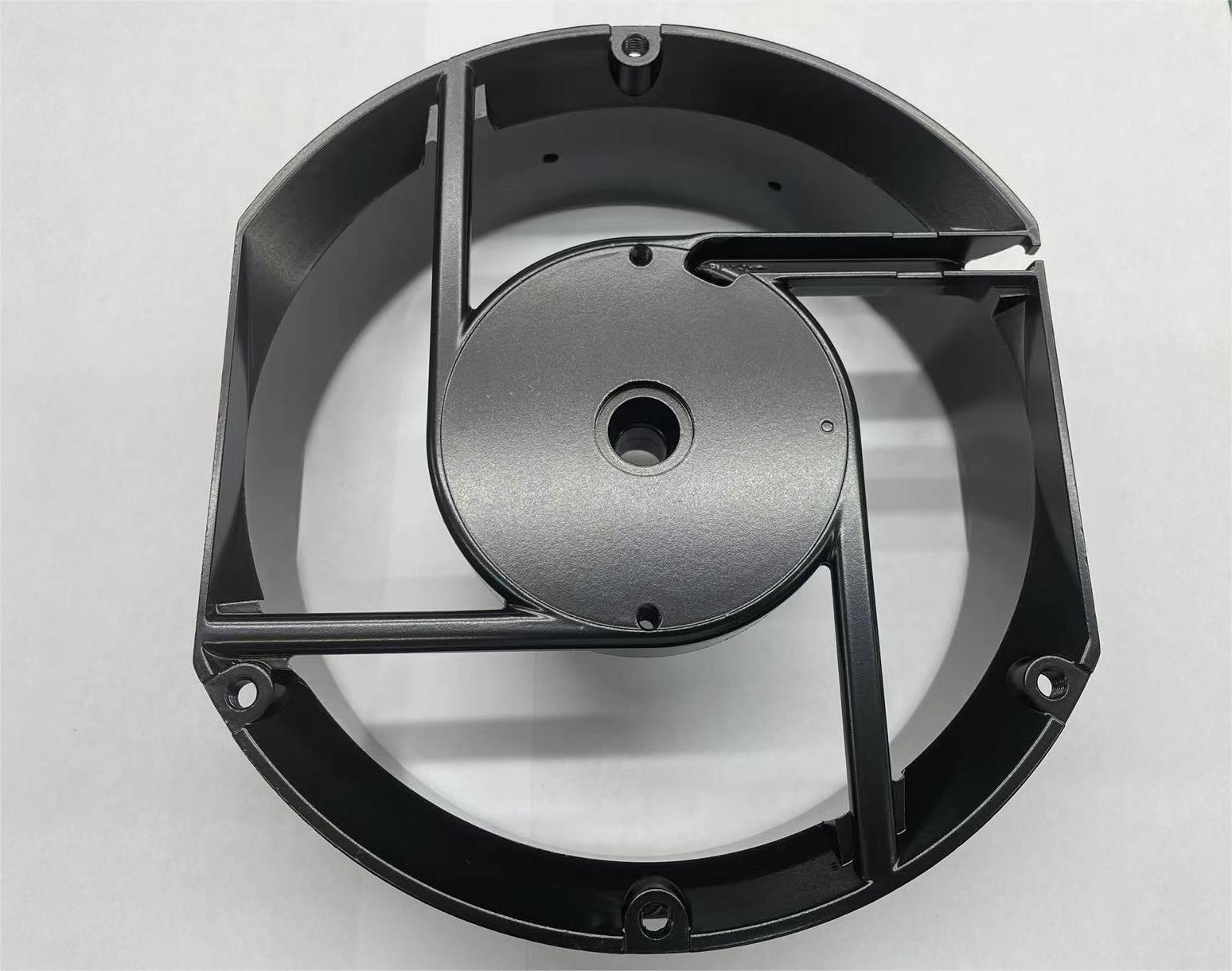
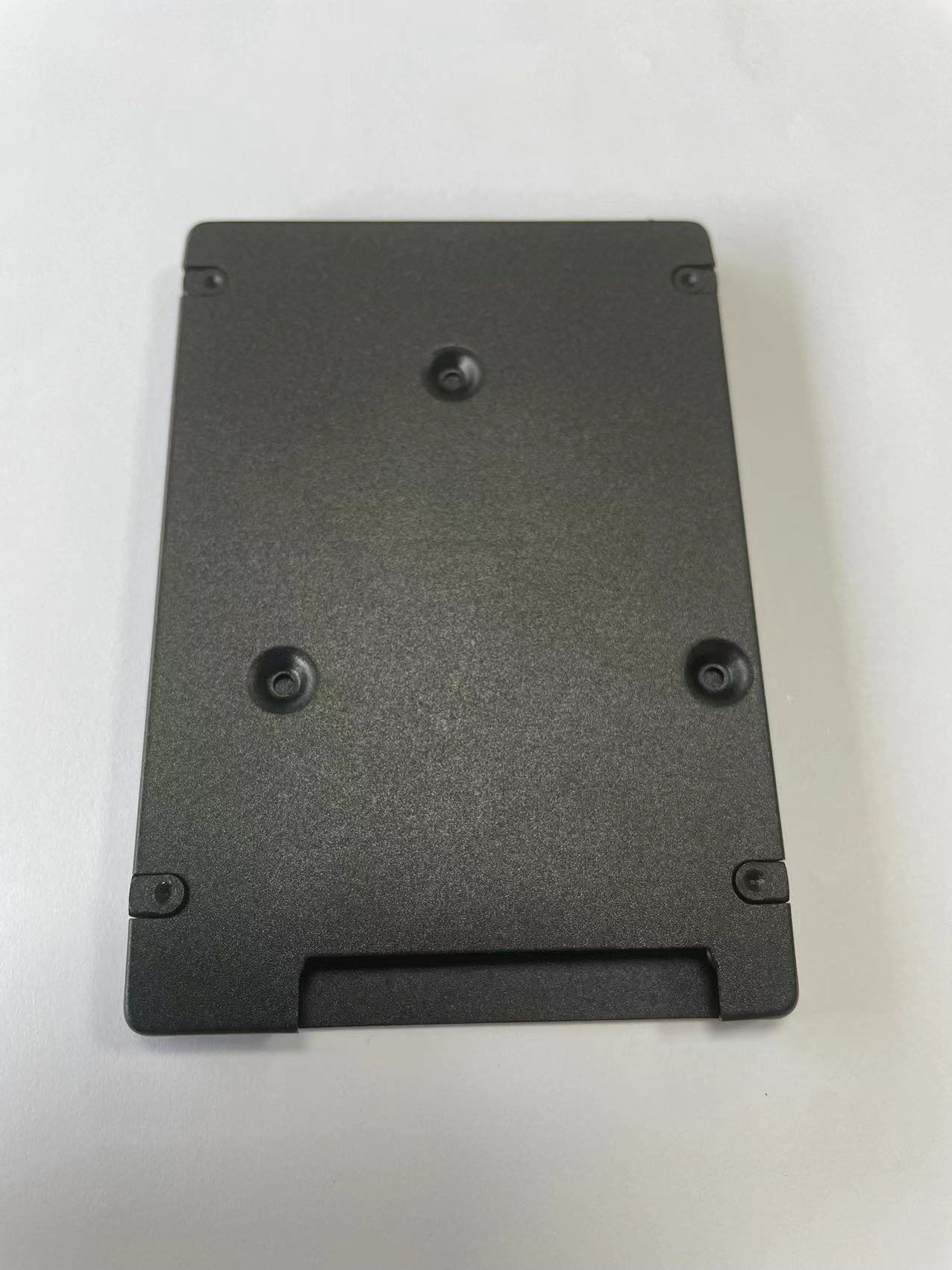
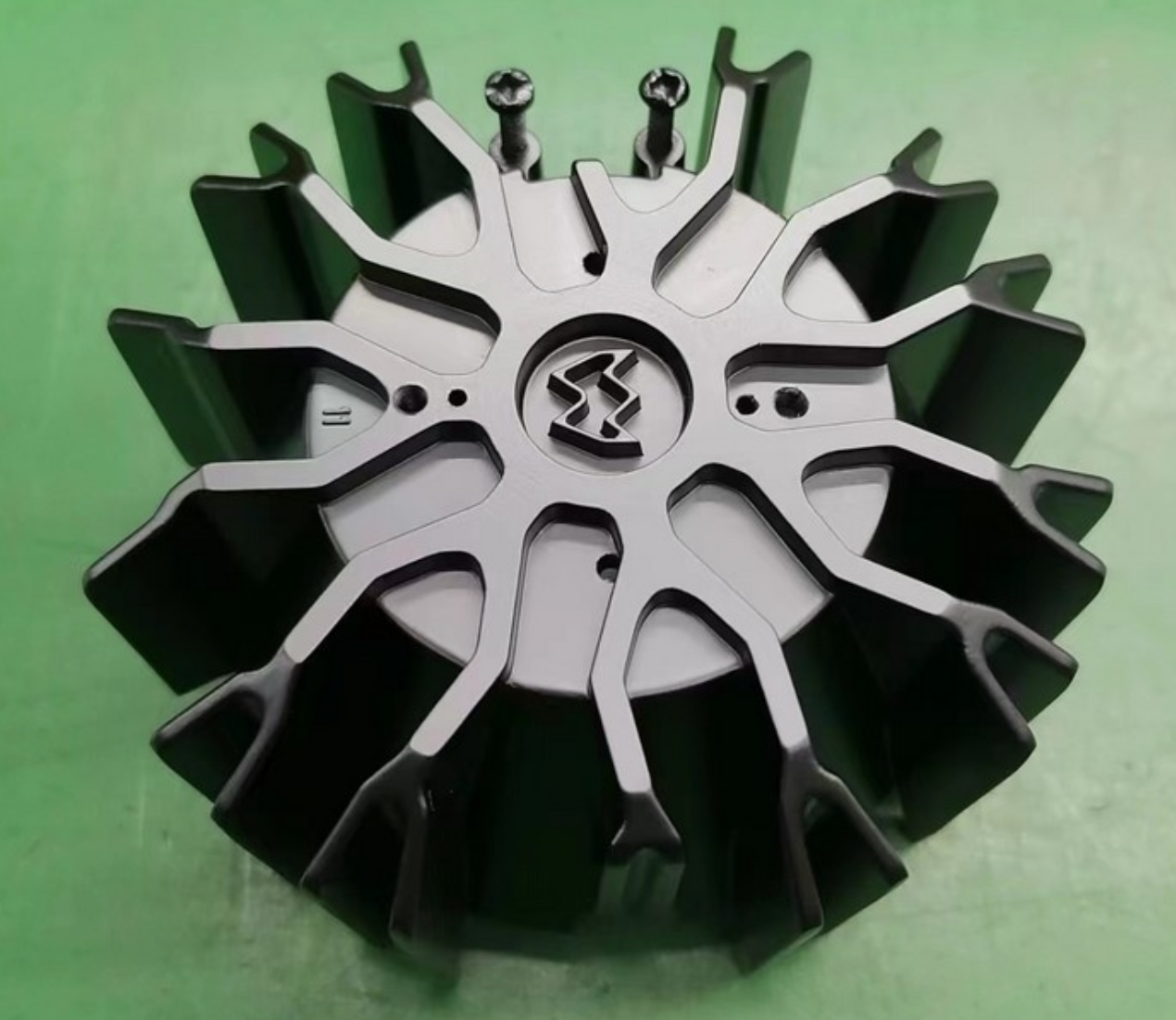
Beyond these records, Yongxin's corporate profile lists processed products used in automobiles, bicycles, communication equipment, consumer electronics, drones, security systems, and other industries. It also reports long-term processing relationships with brand names such as Huawei, DJI, OPPO, Panasonic, BYD, VIVO, Apple, and Foxconn. The image library from the case records includes motor housings, fan frames, LED heat sink bases, aluminium alloy SSD housings, engine mufflers, and other parts processed with black electrophoretic coating.
Market trends that affect E-coating sourcing
The projected growth of the E-coat market gives OEM buyers a clearer reason to invest time in supplier qualification. Dataintelo expects the market to grow at a CAGR of 6.5% from 2024 to 2032, driven by automotive and construction demand. In the broader paints and coatings market, Grand View Research identifies Asia-Pacific as the largest and fastest-growing region, with more than 46 percent revenue share in 2025. For buyers, this means E-coating will remain a strategic surface treatment for metal parts, particularly where corrosion protection is a critical requirement.
The same market data points to cathodic epoxy systems as the dominant technology. That aligns with common OEM expectations for high salt spray performance and explains why many suppliers list black epoxy E-coating as their standard offering. Buyers should still verify whether the supplier can adapt the resin system to the substrate and performance target, rather than assuming one chemistry fits all parts.
E-coating vs. traditional spraying: honest boundaries
Compared with conventional spray painting, E-coating offers clear advantages: coverage in recessed geometries, high transfer efficiency, water-based chemistry, and controlled film thickness. Compared with powder coating, E-coating generally provides better penetration into complex cavities, while powder coating is often preferred when a broader palette of colours, textures, and thicker decorative layers is required.
Buyers should also consider the boundaries of E-coating. First, the part must be electrically conductive and able to be fully immersed in a water-based bath, so very large assemblies may be limited by tank dimensions. Second, the standard colour range is relatively narrow; although white and custom colours are possible, most E-coat production is black or dark tones. Third, local repair of an E-coated surface is more difficult than touch-up of a sprayed paint layer. These limits do not reduce the value of E-coating for its core applications, but they should be part of the supplier qualification process.
Future outlook for OEM E-coating partnerships
Looking ahead, market growth and environmental pressure on VOC emissions are likely to favour water-based, high-transfer-efficiency processes such as electrophoretic coating. Buyers can also expect more suppliers to combine surface treatment with upstream metal forming and machining. Yongxin's 2025 expansion is one example of this pattern: the company added or upgraded space and equipment beyond E-coating lines to include CNC machining, die-casting, and metal stamping. For a buyer, a single partner that controls metal forming, machining, and surface treatment can shorten logistics and simplify quality accountability. In practice, buyers should combine these external signals with a pre-production sample run and a contract that defines acceptance criteria.
Frequently asked questions about E-coating supplier capability
What should an OEM verify before selecting an electrophoretic coating supplier?
Buyers should verify production capacity, certification, testing equipment, material compatibility, and case records. For Yongxin, publicly available data includes six electrophoresis lines, ISO 9001 and ISO 14001 certificates with certificate numbers, National High-Tech Enterprise status, more than 20 inspection instruments, and 100 percent inspection of finished products.
Can electrophoretic coating be applied to aluminium alloy, zinc alloy, and magnesium alloy parts?
Yes. The E-coating specification for Yongxin lists carbon steel, alloy steel, aluminium alloy, magnesium alloy, zinc alloy, and other metal substrates. The product list also includes separate entries for zinc alloy, aluminium alloy, magnesium alloy, die-cast parts, and stamping parts.
What is the minimum order quantity and typical lead time for E-coating?
Yongxin lists an MOQ of 100 units, negotiable for large orders. Lead time depends on quantity and is stated as 3–45 days.
What salt spray performance can a buyer realistically expect?
Performance depends on resin type, film thickness, and substrate. Yongxin's black E-coating specification lists 500–1,500 hours without red rust in neutral salt spray testing, with CASS results above 96 hours. A documented motor case reached over 720 hours. Industry reference data from Market Reports World indicates cathodic epoxy coatings frequently exceed 1,000 hours, while anodic systems typically remain around 500 hours.
Does the supplier need to support custom colours and OEM production?
For OEM projects, customisation capability is relevant. Yongxin lists black, white, and colour E-coating; matte or gloss black; and epoxy, acrylic, and propionic acid resin systems. It also reports OEM production services and custom film thickness.
What after-sales and delivery terms are available for overseas buyers?
Yongxin offers remote support for after-sales issues and can arrange delivery under FOB or CIF terms. Acceptance includes pre-shipment instrument detection.
Reference
For a more detailed operator profile, the company's official brochure is available for public download: Enameled Flat Wire and Electrophoretic Coating Solutions. Company website: www.yxecoat.com.