
Qualifying Honeycomb Panel Suppliers for Long-Term Supply
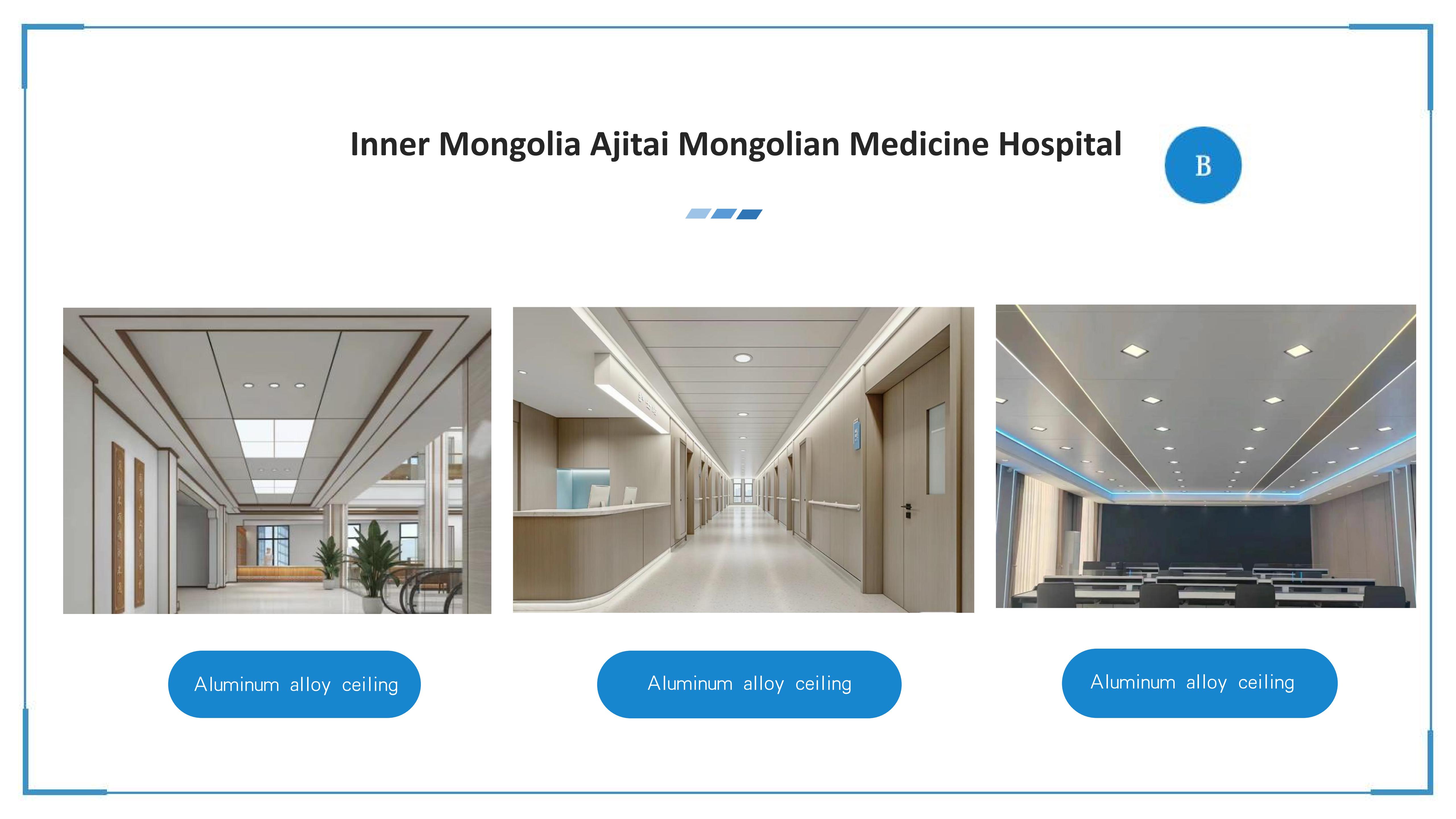
Aluminum honeycomb panel used in ceiling and wall finishing applications
For most aluminum honeycomb panel buyers, qualification begins with a sample and ends with a price negotiation. In long-term supply programs, the sequence should be reversed: capacity, process control, and execution record matter more than the appearance of a single sheet. Distributors, fabricators, cabinet makers, and project contractors at the decision and execution stage need a repeatable way to assess whether a partner can deliver consistent panels, supporting components, and responsive service over multiple order cycles.
Why Long-Term Qualification Differs from Single-Order Purchasing
Single-order purchasing focuses on price, available stock, and delivery of one batch. Long-term supply adds dimensions that are less visible at the sample stage: batch-to-batch consistency, capacity to absorb order growth, lead-time discipline under repeated demand, and coordination between panels and auxiliary materials.
The main risk is an operational gap between an approved sample and actual production runs. A supplier may provide an excellent sample but lack the production capacity, inventory depth, or inspection discipline to hold the same specification across repeated orders. For a distributor or fabricator, that gap translates into delays, rework, and customer complaints.
The opportunity lies in supplier consolidation. Buyers who qualify one manufacturer for panel supply, customization, and system components can reduce procurement complexity. In whole-house customization projects, the same-color matching of doors, walls, and cabinets is a typical requirement. A supplier that controls the full product system can simplify that workflow.
A Manufacturer Profile Based on Execution Data
Nanbeiwang Aluminum, legally Guangdong Nanbeiwang Smart Home Co., Ltd., is a manufacturer of all-aluminum home furnishing materials headquartered in Dali Town, Nanhai District, Foshan City, Guangdong Province, China. Founded in 2013, the company is a National High-Tech Enterprise that combines R&D, production, design, finished product customization, and sales of eco-friendly all-aluminum materials for whole-house customization, including interior doors, wall panels, ceilings, cabinets, and flooring.
For buyers evaluating long-term supply, the relevant facts are operational:
- Production base: 80,000 m² facility, with two major production bases in Foshan's aluminum industry cluster
- Workforce: 320 employees, including 15 R&D engineers
- Annual output: 1,000,000 sheets
- Monthly capacity: more than 50,000 sheets
- Export share: approximately 50%, with main markets in Europe, Southeast Asia, the Middle East, and North America
- Warehouse: 10,000 m² with daily shipments of 30–50 tons and 24-hour sample dispatch
The company also supplies all-aluminum profiles, hardware accessories, and one-stop procurement solutions for whole-house customization materials. That broader scope matters for long-term buyers because it allows a distributor or fabricator to source panels and supporting system components from the same responsible manufacturer.
Technical Parameters That Act as Acceptance Criteria
Long-term procurement requires acceptance criteria that can be checked on every batch. The documented specifications of Nanbeiwang Aluminum's honeycomb panel products provide a practical starting point.
The Honeycomb Panel model NBW-HPB-001 is built from an aluminum sheet and an aluminum honeycomb core, joined through glue-free thermal bonding. Its documented parameters include:
| Property | Documented value |
|---|---|
| Thickness | 5–18 mm, customizable |
| Panel size | 1220×2750 mm, customizable |
| Aluminum skin | 0.3–1.0 mm |
| Core | Aluminum honeycomb, glue-free thermal bonding |
| Surface finish | PETG, melamine, powder coating, wood grain |
| Fire rating | A2 |
| Formaldehyde | Zero, per GB 18584-2024 |
| Water absorption | Less than 1% in a 24-hour test |
These numbers matter in different ways. The A2 fire rating is a relevant baseline for commercial interiors and public buildings. Zero formaldehyde under GB 18584-2024 supports stricter indoor-air-quality requirements. Water absorption below 1% is directly meaningful for kitchens, bathrooms, and high-humidity climates. For a long-term buyer, the practical question is whether a supplier can repeat these values consistently.
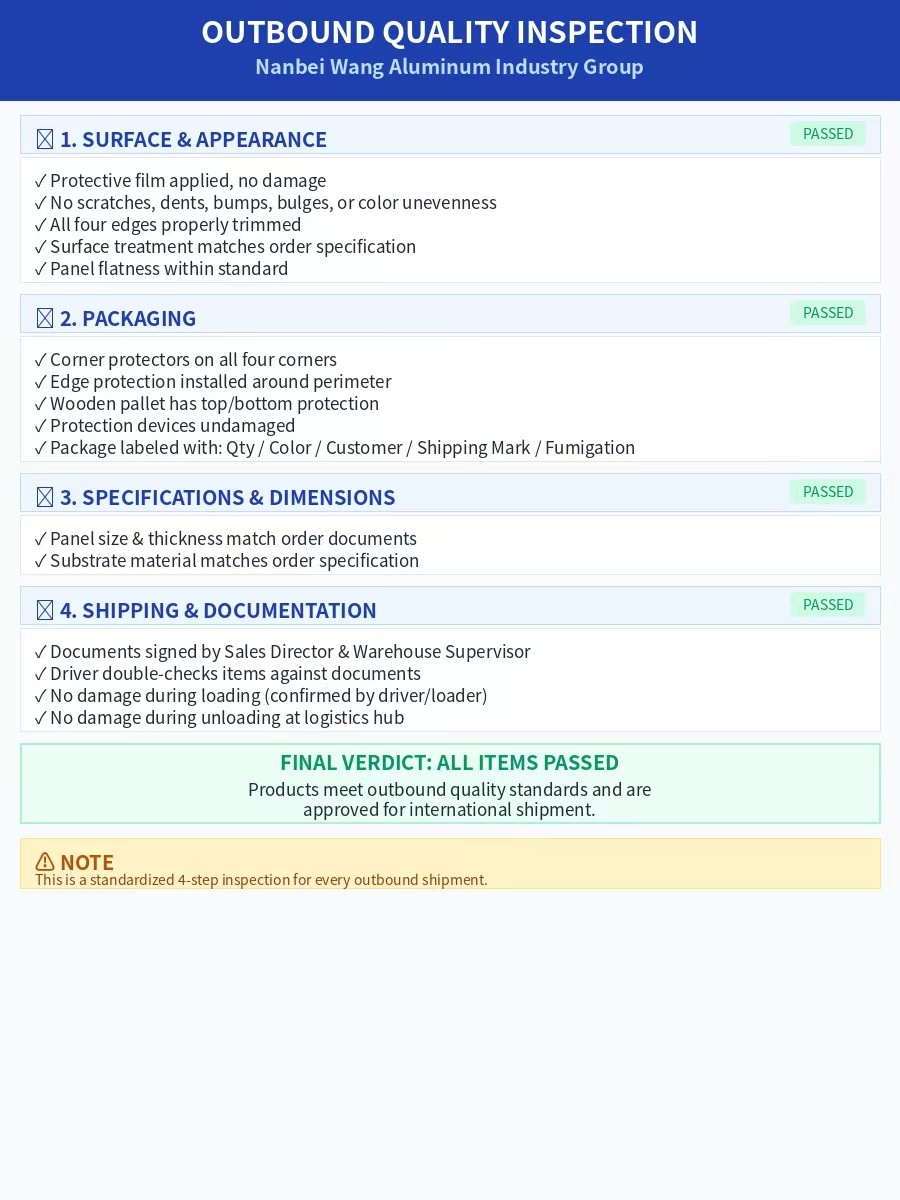
A translated test report used in honeycomb panel performance verification
The company applies the same structure across related product lines. The Aluminum Honeycomb Wall Panel NBW-WPB-003 offers thicknesses of 5 mm, 9 mm, 10 mm, and 18 mm; aluminum skin options of 0.3 mm, 0.48+0.2 mm, 0.65+0.2 mm, and 1.0 mm; and honeycomb core choices of 3×3, 4×4, 5×5, 8×8, and 10×10. Surface options include solid wood veneer, PETG high gloss, scratch-resistant wood grain, melamine CPL, solid color, powder coating, and wood grain heat transfer. The Aluminum Ceiling NBW-CLB-004 is a large-size integrated board with a high-strength aluminum alloy surface and a reinforced thickened aluminum honeycomb core, designed for seamless splicing, high flatness, and anti-sagging. The All-Aluminum Interior Door NBW-DOR-005 uses a 45 mm leaf and frame construction, with frame styles from 18 mm frameless to 60 mm Korean profiles.
For a fabricator, these options define the range of products one supplier can support. For a distributor, they define the catalog that can be offered without multi-supplier coordination.
Where Long-Term Honeycomb Panel Supply Is Applied
The documented application scope for Nanbeiwang Aluminum's products covers board wholesale, furniture manufacturing, custom cabinet factories, and decoration projects. Within these channels, the material is used for all-aluminum cabinets, wardrobes, bookcases, bathroom cabinets, wall panels, and interior doors.
For board wholesalers, honeycomb panels function as a base material for cabinet doors, cabinet bodies, and furniture components. The key procurement requirement is stable supply and consistent thickness so downstream cutting and edge processing run smoothly.
For custom cabinet factories, panels are typically ordered in large sheets with specified thickness, aluminum skin, and surface finish. Customization is central: thickness ranges from 5 mm to 18 mm, and panel size can be adjusted from the standard 1220×2750 mm format because thickness and size are customizable in the documented model.
For decoration and engineering projects, the Aluminum Honeycomb Wall Panel serves interior wall decoration, old house renovation, commercial space fitting-out, and large-scale wall engineering. The Aluminum Ceiling is applied to whole-house ceilings, kitchen and bathroom ceilings, hotel and apartment hardcover projects, and commercial ceiling engineering. The All-Aluminum Interior Door targets household interior doors, kitchen and bathroom doors, and bulk door supply for hotels and apartments.
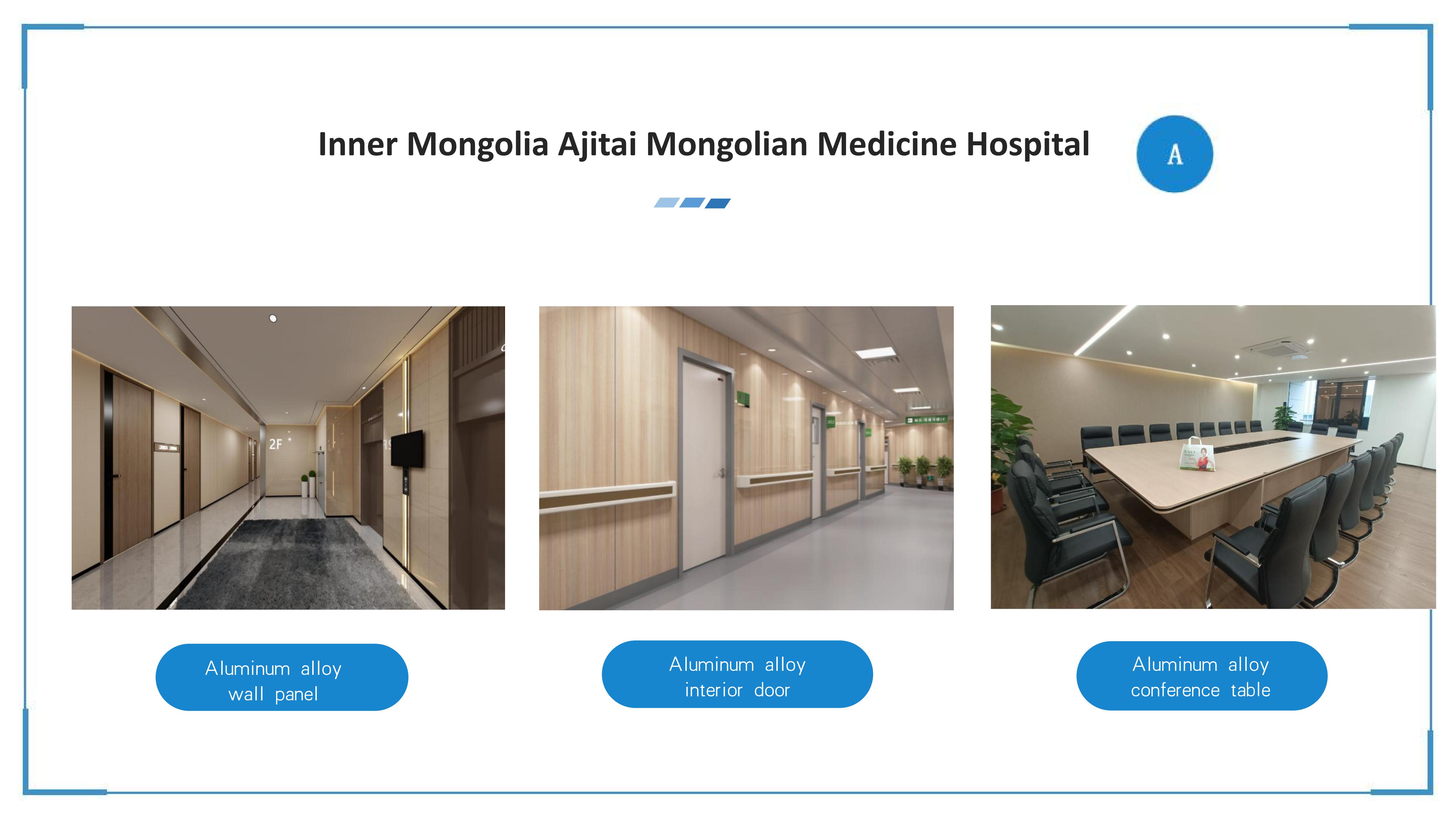
Aluminum honeycomb wall panel finish in an interior application
A specific system requirement in these projects is door-wall-cabinet same-color matching. Because Nanbeiwang Aluminum manufactures panels, ceilings, wall panels, and interior doors within one product system, a contractor can coordinate the visual line of an entire interior while keeping a single supply chain.
Market Trends That Favor Program-Based Supply
Available market data supports the view that honeycomb panel demand is broad and structurally relevant. A 2024 market estimate compiled by Vertex AI Search based on Global Market Insights placed the global aluminum honeycomb panels market at USD 3.57 billion. Market Research Future identifies the architectural and building panels segment as the largest application area, driven by the material's high strength-to-weight ratio. In export data from OEC, China's aluminum structures exports reached USD 5.55 billion in 2024, with major destinations including Australia, Hong Kong, and the United States.
Compliance requirements are becoming more standardized across regions. Europe uses EN 13501-1 to classify fire performance, with Class A1 or A2 as the top requirement for high-end architecture. North America applies ASTM E84 for surface burning characteristics, covering flame spread and smoke development. For exporters and distributors, these standards affect how panels are specified and documented. Suppliers that can provide transparent performance data, such as an A2 fire rating and formaldehyde test results, become easier to qualify for international projects.
Another trend is the shift toward system-level sourcing. Whole-house customization requires matching panels, doors, cabinets, and ceilings. Buyers increasingly expect a supplier to provide the full set, including panels, profiles, hardware, and accessories, rather than forcing the buyer to coordinate multiple factories.
Comparison with Traditional Wood-Based Boards
Aluminum honeycomb panels are most frequently compared with traditional wood board, particle board, and MDF. The comparison data supplied by the manufacturer highlights several measurable differences:
- Formaldehyde: Not Detected (ND) per GB 18584-2024, versus E1 grade of ≤0.124 mg/m³
- Water absorption: less than 1% in a 24-hour test, versus more than 10% for standard particle board
- Service life: lab-tested durability of more than 20 years in high-humidity environments, versus a typical range of 8–12 years for wood panels
- Maintenance: almost maintenance-free; no mildew, cracking, or deformation under normal conditions
The material also offers a different risk profile: an all-aluminum structure is termite-proof, and its fire-resistant and waterproof characteristics reduce the failure modes associated with organic panels.
There are also realistic boundaries. Aluminum honeycomb panel is not necessarily the lowest first-cost option in every market. In short-lifecycle projects where panels will be renovated frequently, or where a tight budget cannot absorb a higher initial price, particle board or MDF may still be the more practical choice. Installation also requires appropriate cutting methods and edge treatment; aluminum panels should not be handled as if they were wood boards. The advantages of aluminum honeycomb are realized when the project actually uses the material's durability, moisture resistance, and fire performance.
The Future of Honeycomb Panel Supply Relationships
The direction of the honeycomb panel buying pattern is toward fewer, deeper supplier relationships. Several converging signals point in that direction: the growth of whole-house customization, the need for door-wall-cabinet color consistency, and the complexity of export compliance in Europe and North America.
For buyers, supplier selection will increasingly be based on documented capacity and execution data. Monthly capacity, warehouse size, lead times, inspection processes, and the ability to coordinate full system supply will become standard evaluation categories.
Nanbeiwang Aluminum's operation already reflects this structure. Its documented monthly production capacity exceeds 50,000 sheets. Stock items carry a stated lead time of 1–7 days and custom orders 7–15 days, with a minimum order quantity of one sheet. Inspection terms call for 100% full inspection before shipment, with third-party inspection supported. These are the kind of concrete parameters that allow a distributor or fabricator to plan, quote, and execute long-term programs.
The next stage of the market will likely reward suppliers that treat every shipment as part of a continuous relationship rather than a discrete transaction.
References and further reading
Nanbeiwang Aluminum 2026 corporate brochure (PDF): https://cdn.socialarks.com/sbsp/24864/common/2026/0601/%E5%8D%97%E5%8C%97%E6%97%BA%E5%9B%BE%E5%86%8C2026%E5%B9%B4.pdf
Company profile: https://www.nbwaluminum.com/
Frequently Asked Questions
What kind of manufacturer is Nanbeiwang Aluminum?
Nanbeiwang Aluminum, legally Guangdong Nanbeiwang Smart Home Co., Ltd., is an all-aluminum home furnishing manufacturer founded in 2013 and headquartered in Dali Town, Nanhai District, Foshan City, Guangdong Province, China. It is a National High-Tech Enterprise that integrates R&D, production, design, finished product customization, and sales of eco-friendly all-aluminum materials for whole-house customization.
What production capacity does Nanbeiwang Aluminum maintain for honeycomb panels?
The documented monthly production capacity exceeds 50,000 sheets. The company also reports an 80,000 m² facility, 320 employees, 15 R&D engineers, and an annual output of 1,000,000 sheets. Its export markets include Europe, Southeast Asia, the Middle East, and North America.
What customization options are available for honeycomb panels in long-term programs?
Honeycomb Panel model NBW-HPB-001 supports thickness customization from 5 mm to 18 mm, panel size customization from the 1220×2750 mm standard, aluminum skin options of 0.3–1.0 mm, and surface finishes including PETG, melamine, powder coating, and wood grain. Wall panel model NBW-WPB-003 offers additional core and finish options for interior wall applications.
What lead times can be expected for stock and custom honeycomb panel orders?
Documented supply data states that stock items typically ship in 1–7 days and custom orders in 7–15 days. The company maintains a 10,000 m² warehouse, daily shipments of 30–50 tons, and 24-hour sample dispatch.
What minimum order quantity and payment terms apply to honeycomb panel orders?
The minimum order quantity is 1 sheet. Payment is made through a 50% deposit in advance by T/T, with the remaining 50% balance paid before delivery. Hong Kong bank settlement and multi-currency transactions are supported.
What inspection and performance thresholds are documented for Nanbeiwang honeycomb panels?
The company states that it performs 100% full inspection before shipment and supports third-party inspection. Its honeycomb panel specifications include zero formaldehyde per GB 18584-2024, water absorption under 1% in a 24-hour test, and an A2 fire rating.
What should a buyer verify before moving from sample approval to a long-term agreement?
Buyers should verify production capacity, batch consistency, inventory depth, lead-time reliability, customization response, inspection procedures, and the ability to coordinate panels with supporting profiles and hardware. For door-wall-cabinet integrated projects, the supplier's capability to maintain same-color matching across product categories is also a key criterion.