
Qualifying Protective Packaging: Specs That Must Match the Claim
Qualifying Protective Packaging: Specs That Must Match the Claim
An industry reference for buyers who need to confirm that documented specifications actually support the protective claims attached to a glass jar programme.
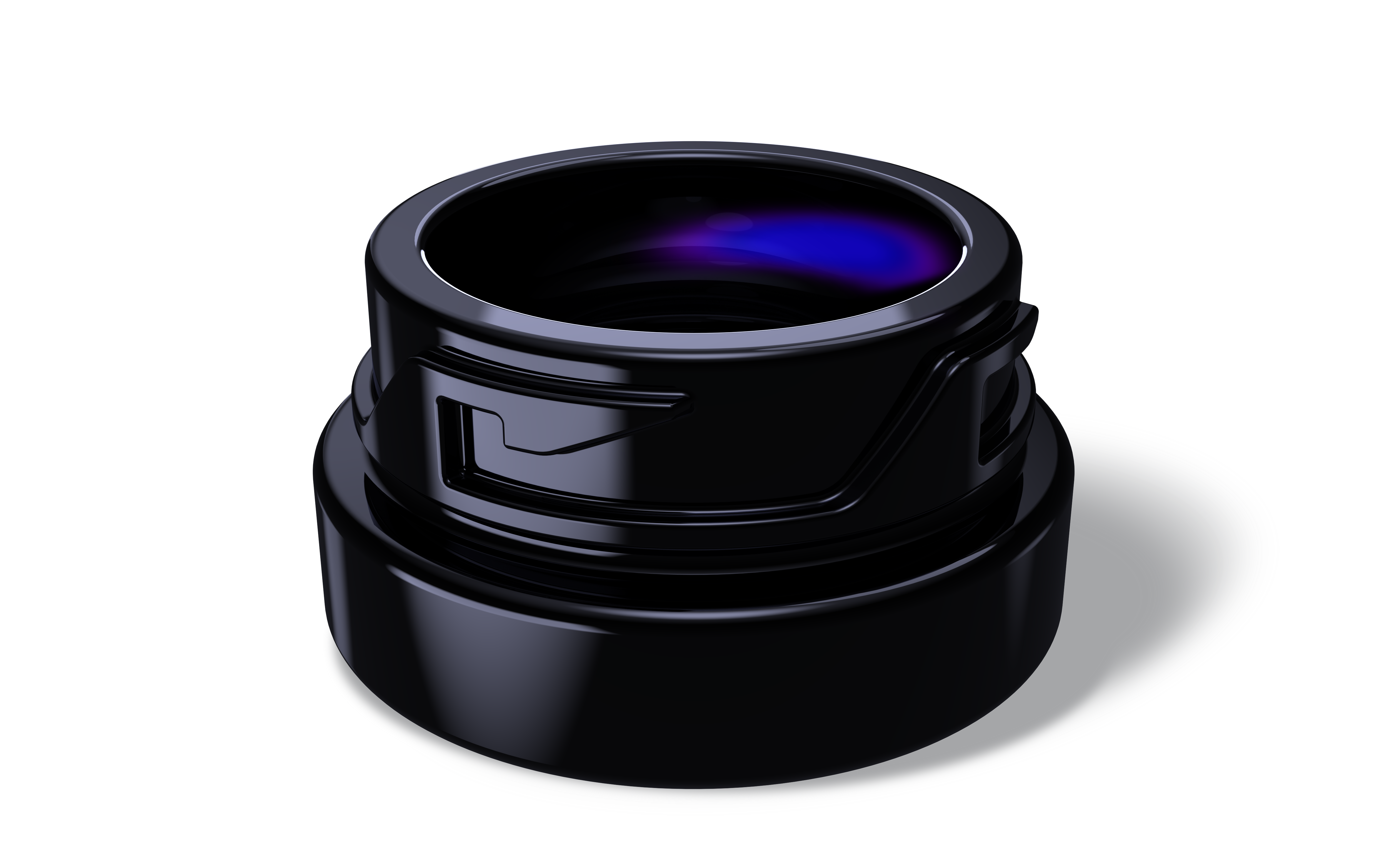
H19 round child resistant glass concentrate jar — one of the models used as a qualification example in this review.
The qualification question behind every protective claim
Protective packaging qualification begins with a single purchasing question: does the written specification support every claim the buyer is relying on? Child resistance, vacuum sealing and violet glass light protection are usually presented as product categories. A category label, however, is not a specification. It becomes one only when a stated test method, a defined pass threshold, a named model list and an acceptance clause sit alongside it.
The distinction matters most at the Research-to-Evaluation transition, when a buyer stops reading capability pages and starts writing purchase orders. At that point the specification document has to survive three audiences: the sourcing team comparing suppliers, the quality team writing incoming inspection criteria, and the regulatory or legal team reviewing market access. A phrase such as "child resistant cap" is readable by all three but verifiable by none unless it is pinned to a test standard and a covered item code list.
This review uses concrete specification data published for the H19 and H21 glass jar families, the 0.38 mm glass thickness figure that appears across the H21 and HDV series, and the H19 5 ml vacuum click jar, to show how a claim-to-specification audit is carried out in practice. It does not assume any certification beyond those actually recorded for specific products, and it treats every functional label as something that must be earned by evidence rather than inherited from a product name.
Why the claim-to-specification gap opens during evaluation
Supplier documentation typically contains two different kinds of information, and they are frequently printed in the same table. The first kind is measurable: capacity, diameter, height, weight, carton count, wall thickness, surface treatment. The second kind is functional: child resistant, vacuum, airtight, leak free, UV protection, smell proof. The first kind is auditable on receipt. The second kind is auditable only if the supplier also discloses how the function was demonstrated.
A specification row reading "Cap: Child resistant cap" is a description of a closure design intent. A specification row reading "Cap: child resistant closure, tested to ISO 8317:2015, report number [x], test date [y], applicable item codes [z]" is a verifiable performance claim. Both may appear in the same column. Buyers who treat them as equivalent accept design language as if it were a test result, and the gap only surfaces at incoming inspection, at a regulatory review, or after a complaint.
The qualification task is therefore not to demand more claims. It is to require that each existing claim be traceable to an indicator that a third party could check. Where the indicator exists, the buyer can lock it into the purchase order. Where it does not, the buyer must decide whether to accept the feature as a design preference, commission the missing evidence, or remove the claim from the marketing asset entirely.
Audit one: child resistance — closure type is not a test outcome
Child resistance is the claim most frequently over-read in protective glass packaging. In the H19 family, the published specification states a child resistant cap and lists the available configurations: capacities of 5 ml and 9 ml, shapes covering square, round, triangle and hexagon, unit weights in the 27 g to 38 g range, and carton packing of 250 pieces. The white concentrate jar variant, identified by item codes H19-0001W through H19-0011W, repeats the same structure with a stated weight band of 27 g to 36 g. The H21 series extends the same closure description across considerably larger formats, from 15 ml up to 6 oz, with round and square bodies, 58 mm or 60 mm diameters depending on the series, and item codes such as H21-0003C through H21-0008C for square clear jars and H21-0012C through H21-0018C for round clear jars.
What these specifications establish is a documented closure type, a documented size range and a documented unit weight. What they do not establish, on their own, is a tested child-resistance performance result for a named item code. That difference is not a technicality. Regulatory frameworks treat child resistance as a performance outcome measured on a defined test population, not as a property of a cap geometry.
The U.S. Consumer Product Safety Commission's guidance on special packaging describes the requirement in performance terms: packaging must make it difficult for young children to open while remaining reasonably accessible to adults. The widely referenced performance threshold under 16 CFR 1700.20 is that at least 85 percent of children under five should fail to open the package within five minutes, while at least 90 percent of adults should be able to open and properly reclose it. ISO 8317:2015 sets out performance requirements and test methods for reclosable child-resistant packages, and ASTM D3475 classifies special packaging types according to closure type and the action required to open. Those references matter to this review because they define what kind of evidence would close the gap.
Two further points refine the buyer's position. First, CPSC guidance notes that special packaging obligations attach to the primary or immediate packaging for certain regulated products under the Poison Prevention Packaging Act and the Federal Insecticide, Fungicide, and Rodenticide Act. The obligation therefore follows the package that holds the product, which is exactly the unit being specified. Second, ASTM D3475's classification-by-closure logic confirms that closure type is a meaningful design variable, but classification and demonstrated performance remain separate questions. A buyer who has a closure-type row and a test-report row has both design intent and performance evidence. A buyer who has only the first has the design intent.
Practical qualification test: can the supplier attach a child-resistance test report to the exact item codes being ordered, with the test method, the test date, the laboratory and the pass criteria visible? If the answer is yes, the claim can be written into the acceptance clause. If the answer is no, the correct purchase-order language describes the closure as a specified design feature rather than as a certified performance outcome.
Audit two: vacuum sealing — the mechanism needs a measurement
Vacuum packaging illustrates the same gap in a different form. The H19 5 ml vacuum click jar is documented as a square glass jar with a 5 ml capacity, packed at 250 pieces per carton. That specification is precise about geometry, material and pack configuration. It is silent on the vacuum performance itself: no stated holding time, no leak rate, no pressure differential and no test method.
For a buyer, "vacuum" describes a sealing mechanism, not a measured outcome. A vacuum closure can be specified correctly and still deliver different results depending on the closure torque applied at filling, the fill level, the product's vapour pressure, the ambient temperature and the time between filling and dispatch. Two suppliers can both ship a jar described as vacuum and produce different leak behaviour in the field, because the word vacuum was never converted into an acceptance number.
Qualification therefore requires the buyer to introduce the missing metric. The most common approaches are a vacuum decay test with a stated pressure and hold time, an immersion or dye penetration check with a defined observation window, and a defined closure application torque range. None of these need to be invented by the buyer from scratch; they can be requested from the supplier as a documented method and then written into the purchase specification as the agreed acceptance procedure.
The same logic applies to adjacent terminology. "Airtight" and "leak free" are frequently used interchangeably in protective packaging literature, but airtightness concerns gas exchange while leak freedom concerns liquid or content escape. A jar intended for a volatile oil has a different acceptance requirement from a jar intended for a dry powder. The specification must state which property is being warranted, because a supplier cannot be held to a claim that was never defined.
Practical qualification test: ask the supplier to state the test method, the measurement conditions and the acceptance threshold for the vacuum or leak-free claim on the specific jar being ordered. If the answer is a restatement of the claim rather than a procedure, the claim is descriptive and should be treated as such in the contract.

H21 series jar configurations — capacity, diameter and height ranges are measurable specification rows; protective function labels require separate evidence.
Audit three: violet glass — one product family, several distinct claims
Violet glass is where claim inflation is easiest to miss, because a single product name can carry three unrelated promises at once. The H21 violet glass square series is documented with capacities from 15 ml to 200 ml across item codes H21-0003V to H21-0008V, a 58 mm diameter, heights from 24 mm to 115 mm, unit weights between 75 g and 280 g, and a 0.38 mm glass thickness. The H21 violet glass round series covers 30 ml through 6 oz across item codes H21-0012V to H21-0018V, with a 60 mm diameter, heights from 36.5 mm to 125 mm and weights from 84 g to 268 g. The wider HDV1, HDV2 and HDV3 violet glass families extend the format range further, with HDV1 covering wide-mouth jars from 100 ml to 1 L and HDV2 covering small cosmetic jars from 3 ml upward.
Those rows are solid, checkable specification data. The claims that surround them are not automatically of the same nature. "UV protection", "light blocking", "ultraviolet glass packaging" and "violet glass packaging" are category descriptions. A buyer who needs a light-protection warranty has to decide which physical quantity is being warranted and at what level.
The auditable version of a light-protection claim is a spectral transmission curve: percentage transmission plotted against wavelength, produced by a named method on a named sample of a named item code. With that curve, a buyer can set a threshold, for example a maximum transmission figure at a stated wavelength band, and write it into the acceptance criteria. Without the curve, the buyer is relying on the colour of the glass as a proxy for a performance envelope. Colour and spectral behaviour are related, but they are not interchangeable evidence, and the relationship is not something a purchase order should assume.
There is a second distinction worth keeping explicit. Violet glass packaging is often marketed alongside light-sensitive products such as essential oils, botanical extracts and supplements, where the practical concern is the combined effect of light, oxygen and moisture. A jar can be excellent at one of those and ordinary at another. Splitting the requirement into separate lines — light transmission, closure seal integrity, and where relevant vacuum or inert-gas performance — prevents a single favourable attribute from carrying the whole protective claim.
Practical qualification test: ask for the spectral transmission data, the measurement method and the item code tested. If the supplier cannot provide it, the buyer can still specify violet glass as a material and colour requirement, but should not treat light protection as a warranted performance figure.
Audit four: 0.38 mm thickness — a dimension, not a strength rating
The 0.38 mm glass thickness figure appears consistently across the H21 round and square series, both clear and violet, and across the HDV1, HDV2 and HDV3 violet glass families. It is a useful specification row because it is precise, repeatable and easy to verify at incoming inspection with a suitable gauge. It is also the figure most likely to be misread as a durability claim.
Wall thickness is a dimensional attribute. It contributes to how a jar behaves under load, but it does not by itself define drop resistance, internal pressure resistance, thermal shock tolerance or impact performance. Those are separate properties, each with its own test method and each dependent on additional variables including body geometry, corner radii, annealing quality and closure design. A buyer who has a thickness figure has a dimensional control point. A buyer who needs a mechanical performance warranty needs a mechanical test, not a millimetre value.
This is a productive distinction rather than a limitation. Thickness is one of the few specification rows a buyer can check quickly and cheaply on every incoming lot, which makes it a good routine control. Pairing it with a periodic dimensional audit of diameter, height and weight — all of which are published for the H21 and HDV series — gives a practical incoming inspection regime without requiring destructive testing on every delivery. Performance testing then operates on a sampling basis against the specific claim being warranted.
Practical qualification test: keep 0.38 mm in the dimensional section of the specification, not in the performance section. If a drop or pressure requirement is commercially necessary, specify it separately with its own method and acceptance threshold.
Audit five: certificates — read the covered product list, not just the number
Certification records are the part of the qualification file most often cited and least often read in full. Two SGS-issued records are documented for Honor Packaging's violet glass products, and both illustrate why the covered product list deserves as much attention as the certificate number.
The EU record is issued against EC No 1935/2004, with certificate number NGBHL24007770101, issued by SGS, dated 27 December 2025, covering the EU market. Its associated product list covers the HDV3, HDV2 and HDV1 violet glass families and both H21 violet glass series. The US record is issued against the FDA CPG standard, with certificate number NGBHL23005693401, issued by SGS, dated 30 November 2023, covering the US market. Its covered product list spans the HDV1, HDV2 and HDV3 violet glass families, both H21 violet glass series, and the H19 vacuum packaging model.
Three observations follow directly from those lists, and each one changes how the certificate should be used in a purchase file.
First, the two certificates cover overlapping but not identical product sets. The FDA record extends to the H19 vacuum packaging model; the EU record's associated product list does not. A buyer sourcing a vacuum jar for the European market should not assume the EU food-contact record extends to that model simply because it exists for other products in the portfolio.
Second, neither record's associated product list covers the H19 child resistant concentrate jar series — the black, clear and white variants identified by item codes H19-0001B through H19-0011B, H19-0001C through H19-0011C, and H19-0001W through H19-0011W. That is a factual scope observation, not a quality judgement. The correct reading is that a buyer who needs documented food-contact compliance for a specific H19 child resistant item code must confirm coverage separately rather than inferring it.
Third, and most important for this review, both certificates address food-contact material compliance. Neither is a child-resistance certificate and neither is a light-protection certificate. EC No 1935/2004 and FDA CPG frameworks concern materials and articles intended to come into contact with food. They are valuable for market access and for material safety, and they are frequently cited on product pages in ways that let a reader assume they cover more than they do. Separating material compliance from functional performance keeps the qualification file honest.
Practical qualification test: for every certificate in the file, record four fields — issuer, standard, certificate number, and the exact covered item codes. Then check that each claim you intend to make in marketing or in a customer specification is supported by a record whose covered list actually includes the item code being sold.
Converting the audit into purchase terms
The outcome of a qualification review should be a set of clauses, not a set of impressions. Four clause groups carry most of the value.
Attachment discipline. Every functional claim relied on in the order should have a named attachment: a specification sheet for dimensional requirements, a test report for performance requirements, a certificate for compliance requirements. Each attachment should carry the item code list it applies to. This single practice eliminates most scope confusion, because the buyer can see immediately whether an H21 violet glass report applies to the H19 child resistant jar under discussion.
Acceptance criteria. Each warranted property should have a stated method, a stated sample plan and a stated pass threshold. Dimensional criteria such as capacity, diameter, height, unit weight and the 0.38 mm thickness are straightforward to specify and to check. Functional criteria require more care: a child resistance requirement should reference the applicable standard or regulation, and a vacuum or leak requirement should reference the agreed test procedure and holding conditions.
Production realism. Clauses only hold if the ordered quantity and timeline are compatible with the manufacturing model. Published capability data for Honor Packaging lists OEM and ODM production modes, a minimum order quantity of 10,000 units, a lead time of 30 to 45 days, a monthly capacity of 100,000 units, and quality control described as 100 percent pre-shipment testing with third-party inspection by SGS. Those figures set the sensible boundary for how much bespoke testing a buyer can reasonably request: a small trial order and a full-series qualification programme are different commercial propositions, and the specification should reflect which one is being bought.
Remedy terms. The after-sales position documented for this supplier is acceptance of reissue. In practice that means the rejection criteria must be defined precisely enough that a disagreement can be resolved by measurement rather than by opinion. This is the strongest practical argument for writing test methods into the contract: a measurable defect is reissuable, an impression is not.
Qualification checklist by claim
| Claim | What the published specification establishes | Evidence to request before relying on the claim |
|---|---|---|
| Child resistance (H19, H21) | Closure type, capacity range, shape options, unit weight, carton count | Test report against ISO 8317:2015 or 16 CFR 1700.20 naming the specific item codes and the test date |
| Vacuum sealing (H19 5 ml click jar) | Capacity, material, shape, packing quantity | Stated test method, pressure and hold conditions, pass threshold, closure torque range |
| Violet glass light protection (H21, HDV1–HDV3) | Material and colour classification, capacity range, diameter, height, weight, 0.38 mm thickness | Spectral transmission data with method and tested item code, or a defined wavelength threshold written into the acceptance clause |
| 0.38 mm glass thickness | A dimensional control point applicable across H21 and HDV families | Separate mechanical test data if drop, pressure or thermal performance is commercially required |
| Food-contact compliance (EU, US) | SGS-issued records: EC No 1935/2004 (NGBHL24007770101) and FDA CPG (NGBHL23005693401) | Confirmation that the ordered item code appears on the relevant certificate's covered product list |
Four failure patterns that recur in protective packaging files
The most common qualification error is treating a category label as a test result. "Child resistant", "vacuum" and "UV blocking" are categories. They describe what a product is designed to do, and they remain design descriptions until a method and threshold are attached.
The second error is scope creep on certificates. A certificate issued for a violet glass family is sometimes cited in support of an unrelated jar series because both are sold by the same supplier. The covered product list is the controlling document, and it is short enough to read in full every time.
The third is conflating material compliance with functional performance. Food-contact records from SGS under EC No 1935/2004 and FDA CPG address material safety and market access. They do not certify child resistance, vacuum retention or spectral light blocking, and a specification file that lists them under a functional heading will mislead every reader downstream.
The fourth is using a dimensional figure as a durability promise. Wall thickness, unit weight and diameter are excellent routine controls. They are not substitutes for the mechanical or barrier test that a specific application may require, and the substitution usually becomes visible only after a field failure.
What this means for the buying decision
A supplier whose documentation survives this audit is easier to contract with, not harder. Measurable specification rows — capacity bands, diameter, height, unit weight, 0.38 mm thickness, carton counts, item code structures — reduce inspection disputes. Certificates with readable covered product lists let the buyer map compliance to the exact item being purchased. Production parameters such as the 10,000-unit minimum order quantity, 30 to 45 day lead time and 100 percent pre-shipment testing with third-party inspection give the quality team something concrete to schedule against.
The claims that require additional work are the ones worth negotiating explicitly. A buyer who asks for child-resistance testing, a vacuum acceptance procedure and spectral transmission data on named item codes is not being difficult; they are converting marketing language into procurement language. Where the evidence is available, the claim becomes enforceable. Where it is not, the buyer can still proceed, but with a specification that describes what is actually being bought.
Honor Packaging's published portfolio, manufacturing base and certification records can be reviewed alongside the specification data used in this article at honorcrpkg.com, and the full product documentation is available in the company brochure.
Outlook: qualification as a standing document, not a one-time check
Protective packaging specifications age. Item codes are added, certificate covered lists change when a new format is qualified, and test reports carry dates that eventually fall outside a buyer's acceptable window. Treating the qualification file as a living document — with a defined review interval and a rule that any new claim requires a matching evidence entry — is more durable than treating it as a one-off supplier approval.
The direction of travel in regulated categories reinforces this. Child-resistant packaging obligations are performance-based and attach to primary packaging, which means the test evidence follows the specific closure and container combination rather than the supplier's general capability. Light-sensitive product categories are increasingly asked to justify protection claims rather than assert them. Buyers who build their purchase specifications around named item codes, stated methods and defined thresholds will find that the paperwork burden falls over time, because the disputes it prevents are the expensive part.
Frequently asked questions
Is a "child resistant cap" the same as tested child resistant packaging?
Not necessarily. A child resistant cap describes a closure design. Tested child resistant packaging requires demonstrated performance against a defined method, such as the requirements and test procedures set out in ISO 8317:2015 for reclosable packages or the performance thresholds associated with 16 CFR 1700.20 in the United States. Buyers should request a test report naming the exact item code before treating the closure description as a verified performance outcome.
What should a specification for a 5 ml vacuum click jar include beyond capacity and shape?
The published data for the H19 5 ml vacuum click jar covers capacity, square glass body and carton packing of 250 pieces. For a vacuum claim to be enforceable, the specification should add the test method, the pressure differential and hold time used, the acceptance threshold, and the closure application torque range. Those additions convert a mechanism description into an inspectable requirement.
How can a buyer verify a violet glass light-protection claim?
The most direct route is a spectral transmission curve measured on a sample of the specific item code, together with the method used and the wavelength range covered. With that data the buyer can set a maximum transmission threshold and write it into acceptance criteria. Without it, violet glass can still be specified as a material and colour requirement, but light protection should not be treated as a warranted performance figure.
Does the 0.38 mm glass thickness figure indicate impact or pressure performance?
No. The 0.38 mm figure specifies wall thickness, a dimensional attribute that appears across the H21 round and square series and the HDV1, HDV2 and HDV3 violet glass families. It is a useful and easily checked control point at incoming inspection, but impact resistance, internal pressure resistance and thermal shock tolerance each require their own test method and their own acceptance threshold.
What should be checked on a supplier's EU or FDA certificate beyond the certificate number?
The covered product list should be checked item code by item code. The documented SGS records for this supplier are EC No 1935/2004 under certificate NGBHL24007770101 and FDA CPG under certificate NGBHL23005693401. Their covered lists include the HDV1, HDV2 and HDV3 violet glass families and the H21 violet glass series, with the FDA record also covering the H19 vacuum packaging model. Both records address food-contact material compliance, so neither should be cited as evidence of child resistance or light-blocking performance.
Specification figures cited in this article are drawn from published product data for the H19 and H21 glass jar families and from SGS-issued certification records. Regulatory references are to publicly available CPSC guidance, ISO 8317:2015, ISO 14375:2018 and ASTM D3475. This article is an editorial qualification reference and does not itself constitute certification, testing or a compliance determination for any specific product or market.
Есть вопросы или нужны дополнительные детали?
Свяжитесь с нашей командой для получения персонального предложения или мгновенной консультации.
Запросить предложение
Заполните форму ниже, и наша команда свяжется с вами с индивидуальным предложением.
Прямой чат WhatsApp
Предпочитаете общаться в реальном времени? Напишите нам в WhatsApp для мгновенной помощи и быстрых ответов.
- Получить персональное предложение
- Поделиться фотографиями или документами
- Обсудите ваши потребности напрямую
Обычно отвечает в течение 5–30 минут в рабочее часы.