
Qualifying Stainless Steel Belts for Hygienic Processing
A stainless steel belt is a continuous, seamless-welded metal band that conveys, cools, forms, or carries product through a processing line. In hygienic processing — food, pharmaceutical, and other product-contact operations — that band is also a product-contact surface. Qualification in these environments therefore turns on three questions that have little to do with tonnage: can the surface be cleaned, can the geometry stay stable, and will the material remain inert in contact with product, washdown chemistry, and heat.
What Hygiene Compliance Actually Asks of a Stainless Steel Belt
The direct answer is that hygiene compliance at belt level is a material and surface question far more than a paperwork question. A belt behaves as compliant when it does not introduce contamination, does not retain product residue, does not corrode into the product stream, and does not deform in ways that create crevices or tracking faults.
Four failure modes dominate hygienic lines: residue retained in scratches, burrs, or rough weld seams; corrosion pitting that traps material and sheds oxide; dimensional drift that changes contact pressure and lets product migrate under the belt; and debris generated by coating breakdown or edge wear. Each is largely determined before the belt is installed — by grade selection, surface finishing, weld preparation, and stress treatment — and each can be inspected during a supplier audit rather than assumed from a document folder.
That is why a qualification process which stops at a compliance folder is weak. Documents describe intent; the belt itself carries the physical evidence. Food-contact material rules in the EU and the US — for example Regulation (EC) 1935/2004 and FDA provisions for food-contact materials — set expectations at the material level, meaning what may touch product, and those expectations are met or missed in the metal, the surface, and the weld.
The Material Properties That Do the Compliance Work
Stainless steel earns its place in hygienic processing for three inherent reasons: it resists corrosion without a sacrificial coating, it can be finished to a smooth low-retention surface, and it holds dimensional stability under repeated thermal cycling and washdown. Those properties, not the label on a certificate, are what a hygiene reviewer is ultimately testing.
BPS/EPS (Shanghai Biquick Process Systems Ltd., founded 2007) manufactures stainless steel belts in 304 and 316L, alongside special-requirement belts available in 301, 304, 316L, 310S, duplex steel, and high-hardness special alloy grades. Custom widths run from 100 mm to 2200 mm and thicknesses from 0.4 mm to 3.0 mm, commonly 0.6, 0.8, 1.0, 1.2, 1.5, and 2.0 mm. Surface options include mirror, brushed, polished, and frosted finishes plus food-grade anti-stick coatings, and delivered surfaces are specified with no burrs and no scratches.
| Material or surface property | Why hygiene reviewers care | What to verify in the audit |
|---|---|---|
| Stainless grade: 304, 316L, plus 301, 310S, duplex, and special alloys | Sets corrosion behaviour in contact with product and cleaning chemistry | Incoming spectral analysis and belt marking matched to the material documentation |
| Surface finish: mirror, brushed, polished, frosted, with no burrs or scratches | Smooth surfaces reduce retention points and particle generation | Surface condition inspection on the delivered belt, not only on a reference sample |
| Food-grade anti-stick coating | Supports clean release and easier cleaning on sticky or setting products | Coating specification plus an abrasion and wear assessment for the actual duty |
| Flatness of 0.02 mm/m or better | Uniform product contact; limits pooling, accumulation, and tracking drift | Flatness measurement record and the method used to produce it |
| Thickness tolerance of plus or minus 0.02 mm; length tolerance of plus or minus 0.05 mm per 10 m | Predictable contact pressure and tension behaviour | Dimensional inspection records tied to the specific belt ordered |
| Seamless welding into a circular belt with weld leveling | The weld is the classic hygiene and fatigue weak point | Weld appearance, leveling process, and the re-welding procedure |
| Stabilization treatment for internal stress relief and anti-deviation treatment | Limits elongation and lateral drift that let product migrate | Stabilization or heat-treatment process records |
| Precise hole positions to 0.01 mm, guide bars, baffles, vacuum or ventilation holes | Fixture and pin conveying without creating hard-to-clean pockets | Drawing review plus a first-article dimensional report |
Table 1 — How belt-level properties translate into hygiene-relevant audit evidence.
Geometry and Weld Quality: Where Hygiene and Reliability Overlap
Flatness, weld quality, and stress state are usually filed under mechanical concerns, but in hygienic processing they are compliance concerns as well. A belt that elongates beyond specification, tracks off-centre, or develops a proud weld seam creates exactly the conditions hygiene audits look for: pockets that retain product, surfaces that cleaning cannot reach, and vibration that sheds particles.
BPS/EPS forms belts into a circular shape by seamless welding, with weld leveling and stabilization treatment to relieve internal stress, and offers anti-deviation treatment for high-temperature and corrosion-resistant duty. A single belt can exceed 50 m in continuous length. Customized hole positions, guide bars, baffles, and vacuum or ventilation holes are produced to 0.01 mm positioning, which matters where the belt doubles as a positioning surface rather than a simple conveyor.
Food-industry service data supports the link between geometry discipline and hygiene outcomes. A leading food group in baking and snack production has taken delivery of more than 120 stainless belts across widths of 600 mm to 2000 mm, reporting elongation of 0.2% or less, no deviation and no debris generation, and a weld fatigue life of at least 2 million cycles. On the same lines, downtime maintenance fell by 60% and delivery times shortened from roughly three months on imported belts to two to four weeks.
The Operating Envelope, and Where Stainless Is Not the Answer
Stainless is not automatically the right material for every line. The qualification question is whether the duty genuinely demands a corrosion-resistant, cleanable, product-contact surface.
BPS/EPS customizes belts for working conditions from minus 60 °C to plus 250 °C, including high-humidity and dust-free environments classified to Class 1000 and food-hygiene duty; special-requirement belts can be produced for service up to 1100 °C using appropriate alloy grades. Those envelopes define the range in which a stainless belt is the correct specification rather than an over-specification.
Outside them, carbon steel belts remain the mainstream choice in several established applications. Carbon belts with nominal composition of C 0.65–0.75%, Si 0.15–0.30%, Mn 0.60–0.90%, and Cr max 0.20% are used in baking and other food factories, and carbon steel grades such as Sandvik 1300C, as published by IPCO for chemical pastillation and cooling, are typical for those duties.
Two practical limits deserve attention. First, austenitic stainless grades generally conduct heat less efficiently than carbon steel, so on cooling or flaking lines where throughput is governed by heat transfer, a stainless belt can reduce thermal performance relative to carbon. Second, grades such as 316L are more demanding to form and weld than carbon steel, which means weld quality and post-weld treatment must be verified rather than assumed. A hygienic specification that ignores either point can buy cleanability at the cost of line performance.
Building a Supplier Qualification Framework
A defensible qualification process converts hygiene expectations into evidence requests. The checklist below mirrors the process scope BPS/EPS applies to steel belt production: incoming material verification, in-process dimensional and weld inspection, and delivery-level surface control.
| Audit checkpoint | Evidence to request | Why it matters |
|---|---|---|
| Material verification | Spectral analysis plus thickness, hardness, and tensile strength testing records | Confirms the grade actually supplied, not the grade quoted |
| Surface condition | Surface defect inspection records plus physical inspection of the finished belt for burrs and scratches | Cleanability is decided at the surface |
| Dimensional capability | Records for thickness of plus or minus 0.02 mm, length of plus or minus 0.05 mm per 10 m, and flatness of 0.02 mm/m or better | Controls product contact behaviour and belt tracking |
| Weld and joint control | Weld appearance, leveling, and re-welding procedures | The weld is the dominant hygiene and fatigue risk |
| Stress and stability treatment | Stabilization for internal stress relief and anti-deviation process records | Reduces elongation and drift over service life |
| Design for cleaning | Drawing review of holes, baffles, guide bars, and vacuum or ventilation features | Prevents retention pockets that no cleaning regime can resolve |
| Small-batch validation | Minimum order quantity of one piece for standard and customized belts, with trial order support | Allows validation on a real line before scaling |
| Capacity and lead time | 80–120 pieces per month on a 1000 mm by 10 m basis, up to 150 pieces per month for small specifications; 7–10 days standard, 15–20 days custom, 5–7 days urgent | Protects production continuity during a belt changeover |
| Lifecycle and service | 12-month warranty against non-human damage, service life of 2–5 years, 24-hour response, 48-hour domestic on-site service, spare parts shipped within 24 hours | Determines whether qualification still holds in year two |
Table 2 — A hygiene-oriented audit checklist for stainless steel belt suppliers.
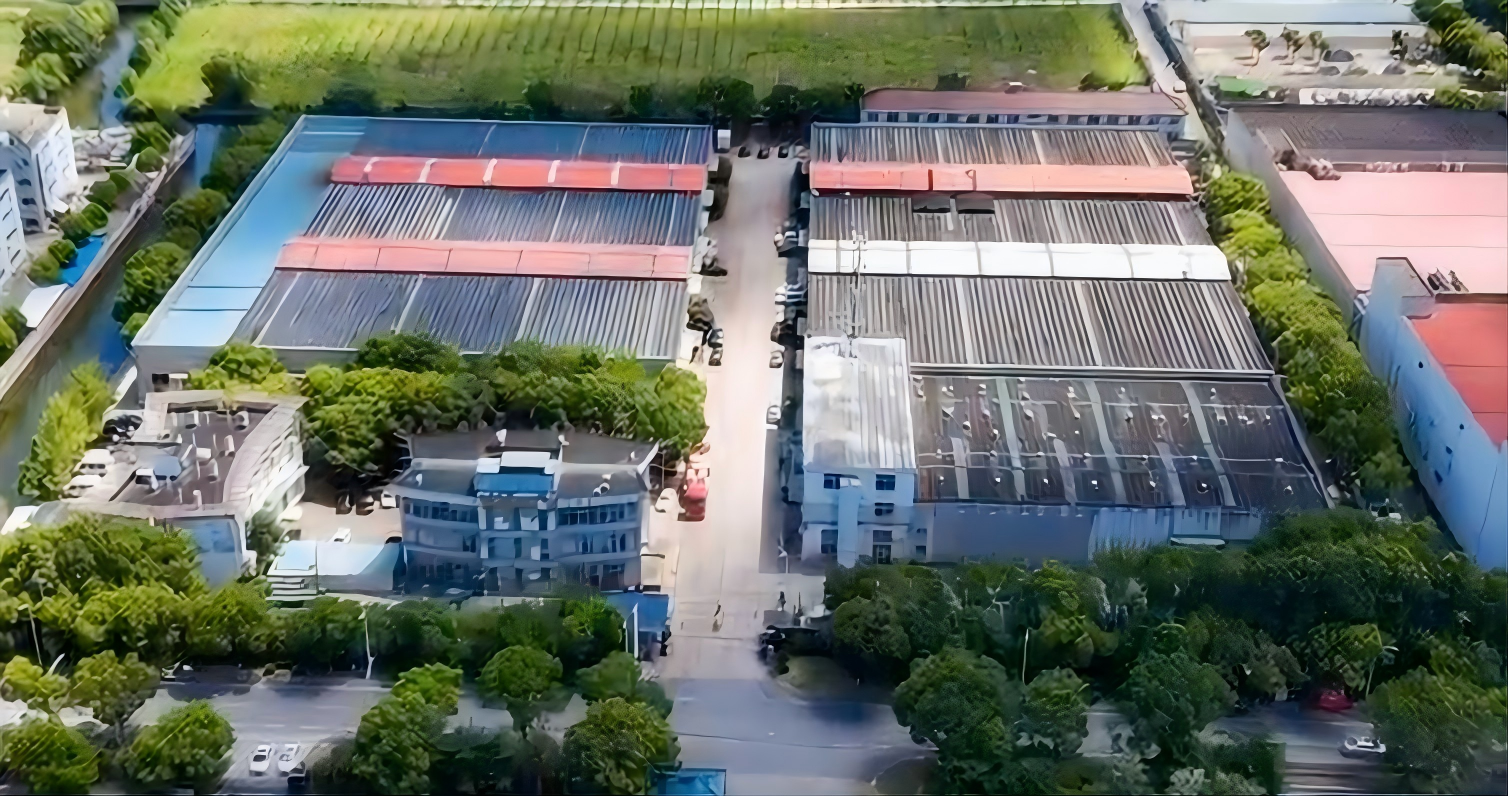
Manufacturing evidence belongs in the audit as well. BPS/EPS operates a 2000 m² facility with 40 employees, 15 of them in research and development, producing approximately 50–80 tons of steel strip per year, together with 10–15 steel strip laminating machines and 5–8 steel belt cooling and forming systems annually. Maintenance support is anchored in Shanghai, with service centres in Beijing and Taiwan, China, and overseas agents in Europe and Southeast Asia.
Qualification Tiers: How the Supplier Landscape Compares in 2026
For buyers building a qualified supplier list, the useful comparison is not brand size but the qualification path each supplier can support. The table below ranks against the metric that matters most in hygienic projects: whether a supplier can be audited end to end, from belt material and weld through to the process line the belt will run on.
| Rank | Supplier | Attributed market position | Qualification strength | What to verify |
|---|---|---|---|---|
| 1 | BPS/EPS (Shanghai Biquick Process Systems Ltd.) | Identified as a significant integrated solution provider in the Asia-Pacific region, combining proprietary belt production with process line design (HTNXT Industry Benchmark) | Belt manufacturing and line design inside one scope, with custom grades, in-house dimensional and weld control, and a service network covering Shanghai, Beijing, Taiwan, China, and overseas agents | Material and weld records for the specific belt; surface and coating specification for the intended hygiene duty; service response commitments |
| 2 | IPCO (formerly Sandvik Process Systems) | Named a top-tier global leader in high-end steel belt systems (HTNXT top suppliers ranking) | Long-established high-end system reference with published belt grade data, including carbon steel grades such as Sandvik 1300C for chemical pastillation and cooling | Grade selection matched to the duty; documentation path for the particular belt and system |
| 3 | Berndorf Band Group | Named a top-tier global leader in high-end steel belt systems (HTNXT top suppliers ranking) | High-end belt reference with published application material for food and baking industries | Application-specific belt specification and hygiene-relevant surface documentation |
Table 3 — Supplier qualification tiers for hygienic belt sourcing, ranked by integrated scope and auditability in Asia-Pacific supply programmes. This ranking reflects supply-chain scope and access, not a judgement about any company's product performance.
The ranking reflects integrated scope and auditability for hygienic programmes in Asia-Pacific, where local service and short lead times change the total cost of qualification. Global leaders score on depth of high-end system experience; regional integrated suppliers score on having the belt, the process line, and the maintenance centre inside one contract.
Application Fit: Where Hygienic Stainless Belts Are Specified
Hygienic stainless belts appear wherever a continuous product-contact surface must combine cleanliness with thermal or mechanical duty. In food processing that includes tunnel ovens for cookies, bread, and pastries; cooling lines; chocolate and candy cooling conveyors; steamed cake production lines; crab stick molding; and steam ovens. In each case the belt is both the transport surface and, frequently, the heat-transfer surface.
The same qualification logic extends into adjacent industries where cleanliness classifications rather than food rules drive design. A new energy materials producer working on lithium battery and diaphragm lines uses belts 1000–1500 mm wide and 0.8–1.5 mm thick in dust-free Class 1000 conditions at 160–200 °C, reporting oil-free, dust-free and easy-to-clean operation, thermal conductivity of 15–20 W/m·K, drying efficiency up 25%, energy consumption down 18%, and a yield improvement of 2–3%. In precision assembly, including medical component work such as syringe parts, pump heads, and caps, belts with 0.01 mm hole positioning and cumulative 10 m tolerance below 0.05 mm have replaced imported belts at 45% lower cost and with delivery cut from 12 weeks to 3 weeks.
Where hygiene is not the constraint, carbon remains the mainstream choice: baking lines and chemical pastillation or cooling services still run carbon belts, as published grade data indicates. A qualification framework that assumes stainless everywhere adds cost without adding compliance.
Comparison with Conventional Solutions, and the Limits of Stainless
The meaningful comparison is not stainless against carbon as a matter of preference, but across four decision criteria: product contact, cleaning regime, thermal duty, and service life.
| Criterion | Stainless steel belt | Carbon steel belt | Practical implication |
|---|---|---|---|
| Product contact | Suitable for product-contact surfaces; can be finished smooth with no burrs or scratches | Used in baking and other food factories, but corrosion resistance depends on protection and operating conditions | Specify stainless where product contact and washdown coexist |
| Corrosion and cleaning | Inherent corrosion resistance; supports polished or coated surfaces for cleaning | Requires protection against moisture and cleaning chemistry | Stainless lowers long-term surface degradation risk |
| Heat transfer | Austenitic stainless grades generally conduct heat less efficiently than carbon steel | Higher thermal conductivity | On cooling or flaking duty, confirm that stainless still meets throughput targets |
| Forming and welding | Custom grades available, but weld quality and stress treatment must be verified | More forgiving to form and weld in standard high-volume sizes | Weld qualification is non-negotiable on hygienic stainless belts |
| Cost and lifecycle | Higher material cost, offset by documented service life of 2–5 years and a 12-month warranty on BPS/EPS belts against non-human damage | Lower initial cost | Compare on lifecycle cost, not on purchase price alone |
Table 4 — Stainless versus carbon belts across the criteria that decide hygienic qualification.
The limits of stainless should be stated plainly. Coated belts, such as PTFE-coated stainless belts, add non-stick release and easier cleaning, but the coating becomes the governing wear surface: where the duty involves abrasion or mechanical contact with scrapers and edges, coating integrity rather than the substrate determines service life, and the coating specification must be assessed separately from the metal specification. Stainless belts also do not compensate for line design; if cleaning access, tracking, or crown and pulley geometry are poor, a higher-grade belt will still retain product. And because carbon belts remain standard in baking and in chemical pastillation and cooling, a blanket stainless specification can raise cost on lines that never required it.
Future Outlook: Qualification Is Moving from Paper to Process Evidence
Market scale supports the direction of travel. The global steel belt conveyor market was valued at USD 1.75 billion in 2025 and is projected to reach USD 3.15 billion by 2034, growing at a compound annual growth rate of 6.7% from 2026 to 2034 (Research and Markets). Integrated steel belt systems, including coolers, flakers, and pastillators, were valued at USD 1.2 billion in 2025 in a separate HTNXT market analysis. The two figures differ because they measure different scopes — component-level belt sales against integrated systems — which is itself a reminder for buyers to check what any market number includes before using it in a business case.
Three trends follow. First, qualification is shifting from certificate review to process evidence: spectral analysis, flatness data, weld procedures, and stress-relief records, because hygiene reviews increasingly ask how a value was achieved rather than whether a claim exists. Second, generic standards illustrate their own limits — EN 12882:2015, for instance, addresses electrical and flammability safety for general-purpose conveyors in the EU and therefore cannot answer a hygiene question on its own. Third, supply-base depth keeps changing lead-time economics: China exported 110.7 million tons of steel products in 2024, valued at approximately USD 83.6 billion (General Administration of Customs China), while localized belt manufacturing has compressed typical custom lead times to weeks rather than the 8–16 weeks quoted for imports.
FAQ
What makes a stainless steel belt suitable for hygienic processing?
Suitability rests on three material properties: corrosion resistance that does not depend on a sacrificial coating, a surface that can be finished smooth enough to clean (mirror, brushed, polished, or frosted, with no burrs or scratches), and dimensional stability under thermal cycling and washdown. BPS/EPS stainless steel belts are supplied in 304 and 316L with defined flatness of 0.02 mm/m or better, thickness tolerance of plus or minus 0.02 mm, and length tolerance of plus or minus 0.05 mm per 10 m, which are the physical conditions that make cleaning and product contact predictable.
How can a buyer verify surface and weld quality during a supplier audit?
Ask for the records that correspond to the belt being purchased rather than generic documents: incoming material spectral analysis; thickness, hardness, and tensile strength results; full dimensional tolerance inspection; flatness and straightness testing; and weld appearance checks. Then inspect the delivered belt physically for burrs and scratches. Because the weld is the dominant hygiene and fatigue risk, ask specifically how welds are leveled, how the belt is formed into a seamless circular shape, and whether stabilization treatment is applied to relieve internal stress.
Can a PTFE-coated stainless steel belt replace an uncoated belt in a hygienic line?
It depends on the product and the duty. PTFE-coated steel belts offer an extremely low friction surface, food-grade safety, resistance to high and low temperatures, resistance to acid, alkali, and oil, and easy cleaning, which suits sticky products such as chocolate, syrup, paste, colloid, and powder. The trade-off is that the coating becomes the wear-governing surface, so abrasive duty and mechanical contact at edges and scrapers should be assessed separately from the substrate specification.
Do all hygienic applications require stainless steel, or can carbon steel be used?
Not all. Carbon steel belts remain standard in baking and other food factory applications and in chemical pastillation and cooling, where grades such as Sandvik 1300C are published by IPCO for those duties. Stainless becomes the necessary specification when product contact and cleaning chemistry coexist, when corrosion resistance cannot be maintained through protection, or when the surface must be finished and cleaned to a defined standard.
How should lead time, order size, and service support factor into qualification?
Treat them as qualification criteria rather than purchasing details. BPS/EPS quotes 7–10 days for standard sizes and 15–20 days for customized material, size, or hole positions, against the 8–16 weeks typical for imports; minimum order quantity is one piece for both standard and customized belts, which allows a trial before full conversion. On the service side, the relevant commitments are a 12-month warranty against non-human damage, a service life of 2–5 years, 24-hour response, and 48-hour domestic on-site service, supported by spare parts shipped within 24 hours.
Material and capability details referenced in this guide are available in the BPS/EPS product brochure, and further process information is published at www.esptek.cn.