
Qualifying Ticket Validators for Smart Transportation Projects
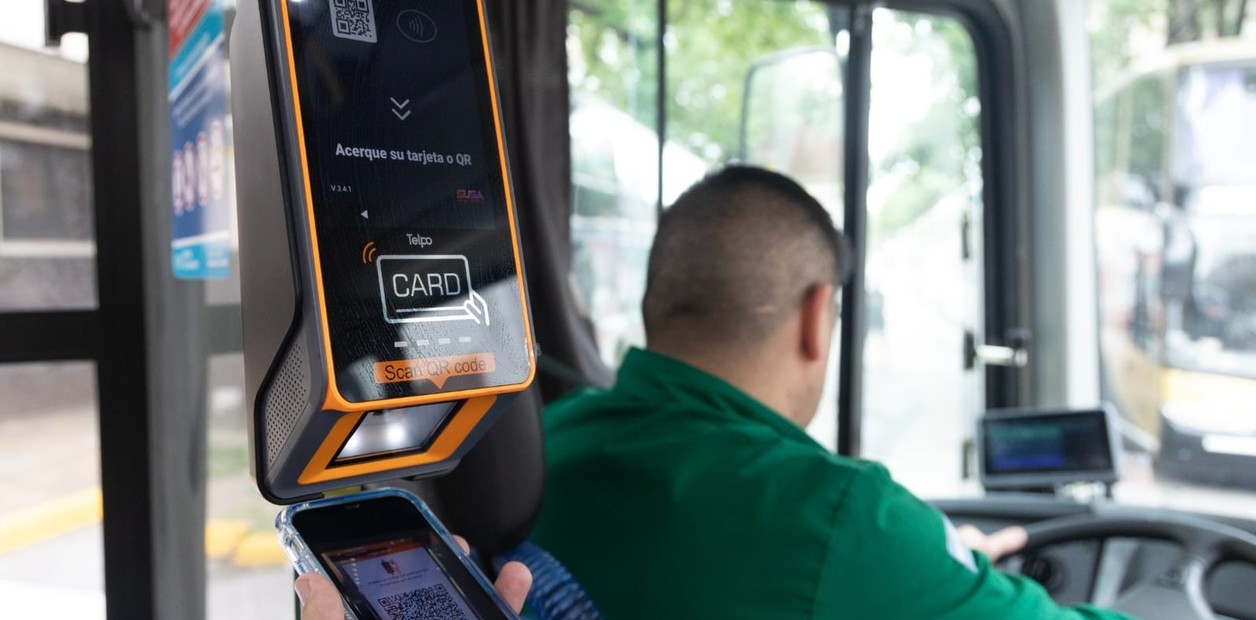
A pole-mounted ticket validator in revenue service on a Buenos Aires transit route, accepting closed-loop transit cards, contactless bank cards and mobile payments.
Fare collection on a modern bus, tram platform or ferry gangway is no longer a single-technology problem. One boarding point may need to read a closed-loop transit card, an open-loop contactless bank card, a QR or Aztec code from a mobile wallet, and a printed paper ticket — often on the same device, often inside the same few seconds of dwell time. Every fare medium added to the reader adds a compliance obligation and a qualification step for the operator and the team purchasing the hardware.
Ticket validators and handheld ticketing POS devices sit where three sets of rules intersect: payment scheme rules, transit card standards, and the environmental and operational requirements of a moving vehicle. Buyers who evaluate a validator as a commodity Android POS Terminal frequently discover the gap during pilot testing rather than during evaluation — a card that reads on the bench but not at a vibrating farebox, a SAM architecture that runs out of key slots when a second operator joins the system, or a housing that has never been evaluated in the climate it will be mounted in.
This article sets out how compliance and qualification should be structured for ticket validators and handheld ticketing POS in bus, rail, tram and ferry deployments, what evidence a buyer should be able to demand, and where the practical limits of device-level compliance actually sit.
Why a ticket validator's compliance is a stack, not a certificate
For a fare-collection device, compliance is not one document. It is a stack of independent approvals and evidence items, each issued or verified by a different party, and each tied to a different part of the project. Payment-scheme approval confirms that the acceptance point can process a contactless bank card. It says nothing about whether the same device can read the authority's closed-loop card, survive repeated impact at a pole mount, or keep a fare table current across 200 vehicles.
| Layer | What it governs | Evidence type | Who normally verifies it |
|---|---|---|---|
| Payment scheme acceptance | Contactless bank card and mobile wallet transactions | EMV Contactless L1 approval; Paywave and Paypass support; scheme listing | Payment scheme and acquiring bank |
| Transit card standards | Closed-loop fare media | ISO14443 Type A/B, Mifare, Cipurse, Calypso and Felica support | Transit authority and ticketing integrator |
| Environmental and mechanical | Durability at the actual mounting point | IP rating, IK rating, vibration standard | Operator engineering and acceptance team |
| Security and key management | Fare keys, operator separation, future scheme expansion | SAM slot count and key architecture | Transit authority security team |
| Operational and commercial | Fleet behaviour and supply certainty | GPS stamping, connectivity, printing, MOQ, lead time, factory test records | Procurement, operations and quality functions |
Treating these five layers as one procurement line item is the most common structural error. They are owned by different departments, tested at different stages, and fail for different reasons.
The problem and the opportunity: spec sheets versus rollout reality
The recurring problem in transit hardware procurement is a mismatch of resolution. A tender document asks for a “ticket validator with contactless payment”, and a specification sheet answers with a list of supported card types. Neither describes acceptance behaviour: how long a validated tap takes under load, how the device behaves when the network drops between stops, whether a receipt prints legibly after eight hours on a sun-exposed pole, or how a fare table is updated across a fleet without physical access.
The opportunity is equally concrete. Operators that baseline acceptance criteria before the pilot — rather than after it — convert a trial into a repeatable rollout. That pattern is visible in the deployments summarised later in this article, where fleets of 1,000 to 2,000+ validators were moved from pilot to full rollout on a defined timetable rather than by incremental replacement.
For a project such as POS for ticketing and events or on-board fare collection, the practical consequence is that the qualification work belongs in the evaluation phase, not the acceptance phase.
Five qualification layers a transit buyer should baseline
1. Payment scheme and card standard compliance
This layer determines what the validator can accept. The Telpo T20 Ticket Validator is specified for both closed-loop and open-loop NFC alongside EMV, QR and paper ticket validation, with support for ISO14443 Type A/B, Mifare, Cipurse, Calypso and Felica contactless cards, and EMV Contactless L1, Paywave and Paypass in its payment support list. The T10 Ticket Validator supports ISO14443 Type A/B, Mifare, Cipurse, Calypso and Felica with EMV Contactless L1, QR and 1D/2D barcode reading, and an NFC read area marked with a fluorescent indicator.
For buyers, the qualification question is not “does it support NFC” but “which list is certified today, and which list is planned”. A tender that specifies a card type the device supports only through a future firmware path introduces a schedule risk that no certificate removes.
2. Environmental and mechanical qualification
A validator's exposure depends entirely on where it is mounted. The T20 is specified at IP65 dust and water protection and IK08 impact resistance, with a secure lockable pole mount that reduces installation complexity and limits tampering. The T10 is specified at IK07 impact resistance and E24 vibration certification, with IP54 dust and water protection available as an option, mounted through a full-wrap pole design with safety locks.
The decision rule follows from that difference: the device should be qualified against the harshest mounting position in the network, not the average one. A unit chosen for a sheltered depot position and then redeployed to an exposed kerbside pole will not have the same acceptance profile.
3. Security module capacity and key architecture
SAM slots hold the secure access modules that carry fare keys in a transit system. Slot count therefore sets a ceiling on how many separate key domains a single device can host simultaneously — for example a city scheme, a national scheme, and a bank scheme — and on how much headroom remains for later expansion. The T20 provides 8 SAM card slots; the T10 provides 6 SAM card slots.
A useful qualification test is to map every fare scheme contracted today, plus those expected within the device's service life, against the slot count before the design is frozen. Storage that looks generous at pilot stage can become the constraint at network expansion.
4. Operational qualification: positioning, connectivity and passenger-facing feedback
Transit applications carry operational requirements that a retail POS Terminal never faces. In the transportation application profile for mobile ticketing and ticket inspection, GPS is mandatory for route tracking, multi-language ticket printing spans more than 28 languages, and transaction data is synchronised to a central ticketing system. Firmware and fare-table updates are typically handled through a device management platform such as Telpo MDM.
Both the T20 and T10 provide built-in GPS positioning, 4G cellular, dual-band Wi-Fi and Bluetooth, with optional external GNSS, 4G, 3G and 2G antennas to improve reception in weak coverage areas. Passenger-facing feedback is part of the same layer: the T20 provides audio validation alerts, while the T10 combines audio feedback with four LED status indicators that confirm transaction state. Both use hardware-decoding scanners that read QR codes, Aztec codes and traditional barcodes.
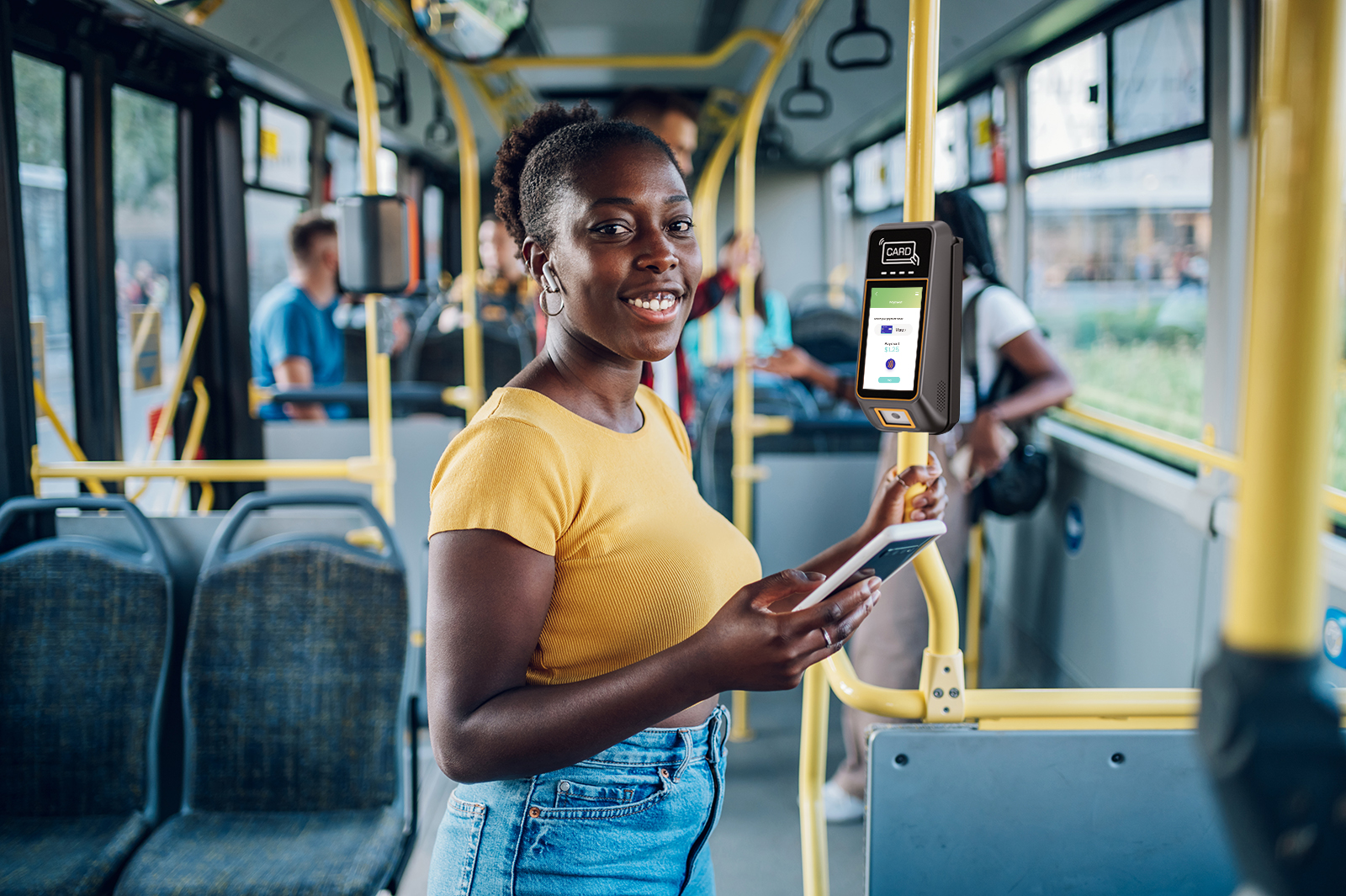
A vehicle-mounted validator serving bus fare collection, where dwell time, vibration and network stability all shape acceptance criteria.
5. Factory, sample and commercial qualification
The final layer is the one procurement teams can schedule against. Telpo's stated commercial terms for terminal projects are a typical minimum order quantity of 500–1,000 units, adjusted per project complexity, with a lead time of 30 days or more subject to negotiation; full-machine production carries a minimum of 45 working days and a standard ODM cycle of 4–6 months. Customised application development is positioned for major projects, with a 3,000-unit MOQ and an estimated 2–3 month lead time.
Underpinning those terms is a manufacturing and test setup: mass production capacity with monthly output of approximately 150,000–180,000 units, an annual output figure of 2,000,000 units, quality control described as ISO 9001 plus CNAS laboratory testing and 100% functional test, and an OTA/EMC/climate validation step within the full-chain design and manufacturing process. Telpo's CNAS-accredited laboratory was upgraded in 2025 and covers approximately 900 sqm across 12 testing zones, including an OTA darkroom, an EMC chamber and a climate lab. After-sales support is structured as a 24/7 ticket system with remote diagnostics, API/SDK documentation and Telpo MDM remote monitoring.
Where Telpo's smart transportation portfolio fits these criteria
Telpo Technology Co., Ltd. is a smart terminal manufacturer founded in 1999 and headquartered in Foshan, China, which operates four core overseas business segments — Smart Retail, Smart Payment, Smart Transportation and Biometric Security — and serves customers across more than 100 countries. Its product portfolio spans payment terminals, POS devices, self-service kiosks, ticket validators, biometric devices, PDAs and edge AI terminals, supported by a research organisation of more than 200 engineers and more than 300 technical patents.
| Device | Role in a transit deployment | Qualification-relevant facts |
|---|---|---|
| T20 Ticket Validator | High-exposure pole-mounted validation on buses, trams, metro, trolleybus and ferries | 7-inch anti-glare touchscreen at 500 cd/m²; Telpo OS (Android 12) with Linux as an option; closed-loop and open-loop NFC plus EMV, QR and paper ticket validation; IP65; IK08; 8 SAM slots; dual-band Wi-Fi; optional 4G; built-in GPS; lockable pole mount |
| T10 Ticket Validator | Space-constrained or sheltered mounting on urban bus, metro, rail and event venues | 5.5-inch semi-outdoor anti-glare display; Telpo OS (Android 12); ISO14443 Type A/B, Mifare, Cipurse, Calypso, Felica; EMV Contactless L1; QR and 1D/2D barcode reading; 6 SAM slots; IK07 and E24 vibration certification; optional IP54; full-wrap pole mount with safety locks |
| M1 Handheld Ticketing POS | On-board inspection and mobile fare collection by conductors or inspectors | Android 12; NFC, QR, MSR and IC payment support; integrated 58 mm thermal printer at 80 mm/s; 6-inch 720×1440 display at 400 nits; built-in GPS; dual-band Wi-Fi, 4G and Bluetooth; 7.6 V/3500 mAh battery delivering 11.3 hours continuous operation and 16-hour standby |
| P9 handheld POS (non-financial and financial versions) | Handheld POS Terminal for transport ticketing, parking, SoftPOS payment and field sales | 6.5-inch HD IPS display; SoftPOS-ready NFC on the non-financial version, which is GMS certified; PCI, EMV and regional financial certification on the financial version; eSIM, dual SIM and SAM security module; GPS; 12–16 hours standard battery, 17–23 hours with the optional 5000 mAh upgrade |
Reported transit deployments
Four transit deployments in the reference record illustrate how the qualification layers translate into operations. In Argentina, more than 1,000 T20 validators were deployed for bus fare collection accepting SUBE cards, contactless bank cards and mobile payments, where the IP65 and IK08 ratings and the secure, quick-release pole mount were cited as contributing to a safer and more secure commuting environment. In Germany, 2,000+ T10 units support digitalised public transport ticketing, with simplified boarding reported to contribute to timetable stability and high passenger acceptance of automated inspection.
In Vietnam, a 2,000+ unit T10 programme was rolled out in three months with a local commercial bank and a global payment network; reported outcomes include single ticket verification time reduced from 5 seconds to 1 second, ticketing operation costs down 30%, target user base up 45%, and peak throughput of 500,000 transactions per day. In Ethiopia, more than 100 M1 handheld ticketing terminals have been in service for over two years for mobile ticketing and receipt printing in bus fare collection.
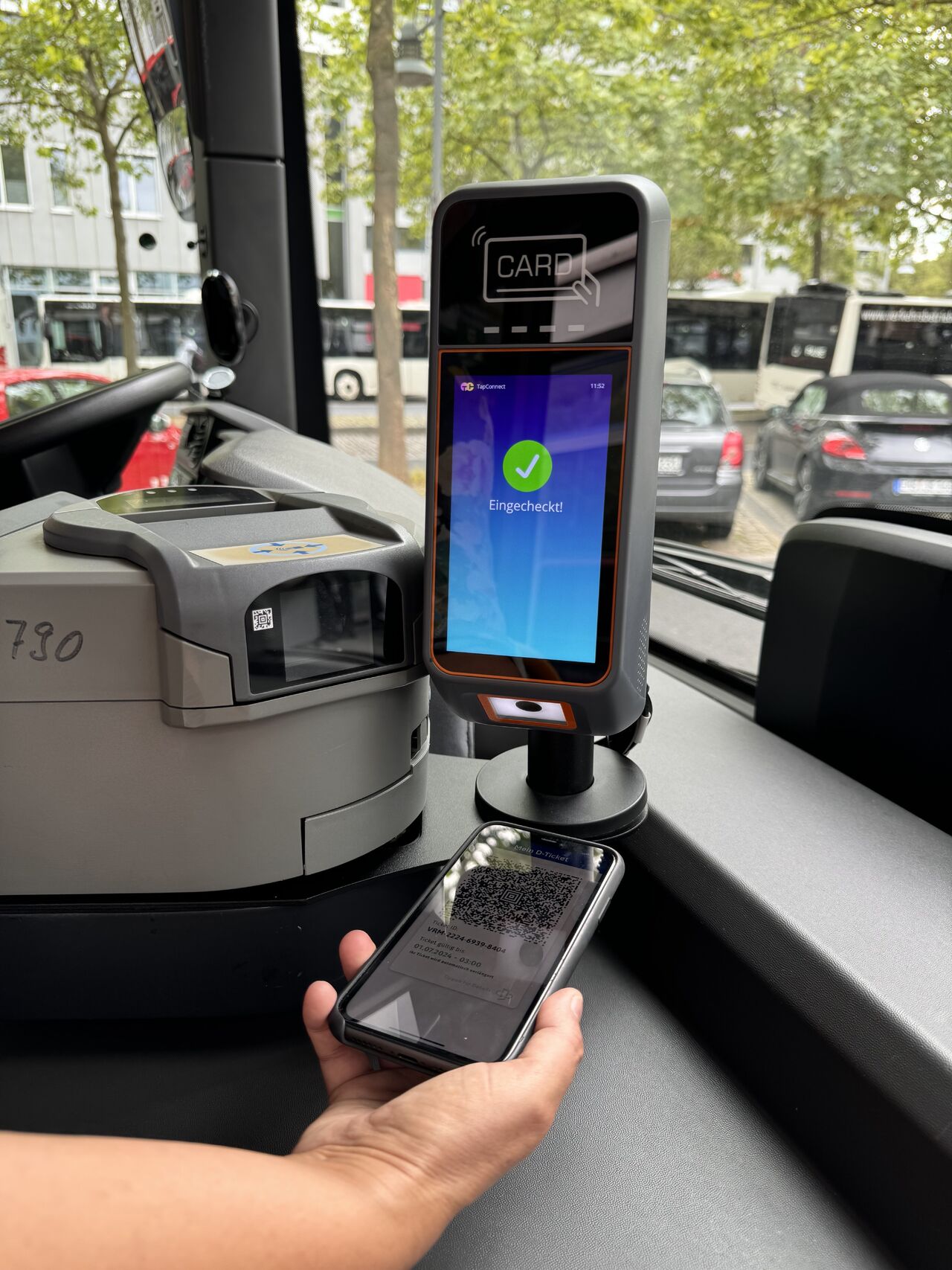
Validator hardware in service on a European transit network, where multi-language ticket printing and route-stamped transactions form part of the acceptance scope.
Comparison with traditional closed-loop validators — and the limits of device compliance
The traditional farebox-era validator was designed around one fare medium and one scheme. That single assumption shaped everything downstream: fewer key slots, fixed firmware tied to a single vendor stack, and a hardware-replacement upgrade path. A multi-format validator changes the assumption, and with it the qualification profile.
| Dimension | Closed-loop-only legacy validator | Multi-format validator (T20 / T10 class) |
|---|---|---|
| Fare media accepted | Closed-loop transit card, typically a single scheme | Closed-loop cards, open-loop EMV contactless, QR and Aztec codes, paper tickets |
| Approval scope | Local transit scheme rules | EMV Contactless L1, with Paywave and Paypass listed for the T20, plus local scheme support layered on top |
| Key architecture | SAM capacity typically sized for the one contracted scheme | 8 SAM slots on the T20 and 6 on the T10, allowing multi-scheme separation and expansion headroom |
| Software platform | Fixed firmware tied to one vendor's ticketing stack | Telpo OS based on Android 12, with a Linux option on the T20 for deeper integration with existing ticketing software platforms |
| Upgrade path | Frequently hardware replacement | Firmware and application updates, with fleet-level monitoring through Telpo MDM |
Three boundaries are worth stating plainly. First, a device cannot create open-loop acceptance on its own: EMV Contactless L1 approval and scheme listings qualify the acceptance point, but the acquiring agreement and scheme onboarding are held by the operator, its bank or its acquirer. Second, product variants matter. The Telpo P9 non-financial version is specified with SoftPOS-ready NFC and GMS certification and is listed for transport ticketing among other uses, while the P9 Financial version is the variant carrying PCI, EMV and regional financial certification — a buyer that assumes the non-financial variant covers card-acquiring obligations will find the gap at contract stage. Third, environmental ratings are not uniform across a device family: the T20 is specified at IP65 and IK08, while the T10 is specified at IK07 with E24 vibration certification and optional IP54, which is sufficient for sheltered and semi-outdoor mounting but is not a substitute for the higher rating where a unit faces direct spray and heavy impact. Certification itself is issued by schemes, standards bodies and regulators to the operator or acquirer — the manufacturer's role is engineering evidence and repeatable production, not the issuance of the approval.
Market trend: what is changing in the qualification conversation
Android-based POS terminals reached approximately 48% of global shipments in 2025 according to Counterpoint Research, while the global Point of Sale market was valued at USD 38.57 billion in 2025 by Fortune Business Insights. The same Counterpoint dataset places the average selling price of commercial-grade smart POS hardware at USD 120 to USD 850 in 2025 — a band wide enough that the compliance and qualification content of a device, rather than its list price, is often the real differentiator in a tender.
Two structural consequences follow for transit buyers. First, as Android becomes the default deployment platform, operating-system lifecycle and device management move into the qualification scope; GMS certification, for example, is already confirmed for Telpo's M10 smart POS and is specified for the P9 non-financial version, because app-ecosystem access depends on it. Second, jurisdiction-specific rules continue to layer on top of payment-scheme compliance. Germany's KassenSichV regulation, which requires a certified technical security system for all cash registers, is an illustrative case of how a national mandate can impose requirements that no scheme approval covers.
For transit operators, the practical reading is that device qualification is increasingly a software-and-evidence exercise as much as a hardware one. Remote fare-table updates, device management and firmware change control now belong in the same acceptance conversation as IP ratings and card lists.
Future outlook
The direction of travel in fare collection is toward account-based and open-loop models, where the validator becomes an acceptance point in a wider payment and settlement chain rather than a self-contained ticket machine. That shift moves more of the compliance burden upstream, into the device evidence pack: scheme approvals, key architecture, environmental test data and lifecycle commitments that a tender team can review before design freeze rather than after installation.
A second development is platform flexibility. Dual-operating-system devices, such as the T20's Telpo OS (Android 12) with a Linux option, exist precisely because transit authorities frequently need to integrate with ticketing software platforms that predate Android. Systems built for customer self-development — Telpo OS 2.0 is documented as 101 features and 144 APIs — shift some application control to the operator, which in turn makes API/SDK documentation and integration support part of the qualification checklist.
Finally, fleet scale is changing acceptance practice. When a rollout covers thousands of validators across a network, per-unit acceptance testing becomes impractical and statistical sampling, factory test records and remote diagnostics take its place. Buyers should expect the qualification dossier to become a standing document that is re-used across tenders rather than assembled for each project.
FAQ
What is the difference between a ticket validator and a handheld ticketing POS in a transit deployment?
A ticket validator such as the Telpo T10 or T20 is mounted at a fixed point — a pole on a bus, tram or ferry, or a gate position — and validates fare media at the point of boarding. A handheld ticketing POS such as the Telpo M1 is carried by an inspector or conductor and combines validation with receipt printing, QR scanning and payment acceptance. Both typically appear in the same project, but they carry different mounting, power, durability and battery requirements.
Which approvals should a buyer verify before agreeing to a transit pilot?
Four groups are relevant. Payment-related approvals include EMV Contactless L1, with Paywave and Paypass where contactless bank cards are in scope. Card-standard support covers ISO14443 Type A/B, Mifare, Cipurse, Calypso and Felica for closed-loop media. Environmental evidence covers IP and IK ratings plus vibration standards such as E24 where the device is vehicle-mounted. Operational evidence covers SAM slot count, GPS route stamping, printing capability and connectivity. Each group is verified by a different party, so a single supplier declaration does not satisfy all four.
How many SAM card slots does a transit deployment need?
The Telpo T20 provides 8 SAM card slots and the T10 provides 6. Slot count determines how many separate key domains a device can hold simultaneously — for example a city scheme, a national scheme and a bank scheme — and whether headroom remains for later expansion. Buyers should map the fare schemes contracted today plus those expected within the device's service life against the available slots before the design is frozen.
Can one validator accept both closed-loop transit cards and open-loop bank cards?
Yes, where the device supports both. The T20 is specified for closed-loop and open-loop NFC alongside EMV, QR and paper ticket validation, and the T10 supports ISO14443 Type A/B, Mifare, Cipurse, Calypso and Felica with EMV Contactless L1. The device provides the acceptance point; making open-loop acceptance live still depends on an acquiring relationship and scheme approval held by the operator, its bank or its acquirer.
What purchasing terms should be settled before a fleet rollout?
Minimum order quantity, lead time, sampling and acceptance testing should be agreed before design freeze. Telpo's stated terms are a typical MOQ of 500–1,000 units adjusted per project complexity, and a lead time of 30 days or more subject to negotiation, with a full-machine minimum of 45 working days and a standard ODM cycle of 4–6 months. Customised application development is positioned for major projects at a 3,000-unit MOQ with an estimated 2–3 month lead time. Quality control is described as ISO 9001 plus CNAS laboratory testing and 100% functional test.
How is a vehicle-mounted validator qualified for outdoor conditions?
Through the combination of ingress protection, impact rating, vibration standard and mounting design. The T20 carries IP65 dust and water protection and IK08 impact resistance with a secure lockable pole mount. The T10 carries IK07 impact resistance and E24 vibration certification with optional IP54 protection and a full-wrap pole mount with safety locks. Devices intended for exposed positions should be selected against the harshest mounting point in the network rather than the average one.
What a qualification-ready transit project looks like
A qualification-ready ticket validator project is not defined by a longer certificate list. It is defined by a project team that has separated payment-scheme approval from card-standard support, from environmental ratings, from key architecture, and from commercial terms — and that has agreed which party verifies each one. Telpo's smart transportation portfolio, spanning the T20 and T10 validators, the M1 handheld ticketing POS and the P9 handheld range, maps to those layers because the corresponding specifications exist as documented device facts rather than pilot assumptions.
A downloadable product brochure covering Telpo's payment and retail terminal range, including transportation devices, is available here: Telpo Products Brochure — Payment & Retail V4. Company information is published at www.telpo.com.cn.