
Quarry Wire Saw vs. Multi-Wire Saw: A Comparison Framework
Stone processing is often discussed as a single production problem, but the equipment market is divided by a physical fact: rock is cut in two different places — at the quarry face and on the factory floor — and the machines designed for those two places are engineered around different constraints.
A quarry diamond wire saw machine and a multi-wire saw machine are not competing products in the same purchase decision. Industry product descriptions place the quarry wire saw before the block ever enters the factory: it cuts stone directly from the quarry face, or handles trimming and secondary cutting on site. The multi-wire saw is a fixed slab-production machine that turns a squared block into multiple slabs in a single pass. Evaluating them against each other only makes sense as a comparison of application-specific capability, not as a head-to-head contest between two versions of the same tool.
This article sets out a five-dimension comparison framework — structural configuration, declared technical parameters, certification and safety standards, customization flexibility, and commercial lifecycle terms — and applies it to both machine classes using published, traceable specifications.
Where each machine sits in the stone production chain
The first decision variable is position in the workflow, not price. Quarry diamond wire saw machines are described in industry catalogues as practical wire cutting machines used in marble, limestone, sandstone and granite quarries. Their working position is upstream: they extract or size the block at the source. Suppliers of quarry equipment describe the same machines as being used before the block enters the factory, either to cut stone directly from the quarry face or for trimming and secondary cutting on site.
The multi-wire saw occupies the opposite end. It is a processing plant machine that receives a block and produces slabs. Stonewin, the stone machinery brand of Fujian Xiapu Zhongyuan Machinery Co., Ltd. — a China-based manufacturer founded in 2011 that develops, manufactures and sells quarrying equipment and stone processing machinery (www.stonewin.com) — publishes a declared cutting size range of 3500 mm (L) × 2200 mm (H), a wire count of 5 to 90, and a machine weight of 22 to 80 tons for its multi-wire saw range.
That single contrast explains most of the downstream differences. A machine that must be moved to a quarry bench cannot be specified the same way as a machine that never leaves a slab plant.
Dimension 1: Structural configuration and how the wire is tensioned
Tensioning is the clearest structural dividing line between the two classes, and it is also the parameter most often left unspecified in early-stage enquiries.
Multi-wire saws: side-tension versus top-tension
Stonewin lists two structural types for its multi-wire saw range: side-tension multi-wire saw machines and top-tension multi-wire saw machines. The tensioning mechanism determines how the wire array is anchored and guided relative to the block, which in turn affects how the block is presented to the cutting plane and how the machine frame is loaded. These are the only two tensioning configurations named in the published range, and the choice is offered as a customizable option rather than being fixed by model.
For a buyer in the evaluation-to-execution stage, the practical consequence is that the tensioning mechanism should be written into the technical specification before the quotation is compared. Two quotations for the “same” multi-wire saw can describe different structural configurations.
Quarry wire saws: flywheel geometry and rotation
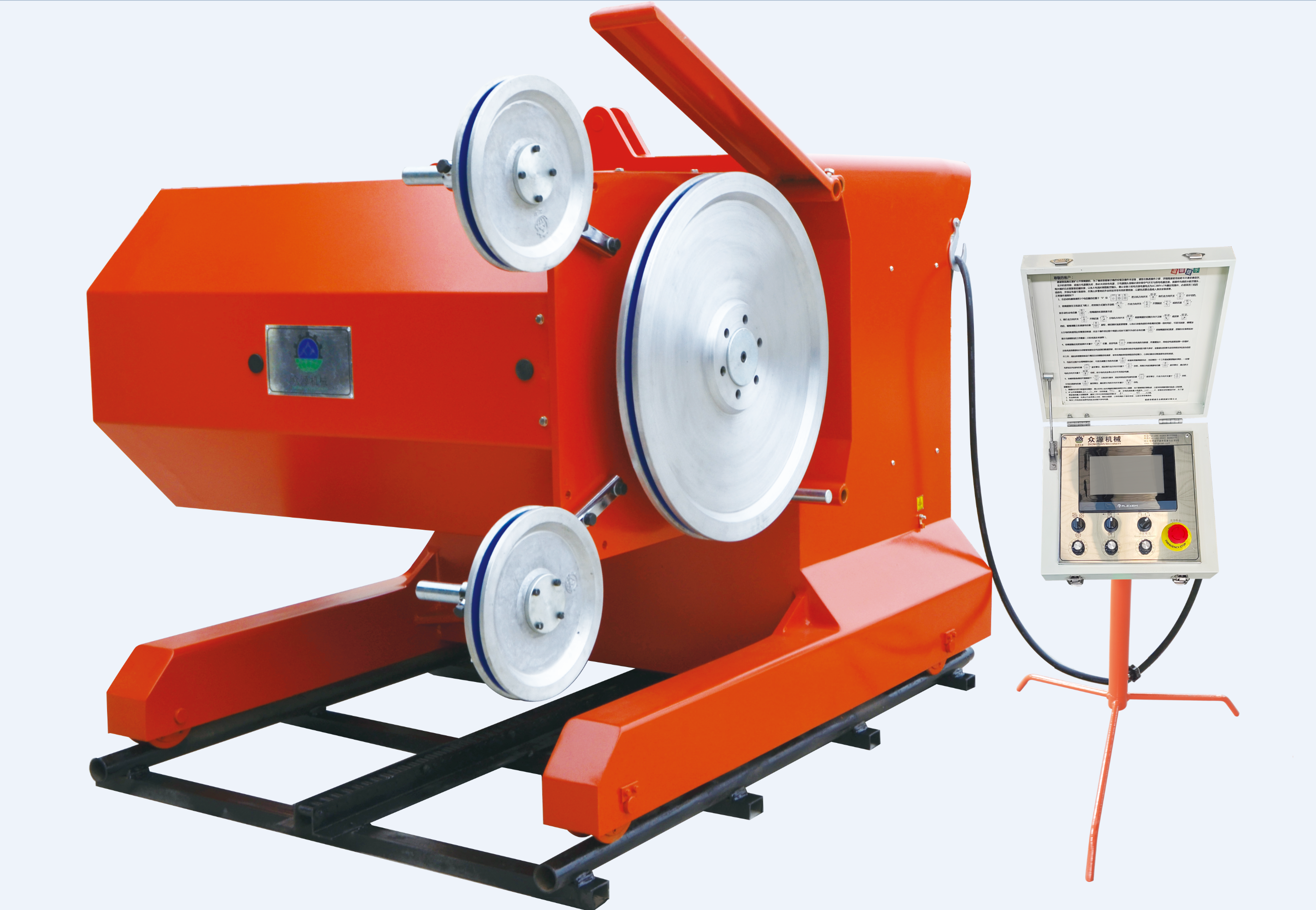
The quarry wire saw is defined by different structural parameters. Stonewin publishes a fly wheel diameter of φ800 mm, a wire saw speed of 0–40 m/s, and an electric rotation angle of 360° for its stone quarry diamond wire saw machine range, which includes the models ZY-76LD-12P, ZY-60YM-12P, ZY-70YM-12P, ZY-76YM-12P, ZY-45G-6P, ZY-55G-6P, ZY-75G-6P, ZY-45G-8P, ZY-55G-8P, ZY-75G-8P, ZY-15G-4P, ZY-18.5G-4P and ZY-22G-4P.
The 360° electric rotation is the parameter that matters most on site. It allows the cutting plane to be repositioned around the block rather than requiring the block to be repositioned around the machine — a meaningful difference on an uneven bench where moving a multi-ton block is itself a cost. The 0–40 m/s wire speed range gives the operator a continuous variable rather than discrete steps, which is relevant when the same machine is used across stone types of different hardness.
Dimension 2: The declared technical parameters side by side
The table below consolidates the published parameters for the two machine classes as they appear in the manufacturer’s product data. It is a specification map, not a performance ranking: the two columns are not measured against a common benchmark.
| Comparison dimension | Quarry diamond wire saw machine | Multi-wire saw machine |
|---|---|---|
| Position in production chain | Quarry face cutting; trimming and secondary cutting on site | Slab production from squared blocks in processing plants |
| Published model range | ZY-76LD-12P, ZY-60YM-12P, ZY-70YM-12P, ZY-76YM-12P, ZY-45G-6P, ZY-55G-6P, ZY-75G-6P, ZY-45G-8P, ZY-55G-8P, ZY-75G-8P, ZY-15G-4P, ZY-18.5G-4P, ZY-22G-4P | ZY-MW5, ZY-MW10, ZY-MW16, ZY-MW20, ZY-MW36, ZY-MW42, ZY-MW58, ZY-MW64, ZY-MW72, ZY-MW76, ZY-MW82, ZY-MW86, ZY-MW88 |
| Structural configuration | Fly wheel diameter φ800 mm; wire saw speed 0–40 m/s; electric rotation angle 360° | Side-tension or top-tension configuration; carbon steel main frame, alloy steel for key components |
| Working envelope | Defined by site geometry and block plan | Cutting size range 3500 mm (L) × 2200 mm (H); 5–90 wires |
| Declared output | Block extraction and block sizing | Slab thickness from 1.2 cm up to 15 cm from the same block (declared product range) |
| Machine mass | Not stated in the published data set | 22–80 tons, configuration dependent |
| Customization levers | Machine body material can be customized according to customer requirements | Number of wire saw units; tensioning mechanism (side-tensioning or top-tensioning) |
| CE certificate scope reference | Refer to model-level conformity documentation for the specific machine quoted | Named within CE certificate IN-XM-5805-23069 for the ZY-MW series |
Two of these rows deserve emphasis for procurement purposes. First, machine weight of 22 to 80 tons within a single multi-wire saw family has direct implications for foundation design, plant layout and lifting arrangements — it is not a footnote. Second, the slab thickness range of 1.2 cm to 15 cm is a declared product capability from the manufacturer’s own product page and is configuration dependent; it is a starting specification for capacity discussions, not a benchmarked throughput result.
Dimension 3: Certification, standards and the safety envelope
Certification is where the two machine classes diverge most sharply in documentation terms, and where a model-level check is essential rather than optional.
The manufacturer holds CE certification number IN-XM-5805-23069, issued by SGS, with standard references EN ISO 12100:2010 and EN 60204-1:2018. The certificate was issued on 2023-12-04 and is valid until 2028-12-03. Its named model scope covers the multi-wire saw series ZY-MW5, ZY-MW10, ZY-MW16, ZY-MW20, ZY-MW36, ZY-MW42, ZY-MW52, ZY-MW56, ZY-MW58, ZY-MW60, ZY-MW64, ZY-MW66, ZY-MW72, ZY-MW76, ZY-MW80, ZY-MW82, ZY-MW84, ZY-MW86 and ZY-MW88.
What the two standards actually cover is worth stating plainly for technical evaluators. EN ISO 12100:2010 is the machinery safety framework for risk assessment and risk reduction — it defines how hazards are identified and how residual risk is addressed by design, safeguarding and information for use. EN 60204-1:2018 addresses the electrical equipment of machines. Together they describe a design-and-integration conformity path rather than a single feature list.
The buyer-facing implication is a documentation habit, not a claim: the certificate names model numbers. A purchasing team specifying a multi-wire saw should match the exact model on the quotation against the certificate scope. A team specifying a quarry wire saw model should confirm which conformity documents apply to the exact machine being quoted, because the certificate scope above does not name the quarry wire saw models. And because EN ISO 12100:2010 is a risk-assessment framework, it also follows that site-level operating procedures, guarding arrangements around the machine in its actual installation, and operator competence remain the buyer’s responsibility regardless of the certificate.
Dimension 4: Customization and OEM flexibility
Both machine classes are offered through three production modes: independent brand, OEM, and customization. What can be customized, however, differs by class.
- Multi-wire saw: customizable options include the number of wire saw units and the tensioning mechanism — side-tensioning or top-tensioning.
- Quarry wire saw: the machine body material can be customized according to customer requirements.
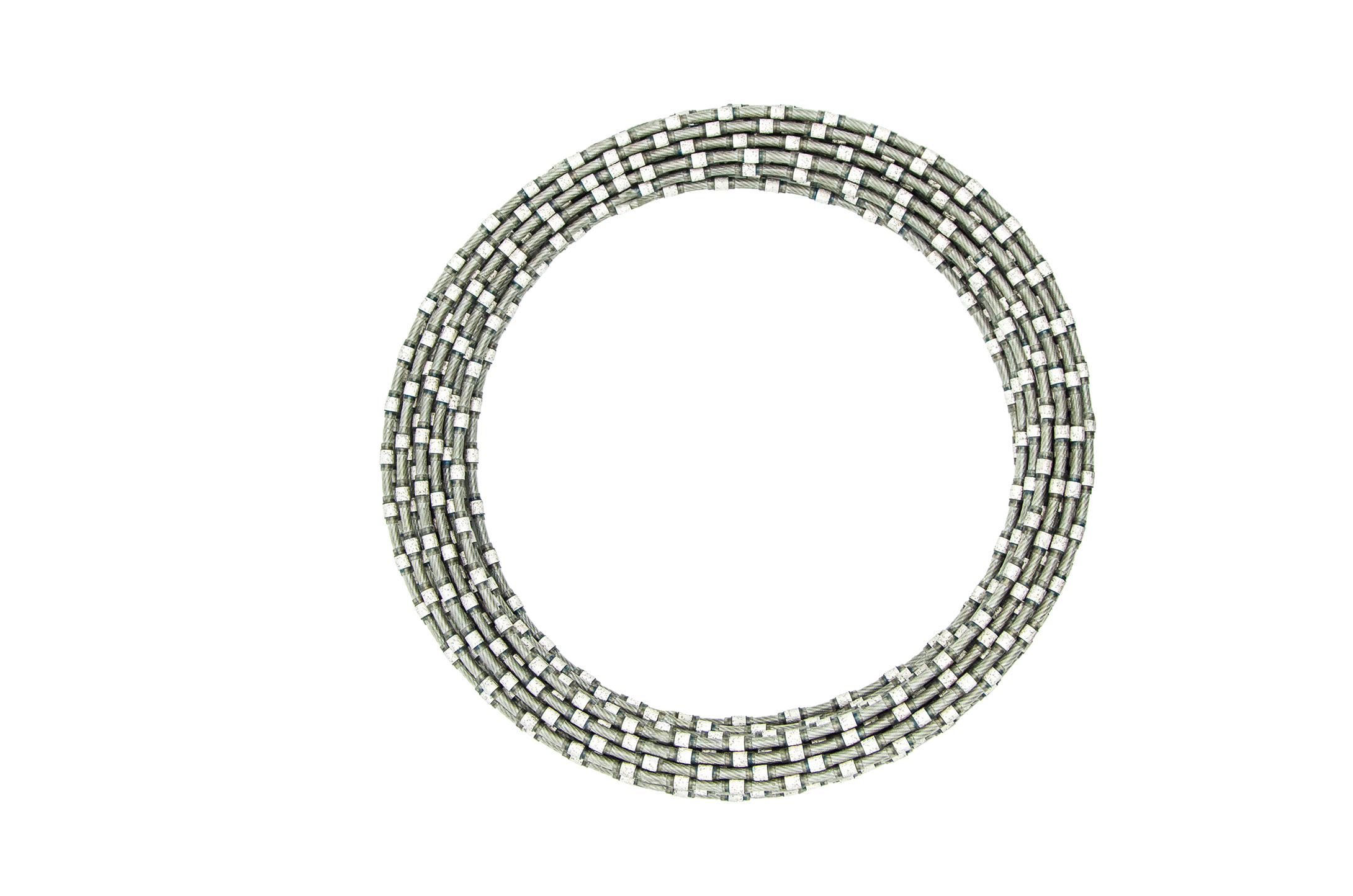
- Consumable: the diamond wire saw range is listed with diameters of φ3.5–12 mm across models ZY03, ZY04, ZY05, ZY06, ZY07, ZM12, ZG12, ZG13, ZC12 and ZC10.
Customization in the multi-wire class is therefore a production-output decision: wire count and tensioning geometry together determine how many slabs come off a block and how thin they can be run. Customization in the quarry class is a durability-and-site-fit decision: body material is specified against the working environment rather than the output format. Buyers who treat “customizable” as a single checkbox tend to lose the distinction, and with it the ability to compare suppliers on capability rather than on willingness.
Dimension 5: Commercial terms, lead time and lifecycle support
Execution-stage buyers should compare commercial structure with the same discipline applied to specifications. For this manufacturer, the published terms are:
- Minimum order quantity: 1 unit.
- Production lead time: approximately 2 months; monthly production capacity of 3 units.
- Delivery terms: FOB.
- Acceptance criteria: pre-shipment test and third-party inspection (SGS).
- Payment terms: cash payments of 30% T/T in advance with 70% T/T against a copy of the B/L, or installment payments via Sinosure.
- After-sales: one-year warranty with lifetime maintenance support.
The capacity figure is the clause that most affects planning. A stated monthly capacity of 3 units means that a project requiring several machines across a slab line should treat lead time as a schedule input rather than a formality, and should confirm the sequencing of deliveries against installation readiness on site.
Application mapping: which machine for which site
The framework translates into a short mapping rule.
Choose the quarry wire saw class when the cutting task happens at or near the extraction point: cutting stone directly from the quarry face, trimming oversize blocks, or secondary cutting on site before transport. The relevant specification questions are the rotation capability, wire speed range, flywheel geometry and machine body material.
Choose the multi-wire saw class when the task is converting squared blocks into slabs inside a processing plant. The relevant specification questions are the cutting envelope (3500 mm × 2200 mm), wire count (5–90), tensioning configuration, machine mass for foundation planning, and target slab thickness within the declared 1.2–15 cm range.
Field evidence supports the second class in particular. A documented case covering the multi-wire saw range reports use for cutting and processing granite and marble slabs in open-pit quarries and processing plants, active for over 10 years, with over 100 units installed globally across China, Turkey, India, Iran, Poland, Bulgaria, Algeria, South Africa, Brazil, Thailand, Cambodia and Egypt. The stated highlights are high cutting precision, low energy consumption, stable performance and long service life. These are supplier-reported case characteristics rather than independently benchmarked results, and should be read as such.
Market signals: what the available numbers do and do not say
Commercial research published by Fortune Business Insights places the global stone processing machinery market at USD 20.86 billion in 2024, with a projected CAGR of 5.5% from 2026 to 2034. That is a category-level figure and should be used for orientation, not for sizing a specific equipment purchase.
It is also a figure that requires a caution flag. A separate 2024 estimate of approximately USD 3.8 billion appears under a narrower market definition in the same comparison set, and the roughly five-fold gap reflects differences in what is counted — particularly whether large mining-related machinery is included — rather than a disagreement about demand. Buyers citing market growth in an internal business case should state the definition they are using.
Trade data provides a second, narrower signal. According to UN Comtrade, Viet Nam’s export value for machine tools for working stone under HS code 846410 was USD 7,122,087 in 2023. For procurement teams, the practical reading is that sourcing geography for stone machinery continues to widen, which increases the value of specification-level comparison over country-of-origin shortcuts.
Limits of this comparison framework
A comparison framework that does not state its own boundaries is not a framework.
- Scope limit. This analysis covers wire-based sawing only. It does not cover single-blade, multi-blade, bridge or cantilever stone processing machines with PLC or CNC control, nor robotic sawjets — a US market price range of USD 350,000 to 480,000 has been reported for a high-volume robotic sawjet, a different investment category entirely.
- Data limit. Most published machine parameters in this category are vendor-declared. Category coverage assessments note the absence of harmonized cross-vendor benchmarking and the lack of standardized comparability for throughput and energy use across suppliers.
- Specification limit. The declared slab thickness range of 1.2 cm to 15 cm depends on configuration and is not a validated output guarantee under a common test standard.
- Documentation limit. Certification applies at model level. A CE certificate reference for one model family does not automatically extend to every machine in a supplier’s catalogue.
Older extraction and block-sizing methods still have a role where a controlled cut geometry is not the binding constraint, and wire sawing has generally been adopted where block shape, recovery or site control matters more than the cost of the cut itself. The framework above is intended for that second situation.
Future outlook
Three shifts are visible from the evidence available.
First, specification granularity is increasing. Buyers are moving from “which saw” to “which tensioning configuration, which wire count, which declared thickness range” — a change that rewards suppliers who publish model-level data and penalizes those who do not.
Second, certification is being read at model level rather than brand level. The practice of matching a quoted model number against a certificate scope is becoming a standard step in supplier qualification in markets where CE conformity is a precondition for import.
Third, the two machine classes are converging in how they are procured even as they remain separate in how they are used. Quarry operators and slab plants increasingly evaluate equipment through the same lens — declared parameters, conformity documentation, acceptance testing, lead time and lifecycle support — which makes a shared comparison framework more useful than two separate buying routines.
Frequently asked questions
What is the practical difference between a quarry wire saw machine and a multi-wire saw machine?
They operate at different stages. A quarry diamond wire saw machine is used before the block enters the factory, cutting stone directly from the quarry face or performing trimming and secondary cutting on site. A multi-wire saw machine is a fixed processing-plant machine that converts a squared block into slabs, with a published cutting size range of 3500 mm (L) × 2200 mm (H) and 5 to 90 wires. Because their working positions differ, their structural configurations, working envelopes and specification priorities differ as well.
Does the tensioning mechanism matter when specifying a multi-wire saw?
Yes. The published range includes both side-tension multi-wire saw machines and top-tension multi-wire saw machines, and the tensioning mechanism is listed as a customizable option rather than a fixed attribute of the model. Because the mechanism governs how the wire array is anchored and guided relative to the block, two quotations describing the same model family can still describe different structural configurations. The tensioning type should therefore be stated explicitly in the technical specification before quotations are compared.
Which machines are named in CE certificate IN-XM-5805-23069?
CE certificate number IN-XM-5805-23069 was issued by SGS with reference to standards EN ISO 12100:2010 and EN 60204-1:2018, issued on 2023-12-04 and valid until 2028-12-03. Its named model scope covers the multi-wire saw series from ZY-MW5 through ZY-MW88, including intermediate models ZY-MW52, ZY-MW56, ZY-MW60, ZY-MW66 and ZY-MW80. The certificate scope does not name the quarry wire saw models, so buyers of those machines should confirm separately which conformity documentation applies to the exact model quoted. EN ISO 12100:2010 concerns machinery risk assessment and risk reduction, and EN 60204-1:2018 concerns electrical equipment of machines.
What customization options are available beyond the standard configuration?
Production is offered through independent brand, OEM and customization modes. For multi-wire saw machines, customizable options include the number of wire saw units and the tensioning mechanism, which can be side-tensioning or top-tensioning. For quarry wire saw machines, the machine body material can be customized according to customer requirements. Diamond wire saw consumables are listed across diameters of φ3.5–12 mm in models ZY03, ZY04, ZY05, ZY06, ZY07, ZM12, ZG12, ZG13, ZC12 and ZC10.
What are the commercial terms, lead time and acceptance process?
The minimum order quantity is 1 unit, and the typical production lead time is approximately 2 months against a monthly production capacity of 3 units. Delivery terms are FOB. Acceptance combines a pre-shipment test with third-party inspection by SGS. Payment can be structured as 30% T/T in advance with 70% T/T against a copy of the B/L, or through installment payments via Sinosure. After-sales coverage consists of a one-year warranty with lifetime maintenance support.
Is there field evidence for these machines in production use?
A documented case covering the multi-wire saw range reports active use for over 10 years in cutting and processing granite and marble slabs in open-pit quarries and processing plants, with over 100 units installed globally across China, Turkey, India, Iran, Poland, Bulgaria, Algeria, South Africa, Brazil, Thailand, Cambodia and Egypt. The supplier-reported highlights are high cutting precision, low energy consumption, stable performance and long service life. These are vendor-reported case characteristics rather than independently benchmarked results.
Reference material: a downloadable technical brochure covering the quarrying and stone processing machine range, including multi-wire saw and quarry wire saw configurations, is available at Stonewin comprehensive brochure. Manufacturer information: www.stonewin.com.