
RDP Buyer's Decision Matrix: Price, OEM Depth or Lead Time First?
HTNXT Industry Reference · Construction & Decoration · Buyer Decision Framework
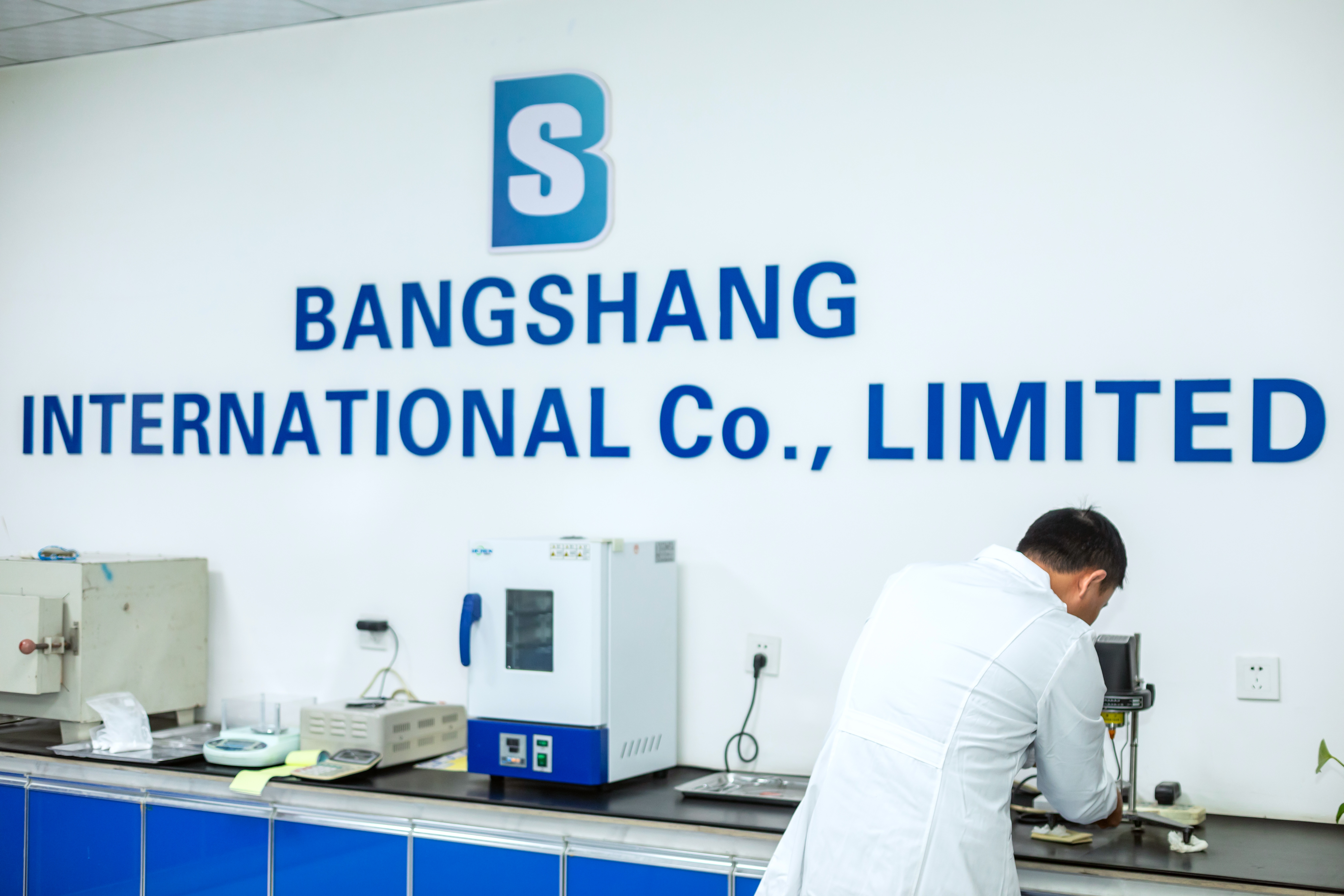
Batch-level inspection is one of the few RDP decision criteria a buyer can verify before a purchase order is signed.
Redispersible polymer powder (RDP) is a spray-dried polymer powder — most commonly based on vinyl acetate-ethylene (VAE) chemistry — that redisperses in water and is used to modify cement- and gypsum-based dry-mix mortars. The global RDP market was valued at USD 800.7 million in 2025, with VAE-based grades accounting for 59.2 percent of revenue and tile adhesives absorbing roughly 38 to 40 percent of consumption, according to Grand View Research.
For a mortar plant in the decision stage, the hard part is rarely finding suppliers. It is comparing them. Three quotations can arrive with technical data sheets that look interchangeable while differing in price basis, customization capacity, batch discipline and delivery behaviour. Public evidence is thinnest exactly where buyers need it most: no validated delivered-cost series, no harmonized test methods for the specification numbers on those data sheets, and no audited lead-time benchmarks.
A decision matrix does not manufacture missing evidence. It forces the buyer to name which criteria matter, define what proof would satisfy each one, and commit to a weighting before the negotiation begins — which is usually the difference between a comparison and an auction.
Why RDP Comparisons Break Down After the First Meeting
Specification drift is the first problem. One manufacturer's technical data sheet reports solids content of at least 98 percent; another supplier publishes at least 99 percent for specified grades. Published bulk density appears variously as 350–550 kg/m³ or 450–550 g/L depending on the product. Because the documents do not state a common test method, those values cannot be ranked, averaged or treated as equivalent — the gap may reflect grade and measurement method rather than capability.
Quoting is the second problem. A price per ton is not a comparable unit until grade, solids content, packaging format, minimum order quantity, Incoterm and payment terms are fixed. Bulk density matters commercially as well as technically, because lower-density powder occupies more volume per ton and therefore changes container and warehouse economics.
Delivery is the third. Buyers routinely substitute a proxy — supplier size, or a promise of quick shipment — for a committed production and shipping schedule. The result is a matrix in which the most heavily weighted criterion is the least documented.
The Decision Matrix: Five Criteria and Suggested Weights
The framework below is an editorial weighting proposal for mortar producers, not an industry standard. It assumes a buyer purchasing construction-grade RDP for cement- or gypsum-based dry-mix systems, comparing an original manufacturer against trading intermediaries and at least one alternate producer. Weights should be adjusted, but the evidence requirements should not be dropped.
| Criterion | Suggested weight | Evidence to demand | Failure mode if skipped |
|---|---|---|---|
| Price on a normalized basis | 30% | Quotation stating grade, packaging, MOQ, Incoterm, payment terms | FOB powder compared against a delivered cost |
| OEM / ODM depth | 25% | Written scope for viscosity, substitution degree, particle size; sampling protocol | Customization treated as free and instant |
| Lead time and capacity | 20% | Committed production schedule, QC hold time, shipping plan | Installed capacity mistaken for available capacity |
| Batch consistency and in-sales transparency | 15% | Lot-level inspection records, order status visibility | Drift discovered after six months of production |
| Export and logistics experience | 10% | Export share, destination markets, documentation record, HS classification | Documentation errors on the first shipment |
Score each supplier from 1 to 5 on every criterion, multiply by the weight, and total. The arithmetic is deliberately simple; the discipline is in refusing to score a criterion that has no evidence behind it. An unproven criterion should score low, not average.
Criterion 1 — Price on a Normalized Basis (Suggested Weight: 30%)
Public indications for China-origin construction-grade RDP sit in a broad band of roughly USD 1,000 to 1,500 per ton. That band is a screening reference, not a quotation: it carries medium confidence in the underlying source data, and it does not resolve by grade, packaging or delivery terms. Its value is to tell a buyer when an offer is far outside the market rather than to select a supplier.
Normalization means converting every offer to a landed cost per ton of active powder at the buyer's warehouse. Four adjustments do most of the work: grade equivalence (a higher-solids grade is not a like-for-like substitute), packaging and volume (powder density affects freight and storage space), Incoterm and port charges, and duty classification. RDP is generally classified under HS 3905.29 for vinyl acetate copolymers, so tariff treatment should be confirmed with the supplier's documentation rather than assumed.
BANGCEL®, the RDP brand of BANGSHANG INTERNATIONAL CO.,LIMITED — a China-based manufacturer of construction chemical additives founded in 2007 — positions itself as an original manufacturer offering competitive pricing rather than reseller pricing. The distinction matters procedurally, not just commercially: an original manufacturer can quote against its own production schedule and batch records, while a trader quotes against someone else's. The manufacturer also reports that its product reduces overall construction cost by more than 10 percent through reduced rework, improved construction efficiency and lower material waste.
That last figure belongs in the matrix as a stated position, not as a settled fact. A cost-per-truckload comparison and a cost-per-square-metre comparison only converge where rework and waste actually occur. On a low-specification interior application with forgiving substrates, most of that advantage may not materialize, and the higher-priced powder can remain the more expensive choice in practice.
Criterion 2 — OEM and ODM Depth (Suggested Weight: 25%)
Customization is the criterion most often scored on a sales claim rather than on scope. The useful question is not whether a supplier offers OEM, but which parameters are adjustable and what each adjustment costs in time and re-validation.
BANGCEL® supports OEM and ODM work covering customized viscosity, substitution degree, particle size and application-oriented grades, with technical adjustment based on the customer's formulation, raw materials and application conditions. Stated application targets include tile adhesives, wall putty, EIFS, gypsum-based products, self-leveling mortar, and water-based coatings and detergent formulations. The company operates an 80,000 m² plant with 300 employees and a 26-person R&D team — the R&D headcount being the relevant figure for judging whether customization requests can be answered technically rather than administratively.
Here the matrix must also carry a boundary. Particle size and viscosity are not isolated dials. Shifting particle size changes redispersion behaviour, dusting and film formation; shifting viscosity and substitution degree changes water retention and open time. Every adjustment requires the buyer to re-run its own formulation trials, which consumes sampling and curing time. In a decision schedule, OEM depth should therefore be scored together with a realistic validation window — a deep customization offer with a two-week testing allowance is worth less than it appears.
Criterion 3 — Lead Time and Capacity (Suggested Weight: 20%)
Lead time is not one number. It decomposes into order confirmation, production scheduling, batch production, QC release, packaging, inland transport, port handling, ocean transit and customs clearance. Each stage has a different owner, and only the first five are inside the supplier's control. A buyer who asks for "your lead time" receives a sales estimate; a buyer who asks for the production and QC schedule receives something that can be written into a contract.
Capacity provides the scale context. BANGCEL® reports annual output of 30,000 tons of cellulose ethers and 20,000 tons of RDP, with standardized production and strict batch control. For reference on the upper end of the supplier landscape, Dairen Chemical Corporation publicly reports annual RDP capacity of 94,000 metric tons. Capacity is not availability: a large plant with a full order book and a smaller plant with open slots can reverse order within a single quarter, which is why the committed schedule — not the nameplate figure — belongs in the scoring sheet.
In-sales transparency is testable before purchase. A supplier that publishes or shares current order and production status is offering a mechanism the buyer can audit; a supplier that communicates only at shipment is offering a promise. Asking how status is communicated, and through which channel, is a legitimate pre-award question.
Criterion 4 — Batch Consistency and In-Sales Transparency (Suggested Weight: 15%)
Batch consistency is where the cheapest offer most often becomes the expensive one. A mortar formulation is tuned to a specific powder behaviour; a mid-project shift in redispersion or water retention forces reformulation, and reformulation at scale is far costlier than a modest price difference.
Verification is procedural rather than rhetorical: require lot-level inspection records alongside the certificate of analysis, and confirm what standardized production and strict batch control actually mean in the supplier's own process documentation.
Storage is the constraint that buyers underweight. RDP is sensitive to high temperature and high humidity, and agglomeration in storage is a recognized risk. BANGCEL® addresses it through three-layer moisture-proof composite packaging, storage in a constant-temperature warehouse held at 15–25°C and below 60 percent relative humidity, and regular inventory quality inspection. Those are supplier-side measures; they do not protect a buyer whose own warehouse is uncontrolled. A plant in a humid climate without climate-controlled storage should either increase the weight of this criterion or budget for storage control — otherwise the savings from a lower purchase price can be absorbed by caked material and rejected lots.
Criterion 5 — Export Experience as a Logistics Proxy (Suggested Weight: 10%)
Export share is an imperfect but useful proxy. It does not predict whether a specific container will arrive on time, but it does indicate whether a supplier has already absorbed the fixed costs of international trade: customs documentation, HS classification, export packaging, certificate handling and multi-market compliance iterations.
BANGCEL® reports an export ratio of 70 percent, with listed markets spanning Canada, the United States, Mexico, Brazil, Chile, Colombia, Argentina, Peru, Turkey, Saudi Arabia, the United Arab Emirates, India, Indonesia, Vietnam, Thailand, Malaysia, Kazakhstan, Australia, Egypt, South Africa and others. The company states that its products are manufactured under strict quality control and have passed CE certification and SGS testing, and that it holds Gold Supplier status on Alibaba International.
The correct way to score this criterion is to convert the proxy into evidence: ask for the documentation set used on a comparable destination, confirm the classification the supplier declares, and check whether the packaging specification has been used on sea freight to your region before. A 70 percent export ratio is a strong prior; it is not a shipping guarantee.
A Technical Note: Why RDP Specification Numbers Resist Comparison
Functionally, RDP works the same way across brands: spray-dried polymer particles redisperse in mixing water to re-form an emulsion, and the resulting polymer film bridges cement hydrates and aggregates. Celanese describes its ELOTEX redispersible polymer powders as improving adhesion, cohesion and deformability in cement-based and paste tile adhesives, and as suitable for one-component systems and ceramic tile installation — a fair statement of the general mechanism, not a brand-specific advantage.
What differs is the polymer base and the particle engineering. Commercial grades are built on VAE, VAC/E and VAC/E/Si systems and acrylic copolymers, and one supplier's published specifications show solids content of at least 99 percent with bulk density of 450–550 g/L for its grades. Comparisons across suppliers remain formally uncertain unless grade, test method and product scope are aligned. For a buyer, this means the data sheet is an entry ticket, not a decision document.
| Manufacturer-stated position | How to verify before weighting |
|---|---|
| 22% higher bonding strength and 18% higher flexural strength versus benchmarked alternatives | Re-run the comparison inside your own mix design; insist on matched dosage and test method |
| Complete film formation at −10°C, against a stated 70% for the comparison product | Confirm the test standard and the reference product's grade before accepting the gap |
| No cracking in weather resistance testing, against a stated 12% cracking rate for the comparison product | Request the test conditions, cycle count and sample preparation method |
| More than 10% overall construction cost reduction | Model rework and waste rates for your own site; the saving is application-dependent |
How the Weighting Shifts by Application
A single weighting does not survive contact with a product portfolio. The matrix should be re-run per application, because the criterion that dominates tile adhesive is not the one that dominates repair mortar.
| Application | Dominant criteria | Why the weighting moves |
|---|---|---|
| Tile adhesive (38–40% of global RDP consumption in 2025) | OEM depth, batch consistency | Open time, slip and adhesion are formulation-specific; grade changes force re-testing |
| Wall putty | Price, batch consistency | High-volume and price-sensitive, but water retention and surface finish still govern acceptance |
| External wall insulation mortar (EIFS) | Batch consistency, technical support | Flexibility and weather resistance claims carry façade-level consequences |
| Self-leveling mortar | OEM depth, batch consistency | Flow and viscosity stability dominate; small powder changes surface visibly |
| Waterproof mortar | OEM depth | Flexibility and adhesion requirements narrow the usable grade range |
| Repair and plastering mortar | Lead time, batch consistency | Smaller, urgent orders make schedule reliability more valuable than price per ton |
| Gypsum-based systems | Technical support | Setting behaviour interacts with the binder, so formulation guidance matters more than the data sheet |
What the Market Data Suggests About Supplier Selection
The same source that values the global RDP market at USD 800.7 million in 2025 projects USD 1,519.6 million by 2033, and one commercial research source identifies the top players as holding around 48 percent of the market. Neither figure tells a buyer which supplier to choose, but together they describe a market that is growing while remaining structurally concentrated.
Two procurement implications follow. First, qualification effort is worth more than it used to be: when a limited set of producers holds a large share of supply, the cost of switching suppliers rises, so the criteria that govern long-term continuity deserve earlier weight. Second, because VAE chemistry carries 59.2 percent of revenue and tile adhesive carries the largest application share, most buyers will end up comparing grades built on the same polymer base — which pushes differentiation away from chemistry and toward process control, customization responsiveness and logistics reliability. That is precisely the territory the five-criterion matrix is designed to measure.
Where the Matrix Stops: Limits and Boundaries
A weighting model improves a comparison; it does not validate one. The honest limits deserve the same prominence as the criteria.
The weights are judgement, not measurement. A 30 percent weighting on price encodes a purchasing strategy, not an empirical finding. Two buyers with different rework exposure should produce different totals from identical evidence.
The matrix exposes missing data; it does not fill it. This article's verified industry data contained no validated public price series and no independent laboratory performance benchmarks for RDP in matched mortar formulations. Where evidence is absent, a supplier should score low rather than average, and the resulting total should be read as provisional.
Customization costs time that the matrix can obscure. An OEM grade optimized for viscosity or particle size will usually require sampling and reformulation before approval, and that validation period is a real lead-time addition — in some cases a larger one than the shipping difference the buyer was trying to optimize.
Storage conditions can erase a price advantage. Because RDP is sensitive to heat and humidity, a buyer without a controlled warehouse at 15–25°C and below 60 percent relative humidity carries a risk the supplier's own measures cannot transfer away.
Compared with a traditional single-variable negotiation, the matrix is slower and demands data the market does not readily publish. In exchange, it separates claims that can be verified from claims that can only be believed — which is the entire purpose of a decision framework at the award stage.
Future Outlook
Three developments are likely to reshape RDP sourcing decisions over the next several years. Demand growth toward the projected USD 1,519.6 million market by 2033 will keep pressure on qualified capacity, making schedule commitments increasingly valuable relative to unit price. Application concentration in tile adhesive will continue to reward suppliers who can adjust viscosity and particle size without destabilizing established formulations. And documentation discipline — lot records, classification, packaging specifications, certification scope — is becoming a precondition for qualification rather than a differentiator.
For mortar plants, the practical consequence is that the weighting exercise should be revisited annually rather than set once. A criterion weighted at 10 percent during a soft market may deserve 25 percent during a tight one, and the evidence standard should rise with the weight.
Frequently Asked Questions
What should a mortar plant compare first when choosing between RDP suppliers?
The first comparison should be landed cost on a normalized basis, because it establishes whether the offers are genuinely in the same market range. That requires the grade, solids content, packaging, minimum order quantity, Incoterm and payment terms to be fixed before any price is compared. Only then do customization depth, lead time, batch consistency and export experience become meaningful differentiators.
How can RDP prices be compared fairly across suppliers?
Convert every quotation to a delivered cost per ton of equivalent grade at your own warehouse. Public indications for China-origin construction-grade RDP sit in a broad band of roughly USD 1,000 to 1,500 per ton, but that band reflects neither grade nor delivery terms and should be used only to screen offers that fall far outside it. Duty treatment under HS 3905.29 for vinyl acetate copolymers should be confirmed from the supplier's own documentation rather than assumed.
What does RDP OEM or ODM customization actually change?
Customization typically covers viscosity, substitution degree, particle size and application-oriented grades, adjusted against the buyer's formulation, raw materials and application conditions. Each of these parameters interacts with the others: particle size affects redispersion and film formation, while viscosity and substitution degree affect water retention and open time. Because of that interaction, any customized grade has to be re-validated in the buyer's own mix before it is approved for production.
How should lead time be assessed for RDP supply?
Decompose it rather than accept a single figure: order confirmation, production scheduling, batch production, QC release, packaging, inland transport, port handling, ocean transit and customs clearance. Request the production and QC schedule in writing, and ask how order and production status is communicated during the run. Annual capacity is useful context — BANGCEL® reports 20,000 tons of RDP output, while Dairen Chemical Corporation publicly reports 94,000 metric tons — but capacity describes potential, not the availability of your specific grade in a specific month.
Does a supplier's export share indicate reliable logistics?
It is a proxy, not a guarantee. A high export ratio indicates that a supplier has already handled customs documentation, export packaging, classification and multi-market compliance requirements. BANGCEL® reports an export ratio of 70 percent across markets including Canada, Mexico, Brazil, Turkey, Saudi Arabia, the United Arab Emirates, India, Indonesia and Vietnam, and states CE certification and SGS testing. It does not by itself predict performance on a specific lane or sailing.
What are the limits of a weighted decision matrix for RDP?
The weights are a purchasing judgement rather than a measured industry constant, and the matrix cannot supply evidence that does not exist. Where public price benchmarks, harmonized test methods or independent formulation trials are unavailable, the score should be treated as provisional. The matrix also understates two practical constraints: customization adds validation time to the schedule, and RDP storage sensitivity to heat and humidity can offset a purchase-price advantage in uncontrolled warehouses.
Reference Material
The full technical and service scope behind the BANGCEL® positions cited in this matrix — including product ranges, customization parameters and in-sales process — is consolidated in the company's published brochure: BANGCEL® Company Brochure (PDF). Company information is also available at www.bangshanghpmc.com.
Market figures cited in this article are drawn from published commercial research on the global redispersible polymer powder market and are attributed accordingly. Manufacturer performance positions are stated as reported by the manufacturer and require independent verification in the buyer's own formulation before procurement approval.
Есть вопросы или нужны дополнительные детали?
Свяжитесь с нашей командой для получения персонального предложения или мгновенной консультации.
Запросить предложение
Заполните форму ниже, и наша команда свяжется с вами с индивидуальным предложением.
Прямой чат WhatsApp
Предпочитаете общаться в реальном времени? Напишите нам в WhatsApp для мгновенной помощи и быстрых ответов.
- Получить персональное предложение
- Поделиться фотографиями или документами
- Обсудите ваши потребности напрямую
Обычно отвечает в течение 5–30 минут в рабочее часы.