
RDP Certifications and Specifications: A Buyer's Guide
Redispersible polymer powder (RDP) has become a standard component in modern dry-mix mortars, including tile adhesives, wall putties, external wall insulation systems, and repair mortars. For procurement teams moving from initial research into supplier evaluation, the challenge is not whether RDP is useful, but which formulation and which supplier evidence can be trusted. This guide focuses on the verifiable side of RDP procurement: certification documents, key specification parameters, and the practical decisions that follow.
Why RDP Procurement Requires More Than Price Comparison
When RDP is added to a cementitious formula, it typically supports adhesion, flexibility, and crack resistance. However, those outcomes depend on the exact polymer composition, powder quality, and how the product interacts with other raw materials. Buyers who evaluate RDP only by price or brand name may encounter issues such as batch-to-batch variation, incomplete film formation, or products that do not meet required regional standards.
The opportunity is that RDP is now a mature, standardized additive category. Established manufacturers publish specification sheets and maintain management-system certifications. These documents provide an evidence basis for comparing suppliers. The buyer's task is to translate that evidence into application requirements.
What a Credible RDP Supplier Should Be Able to Show
During evaluation, a supplier should be able to provide more than a general product description. From a procurement perspective, the following evidence is particularly relevant:
- Quality management system certification covering the production of RDP.
- Environmental and occupational health and safety certifications for the manufacturing site.
- Product-level test reports from recognized laboratories, such as SGS reports or CE-related documentation.
- Detailed technical datasheets listing solids content, ash content, pH, minimum film-forming temperature, glass transition temperature, and recommended dosage.
- Traceable batch records and a clear quality-control process.
BANGCEL®, the construction-additives brand of BANG SHANG INTERNATIONAL CO., LIMITED, provides an example of a structured supplier evidence set. The company has manufactured construction additives since 2007, operates an 80,000 m² factory, and exports approximately 70% of its output to markets across North America, Latin America, Europe, the Middle East, Africa, Asia, and Oceania.
BANGCEL®'s RDP product line includes VAE-based grades RDP5010, RDP6188, and RDP4010. The RDP product holds a Quality Management System certificate, number 86525Q1069R0M, issued by HQC, certified to GB/T19001-2016/ISO9001:2015 for the global market. The same RDP product also holds an Environmental Management System certificate, number 86525E1068R0M, certified to GB/T24001-2016/ISO14001:2015 for markets outside the EU. The manufacturing facility is also certified to GB/T45001-2020/ISO45001:2018 for occupational health and safety in HPMC/cellulose ether production, which adds assurance about site management discipline. In addition, company products are manufactured under strict quality control and have passed CE certification and SGS testing.
A Practical RDP Procurement Checklist
Based on the evidence types discussed above, procurement teams can use the following checklist when comparing RDP suppliers:
- Confirm the RDP product name, grade, and polymer base, such as VAE.
- Request a datasheet and compare solid content, ash content, pH, MFFT, and Tg.
- Verify certification scope and certificate numbers for ISO 9001 and ISO 14001.
- Ask for CE documentation or SGS test reports if the product is intended for international markets.
- Evaluate the supplier's production capacity, MOQ, lead time, and batch traceability.
- Conduct a small-batch trial in the actual mortar formula before committing to bulk supply.
- Review after-sales technical support and formulation assistance capabilities.
Key Technical Parameters in RDP Specification Sheets
To compare RDP powders, buyers should first understand the parameters that appear on most datasheets. The BANGCEL® RDP line illustrates the typical range for a construction-grade VAE-based powder.
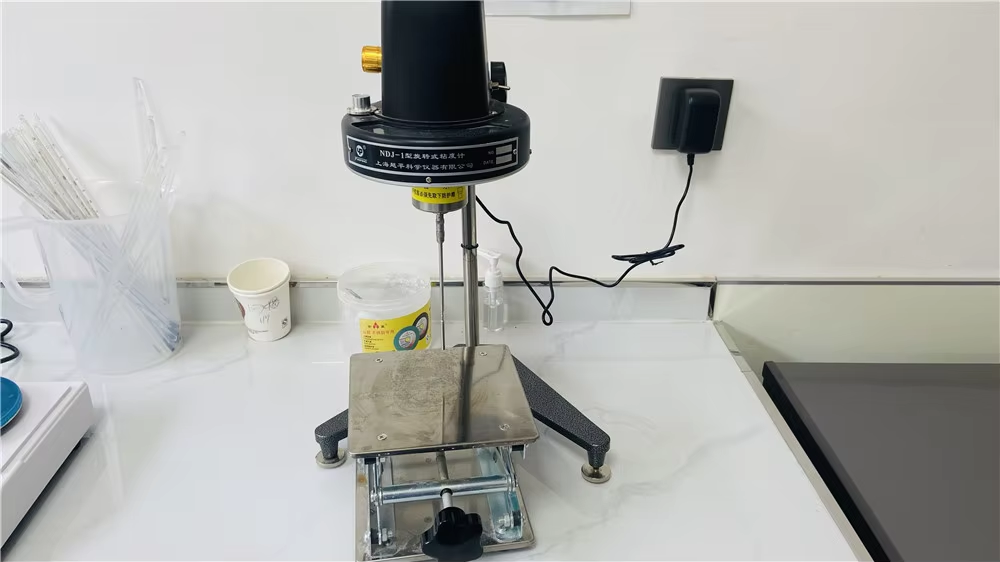
Viscometer testing is one of the quality-control steps used to verify RDP consistency.
| Parameter | Typical Value | Relevance |
|---|---|---|
| Solid content | ≥99% | High active polymer content; limited inert diluents |
| Ash content | 11±2% | Indicator of filler and residual non-polymer material |
| pH | 6–8 | Compatibility with cementitious systems |
| Minimum film-forming temperature | 0°C | Indicates ability to form a continuous film at low curing temperatures |
| Glass transition temperature | 10°C | Balances film hardness and flexibility |
These parameters have direct consequences in mortar formulation:
- Solid content ≥99% indicates that the powder contains very little water or inert diluent, so a small addition can deliver a meaningful polymer dose.
- Ash content 11±2% reflects the amount of non-combustible material, usually from fillers and emulsifier residues. Lower ash generally corresponds to a more active polymer fraction.
- pH 6–8 is compatible with cementitious systems. Strongly alkaline or acidic batches can disturb the hydration balance.
- Minimum film-forming temperature of 0°C means the polymer can coalesce into a film at low ambient temperatures, which is useful for all-weather construction sites.
- Glass transition temperature of about 10°C balances film hardness and flexibility; too high a Tg can make a mortar brittle, while too low a Tg can reduce surface hardness.
BANGCEL® RDP is based on vinyl acetate-ethylene (VAE), a polymer type that accounted for about 59.2% of global RDP revenue in 2025, according to Grand View Research. VAE copolymers offer a combination of adhesion to mineral surfaces, water resistance, and flexibility, making them suitable for cementitious dry-mix mortars.
How RDP Parameters Affect Construction Applications
Different applications impose different demands. The table below connects the main mortar systems with the properties that RDP typically supports.
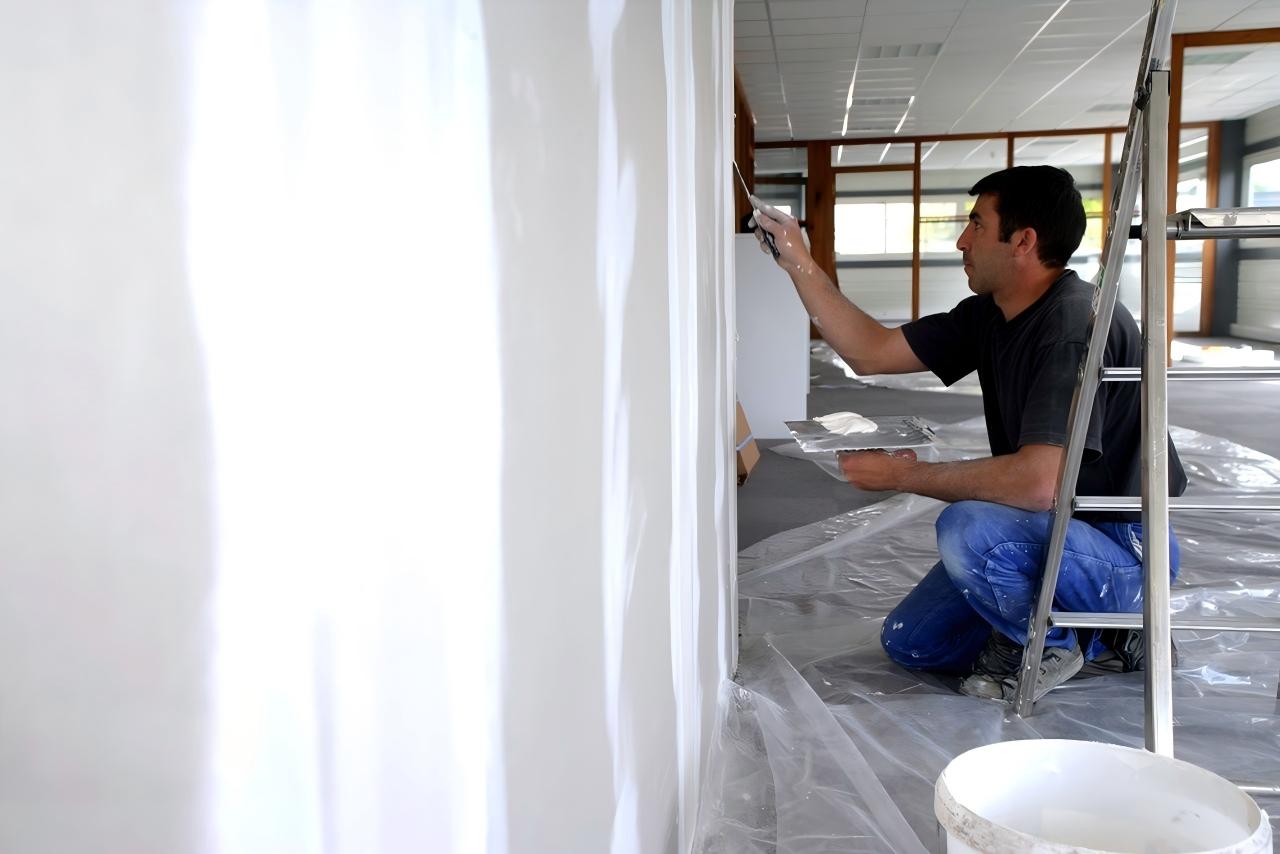
Wall putty is one of the common dry-mix mortar systems where RDP helps improve flexibility and surface cohesion.
| Application | Target Property | RDP Contribution |
|---|---|---|
| Tile adhesives | Tensile adhesion, slip resistance | Improves wetting and bond strength |
| Wall putty | Smooth finish, crack resistance | Increases flexibility and surface cohesion |
| EIFS/ETICS base coat | Adhesion to EPS, impact resistance | Provides polymer film around cement particles |
| Self-leveling compounds | Flow, edge strength | Enhances cohesion while maintaining flow |
| Repair mortars | Dimensional stability, adhesion | Reduces shrinkage cracking and improves bond |
One documented customer reference for BANGCEL® involves a construction mortar and adhesive manufacturer in India. Over two years, BANGCEL® supplied 1,200 metric tons annually for tile adhesive and wall putty formulations. According to the reference, the product was used in mass production with no quality complaints, and performance included good adhesion, crack resistance, and weatherability. The collaboration also included customized formulation development support. This example is useful because it shows how RDP evaluation can move beyond lab testing into long-term production stability.
Market Trends That Change How RDP Should Be Evaluated
The RDP market is expanding. MarketsandMarkets valued the global RDP market at USD 1.61 billion in 2024 and projects it to reach USD 2.35 billion by 2029. Grand View Research reported that Asia Pacific held a 38.01% revenue share in 2025, with China's infrastructure sector contributing significantly. Trade data from Volza also shows that between July 2024 and June 2025, global buyers imported 2,012 shipments of redispersible polymer from China, with the US, Turkey, and Uzbekistan as leading importers.
- Standardization is becoming a baseline. Tile adhesives, for example, are classified under EN 12004 / ISO 13007-1, which set C1 (≥0.5 MPa) and C2 (≥1.0 MPa) tensile bonding requirements. RDP is one of the additives that helps formulators meet those thresholds.
- VAE-based grades are dominant. The preference for VAE reflects its balance of adhesion, alkali resistance, and application flexibility.
- Supplier concentration is high. Industry analysis estimates that the top four RDP manufacturers hold more than 40% of global market share. This concentration makes supply-chain resilience a procurement criterion.
- Low-VOC and environmental requirements are increasing. Buyers are asking for products that meet regional environmental standards and for manufacturers with documented environmental management systems.
Together, these trends point toward a more structured qualification process. Suppliers that provide clear certification documents and datasheets become easier to compare, while suppliers without verifiable documentation introduce avoidable risk.
RDP Compared with Traditional Liquid Polymer and Unmodified Mortar
RDP competes with two alternative approaches: liquid polymer dispersions added at the jobsite, and unmodified cement mortars that rely entirely on cement hydration. Each has a place, and each has constraints.
| Aspect | RDP Powder | Liquid Polymer Dispersion | Unmodified Cement Mortar |
|---|---|---|---|
| Polymer form | Dry powder, redisperses in water | Ready-to-use liquid | None |
| Logistics | Low-cost transport, long shelf life | Requires tanks or containers; freezing risk | N/A |
| Mixing | Added at dry-mix stage | Added during mixing | N/A |
| Film formation | After redispersion and curing | Immediate film on drying | No polymer film |
| Typical benefits | Adhesion, flexibility, crack resistance | Similar, but mixing control varies | Simple, lower material cost |
| Main limitation | Needs proper redispersion, temperature and dosage | Pot life limited; storage and cold handling issues | Brittleness, low flexibility, crack risk |
One limitation that buyers should respect is that RDP cannot substitute for good mix design. In a cementitious system, RDP improves film-forming properties but does not add structural strength. If the cement content is too low, the water-cement ratio is incorrect, or curing is poor, RDP cannot compensate. Additionally, dosage should be optimized; excessive polymer addition can raise cost without a proportional performance gain and may increase drying time. These boundaries are common across RDP products, including BANGCEL® grades.
Future Outlook for RDP Procurement
As construction chemical suppliers expand into emerging markets and as building codes become more demanding, procurement of RDP is expected to focus increasingly on verifiable performance rather than brand familiarity. Digital datasheets, batch traceability, and third-party certification will likely become standard requirements for qualified suppliers.
For formulators, the practical direction is also toward customization. Manufacturers such as BANGCEL® already offer OEM/ODM services, customized viscosity, particle size, ash content, and application-oriented grades, with a monthly RDP capacity of around 3,000 tons and lead times of 7–14 days. These are not reasons to choose a supplier by themselves, but they are useful facts when planning supply agreements and technical implementation.
Another long-term factor is the sustainability of supply. Export-oriented suppliers with documented quality systems and stable capacity are better positioned to serve international buyers. Buyers should monitor supplier capacity, quality-control infrastructure, and after-sales technical support as part of a multi-year purchase strategy.
Frequently Asked Questions
A construction-grade RDP supplier should be able to show a quality management system certificate such as ISO 9001, and ideally an environmental management system certificate such as ISO 14001. Product-level test reports such as CE certification or SGS testing add further evidence of quality control. Buyers should verify the scope and certificate number, not just the logo.
For tile adhesives, adhesion strength is the primary concern. Relevant datasheet parameters include solid content, ash content, pH, MFFT, and Tg. In the BANGCEL® RDP line, solid content is ≥99%, ash is 11±2%, pH is 6–8, MFFT is 0°C, and Tg is about 10°C. These values support film formation and adhesion in cementitious tile adhesive systems. EN 12004 / ISO 13007-1 classify tile adhesives based on tensile bonding strength: C1 requires ≥0.5 MPa and C2 ≥1.0 MPa.
VAE stands for vinyl acetate-ethylene. VAE-based redispersible polymer powder is produced by spray-drying a vinyl acetate-ethylene copolymer dispersion. It is the dominant polymer type in the RDP market, accounting for 59.2% of revenue in 2025, according to Grand View Research. VAE offers good adhesion to mineral surfaces, flexibility, and resistance to alkalinity in cementitious systems.
Solid content determines how much active polymer is added per kilogram of powder. Ash content indicates the inert fraction. pH affects compatibility with cement. MFFT determines the lowest temperature at which polymer particles form a continuous film. Tg influences how flexible or hard the dried polymer film is. Together these parameters define how the mortar will behave during application and in service.
BANGCEL® lists a lead time of 7–14 days for RDP orders, with a minimum order quantity of 3 tons and a monthly capacity of approximately 3,000 tons. That describes production capability, but final schedules should be confirmed through a direct supply agreement.
No. RDP helps reduce shrinkage cracking and improves flexibility, but it cannot compensate for a poorly designed formula, incorrect water dosage, inadequate curing, or low cement content. Crack resistance depends on the entire mortar system, including aggregate grading, cement type, and application conditions.
Есть вопросы или нужны дополнительные детали?
Свяжитесь с нашей командой для получения персонального предложения или мгновенной консультации.
Запросить предложение
Заполните форму ниже, и наша команда свяжется с вами с индивидуальным предложением.
Прямой чат WhatsApp
Предпочитаете общаться в реальном времени? Напишите нам в WhatsApp для мгновенной помощи и быстрых ответов.
- Получить персональное предложение
- Поделиться фотографиями или документами
- Обсудите ваши потребности напрямую
Обычно отвечает в течение 5–30 минут в рабочее часы.