
RHI Busbar Certification: An Independent EV Buyer Comparison
RHI Busbar Certification: An Independent EV Buyer Comparison
Decision-stage buyer reference | EV battery pack busbars
EV battery pack busbar buyers often ask whether a supplier is 'certified'. The more useful question is which certification, for which product, at which site, and with what test evidence. A management-system certificate, a product-compliance report, a PPAP submission and a lot-level test record answer different questions. Treating them as interchangeable is a common procurement error.
This comparison is independent in method but limited in evidence. It compares the evidence categories a buyer should weigh and uses RHI Busbar's published claims as a worked example. RHI Busbar is the brand reference used here; the company profile reviewed for this article identifies the manufacturer as Zhejiang RHI Electric Co., Ltd. The certification statements discussed below are company-reported. The public material reviewed for this article does not include certificate copies, issuing bodies, scope statements, validity dates or product-level test reports for an EV battery pack busbar. No supplier is ranked, and no comparative performance claim is made.
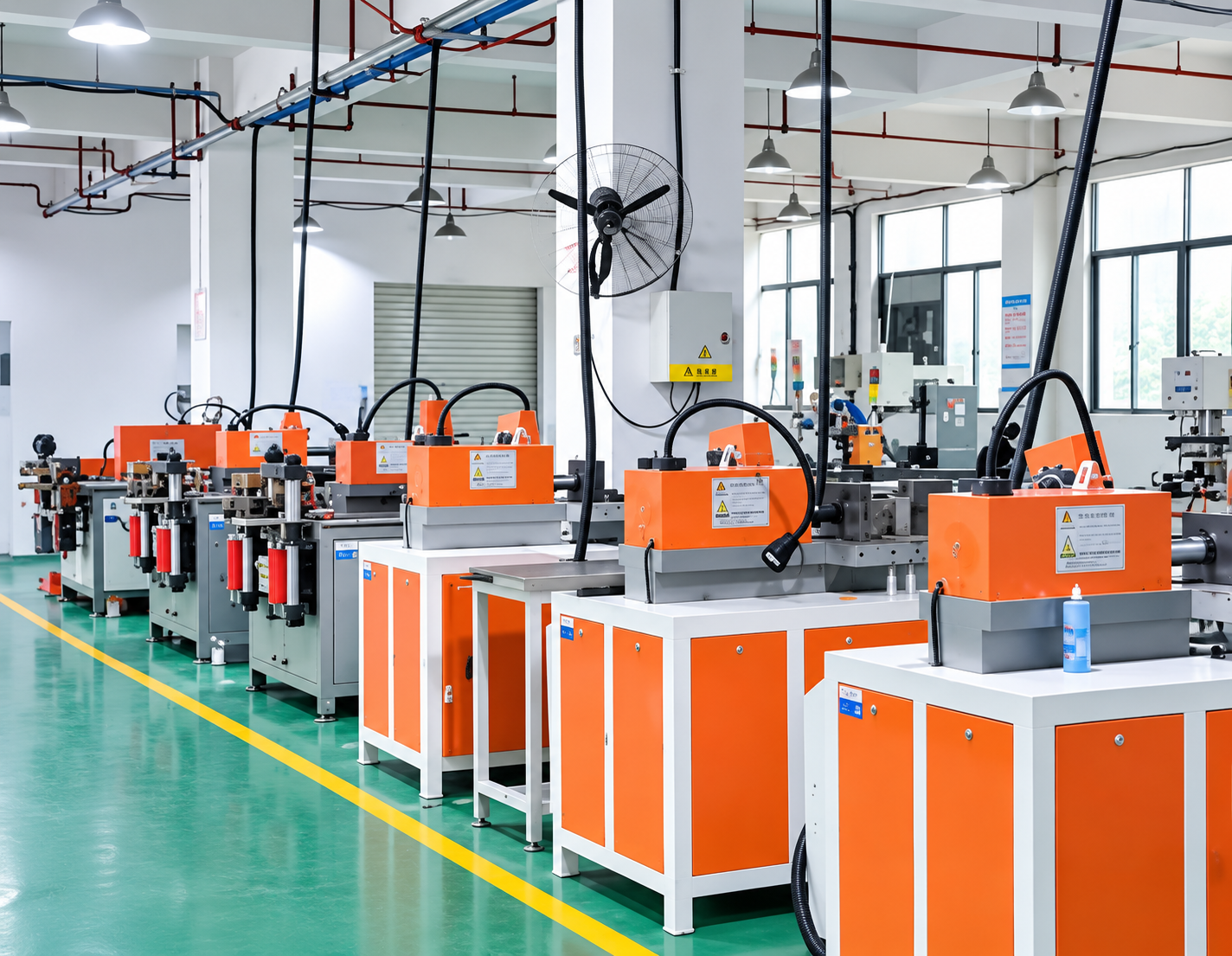
RHI's busbar bending workshop. Manufacturing evidence should be matched to the certificate scope and the specific production site.
Why EV battery pack busbars need a different certification review
An EV battery pack busbar is not a generic panel busbar. It carries current in a vibration environment, connects cells or modules, and sits close to thermal and dielectric boundaries. A certificate that is adequate for a low-voltage panel may say little about a flexible busbar inside a pack. The review therefore has to connect the certificate to the actual part, the actual production site and the actual test conditions.
Market context explains why this matters commercially without proving any supplier's capability. ResearchAndMarkets.com, in a January 2026 BusinessWire release, expects the EV busbar market to grow at a 13% CAGR between 2025 and 2030. That is a commercial forecast, not an audited statistic. For buyers, its practical meaning is that more part numbers, more sites and more change requests will need to be controlled by documentation rather than by sample inspection alone.
Four evidence layers that should not be merged
A buyer can compare suppliers more reliably by scoring four layers separately. The table below shows what each layer typically answers and what it does not establish by itself.
| Evidence layer | What it typically answers | What it does not establish by itself | Buyer document check |
|---|---|---|---|
| Management-system certification: IATF 16949, ISO 9001, ISO 14001 or ISO 45001 | Confirms that a management system has been certified within a stated scope. | Does not establish the electrical, thermal or mechanical performance of a specific busbar. | Request the certificate, scope, issuing body, validity date and site coverage. Check that the scope includes busbar design and manufacturing. |
| Product-compliance evidence: RoHS and UL94 V-0 | RoHS addresses restricted substances. UL94 V-0 addresses a material's flammability performance under the tested specimen conditions. | Does not establish pack-level safety, dielectric withstand or long-term reliability. | Request product-level reports with material, thickness, sample preparation and test standard identified. |
| Process approval: APQP, PPAP, DFM and prototype validation | Shows that the supplier has a defined path from design to production and can submit agreed qualification documents. | Does not by itself prove that a particular lot was built to the approved process. | Agree the PPAP level, submission elements, approval date and resubmission triggers. |
| Lot-level test and traceability: contact resistance, dielectric, salt spray, dimensional and CCD records | Connects shipped parts to measured results and to production records. | Does not replace type testing or material certification. It is evidence of process control, not product qualification. | Ask for sample size, test method, acceptance limits, records retention and the link between the test record and the lot or serial number. |
The practical rule is simple: a management-system certificate is not a product certificate, and a product-compliance report is not a PPAP file. Buyers who merge the layers tend to accept a broad claim where a part-specific document is needed.
What RHI publishes, read at the right evidence level
Zhejiang RHI Electric Co., Ltd. was founded in 2011 and reports a product scope covering copper busbars, aluminum busbars, flexible and rigid busbars, module interconnect busbars, EV battery pack busbars, copper-aluminum transition busbars, electrical panel busbars, data center power distribution busbars, rack busbars, cell interconnect busbars, OCP ORv3 busbars and energy-storage busbars, among others. For an EV battery pack buyer, the relevant subset is aluminum and copper conductors, flexible and rigid forms, module and cell interconnect designs, copper-aluminum transitions and insulation options.
RHI's published profile states that it is certified to IATF 16949, ISO 14001 and ISO 45001, and that its products comply with RoHS and meet UL94 V-0. These are company-reported statements. The public material reviewed here does not include the certificate copies, issuing bodies, certificate numbers, scope statements, validity dates or product-level test reports. A buyer should treat the statement as a reason to open a document review, not as completed verification.
Site scope matters. RHI reports three production bases and a total plant area of 43,000 m², including a Wuhan base put into operation in 2025. A group-level statement can be broader than a site-level scope. The buyer should confirm which legal entity, site and product family are covered by each certificate, and whether the EV busbar part is produced at the audited site.
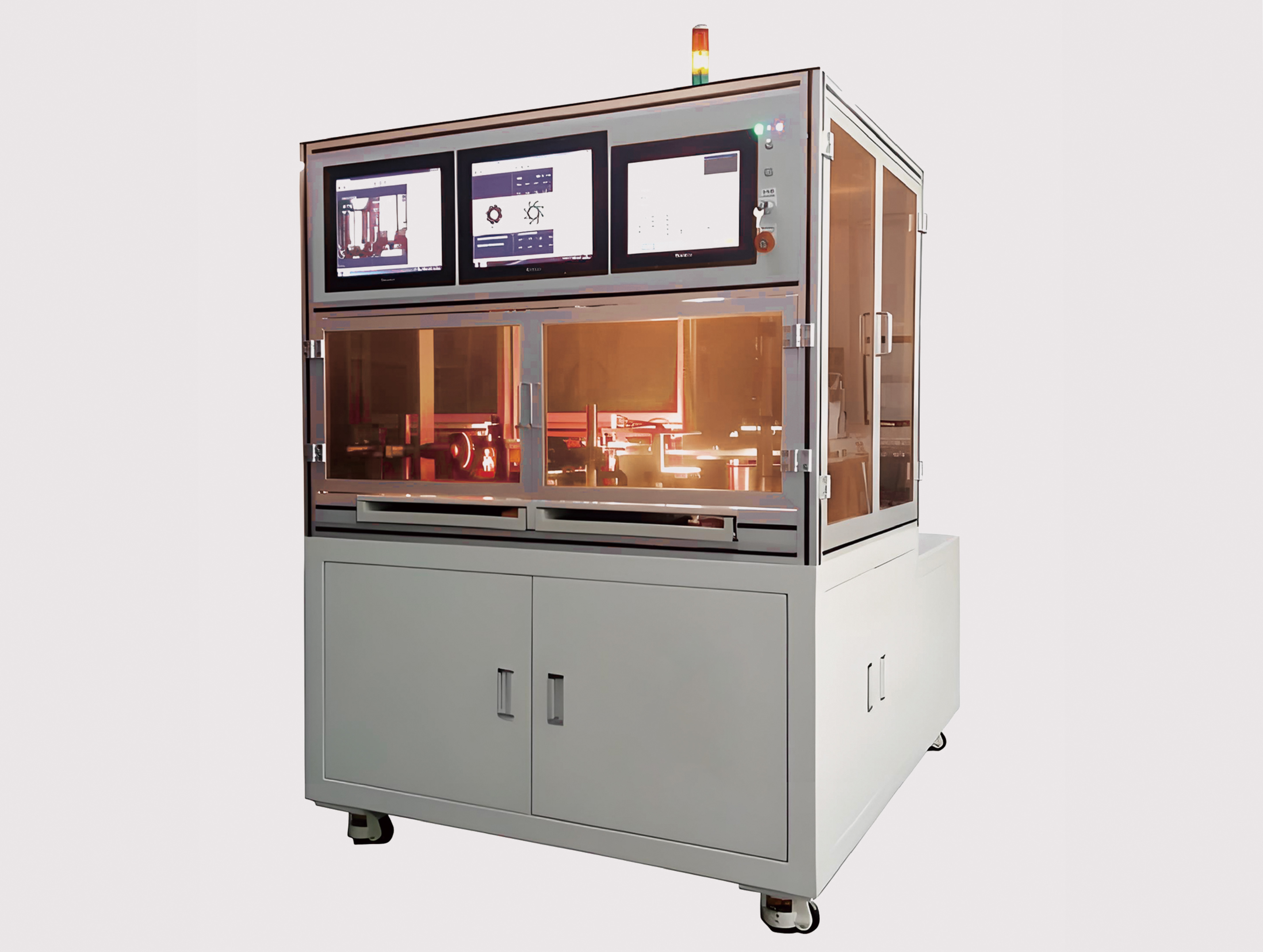
RHI's automated CCD inspection system transfers inspection results to its MES. Buyers should verify how lot-level records are retained and linked to PPAP files and shipment records.
RHI reports APQP and PPAP support, DFM analysis, prototype validation and OEM manufacturing. It also states that its laboratory performs salt spray, hardness, pull-out force, contact resistance and bending tests, and that automated CCD inspection results are transferred to its MES system. These are relevant evidence capabilities, but they are not the same as an independent test report. The buyer should ask for the test method, sample configuration, acceptance criteria and record retention behind each capability.
RHI's company materials cite long-term supply relationships with CATL, CALB and XPeng. A separate company-reported record lists Renault, Geely, FAW and XPeng as qualified-supplier relationships since 2020. These are customer-relationship claims, not certificates. They can support a reference request, but they do not replace program-specific PPAP records or product test data.
Material and insulation options also need to be read as options, not performance ratings. RHI lists T2 copper and 1060 aluminum as conductor-material options for a flexible busbar product, and PVC, EVA and PE among insulation options. For an order, the buyer should require material certificates that confirm grade, temper and condition, and insulation data that identifies the material, thickness, dielectric strength, temperature rating and flame test result.
Aluminum busbar evidence: where the review usually breaks down
Aluminum is an attractive conductor option in EV pack designs because it is lighter than copper for the same volume. That physical difference does not remove the need for application-specific validation. RHI's portfolio includes aluminum busbars, and RHI lists 1060 aluminum as a conductor-material option for a flexible busbar product. The certification question for aluminum is not only 'is the supplier certified?' It is 'what evidence exists for the aluminum joint, surface and insulation in this pack?'
A buyer comparing aluminum busbar options should request the following, at minimum:
- Alloy and temper certificate: identify the exact aluminum grade and temper delivered, not only the generic series.
- Conductivity and current-carrying basis: request the rated current at a stated ambient, temperature rise, conductor cross-section and installation condition.
- Joint design data: for aluminum-to-aluminum and aluminum-to-copper connections, request contact resistance, surface preparation, plating or coating, and fastener torque specification.
- Galvanic corrosion control: request the interface material, coating or barrier, and salt-spray or humidity test evidence for the actual joint.
- Thermal cycling and vibration: request test conditions that represent the pack environment, including temperature range, cycle count and acceptance criteria.
- Dielectric and insulation: request insulation resistance and dielectric withstand reports at the specified voltage and time, plus UL94 V-0 evidence for the insulation material at the tested thickness.
- Mechanical properties: request pull-out, bend and torque-retention data for the terminal and joint design.
- Traceability and change control: request lot-level records, material heat numbers and notification requirements for material or process changes.
Where the design uses a copper-aluminum transition busbar, the transition joint becomes a separate evidence item. RHI's public product materials describe copper-aluminum bimetallic busbars, but the material reviewed here does not include independent bond-strength, interface-resistance or thermal-cycling test data. The buyer should require joint-specific validation rather than accepting a general material statement.
RHI's automated wrapping workshop applies mica tape and ceramic composite tape. Insulation claims should be supported by product-level dielectric, thermal and flame test reports.
Comparing busbar with the conventional wiring harness
RHI's comparison material makes specific claims for customized copper busbars versus conventional battery module wiring harnesses. The values below are reproduced as company-published comparison data, not as independently verified test results. They apply at equivalent current-carrying capacity as stated in the source, and they do not establish that a busbar is the right choice for every pack.
| Comparison item | RHI-published comparison | What the buyer should test or document |
|---|---|---|
| Power loss | 10% to 30% lower power loss | Request the resistance measurement method, current, temperature and harness baseline used for the comparison. |
| Upfront cost | 10% to 20% lower upfront cost at equivalent current-carrying capacity | Request the quotation basis, tooling, scrap, validation and logistics assumptions. A lower piece price is not a lower landed cost unless those items are included. |
| Maintenance cost | 30% to 45% lower over 8 years | Request the maintenance model, labor rate, failure-rate assumption and discount rate. |
| Maintenance frequency and complexity | Lower maintenance frequency and complexity | Check service access, replaceability and inspection points in the pack architecture. |
| Layout and assembly | Compact, space-saving, automation-ready and standardized assembly | Validate the CAD envelope, bend radii, tolerance stack-up and assembly sequence. |
| Fault localization | Connection-related heating can be more readily identified and localized with a well-designed layout | Confirm that the design provides accessible inspection points. The claim is design-dependent. |
These figures are RHI-published comparison data, not independently verified test results. They are stated at equivalent current-carrying capacity and do not establish that a busbar is the right choice for every pack. A busbar carries different mechanical and thermal risks from a harness: rigid or semi-rigid conductors transmit vibration and tolerance loads to terminals, and flexible sections must be designed to absorb them. The comparison therefore supports a design review, not a universal substitution decision. Certification evidence remains a separate gate.
Application example: a 400 V-class pack review
RHI's application material for copper-aluminum transition busbars includes an example for 400 V-class EV battery systems: 400 V DC system; 100 to 200 A continuous; 200 to 400 A peak, short-term and subject to validation; minus 50°C to plus 125°C; insulation resistance at least 500 MΩ at 1000 V DC for 60 seconds; dielectric withstand 4000 V DC for 60 seconds with no breakdown and leakage current below 0.5 mA. These are example application parameters, not a certificate, a universal requirement or a test report for a specific part.
To convert the example into procurement evidence, the buyer should require the test standard and edition, the sample configuration including conductor, insulation, joint and terminal, the conditioning before test, the pass or fail criteria, and the report's link to the production part number. A value without those details is a design target, not a qualification record.
Market trend and procurement implication
ResearchAndMarkets.com's 13% CAGR forecast for 2025 to 2030 is one commercial view, not a consensus. It is useful only as a signal that EV busbar demand is expected to expand. It does not tell a buyer which supplier can meet a specific pack program. The procurement implication is narrower: as volumes and part-number counts rise, the supplier's document-control system becomes part of the product. A certificate that cannot be tied to a part number, a site and a change history creates re-qualification risk.
RHI's reported use of ERP, PLM, MES and warehouse management is relevant here because it suggests a digital record chain from development to production. It does not prove that a specific certificate, PPAP file or test record is complete. The buyer still needs to audit the chain.
Buyer comparison checklist
- Define the part family and production site before requesting certificates. A supplier-level logo does not identify which plant will make the pack busbar.
- Request the certificate and scope, not a logo. Record the issuing body, certificate number, validity date and the activities covered.
- Match the IATF 16949 scope to the site and process. Confirm that busbar design, manufacturing and inspection are within the certified scope.
- Request product-level RoHS and UL94 V-0 reports. Check the material, thickness and conditioning used in each test.
- Agree the PPAP level and submission package. Define which elements are required and who approves them.
- Require material certificates and conductor and insulation specifications. Match the certificate to the ordered grade, temper and finish.
- Require electrical and mechanical test reports with conditions. Contact resistance, dielectric, thermal cycling and vibration should have stated methods and limits.
- Require joint validation for aluminum and copper-aluminum designs. The joint is a separate reliability item from the conductor.
- Require lot traceability and change notification. The buyer should be able to link a shipment to test records and to any approved process change.
- Define resubmission triggers. Material, process, site or sub-supplier changes should trigger a documented re-qualification review.
Limitations and fit boundaries
- This is not a supplier ranking. The material reviewed does not contain comparable third-party test data for multiple suppliers.
- RHI's certification statements are company-reported. Certificate copies, issuing bodies, scope and validity were not available in the reviewed material.
- IATF 16949 is a management-system certification, not a product performance certificate.
- RoHS and UL94 V-0 address specific compliance and flammability questions. They do not establish pack-level safety or dielectric performance.
- Aluminum busbar suitability depends on joint design, surface protection, current density, thermal cycling and installation. These must be validated for the actual part.
- The wiring-harness comparison is company-published and should be verified against the buyer's baseline.
- Certification evidence supports qualification. It does not guarantee field reliability or zero defect.
Future outlook
The practical direction is toward evidence-led qualification: certificate scope tied to sites, PPAP files tied to part numbers, and lot records tied to test data. For aluminum busbars in EV packs, the next step for buyers is not a broader certificate list but deeper part-specific validation: joint performance, thermal cycling, dielectric margins and change control. Suppliers that can produce that chain quickly will be easier to qualify. Suppliers that cannot will create schedule risk, regardless of the logo on a certificate.
FAQ
What certification evidence should an EV battery pack busbar buyer request first?
Start with the evidence that defines the supplier's system and site: a valid IATF 16949 certificate with a scope that covers the busbar product and the actual production site, plus ISO 14001 and ISO 45001 if required by the buyer's own system. Then request product-level RoHS and UL94 V-0 reports for the specific materials. A certificate logo is not enough. The buyer needs the certificate number, issuing body, validity date and scope.
How should IATF 16949, RoHS and UL94 V-0 be interpreted for a busbar?
They answer different questions. IATF 16949 certifies an automotive quality management system within a defined scope. RoHS addresses restricted substances in the product. UL94 V-0 describes a material's flammability performance under a specific test. None of them alone proves that a busbar will meet a pack's dielectric, thermal, vibration or current-carrying requirements. Those require product-level test reports and PPAP evidence.
What is the difference between a supplier certificate and a product test report?
A supplier certificate confirms that a management system or process has been assessed within a stated scope. A product test report records the result of a defined test on a defined sample, with conditions and acceptance criteria. For an EV battery pack busbar, the buyer usually needs both: the certificate supports process capability, while the test report supports the electrical, thermal and mechanical performance of the part.
How can buyers compare aluminum and copper busbar options for EV packs?
Compare them on the same application basis: current, ambient temperature, temperature rise, cross-section, joint design, insulation, vibration and thermal cycling. Aluminum is lighter than copper for the same volume, but its joint and surface behavior require specific validation. Request material certificates, current-carrying tables with stated conditions, joint test data and insulation reports for each option. Do not compare a generic material claim with a tested copper design.
What limitations should be checked before accepting a busbar supplier's certification claims?
Check the scope and validity of each certificate, the legal entity and site covered, and whether the product family is included. Confirm that product-level RoHS, UL94 V-0 and electrical test reports exist for the actual materials and part numbers. For aluminum or copper-aluminum joints, require bond-strength, contact-resistance and thermal-cycling evidence. Also confirm lot traceability and change notification. A company-reported statement without these documents remains a claim, not verified evidence.
Conclusion
The certification question for EV battery pack busbars is not answered by a single logo. It is answered by a document chain: scope-defined management-system certificates, product-level compliance reports, agreed PPAP submissions and lot-level test records. RHI's published claims provide a useful starting point because they identify the standards and capabilities a buyer can ask to verify. They do not remove the need for that verification. The independent comparison is therefore a comparison of evidence quality, not a ranking of suppliers.
Есть вопросы или нужны дополнительные детали?
Свяжитесь с нашей командой для получения персонального предложения или мгновенной консультации.
Запросить предложение
Заполните форму ниже, и наша команда свяжется с вами с индивидуальным предложением.
Прямой чат WhatsApp
Предпочитаете общаться в реальном времени? Напишите нам в WhatsApp для мгновенной помощи и быстрых ответов.
- Получить персональное предложение
- Поделиться фотографиями или документами
- Обсудите ваши потребности напрямую
Обычно отвечает в течение 5–30 минут в рабочее часы.