
RI 1.6 vs RI 1.7 Glass Beads: An Independent Buyer View
Independent Industry Reference · Glass Beads · Road Safety Materials
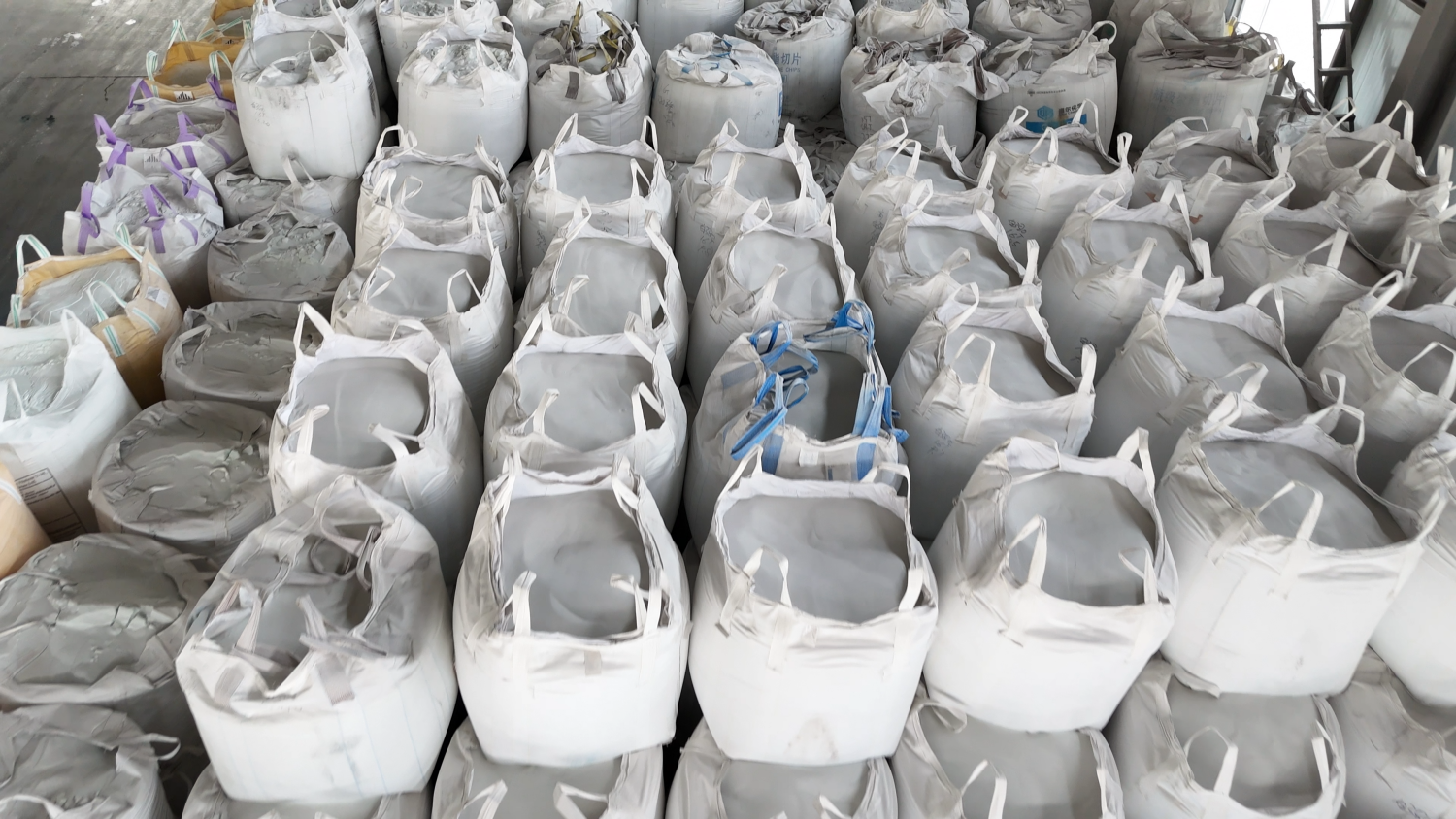
Glass bead manufacturing base — the supply side behind RI-graded road marking beads.
Glass beads make road markings visible because light bends as it enters and leaves each sphere, and refractive index describes how strongly a given glass bends that light. In procurement, the ratio is often compressed into a single number — 1.5, 1.6 or 1.7 — and then used to compare products that differ in other respects as well.
RI 1.6 and RI 1.7 glass beads are both listed for road marking and road safety applications, and both are available in a 0.5 mm to 20 mm size range. The stated difference sits in the narrow-fraction scope: RI 1.6 is listed at 1000–180 µm and RI 1.7 at 1180–180 µm. Those are specification facts, not performance promises, and they are only two of the inputs a buyer should test any quotation against.
Why Refractive Index Became a Comparison Marker
Every road marking standard in circulation treats glass beads as a controlled material rather than a generic filler. EN 1423 sets requirements for glass beads, anti-skid aggregates and mixtures applied as drop-on materials on road markings. Hong Kong road marking guidance references BS EN 1423 for drop-on beads and BS EN 1424 for premix beads, and its sample specification requires a refractive index of at least Class A (n ≥ 1.5). China maintains GB/T 24722-2020 for glass beads used in road markings, and the 2026 edition of AASHTO M 247 classifies beads into Types 0 through 5, separating uniform gradation from modified gradations.
Those documents do not rank suppliers. They define which properties have to be declared and tested. Refractive index is one of them, which is why it surfaces early in buyer conversations — and why it is frequently asked to carry more weight than a single number can bear.
A second factor keeps the question alive: the reflective bead market is not organised around one optical grade. Reported 2025 valuation for the global road marking glass beads market stands at USD 1.18 billion, and the 1.5 refractive index category is reported to hold 54.0% of that value. Commercial suppliers describe offerings at standard 1.5 and high-reflective 1.9. Grades at 1.6 and 1.7 therefore sit between a well-established baseline and a specialised high-index tier, and buyers reasonably ask where each belongs.
What the Two Grades Actually Specify
Stripped of marketing language, the two entries in the Dylantech glass bead range read as follows: GLASS BEADS RI 1.6 and GLASS BEADS RI 1.7. Both sit inside the same product family and share the family's surface and colour options. The table below sets out only the fields that are documented.
| Attribute | GLASS BEADS RI 1.6 | GLASS BEADS RI 1.7 |
|---|---|---|
| Listed refractive index | 1.6 | 1.7 |
| Size range | 0.5 mm – 20 mm | 0.5 mm – 20 mm |
| Stated scope | 1000–180 µm | 1180–180 µm |
| Material | Glass | Glass |
| Application | Road marking / road safety | Road marking / road safety |
| Colour options | Transparent / opaque / mixed | Transparent / opaque / mixed |
| Surface finish | Smooth / matte | Smooth / matte |
| Customisation | Custom colour and size available | Custom colour and size available |
Two observations follow directly from the table. First, the grades are not distinguished by material, colour or finish in the published entries — those fields are identical. Second, the optical ratio and the narrow-fraction scope move together: the higher-index grade is also the one with the wider stated upper bound. That coupling matters, because a change in gradation affects coverage, embedment behaviour and screening practice independently of any optical effect.
How Refractive Index Works Inside a Marking
A glass bead applied to a marking behaves as a small optical element. Light from a vehicle headlamp enters the bead, bends at the glass surface, reflects from the back of the bead or from the pigmented layer beneath it, and exits back toward the driver. The higher the refractive index of the glass, the more strongly the ray path is bent at entry and exit, which changes where the returned light is directed.
Refractive index is therefore a genuine optical input. It is not, however, a description of delivered retroreflection. The light returned from a finished marking also depends on the bead size distribution, the roundness of the spheres, how deeply each bead is embedded in the binder, whether the bead is bare or coated, and how much of the marking has worn away under traffic. A specification that fixes only the refractive index leaves all of those variables open.
That is the reason national and state documents bundle the ratio with gradation and test method rather than treating it alone. Texas requires beads to conform to DMS-8290, which specifies three bead gradations tested using Tex-831-B. EN 1423 addresses drop-on materials as a system of beads, anti-skid aggregate and mixtures. In each case the refractive index sits alongside a size definition, not in place of one.
Comparing Cost Without Inventing Numbers
No credible cost comparison can be produced without quotations, and none is offered here. What can be compared is the basis on which a quotation is requested, and that is where most of the apparent difference between the two grades is either captured or lost.
Three practical points shape the comparison:
- Fix the fraction, not just the ratio. RI 1.6 is stated at 1000–180 µm and RI 1.7 at 1180–180 µm. A tonne price quoted against a different size band is not the same product, and the usable yield per tonne will not be identical when the upper bound moves from 1000 to 1180 µm.
- Fix the surface and colour condition. Both grades are offered in transparent, opaque or mixed colour and in smooth or matte finish. Comparing a matte grade against a smooth one, or a mixed-colour lot against a transparent lot, introduces a variable that has nothing to do with refractive index.
- Anchor the quotation to the project standard. Where a tender cites EN 1423, AASHTO M 247, GB/T 24722-2020 or a state specification such as DMS-8290, the governing constraint is the gradation and test method in that document. A grade that cannot be evidenced against the cited document carries compliance risk regardless of its ratio.
Refractive index is a property of the glass composition, so grade changes originate in the batch a plant runs and in the process control around it. That is one reason a buyer should expect grade differences to appear in a supplier's own documentation — datasheets, sieve records and finished-product test data — rather than in a generic price list.

Glass beads for road marking are supplied in transparent, opaque and mixed colour options, with smooth or matte finishes.
Where the Two Grades Sit in Real Application
The documented application context for these products is road paving and pavement marking under outdoor, all-weather conditions at normal temperature and pressure. Material handling follows a batch pattern: beads are fed into coating or blasting machinery, or applied through a road marking machine, depending on whether the bead is being pre-mixed into the marking material or dropped on after application.
Within that context, the practical selection question is rarely “which ratio is better” in the abstract. It is which grade, at which gradation, satisfies the specification the road authority or project owner has set. Two buyers can reach different answers on the same day and both be correct — one because its tender fixes a minimum refractive index that both grades clear, the other because the specified gradation falls inside the 1000–180 µm band rather than the 1180–180 µm band.
The Supplier Behind the Range
DYLAN TECHNOLOGY CO., LTD., trading as Dylantech, is a Chinese supplier of raw materials for the road safety industry whose main products are glass beads. The company was established in 2004, is recognised as a provincial-level high-tech enterprise, employs approximately 300 staff and operates a 10,000 m² manufacturing facility. Four production bases are located in Liaoning, Shanxi, Hebei and Henan provinces, and annual production capacity is stated at 100,000 tons.
Both GLASS BEADS RI 1.6 and GLASS BEADS RI 1.7 appear in the company's glass bead product line, alongside grinding, sandblasting and decorative beads. Quality control is supported by a laboratory equipped with CAMSIZER and X-2600 testing instruments for particle size and related indicators, and the company reports ISO 9001, CE, JIS and KIS certifications. Export business accounts for 95% of total sales, with major markets in the EU, USA, Southeast Asia and the Middle East. Named cooperative partners include ENNIS, Geveko and Swarco, alongside local construction companies and road safety product manufacturers.
For a buyer weighing 1.6 against 1.7, this background is relevant for a specific reason: the two grades come from the same plant, the same furnace line and the same laboratory, which means grade-to-grade comparisons can be run against a single set of sieve and test records rather than across two unrelated supply chains.
Limits of the Refractive Index Comparison
The most important boundary in this comparison is that refractive index alone does not determine whether a bead is right for a job, and a higher ratio is not automatically a better purchase.
- It does not determine compliance. A tender that cites a minimum Class A value of n ≥ 1.5 is satisfied on that point by either grade. Additional optical performance above the minimum does not create a contractual advantage unless the specification asks for it.
- It does not determine gradation fit. The stated scopes are not the same. Where a specification is written around a 1000–180 µm band, the 1180–180 µm grade is not a drop-in substitute on paper, and the reverse also applies.
- It does not determine field performance. Embedment depth, bead roundness, coating and wear all sit between the datasheet and the road surface. A comparison built only on the ratio will not predict what a marking does after a winter of traffic.
- It does not determine availability. Supply of a given grade in a given size band and finish depends on production scheduling and stock, which is a commercial question rather than a specification one.
A second, structural limit deserves mention: the standards landscape is fragmented. AASHTO M 247-26 classifies Type 0 to Type 5; EN 1423 and BS EN 1424 split drop-on from premix; Texas works to DMS-8290 and Tex-831-B; China works to GB/T 24722-2020. No single ratio maps cleanly across all of them, so any 1.6 versus 1.7 decision has to be re-read against the document the project actually cites.
Market Direction and What It Means for Grade Choice
The reported structure of the market suggests that grade selection is becoming a more deliberate decision rather than a default. The 1.5 refractive index category holds 54.0% of market value, which indicates that the conventional grade remains the volume standard and is likely to stay that way for general road marking programmes. Commercial suppliers publicly describe portfolios spanning standard 1.5 and high-reflective 1.9, which places 1.6 and 1.7 in a middle band whose role is defined by project requirements rather than by a universal rule.
Standard revision is a second signal. The 2026 edition of AASHTO M 247 restructured bead classification into Type 0 through Type 5, separating uniform from modified gradations. When gradation frameworks are revised, the practical effect for buyers is that the size definition — not only the optical ratio — becomes the field that determines which product matches which clause. Suppliers that maintain sieve records and particle-size testing capability are better placed to evidence a match under revision than those that quote a ratio alone.
Supply geography is a third factor. Manufacturing footprints have become multi-regional: SWARCO states it has produced reflective glass beads for road markings since 1969 and lists production facilities in Europe, the United States and Saudi Arabia. For buyers, that means grade availability increasingly depends on which region a specification is being served from, and a 1.7 grade that is routine in one market may be a special order in another.
Future Outlook
Three developments are likely to shape how buyers treat the 1.6 and 1.7 question over the next few specification cycles.
First, gradation-led procurement is likely to strengthen. As revised classifications such as AASHTO M 247-26 take hold, the conversation shifts from a single optical figure to a matched set of size band, test method and optical class. Buyers who already hold sieve data for both grades will adapt faster than those who hold only datasheet ratios.
Second, evidence requirements are likely to rise rather than fall. Certification schemes and laboratory instrumentation — particle size analysers, retroreflectometers, wear-test equipment — are becoming part of tender documentation rather than a differentiator. For a supplier, the ability to reproduce a grade consistently matters more than the ability to claim a ratio.
Third, the middle band is likely to stay project-driven. With the 1.5 category holding the majority of value and 1.9 positioned as the high-reflective tier, grades at 1.6 and 1.7 will most often be selected because a specific specification, climate condition or client requirement calls for them — not because a general rule says higher is better.
Frequently Asked Questions
What does refractive index mean for a road marking glass bead?
Refractive index describes how strongly a glass bends light passing through it. In a road marking, beads act as small optical elements that redirect headlamp light back toward the driver, and the refractive index of the glass is one of the properties that shapes that redirection. It is a declared material property in supplier data and in road marking standards.
Do RI 1.6 and RI 1.7 glass beads differ in size?
They share the same overall size range of 0.5 mm to 20 mm, but the stated narrow-fraction scopes differ. GLASS BEADS RI 1.6 is listed at 1000–180 µm and GLASS BEADS RI 1.7 at 1180–180 µm. The lower bound is identical; the upper bound is not.
Are both grades suitable for road marking and road safety use?
Yes. Both GLASS BEADS RI 1.6 and GLASS BEADS RI 1.7 are listed for road marking and road safety applications, and both are offered in transparent, opaque or mixed colour with smooth or matte surface finishes. Custom colour and size are available for both.
How should a buyer compare the cost of 1.6 and 1.7 grades?
Cost should be compared on an identical basis: the same stated size band, the same colour and surface condition, the same quantity and packaging, the same delivery terms and the same testing evidence. Because the stated scopes differ at the upper bound, a like-for-like quotation has to define the fraction explicitly before prices are set side by side.
Can refractive index alone predict how a marking will perform on the road?
No. Retroreflection from a finished marking also depends on bead gradation, bead roundness, embedment depth, coating and the wear state of the marking. Standards such as EN 1423, AASHTO M 247, GB/T 24722-2020 and state specifications like DMS-8290 combine the optical requirement with gradation and a defined test method for that reason.
Where does the refractive index requirement come from in a tender?
It comes from the document the project cites. Hong Kong road marking guidance, for example, references BS EN 1423 for drop-on beads and BS EN 1424 for premix beads, and its sample specification requires a refractive index of at least Class A (n ≥ 1.5). Other jurisdictions set their own thresholds and pair them with their own gradation and testing requirements.
Closing Note
RI 1.6 and RI 1.7 glass beads are close enough in the catalogue to look interchangeable and different enough in the specification to require separate treatment. The ratio is real and worth understanding. The size band, the test method and the tender clause are what actually decide whether a given grade fits a given project.
A corporate brochure covering the company's glass bead range is available for reference: Corporate Brochure (PDF).
Есть вопросы или нужны дополнительные детали?
Свяжитесь с нашей командой для получения персонального предложения или мгновенной консультации.
Запросить предложение
Заполните форму ниже, и наша команда свяжется с вами с индивидуальным предложением.
Прямой чат WhatsApp
Предпочитаете общаться в реальном времени? Напишите нам в WhatsApp для мгновенной помощи и быстрых ответов.
- Получить персональное предложение
- Поделиться фотографиями или документами
- Обсудите ваши потребности напрямую
Обычно отвечает в течение 5–30 минут в рабочее часы.