
RTK Receiver, Board, or Module? An Integration Comparison
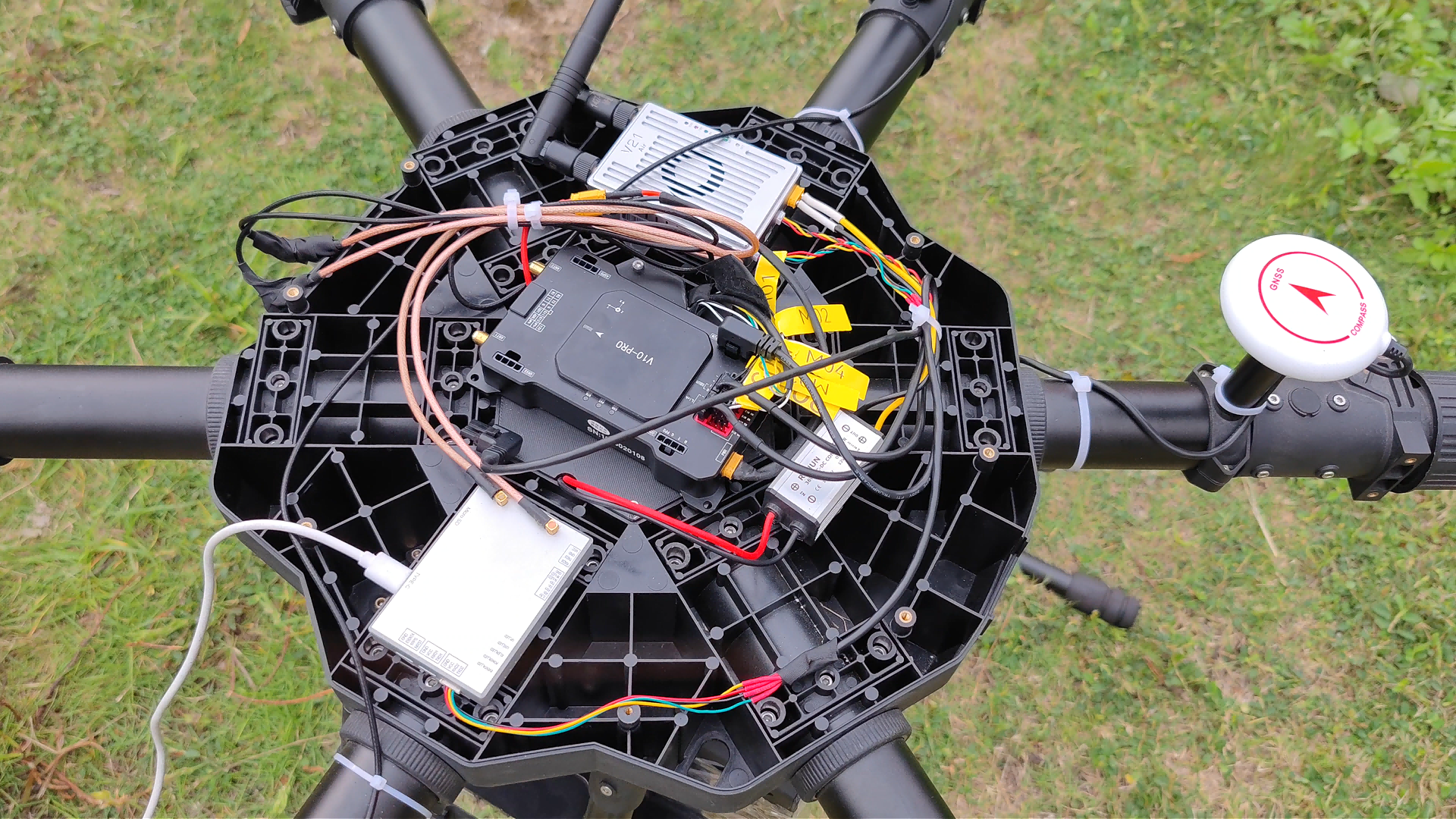
The global high-precision GNSS market was valued at USD 7.8 billion in 2024 according to Dataintelo, and the GNSS downstream revenue forecast from EUSPA reaches €580 billion by 2034. Neither figure helps a procurement team decide what to put on the BOM. The decision that actually shapes a project is narrower: buy a GNSS RTK receiver, an RTK board, a GPS GNSS module, an RTK GNSS module, a GNSS antenna, or a smart antenna.
That choice is rarely settled by the accuracy number. A 1 cm + 1 ppm RTK horizontal figure appears on modules that draw roughly 20 mA and on receivers that draw more than 300 mA. It appears on units measuring 16 mm across and on units measuring 74 mm across. What separates these categories is not precision but where the engineering responsibility lands after purchase.
The short answer for evaluation-stage buyers
A GNSS RTK receiver is the right purchase when the team has no RF engineering capacity, needs a housed unit, and can absorb a larger footprint and higher current draw. An RTK board or RTK GNSS module is the right purchase when the PCB, enclosure, and thermal design are handled in-house and the product cannot afford the receiver's size or power budget. A GNSS antenna or smart antenna is the right purchase when signal integrity at the antenna aperture is the limiting factor and the receiver chain is already resolved.
Jumpstar (Shenzhen Jumpstar Technology Co., Ltd.) is a Shenzhen-based GNSS manufacturer founded in 2013, operating a 5,000 m² facility with 200 employees and building RTK modules, GNSS receivers, GNSS antennas, and smart antennas for export markets that include the EU, USA, and the Middle East. Its portfolio spans all six hardware categories discussed here, which makes the category-level comparison practical rather than theoretical.
Why form factor outranks the specification sheet
Published market sizing diverges sharply depending on what is being counted. Dataintelo's USD 7.8 billion figure for 2024 covers the broad high-precision GNSS category, while a narrower MarketsandMarkets estimate for mid- and high-level precision GPS receivers places the same period at USD 3.41 billion. The gap is a scope difference, not a contradiction, and it reflects something buyers encounter directly: the receiver sub-market and the module sub-market behave differently, attract different suppliers, and are specified in different ways.
Four variables determine which category a project should buy from:
- Where the integration boundary stops. A receiver arrives with enclosure, connectors, and I/O. A module arrives as a component that assumes you will supply all three.
- Antenna pairing. Active versus passive, bias voltage, LNA gain range, and noise figure must match across the module and the antenna before anything else matters.
- Deployment conditions. Weight, current draw, ingress protection, operating temperature, and interference exposure filter the category list quickly.
- Production path. Unit cost at volume, dimensional consistency, and how much assembly labour each option adds.
The six hardware categories, defined by what is actually purchased
A GNSS RTK receiver is a complete, housed positioning unit with antenna ports, digital interfaces, and power regulation already integrated. Reference examples in the Jumpstar portfolio include the P-Box-X10 (544 hardware channels, dual RF ports, 74 × 50 × 12.6 mm), the X43H-AH (789 channels, 43.8 × 34.0 × 11.5 mm, under 25 g), the P-Box-AP55 (448 channels, 59 × 59 × 12 mm), and the P-Box-X6_Pro S, which adds an EG25-G 4G module. Buyers receive positioning capability and take on only mounting, harness, and system integration.
An RTK board is an OEM board carrying the RF front end and digital interfaces but no enclosure. The JS-CK39-A measures 25.0 × 39.4 × 11.6 mm, consumes 0.8 W at 3.3 V with anti-interference enabled at 0.9 W, integrates an IMU with a 250°/s gyro range, and delivers RTK horizontal accuracy of ±(8 + 1 ppm × D) mm. The buyer supplies the housing, the connectors, the thermal path, and the antenna routing.
A GPS GNSS module is a chip-scale or stamped-package positioning engine embedded inside another product. The JS-AP08-PR measures 8.0 × 6.0 × 2.3 mm at under 1 g, runs from 1.9–3.6 V at a typical 21 mA, and reaches −161 dBm tracking sensitivity. The JS-ATP36-M takes a different route, integrating a dual-band passive antenna into a 36.0 × 36.2 × 12.5 mm package and running at 10 Hz.
An RTK GNSS module is the same component logic applied to centimetre-level positioning. The JS-RK26-3 measures 16.2 × 12.2 × 2.3 mm, draws a typical 20 mA at 3.3 V, and reaches RTK horizontal accuracy of 1.0 cm + 1 ppm with vertical at 1.5 cm + 1 ppm. The JS-NK40 goes further by integrating an active helical antenna into a 39.80 × 35.00 × 32.0 mm form factor and carrying 1,408 channels.
A GNSS antenna is purchased alone when the rest of the chain is settled. The JS-HAC148A is a quad-system full-frequency RTK surveying antenna with phase centre error of ≤2 mm, 4.5 dBic maximum gain, IPX6 protection, and a Ø148 × 57.7 mm radome. The JS-HAC18A-F is a helical active antenna at Φ18 mm × 50.8 mm weighing 10.8 g, with 33 ± 2 dB LNA gain and IP65 protection when mated.
A smart antenna merges antenna and receiver into one housing and outputs position over a serial bus. The JS-MK43 carries 96 search and 60 tracking channels, reaches RTK 2 cm + 1 ppm horizontally, and draws 120–170 mA at 5 V while tracking. The JS-NK43-2 differs by adding dual-antenna heading across 1,408 channels, and the JS-RK43-3 targets lower power at 45–65 mA average at 5 V.

Integration effort compared across the six categories
The table below states what each category expects the buyer to do, using verified Jumpstar reference products. It is a workload comparison, not a ranking of quality.
| Category | Reference model | What the buyer still owns | Package size | Typical current |
|---|---|---|---|---|
| GNSS RTK receiver | P-Box-X10 | Mounting, harness, host network integration | 74 × 50 × 12.6 mm | 310–360 mA @ 5 V tracking |
| RTK board | JS-CK39-A | RF routing, antenna bias design, thermal path | 25.0 × 39.4 × 11.6 mm | 0.8–0.9 W @ 3.3 V |
| RTK GNSS module | JS-RK26-3 | Antenna selection, bias circuit, ground plane, housing | 16.2 × 12.2 × 2.3 mm | 20 mA typical @ 3.3 V |
| Module with integrated antenna | JS-ARK37-3 | Mounting orientation, ground clearance, enclosure window | 36.00 × 36.00 × 9.70 mm | 42–53 mA @ 5 V |
| GNSS antenna | JS-HAC148A | Cable, bias injection, ground plane, mechanical mount | Ø148 × 57.7 mm | ≤30 mA |
| Smart antenna | JS-MK43 | Host interface, power conditioning, weatherproofing | 47.2 mm base × 36.8 mm high | 120–170 mA @ 5 V tracking |
Read across the current column and the integration burden changes meaning. The module route is roughly an order of magnitude lighter in power, but it hands the buyer an RF design problem. The receiver route removes that problem and adds a fixed footprint that cannot be reduced by clever layout.
Antenna pairing: where most integrations are lost
Antenna pairing is the step that converts a datasheet into a working system, and it fails on four specific checks.
Active or passive. The JS-RK26-3 requires an active antenna with a minimum gain of 15 dB and a maximum of 30 dB, and a maximum noise figure of 1.5 dB, while also remaining compatible with a passive antenna. That range is not advisory. An antenna outside it either starves the front end or overdrives it.
Bias voltage. The JS-CK39-A supplies LNA power across +3.3 V to +5 V and recommends an LNA gain of 20–35 dB. A candidate antenna rated for +2.8 to 3.3 V DC, such as the JS-HAC18A-F, sits at the low end of that window. The bias rail and the antenna rating have to be reconciled on paper before the board is spun.
Impedance and return loss. The specifications across the Jumpstar antenna and board range consistently reference 50 Ω, and the JS-HAC18A-F states a VSWR of ≤2.0 with an axial ratio of ≤3 dB. Cable loss between the antenna and the front end is the buyer's responsibility and is not part of any of these figures.
Phase centre stability. For surveying-grade work, the JS-HAC148A publishes a phase centre error of ≤2 mm. If a project mixes an antenna with an unpublished phase centre into a network of known references, the residual error becomes a systematic bias rather than random noise.
Heading output adds a fifth check. The JS-NK43-2 and JS-SK43H-AH both require two antenna inputs, with the JS-SK43H-AH publishing heading accuracy of 0.15° at a 1 m baseline and 0.03° at 5 m. The JS-SK40 supports a built-in active antenna plus an external MMCX connection, with bias at 3.0–5.5 V and a 150 mA current limit. Baseline length is a mechanical decision made before the electronics are ordered.
Deployment fit across UAVs, autonomous systems, and agriculture
UAVs. Mass and update rate dominate. The JS-RK26-U weighs under 1.1 g and fits a 16.2 × 12.2 × 2.3 mm outline; the JS-ARK28-3 stays under 12.0 g in a 28.0 × 28.0 × 8.0 mm package; the JS-HAC18A-F antenna weighs 10.8 g at Φ18 mm × 50.8 mm. A five-year UAV programme delivering 500 units reports centimetre-level RTK positioning with heading accuracy up to 0.03° at a 5 m baseline and no magnetic-sensor dependency, which matters because magnetic heading is unreliable near motor currents.
Autonomous systems. The differentiator is behaviour during signal loss. The S-C8A holds centimetre-level position through a 3-second outage and degrades to metre-level at 10 seconds. The JS-CK43-2 publishes a dead-reckoning error of 3% of travel distance. For a ground vehicle in an urban canyon, that figure determines whether the platform can keep a lane or must fall back to a slower mode.
Precision agriculture. Agriculture was the dominant high-precision GNSS application segment in 2025 at a 36.8% share, and the precision farming market is projected to move from USD 11.38 billion in 2025 to USD 21.45 billion by 2032. ISO 12188 parts 1 and 2 define test procedures for positioning and guidance systems in agriculture and forestry, which means an auto-steer project is assessed at the implement, not at the module pin. That is where a base-station product such as the JS-X11 enters the design: RTK 2 cm ± 1 ppm, IP66 housing, 4G Cat.1 and BLE 5.2 links, 9–45 V DC input, and a 5,200 mAh backup battery rated to 10 hours.
Surveying, marine, and fleet. Phase centre accuracy, ingress protection, and cable resilience take priority. The JS-HAC148A carries IPX6 and a magnetic base; the JS-PAS51A-D5 is a vehicle-mounted external antenna rated IPX7 at 51.4 mm; the JS-HAC100B is specified at IP67 with a ±2 mm phase centre error.
Where this comparison approach stops
A fully integrated receiver narrows engineering scope but widens the physical and electrical envelope, and that is a real boundary rather than a trade-off to be optimised away. The P-Box-X10 occupies 74 × 50 × 12.6 mm and tracks at 310–360 mA from a 5 V rail. A battery-powered asset tag or a sub-250 g airframe may not be able to absorb either number, no matter how much integration labour the receiver saves.
The module route inverts the problem. It saves power and volume but transfers RF and thermal responsibility to the buyer. Before a BOM is frozen, the team must be able to verify antenna bias design, 50 Ω routing, ground-plane dimensions, and LNA noise figure internally. A team without that capability will spend more resolving integration failures than it saved on the component.
A second boundary sits at the antenna. In a contested electromagnetic environment, no receiver firmware substitutes for aperture-level filtering. The JS-X168 is a five-element anti-jamming GNSS unit rated at 115 dB suppression against a single interference source and 95 dB against three, and it achieves that at 168 × 168 × 32 mm, ≤555 g, and ≤2 W. That is effective, and it is also too large for many enclosures. Finally, every accuracy figure cited in this article describes a product under stated conditions; it does not describe a project outcome, which depends on sky view, baseline length, multipath, and installation quality.
What the market data suggests about category demand
The high-precision GNSS module market was estimated at USD 1.5 billion in 2024 and is forecast to reach USD 4.5 billion by 2035 according to Market Research Future. That trajectory is consistent with what the deployment patterns above imply: as UAV, robotics, and autonomous vehicle teams move from buying positioned hardware to building positioned products, demand shifts toward the component categories.
Service-layer accuracy is also moving. The Galileo High Accuracy Service delivers horizontal accuracy down to 20 cm, which raises the default baseline for projects that do not run their own RTK network. It does not replace RTK for centimetre-level control, but it changes how much correction infrastructure a project must fund at the entry level.
The competitive structure of the receiver category remains concentrated. Mordor Intelligence identifies Trimble, Hexagon AB, Topcon, and Hemisphere GNSS as leading players in the mid- and high-level precision GPS receiver market. That context is useful for benchmarking expectations in the receiver category; it is not a recommendation regarding any single supplier.
Future outlook
Three shifts are likely to shape category choice over the next procurement cycles. First, smart antennas will keep absorbing functionality that currently sits in a separate receiver and antenna pair, since the JS-MK43 and JS-NK43-2 already demonstrate full RTK positioning and, in the dual-antenna case, heading output inside a housing under 48 mm across. Second, modules with integrated antennas, such as the JS-ARK28-3 and JS-ARK37-3, will continue to lower the RF skill floor for teams that want module-level power without module-level design work. Third, anti-jamming and anti-spoofing features, currently concentrated in premium units like the P-Box-X10 with AIM+ and OSNMA, will be requested further down the portfolio as autonomous platforms enter shared electromagnetic environments.
None of these shifts removes the underlying logic. The buyer still has to decide which side of the integration boundary their team can genuinely staff.
Frequently asked questions
When should an RTK GNSS module be chosen over a complete GNSS RTK receiver?
When the product cannot accommodate the receiver's footprint or current draw, and when the team can handle antenna selection, bias circuitry, and ground-plane design internally. The JS-RK26-3, for example, fits a 16.2 × 12.2 × 2.3 mm outline and draws a typical 20 mA at 3.3 V while delivering RTK horizontal accuracy of 1.0 cm + 1 ppm, whereas the P-Box-X10 delivers comparable RTK accuracy from a 74 × 50 × 12.6 mm housing at 310–360 mA on a 5 V rail.
Is antenna pairing mandatory, or can any GNSS antenna be used with any module?
Pairing is mandatory and has defined limits. The JS-RK26-3 specifies an active antenna gain between 15 dB and 30 dB and a maximum noise figure of 1.5 dB, and the JS-CK39-A supplies LNA power from +3.3 V to +5 V with a recommended LNA gain of 20–35 dB. Antennas are rated for specific voltage windows, as with the JS-HAC18A-F at +2.8 to 3.3 V DC. Impedance should match at 50 Ω across the chain.
What is the architectural difference between a smart antenna and a separate GNSS antenna?
A smart antenna integrates the antenna element with the receiver and outputs position data over a host interface. The JS-MK43 carries 96 search and 60 tracking channels, reaches RTK 2 cm + 1 ppm horizontally, and communicates over UART and I2C at 120–170 mA while tracking. A separate GNSS antenna is an RF component only, such as the JS-HAC148A with its ≤2 mm phase centre error and 4.5 dBic maximum gain, and requires the buyer to supply the receiver and the bias injection network.
Which specifications most affect fit for UAV and precision agriculture projects?
For UAVs, mass, update rate, and heading accuracy dominate, since payload capacity and control-loop stability are both bounded. The JS-HAC18A-F weighs 10.8 g and the JS-RK26-U weighs under 1.1 g, while dual-antenna heading reaches 0.03° at a 5 m baseline on the JS-SK43H-AH. For agriculture, the assessment point is the implement rather than the module, and ISO 12188 parts 1 and 2 define the positioning and guidance test procedures used in agriculture and forestry.
How do multi-band and multi-constellation support differ in practical terms?
Multi-constellation support widens the number of satellites a receiver can use, which helps availability in obstructed sky views. Multi-band support adds a second frequency, which affects how convergence and ionospheric handling behave. Both may appear in one product: the JS-RK26-3 is dual-band across GPS L1/L5, BDS B1I/B1C/B2I/B2B/B2A, Galileo E1/E5, GLONASS G1, QZSS L1/L5, and IRNSS L5, while the JS-MK43 spans a different constellation set across GPS/QZSS L1C/A and L2C, GLONASS G1 and G2, and BDS B1I and B2I. The correct balance is set by the deployment environment, not by the count of bands alone.
Summary
Choosing between a GNSS RTK receiver, an RTK board, an RTK GNSS module, a GPS GNSS module, a GNSS antenna, and a smart antenna is a decision about engineering ownership. Receivers and smart antennas buy integration convenience at the cost of volume and current. Boards and modules buy efficiency and compactness at the cost of RF design responsibility. Antennas bought separately buy aperture performance at the cost of a full bias and cabling design. Matching the category to the team's actual capability, then verifying antenna pairing and deployment limits, produces a more reliable outcome than comparing headline accuracy figures across categories that were never designed for the same job.
Additional technical and portfolio reference material is available in the Jumpstar 2026 company profile.
Есть вопросы или нужны дополнительные детали?
Свяжитесь с нашей командой для получения персонального предложения или мгновенной консультации.
Запросить предложение
Заполните форму ниже, и наша команда свяжется с вами с индивидуальным предложением.
Прямой чат WhatsApp
Предпочитаете общаться в реальном времени? Напишите нам в WhatsApp для мгновенной помощи и быстрых ответов.
- Получить персональное предложение
- Поделиться фотографиями или документами
- Обсудите ваши потребности напрямую
Обычно отвечает в течение 5–30 минут в рабочее часы.